Best potting mix brands for container vegetables — ranked comparison
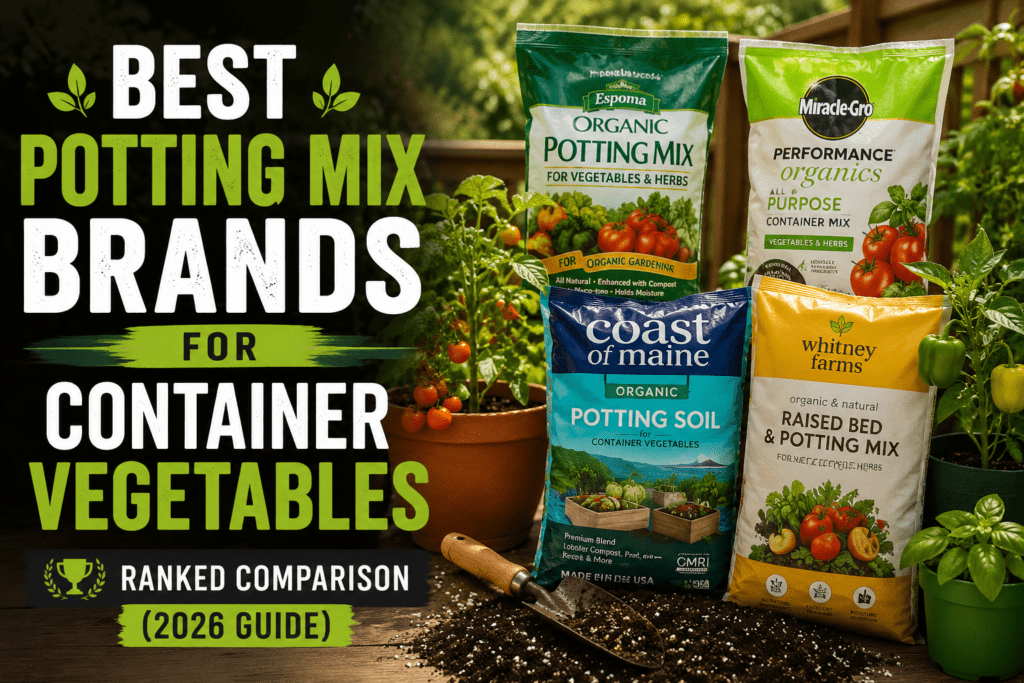
Choosing the right potting mix is arguably the most critical decision for successful container vegetable gardening, even more so than selecting the vegetable variety itself. A superior mix provides the ideal balance of aeration, moisture retention, and nutrients, directly impacting your harvest’s size and quality. This guide offers a ranked comparison of the best potting mix brands for container vegetables in 2026, helping you cultivate thriving plants right on your patio or balcony.
Key Takeaways
- Premium Organic Options Lead: Brands like Fox Farm Ocean Forest and Happy Frog consistently perform best for container vegetables due to their rich organic matter and balanced nutrient profiles.
- Drainage and Aeration are Paramount: Container mixes must drain well to prevent root rot while retaining enough moisture for plant hydration. Ingredients like perlite, coir, and aged bark are essential.
- Nutrient Availability Matters: Good potting mixes provide initial nutrients, but container vegetables are heavy feeders, often requiring supplemental fertilization within a few weeks.
- Avoid Garden Soil: Never use garden soil in containers; it compacts too much, leading to poor drainage and aeration.
- Cost Reflects Quality: While budget options exist, investing in a higher-quality potting mix typically yields better results for container vegetables.
- DIY is an Option: Creating your own potting mix allows for customization and can be cost-effective, but requires careful ingredient selection.
- Climate Considerations: Hot climates demand mixes with excellent moisture retention, while temperate regions might prioritize drainage slightly more.
- Regular Replacement: Potting mix should be refreshed or entirely replaced annually for heavy-feeding container vegetables to maintain optimal plant health.
What Makes a Potting Mix Good for Growing Vegetables in Containers?
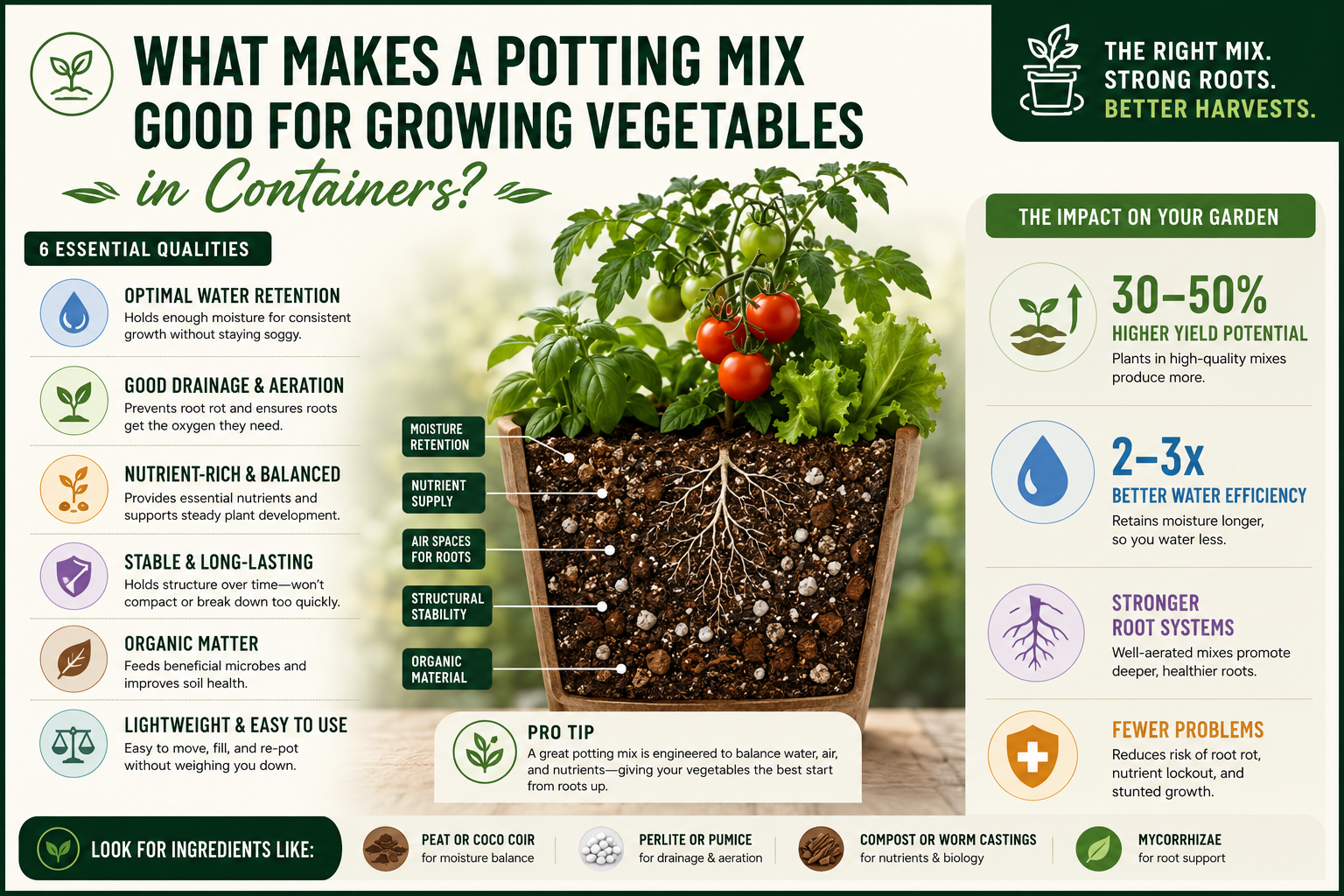
A potting mix is deemed excellent for container vegetables when it perfectly balances drainage, aeration, moisture retention, and nutrient supply. Unlike garden soil, container mixes are engineered to thrive in confined spaces, preventing compaction and ensuring roots have access to both water and air. This specialized composition is crucial for container-grown plants that cannot access the vast soil networks of in-ground gardens.
The ideal potting mix for container vegetables should have several key characteristics:
- Excellent Drainage: Roots need oxygen. A mix that drains quickly prevents waterlogging, which suffocates roots and encourages diseases like root rot. Ingredients like perlite, coarse sand, or pumice contribute to this.
- Good Aeration: Even with good drainage, the mix needs structural integrity to maintain tiny air pockets essential for root respiration. Components like bark fines and perlite help keep the mix light and airy.
- Optimal Moisture Retention: While drainage is critical, the mix must also hold enough water to keep plants hydrated between waterings. Peat moss, coco coir, and vermiculite are excellent for this, acting like sponges.
- Nutrient-Rich: Vegetable plants are heavy feeders, so a good potting mix provides a baseline of nutrients to support initial growth. High-quality mixes often include compost, worm castings, or slow-release organic fertilizers.
- Stable pH: Most vegetables prefer a slightly acidic to neutral pH (6.0-7.0). Reputable brands formulate their mixes to fall within this range.
- Disease and Pest Free: Unlike garden soil, sterile potting mixes reduce the risk of introducing soil-borne diseases, weed seeds, or pests to your containers.
Choosing the right potting mix ensures your container vegetables have the best possible environment to grow strong and produce abundant harvests. For a more comprehensive understanding, explore our guide on the best soil mix for container gardening (complete guide).
How Do Miracle-Gro and Fox Farm Potting Soils Compare for Tomatoes?
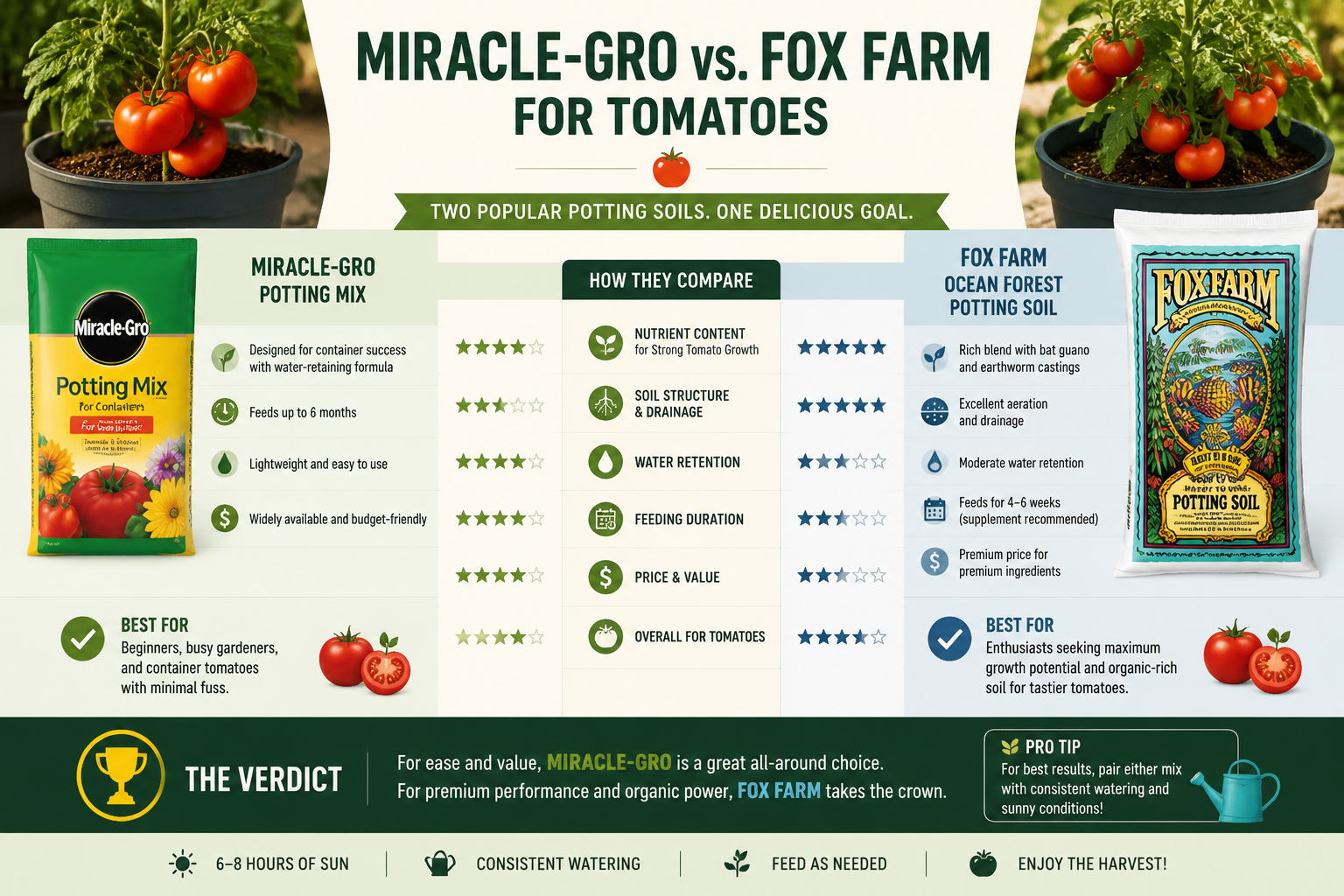
For tomatoes, Fox Farm Ocean Forest generally outperforms Miracle-Gro Potting Mix due to its superior organic composition, diverse nutrient blend, and long-term soil health benefits, though Miracle-Gro offers convenience and quick initial growth. Tomatoes are heavy feeders and benefit immensely from a rich, well-aerated, and nutrient-dense environment that can sustain them through a long growing season.
Fox Farm Ocean Forest Potting Soil
- Pros:
- Rich Organic Blend: Contains bat guano, worm castings, fish meal, and crab meal, providing a comprehensive spectrum of organic nutrients.
- Excellent Aeration and Drainage: A mix of sphagnum peat moss, forest humus, coco coir, and perlite ensures ideal air-to-water ratios, crucial for tomato root health.
- pH Balanced: Formulated to an optimal pH for nutrient uptake, especially beneficial for fruiting plants like tomatoes.
- Sustainable Release: Organic nutrients release slowly over time, promoting steady, sustained growth rather than sudden spurts.
- Long-Term Health: Contributes to a vibrant soil microbiome, which is essential for resilient plants.
- Cons:
- Higher Cost: It is one of the more expensive options on the market.
- Strong Smell: The organic ingredients can produce a noticeable odor, especially when first opened.
Miracle-Gro Potting Mix
- Pros:
- Readily Available & Affordable: Widely accessible in most garden centers and generally more budget-friendly.
- Quick Nutrient Boost: Contains synthetic slow-release fertilizers that provide an immediate surge of nutrients, often leading to rapid initial growth.
- Lightweight: Easy to handle and relatively clean.
- Cons:
- Synthetic Fertilizers: While effective initially, the synthetic nutrients can deplete quickly, requiring more frequent supplemental feeding.
- Less Organic Matter: Contains less diverse organic matter than premium brands, which means fewer long-term soil health benefits and less robust microbial activity.
- Potential for Salt Buildup: Synthetic fertilizers can lead to salt buildup over time, which can harm root systems.
- Compaction Issues: Can sometimes compact more easily over a season, reducing aeration.
Recommendation for Tomatoes: If budget allows, Fox Farm Ocean Forest is the superior choice for container tomatoes, promoting healthier root development and sustained, vigorous growth throughout the season. However, Miracle-Gro remains a viable option for gardeners prioritizing convenience and initial cost savings, provided they are prepared for more consistent supplemental feeding.
Cheapest High-Quality Potting Mix for Raised Garden Beds
For raised garden beds, the cheapest high-quality potting mix usually involves a blend of local bulk compost with supplementary amendments like peat moss, perlite, or coco coir, rather than relying solely on bagged retail potting mixes. While you could fill an entire raised bed with premium bagged mix, it quickly becomes cost-prohibitive.
Here’s how to achieve high-quality on a budget:
- Bulk Compost: The foundation of a cost-effective, high-quality raised bed mix is bulk compost from a local landscaping supply company, municipal composting facility, or even your own backyard compost pile. This significantly reduces costs compared to buying bagged compost.
- Pros: Nutrient-rich, improves soil structure, introduces beneficial microbes, excellent water retention.
- Cons: Quality can vary, may contain weed seeds (from municipal sources), potentially heavy.
- Local Topsoil (Screened): Sometimes, screened topsoil (ensure it’s sterile and free of contaminants) can be mixed with compost as a bulk filler. This should be used sparingly in containers due to potential compaction but can work in deeper raised beds.
- Amendments for Drainage and Aeration:
- Peat Moss or Coco Coir: These are good for moisture retention and lightening the mix. Coco coir is more sustainable. Buy in compressed bales for better value.
- Perlite or Vermiculite: Essential for aeration and drainage. Perlite is lighter and improves drainage; vermiculite retains more moisture. Buying in larger bags is more cost-effective.
- Aged Pine Bark Fines: An excellent, often affordable, amendment for long-term structure, drainage, and aeration. Check local nurseries or landscape suppliers.
Recommended Budget Mix Ratio (for raised beds):
- 50-60% High-Quality Bulk Compost: Forms the base, providing nutrients and organic matter.
- 20-30% Coco Coir or Peat Moss: For moisture retention and to lighten the mix.
- 10-20% Perlite or Aged Pine Bark Fines: For improved drainage and aeration.
This DIY approach offers significantly better value than buying multiple bags of premium potting mix for large volumes while still providing an excellent growing medium for your vegetables.
Why Are My Container Vegetables Not Growing Well in Standard Potting Soil?
Your container vegetables are likely not thriving in standard potting soil because many “standard” or “all-purpose” mixes lack the specific qualities required for the intense growing demands of container gardening. These issues typically stem from poor drainage, insufficient aeration, rapid nutrient depletion, or unsuitable pH levels that inhibit healthy root development and nutrient uptake.
Common reasons for poor growth:
- Compaction: Standard potting soil can compact easily over time, especially after repeated watering. This reduces air pockets, suffocates roots, and prevents water from draining properly, leading to waterlogging.
- Poor Drainage: Many inexpensive potting mixes are too heavy and retain too much water, creating an anaerobic environment that fosters root rot, a common killer of container plants.
- Inadequate Aeration: Roots need oxygen to respire and absorb nutrients. Compacted or waterlogged soil lacks sufficient air, hindering root growth and overall plant vigor.
- Nutrient Depletion: Container plants quickly exhaust the limited nutrients in their small soil volume. Standard mixes might offer initial nutrients, but these are often insufficient for the entire growing season of heavy feeders like vegetables.
- Incorrect pH: The pH of the potting mix directly affects nutrient availability. If the pH is too high or too low for your specific vegetables, they cannot absorb essential nutrients, even if present in the soil.
- Lack of Organic Matter: Premium potting mixes incorporate rich organic matter (like compost or worm castings) that slowly release nutrients and foster a healthy microbial ecosystem. Standard mixes may lack this complexity.
To rectify this, switch to a high-quality potting mix specifically formulated for container vegetables, and consider supplementing with appropriate fertilizers throughout the growing season. For advice on when to fertilize vegetable seedlings, refer to our expert 2026 guide.
Organic Potting Mix Brands Recommended by Professional Gardeners
Professional gardeners consistently recommend organic potting mix brands that prioritize a balanced nutrient profile, excellent drainage, and a robust microbial environment, ensuring sustained plant health and yield without synthetic chemicals. These brands are often favored for their long-term benefits to soil structure and plant vitality, especially for edible crops.
Here are some top recommendations:
- Fox Farm Ocean Forest Potting Soil:
- Why it’s recommended: Known for its “ocean forest” blend of sphagnum peat moss, forest humus, sandy loam, and unique organic ingredients like bat guano, fish meal, and crab meal. It’s pre-amended with a diverse array of nutrients, providing a rich, living soil environment that supports vigorous growth. Its excellent texture ensures superb drainage and aeration.
- Best for: Most container vegetables, especially heavy feeders like tomatoes, peppers, and squash.
- Fox Farm Happy Frog Potting Soil:
- Why it’s recommended: A slightly lighter and less intense version of Ocean Forest, Happy Frog still boasts a rich organic composition with beneficial microbes, worm castings, and bat guano. It’s often praised for its ability to foster strong root development and promote healthy foliage.
- Best for: Seedlings, young plants, and a wide range of vegetables.
- Coast of Maine Organic Potting Soil (Bar Harbor Blend):
- Why it’s recommended: This brand emphasizes sustainably sourced ingredients like composted bark, sphagnum peat moss, and worm castings, enriched with kelp meal and lobster meal. Gardeners appreciate its consistent quality, rich dark texture, and its ability to retain moisture while draining well.
- Best for: All container vegetables, particularly those that appreciate consistent moisture and slow-release nutrients.
- Espoma Organic Potting Mix:
- Why it’s recommended: A reliable and widely available organic option that often includes peat moss, perlite, and a balanced mix of organic fertilizers like alfalfa meal and bone meal. It’s known for promoting strong root growth and providing adequate nutrients for a range of container plants.
- Best for: General container vegetable gardening, a good all-around organic choice.
When choosing, prioritize brands that list specific organic ingredients and ensure the mix is OMRI-listed for organic certification if that is a strict requirement for your gardening practices.
Best Potting Mix for Beginners Who Want to Grow Vegetables on a Patio
For beginners aiming to grow vegetables on a patio, the best potting mix is a high-quality, all-purpose organic potting mix that comes pre-amended with nutrients and offers a balanced blend of drainage and moisture retention. Such a mix simplifies the initial setup, reducing the need for immediate fertilization and minimizing common beginner pitfalls related to soil quality.
Our Top Recommendation for Beginners:
- Fox Farm Happy Frog Potting Soil:
- Why it’s ideal for beginners: Happy Frog offers a fantastic balance of nutrients (from worm castings and bat guano) and excellent texture, promoting strong root development and vigorous growth without being overly “hot” for young plants. It drains well while retaining adequate moisture, forgiving minor watering inconsistencies. Its ready-to-use nature means beginners don’t need to worry about adding amendments or fertilizers right away.
- Benefits: Reduces the learning curve, provides a strong start for plants, and offers a buffer against initial mistakes.
- Application: Simply fill your containers and plant. You’ll typically have 3-4 weeks before needing to consider supplemental feeding.
Alternative Beginner-Friendly Options:
- Espoma Organic Potting Mix: A solid, widely available choice that is consistent and provides good results for general container vegetables.
- Coast of Maine Organic Potting Soil: Offers excellent quality and nutrient balance, though it might be slightly pricier or harder to find in some regions.
Regardless of the brand, ensure the bag specifies it’s for “containers” or “potting” to guarantee it has the correct structure for confined spaces. Starting with a good base significantly increases your chances of success and enjoyment in patio vegetable gardening. For more beginner tips, check out our container gardening for beginners: step-by-step guide 2026.
Which Potting Mix Works Worst in Hot Climates for Container Gardening?
In hot climates, potting mixes that are overly heavy, prone to quick compaction, or lack sufficient moisture-retaining ingredients perform the worst for container gardening, leading to rapid drying out, stressed plants, and decreased yields. These inferior mixes force gardeners to water excessively, which can still be insufficient and may wash away nutrients.
Specifically, avoid mixes that:
- Are Peat-Heavy without Coir or Vermiculite: While peat moss retains moisture, if it’s the dominant component without other moisture-balancing elements like coco coir or vermiculite, it can become hydrophobic (repel water) when completely dry, making it difficult to re-wet. Once dry, it often struggles to provide consistent moisture.
- Contain Excessive Perlite or Coarse Sand Only: While crucial for drainage, too much of these without sufficient moisture-retaining organic matter will cause the mix to dry out almost instantly in intense heat, leaving plants parched.
- Are Labeled “Topsoil” or “Garden Soil”: These are fundamentally unsuitable for containers as they compact severely, lack aeration, and dry into a brick-like consistency in hot, sunny conditions.
- Are Very Cheap, Generic Potting Mixes: These often contain low-quality, inconsistent ingredients, leading to poor performance across all metrics in challenging conditions like extreme heat.
In hot climates, look for mixes with a strong balance of coco coir, compost, and vermiculite to maximize moisture retention, coupled with perlite or pine bark fines for crucial aeration. Using self-watering containers or adding a layer of mulch on top can also significantly help. For optimal plant choices, consider heat resistant plants: thrive in sun & heat (2026 guide).
How Much Should I Expect to Spend on Good Potting Mix for Vegetable Containers?
You should expect to spend between $15 to $30 for a 1.5 to 2 cubic foot bag of good quality potting mix for vegetable containers in 2026, with premium organic brands often falling at the higher end of this range. While cheaper options exist, they often compromise on quality, requiring more frequent fertilization and potentially leading to less successful harvests.
Here’s a breakdown of cost expectations:
- Budget-Friendly (Acceptable): $8-$15 for 1.5-2 cu ft. These are typically basic “all-purpose” mixes. They might contain synthetic fertilizers and less diverse organic matter. You’ll likely need to amend them with compost or perlite and fertilize more frequently.
- Good Quality (Recommended): $15-$25 for 1.5-2 cu ft. Brands like Espoma Organic Potting Mix or specific varieties from regional suppliers fall into this category. They offer a better balance of ingredients, often include some organic matter, and provide a decent nutrient base.
- Premium Organic (Best Performance): $25-$35+ for 1.5-2 cu ft. Brands like Fox Farm Ocean Forest or Coast of Maine are examples. These mixes are rich in diverse organic nutrients, offer superior aeration and drainage, and generally yield the best results for container vegetables.
Cost-Saving Tip: For large numbers of containers or raised beds, buying potting mix in bulk from a local garden center or landscaping supply company can significantly reduce the per-cubic-foot cost. This is especially true if you’re mixing your own. Remember that good soil is an investment in your harvest, often paying for itself in yield and plant health.
Common Mistakes People Make When Choosing Potting Soil for Vegetables
Many common mistakes when choosing potting soil for vegetables stem from misunderstanding the fundamental differences between garden soil and container media, or by prioritizing cost over the specific needs of container-grown plants. These errors often lead to compacted soil, poor drainage, nutrient deficiencies, and ultimately, stunted plant growth or crop failure.
Here are the most common pitfalls:
- Using Garden Soil or Topsoil: This is the most critical mistake. Garden soil is too dense for containers; it compacts, lacks aeration, and provides poor drainage, leading to root rot and nutrient lockout.
- Buying the Cheapest Bag: Inexpensive “potting soil” often means low-quality ingredients, inadequate drainage, or insufficient nutrients, requiring constant amendments and feeding.
- Not Checking for “Container” or “Potting Mix” Labels: A product simply labeled “soil” might be unsuitable. Always look for “potting mix,” “potting soil for containers,” or “container mix.”
- Ignoring Ingredients List: Not all potting mixes are created equal. Avoid mixes that are primarily peat moss without other balancing components, or those that don’t mention perlite, coco coir, or compost.
- Assuming All Nutrients are Provided for the Season: Even premium mixes will eventually deplete their nutrients, especially with heavy-feeding vegetables. Neglecting supplemental fertilization is a common error.
- Choosing the Wrong Mix for the Climate: Using a fast-draining mix in a hot, dry climate, or a heavy, moisture-retentive mix in a cool, humid climate can lead to problems.
- Not Considering Organic vs. Synthetic: Beginners might not realize that organic mixes offer different benefits (slow-release, microbial health) compared to synthetic blends (quick boost).
By avoiding these mistakes and investing in a quality potting mix tailored for container vegetables, you significantly increase your chances of a bountiful harvest. For additional insights on common issues, review our guide on common vegetable growing mistakes: avoid them in 2026.
Can I Make My Own Potting Mix That Works as Well as Store-Bought Brands?
Yes, you can absolutely make your own potting mix that works as well as, or even better than, many store-bought brands, provided you use high-quality ingredients and understand the principles of a balanced mix. Creating your own blend offers cost savings, customization for specific plant needs, and control over the ingredients.
Here’s a general recipe for a high-quality DIY potting mix for vegetables:
- Base (Provides structure and moisture retention):
- 1 part Sphagnum Peat Moss or Coco Coir (compressed bales are economical)
- 1 part Aged Pine Bark Fines (for drainage and aeration)
- Aeration/Drainage (Prevents compaction, adds air pockets):
- 1 part Perlite or Vermiculite (Perlite for better drainage, Vermiculite for more moisture retention)
- Nutrients/Organic Matter (Feeds plants, supports soil life):
- 1 part High-Quality Compost (worm castings, mushroom compost, or well-rotted leaf mold)
- Optional Amendments (Based on specific needs):
- Slow-release organic fertilizer (e.g., blood meal, bone meal, kelp meal)
- Lime (if your peat/coir is too acidic for your plants, helps raise pH)
- Mycorrhizal fungi inoculant (to enhance root development and nutrient uptake)
Mixing Instructions:
- Combine peat moss/coco coir, bark fines, perlite/vermiculite, and compost thoroughly in a large tub or on a tarp.
- Add any optional amendments and mix again.
- Slightly moisten the mix before use to prevent dust and ensure even moisture distribution.
Benefits of DIY:
- Cost-Effective: Especially for large quantities.
- Customizable: Tailor the mix to specific vegetables (e.g., more sand for root crops, more compost for heavy feeders).
- Quality Control: You know exactly what goes into your mix.
The key is to source good ingredients. For example, ensuring your compost is fully broken down prevents it from competing with your plants for nitrogen.
What Nutrients Do Vegetables Need That Standard Potting Mix Might Lack?
Vegetables are heavy feeders requiring a broad spectrum of macronutrients and micronutrients that standard or inexpensive potting mixes often lack or deplete quickly after initial growth. The three primary macronutrients are Nitrogen (N), Phosphorus (P), and Potassium (K), typically referred to as NPK. Beyond these, a range of secondary and micronutrients are vital for robust vegetable growth.
Here’s a breakdown of what vegetables need and what might be missing:
Macronutrients (Often Insufficient in Basic Mixes)
- Nitrogen (N): Crucial for leafy green growth (stems and leaves). Standard mixes might have a short-term nitrogen boost, but heavy-feeding greens like spinach or lettuce quickly exhaust it.
- Phosphorus (P): Essential for root development, flowering, and fruiting. Vegetables producing fruits (tomatoes, peppers, squash) or root crops (carrots, potatoes) need ample phosphorus, which can be limited in basic mixes.
- Potassium (K): Important for overall plant health, disease resistance, and fruit quality. Like phosphorus, fruiting and root vegetables demand high potassium, which often runs out.
Secondary Macronutrients (Often Present, but can become deficient)
- Calcium (Ca): Critical for cell wall development, preventing issues like blossom end rot in tomatoes and peppers. Deficiencies can occur if pH is off or uptake is hindered.
- Magnesium (Mg): Key component of chlorophyll, vital for photosynthesis. Yellowing between leaf veins can indicate a deficiency.
- Sulfur (S): Important for protein formation and enzyme activity.
Micronutrients (Often Limited or Unavailable)
- Boron (B), Copper (Cu), Iron (Fe), Manganese (Mn), Molybdenum (Mo), Zinc (Zn): These are needed in smaller amounts but are indispensable for various plant functions. Standard mixes may not provide a balanced array, or they might become unavailable if the pH drifts.
Why the Deficiency? Container environments are limited. Unlike garden soil where nutrients are replenished by breakdown of organic matter and a vast soil food web, potting mixes rely on their initial composition and occasional amendments. Without continuous replenishment, heavy-feeding vegetables quickly strip the mix of essential elements, leading to slow growth, poor yields, and susceptibility to disease. Regular feeding with a balanced liquid fertilizer or incorporating slow-release organic amendments is crucial.
Top Recommended Potting Mixes for Small Space Vegetable Gardening
For small space vegetable gardening, such as balconies or patios, the top recommended potting mixes are premium, lightweight, and nutrient-dense formulations that provide excellent drainage while retaining adequate moisture. These specialized mixes maximize the growing potential within limited container volumes, promoting robust plant health and higher yields.
Here are the top recommendations for “Best potting mix brands for container vegetables — ranked comparison” in small spaces:
- Fox Farm Ocean Forest Potting Soil:
- Why it’s great: This remains a top contender for small spaces due to its unparalleled blend of organic ingredients and balanced nutrient profile. It supports vigorous growth from the start, crucial when every square inch counts. Its excellent aeration and drainage prevent issues in smaller pots.
- Ideal for: Any vegetable, especially those with high nutrient demands like tomatoes, peppers, and beans.
- Coast of Maine Organic Potting Soil (Bar Harbor Blend):
- Why it’s great: Highly regarded for its consistent quality, rich organic matter, and ability to hold moisture without becoming waterlogged. This is vital in small containers that can dry out quickly. The slow-release nutrients are a bonus for sustained growth.
- Ideal for: Leafy greens (lettuce, spinach), herbs, radishes, and smaller fruiting vegetables.
- Espoma Organic Potting Mix:
- Why it’s great: A reliable and widely available option, Espoma offers a good balance for general container vegetable growth. It’s often lighter than some premium mixes, making containers easier to move in small spaces, and provides a solid foundation of organic nutrients.
- Ideal for: General purpose vegetable gardening in small containers, a great all-around choice.
- Pro-Mix HP Mycorrhizae (High Porosity):
- Why it’s great: While not strictly an “organic” brand (it’s a professional-grade peat-based mix), it’s highly valued for its exceptional aeration and drainage, critical in small containers where root health can be compromised. The added mycorrhizae benefit root uptake. You’ll need to add your own organic nutrients or compost to make it suitable for organic vegetable growing.
- Ideal for: Gardeners willing to add their own organic amendments and fertilizers, or for those prioritizing maximum drainage and aeration.
When gardening in small spaces, the quality of your potting mix directly impacts your success. Investing in a superior mix will make a significant difference. Consider using containers that match the needs of your vegetables; our pot size guide for vegetables 2026: optimal growth & harvest can help.
How Often Should I Replace Potting Mix in My Vegetable Containers?
You should replace the potting mix in your vegetable containers annually for most heavy-feeding annual vegetables to ensure optimal nutrient availability, proper drainage, and aeration. For perennial vegetables or very large containers, a partial top-dressing or refreshment of the top layer may suffice every year, with a full replacement every 2-3 years.
Here’s why and how often:
- Annual Vegetables (Tomatoes, Peppers, Cucumbers, Leafy Greens):
- Frequency: Annually. These plants are heavy feeders and quickly deplete the nutrients and organic matter in the mix. The soil structure also degrades, leading to compaction and poor drainage over a single season.
- Why: Maximize yield and prevent disease. Old soil can harbor pathogens, pests, or accumulate salts from fertilizers.
- Perennial Vegetables (e.g., Rhubarb, Asparagus in large containers):
- Frequency: Every 2-3 years for full replacement; annual top-dressing. For established perennials, it’s often more practical to remove the top few inches of old soil and replace it with fresh potting mix or a rich compost. This replenishes nutrients and improves the top layer’s structure.
- Why: Minimizes disturbance to established root systems while still providing essential revitalization.
- Small, Fast-Growing Vegetables (Radishes, some herbs):
- Frequency: Can be reused for 1-2 cycles within a season, then replaced. If growing successive crops, ensure the mix is well-fertilized between plantings, but a full replacement at season’s end is still recommended.
Signs It’s Time to Replace:
- Compaction: The soil feels hard and dense, not light and fluffy.
- Poor Drainage: Water sits on top or drains very slowly.
- Nutrient Deficiencies: Plants show signs of yellowing or stunted growth despite feeding.
- Salt Buildup: A white crust forms on the soil surface or around the container rim.
While tempting to reuse, fresh potting mix is one of the most cost-effective investments for robust container vegetable production. You can often rejuvenate old potting mix for less demanding plants or use it as a soil amendment in garden beds, but it’s rarely ideal for growing heavy-feeding vegetables in containers for a second season without significant, careful amendment. For more on this, consult our article on reuse vegetable garden soil in 2026? expert guide.
FAQ
What is the primary difference between potting mix and garden soil?
Potting mix is designed for containers, offering superior drainage, aeration, and a sterile, lightweight composition, while garden soil is dense, can harbor pests, and compacts in pots, leading to poor plant health.
Can I mix my old potting soil with new potting mix?
You can mix old potting soil with new, but it’s best to only reuse old potting soil for less demanding plants or as an amendment to outdoor garden beds, rather than solely for new container vegetables, as it typically lacks nutrients and has degraded structure.
Do I need to fertilize vegetables grown in premium potting mix?
Yes, even premium potting mixes with initial nutrient charges will deplete nutrients, especially with heavy-feeding vegetables. Most container vegetables will require supplemental feeding within 3-6 weeks of planting.
Is coco coir better than peat moss for container vegetables?
Coco coir is often preferred over peat moss for container vegetables as it is more sustainable, has a neutral pH, and re-wets more easily if it dries out, while offering similar excellent moisture retention and aeration.
How do I store leftover potting mix?
Store leftover potting mix in its original bag or an airtight container in a cool, dry place to prevent it from drying out, becoming contaminated, or attracting pests.
What is perlite used for in potting mix?
Perlite is a lightweight, volcanic rock added to potting mix to improve drainage and aeration, preventing compaction and ensuring roots have access to oxygen.
Can I use compost alone as a potting mix for vegetables?
While rich in nutrients, compost alone is generally too dense and can compact heavily in containers, leading to poor drainage and aeration. It’s best used as a component (typically 20-50%) within a balanced potting mix.
What is the ideal pH range for vegetable potting mix?
Most vegetables thrive in a slightly acidic to neutral pH range, typically between 6.0 and 7.0. Reputable potting mix brands are formulated within this range.
Why do my container vegetables dry out so quickly?
Your container vegetables might be drying out quickly due to insufficient moisture retention in the potting mix, small container size, excessive sun exposure, or high temperatures. A mix with more coco coir or vermiculite can help.
Conclusion
Selecting the best potting mix brands for container vegetables in 2026 is a foundational step toward a thriving harvest. While the initial investment in a premium mix might seem higher, the benefits of optimal drainage, aeration, and nutrient availability directly translate to healthier plants and more abundant yields. Brands like Fox Farm Ocean Forest, Happy Frog, and Coast of Maine consistently lead the pack, providing the comprehensive support container vegetables demand. By understanding the critical components of a good potting mix and avoiding common pitfalls like using garden soil, even beginner gardeners can cultivate a successful and productive container vegetable patch. Prioritize quality, understand your climate, and don’t shy away from supplementing nutrients throughout the season for the best results.
[[RELATED_READING]]