Perlite vs vermiculite vs coco coir — which to add to apartment container mix
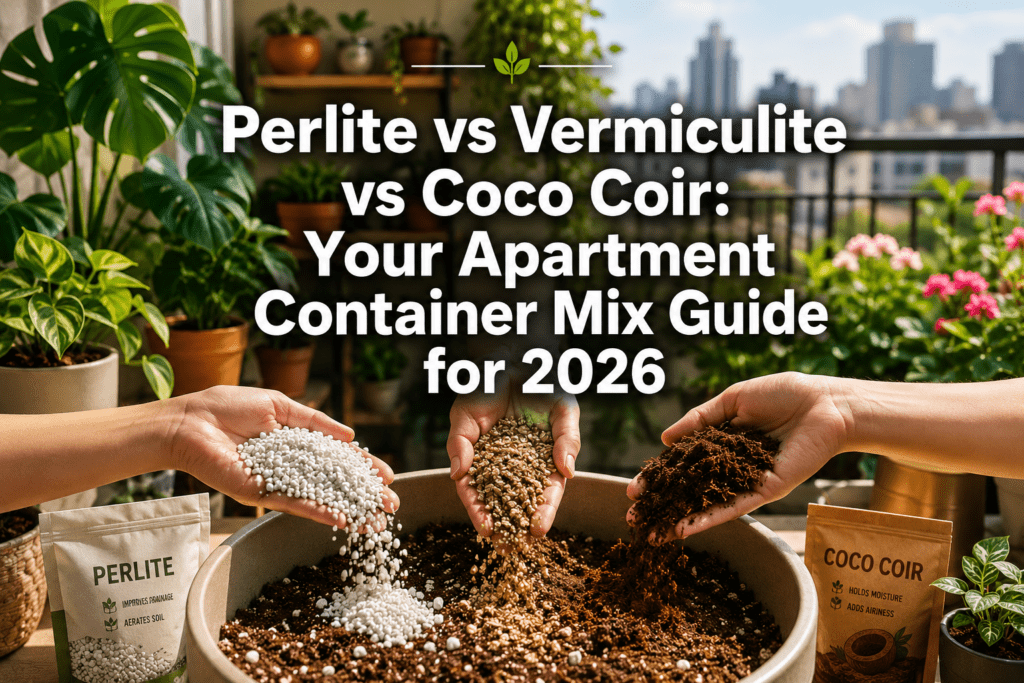
Quick Answer: For apartment container gardening in 2026, choosing between perlite, vermiculite, and coco coir depends on your specific plant needs: perlite excels at drainage and aeration, vermiculite offers superior water retention and nutrient buffering, and coco coir provides a balanced blend of both while being a sustainable, lightweight option.
Key Takeaways
- Perlite is ideal for plants needing excellent drainage and root aeration, preventing compaction.
- Vermiculite is best for moisture-loving plants and seed starting, enhancing water and nutrient retention.
- Coco Coir offers a balanced approach, improving both drainage and water retention, making it versatile for most container plants.
- Combining these materials can create a custom potting mix optimized for specific plant requirements in small spaces.
- Consider the weight, cost, and sustainability when selecting an amendment for apartment container gardening.
- Proper mixing is crucial to avoid common beginner mistakes like uneven distribution.
What Exactly is Perlite and How Does It Help Plants Grow?
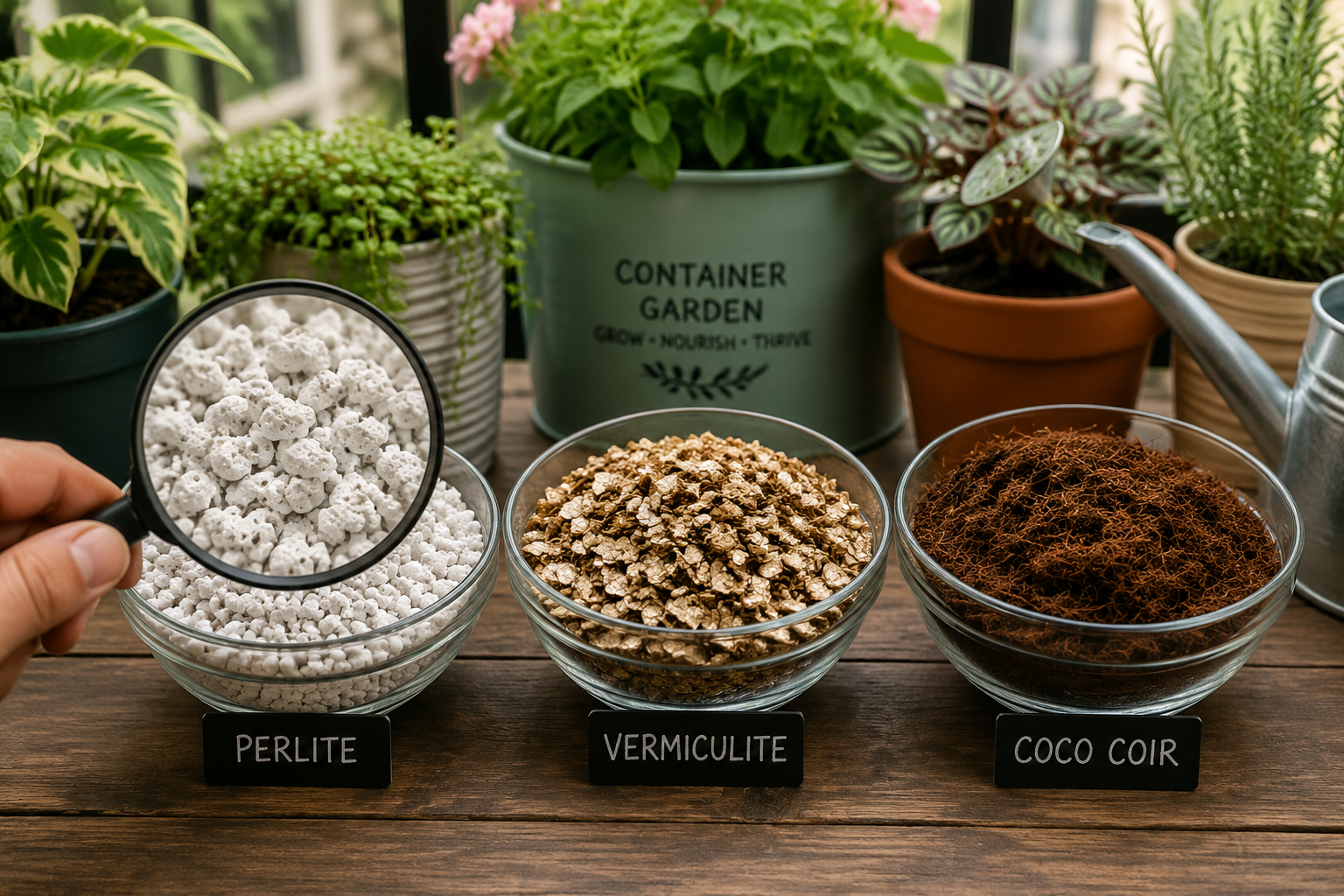
Perlite is an amorphous volcanic glass that is superheated until it expands into lightweight, white, porous particles, much like popcorn. It significantly improves soil aeration and drainage in container mixes, preventing roots from suffocating or rotting due to excess moisture.
When added to potting mix, perlite creates tiny air pockets that are vital for oxygen delivery to plant roots. This helps promote healthy root development, which is crucial for nutrient uptake and overall plant vigor. Its inert nature means it doesn’t break down quickly or alter the soil pH. For apartment gardeners, particularly those tending to plants sensitive to overwatering, perlite is an invaluable amendment. It’s often used in mixes for succulents, cacti, and other plants that thrive in well-draining conditions. A common ratio for a balanced potting mix might include 25-30% perlite to ensure adequate drainage.
Which Growing Medium Holds More Water: Vermiculite or Coco Coir?
Vermiculite generally holds significantly more water than coco coir by weight, acting like a sponge that absorbs moisture and nutrients. Coco coir, while excellent at moisture retention compared to traditional soil, also provides better aeration and drainage than vermiculite due to its fibrous structure.
Vermiculite’s unique accordion-like structure allows it to absorb large quantities of water, up to three to four times its weight, and then release it slowly as the plant needs it. This property makes it exceptional for plants requiring consistent moisture, such as seedlings or thirsty vegetables. Coco coir, derived from coconut husks, has a more fibrous texture that retains water effectively while still allowing for good airflow around roots. It can hold eight to nine times its weight in water, but its structure also ensures that excess water drains away, preventing waterlogging. Therefore, for moisture retention with minimal drainage, vermiculite is superior, whereas coco coir offers a more balanced retention-to-drainage ratio. For more on watering, see our guide on how to water containers when your apartment has no outdoor faucet.
How Much Does Each Growing Medium Cost for Container Gardening?
The cost of perlite, vermiculite, and coco coir can vary based on volume, brand, and supplier, but generally, coco coir is the most budget-friendly option in bulk, while perlite and vermiculite tend to be similarly priced per bag for smaller quantities.
For small-scale apartment gardening, you might find a 2-cubic-foot bag of perlite or vermiculite ranging from $20-$35 in 2026, depending on your location and supplier. Coco coir, often sold in compressed bricks that expand significantly when hydrated, can be more economical. A brick yielding 1.5-2 cubic feet of expanded coir might cost $15-$25. Larger quantities, especially of coco coir, offer better value per cubic foot. When calculating costs, also consider the long-term benefit of improved plant health and reduced need for frequent watering or repotting.
Why Do Some Indoor Gardeners Prefer Coco Coir Over Perlite?
Many indoor gardeners prefer coco coir over perlite because it offers a better balance of water retention and aeration, has a natural, organic appearance, and often comes with a more favorable pH level for most plants.
While perlite is excellent for drainage, it provides minimal water retention. Coco coir, however, acts as both a sponge and a structural support, holding moisture and nutrients while still allowing sufficient air pockets for roots. This dual functionality can reduce the need for frequent watering, a significant advantage for apartment dwellers who may have busy schedules or limited access to water sources. Additionally, coco coir typically has a neutral pH (5.5-6.8), which is ideal for a wide range of plants, whereas perlite is completely inert. Its organic nature also appeals to those looking for sustainable gardening options, though both materials are derived from natural sources.
Can I Mix These Materials Together in My Potting Soil?
Yes, you can and often should mix perlite, vermiculite, and coco coir with your potting soil to create a custom blend that optimizes drainage, water retention, and aeration for your specific plants.
Combining these amendments allows you to tailor your potting mix to the precise needs of your plants. For example, a mix for moisture-loving plants might include more coco coir and vermiculite, while a mix for succulents would lean heavily on perlite for superior drainage. A common general-purpose container mix for apartment plants might be 60% potting soil, 20% coco coir, and 20% perlite, adjusting the ratios based on whether you need more moisture retention or drainage. This approach gives you greater control over your soil’s properties than using a pre-made mix alone. For more on creating optimal soil, refer to our complete guide on the best soil mix for container gardening.
Which Medium Works Best for Small Apartment Plants with Limited Space?
Coco coir works exceptionally well for small apartment plants with limited space due to its balanced properties of water retention, aeration, and lightness, which helps maintain container weight.
Its ability to retain moisture means less frequent watering, a convenience for those with busy lifestyles or hard-to-reach plants. Simultaneously, its fibrous texture provides excellent aeration, preventing compaction in small pots where root space is restricted. Perlite is also a strong contender for lightness and drainage, especially for succulents or plants prone to root rot. However, coco coir often offers a more comprehensive solution for general plant health in compact environments, reducing the overall number of different soil amendments you might need to store. For more on small space planting, check out our article on best plants for small spaces.

Are There Any Downsides to Using Perlite in Container Gardens?
While highly beneficial, perlite does have a few downsides in container gardens, including its tendency to float to the top of the soil, the potential for dust irritation during handling, and its inability to retain nutrients.
Due to its extremely lightweight nature, perlite can float to the surface of the potting mix when watered, sometimes exposing plant roots or creating an uneven soil surface. When handling dry perlite, fine dust particles can be released, which can be an irritant to the respiratory system and eyes; it’s advisable to wear a mask and gloves, or pre-moisten it slightly. Additionally, perlite is inert and provides no nutritional value to plants, nor does it buffer nutrients, meaning plants rely entirely on other components of the potting mix and fertilizer for sustenance.
What Plants Grow Best with Vermiculite?
Vermiculite is particularly beneficial for plants that require consistent moisture and a stable temperature, such as seedlings, cuttings, and many moisture-loving vegetables and herbs.
Its excellent water and nutrient retention properties create an ideal environment for young plants to establish strong root systems. For germinating seeds, vermiculite helps maintain the necessary moisture levels without becoming waterlogged, reducing damping-off disease. Plants like tomatoes, peppers, ferns, and various leafy greens thrive when vermiculite is incorporated into their potting mix, as it helps prevent rapid drying out and ensures a steady supply of moisture and buffered nutrients. Consider adding vermiculite when growing spinach in containers for improved moisture management.
How Do Professional Gardeners Choose Between These Three Materials?
Professional gardeners choose between perlite, vermiculite, and coco coir by carefully assessing the specific needs of the plants they are growing, the environmental conditions, and the desired characteristics of their potting mix.
- For drainage and aeration: Perlite is selected when excellent drainage and increased oxygen to the root zone are paramount, often for drought-tolerant plants, or to counteract heavy potting soils.
- For moisture and nutrient retention: Vermiculite is preferred for situations demanding high water and nutrient retention, such as seed starting, propagating cuttings, or growing thirsty plants.
- For balanced performance and sustainability: Coco coir is chosen for its balanced ability to retain moisture and provide aeration, its neutral pH, and its renewability. It’s often a go-to for general-purpose mixes, particularly when bulk quantities are needed.
Ultimately, professionals frequently blend these materials in varying ratios to create custom media tailored to the precise requirements of their crops, optimizing for growth, water management, and nutrient delivery in their specific climate or growing setup.
Is Coco Coir Sustainable Compared to Perlite?
Yes, coco coir is generally considered more sustainable than perlite because it is a renewable byproduct of the coconut industry, whereas perlite is a mined, finite resource.
Coco coir is made from the husks of coconuts, which are an annually renewable crop. The processing typically involves soaking and grinding the husks, which historically might have been considered waste. Perlite, while naturally occurring, is a non-renewable mineral extracted through mining. The energy required for processing perlite (superheating) is also higher than for coco coir. Therefore, for gardeners prioritizing environmental impact, coco coir represents a more sustainable choice for container gardening amendments in 2026.
What Common Mistakes Do Beginners Make When Adding These to Potting Mix?
Beginners often make several common mistakes when incorporating perlite, vermiculite, and coco coir into potting mix, primarily related to incorrect ratios, uneven mixing, and not pre-wetting coco coir.
- Incorrect Ratios: Using too much of one amendment can throw off the balance. Too much perlite can lead to overly fast drainage, requiring more frequent watering. Too much vermiculite can cause waterlogging, leading to root rot.
- Uneven Mixing: Simply adding the amendment on top of soil won’t work. It’s crucial to thoroughly mix the chosen material throughout the entire volume of potting soil to ensure uniform distribution of its benefits.
- Not Pre-wetting Coco Coir: Coco coir, especially in compressed brick form, needs to be fully hydrated before mixing into soil. Adding dry coir will absorb water intended for the plant roots, leading to underwatering issues initially.
- Ignoring Dust: As mentioned, perlite dust can be an irritant. Forgetting to wear protection or pre-moisten it can cause discomfort.
To avoid these, always research the optimal ratios for your specific plants and thoroughly blend the components. Start small and observe your plants’ responses.
Which Growing Medium is Lightest for Hanging or Balcony Planters?
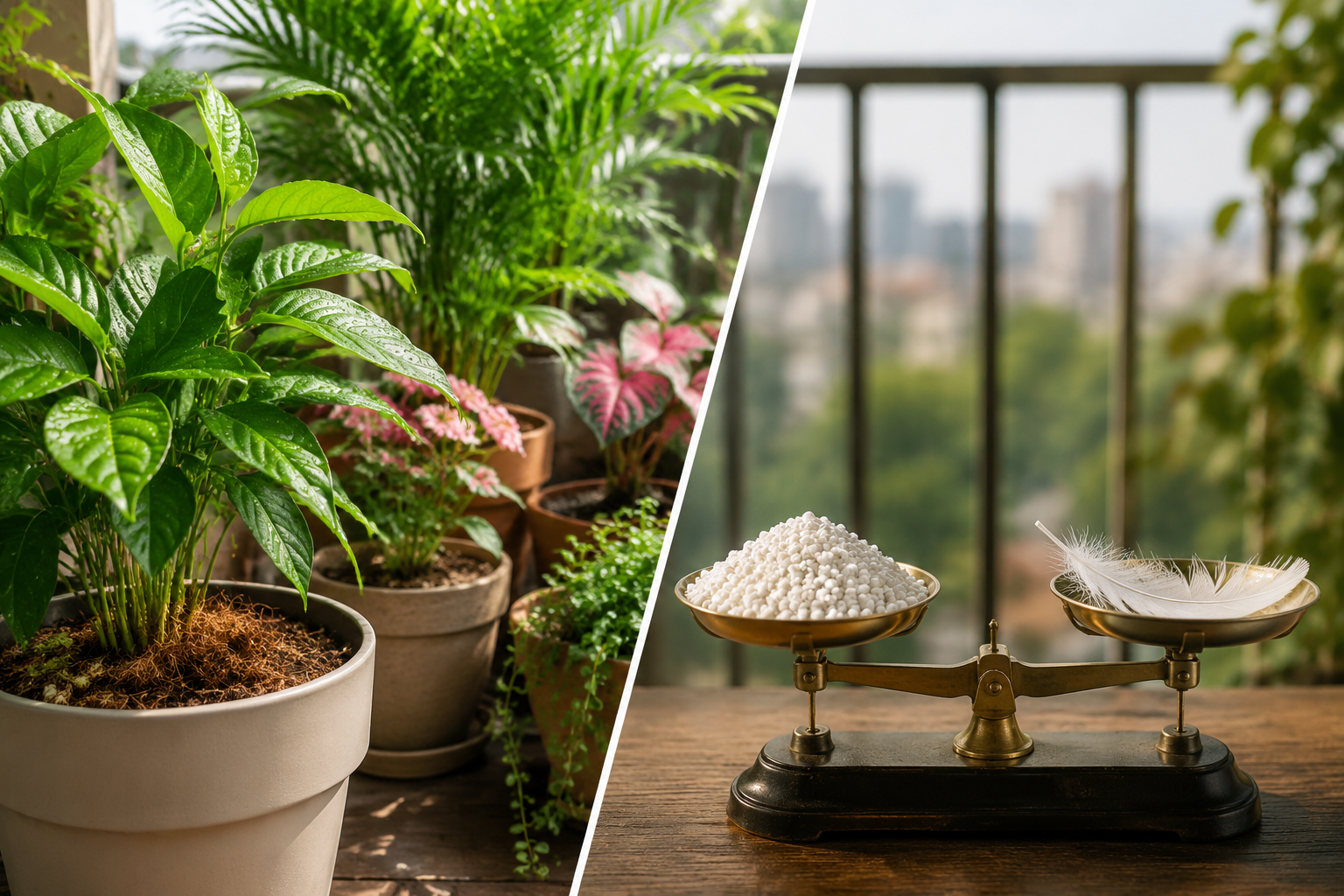
Perlite is the lightest of the three growing mediums, making it an excellent choice for hanging baskets, vertical gardens, or balcony planters where minimizing weight is a critical concern.
Its expanded, porous structure gives it very low density, significantly reducing the overall weight of a container when mixed into potting soil. This is particularly advantageous for apartment dwellers who need to adhere to weight limits for balconies or railings, or for anyone who needs to move planters frequently. While coco coir is also relatively light, especially when dry, perlite provides superior weight reduction per volume compared to both coco coir and vermiculite.

Do These Materials Help With Drainage or Water Retention?
Yes, all three materials — perlite, vermiculite, and coco coir — are specifically used in potting mixes to actively manage both drainage and water retention, though each excels in different aspects.
- Perlite primarily enhances drainage and aeration. Its porous, inert nature prevents compaction and allows excess water to quickly flow out, preventing root rot. It does not retain significant amounts of water or nutrients itself.
- Vermiculite primarily improves water retention. Its layered structure absorbs and holds a large volume of water and nutrients, releasing them slowly over time, making it excellent for plants that need consistent moisture. It also provides some aeration, but less than perlite.
- Coco Coir provides a balanced improvement in both drainage and water retention. Its fibrous structure holds moisture effectively while also ensuring sufficient air circulation, preventing both waterlogging and rapid drying out. This makes it a versatile choice for many container plants.
Conclusion
Choosing the right amendment for your apartment container mix in 2026—perlite, vermiculite, or coco coir—is a fundamental decision that profoundly impacts your plants’ health and your gardening success. Perlite is your go-to for superior drainage and aeration, ideal for succulents and plants prone to root rot. Vermiculite shines in water and nutrient retention, making it perfect for seedlings, cuttings, and moisture-loving plants. Coco coir offers a versatile balance of both, along with sustainability benefits, suited for a wide array of apartment plants.
For optimal results, consider combining these materials to craft a custom potting mix that precisely matches your plants’ specific needs and your watering habits. Don’t be afraid to experiment with ratios, starting with general guidelines and adjusting based on how your plants respond. By understanding the unique properties of each, you can ensure your apartment garden thrives, even in limited space.
Related Reading
- Start Container Gardening At Home (Easy Method) – 2026 Guide
- Best Planters For Small Apartments: Your Ultimate Buyer’s Guide
- What Is Container Gardening? A Beginner’s 2026 Guide
- Container Gardening For Beginners: Step-by-Step Guide 2026
- DIY Container Gardening Ideas For Small Spaces: 2026 Guide
Sources
- Cornell University Cooperative Extension. (n.d.). Growing Media for Container Production in a Greenhouse. Cornell University.
- University of Florida IFAS Extension. (2018). Growing Media for Container Production of Nursery Crops. UF/IFAS Extension.
- The National Gardening Association. (n.d.). What Is Coir?. National Gardening Association.