Self-Watering Containers: Effortless Gardening
Tired of daily watering chores or coming home to wilted plants? Self-watering containers might be the game-changer your garden needs, especially as summer approaches. These innovative planters simplify plant care by providing a consistent water supply, reducing the frequency of manual watering, and ensuring plants receive the moisture they need without the risk of over or under-watering. This “gardening without the guilt” approach, as noted by Tallahassee.com on June 5, 2026, makes them ideal for busy gardeners seeking lush, healthy plants with minimal effort.
Key Takeaways
- Consistent Moisture: Self-watering containers provide a steady water supply, preventing the dry-wet cycles that stress plants.
- Reduced Watering: Gardeners can significantly cut down on how often they need to water, sometimes from daily to weekly or even less.
- Nutrient Efficiency: The enclosed system helps prevent nutrient leaching, keeping essential fertilizers available to plants longer.
- Versatile Use: Suitable for a wide range of plants, including vegetables, herbs, and flowering plants, both indoors and outdoors.
- Beginner-Friendly: They remove much of the guesswork from watering, making gardening more accessible for new enthusiasts.
- Cost-Effective Long-Term: While initial investment can be higher, they save water and reduce plant loss, proving economical over time.
- DIY Options: It is possible to create effective self-watering systems using common household materials.
What Exactly Are Self-Watering Containers and How Do They Work?
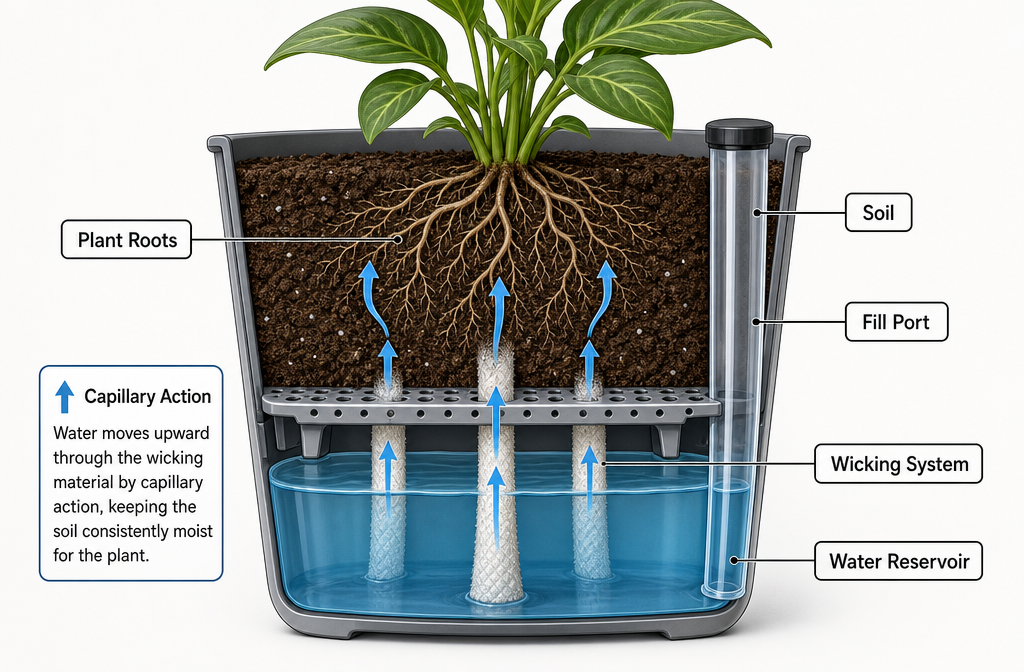
Self-watering containers are specialized planters designed to provide plants with a continuous and regulated water supply, typically for several days or even weeks. They function through capillary action, drawing water from a reservoir located beneath the plant’s soil up into the root zone as needed [4]. This system essentially automates a critical aspect of plant care.
These containers usually consist of two main compartments: a growing bed for the soil and plant, and a separate water reservoir below it [4]. A wicking system, often made of a perforated tray or wicking strips, connects the soil in the growing bed to the water in the reservoir [3, 4]. As the soil dries out, it draws moisture up from the reservoir through the wicking material. This ensures that roots have access to water whenever they need it, mimicking how plants access groundwater naturally. Many designs also include a fill tube or port to make refilling the reservoir easy, and an overflow hole to prevent overfilling and root rot. For instance, the Costa Farms Twist.Lift.Water.™ system, launched in March 2026, features a concealed reservoir and a Waterwick® for precise moisture delivery [1].
Are Self-Watering Planters Better Than Traditional Pots?
Yes, self-watering planters generally offer significant advantages over traditional pots, particularly in terms of consistency, water efficiency, and reduced maintenance. They ensure plants receive a steady supply of moisture, which is crucial for healthy growth and prevents the stress caused by fluctuating soil moisture levels [5].
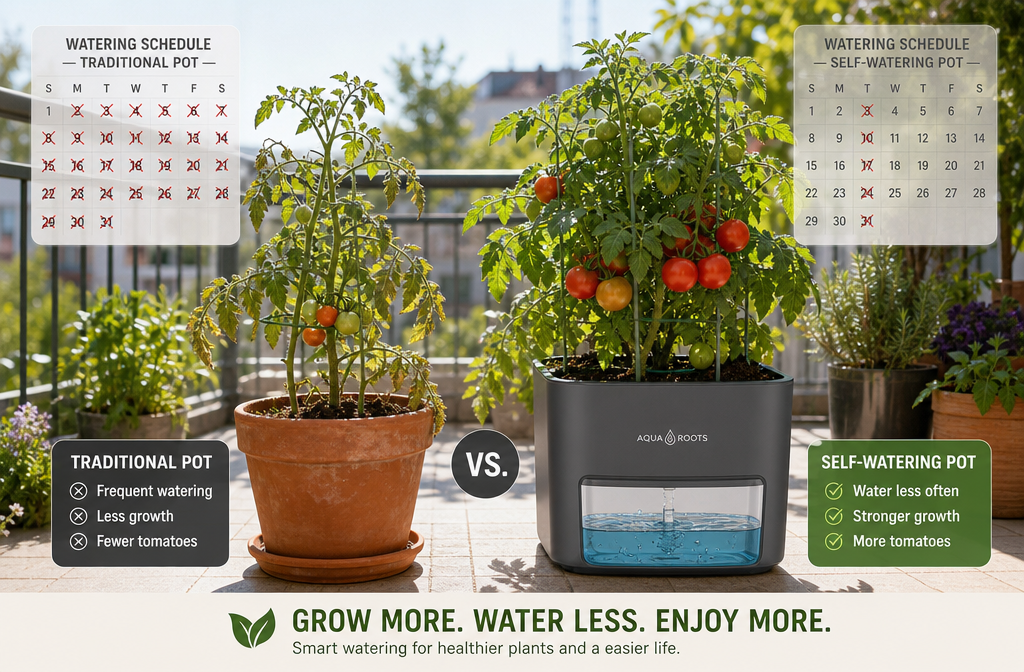
Traditional pots often require daily watering, especially during hot weather or for thirsty plants like vegetables [6]. This can lead to issues like under-watering, where plants wilt, or over-watering, which can cause root rot due to poor drainage and waterlogged soil. Self-watering systems mitigate these problems by delivering water from the bottom up, encouraging deeper root growth and reducing water loss through evaporation [4]. An April 2026 article from Mini Space Garden highlighted their effectiveness in small garden spaces, providing consistent moisture and reducing watering frequency, which is especially beneficial for those with limited time or space [5]. However, the initial cost might be higher for self-watering pots, and they require a specific soil mix (not too dense) to function optimally.
How Much Do Good Self-Watering Containers Cost?
The cost of self-watering containers varies widely depending on size, material, brand, and design, typically ranging from $10 for small, basic plastic models to over $100 for large, decorative, or high-tech systems. For instance, Bob Vila’s May 2026 review noted the Gardenix Decor Self-Watering Pots as a top overall choice, while the Bloem Ariana Self-Watering Planter offered good value, suggesting a range of options [2].
You can find small, entry-level plastic self-watering pots for around $10-$20. Mid-range options, often made from more durable plastic or with improved aesthetics, usually fall into the $30-$60 bracket. Larger, premium, or aesthetically designed containers, such as the Lechuza Balconera Self-Watering Garden Planter (noted as the best window box option [2]), can cost upwards of $70-$150, especially if they are made from materials like ceramic or include advanced features. DIY options, as discussed by Garden Organic in June 2025, can significantly reduce costs by repurposing materials like plastic crates and old pots [3]. When considering the investment, factor in the long-term benefits of water savings, reduced plant loss, and convenience. For insights into starting container gardening affordably, explore “Start Container Gardening At Home (Easy Method) – 2026 Guide” [https://minispacegarden.com/start-container-gardening-at-home/].
Why Are My Plants Dying Even With a Self-Watering System?
Plants in self-watering systems can still die due to several common issues, primarily incorrect soil mix, improper setup, lack of drainage, or nutrient imbalances. While these systems simplify watering, they do not eliminate other essential plant care requirements.
The most frequent culprit is using the wrong type of soil. Heavy potting mixes can become waterlogged in self-watering containers, suffocating roots and leading to root rot, even with a reservoir [4]. Instead, use a light, airy, well-draining potting mix. Another issue can be an insufficient wicking system, preventing water from reaching the soil effectively. Ensure the wicking material makes good contact with both the water and the soil. Over-fertilization can also cause problems, as the consistent moisture in self-watering pots can lead to nutrient accumulation if not managed. Lastly, while the system manages water, plants still need adequate light, proper temperature, and protection from pests and diseases. If you’re encountering issues, consider checking the plant’s light exposure and inspecting for pests. Learn more about optimal soil mixes in our “Best Soil Mix For Container Gardening (Complete Guide)” [https://minispacegarden.com/best-soil-mix-for-container-gardening/].
What Kind of Plants Grow Best in Self-Watering Containers?
Self-watering containers are ideal for plants that prefer consistently moist soil and have moderate to high water needs, making them excellent for many vegetables, herbs, and certain flowering plants. They are particularly beneficial for thirsty plants that wilt quickly in traditional pots.
Best Plants for Self-Watering Containers:
- Vegetables: Tomatoes, peppers, eggplants, cucumbers, zucchini, lettuce, spinach, and other leafy greens thrive due to consistent moisture.
- Herbs: Basil, mint, parsley, cilantro, and chives benefit from steady hydration.
- Flowers: Impatiens, petunias, fuchsias, begonias, and other annuals that require frequent watering will flourish.
- Fruiting Plants: Strawberries and blueberries (in appropriate acidic soil) can also do well.
Plants that prefer drier conditions, such as succulents, cacti, or lavender, are generally not suited for self-watering containers as they can suffer from root rot due to constant moisture. For small space gardening, check out “Small Balcony Vegetable Gardening: Your 2026 Urban Guide” [https://minispacegarden.com/small-balcony-vegetable-gardening/] for plant suggestions.
Do Self-Watering Containers Work for Beginners or Just Experienced Gardeners?
Self-watering containers are an excellent choice for beginner gardeners because they significantly reduce the most common cause of plant failure: improper watering. They eliminate much of the guesswork associated with watering schedules and quantities, making gardening more approachable and less intimidating.
By providing a consistent moisture supply, these systems allow beginners to focus on other aspects of plant care, such as light requirements, soil health, and pest management, without constantly worrying about their plants drying out. This “set it and forget it” aspect, at least for watering, builds confidence and encourages continued gardening efforts. While experienced gardeners also benefit from the convenience, self-watering pots lower the barrier to entry for newcomers. It’s important for beginners to still choose the right plants and a proper potting mix for self-watering systems to ensure success.
Common Mistakes People Make with Self-Watering Containers
Even with their simplicity, several common mistakes can hinder the effectiveness of self-watering containers, often leading to plant health issues. These include using inappropriate soil, overfilling the reservoir, neglecting regular flushing, and misjudging plant water needs.
Here are key mistakes and how to avoid them:
- Using Heavy Potting Mix: Avoid dense garden soil or heavy potting mixes. These can compact, preventing proper wicking and leading to waterlogged roots. Always use a light, airy, peat-based or coco coir-based potting mix [4].
- Overfilling the Reservoir (Without an Overflow): While most commercial self-watering pots have an overflow hole, if yours doesn’t, ensure you don’t overfill, as it can still lead to waterlogging at the bottom of the soil.
- Not Flushing the Soil: Over time, salts from fertilizers can build up in the soil. Periodically (e.g., once a month), top-water the plant until water drains from the overflow hole, effectively flushing out excess salts.
- Placing in Direct Rain: For outdoor containers, prolonged heavy rain can over-saturate the soil, especially if the overflow is blocked or inadequate. Consider moving plants or checking drainage after heavy rainfall.
- Assuming No Maintenance: While watering frequency decreases, these systems still require refills, occasional flushing, and monitoring for pests or nutrient deficiencies.
- Choosing the Wrong Plants: As mentioned, plants that prefer dry conditions will suffer in a constantly moist environment.
Can I Make My Own DIY Self-Watering Container at Home?
Yes, you can easily make your own DIY self-watering container at home using readily available materials, offering a cost-effective and customizable solution for effortless gardening. This approach is particularly popular for those looking to repurpose items and engage in sustainable practices.
A common DIY method involves using two plastic containers, one slightly smaller than the other, or a single container with a separate water reservoir section [3].
Steps for a Basic DIY Self-Watering Container:
- Gather Materials: You’ll need two plastic containers (e.g., buckets, storage bins) where one fits inside the other, a drill, wicking material (e.g., felt, old t-shirt strips, or a small plastic pot), and gravel or small stones.
- Prepare the Inner Container: Drill several drainage holes in the bottom of the smaller container (this will hold the soil). If using wicking strips, thread them through holes in the bottom. Alternatively, for a wicking pot, drill holes in the sides of a small pot, fill it with soil, and place it inverted in the larger container to create a wicking tower.
- Create the Reservoir: Place a layer of gravel or small stones at the bottom of the larger container to create a false bottom for the water reservoir. Alternatively, if using the “pot-in-pot” method, the larger container serves as the reservoir, and the smaller, inner pot sits above the water.
- Add a Fill Tube: Cut a PVC pipe or plastic bottle top to extend from the reservoir up to the soil surface. This allows for easy refilling of the water reservoir without disturbing the plant.
- Assemble and Plant: Place the prepared inner container with your potting mix and plant into the larger reservoir container. Fill the reservoir with water via the fill tube.
For detailed instructions, Garden Organic provided a step-by-step guide in June 2025 [3]. These DIY methods are great for “DIY Container Gardening Ideas For Small Spaces: 2026 Guide” [https://minispacegarden.com/diy-container-gardening-ideas/].
Are Self-Watering Containers Good for Indoor or Outdoor Plants?
Self-watering containers are highly effective and beneficial for both indoor and outdoor plants, providing consistent moisture that adapts to varying environmental conditions. Their ability to regulate water supply makes them versatile for different gardening settings.
For Outdoor Plants:
- They are excellent for patios, balconies, and small garden spaces where plants are exposed to sun, wind, and heat, which can quickly dry out traditional pots [5].
- They reduce the need for frequent watering, making vacation care easier.
- Window box versions, like the Lechuza Balconera [2], are perfect for maintaining lush displays without constant attention.
- During hot summer months, outdoor plants in self-watering containers often show less stress and more vigorous growth.
For Indoor Plants:
- They prevent the common indoor gardening mistake of inconsistent watering, which can lead to wilting or root rot.
- They are great for plants that thrive on consistent moisture, such as many houseplants.
- They can reduce the humidity fluctuations around plants, which is beneficial in dry indoor environments.
- The concealed reservoir designs, such as the Costa Farms Twist.Lift.Water.™ system [1], offer a cleaner aesthetic and prevent water spills indoors.
Whether you’re growing a robust balcony vegetable garden or maintaining a thriving collection of indoor houseplants, self-watering containers offer a practical solution. See “Balcony Gardening For Renters: 2026 Ultimate Guide” [https://minispacegarden.com/balcony-gardening-for-renters/] for more outdoor ideas.
What Materials Are Best for Self-Watering Containers?
The best materials for self-watering containers generally prioritize durability, water retention, and aesthetic appeal, with plastic being the most common and practical choice, followed by ceramic, terracotta, or even recycled materials for DIY projects. Each material has its own advantages.
Common Materials and Their Qualities:
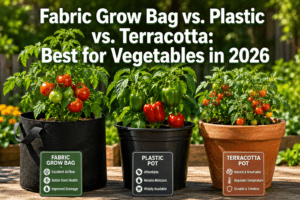
- Plastic: Highly popular due to its affordability, lightweight nature, and excellent water retention. Plastic prevents water evaporation from the sides, ensuring the reservoir’s supply lasts longer. Many commercially available self-watering pots, like those reviewed by Bob Vila [2], are made from durable, UV-resistant plastics.
- Ceramic/Glazed Terracotta: Offers a more decorative and heavier option, which can be beneficial for stability in windy outdoor conditions. The glazed interior still helps with water retention, while the exterior provides an attractive finish. Unglazed terracotta can be used as a slow-release watering method (olla pots) by burying them in the soil to slowly seep water [7].
- Recycled Materials: For DIY enthusiasts, items like food-grade plastic buckets, storage bins, or even soda bottles can be repurposed. This is an eco-friendly and cost-effective approach [3].
When selecting, consider the container’s placement (indoors or outdoors), the plant’s size, and your aesthetic preferences.
How Often Do I Need to Refill a Self-Watering Container?

The refill frequency for a self-watering container largely depends on the container’s size, the plant’s water needs, the climate, and the amount of water the reservoir holds. Generally, most self-watering containers require refilling once every 1-3 weeks.
- Small Containers: Smaller containers (under 1 gallon) with thirsty plants in hot, sunny conditions might need refilling every few days to a week.
- Medium to Large Containers: Larger containers (2-5 gallons and up) can often go 1-2 weeks, or even longer for plants with moderate water needs in temperate climates.
- Climate: Hot, dry, and windy conditions increase evaporation and plant transpiration, necessitating more frequent refills.
- Plant Type: Fast-growing vegetables like tomatoes or plants with large leaf surfaces will deplete the reservoir faster than smaller, less thirsty plants.
Always check the reservoir’s water level regularly, especially when first using a new setup or during periods of extreme weather, until you establish a reliable refill schedule.
Which Brands Make the Most Reliable Self-Watering Systems?
Several reputable brands are known for producing reliable self-watering systems, offering a range of designs and features to suit different gardening needs. These brands often prioritize durability, efficient wicking, and user-friendly designs.
Top Brands Highlighted in 2026 Reviews:
- Gardenix Decor: Their self-watering pots were recognized by Bob Vila in May 2026 as the “best overall” choice for their efficiency and design [2].
- Bloem: The Bloem Ariana Self-Watering Planter received praise for its excellent value, offering a cost-effective yet reliable option [2].
- Lechuza: Known for premium, stylish self-watering planters, particularly their Balconera model which was rated the “best window box” option [2]. Lechuza systems are often favored for their robust build and aesthetic appeal.
- Costa Farms: Introduced their new Twist.Lift.Water.™ system in March 2026, featuring a patent-pending design with a concealed reservoir and built-in Waterwick® for precise moisture delivery, aiming to eliminate watering guesswork for houseplants [1].
- EarthBox: A well-known brand, particularly for larger vegetable gardening systems, offering robust, self-contained growing environments.
When choosing a brand, consider the specific features, material quality, size, and reviews to find the best fit for your gardening goals.
Are Self-Watering Containers Worth the Extra Money?
Yes, self-watering containers are generally worth the extra money for most gardeners, especially when considering the long-term benefits of convenience, plant health, and water conservation. While the initial investment might be higher than traditional pots, the advantages often outweigh the cost.
Benefits that Justify the Cost:
- Time Savings: Significantly reduces the frequency of watering, freeing up time for other gardening tasks or personal activities.
- Reduced Plant Loss: Prevents both under-watering and over-watering, which are common causes of plant death, saving money on replacement plants.
- Water Efficiency: The enclosed reservoir system minimizes water loss due to evaporation and runoff, leading to more efficient water use.
- Consistent Growth: Plants thrive with a steady moisture supply, often resulting in healthier, more vigorous growth and better yields, especially for edibles.
- Flexibility: Allows gardeners to go away for extended periods without worrying about their plants drying out.
- Nutrient Retention: Less frequent top-watering means fewer nutrients are leached from the soil, potentially reducing fertilizer use.
For container gardening enthusiasts, busy individuals, or those in hot climates, the value proposition of “gardening without the guilt” is substantial.
FAQ
Q: Can I use regular garden soil in a self-watering container? A: No, regular garden soil is typically too heavy and dense for self-watering containers, leading to poor drainage and potential root rot. Always use a lightweight, well-draining potting mix.
Q: How do I know when to refill the water reservoir? A: Many self-watering containers have a water level indicator. If not, you can check by lifting the pot (if small enough) or by looking into the fill tube. Refill when the reservoir is low or empty.
Q: Do self-watering containers need drainage holes? A: Yes, self-watering containers should have an overflow hole in the reservoir to prevent overwatering and root rot, especially during heavy rains outdoors.
Q: Can I put fertilizer in the water reservoir? A: Yes, liquid fertilizers can be added to the reservoir, providing a slow and steady supply of nutrients directly to the roots. Always follow fertilizer dilution instructions.
Q: Are self-watering containers good for growing vegetables? A: Absolutely, they are excellent for growing many vegetables like tomatoes, peppers, and leafy greens, as these plants generally thrive with consistent moisture.
Q: Will self-watering containers attract mosquitoes? A: If the reservoir is exposed, it could potentially attract mosquitoes. Choose containers with enclosed reservoirs or add mosquito dunks designed for standing water if outdoor exposure is a concern.
Q: Can self-watering pots be used for seedlings? A: While possible, it’s generally better to wait until seedlings are established before moving them to a self-watering system, as young seedlings can be sensitive to consistent moisture levels.
Conclusion
Self-watering containers offer a transformative approach to gardening, delivering consistent moisture and significantly reducing the time and effort required for plant care. For June 2026 and beyond, they are a practical solution for busy individuals, apartment dwellers, and anyone seeking to cultivate thriving plants without the stress of daily watering. By understanding their mechanics, choosing the right plants and soil, and avoiding common mistakes, gardeners of all experience levels can embrace “gardening without the guilt” and enjoy lush, healthy greenery.
To get started, assess your gardening needs and budget, then select a suitable self-watering container or consider a DIY project. Fill it with a high-quality, well-draining potting mix, plant your chosen vegetation, and enjoy the benefits of a system that takes care of the watering for you. Regularly monitor the water reservoir, especially during initial setup and extreme weather, and remember to periodically flush the soil to prevent salt buildup. With these simple steps, self-watering containers can be a cornerstone of your effortless gardening success.
References
[1] Costa Farms Debuts Twist Lift Water System For Easy Houseplant Care – https://www.greenhousegrower.com/production/costa-farms-debuts-twist-lift-water-system-for-easy-houseplant-care/?utm_source=openai [2] Best Self Watering Planter – https://www.bobvila.com/articles/best-self-watering-planter/?utm_source=openai [3] Make A Self Watering Container – https://www.gardenorganic.org.uk/news/make-a-self-watering-container?utm_source=openai [4] Self Watering Containers – https://extension.umd.edu/resource/self-watering-containers/?utm_source=openai [5] Self Watering Pots Do They Actually Work For Small Gardens – https://minispacegarden.com/self-watering-pots-do-they-actually-work-for-small-gardens/?utm_source=openai [6] Best Time To Water Your Container Garden – https://www.gardeningknowhow.com/edible/vegetables/best-time-to-water-your-container-garden?utm_source=openai [7] Slow Watering Hacks – https://www.gardeningknowhow.com/garden-how-to/watering/slow-watering-hacks?utm_source=openai