What’s the best fertilizer schedule for small space vegetables in containers?
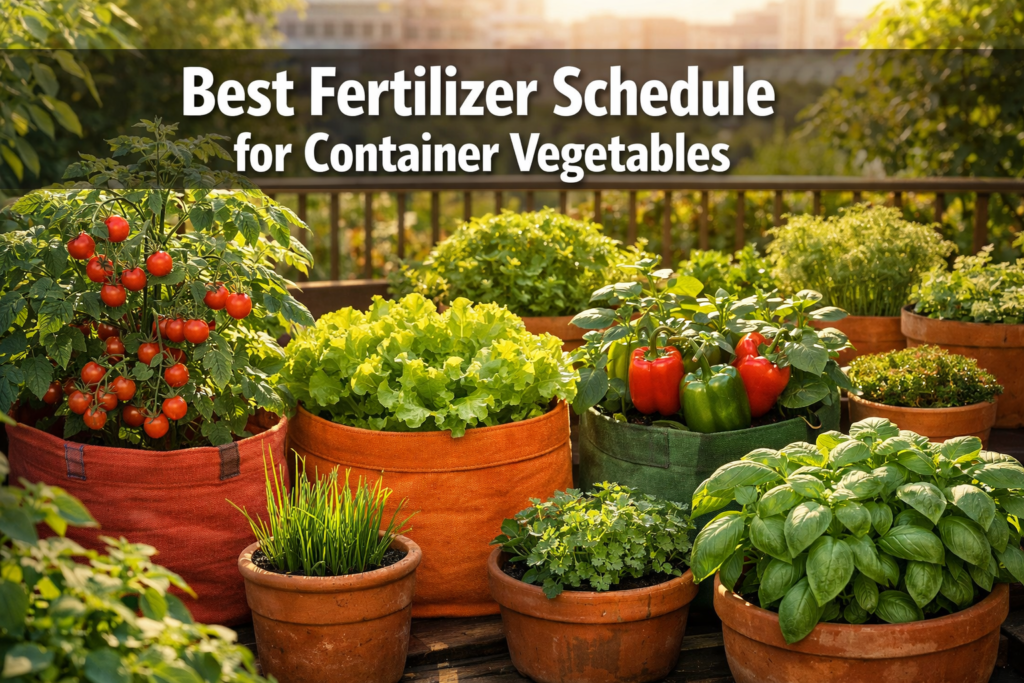
Quick Answer: Container vegetables need feeding every 1–2 weeks with a balanced liquid fertilizer once they’re established (about 2 weeks after transplanting), plus a slow-release granular fertilizer worked into the potting mix at planting. Because containers drain nutrients with every watering, a consistent schedule matters far more than it does in ground beds.
Key Takeaways
- 🌱 Start with a slow-release granular fertilizer (10-10-10 or similar) mixed into your potting soil at planting time.
- 💧 Begin liquid feeding 2 weeks after transplanting, then feed every 7–14 days through the growing season.
- 🍅 Fruiting vegetables (tomatoes, peppers, squash) need more phosphorus and potassium during flowering and fruiting; switch to a low-nitrogen formula at that stage.
- 🥬 Leafy greens benefit from higher nitrogen throughout their short growing cycle.
- ⚠️ Overfeeding is a real risk in small containers — yellowing leaf tips and crusty white deposits on pots are early warning signs.
- 🌿 Herbs are light feeders; feed them at half the recommended dose, once every 3–4 weeks.
- 🪴 Flush containers with plain water every 4–6 weeks to prevent salt buildup from fertilizer residue.
- 📅 Stop feeding 2 weeks before your expected final harvest to avoid excess nitrogen in edible parts.
- ☀️ Hot weather increases watering frequency, which leaches nutrients faster — feed more often in summer heat.
Why Container Vegetables Need a Different Feeding Strategy Than Ground Gardens
Container vegetables run out of nutrients much faster than in-ground plants. Every time you water, soluble nutrients drain out through the bottom of the pot. A standard potting mix typically exhausts its built-in nutrients within 4–6 weeks (based on estimates from university extension programs, including Penn State Extension’s container gardening guidelines).
In a small space, this problem compounds quickly. You’re often growing high-yield crops like tomatoes or peppers in relatively small volumes of soil, so the nutrient-to-plant ratio is already tight. A consistent fertilizer schedule for small space vegetables in containers isn’t optional — it’s the difference between a productive harvest and a struggling plant.
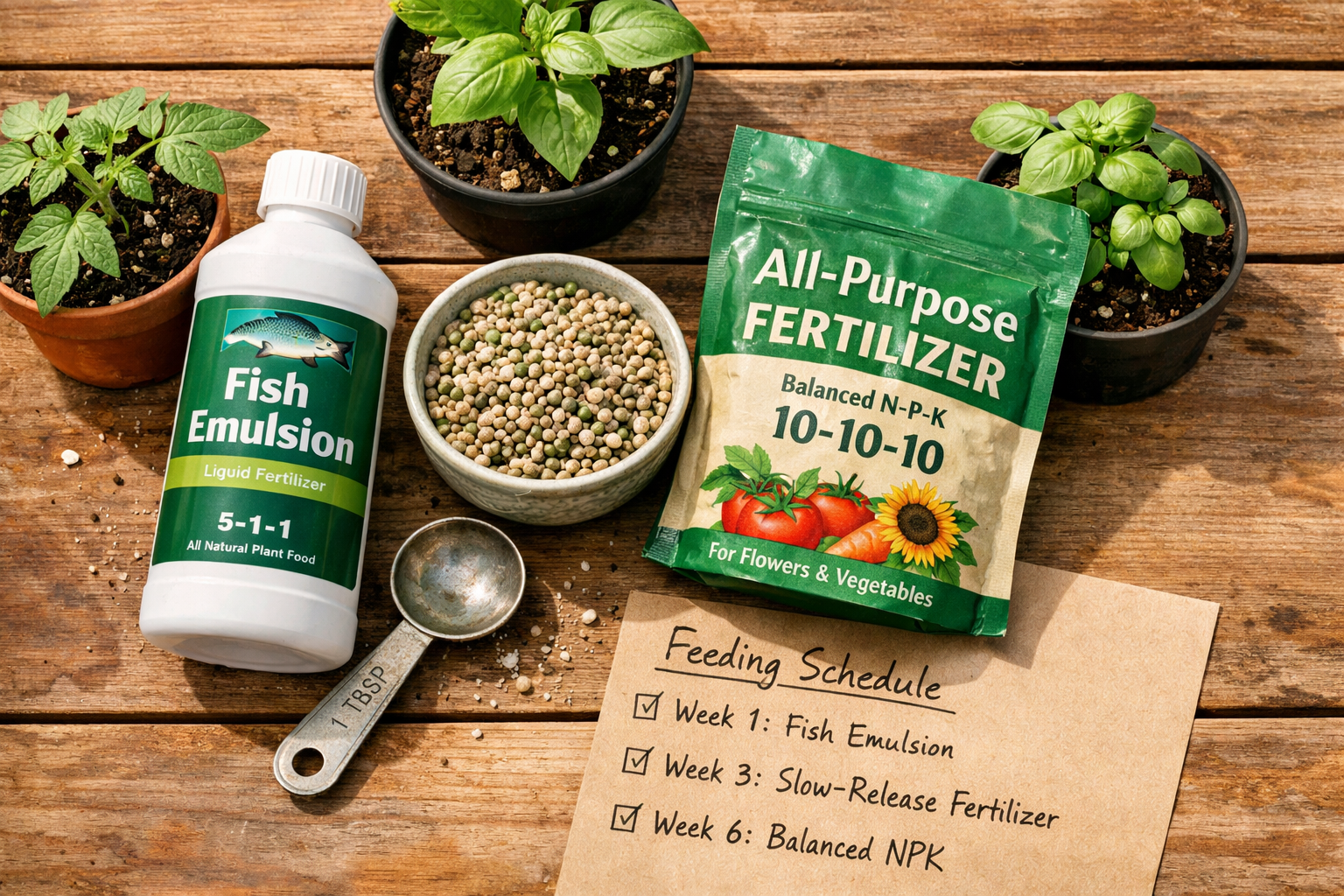
Choose your base approach:
- Slow-release granules at planting — convenient, feeds for 3–6 months, but you can’t adjust the rate mid-season.
- Liquid fertilizer on a schedule — flexible, fast-acting, lets you shift the nutrient ratio as the plant’s needs change.
- Combined approach — granules at planting plus liquid top-ups every 1–2 weeks. This is what I recommend for most container vegetable growers.
For a deeper look at which containers work best for this kind of intensive growing, see our guide to best containers for growing vegetables.
What’s the Best Fertilizer Schedule for Small Space Vegetables in Containers, by Crop Type?
The answer depends on what you’re growing. Different vegetables have different nutrient priorities at different life stages.
🍅 Fruiting Vegetables (Tomatoes, Peppers, Eggplant, Squash)
| Growth Stage | Fertilizer Type | Frequency |
|---|---|---|
| At planting | Slow-release 10-10-10 | Once |
| Weeks 1–2 | None (let roots establish) | — |
| Weeks 3 to first flower | Balanced liquid (e.g., 5-5-5) | Every 7–10 days |
| Flowering and fruiting | Low-N, high-P/K (e.g., 5-10-10) | Every 7–10 days |
| 2 weeks before harvest | Plain water only | — |
Why the switch matters: High nitrogen during fruiting pushes leafy growth at the expense of fruit development. Shifting to a phosphorus- and potassium-heavy formula at flowering supports fruit set and flavor.
🥬 Leafy Greens (Lettuce, Spinach, Kale, Chard)
Leafy greens are nitrogen lovers. They have a short growing cycle (most are ready in 30–60 days), so a high-nitrogen liquid fertilizer every 10–14 days from week 2 onward is sufficient. You don’t need to switch formulas because you’re harvesting leaves, not fruit.
Common mistake: Feeding leafy greens too heavily with a high-nitrogen fertilizer in hot weather can cause bolting. Ease off slightly when temperatures climb above 85°F (29°C).
🌿 Herbs (Basil, Parsley, Cilantro, Mint)
Herbs are light feeders. Over-fertilizing herbs, especially with nitrogen, dilutes their essential oils and reduces flavor intensity. Feed at half the recommended dose, once every 3–4 weeks. For woody herbs like rosemary and thyme, once a month is plenty.
For more on growing herbs in tight spaces, see best herbs for small gardens.
When Should You Start Fertilizing Container Vegetables?
Start liquid feeding about 2 weeks after transplanting seedlings into their final containers. Before that, the plant is focused on root establishment, and feeding too early can burn young roots or push weak, leggy growth.
If you’re starting from seed directly in the container, wait until the seedling has its second set of true leaves before beginning a diluted feeding schedule. Our guide on when to fertilize vegetable seedlings covers this transition in detail.
If you used a potting mix with fertilizer already included (many commercial mixes do), wait 4–6 weeks before adding any additional fertilizer. Check the bag label for the nutrient charge duration.
What’s the Best Fertilizer Schedule for Small Space Vegetables in Containers During Summer Heat?
In summer, container vegetables need feeding more frequently because heat accelerates both plant growth and nutrient leaching. A good rule: if you’re watering daily or more, feed every 7 days instead of every 14.
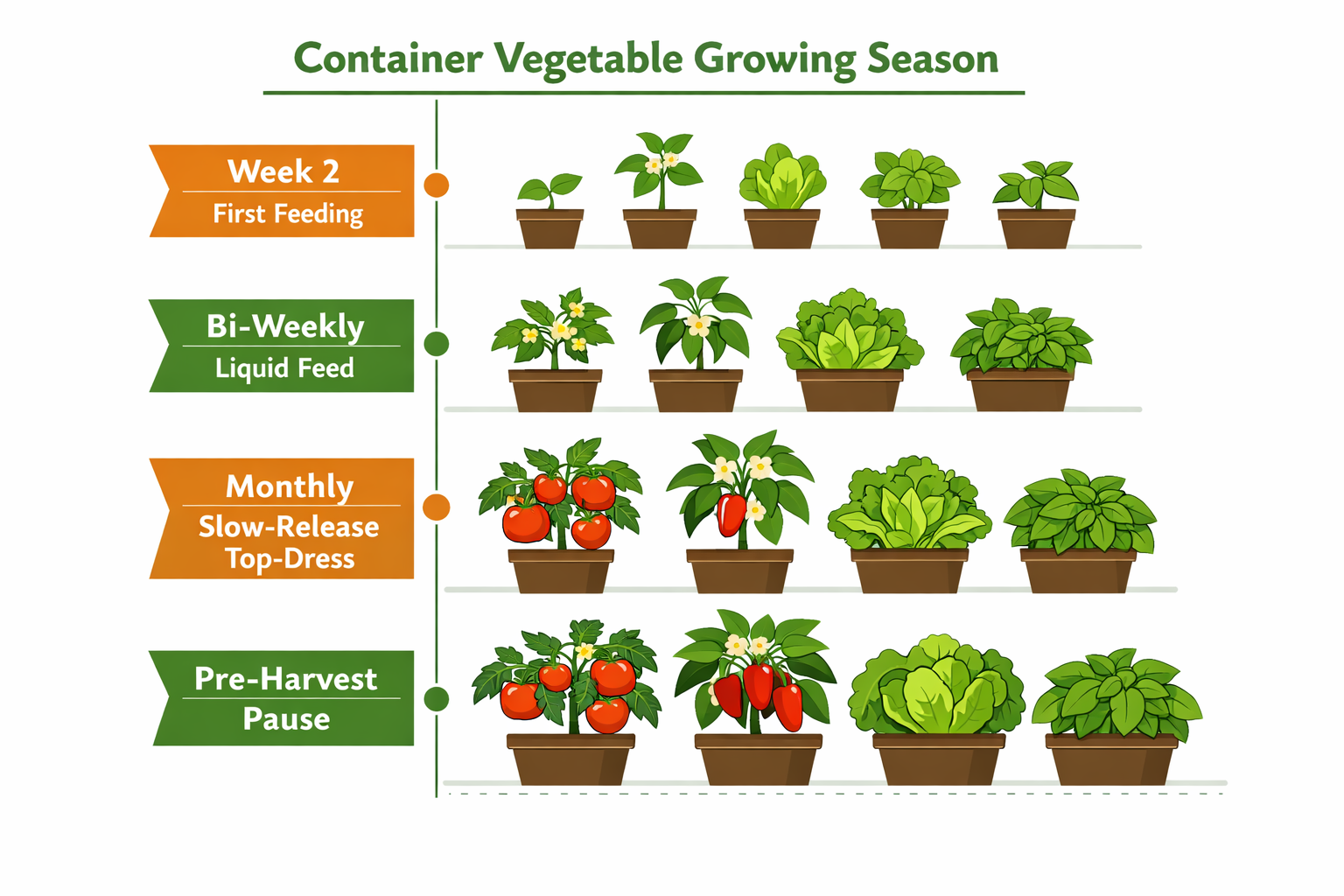
Practical adjustments for hot weather:
- Use a half-strength liquid fertilizer at double the frequency rather than full-strength less often. This reduces the risk of root burn while maintaining steady nutrient availability.
- Water thoroughly before feeding — never fertilize dry soil, as concentrated nutrients can damage roots.
- Flush containers with plain water every 4–6 weeks to clear salt buildup, which shows up as white crusty deposits on the outside of terracotta pots.
For related guidance on keeping container plants hydrated in heat, see how often to water container vegetables in summer.
Organic vs. Synthetic Fertilizers: Which Works Better in Containers?
Both work, but they behave differently in the confined environment of a container.
Synthetic fertilizers are immediately available to plants, predictable, and easy to dose precisely. They’re a good choice if you want fast results or are correcting a deficiency mid-season.
Organic fertilizers (fish emulsion, worm castings, compost tea) feed more slowly and improve soil biology over time. In containers, this matters less than in ground beds because you’re refreshing the potting mix each season anyway. That said, organic options are gentler and harder to over-apply.
My recommendation: Use a slow-release organic granule at planting, then supplement with a balanced liquid synthetic fertilizer (like a 5-5-5 or 10-10-10 formula) during the growing season. This gives you the best of both approaches without overcomplicating the process.
For more on fertilizer options specifically for small gardens, see best fertilizers for small gardens.
How Do You Know If You’re Fertilizing Too Much or Too Little?
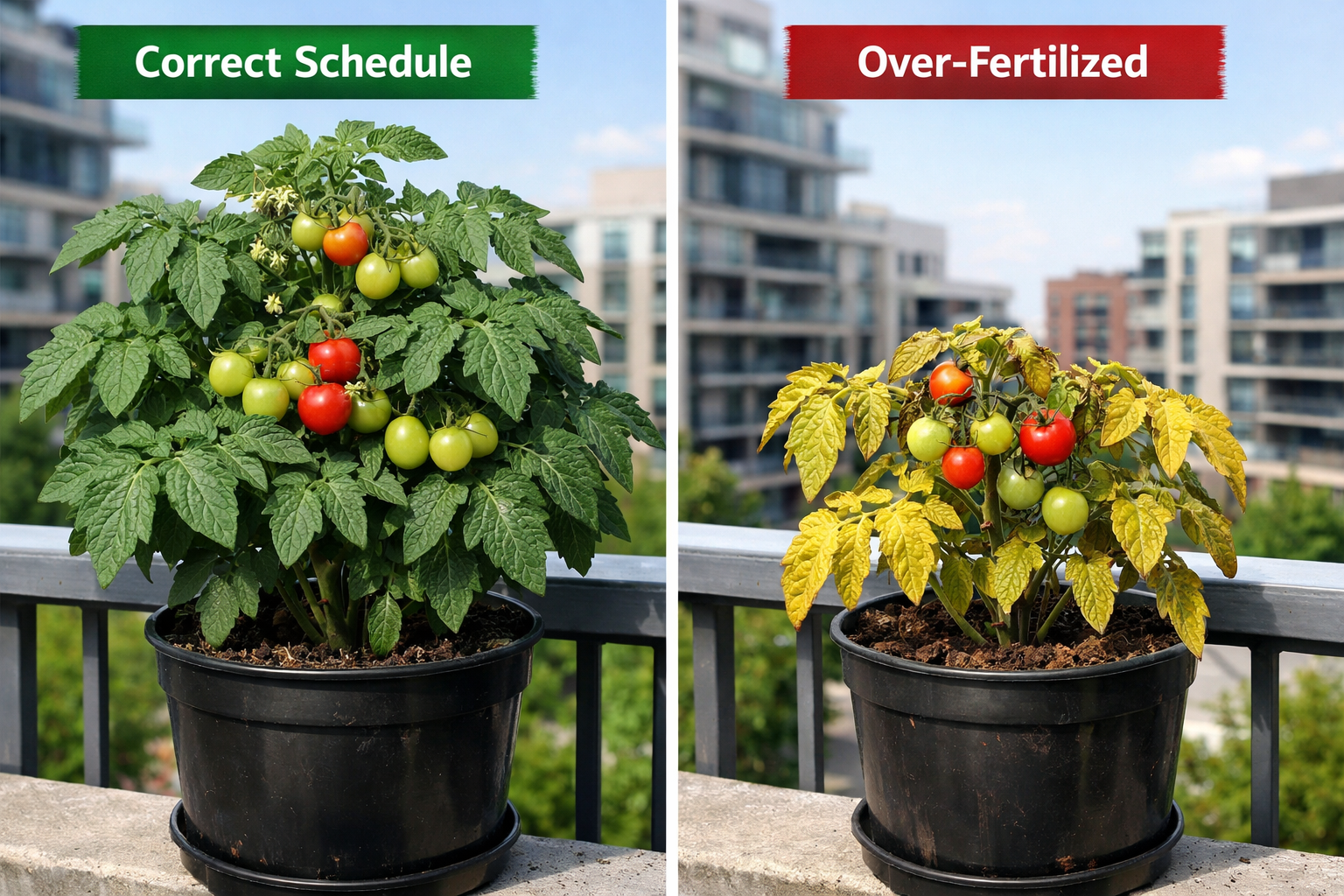
Signs of over-fertilization in containers:
- Leaf tips turning brown or yellow (fertilizer burn)
- White crusty deposits on the soil surface or pot exterior
- Rapid, weak, leggy growth
- Wilting despite adequate water (root damage from salt buildup)
Signs of under-fertilization:
- Pale yellow-green leaves, especially older lower leaves
- Slow or stunted growth with no obvious pest or disease cause
- Poor fruit set or very small yields
- Leaves dropping prematurely
If you suspect slow growth but the plant isn’t dying, the cause might not be fertilizer alone. See why are my vegetables growing slowly but not dying for a broader diagnostic checklist.
What Potting Mix Should You Use to Support Your Fertilizer Schedule?
Your fertilizer schedule is only as effective as the growing medium underneath it. A dense, compacted mix won’t distribute nutrients evenly, and a nutrient-poor mix will exhaust faster than expected.
Use a high-quality potting mix (not garden soil) with good drainage. Look for mixes that include perlite or vermiculite for aeration. Avoid mixes marketed as “garden soil” or “topsoil” — these compact in containers and restrict root growth.
For detailed guidance, see best soil mix for container gardening and best potting soil for container gardening USA.
Conclusion: Build a Simple, Consistent Feeding Routine
The best fertilizer schedule for small space vegetables in containers comes down to three principles: start with a nutrient-rich base, feed consistently with liquid fertilizer throughout the season, and adjust the formula to match what your plants are doing (growing leaves vs. setting fruit).
Your actionable starting point for 2026:
- Mix slow-release granular fertilizer into your potting mix at planting.
- Begin liquid feeding 2 weeks after transplanting.
- Feed fruiting crops every 7–10 days; leafy greens every 10–14 days; herbs every 3–4 weeks.
- Switch to a low-nitrogen, high-P/K formula when fruiting crops begin to flower.
- Flush containers with plain water every 4–6 weeks.
- Stop feeding 2 weeks before final harvest.
Keep a simple log — even a note on your phone — of when you fed and what you used. You’ll quickly develop a rhythm that fits your specific crops, container sizes, and local climate.
Frequently Asked Questions
Q: Can I use the same fertilizer for all my container vegetables?
A: A balanced formula (10-10-10 or 5-5-5) works for most vegetables during early growth, but fruiting crops need a lower-nitrogen formula once they begin flowering. One fertilizer for everything is fine as a starting point, but adjusting for crop type improves yields.
Q: How often should I fertilize container tomatoes specifically?
A: Every 7–10 days with a liquid fertilizer. Use a balanced formula until first flowers appear, then switch to a high-phosphorus, high-potassium formula (such as 5-10-10) through fruiting.
Q: Is it okay to fertilize right after transplanting?
A: No. Wait at least 2 weeks after transplanting to allow roots to establish. Feeding too early can stress or burn young roots.
Q: What’s the easiest fertilizer routine for a beginner?
A: Mix a slow-release granular fertilizer into your potting mix at planting, then add a diluted liquid fertilizer (half the label dose) every 2 weeks. This two-step approach is forgiving and effective.
Q: Do container plants need fertilizer in winter?
A: Most vegetable crops don’t grow actively in winter, so feeding is unnecessary unless you’re growing under grow lights indoors with active growth. Reduce or stop feeding when growth slows.
Q: Can I use coffee grounds as fertilizer in containers?
A: Coffee grounds add some nitrogen and can improve soil texture, but they’re not a reliable standalone fertilizer. Use them as a minor supplement, not a replacement for a proper feeding schedule.
Q: Why are the leaves on my container vegetables turning yellow even though I’m fertilizing?
A: Yellow leaves can indicate nitrogen deficiency, but they can also result from overwatering, root rot, or salt buildup from over-fertilization. Check drainage first, then assess your feeding frequency.
Q: How do I fertilize vegetables in very small containers (under 5 gallons)?
A: Use half the recommended dose at double the frequency. Small containers have less buffer against nutrient concentration, so lighter, more frequent feeding reduces the risk of root burn.
Q: Should I fertilize container vegetables during a heat wave?
A: Reduce feeding during extreme heat (above 95°F/35°C) because plants are stressed and can’t absorb nutrients efficiently. Resume your normal schedule when temperatures drop.
Q: Is liquid or granular fertilizer better for containers?
A: Liquid fertilizer is more flexible and faster-acting, making it the better choice for in-season feeding. Granular slow-release fertilizer works best as a base amendment at planting time.
References
- Penn State Extension. (2021). Container Vegetable Gardening. https://extension.psu.edu
- University of Minnesota Extension. (2022). Fertilizing vegetables in containers. https://extension.umn.edu
- Cooperative Extension System. (2020). Nutrient management for container-grown crops. https://www.extension.org