
Pet AND Kid-Safe Indoor Plants

Quick Answer: Creating a lush indoor environment doesn’t require sacrificing the safety of your children or pets; a diverse range of houseplants is naturally non-toxic and suitable for homes with curious inhabitants. These plants not only enhance indoor aesthetics but can also improve air quality without posing a risk if ingested or handled.
Key Takeaways:
- Many common houseplants are toxic; always verify a plant’s safety before bringing it into a home with kids or pets.
- Prioritizing non-toxic plants prevents accidental ingestions which can lead to mild to severe health issues.
- The ASPCA and Poison Control are excellent resources for checking plant toxicity.
- Specific categories like ferns, palms, and certain flowering plants offer safe and beautiful options.
- Even non-toxic plants can cause mild stomach upset if consumed in large quantities; monitoring is still advised.
- Proper plant placement and teaching boundaries to children and pets further enhance safety.
- Consider plants that are also low-maintenance or air-purifying to maximize benefits.
Why Prioritize Pet AND Kid-Safe Indoor Plants?
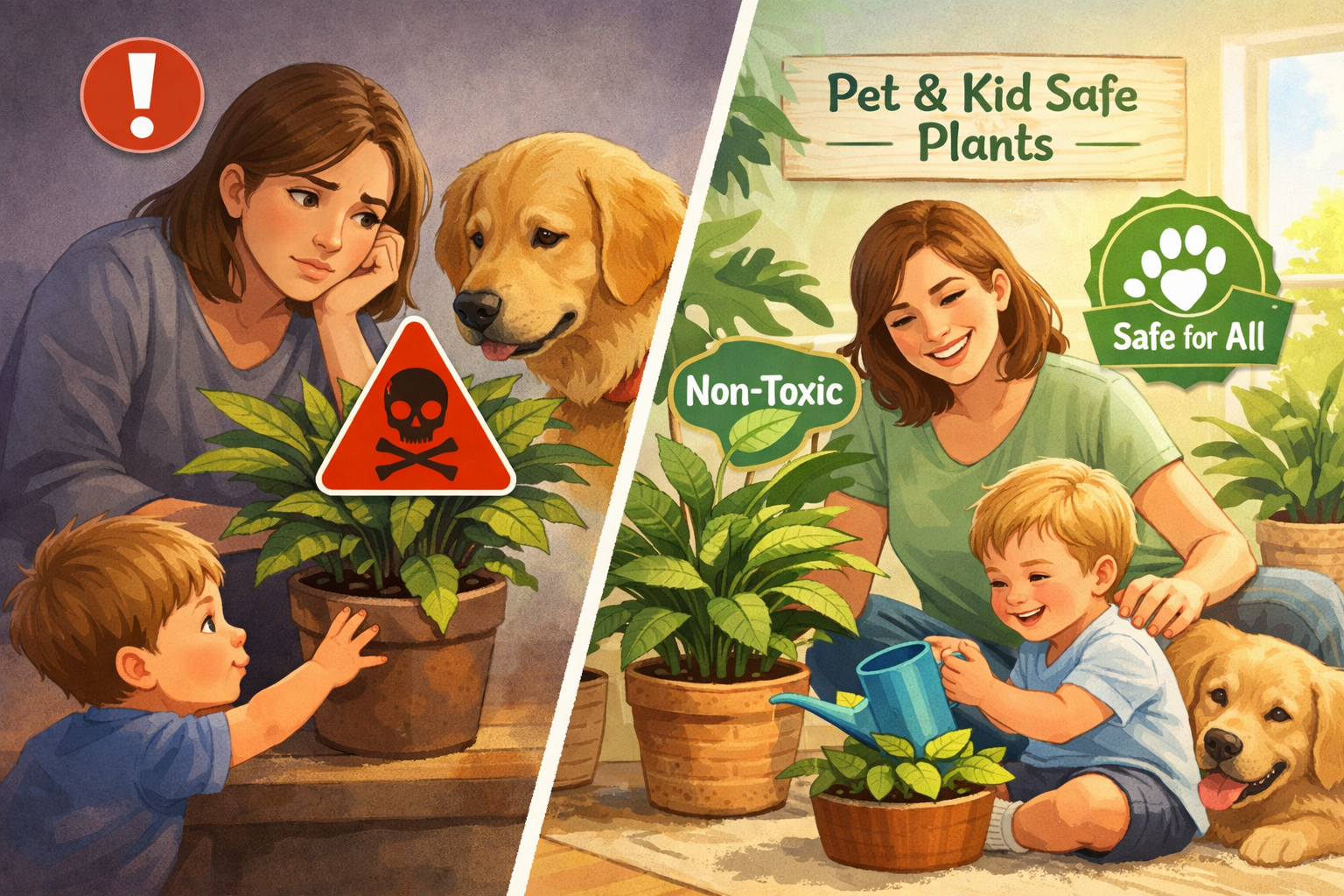
Prioritizing pet and kid-safe indoor plants is crucial to prevent accidental poisonings and ensure a worry-free living environment for families. Many popular houseplants, while beautiful, contain compounds that can cause symptoms ranging from mild irritation to serious organ damage if ingested by curious children or pets.
The appeal of houseplants is undeniable, offering aesthetic beauty, stress reduction, and even improved air quality. However, the diverse chemical compositions within the plant kingdom mean that some species pose a significant risk. For instance, common plants like Pothos, Peace Lilies, and Dumb Cane (Dieffenbachia) are highly toxic, containing calcium oxalate crystals that can cause intense oral irritation, swelling, and difficulty breathing. A study by the American Society for the Prevention of Cruelty to Animals (ASPCA) consistently lists numerous plants as toxic to pets, highlighting the widespread nature of this concern. Children, often driven by curiosity, are equally vulnerable to sampling leaves or berries, making plant selection a critical safety decision in any family home. Opting for certified non-toxic varieties eliminates this constant worry, allowing both children and pets to explore their environment safely.
When considering new additions to your indoor garden, always consult reliable sources like the ASPCA’s plant list or Poison Control Center hotlines to verify toxicity. Even with non-toxic options, good practice includes placing plants out of direct reach where possible, especially for very young children or overly zealous pets. This approach combines preventative plant selection with mindful placement to create a truly safe green space.
Top Pet AND Kid-Safe Indoor Plants: A Comprehensive List
A wide array of beautiful and beneficial indoor plants are completely safe for homes with children and pets, allowing you to enjoy greenery without concern. These plants span various sizes, light requirements, and aesthetic qualities, ensuring there’s a perfect match for any interior design or skill level.
Choosing the right plants for your home is simplified when you know which ones are inherently non-toxic. Here’s a detailed list of some of the best pet and kid-safe indoor plants:
1. Ferns (True Ferns)
Most true ferns are excellent choices for households with pets and children. They thrive in moderate to high humidity and indirect light, adding a lush, textural element to any room.
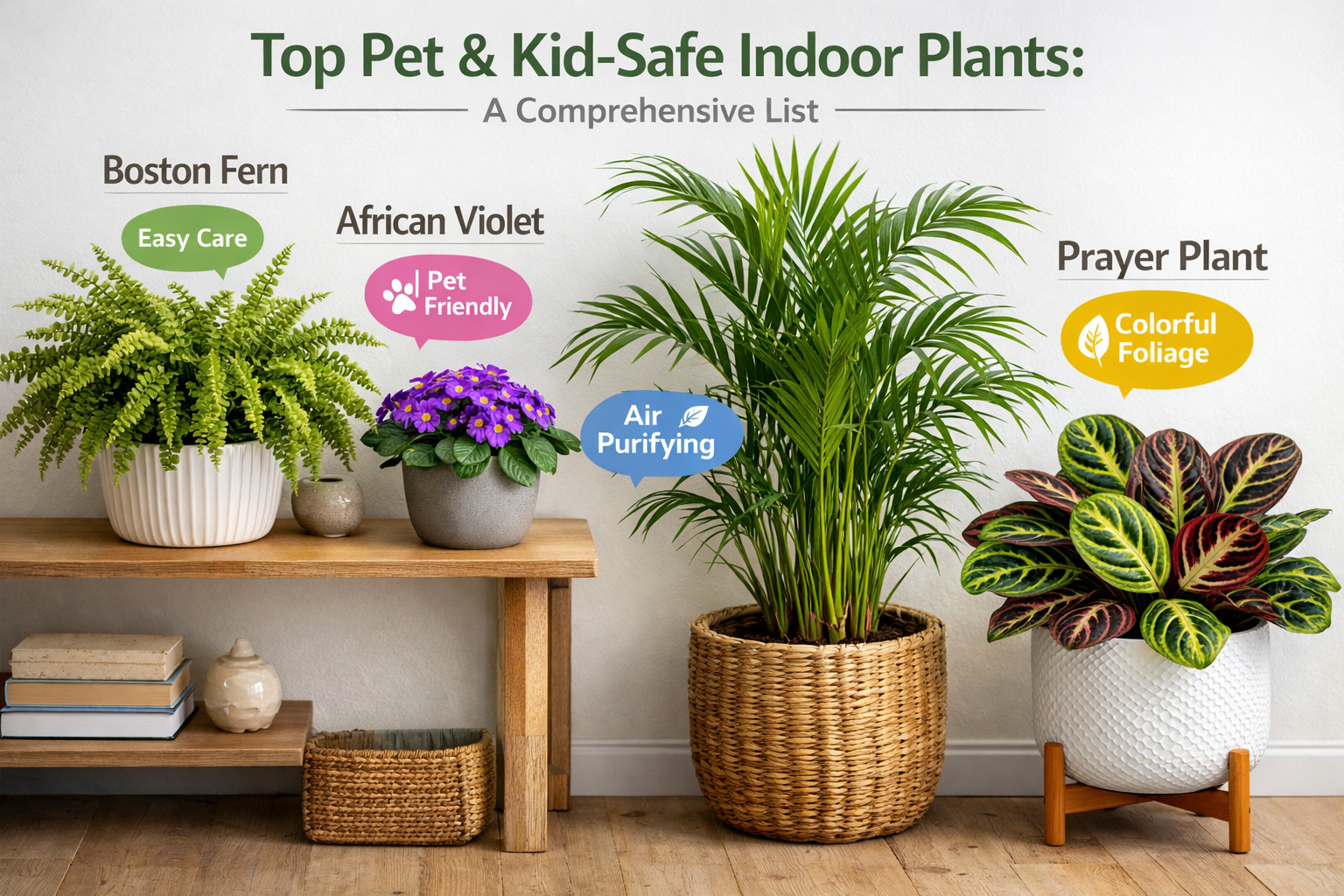
- Boston Fern (Nephrolepis exaltata): Famous for its graceful, arching fronds, the Boston Fern is a classic, non-toxic houseplant that also acts as a natural humidifier. It prefers consistent moisture and bright, indirect light.
- Staghorn Fern (Platycerium bifurcatum): A unique, epiphytic fern often grown mounted, it’s completely safe and makes a striking statement piece. It needs bright, indirect light and occasional watering.
- Maidenhair Fern (Adiantum spp.): Delicate and elegant with small, fan-shaped leaves, these ferns add a touch of sophistication and are entirely non-toxic. They demand higher humidity and consistent moisture.
2. Palms
Several palm varieties bring a tropical feel indoors and are safe for both kids and pets. They typically prefer bright, indirect light and can grow quite large, making them excellent floor plants.
- Areca Palm (Dypsis lutescens): Also known as the butterfly palm, it’s known for its feathery fronds and air-purifying qualities. It is non-toxic and relatively easy to care for, enjoying bright, indirect light and consistent watering.
- Parlor Palm (Chamaedorea elegans): A compact and popular palm, it tolerates lower light conditions than most palms and is highly durable. It’s a perfect starter palm for any family.
- Ponytail Palm (Beaucarnea recurvata): While resembling a palm, it’s actually a succulent. Its distinctive trunk and long, hair-like leaves are completely safe. It’s drought-tolerant and thrives in bright light.
3. Prayer Plants & Marantaceae Family
Members of the Marantaceae family are renowned for their striking foliage and unique habit of folding their leaves up at night, like hands in prayer. All are considered non-toxic.
- Prayer Plant (Maranta leuconeura): With vibrant patterns and colors on its leaves, the Prayer Plant is a beautiful and safe choice. It enjoys medium to low light and high humidity.
- Calathea (Calathea spp.): Known for their incredibly diverse and colorful leaf patterns, Calatheas are stunning and safe. They require consistent humidity and indirect light to thrive.
4. Succulents & Cacti (Pet-Friendly Varieties)
While many succulents are safe, it’s crucial to distinguish them from toxic ones like Euphorbia (which often resemble cacti). Always confirm the specific species.
- Haworthia (Haworthia spp.): Resembling miniature aloes, Haworthia plants are safe, low-maintenance, and thrive in bright light.
- Christmas Cactus (Schlumbergera spp.): A popular flowering succulent, its segmented stems and festive blooms are non-toxic. It prefers bright, indirect light.
- Echeveria (Echeveria spp.): These rosette-forming succulents are beautiful and safe, perfect for sunny windowsills.
5. Flowering Plants
Several flowering plants can add a pop of color without posing a risk.
- African Violet (Saintpaulia spp.): These charming plants produce beautiful, long-lasting flowers and are entirely safe. They prefer bright, indirect light and consistent moisture.
- Orchids (Phalaenopsis spp. & many others): Most common orchid varieties are non-toxic, offering elegant blooms and a sophisticated touch. They require specific care but are a safe bet.
6. Trailing & Hanging Plants
For elevated greenery, these options are both beautiful and safe.
- Spider Plant (Chlorophytum comosum): One of the most popular and easiest houseplants, Spider Plants are non-toxic and produce “spiderettes” that can be propagated. They tolerate a range of conditions. For more easy-care options, check out our guide on Beginner-Friendly Plants.
- Hoya (Hoya carnosa and others): Many Hoya varieties, with their thick, waxy leaves and often fragrant, star-shaped flowers, are safe for homes with kids and pets. They appreciate bright, indirect light.
7. Herbs & Edibles
Bringing culinary herbs indoors is a fantastic way to have fresh ingredients on hand, and they are inherently safe for consumption.
- Basil (Ocimum basilicum): A fragrant and delicious herb, safe for all.
- Thyme (Thymus vulgaris): Hardy and aromatic, perfect for cooking and entirely non-toxic.
- Rosemary (Salvia rosmarinus): A favorite culinary herb, safe and adds a lovely scent.
- Mint (Mentha spp.): While safe, mint can be quite vigorous; consider growing it in its own pot.
- For tips on growing your own, explore our Grow Herbs Indoors guide.
8. Unique & Large Statement Plants
Don’t shy away from larger plants if you want a dramatic effect.
- Banana Plant (Musa acuminata ‘Dwarf Cavendish’ or similar edible varieties): These fast-growing plants offer large, tropical leaves and are non-toxic. Ensure it’s an edible banana variety, as ornamental “banana” plants may differ.
- Money Tree (Pachira aquatica): A popular plant often associated with good luck, the Money Tree is safe for pets and kids and adapts well to various indoor conditions.
| Plant Name | Light Requirement | Watering Frequency | Key Feature | Pet/Kid Safety |
|---|---|---|---|---|
| Boston Fern | Bright, indirect | High | Lush, arching fronds, air purifying | Safe |
| Areca Palm | Bright, indirect | Moderate | Feathery fronds, tropical look, air purifying | Safe |
| Prayer Plant | Medium to low, indirect | Moderate | Unique leaf patterns, leaves fold at night | Safe |
| Spider Plant | Bright, indirect | Moderate | Easy to grow, “spiderettes” for propagation | Safe |
| African Violet | Bright, indirect | Moderate | Colorful, long-lasting flowers | Safe |
| Haworthia | Bright | Low | Succulent, architectural form | Safe |
| Christmas Cactus | Bright, indirect | Moderate | Seasonal blooms, easy care | Safe |
| Hoya | Bright, indirect | Low to Moderate | Waxy leaves, unique flowers | Safe |
| Basil | Bright | Moderate | Aromatic, culinary herb | Safe |
| Money Tree | Bright, indirect | Moderate | Braided trunk, large leaves | Safe |
When choosing plants from this list, consider your home’s specific conditions regarding light and humidity. Even safe plants still need proper care to thrive. For a comprehensive overview of how to keep your new plants healthy, refer to our Indoor Plant Care Guide 2026.
Understanding Plant Toxicity: What to Look For
Understanding plant toxicity involves recognizing the common signs of exposure in pets and children and knowing which plant families frequently contain harmful compounds. Not all plants are created equal in terms of their safety profile, so awareness is key.
Many toxic plants contain irritating sap, specific compounds like oxalates, or other alkaloids that cause adverse reactions. For pets, signs of plant poisoning can include vomiting, diarrhea, lethargy, excessive drooling, mouth irritation, or difficulty breathing. In children, symptoms might be similar, along with skin rashes or eye irritation if contact occurs. If you suspect ingestion or exposure to a toxic plant, it’s crucial to contact your veterinarian, doctor, or a poison control center immediately. Having the plant’s name handy will significantly help in diagnosis and treatment. Always ensure you purchase plants from reputable sources that provide accurate identification, as mislabeled plants can pose a hidden risk. For further guidance on identifying and avoiding plant hazards, consider our Indoor Gardening Mistakes guide.
Safe Plant Placement Strategies
Implementing safe plant placement strategies involves considering the natural habits of children and pets to minimize access to even non-toxic plants. Strategic placement adds an extra layer of protection, reducing the likelihood of accidental ingestion or damage.
For climbing pets or highly curious toddlers, even a plant deemed “safe” can become a tempting chew toy or a mess waiting to happen. Consider placing plants on high shelves, in hanging planters, or within terrariums that are out of reach. For floor plants, heavy, stable pots are essential to prevent tipping. You can also use physical barriers, such as decorative fences or plant stands that elevate plants beyond easy access. For small-space living, exploring Best Indoor Plants For Small Homes: 2026 Compact Guide can provide ideas for safe and space-efficient plant arrangements. Additionally, providing pets with appropriate chew toys can redirect their attention away from plants. Teach children not to put plants in their mouths, even “safe” ones, to establish good habits early.
Cultivating a Thriving, Safe Indoor Garden
Cultivating a thriving, safe indoor garden goes beyond just selecting non-toxic plants; it involves understanding their care needs, choosing appropriate containers, and maintaining a healthy environment. A well-cared-for plant is less likely to become a target for curious exploration.
Proper plant care ensures your pet and kid-safe indoor plants flourish, making your home a vibrant and secure oasis. This includes using the Best Soil For Indoor Plants: Your 2026 Expert Guide, providing adequate light (refer to our Low Light Indoor Plants guide if needed), and following a consistent watering schedule using an Indoor Watering Guide. Choosing the Best Pots For Indoor Plants 2026 not only enhances aesthetics but also supports plant health. Regularly inspect plants for pests or diseases, as unhealthy plants can be more attractive to curious nibblers. Consider incorporating air-purifying indoor plants into your selection to double down on health benefits. Creating a truly holistic and safe indoor garden environment means nurturing both your plants and the well-being of your family.
Conclusion
Creating an indoor oasis filled with lush greenery doesn’t require compromising the safety of your children or beloved pets. By selecting from a comprehensive list of non-toxic plants like Boston Ferns, Areca Palms, Spider Plants, and African Violets, you can cultivate a beautiful and worry-free home environment. Prioritizing safety through informed plant choices and strategic placement ensures that your green companions enhance your living space without posing any risks to curious hands or paws.
Actionable Next Steps:
- Inventory Your Current Plants: Before adding new ones, identify all existing houseplants and verify their toxicity using resources like the ASPCA plant list. Remove or relocate any toxic plants out of reach.
- Select from the Safe List: Choose 2-3 new plants from our comprehensive list that suit your home’s lighting conditions and your care commitment level.
- Plan Placement Carefully: Decide where to place your new plants, considering elevated spots, hanging planters, or sturdy, heavy pots to prevent accidental tipping or access.
- Educate Family Members: Teach children about safe plant interactions and train pets to avoid plants, perhaps using positive reinforcement or deterrents.
- Maintain Regular Care: Ensure your safe plants thrive with proper watering, light, and soil. Healthy plants are less likely to attract unwanted attention.
FAQ
What are the safest indoor plants for homes with cats and dogs?
The safest indoor plants for homes with cats and dogs include Boston Ferns, Areca Palms, Spider Plants, African Violets, Prayer Plants, and most true succulents like Haworthia and Echeveria.
Can any non-toxic plant cause an allergic reaction in kids or pets?
While generally safe, any plant can potentially cause a mild allergic reaction or stomach upset if consumed in large quantities, even if non-toxic. Always monitor initial interactions.
How can I verify if a plant is truly pet and kid-safe?
You can verify a plant’s safety by checking reliable sources such as the ASPCA’s plant toxicity list or calling the Poison Control Center (for children) with the plant’s botanical name.
Are all ferns safe for pets and kids?
Most “true” ferns, such as Boston Ferns and Maidenhair Ferns, are safe. However, some plants with “fern” in their name, like Asparagus Ferns (which are actually part of the lily family), are toxic, so always confirm the specific species.
What should I do if my child or pet eats a plant I think might be toxic?
If you suspect your child or pet has ingested a potentially toxic plant, immediately contact your pediatrician or veterinarian, or call the Poison Control Center or ASPCA Animal Poison Control with the plant’s name.
How can I deter pets from chewing on even safe plants?
Deter pets by providing alternative chew toys, using bitter apple spray (safe for plants), or placing plants in inaccessible locations like high shelves or hanging baskets. Consistent training also helps.
Are flowering plants generally more toxic than foliage plants?
There is no general rule that flowering plants are more toxic than foliage plants. Toxicity depends on the specific species; for example, African Violets are safe, while lilies (even just pollen) are highly toxic to cats.
Sources
- American Society for the Prevention of Cruelty to Animals. (n.d.). Toxic and Non-Toxic Plants List. Retrieved from https://www.aspca.org/pet-care/animal-poison-control/toxic-and-non-toxic-plants
- Poison Control. (n.d.). Poison Control Center. Retrieved from https://www.poison.org/