LED grow light spectrum explained for food crops vs ornamentals
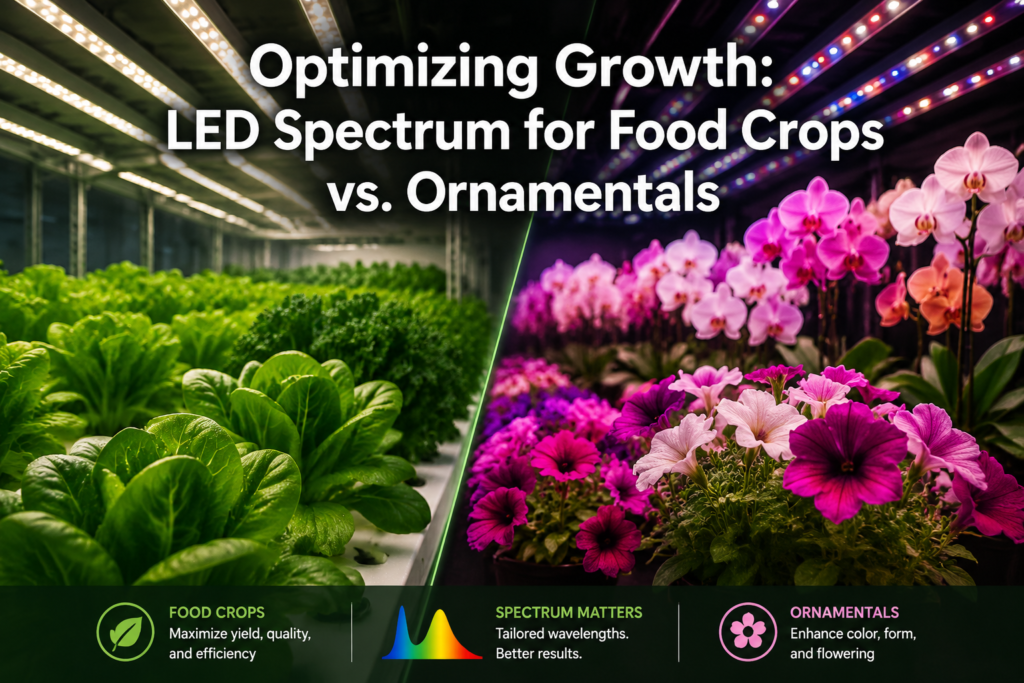
Quick Answer: The optimal LED grow light spectrum for food crops versus ornamental plants differs significantly due to their distinct biological goals: food crops like tomatoes prioritize fruiting and biomass accumulation, requiring more red and far-red light, while ornamentals often benefit from balanced or slightly bluer light to enhance compact growth and vibrant foliage or specific flower characteristics. Understanding these spectral nuances is critical for maximizing yields, improving nutritional value, or achieving desired aesthetic traits in 2026 indoor gardening.
Key Takeaways
- Red and Blue are Core: Red light (600-700 nm) drives photosynthesis and flowering; blue light (400-500 nm) promotes vegetative growth, compact structure, and nutrient absorption.
- Food Crops Love Red: Fruiting and flowering food crops (tomatoes, peppers) benefit from higher ratios of red and far-red light during reproductive stages to boost yield and fruit development.
- Ornamentals Vary: Leafy ornamentals (ferns) prefer more blue light for compact growth, while flowering ornamentals might need specific red spectrums to influence bloom timing and color.
- Full Spectrum isn’t Always “Best”: While useful for general growth, “full spectrum” lights may not be optimized for specific plant goals, often lacking targeted intensity in key wavelengths.
- Microgreens and Herbs: These generally thrive under cooler, bluer light or a balanced full spectrum to encourage leafy growth and prevent stretching.
- Cost vs. Performance: Professional LED grow lights offer advanced spectral control but come at a higher price; cheaper options may lack specific wavelengths or intensity.
- Common Mistakes: Overlooking plant-specific needs, incorrect light intensity (PPFD), and ignoring photoperiod are common errors.
- Succulents vs. Vegetables: Succulents need high intensity and broader spectrum (mimicking intense sun), while most vegetables require spectrum optimized for vegetative or fruiting cycles.
What Light Spectrum Do Tomatoes Need to Grow Best?
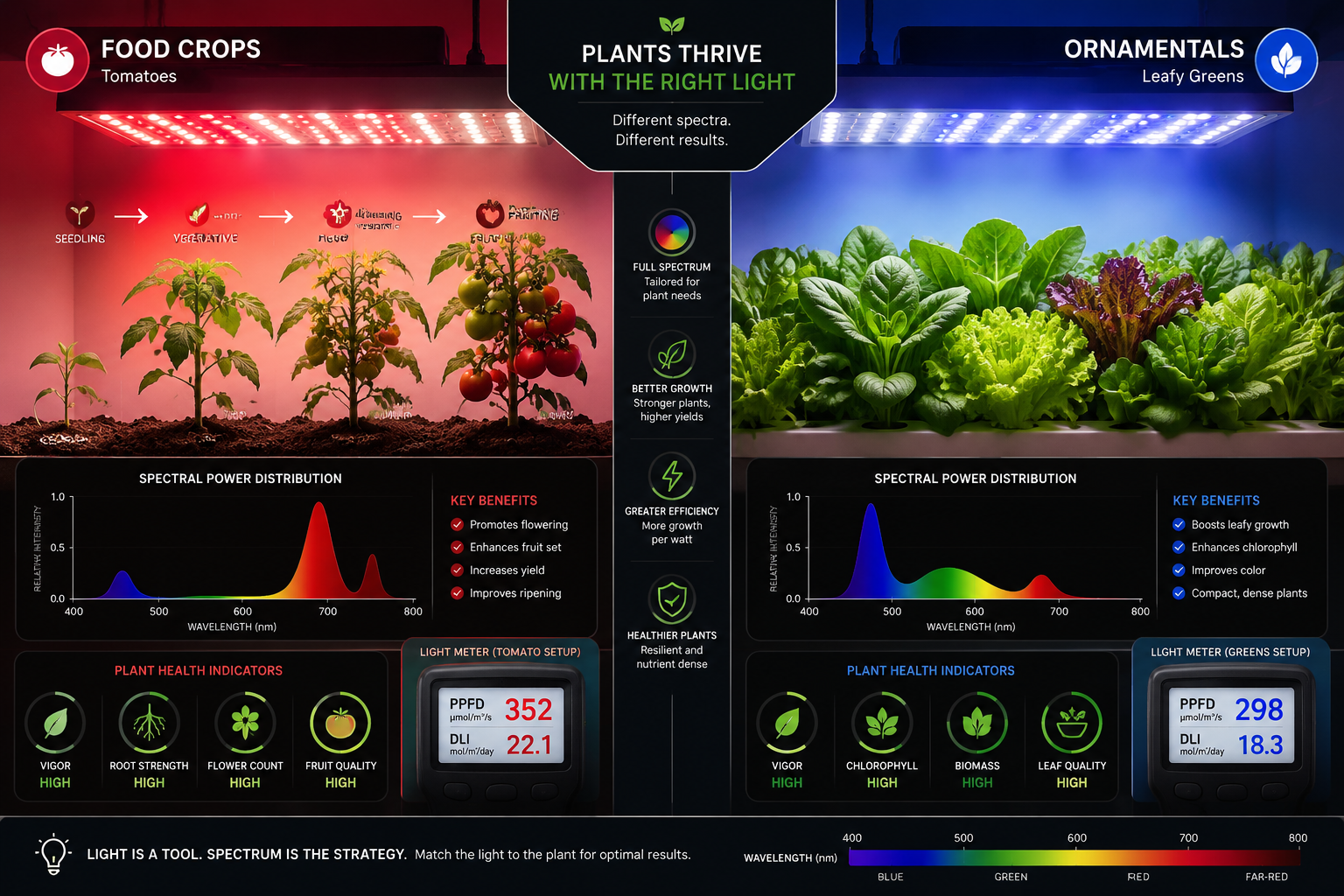
Tomatoes, as fruiting food crops, require a specific LED grow light spectrum that prioritizes red and far-red light during their flowering and fruiting stages, while still needing adequate blue light for robust vegetative growth. During the vegetative phase, a balanced spectrum with a good proportion of blue light (around 15-25%) promotes strong stems and healthy leaf development. However, once tomatoes begin to flower and set fruit, increasing the red light (600-700 nm) and introducing far-red light (700-780 nm) significantly boosts flowering, fruit production, and overall yield.
- Vegetative Stage: A spectrum with 15-25% blue light and the remaining majority as red and green light supports strong, compact plant structure. This balance helps prevent leggy growth before fruiting begins.
- Flowering and Fruiting Stage: The ideal spectrum shifts to a higher red-to-blue ratio, often with red light comprising 70-80% of the photosynthetic photon flux density (PPFD), complemented by far-red. Far-red light, while not directly photosynthetic, can enhance photosynthesis by the Emerson effect and influence flowering time and fruit expansion. A common target might be a red:blue ratio of 4:1 to 5:1 for optimal fruiting.
- Intensity Matters: Beyond spectrum, tomatoes are heavy feeders of light. They generally require high light intensity, often exceeding 500-600 µmol/m²/s PPFD during peak fruiting. Using LED lights specifically designed for fruiting plants can significantly improve tomato yields. For more on growing tomatoes in confined spaces, see our guide on growing tomatoes in small spaces.
How are LED Grow Lights Different for Leafy Greens Versus Flowering Plants?
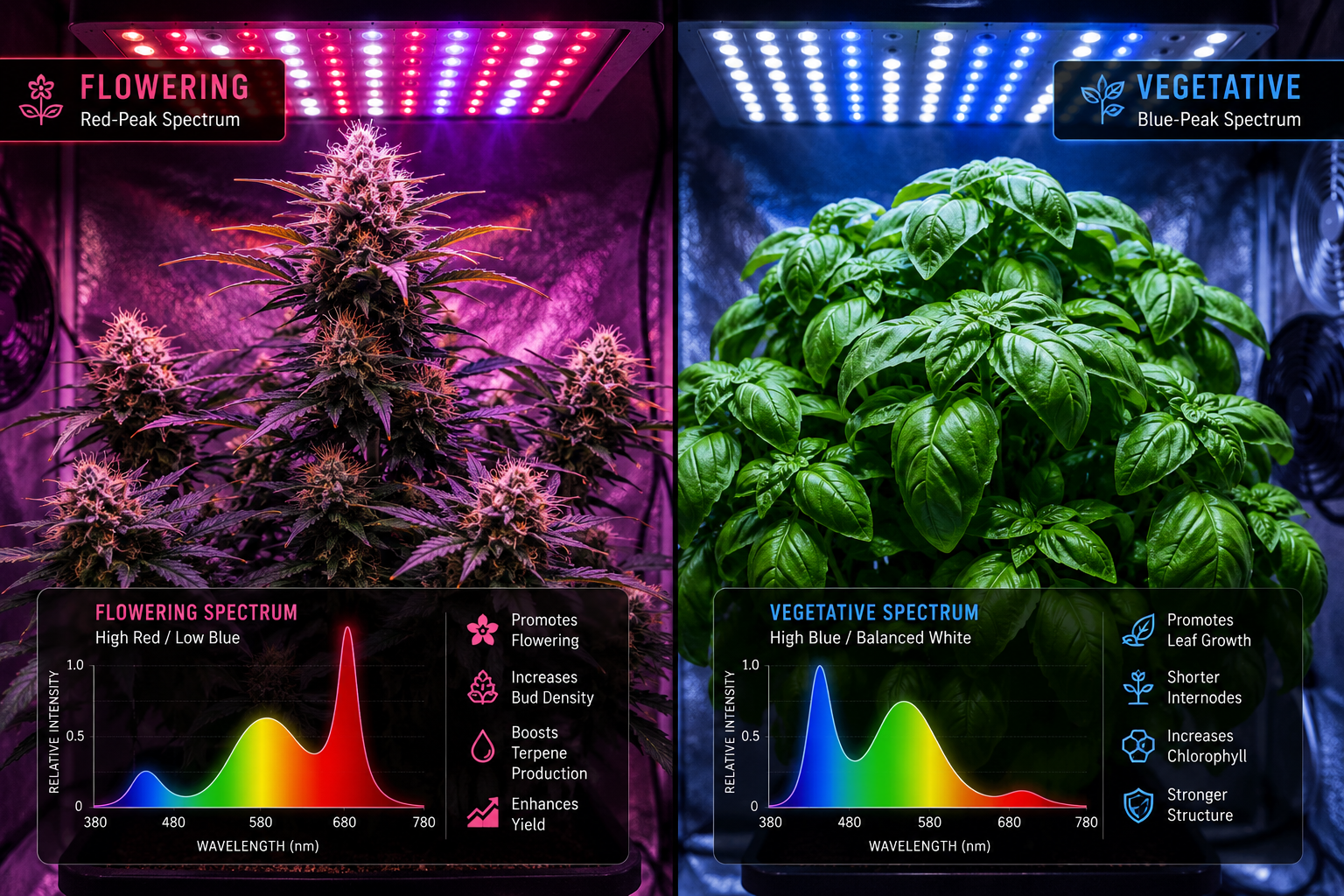
LED grow lights for leafy greens typically emphasize blue light and a balanced full spectrum to encourage dense, compact foliage growth, while lights for flowering plants significantly increase red and sometimes far-red light to stimulate bloom production and fruit development. Leafy greens like lettuce, spinach, and kale benefit from higher percentages of blue light (400-500 nm) because it promotes chlorophyll production, leaf expansion, and compact growth, preventing them from stretching and becoming leggy. This spectral balance often results in a cooler, whiter appearance of the light.
- Leafy Greens:
- Spectrum: Higher blue light component (often 20-30%), balanced with green and red.
- Goal: Maximize leaf area, compact structure, nutrient density, and prevent premature bolting (flowering).
- Appearance: Lights often appear white or slightly bluish-white to the human eye due to a broader spectrum with strong blue.
- Example: A lettuce grower might use LEDs with a spectrum rich in blue and green to produce crisp, vibrant leaves.
- Flowering Plants (e.g., tomatoes, peppers, cannabis):
- Spectrum: High red light (600-700 nm) and often far-red (700-780 nm) are dominant, with blue light present but in a lower ratio.
- Goal: Induce flowering, promote fruit/bud development, increase biomass and secondary metabolite production.
- Appearance: Lights often appear pink or purple due to the heavy emphasis on red and blue wavelengths.
- Example: A chili plant grower would switch to a red-heavy spectrum during the flowering stage to encourage abundant fruit set.
- Specific Flowering Plants: For plants like cannabis, specific light recipes with particular red:blue ratios and additional wavelengths can optimize cannabinoid profiles and yield. We’ll delve into specific cannabis requirements later.
How Much Do Professional Full Spectrum LED Grow Lights Cost?
Professional full-spectrum LED grow lights for commercial or serious hobbyist use typically range from $200 to over $2,000 per fixture, depending on their wattage, coverage area, advanced features like dimming and spectral tuning, and brand reputation. These higher-end lights offer precise control over spectral output, better efficiency (PPF/W), and often boast longer lifespans compared to consumer-grade options. The investment usually correlates with the desire for optimized growth, higher yields, and energy savings over time.
- Entry-Level Professional: You might find lights covering a 2×2 or 3×3 foot area for $200-$500. These usually have fixed full-spectrum output, good efficiency, and solid construction.
- Mid-Range Professional: Fixtures costing $500-$1,200 often cover larger areas (4×4 or 5×5 feet) and may include features like daisy-chaining, basic dimming, and enhanced thermal management.
- High-End & Commercial Grade: Lights exceeding $1,200, reaching up to $2,500+, are designed for large-scale operations or growers needing advanced capabilities. These typically offer:
- Tunable Spectrum: Allowing users to adjust red, blue, green, and far-red channels independently.
- Wireless Control: Integration with environmental control systems.
- High PPF Output: Delivering intense light over large footprints.
- Durability: Built for continuous operation in demanding environments.
While the initial cost is higher, the increased yield, quality, and energy efficiency of professional-grade lights often justify the investment for dedicated growers.
Why Are My Plants Not Growing Even With LED Lights?
Plants failing to thrive under LED lights often indicates issues beyond just having a light source; common problems include incorrect light spectrum, insufficient light intensity (PPFD), improper photoperiod, nutrient deficiencies, or environmental stressors like inadequate temperature and humidity. LED lights are effective tools, but their correct application requires understanding plant biology and environmental controls. For more detailed troubleshooting on slow growth, refer to our guide on why vegetables grow slowly but don’t die.
- Incorrect Spectrum: Using a red-heavy light for vegetative growth can lead to stretching (etiolation), while a blue-heavy light for flowering might reduce bud/fruit development.
- Insufficient Light Intensity (PPFD): Many inexpensive LEDs do not provide enough photosynthetic photon flux density (PPFD) to meet a plant’s daily light integral (DLI) requirements. Plants appear stunted, weak, or fail to flower. Use a PAR meter to measure actual PPFD at canopy level.
- Improper Photoperiod: Plants need specific light-dark cycles. Providing too much or too little light per day can stress plants. For instance, most vegetables need 12-16 hours of light, while some flowering plants require specific dark periods to initiate blooming.
- Nutrient Deficiencies: Even with perfect light, plants won’t grow without the right balance of macro and micronutrients. Yellowing leaves, stunted growth, or unusual leaf coloration can all point to nutrient issues.
- Environmental Factors: Temperature, humidity, and CO2 levels play crucial roles. Temperatures too low or too high can inhibit growth, as can extreme humidity.
- Watering Issues: Both overwatering (leading to root rot) and underwatering (causing wilting and nutrient lockout) severely impede plant growth.
- Pests or Disease: Small plants can be easily overwhelmed by pests or fungal diseases, which can stunt growth or lead to plant death.
Can I Use the Same LED Grow Light for Succulents and Vegetables?
While you can use the same LED grow light for succulents and most vegetables, it’s not ideal for optimizing the growth of both, as succulents generally prefer high intensity across a broad, full spectrum to mimic intense desert sun, whereas many vegetables benefit from specific spectral adjustments during different growth stages. Succulents thrive under very bright light that closely mimics natural sunlight, often requiring higher PPFD than many leafy vegetables.
- Succulents:
- Needs: High light intensity, broad-spectrum light (often leaning towards white light with balanced blue and red), and a longer photoperiod (12-16 hours). They prefer a “crisp” light that promotes compact growth and vibrant stress colors.
- Risk with Veggie Lights: If a light is too red-heavy for flowering vegetables, succulents might stretch (etiolate) or lose their vibrant coloration.
- Vegetables:
- Needs: Vary greatly by growth stage. Leafy greens prefer more blue, fruiting vegetables demand more red for flowering and fruiting.
- Risk with Succulent Lights: A light optimized solely for succulents might lack the concentrated red wavelengths needed to maximize flowering and fruiting for vegetables, leading to suboptimal yields.
For optimal results, it’s better to select a light with adjustable spectrum or choose specific fixtures. If using one light, a high-quality full-spectrum LED with good intensity and dimming capabilities would be the most versatile compromise.
Are LED Grow Lights Worth It for Small Indoor Gardens?
LED grow lights are definitely worth it for small indoor gardens in 2026, offering significant benefits over traditional lighting options due to their energy efficiency, long lifespan, minimal heat output, and ability to deliver specific light spectrums tailored to plant needs. For anyone serious about year-round indoor gardening, especially in small spaces, LEDs provide the controlled environment necessary for successful plant growth. This is especially true for those aiming for homegrown food, as discussed in “Is 80% Homegrown Food From An Apartment Garden Realistic?” on our site.
- Energy Efficiency: LEDs consume significantly less electricity than fluorescent or HID lights, reducing operating costs over time. This is a major advantage for small-scale growers where every watt counts.
- Long Lifespan: Most quality LED fixtures last 50,000 hours or more, translating to several years of continuous use without replacement.
- Low Heat Emission: LEDs produce far less heat, reducing the need for extensive ventilation and cooling systems, which is crucial for maintaining stable temperatures in confined indoor spaces.
- Targeted Spectrum: Modern LEDs allow for precise tuning of light spectrums, enabling growers to optimize light for specific plant stages (e.g., vegetative, flowering) or plant types (e.g., herbs, microgreens, or even plants that grow without sunlight).
- Compact Size: Their small footprint makes them ideal for shelves, closets, or other tight spaces often found in apartment gardening. For tips on maximizing space, check out our guide on best grow lights for indoor plants in small spaces 2026.
- Cost Savings: While the initial investment might be higher than traditional bulbs, the energy savings and longevity often result in a lower total cost of ownership.
What Wavelengths Do Cannabis Plants Require for Optimal Growth?
Cannabis plants require a dynamic LED grow light spectrum that shifts from blue-dominant wavelengths during the vegetative phase to red-dominant wavelengths during flowering, with supplementary green and far-red light playing crucial roles throughout. Optimizing these wavelengths is critical for maximizing cannabinoid production, terpene profiles, and overall yield.
- Vegetative Phase: Cannabis thrives under a spectrum rich in blue light (400-500 nm) during its vegetative stage. Blue light promotes compact growth, thick stems, and robust leaf development, preventing excessive stretching. A ratio of 20-30% blue light is often recommended. Green light (500-600 nm) is also beneficial, penetrating deeper into the canopy and contributing to overall photosynthesis.
- Flowering Phase: As cannabis transitions to flowering, the spectrum should shift dramatically to emphasize red light (600-700 nm). Red light is essential for inducing flowering, increasing bud density, and boosting cannabinoid synthesis. A high red-to-blue ratio (e.g., 4:1 to 5:1) is commonly employed.
- Far-Red Light (700-780 nm): Introducing a small amount of far-red light during flowering can enhance the “Emerson effect,” increasing photosynthetic efficiency, and influence flowering initiation and stretch.
- UV Light (UVA, 315-400 nm): Some growers incorporate low levels of UVA light, particularly during the late flowering stage, as it can potentially increase the production of terpenes and cannabinoids as a defense mechanism, although research is ongoing.
- Full Cycle: A well-balanced full spectrum throughout the plant’s life, with specific boosts in blue for veg and red for flower, generally produces the best results. Many advanced cannabis grow lights offer tunable spectrums to achieve this precision.
Common Mistakes People Make When Choosing LED Grow Lights
Many people make several common mistakes when choosing LED grow lights, often leading to suboptimal plant growth or wasted investment, including prioritizing wattage over Photosynthetic Photon Flux Density (PPFD), ignoring specific plant requirements, underestimating coverage area, and falling for marketing hype about “full spectrum” without understanding its composition. These errors can hinder successful indoor gardening.
- Focusing Only on Wattage: Wattage indicates power consumption, not necessarily light output useful for plants. The critical metric is PPFD (Photosynthetic Photon Flux Density), measured in µmol/m²/s, which quantifies the amount of photosynthetically active radiation (PAR) reaching the plants. Always compare PPFD maps or stated PPFD values at various hanging heights.
- Ignoring Plant-Specific Needs: Assuming one “full spectrum” light fits all plants is a major mistake. As detailed, leafy greens, fruiting vegetables, and ornamentals have different ideal spectral requirements at different life stages.
- Underestimating Coverage Area: Growers often buy lights too small for their intended grow space, leading to uneven light distribution and poor growth at the edges of the canopy. Always check the manufacturer’s recommended PPFD coverage map for the desired grow area.
- Falling for “Full Spectrum” Hype: While “full spectrum” sounds good, some cheap lights marketed this way may have inefficient or poorly balanced spectrums, lacking intensity in critical wavelengths or having too much in irrelevant ones. A truly effective full spectrum is engineered with specific ratios of blue, green, and red, often with far-red.
- Overlooking Thermal Management: Poor heat dissipation in cheaper LEDs can lead to reduced efficiency, shorter lifespan, and potential damage to plants if the fixture gets too hot.
- Ignoring Dimmers and Control: Professional-grade lights offer dimming and even spectral tuning, allowing growers to adjust intensity and spectrum as plants mature, saving energy and optimizing growth. For beginners, simple, effective lights are often recommended (see below).
- Not Considering Efficiency (PPF/W): A higher PPF per watt (µmol/J) indicates better efficiency, meaning more usable light for plants per unit of electricity consumed. This translates to lower electricity bills over time.
- Forgetting About Light Cycle (Photoperiod): Even the best light won’t help if plants don’t get the correct duration of light and dark. Understanding indoor gardening mistakes can prevent these issues.
Do Cheap LED Grow Lights Actually Work for Indoor Farming?
Cheap LED grow lights can work for certain basic indoor farming applications, particularly for seedlings, microgreens, or low-light ornamental plants, but they often fall short for high-yield fruiting vegetables or commercial operations due to lower intensity, less optimized spectrums, and shorter lifespans. The effectiveness of a cheap LED light largely depends on the specific plant’s needs and the grower’s expectations.
- Where They Work (Limited Scope):
- Seed Starting: Many inexpensive LED bars or panels are sufficient for germinating seeds and supporting young seedlings before transplanting.
- Microgreens and Herbs: These plants have lower light requirements and often thrive under the basic spectrums provided by cheaper LEDs, especially if they are cool-white or slightly blue-dominant. For setting up an indoor herb garden, cheaper lights can be a good start.
- Low-Light Ornamentals: Some houseplants that naturally tolerate lower light conditions can survive and even grow under less powerful, cheaper LEDs.
- Where They Fall Short:
- Fruiting Vegetables (e.g., tomatoes, peppers): These require high PPFD and specific red-heavy spectrums for flowering and fruiting, which cheap lights rarely provide in sufficient quantity or quality. Yields will likely be significantly reduced.
- Cannabis: Optimal cannabis cultivation demands precise spectral control and high intensity, which budget lights cannot deliver, impacting potency and bud development.
- Energy Efficiency: Cheap LEDs often have lower PPF/W ratings, meaning they consume more electricity to produce less usable light compared to professional-grade fixtures.
- Lifespan & Reliability: Lower quality components can lead to premature failure or rapid degradation of light output.
For serious indoor farming, investing in a mid-range or professional-grade LED light is almost always more cost-effective in the long run due to higher yields, better plant quality, and lower electricity bills.
What Spectrum Is Best for Microgreens and Herbs?
The best spectrum for microgreens and herbs typically leans towards a balanced full spectrum with a good proportion of blue light, which encourages compact, leafy growth, prevents stretching, and enhances chlorophyll production. While a full spectrum is generally suitable, many microgreens and herbs thrive particularly well with a slightly higher percentage of blue light (e.g., 20-30% blue with the remainder red and green) or simply a cool-white light source.
- Blue Light (400-500 nm): Crucial for vegetative development. It promotes thick, dark green leaves and a compact growth habit, preventing the leggy, pale stems often seen under insufficient or red-dominant light.
- Green Light (500-600 nm): While often overlooked, green light penetrates deeper into the plant canopy and contributes to overall photosynthesis, especially important for denser crops of microgreens.
- Red Light (600-700 nm): Essential for photosynthesis, but too much red without adequate blue can cause stretching in microgreens and premature bolting in some herbs. A balanced amount is still necessary.
- Intensity: Microgreens and most herbs don’t require extremely high light intensity. A PPFD of 100-250 µmol/m²/s is often sufficient, making them ideal candidates for more affordable LED setups. For example, a basic LED shop light or dedicated full-spectrum grow light designed for seedlings can work well. Explore more about indoor herb garden setup for tailored advice.
How Do Red and Blue LED Spectrums Impact Plant Development?
Red and blue LED spectrums fundamentally impact plant development by signaling different physiological responses: blue light primarily drives vegetative growth, compact structure, and photosynthetic efficiency, while red light is crucial for photosynthesis, stem elongation, flowering, and fruiting. These two wavelengths are the most photosynthetically active for plants.
- Blue Light (400-500 nm):
- Vegetative Growth: Promotes strong, stocky stems and dense, dark green foliage.
- Photomorphogenesis: Influences plant shape and form. High blue light keeps plants compact and prevents stretching.
- Chlorophyll Production: Essential for synthesizing chlorophyll, leading to efficient photosynthesis.
- Stomatal Opening: Helps regulate stomatal function, which affects gas exchange and water use efficiency.
- Best For: Seedlings, leafy greens, and the vegetative stage of fruiting plants.
- Red Light (600-700 nm):
- Photosynthesis: Highly efficient at driving photosynthesis; plants absorb a significant portion of red light for energy conversion.
- Stem Elongation: Can promote stretching (etiolation) if used in isolation or in too high a ratio without sufficient blue light.
- Flowering and Fruiting: Crucial for inducing and enhancing flowering, fruit development, and biomass accumulation in many plant species.
- Seed Germination: Can influence germination rates in some seeds.
- Best For: Flowering and fruiting stages of most food crops, and overall plant biomass.
- Red:Blue Ratio: The balance between red and blue light is critical. A higher blue ratio is often used for propagation and vegetative growth, while a higher red ratio is used to initiate and enhance flowering and fruiting. Too much red without adequate blue can lead to leggy, weak plants, while too much blue can sometimes stunt overall growth.
Which LED Grow Lights Are Recommended for Beginners?
For beginners in 2026, LED grow lights that are simple to set up, provide a balanced full spectrum, offer reasonable intensity for common indoor plants, and come with basic features like dimming or adjustable hanging are highly recommended. Prioritizing ease of use and versatility over highly specialized spectral tuning is key.
- Full-Spectrum White Light LEDs: These lights mimic natural sunlight and are typically the easiest for beginners to use because they don’t require complex spectral adjustments. They usually appear white or warm white to the human eye, making your grow space more pleasant. Look for models with a balanced spectrum that supports both vegetative and flowering growth for a variety of plants.
- Fixture Types:
- LED Bar Lights: Excellent for shelving units or small grow tents, easy to hang and often daisy-chainable.
- Small Panel Lights: Good for individual plants or small grow areas (e.g., 2×2 feet), often equipped with passive cooling.
- Key Features for Beginners:
- Dimming Capability: Allows you to adjust light intensity, crucial for different plant stages (e.g., lower for seedlings, higher for flowering).
- Adjustable Hanging Height: Essential for maintaining the correct distance between the light and your plants.
- Good Heat Dissipation: Ensures the light runs efficiently and safely without overheating your plants.
- Reputable Brands: Sticking with established brands often means better quality, reliability, and customer support.
- Avoid: Overly complex lights with multiple tunable channels and steep learning curves. Start with something simple and effective, and upgrade as your experience and needs grow. For more entry-level options, consider guides like best grow lights for indoor plants in small spaces 2026.
Conclusion
Understanding the specific needs of your plants and matching them with the appropriate LED grow light spectrum is paramount for success in indoor gardening, whether you’re cultivating nutrient-rich food crops or vibrant ornamental plants. As we’ve explored, food crops like tomatoes thrive on red-dominant light during fruiting, while leafy greens and many ornamentals benefit from a bluer or more balanced spectrum to encourage compact, robust vegetative growth.
For beginners, starting with a quality full-spectrum white LED light with dimming capabilities offers a versatile and user-friendly approach. As you gain experience, delving into more specialized or tunable spectrums can unlock even greater potential for yield, quality, and specific plant characteristics. Always prioritize PPFD, consider your plant’s specific growth stage, and remember that light is just one component of a holistic growing environment that also includes nutrients, water, temperature, and humidity. By making informed choices about your LED grow light spectrum, you can transform your indoor garden into a thriving, productive space in 2026.
FAQ
Q: What is PAR in LED grow lights?
A: PAR stands for Photosynthetically Active Radiation, referring to the portion of the light spectrum (400-700 nanometers) that plants use for photosynthesis. PPFD (Photosynthetic Photon Flux Density) is the measurement of PAR that actually reaches the plant canopy per second.
Q: Can I grow any plant with a full spectrum LED light?
A: You can grow most plants with a good quality full spectrum LED light, but for optimal yield, specific morphology, or targeted plant goals (e.g., maximizing fruit size or flower color), a customized or tunable spectrum often performs better.
Q: How far should my LED grow light be from my plants?
A: The ideal distance varies by light intensity and plant stage. Seedlings generally need less intense light (18-24 inches away), while flowering plants require higher intensity (6-18 inches away). Always refer to the manufacturer’s recommendations and observe your plants for signs of light stress (e.g., bleaching, stretching).
Q: Do plants need green light from LEDs?
A: Yes, plants do use green light for photosynthesis. While red and blue are primary, green light penetrates deeper into the plant canopy and contributes to overall photosynthetic efficiency, especially in dense foliage.
Q: What’s the difference between “white” and “purple” LED grow lights?
A: “Purple” or “blurple” lights primarily emit red and blue wavelengths, optimized for photosynthesis but often uncomfortable for human eyes. “White” full-spectrum lights typically contain a broader range, including green, producing a more natural-looking light that’s pleasant in a living space, while still providing necessary PAR.
Q: How do I know if my plants are getting enough light?
A: Signs of insufficient light include leggy, stretched growth, pale or yellowing leaves, and a lack of flowering or fruiting. Signs of too much light include scorched or bleached leaves, stunted growth, and leaves curling upwards as if trying to escape the light.
Q: Should I use a timer for my LED grow lights?
A: Yes, using a timer is essential to provide a consistent and appropriate photoperiod (light-dark cycle) for your plants, which is critical for their growth and development.
Q: Can I mix different types of LED grow lights?
A: Yes, some advanced growers mix different types of LEDs (e.g., a full-spectrum white light with supplemental red bars) to precisely tune the spectrum for specific plant needs or to address coverage gaps.
Q: What is the ideal photoperiod for fruiting vegetables under LEDs?
A: Most fruiting vegetables, like tomatoes and peppers, thrive on a photoperiod of 12-16 hours of light per day, followed by a dark period. Consistent dark periods are crucial for flowering and fruit development.
Q: Are LED grow lights safe for home use?
A: Yes, when used correctly, LED grow lights are safe for home use. Ensure proper ventilation, avoid direct eye exposure to intense light, and follow all manufacturer instructions for installation and operation.
Sources
- Lefsrud, M. G., & Kopsell, D. A. (2018). Growth and secondary metabolite responses of horticultural crops to different light-emitting diode (LED) wavelengths. Frontiers in Plant Science, 9, 1374.
- Singh, D., Basu, C., Meinhardt-Llopis, S., & Shirley, R. (2015). Plant factory: An indoor vertical farming system for efficient quality food production. HortScience, 50(2), 269-278.