How many hours of grow light does basil need vs lettuce vs tomatoes
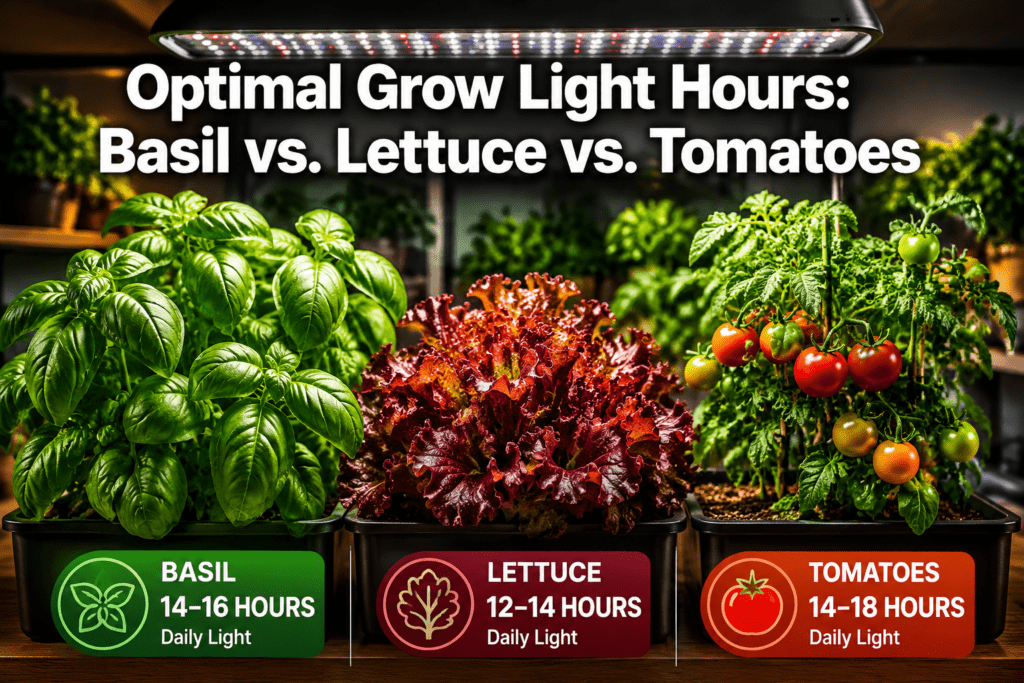
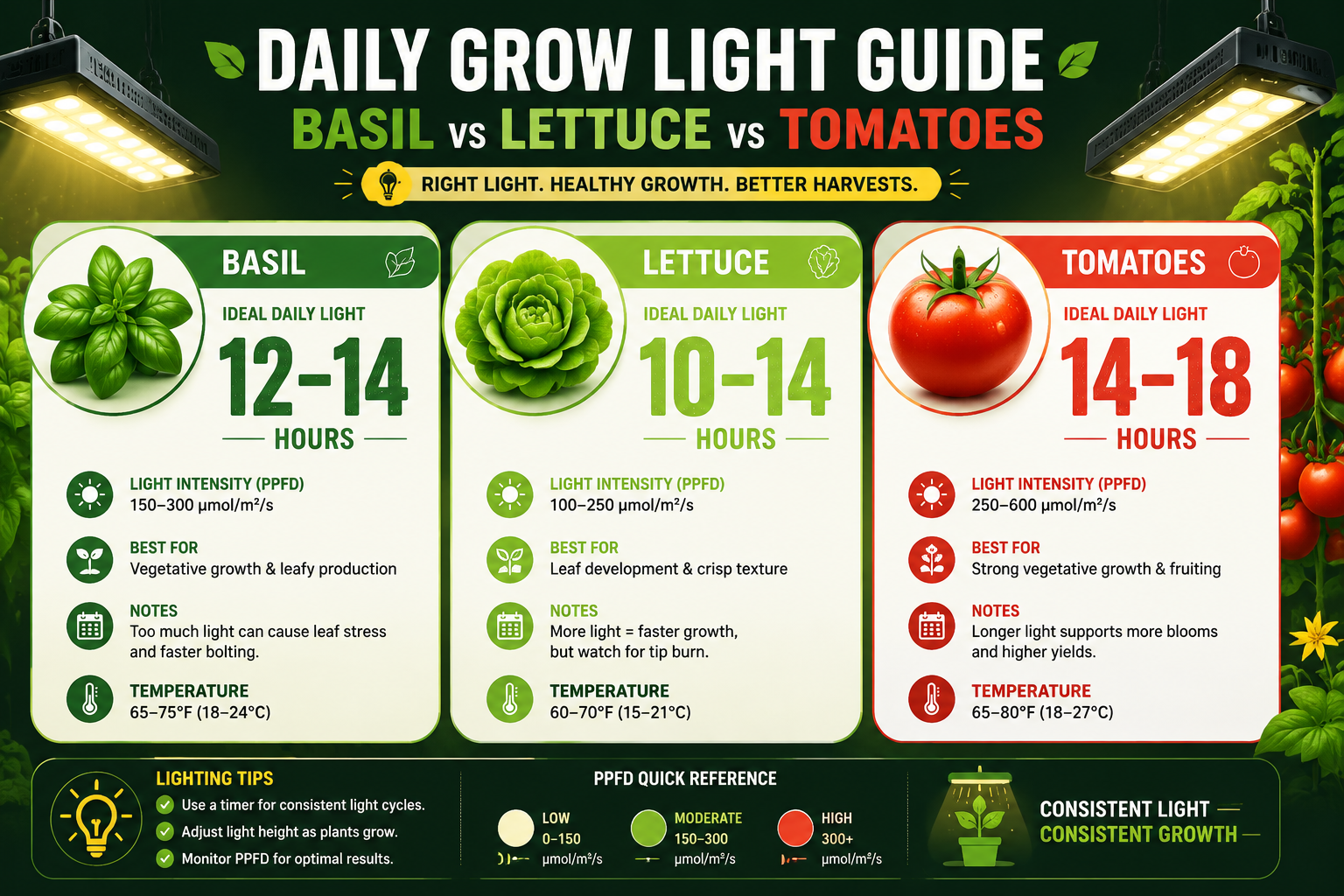
Quick Answer: Basil generally needs 12-14 hours of grow light per day, lettuce thrives on 10-14 hours, while tomatoes, being heavy feeders of light, require a longer duration of 14-18 hours daily. The specific light duration depends on the plant’s growth stage, light intensity, and the desired outcome, ensuring a crucial balance between photosynthesis and essential dark periods.
Key Takeaways
- Basil needs 12-14 hours of daily grow light for optimal growth, favoring high light intensity.
- Lettuce is more flexible, performing well with 10-14 hours of grow light, often tolerating lower light intensities than fruiting plants.
- Tomatoes are high-light demanders, requiring 14-18 hours of grow light daily, especially for flowering and fruiting.
- A crucial “dark period” of at least 6 hours is essential for all plants to carry out metabolic processes and prevent stress.
- LED grow lights are generally superior for indoor vegetables due to their efficiency, spectrum control, and lower heat output compared to fluorescents.
- Monitoring plant health for signs of too much (bleaching, crisping) or too little light (legginess, pale leaves) is critical for success.
- The distance of grow lights from plants is as important as duration; adjust based on light intensity and plant response.
- Investing in a timer is the cheapest and most effective way to manage consistent grow light schedules.
How Many Hours of Grow Light Does Basil Need vs Lettuce vs Tomatoes?
The number of hours of grow light basil needs versus lettuce versus tomatoes varies significantly due to their different botanical classifications and growth habits. Basil (an herb) and lettuce (a leafy green) are typically less demanding than tomatoes (a fruiting plant), which require more intense and prolonged light to produce fruit. Understanding these distinctions is fundamental for successful indoor gardening.
Basil, a popular herb, flourishes with 12-14 hours of grow light per day. It’s a sun-loving plant that will become leggy and less flavorful with insufficient light. Lettuce, on the other hand, is a leafy green that prefers cooler temperatures and can thrive with 10-14 hours of light daily, often tolerating slightly lower light intensities. Tomatoes, being fruiting plants, are the most light-hungry of the three, demanding 14-18 hours of intense grow light per day to support flowering and fruit development. Providing adequate dark periods (6-10 hours) for all these plants is just as important as their light cycle, allowing them to perform essential metabolic processes and rest.

Basil: A Sun-Loving Herb’s Requirements
Basil typically requires 12-14 hours of grow light per day. As a warm-weather, sun-loving herb, it needs consistent, bright light to develop strong stems, lush leaves, and its characteristic aromatic oils. Anything less can lead to leggy, sparse growth and a diminished flavor profile.
For basil, consider full-spectrum LED grow lights that mimic natural sunlight. The intensity should be sufficient to prevent stretching, meaning the leaves should remain close together on the stem. If growing multiple varieties of basil, such as sweet basil, Thai basil, or lemon basil, their light needs are largely similar, focusing on consistent duration and intensity. Ensure good air circulation around your basil plants to prevent fungal issues, especially under grow lights. For tips on managing your indoor herb garden, refer to our Indoor Herb Garden Setup: Grow Fresh Herbs Year-Round In 2026.
Lettuce: The Leafy Green’s Light Needs
Lettuce can survive and thrive with 10-14 hours of grow light per day, making it slightly more tolerant of varying light durations compared to basil and tomatoes. Most lettuce varieties prefer cooler temperatures and can bolt (go to seed) if exposed to excessive heat or overly intense, prolonged light.
For best results, aim for a mid-range light duration, like 12 hours. This provides ample energy for leafy growth without inducing stress. Varieties like loose-leaf lettuce or romaine might stretch a bit if light is too low, while butterhead types are often more compact. If your lettuce shows signs of bolting, like rapid stem elongation and bitter leaves, it might be receiving too much light intensity or experiencing high temperatures, or both. Our guide on Prevent Lettuce Bolting In Summer 2026: Expert Guide offers practical solutions.
Tomatoes: The Fruiting Plant’s High Demand
Tomato plants, especially once they begin to flower and fruit, require 14-18 hours of grow light per day. They are “heavy feeders” not just of nutrients but also of light, needing extended periods of intense illumination to produce a bountiful harvest.
Providing less than 14 hours of light can result in delayed flowering, smaller fruits, and overall weaker plants. During the fruiting stage, the longer light duration helps ensure proper fruit development and ripening. However, even tomatoes need a dark period (at least 6 hours) for crucial physiological processes like respiration and nutrient distribution. Without this dark period, plants can become stressed, leading to poor growth and reduced yields. For more details on cultivating tomatoes in confined spaces, check out Growing Tomatoes In Small Spaces: 2026 Expert Guide.
How Long Do Basil Plants Need to Be Under Grow Lights Each Day?
Basil plants need to be under grow lights for 12 to 14 hours each day for optimal growth and flavor. This duration provides enough photosynthetic activity while still allowing for a necessary dark period for metabolic functions. Consistent light duration is key to preventing legginess and promoting dense, flavorful foliage.
To ensure your basil thrives, use a timer to maintain a regular 12-14 hour light cycle. This consistency mimics natural sunlight patterns and prevents plant stress. Basil is a high-light herb, meaning it not only needs sufficient duration but also good light intensity. If you notice your basil stretching towards the light or developing pale, thin leaves, it’s a sign that either the light duration is too short or the intensity is too low, or both.
Can Lettuce Survive with Less Light Than Other Vegetables?
Yes, lettuce can survive and often thrives with slightly less light than many other vegetables, typically needing 10-14 hours per day. This makes it a good choice for areas with slightly lower light intensity or for gardeners who prefer a shorter daily light cycle compared to sun-loving herbs like basil or fruiting plants like tomatoes.
While lettuce can tolerate less light, providing it with consistent, moderate light within its preferred range will result in faster growth and larger, healthier leaves. If light is too low, lettuce may become leggy and less crisp. Conversely, too much intense light or overly long durations, especially when coupled with high temperatures, can trigger bolting, where the plant prematurely produces a flower stalk and bitter leaves. This is a common mistake that can be avoided by monitoring light and temperature.
What’s the Minimum Grow Light Hours for Tomato Seedlings?
Tomato seedlings require a minimum of 12-16 hours of grow light per day to develop strong, healthy stems and leaves, preparing them for transplanting. Consistent light during this early stage is crucial for preventing leggy, weak seedlings that are more susceptible to disease and less productive later on.
During the seedling phase, bright, consistent light helps build a robust plant structure. Aim for light durations closer to the 16-hour mark if possible, followed by an 8-12 hour dark period. As the seedlings mature and approach transplanting, you can gradually increase the light duration to the 14-18 hour range recommended for mature fruiting plants. Proper light at this stage is a foundational step in ensuring a successful tomato harvest. For advice on when and how to transplant, see our article, Why Are My Vegetable Seedlings Dying After Transplanting?
Do Different Basil Varieties Need Different Amounts of Light?
No, different basil varieties generally do not need significantly different amounts of light; most basil cultivars, including sweet basil, Thai basil, and lemon basil, thrive with 12-14 hours of bright grow light daily. Their fundamental light requirements for photosynthesis and essential oil production remain largely consistent across varieties.
While slight variations in growth habit or leaf color might exist, the underlying biological need for intense, prolonged light is universal for basil. The key factors for success are providing adequate duration and sufficient intensity. If one variety seems to struggle, it’s more likely due to differences in nutrient uptake, water, or temperature rather than a unique light requirement compared to other basil types.
How Much Grow Light Do Indoor Vegetable Gardens Actually Require?
Indoor vegetable gardens generally require between 10 to 18 hours of grow light per day, depending on the specific plants being cultivated. Leafy greens like lettuce need less (10-14 hours), herbs like basil are intermediate (12-14 hours), and fruiting vegetables like tomatoes demand the most (14-18 hours).
The overall requirement for an indoor vegetable garden is not a single number but a tailored approach based on the plant mix. A good strategy is to group plants with similar light needs or use adjustable lighting systems. For a mixed garden, you might run lights for 14 hours, which would be sufficient for basil and most lettuce varieties, though it might be slightly short for optimal tomato fruiting. This often involves a compromise or specialized zones within your grow space. For a broader perspective on successful indoor growing, check out our Indoor Vegetable Gardening 2026: Your Ultimate Guide.
What Happens if I Give My Plants Too Many Hours of Artificial Light?
If plants receive too many hours of artificial light without a sufficient dark period, they can become stressed, exhibiting symptoms like stunted growth, bleached or yellowing leaves, and reduced flowering or fruiting. The dark period is crucial for plants to process sugars, translocate nutrients, and regulate hormones.
Continuous light exposure can disrupt the plant’s natural circadian rhythm, leading to a breakdown in vital metabolic functions. Plants might also show signs of light burn, where the leaves become crisp, dry, or discolored due to overexposure, especially if the light intensity is also too high or the lights are too close. Think of it like overworking; eventually, performance declines.
Are LED Grow Lights Better Than Fluorescent for Herbs?
Yes, LED grow lights are generally better than fluorescent lights for growing herbs like basil, offering superior efficiency, a more customizable spectrum, and significantly less heat output. While fluorescents can work for seedlings and some leafy greens, LEDs provide the intensity and spectrum needed for robust herb growth.
LEDs consume less electricity, have a longer lifespan, and allow for precise control over the light spectrum, which can be optimized for vegetative growth (blue light) or flowering (red light). Their lower heat output also means they can be placed closer to plants without risking heat stress, an important consideration in small indoor setups. For guidance on selecting the right lighting for your small space, consider our article, “Best Grow Lights For Indoor Plants In Small Spaces 2026” – https://minispacegarden.com/best-grow-lights-for-indoor-plants-in-small-spaces/.
Can I Grow Vegetables Under Grow Lights During Winter?
Yes, you can successfully grow a wide variety of vegetables under grow lights during winter, effectively extending your growing season indoors year-round. Grow lights provide the necessary light spectrum and duration that natural winter sunlight often lacks, allowing for continuous harvests of herbs, leafy greens, and even some fruiting vegetables.
Growing vegetables indoors during winter is an excellent way to ensure fresh produce regardless of outdoor conditions. While it requires an initial investment in grow lights and a suitable setup, the ability to harvest fresh basil, lettuce, or even cherry tomatoes when snow is on the ground can be very rewarding. Consider hardy varieties or those known to thrive indoors. For broader tips, refer to “Indoor Gardening Without Sunlight: Grow Plants Year-Round” – https://minispacegarden.com/indoor-gardening-without-sunlight/.
How Close Should Grow Lights Be to Basil and Tomato Plants?
The ideal distance for grow lights to basil and tomato plants depends heavily on the light type, its wattage, and intensity, but generally, LEDs should be 6-18 inches from the canopy, while weaker fluorescents might need to be 2-6 inches away. The goal is to provide ample light without causing heat stress or light burn.
For high-intensity LED grow lights, basil typically thrives with lights 8-12 inches away, and tomatoes might need them 12-18 inches away (adjusting closer during vegetative growth and potentially further during fruiting). Fluorescent lights, being less intense, often need to be much closer, sometimes just a few inches. Always monitor your plants closely for signs of stress: leaves bleaching or crisping indicates lights are too close/intense, while legginess means they are too far or not strong enough.
What’s the Cheapest Way to Provide Grow Light Hours for Vegetables?
The cheapest way to provide grow light hours for vegetables is by using basic full-spectrum LED shop lights or fluorescent T5/T8 fixtures on a simple mechanical timer. While initial cost savings might tempt some to use household bulbs, dedicated grow lights are more efficient and effective in the long run.
Mechanical timers are inexpensive and reliable for maintaining a consistent light schedule without manual intervention. For the lights themselves, basic LED strip lights or T5/T8 fluorescent tubes offer a good balance of cost and performance for herbs and leafy greens. For fruiting plants like tomatoes, however, a slightly more powerful LED fixture is a worthwhile investment for better yields. Exploring budget-friendly indoor gardening options can be found in our “Indoor Gardening On A Budget: Grow More, Spend Less In 2026” – https://minispacegarden.com/indoor-gardening-on-a-budget/.
Do Herbs Like Basil Need Different Light Than Fruiting Plants?
Yes, herbs like basil generally need different light parameters (duration and intensity) than fruiting plants like tomatoes, primarily because their energy allocation differs. Herbs focus on vegetative growth for leaves, while fruiting plants need more intense and prolonged light to support flowering, fruit set, and ripening.
While both require significant light, fruiting plants typically demand higher light intensities and longer durations to produce fruit successfully. Herbs, though sun-loving, often thrive with slightly less intensity and can be content with 12-14 hours of light, whereas a tomato plant producing fruit will demand closer to 14-18 hours of stronger light. Providing an appropriate light environment for each plant type is critical for maximizing their specific yield.

Common Mistakes People Make with Indoor Grow Lights for Vegetables
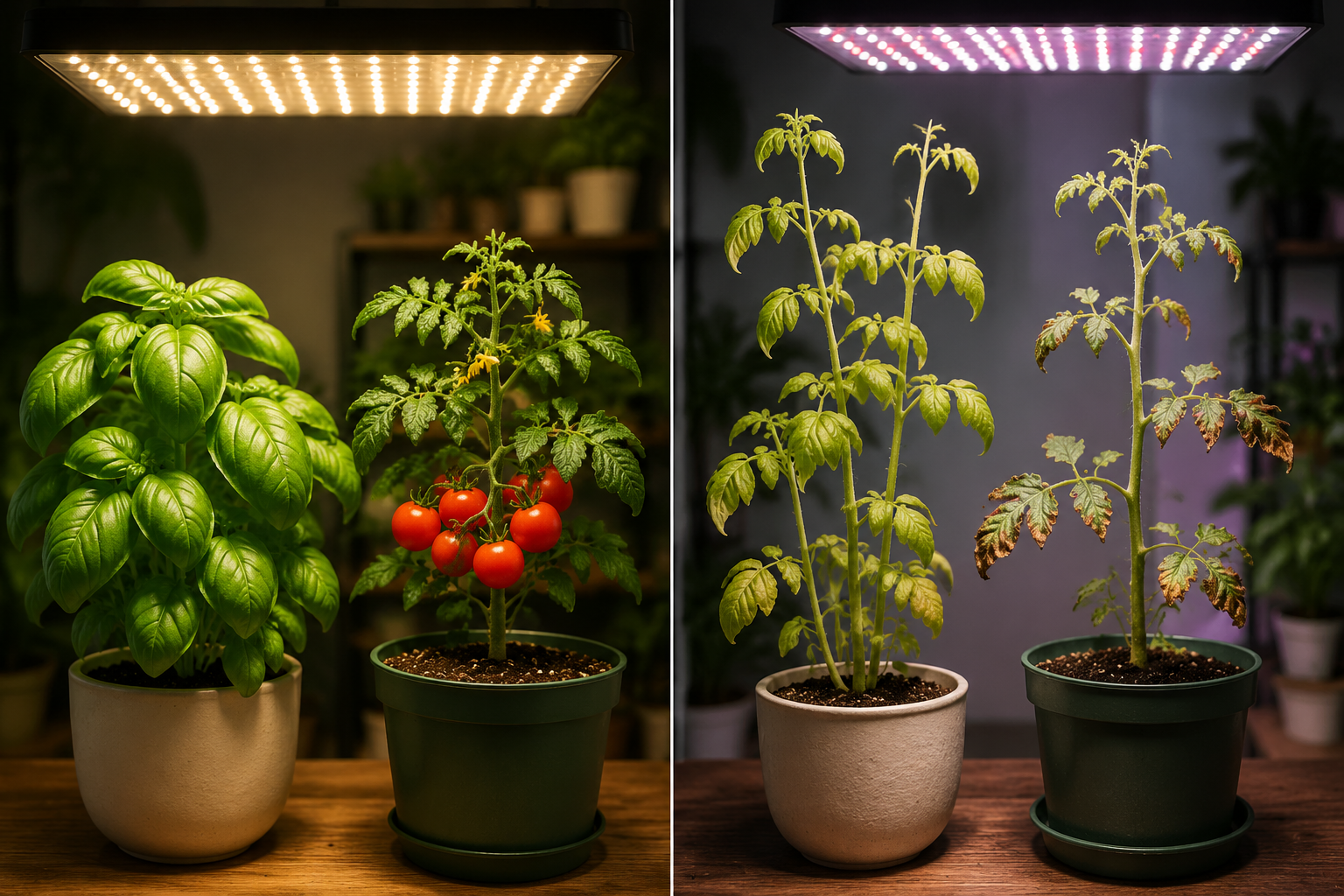
Common mistakes with indoor grow lights for vegetables include incorrect light duration, improper light distance, neglecting the dark period, using the wrong light spectrum, and underestimating overall light intensity needs. These errors can significantly hinder plant growth and yield.
- Incorrect Light Duration: Providing too few hours leads to leggy, weak plants; too many hours stresses plants and inhibits essential dark-period processes.
- Improper Light Distance: Lights placed too far away result in stretching, while lights too close cause bleaching, burning, or heat stress.
- Neglecting the Dark Period: All plants need a period of darkness (typically 6-10 hours) for crucial metabolic functions. Continuous light is detrimental.
- Wrong Light Spectrum: Using general household bulbs instead of full-spectrum grow lights can lead to poor growth because they lack the specific wavelengths plants need.
- Underestimating Intensity: Especially for fruiting plants like tomatoes, low-intensity lights will not provide enough energy for vigorous growth and fruit production.
- Lack of a Timer: Inconsistent light schedules due to manual operation can stress plants. A timer ensures regularity.
Avoiding these common pitfalls by understanding your plants’ specific needs and investing in appropriate equipment can dramatically improve your indoor gardening success. For a comprehensive list of errors to avoid, consult Common Vegetable Growing Mistakes: Avoid Them In 2026.
Conclusion
Understanding the distinct grow light requirements for basil, lettuce, and tomatoes is paramount for successful indoor gardening in 2026. Basil, a sun-loving herb, thrives on 12-14 hours of bright light daily. Lettuce, a leafy green, is content with 10-14 hours, demonstrating more flexibility. Tomatoes, as heavy-fruiting plants, demand the most, needing an intensive 14-18 hours of light each day to produce a bountiful harvest. Crucially, all these plants require a dedicated dark period of at least 6-10 hours to complete essential metabolic processes.
To optimize your indoor garden, invest in quality LED grow lights and reliable timers to ensure consistent light cycles. Monitor your plants for signs of stress, adjusting light duration and distance as needed. By tailoring your approach to each plant’s specific needs, you can enjoy fresh, homegrown produce year-round, regardless of external conditions.
FAQ
What happens if basil gets too much light?
If basil gets too much light, especially high intensity light, its leaves can become bleached, yellowed, or develop crispy edges, indicating light burn or stress. Consistent dark periods are also crucial.
Can I grow basil and lettuce under the same grow light schedule?
Yes, you can grow basil and lettuce under the same grow light schedule, ideally around 12-14 hours per day. This duration satisfies basil’s needs while being well within lettuce’s acceptable range, though lettuce may tolerate slightly less light.
Do seedlings need more or less light than mature plants?
Seedlings generally need slightly less intense light but for a similar duration (12-16 hours) as mature plants to prevent legginess and promote strong initial growth, gradually increasing intensity as they mature.
Is 24 hours of light good for any vegetable?
No, 24 hours of continuous light is generally detrimental to most vegetables as they require a dark period for essential metabolic processes, respiration, and hormone regulation. Sustained darkness helps prevent plant stress and supports healthy growth.
What kind of grow light is best for mixed vegetables?
Full-spectrum LED grow lights are best for mixed vegetables as they offer an optimized spectrum for all growth stages, high energy efficiency, and lower heat output, making them versatile for different plant needs.
How do I know if my plants are getting enough light?
Signs of insufficient light include leggy, stretched stems, pale or yellowing leaves, slow growth, and lack of flowering or fruiting. Conversely, crisp edges, bleached leaves, or stunted growth can indicate too much light.
Can I use household LED bulbs as grow lights?
While some household LED bulbs can provide some light, they are typically not full-spectrum or intense enough to support robust growth for most vegetables. Dedicated grow lights are designed with the specific light spectrum and intensity plants require.
What’s the best way to manage grow light schedules?
The best way to manage grow light schedules is by using an automatic timer. This ensures consistent light durations daily, preventing manual errors and providing the stable environment plants need.
Sources
- Cornell University. (2024). Hydroponic Lettuce Production. Cornell Extension.
- Purdue University. (2023). Indoor Vegetable Growing Guide. Purdue Extension.
- University of Florida. (2025). Lighting for Indoor Plants. UF/IFAS Extension.