What Is Chaos Gardening? The Easiest Way to Grow Food in Small Spaces
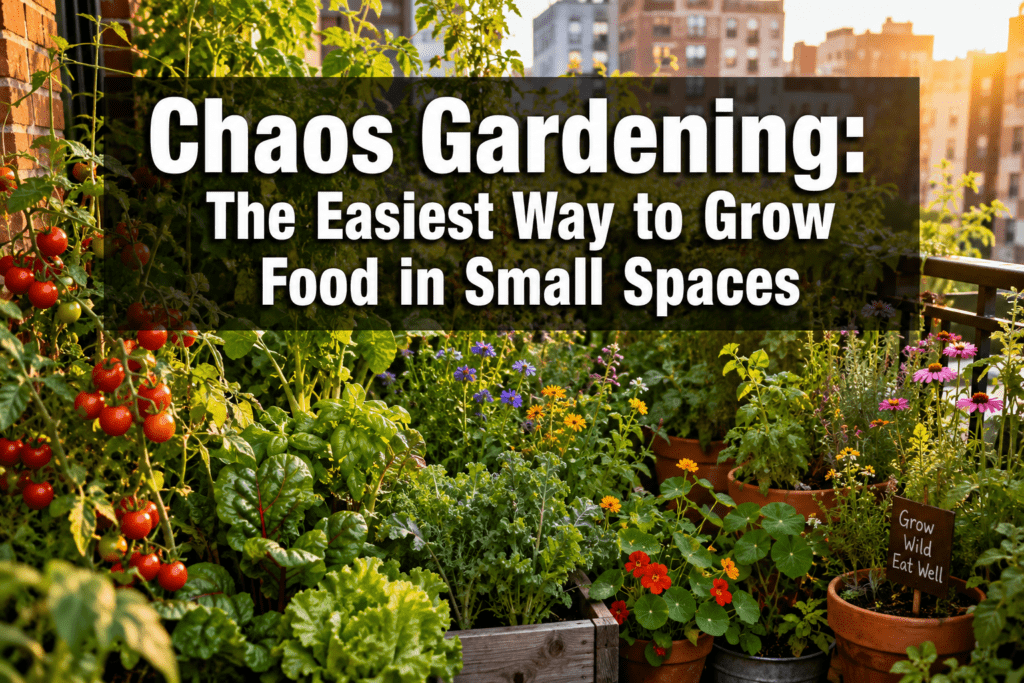
Quick Answer: Chaos gardening is a low-effort growing method where you scatter a mix of seeds across available soil or containers and let plants grow with minimal intervention. It works in spaces as small as a balcony planter or a windowsill box, making it one of the most accessible ways to produce food at home. No precise spacing, no rigid planting schedules, and no expensive equipment required.
Key Takeaways
- Chaos gardening means scattering mixed seeds and letting nature do most of the work, with little planning or maintenance required.
- You can start a chaos garden in as little as a single container, a raised bed, or a small patch of ground.
- It costs significantly less than traditional gardening because you skip transplants, specialty tools, and complex soil amendments.
- Fast-growing vegetables like radishes, lettuce, spinach, and herbs are the best performers in a chaos garden setup.
- Apartment dwellers can absolutely do chaos gardening using containers, grow bags, or window boxes.
- The biggest beginner mistakes are overwatering, choosing the wrong seeds for their climate, and planting too late in the season.
- A small chaos garden (4 to 10 square feet) can realistically produce enough fresh herbs and salad greens to supplement meals weekly.
- Chaos gardening works across most climate zones when you choose regionally appropriate seed mixes.
What Exactly Is Chaos Gardening and How Does It Work
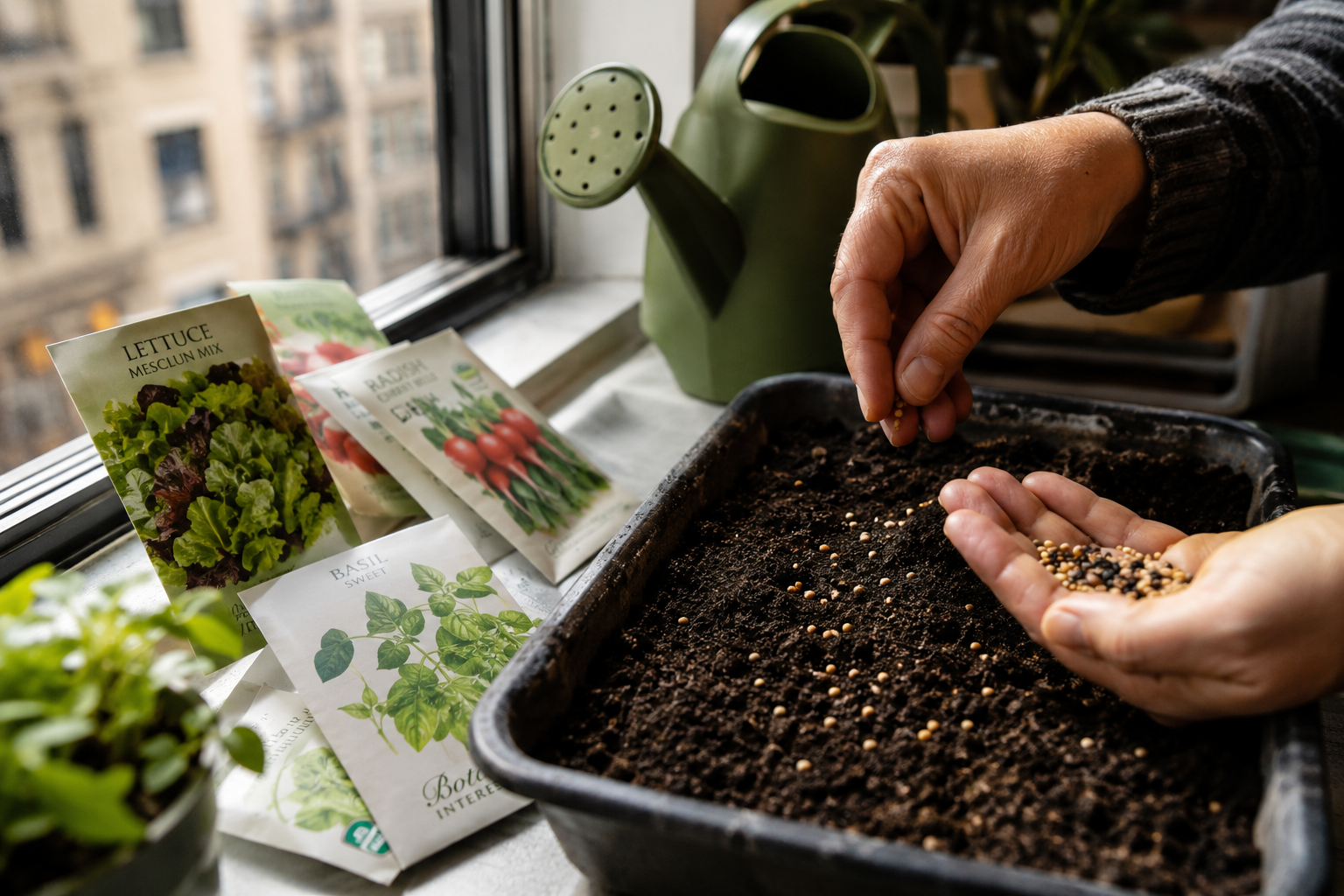
Chaos gardening is a seed-scattering technique where you mix multiple seed varieties together and broadcast them across prepared soil without following traditional spacing or row guidelines. Plants compete, self-thin, and grow in a dense, naturalistic pattern that mimics how plants grow in the wild.
The method gained traction on social media platforms around 2022 and 2023, particularly among urban gardeners frustrated with the steep learning curve of conventional vegetable growing. The core idea is simple: prepare a patch of soil or fill a container with good compost, scatter your seed mix, water it in, and check back regularly.
How the process works in practice:
- Choose a container, raised bed, or small ground patch with at least 4 to 6 hours of daily sunlight.
- Fill or loosen the soil to about 6 inches deep and mix in compost if available.
- Combine 3 to 6 compatible seed varieties in a small bag and shake to mix.
- Scatter the seed mix evenly across the surface, then press seeds lightly into the soil.
- Water gently and keep the soil moist until germination (usually 5 to 14 days).
- Thin only the most overcrowded clusters once seedlings reach 2 to 3 inches tall.
- Harvest outer leaves and smaller plants as they mature to give remaining plants more room.
The “chaos” part refers to the unplanned layout, not to neglect. You still water and check for pests, but you skip the precise measuring, transplanting, and rigid scheduling that intimidates many beginners.
How Much Space Do I Need to Start a Chaos Garden
You need very little space. A single 12-inch container, a window box, or a 2×2-foot raised bed is enough to start. Even a repurposed wooden crate or a 5-gallon bucket works.
Most beginners start with 4 to 10 square feet total, which is manageable, productive, and easy to maintain. If you have a balcony, a patio, or even a sunny windowsill, you have enough space for a chaos garden that produces real food.
Space options by living situation:
| Living Situation | Recommended Starting Space | Best Container Type |
|---|---|---|
| Apartment with balcony | 4 to 8 sq ft | Grow bags, window boxes |
| Ground-floor patio | 6 to 12 sq ft | Raised bed, large pots |
| House with small yard | 10 to 25 sq ft | In-ground bed or raised bed |
| Indoor only | 1 to 2 sq ft | Windowsill box, deep tray |
Can I Do Chaos Gardening If I Live in an Apartment
Yes. Apartment chaos gardening is one of the most popular applications of this method. Balconies, windowsills, and even indoor grow setups under a basic LED grow light all work.
The key constraint for apartment gardeners is sunlight. Most food crops need 4 to 6 hours of direct sun per day. South- or west-facing balconies and windows are ideal. If your space gets less than 4 hours, stick to shade-tolerant crops like lettuce, spinach, chives, and parsley.
Apartment-friendly chaos garden tips:
- Use lightweight grow bags (fabric pots) instead of heavy ceramic containers to stay within balcony weight limits.
- A 10-gallon grow bag holds enough soil for a productive mixed salad garden.
- Window boxes mounted on railings add growing space without taking up floor area.
- If you have no outdoor space at all, a simple 4-bulb LED grow light on a timer (14 hours on, 10 hours off) can support microgreens, herbs, and small lettuce varieties indoors.
Is Chaos Gardening Cheaper Than Traditional Gardening
In most cases, yes, chaos gardening is significantly cheaper than traditional vegetable gardening. The primary reason is that you start from seed rather than buying transplants, and you skip specialty tools, trellises, and complex soil systems.
A basic chaos garden starter setup typically costs between $15 and $40, depending on whether you already own containers. A packet of mixed salad seeds costs $3 to $5 and can seed a 4-square-foot bed multiple times.
Where chaos gardening saves money:
- No transplants (seeds cost a fraction of the price)
- No precise spacing tools or garden planning software
- Minimal fertilizer needed when you start with quality compost
- Reusable containers and grow bags last multiple seasons
The one area where costs can add up is soil. Good quality potting mix or compost is worth the investment, especially in containers. Cheap potting soil drains poorly and limits plant growth. Budget roughly $10 to $20 for a 1.5-cubic-foot bag of quality potting mix for your first container setup.
What Vegetables Grow Best With Chaos Gardening Techniques
Fast-maturing, cut-and-come-again crops perform best in chaos gardens. These are plants that tolerate close spacing, grow quickly from seed, and can be harvested repeatedly without pulling the whole plant.
Top performers for chaos gardening:
- Lettuce (all varieties) – germinates in 7 to 10 days, harvestable in 30 days
- Radishes – ready in as little as 25 days, great for filling gaps
- Spinach – cold-tolerant, productive in small spaces
- Arugula – fast, spicy, and nearly foolproof
- Kale – slower but highly productive over a long season
- Chives, parsley, cilantro – herbs that thrive in dense plantings
- Bush beans – compact, no staking needed
- Nasturtiums – edible flowers that also deter pests
Avoid vining crops like cucumbers, squash, and indeterminate tomatoes in a true chaos garden setup. They need more space and structure than the method allows. If you want tomatoes, use a compact determinate variety in its own container alongside your chaos bed.
What Kind of Soil and Supplies Do I Need for Chaos Gardening
You need three things: a container or bed, quality soil or compost, and seeds. That’s the honest minimum.
Basic supply list:
- Container, raised bed, or prepared ground patch
- Quality potting mix or garden compost (avoid cheap, peat-heavy mixes for containers)
- Mixed seed packets suited to your season
- A watering can or gentle hose attachment
- Optional: a thin layer of vermiculite to cover seeds after scattering
You do not need grow lights (unless gardening indoors), fertilizer spikes, pH meters, or specialty amendments to start. Once you’re producing food consistently, you can add a balanced liquid fertilizer every 2 to 3 weeks to boost yields, but it’s not essential for a first season.
How Is Chaos Gardening Different From Regular Vegetable Gardening
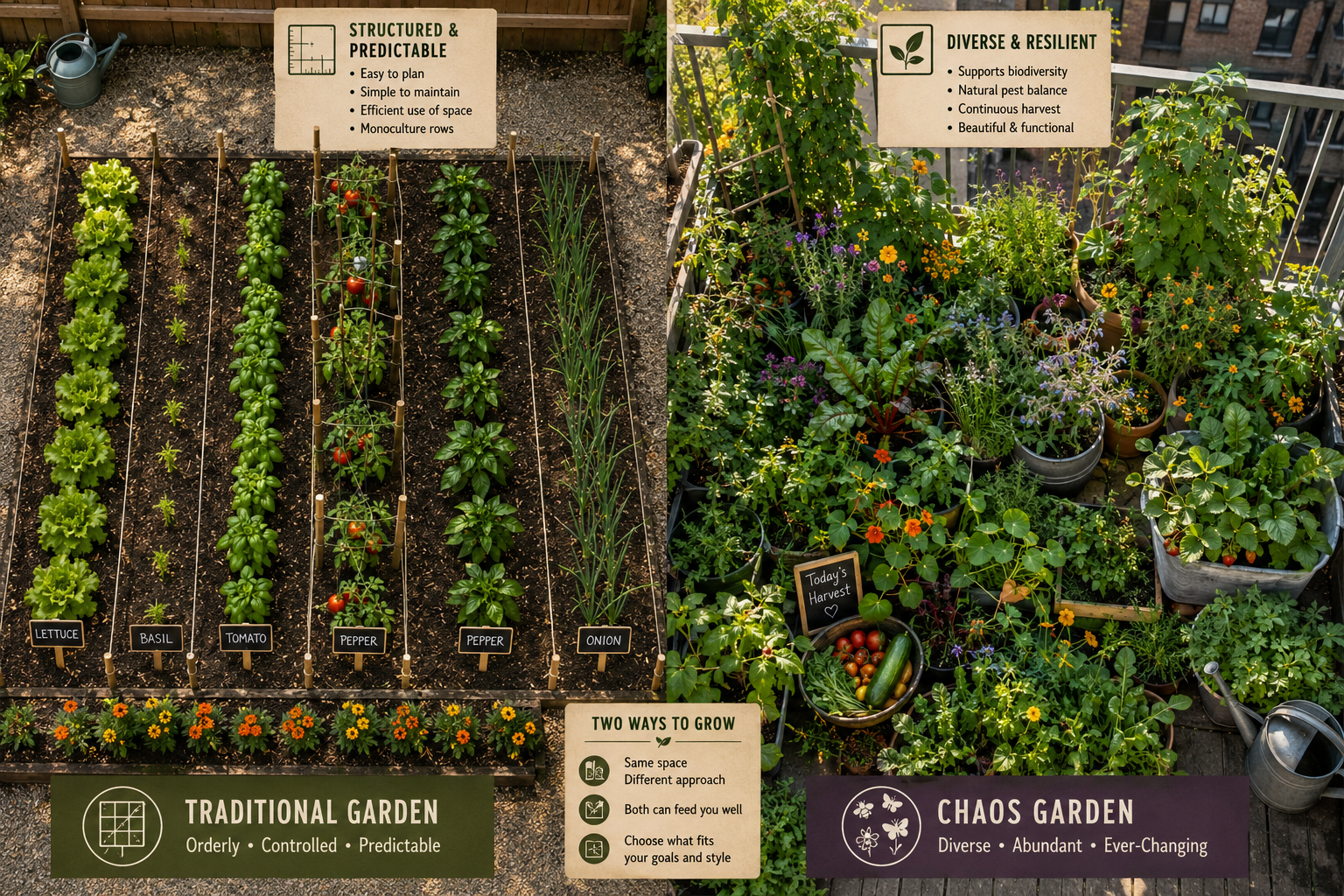
Traditional vegetable gardening follows precise rules: specific spacing between plants, dedicated rows, timed transplanting schedules, and individual crop management. Chaos gardening abandons most of those rules in favor of density, diversity, and simplicity.
The practical difference shows up in time investment and skill required. A traditional garden bed requires planning, hardening off seedlings, spacing calculations, and crop rotation knowledge. A chaos garden requires soil, seeds, water, and patience.
Key differences at a glance:
| Factor | Traditional Gardening | Chaos Gardening |
|---|---|---|
| Planning required | High | Low |
| Skill level needed | Intermediate | Beginner |
| Seed-to-harvest time | Varies widely | Often 25 to 45 days |
| Space efficiency | Moderate | High |
| Maintenance time | 2 to 4 hours/week | 15 to 30 min/week |
| Biodiversity | Usually low | High |
How Much Time Do I Need to Spend Maintaining a Chaos Garden
Most chaos gardens require 15 to 30 minutes of attention per week once established. The main tasks are watering (daily in hot weather, every 2 to 3 days in cooler months), checking for pest damage, and harvesting.
The setup phase takes the most time: roughly 1 to 2 hours to prepare soil, fill containers, and scatter seeds. After that, maintenance is genuinely minimal compared to traditional gardening.
Can Chaos Gardening Work in Different Climate Zones
Yes, chaos gardening adapts to most climate zones when you choose seeds appropriate for your region and season. The method itself is climate-neutral; what changes is your seed selection and timing.
- Cool climates (USDA Zones 3 to 5): Focus on cold-tolerant crops like spinach, kale, and radishes. Start in late spring after last frost.
- Moderate climates (Zones 6 to 8): The widest variety of crops work. You can often get two full chaos garden cycles per year (spring and fall).
- Hot climates (Zones 9 to 11): Avoid summer planting for cool-season crops. Focus on heat-tolerant herbs, beans, and heat-adapted lettuce varieties. Plant in fall through early spring.
Check your local last frost date and first frost date before choosing seeds. Most seed packets list the minimum soil temperature for germination, which is the most reliable guide for timing.
What Are the Common Mistakes Beginners Make With Chaos Gardening
The most common mistake is treating “chaos” as a reason to be completely hands-off. Plants still need consistent water, especially in containers, and ignoring them for a week in hot weather can kill seedlings quickly.
Other frequent beginner mistakes:
- Planting too late in the season – Most cool-season crops fail if planted when daytime temperatures exceed 80°F (27°C) consistently.
- Using poor quality soil – Cheap potting mix leads to poor germination and weak plants.
- Overwatering – Soggy soil causes root rot. Check that containers have drainage holes.
- Choosing incompatible seeds – Mixing slow-growing crops (like carrots) with fast ones (like radishes) means the fast growers crowd out the slow ones before they establish.
- Skipping thinning entirely – Some light thinning of the densest clusters helps remaining plants thrive.
- Expecting full meals immediately – A small chaos garden supplements your diet; it doesn’t replace a grocery run in the first season.
How Much Food Can I Actually Produce With a Small Chaos Garden
A well-managed 4 to 6-square-foot chaos garden focused on salad greens and herbs can realistically produce 1 to 3 pounds of harvestable greens per week during peak growing season. That’s enough to cover a household’s salad needs several times over.
Yield depends on sunlight, soil quality, watering consistency, and crop choice. Radishes and lettuce are the highest-yield options for small spaces. Herbs like basil and chives produce continuously and add significant value relative to their grocery store cost.
Expecting to grow all of your family’s vegetables from a small chaos garden is unrealistic. But expecting to cut your fresh herb and salad green grocery spending significantly? That’s achievable within the first season.
Are There Online Communities or Resources for Chaos Gardeners
Yes, several active communities exist. The r/vegetablegardening and r/NoLawnMovement subreddits on Reddit both have large followings with chaos gardening discussions. TikTok and Instagram have thousands of creators documenting chaos garden experiments, which makes it easy to see real results in real spaces.
For seed sourcing, Baker Creek Heirloom Seeds and Botanical Interests both offer mixed seed collections well-suited to chaos gardening. Many local seed libraries (often housed in public libraries) offer free seeds, which makes starting a chaos garden nearly cost-free.
Pros and Cons of Chaos Gardening Compared to Structured Gardens
Pros:
- Extremely low barrier to entry for beginners
- Low cost, especially compared to buying transplants
- High biodiversity reduces pest pressure naturally
- Flexible and forgiving of imprecision
- Works in very small spaces
Cons:
- Lower yields per plant compared to optimally spaced traditional gardens
- Not ideal for large vegetables or vining crops
- Harder to track what’s growing where
- Some crops don’t perform well in dense, mixed plantings
- Requires good seed selection knowledge to avoid incompatible mixes
Choose chaos gardening if you’re a beginner, have limited space, or want a low-maintenance growing system. Stick with traditional methods if you’re growing specific high-value crops, want maximum yield from a large plot, or are growing for preservation and storage.
Frequently Asked Questions
What is chaos gardening in simple terms?
Chaos gardening is the practice of scattering a mix of vegetable and herb seeds across prepared soil without precise spacing or planning, then letting the plants grow naturally with minimal intervention.
Do I need gardening experience to try chaos gardening?
No. Chaos gardening is specifically suited to beginners. The method removes most of the technical barriers that make traditional gardening feel overwhelming.
How long before I can harvest from a chaos garden?
Fast crops like radishes are harvestable in 25 days. Lettuce and arugula are ready in 30 to 45 days. Most chaos gardens produce something harvestable within 4 to 6 weeks of planting.
Can I chaos garden year-round?
In mild climates (Zones 9 to 11), yes. In colder zones, you can extend the season with a cold frame or row cover, but most gardeners in Zones 3 to 7 have a natural growing window of 4 to 7 months.
What seeds are best for a first chaos garden?
A mix of loose-leaf lettuce, arugula, radishes, and chives is an excellent starting point. All germinate quickly, tolerate close spacing, and are forgiving of beginner mistakes.
Do I need to add fertilizer to a chaos garden?
Not at first. Starting with quality compost-rich soil provides enough nutrients for most crops through their first growth cycle. After 4 to 6 weeks, a diluted liquid fertilizer every 2 to 3 weeks helps maintain productivity.
Is chaos gardening the same as a wildflower meadow?
They share the same seed-scattering approach, but chaos gardening focuses on edible crops rather than ornamental flowers. Some chaos gardeners mix in edible flowers like nasturtiums and calendula for pest control and aesthetics.
Can I use chaos gardening in raised beds?
Yes, raised beds are actually ideal for chaos gardening. They offer good drainage, defined boundaries, and easy access for harvesting.
What’s the difference between chaos gardening and companion planting?
Companion planting is a deliberate strategy of pairing specific plants known to benefit each other. Chaos gardening is less intentional; you scatter a mix and let natural competition and cooperation sort itself out.
Will weeds be a problem in a chaos garden?
Dense planting is one of chaos gardening’s natural advantages: when your crops cover the soil quickly, there’s less room for weeds to establish. Some weeding may still be needed, especially in the first few weeks before your seedlings fill in.
Conclusion
Chaos gardening answers a real problem: most people want to grow food but don’t have the time, space, or expertise that traditional gardening seems to demand. The method strips the process down to its essentials, scatter seeds, water consistently, harvest often, and it delivers real results even in the smallest urban spaces.
If you’re ready to start, here’s a practical next step: buy one packet each of loose-leaf lettuce, arugula, and radish seeds. Fill a 10-gallon grow bag or a window box with quality potting mix. Mix the seeds together, scatter them across the surface, press them in lightly, and water. Check back in a week. You’ll likely see your first sprouts, and from there, the process takes care of itself.
What Is Chaos Gardening? The Easiest Way to Grow Food in Small Spaces is ultimately about lowering the barrier between wanting to grow food and actually doing it. The best chaos garden is the one you start this week, not the one you plan perfectly for next year.
References
- Chalker-Scott, L. (2015). The Science of Gardening. Washington State University Extension. https://extension.wsu.edu
- Baker Creek Heirloom Seeds. (2023). Seed catalog and growing guides. https://www.rareseeds.com
- Botanical Interests. (2023). Seed planting guides. https://www.botanicalinterests.com
- USDA Plant Hardiness Zone Map. (2023). https://planthardiness.ars.usda.gov