How to Water Houseplants Correctly (Without Overwatering) – 2026 Guide
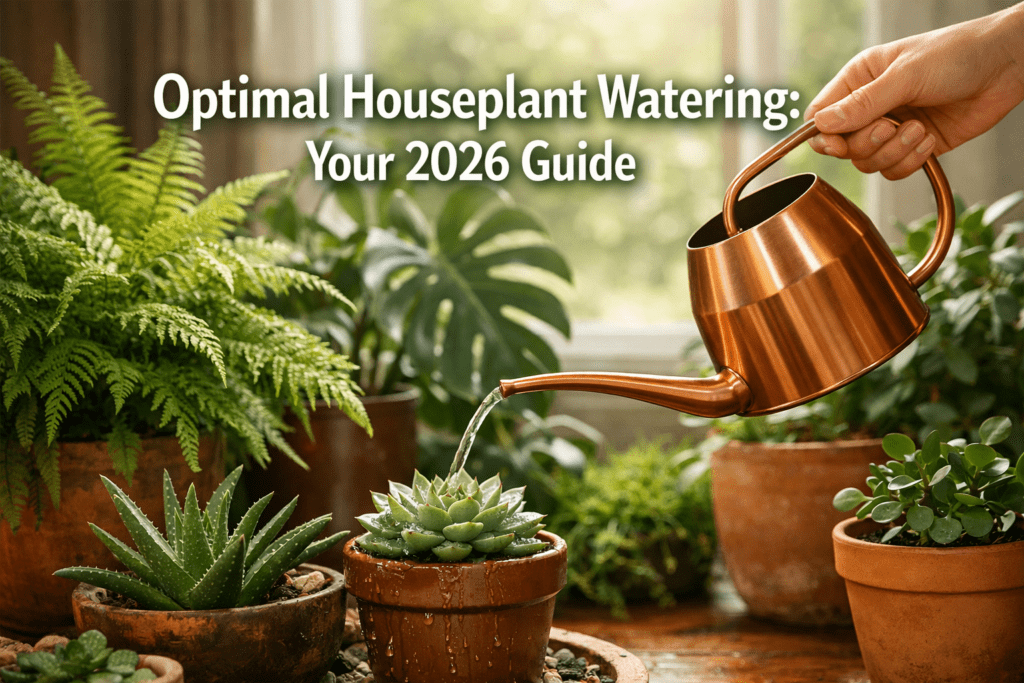
Quick Answer: The best practices for watering houseplants in 2026 revolve around understanding individual plant needs, assessing soil moisture accurately before watering, providing thorough and consistent hydration, ensuring proper drainage, and adapting to environmental factors like humidity and light. Overwatering remains the leading cause of houseplant demise, emphasizing the critical role of these tailored approaches.
Quick Diagnosis: Yellow leaves, soggy soil, and mushy stems usually mean overwatering, while dry soil and drooping leaves often signal underwatering.
Houseplant Watering Problems at a Glance
| Plant Symptom | Most Likely Cause |
|---|---|
| Yellow leaves | Overwatering |
| Dry brown edges | Underwatering |
| Mushy stems | Root rot |
| Wilting with wet soil | Overwatering stress |
| Drooping with dry soil | Thirsty plant |
Key Takeaways
- Assess Soil Moisture: Always check the top 1-2 inches of soil (or use a moisture meter) before watering; don’t rely solely on a schedule.
- Water Thoroughly: Water until liquid drains from the pot’s bottom, ensuring the entire root ball is hydrated.
- Ensure Drainage: Use pots with drainage holes and a saucer to prevent root rot. Promptly empty excess water.
- Understand Plant Needs: Different species have vastly different watering requirements; research your specific plants.
- Consider Environmental Factors: Humidity, light, temperature, and pot material all influence how quickly soil dries out.
- Use Room Temperature Water: Cold water can shock roots; use tepid water for best results.
- Bottom Watering: For some plants, soaking from the bottom can promote stronger root growth and avoid soil compaction.
- Avoid Overwatering: This is the most common mistake. Signs include yellowing leaves, soft stems, and moldy soil.
- Recognize Underwatering: Wilted leaves, dry, crusty soil, and stunted growth are common indicators.
- Adjust Seasonally: Plants generally need less water in winter when growth slows and more in active growing seasons.
Top 5 Houseplant Watering Tips
- Always check soil moisture before watering
- Use pots with proper drainage holes
- Water deeply until excess drains out
- Reduce watering during winter months
- Avoid letting plants sit in standing water
Why is Proper Watering Crucial for Houseplants in 2026?
Proper watering is crucial because it directly impacts a houseplant’s ability to absorb nutrients, photosynthesize, and maintain its structural integrity, making it the single most vital aspect of plant care. Water acts as the transportation system for nutrients from the soil to the leaves and is a key component in cellular processes that enable growth and overall plant health.
Water is more than just a drink for plants; it’s essential for their survival and thriving. Here’s why getting it right is non-negotiable:
- Nutrient Absorption: Water dissolves nutrients in the soil, allowing plant roots to absorb them. Without adequate water, even nutrient-rich soil is useless.
- Photosynthesis: Plants use water, along with sunlight and carbon dioxide, to create energy (sugars) through photosynthesis. Insufficient water halts this vital process.
- Turgor Pressure: Water maintains turgor pressure within plant cells, which keeps stems firm and leaves upright. Lack of water leads to wilting.
- Temperature Regulation: Transpiration, the process of water evaporating from leaves, helps cool the plant, similar to how humans sweat.
- Preventing Pests and Diseases: Healthy, well-watered plants are more resilient to pests and diseases. Stressed plants, especially those overwatered and suffering from root rot, become vulnerable.
Many common houseplant problems, such as yellowing leaves, brown tips, or stunted growth, can often be traced back to incorrect watering practices. Mastering the best practices for watering houseplants in 2026 is foundational for any successful indoor gardener.
How Do You Accurately Assess Soil Moisture for Houseplants?
Accurately assessing soil moisture for houseplants involves using your fingers, a moisture meter, or judging the pot’s weight to determine if the plant genuinely needs water, rather than adhering strictly to a rigid schedule. Each method provides valuable insight into the actual water content within the soil.
Here are the primary methods for checking soil moisture:
The Finger Test
This is the simplest and often most reliable method for most plants.
- Insert Finger: Push your index finger about 1-2 inches deep into the soil. For larger pots or plants that prefer to dry out more, go a bit deeper.
- Feel the Soil:
- Dry: If the soil feels dry to the touch at this depth, it’s likely time to water.
- Damp: If it feels cool and damp, wait.
- Wet: If it feels soggy or sticky, it’s definitely too wet.
Decision Rule: Water most plants when the top 1-2 inches of soil feel dry. Succulents and cacti prefer to dry out almost completely before rewatering.
Using a Moisture Meter
A moisture meter is a useful tool, especially for beginners or those with many plants.
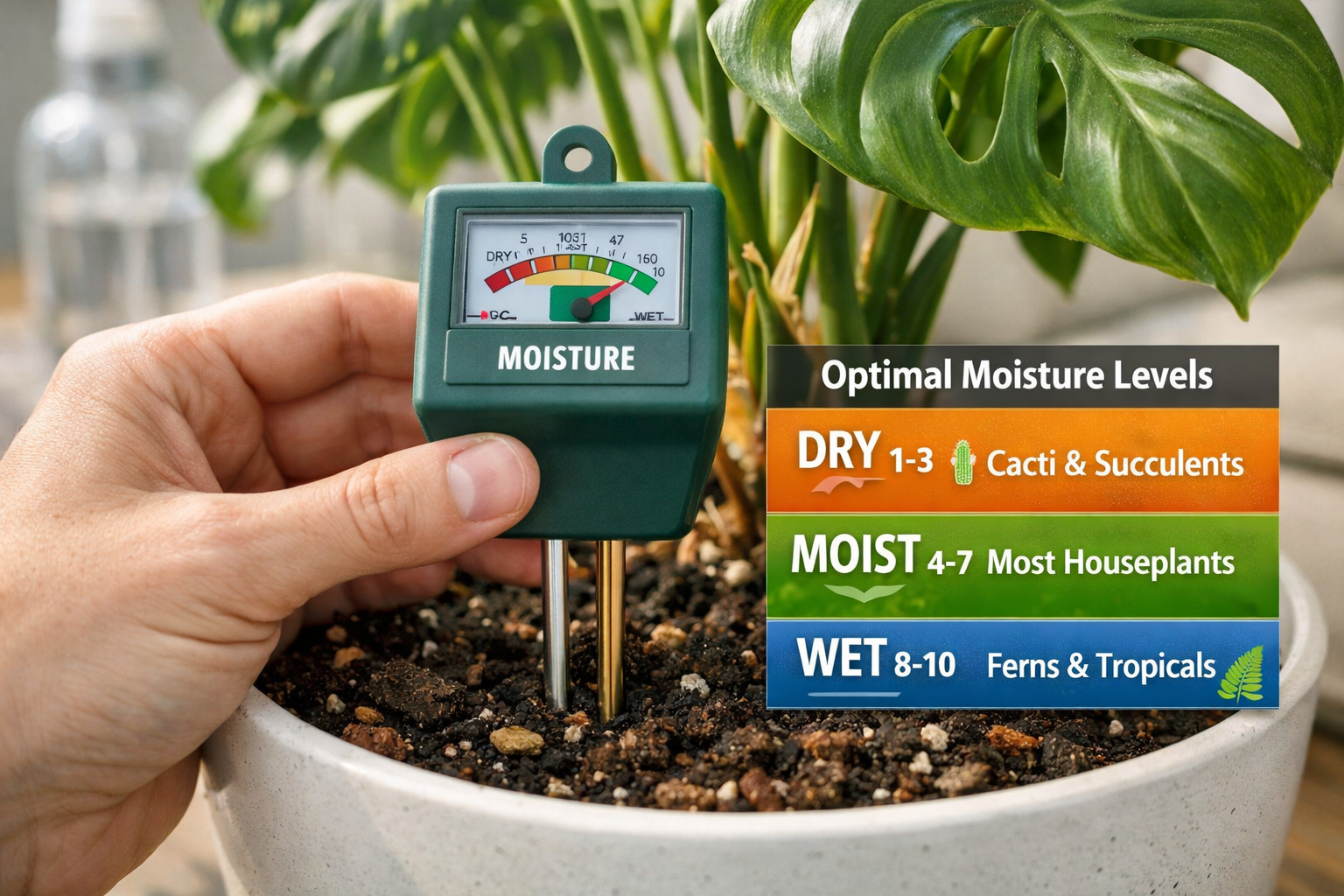
- Insert Probe: Push the probe of the moisture meter into the soil, usually about two-thirds of the way down into the pot. Avoid hitting major roots.
- Read the Dial: The meter will typically have a scale indicating “Dry,” “Moist,” and “Wet” or numerical readings.
- Interpret:
- Dry (1-3): Time to water.
- Moist (4-7): Check again in a few days.
- Wet (8-10): Do not water.
Common Mistake: Leaving the moisture meter in the soil constantly can damage the probe and provide inaccurate readings. Insert, read, and remove. For advice on tracking, see our guide on Indoor Plant Watering Schedule Trackers: Methods Compared (2026).
Lifting the Pot
The weight of a pot can tell you a lot about its moisture content.
- Feel the Weight: Lift the pot shortly after watering when the soil is saturated, noting its weight.
- Compare: When the pot feels significantly lighter, it indicates the soil has dried out. This method becomes intuitive with practice.
Edge Case: This method is less effective for very large or heavy pots where the weight difference isn’t easily discernible.
Most Common Houseplant Watering Mistakes
- Watering on a fixed schedule without checking soil
- Using pots without drainage holes
- Overwatering low-light plants
- Leaving water sitting in saucers
- Using cold water directly from the tap
- Ignoring humidity and seasonal changes
What are the Best Techniques for Watering Houseplants in 2026?
The best techniques for watering houseplants in 2026 prioritize thorough saturation, proper drainage, and species-specific approaches like top or bottom watering, ensuring the entire root system receives adequate hydration without becoming waterlogged. Applying these methods prevents common issues like root rot and drought stress.
Top Watering
This is the most common method and works for the majority of houseplants.
- Water Slowly and Evenly: Pour water over the entire surface of the soil, not just around the stem. This encourages roots to spread throughout the pot.
- Water Until Drainage: Continue watering until you see water flowing out of the drainage holes at the bottom of the pot. This ensures the entire root ball is saturated.
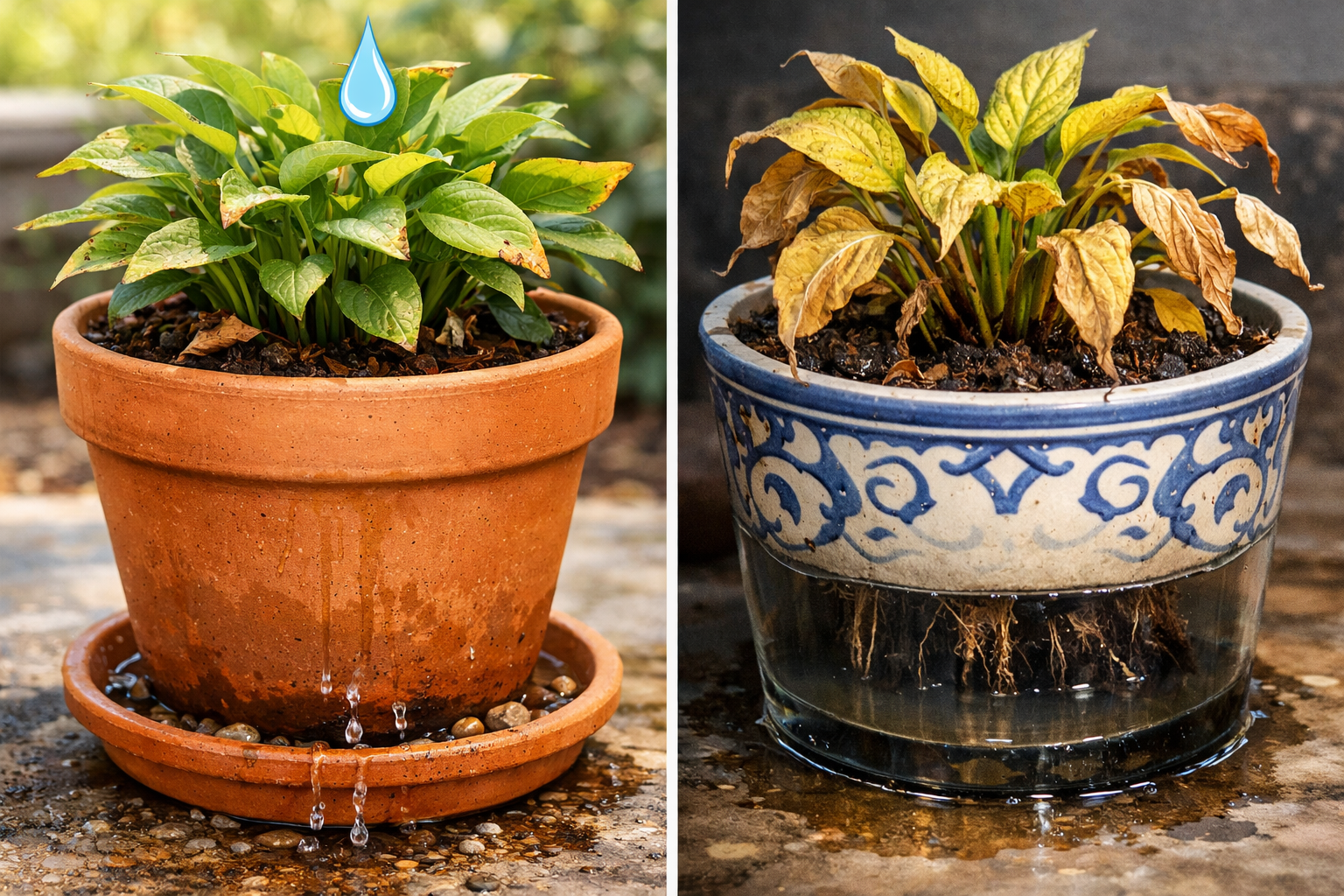
- Empty Saucer: Crucially, empty any standing water from the saucer within 15-30 minutes. Leaving roots sitting in water can quickly lead to root rot.
Pros of Top Watering:
- Washes away accumulated salts from the soil surface.
- Simple and quick for most plants.
Cons of Top Watering:
- Can compact the soil over time.
- May not thoroughly hydrate very dry or peaty soil, which can repel water (hydrophobic soil).
Bottom Watering
Bottom watering allows plants to absorb water from the base of the pot, promoting deeper root growth and preventing soil compaction or fungal issues on the soil surface.
- Prepare a Basin: Place the potted plant (with drainage holes!) into a basin, sink, or tray filled with 1-2 inches of room temperature water.
- Let Absorb: Allow the plant to sit in the water for 15-45 minutes, or until the top of the soil feels slightly damp.
- Remove and Drain: Take the plant out of the basin and let any excess water drain completely before returning it to its spot.
Pros of Bottom Watering:
- Encourages robust root systems as roots grow downwards towards the water source.
- Avoids wetting foliage, which can prevent certain fungal diseases (e.g., powdery mildew).
- Ideal for plants sensitive to top-down watering, like African violets, or those with dense foliage.
- Excellent for rehydrating very dry, hydrophobic soil.
Cons of Bottom Watering:
- Does not flush out mineral salts, which can accumulate on the soil surface over time.
- Requires periodic top watering to rinse salts.
- Can be time-consuming for many plants.
Decision Rule: Choose bottom watering for plants prone to fungal issues, those with dense foliage, or if your soil becomes overly hydrophobic. Otherwise, top watering is generally sufficient. Our “Indoor Watering Guide: Master Houseplant Hydration In 2026” provides more detailed tips on both methods.
Watering Container Plants in Hot Weather
For houseplants that might be moved outdoors temporarily or for container plants on balconies, hot weather significantly increases water evaporation.
- Frequency: Plants in hot conditions often need watering daily or every other day.
- Time of Day: Water early in the morning or late in the evening to reduce evaporation and allow plants to absorb water before intense heat.
- Mulch (if applicable): A thin layer of mulch can help retain soil moisture.
For comprehensive guidance on this specific challenge, refer to our article on “Watering Container Plants In Hot Weather USA: 2026 Expert Guide.”
How Do Environmental Factors Impact Houseplant Watering Needs?
Environmental factors such as light, temperature, humidity, and airflow significantly influence how quickly a houseplant uses water, requiring adjustments to watering frequency and volume to prevent over or under-hydration. Ignoring these variables often leads to plant stress.
Light Levels
- High Light: Plants receiving more light photosynthesize more actively and use water faster. They generally need to be watered more frequently.
- Low Light: Plants in lower light conditions grow slower and use less water. Overwatering is a common problem for low-light plants.
- Example: A peace lily in a bright, south-facing window will need water more often than the same plant in a dim corner. For insights on low-light plants, explore our guide on “Low Light Indoor Plants: Your 2026 Guide To Easy Greenery.”
Temperature
- Warm Temperatures: Higher temperatures increase evaporation from the soil and transpiration from the leaves, meaning plants dry out faster and need more frequent watering.
- Cooler Temperatures: Plants in cooler environments will dry out more slowly and require less frequent watering.
Humidity
- Low Humidity: Dry air (common in heated or air-conditioned homes) causes more water to evaporate from both the soil and the plant leaves. Plants will dry out faster and may benefit from increased humidity or more frequent watering.
- High Humidity: Humid air slows down evaporation and transpiration, so plants will retain moisture longer and need less frequent watering.
- Tip: Consider grouping plants or using a pebble tray to increase local humidity. For addressing related issues, see “Brown Leaf Tips: Instant Solutions For Low Humidity Plants (2026).”
Airflow & Potting Material
- Good Airflow: While beneficial for preventing fungal diseases, excessive airflow can also speed up soil drying.
- Pot Material:
- Terracotta/Unglazed Ceramic: Porous materials allow air and moisture to pass through, causing soil to dry out faster. Great for plants that prefer drier conditions.
- Plastic/Glazed Ceramic: Non-porous materials retain moisture longer. Good for plants that like consistently moist soil.
- For choosing the right home for your plant, check out “Best Pots For Indoor Plants 2026: Ultimate Guide To Choosing.”
Seasonal Changes
- Growing Season (Spring/Summer): Most plants are actively growing and need more frequent watering.
- Dormancy (Fall/Winter): Growth slows down, and plants use less water. Reduce watering frequency significantly during these months to prevent overwatering and root rot.
Comparison Table: Watering Adjustments Based on Environmental Factors
| Environmental Factor | Impact on Watering Frequency |
|---|---|
| High Light | More Frequent |
| Low Light | Less Frequent |
| High Temperature | More Frequent |
| Low Temperature | Less Frequent |
| Low Humidity | More Frequent |
| High Humidity | Less Frequent |
| Terracotta Pot | More Frequent |
| Plastic Pot | Less Frequent |
| Active Growth | More Frequent |
| Dormancy | Less Frequent |
Most Common Mistake: Overwatering kills more houseplants than underwatering because soggy soil suffocates roots and causes root rot.
What are Common Watering Mistakes and How to Avoid Them?
The most common watering mistakes include overwatering, underwatering, using inappropriate water temperature, and ignoring drainage, all of which can severely compromise a houseplant’s health. Avoiding these pitfalls requires attentive observation and adherence to tailored watering practices.
1. Overwatering (The #1 Killer)
Overwatering doesn’t necessarily mean giving too much water at once, but rather watering too frequently when the plant doesn’t need it, leading to waterlogged soil and root rot.
- Signs: Yellowing leaves (especially lower ones), soft/mushy stems, stunted growth, foul odor from soil, mold on soil surface, dropping leaves.
- Why it’s harmful: Roots need oxygen to function. Waterlogged soil deprives roots of oxygen, causing them to rot and die, preventing nutrient and water uptake.
- How to Avoid:
- Always check soil moisture before watering.
- Ensure pots have adequate drainage holes.
- Empty excess water from saucers promptly.
- For a quick rescue, see “Fix Overwatered Plants Fast: Rescue Guide (2026).”
2. Underwatering
While less common than overwatering, consistent underwatering also stresses plants and can be fatal.
- Signs: Wilting leaves, crispy or dry leaf edges/tips, dry and hard soil pulling away from the pot edges, stunted growth, drooping (but firm) leaves.
- Why it’s harmful: Lack of water means no nutrient transport, no turgor pressure, and inhibited photosynthesis.
- How to Avoid:
- Regularly check soil moisture.
- Water thoroughly until drainage occurs.
- If soil is extremely dry and hydrophobic, try bottom watering or slow, multiple applications of water.
- For general leaf issues, refer to “Why Are My Plant Leaves Turning Yellow, USA? 2026 Fixes.”
3. Ignoring Drainage
A pot without drainage holes is a recipe for disaster, almost guaranteeing root rot over time.
- Problem: Water has nowhere to go, sitting at the bottom of the pot and suffocating roots.
- How to Avoid:
- Always use pots with drainage holes.
- If you love a decorative pot without holes, use it as a cachepot (a decorative cover for a functional pot with drainage). Remove the inner pot for watering, let it drain completely, then return it to the cachepot.
- Explore our guide on “How Indoor Plants Drain In Pots Without Holes: 2026 Guide.”
4. Using Cold or Treated Water
Water temperature and composition can impact plant health.
- Cold Water: Can shock sensitive roots, causing stress.
- Chlorinated Water: While most plants tolerate tap water, some (e.g., ferns, dracaenas, prayer plants) are sensitive to chlorine and fluoride, which can cause brown leaf tips.
- How to Avoid:
- Use room temperature water. Let tap water sit out for 24 hours to allow chlorine to dissipate.
- Consider filtered water or rainwater for highly sensitive plants.
5. Inconsistent Watering
Erratic watering – long periods of drought followed by a flood – stresses plants and can lead to problems like leaf drop or splitting.
- How to Avoid:
- Establish a routine of checking soil moisture, even if it’s not a strict watering schedule.
- Be consistent with your watering approach for each plant.
By understanding and consciously avoiding these common errors, you can significantly improve the health and longevity of your houseplants. For a broader view of common beginner mistakes, read “Top Plant Care Mistakes Beginners USA Make (2026 Guide).”
Advanced Tips for Best Practices for Watering Houseplants 2026
To elevate your houseplant watering strategy, consider advanced techniques such as custom water solutions, humidity management, and understanding advanced plant cues, which go beyond basic moisture checks to optimize growth and vitality. These methods cater to specific plant needs and environmental conditions.
1. Water Quality and Enhancements
While tap water is often sufficient, refining your water source can benefit sensitive plants.
- Rainwater: Naturally soft and free of chlorine and minerals, rainwater is ideal for almost all plants.
- Distilled/Filtered Water: Beneficial for plants sensitive to mineral buildup (e.g., carnivorous plants, calatheas) or those showing signs of salt toxicity.
- “Plant Water”: Some products offer fortified water or water conditioners, claiming to optimize pH and nutrient content. Use with caution and research, as unnecessary additives can sometimes do more harm than good. Generally, a balanced fertilizer applied correctly is more effective than specialized “plant water.”
2. Humidity Management
Beyond just watering the soil, ambient humidity plays a critical role in a plant’s overall hydration, especially for tropical species.
- Pebble Trays: Place a layer of pebbles in a tray and fill with water, ensuring the pot sits above the water level. As the water evaporates, it increases humidity around the plant.
- Misting: Provides temporary humidity. Use a fine mist, especially for plants that appreciate it (ferns, orchids, tropical foliage). However, misting alone is often insufficient for significant humidity increase.
- Humidifiers: The most effective way to increase ambient humidity in a room, crucial for plants like Ficus lyrata or Calatheas that struggle in dry indoor air.
3. Listening to Your Plants: Advanced Cues
Observing specific plant reactions can give you early warnings beyond just soil moisture.
- Slight Drooping: For some plants (e.g., Peace Lilies, Fittonia), a slight, temporary droop is a clear sign they are thirsty and a good indicator to water before severe wilting. They recover quickly after watering.
- Leaf Texture:
- Succulents: Shriveled or soft leaves (rather than firm and plump) often mean they need water.
- Rubber Plants/Ficus: Leaves may become less firm or slightly pliable when thirsty.
- Leaf Color Changes: While yellowing can indicate overwatering, a duller green or slight fading can sometimes suggest thirst.
- Slow Growth: Consistent underwatering can lead to stunted growth as the plant conserves energy.
4. Grouping Plants
Grouping plants together can create a mini-microclimate, slightly raising local humidity as they transpire together. This can subtly extend the time between waterings for some species. For guidance on suitable groupings, consider Best Indoor Plants For Small Homes: 2026 Compact Guide.
5. Consistent Observation and Adjustment
The best strategy is a dynamic one. Regularly observe your plants, feel the soil, and adjust your watering frequency based on:
- Growth Rate: Actively growing plants (new leaves, stems) need more water.
- Season: Reduce watering in winter dormancy.
- New Location: A move to a brighter or warmer spot means more frequent watering.
- Potting Medium: Different soils retain water differently. Our “Best Soil For Indoor Plants: Your 2026 Expert Guide” provides insight into soil types.
How Often Should You Water Houseplants?
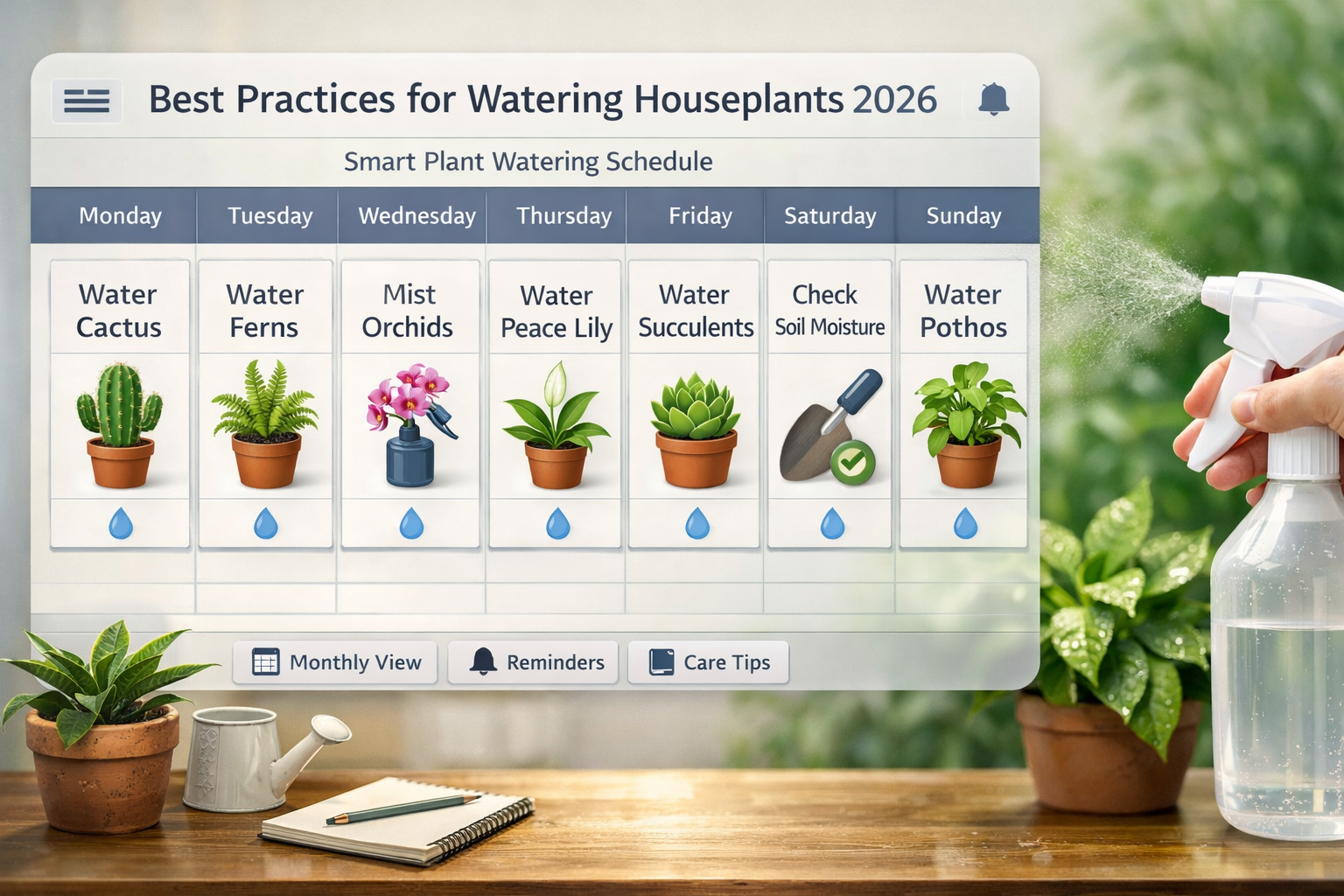
Most indoor plants should only be watered when the top 1–2 inches of soil feel dry. Fast-growing plants in bright sunlight usually need more frequent watering, while low-light plants and succulents require less.
- Succulents: Every 2–3 weeks
- Tropical houseplants: About once a week
- Low-light plants: Every 10–14 days
- Winter months: Water less frequently
Conclusion
Learning how to water houseplants correctly is one of the most important skills for keeping indoor plants healthy. Most watering problems happen when plants are watered too often without checking soil moisture first.
By checking the soil regularly, using proper drainage, and adjusting watering based on light, humidity, and season, you can avoid common problems like root rot, yellow leaves, and dry brown tips. A simple watering routine makes it much easier for houseplants to thrive throughout 2026.
Actionable Next Steps:
- Invest in a Moisture Meter: If you don’t have one, acquire a simple soil moisture meter to help accurately gauge when your plants need water.
- Finger Test Regularly: Make it a habit to check the top 1-2 inches of soil with your finger before grabbing the watering can.
- Research Your Plants: Take a moment to understand the specific watering preferences of each houseplant species you own.
- Check Drainage: Ensure all your pots have drainage holes and empty saucers immediately after watering.
- Observe and Adjust: Pay close attention to how your plants react to your watering regimen and make small adjustments based on their cues and environmental factors.
FAQ
Q1: How often should I water my houseplants?
A1: You should water your houseplants when the top 1-2 inches of soil feel dry to the touch, not on a fixed schedule. This varies based on plant type, pot size, light, and temperature.
Q2: What are the signs of an overwatered plant?
A2: Signs of overwatering include yellowing lower leaves, soft or mushy stems, stunted growth, a foul smell from the soil, or mold growth on the soil surface.
Q3: What are the signs of an underwatered plant?
A3: Signs of underwatering include wilting leaves, crispy or brown leaf edges, dry and compacted soil pulling away from the pot, and overall droopiness.
Q4: Is it better to top water or bottom water houseplants?
A4: Both methods are effective. Top watering flushes out salts and is quick, while bottom watering encourages deep root growth and is ideal for very dry soil or sensitive foliage. A combination can be beneficial.
Q5: Should I use tap water for my houseplants?
A5: Most houseplants tolerate tap water, but sensitive plants (e.g., ferns, dracaenas) may benefit from filtered water or tap water left out for 24 hours to allow chlorine to dissipate. Use room temperature water.
Q6: Do plants need less water in winter?
A6: Yes, most houseplants enter a period of slower growth or dormancy in winter due to less light and cooler temperatures, requiring significantly less frequent watering.
Q7: What if my pot doesn’t have drainage holes?
A7: Use a pot without drainage holes as a decorative cachepot. Keep your plant in a separate, slightly smaller pot with drainage holes inside it. Remove the inner pot for watering and let it drain completely before returning it to the cachepot.
Q8: Can a moisture meter prevent overwatering?
A8: Yes, a moisture meter is an excellent tool to accurately assess soil wetness deep within the pot, helping to prevent watering when the soil is already moist and thereby reducing the risk of overwatering.
Q9: Why are my plant leaves turning yellow?
A9: Yellowing leaves can indicate various issues, but for watering, it most commonly points to overwatering (especially lower leaves) or sometimes severe underwatering. Check soil moisture first.
Q10: How much water should I give my plant?
A10: Water thoroughly until you see water draining from the bottom of the pot. This ensures the entire root ball is saturated. Discard any excess water from the saucer.
Q11: Can overwatered plants recover?
Yes. Many overwatered plants recover if caught early. Let the soil dry out, improve drainage, and trim damaged roots if root rot is present.
Q12: Should I water plants on a schedule?
No. Houseplants should be watered based on soil moisture, not a fixed calendar schedule.
Q13: Do plants need less water in winter?
Yes. Most indoor plants grow more slowly during winter and therefore need less frequent watering.