Watering Container Plants in Hot Weather USA: 2026 Expert Guide
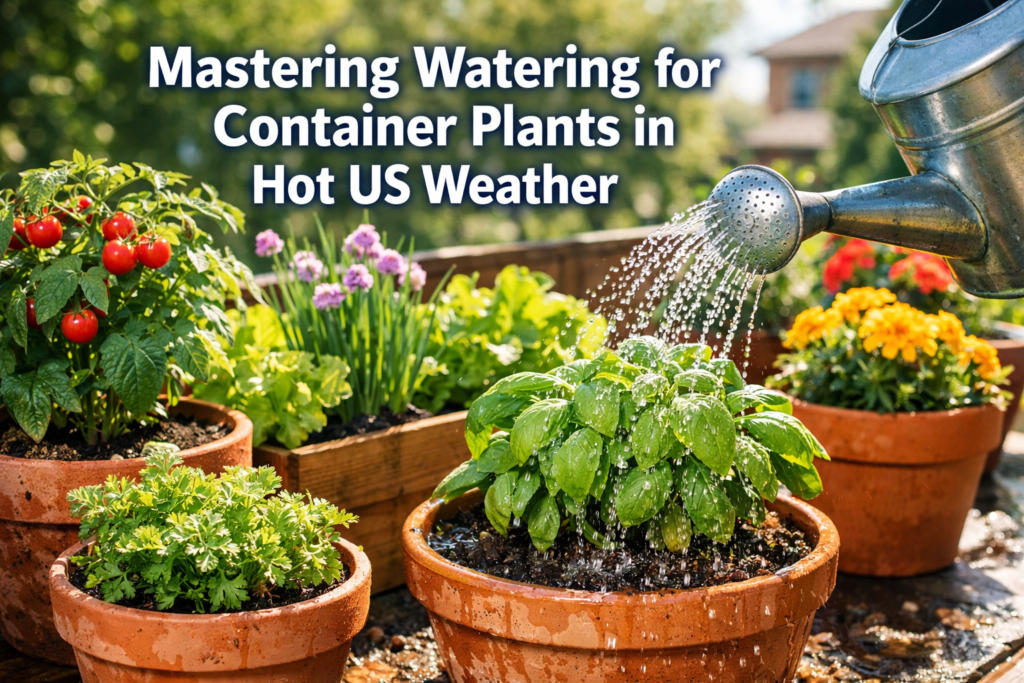
Successfully watering container plants in hot weather in the USA requires a proactive and informed approach to prevent dehydration and stress, ensuring your potted greenery thrives despite intense summer heat. The key is understanding how containers and high temperatures affect soil moisture, and then adapting your watering schedule and methods accordingly.
Key Takeaways
- Water Early or Late: The best times for watering container plants are early morning or late afternoon to minimize evaporation [2, 7].
- Check Soil First: Always perform the finger test or use a moisture meter before watering to prevent both over and under-watering [2, 3].
- Water Deeply: Apply water slowly and directly to the soil at the base of the plant until it drains from the bottom, encouraging deep root growth [3].
- Consider Container Type: Smaller pots, terracotta, and fabric containers dry out faster and may require daily or even twice-daily watering in extreme heat [5].
- Utilize Mulch: Apply a layer of organic mulch to the soil surface to significantly reduce moisture evaporation and regulate soil temperature [6].
- Strategic Placement: Group containers, move them to shade during peak heat, or place them under tree canopies to create cooler microclimates [3, 5, 8].
- Automate When Possible: Self-watering containers and drip irrigation systems are excellent solutions for consistent hydration with less effort [2].
- Address Dry Soil: If water runs off instead of soaking in, submerge the entire container in a bucket of water until bubbles cease [2].
Why Container Plants Need Special Attention in Hot US Weather
Container plants face unique challenges in hot weather compared to garden beds because their root systems are confined and more exposed to temperature fluctuations, causing them to dry out significantly faster [3]. The limited soil volume in pots heats up more rapidly and retains less moisture, necessitating frequent and strategic watering to prevent heat stress and wilting.
In the USA, summer temperatures can soar, and container plants are particularly vulnerable to dehydration. Unlike plants in the ground, which have access to a larger reservoir of soil moisture and are insulated by the surrounding earth, potted plants are at the mercy of their container size and material. Smaller pots, especially those made of porous materials like terracotta, can lose moisture very quickly through evaporation from both the soil surface and the pot walls [5]. This rapid moisture loss means that container plants often need watering daily, and sometimes even twice a day, during peak summer heat [5]. Understanding these dynamics is crucial for effective care. For further insights into general watering practices, consider our guide on “How Often Should You Water Container Plants? 2026 Expert Guide” – https://minispacegarden.com/how-often-should-you-water-container-plants/.
Factors Influencing Watering Needs:
- Container Size & Material: Smaller pots and porous materials (like terracotta) dry faster. Larger, thicker-walled pots retain moisture longer [3].
- Plant Type: Thirsty plants like impatiens or many vegetables require more water than drought-tolerant species [8].
- Sun Exposure: Plants in full sun will dry out quicker than those in partial shade.
- Wind: Windy conditions dramatically increase evaporation rates from both soil and leaves.
- Humidity: Low humidity levels accelerate moisture loss from plants and soil.
Decision Rule: Choose larger containers (15+ inches in diameter) for most plants to provide a greater soil volume reservoir, which reduces watering frequency, especially for “How Often To Water Container Vegetables In Summer 2026” – https://minispacegarden.com/how-often-to-water-container-vegetables-in-summer/.
What are the Best Practices for Watering Container Plants in Hot Weather USA?
The best practices for watering container plants in hot weather in the USA involve a combination of timing, technique, and moisture management to ensure deep hydration while minimizing water loss. Always aim to water early in the morning or late in the afternoon, check soil moisture before applying water, and focus on deep watering at the plant’s base.
To successfully keep your container plants hydrated, adopt practices that directly combat the intense heat. Watering in the early morning is ideal because it allows the plants to absorb water before the day’s heat causes rapid evaporation, preparing them for the intense sun [2, 7]. Late afternoon watering is a secondary option, giving plants a boost as temperatures cool, but ensure leaves dry before nightfall to prevent fungal issues [3].
Essential Watering Techniques:
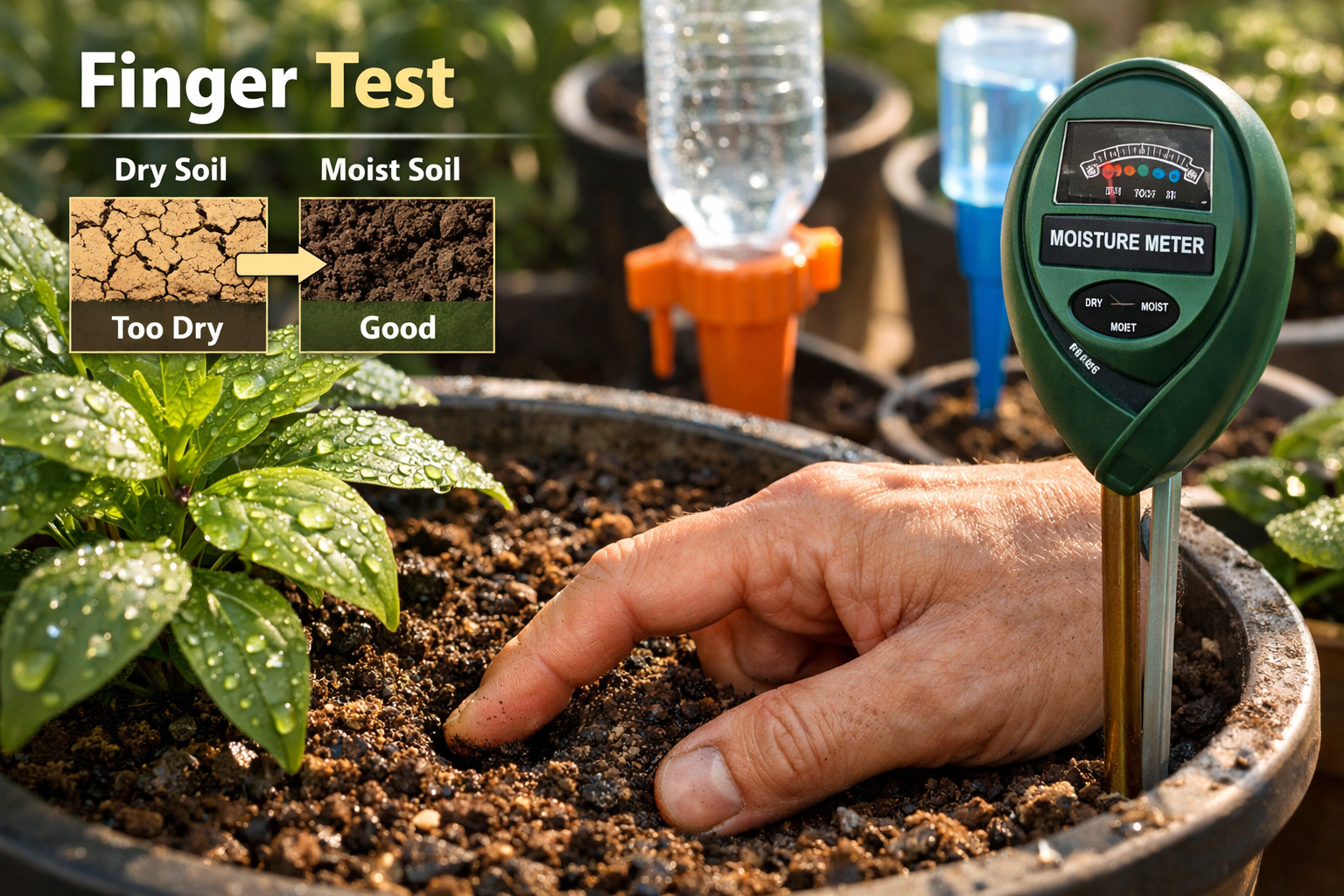
- Check Soil Moisture: Before reaching for the watering can, insert your finger about two inches into the soil [2]. If it feels dry, it’s time to water. A moisture meter offers a more precise reading. This prevents overwatering, which can lead to root rot. For guidance on avoiding issues, see “Common Watering Mistakes In Container Gardening: Expert Guide 2026” – https://minispacegarden.com/common-watering-mistakes-in-container-gardening/.
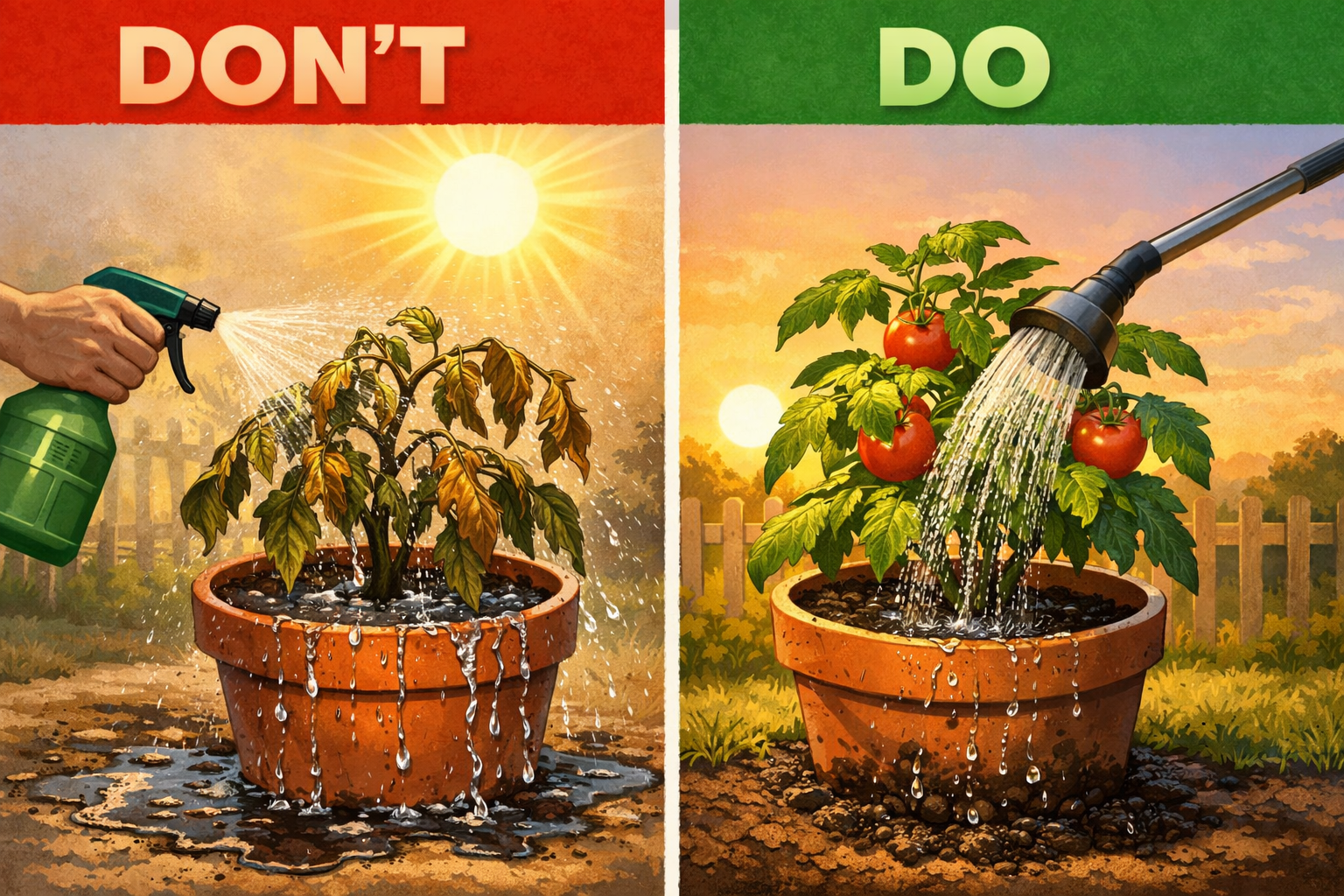
- Water Deeply and Slowly: Pour water slowly and steadily at the base of the plant, allowing it to soak into the soil rather than running off [3]. Continue until water drains from the pot’s bottom drainage holes, indicating the entire root ball is saturated [4].
- Avoid Wetting Foliage: Watering leaves in direct sun can cause leaf burn and encourages fungal diseases like powdery mildew [3]. Focus the water directly on the soil.
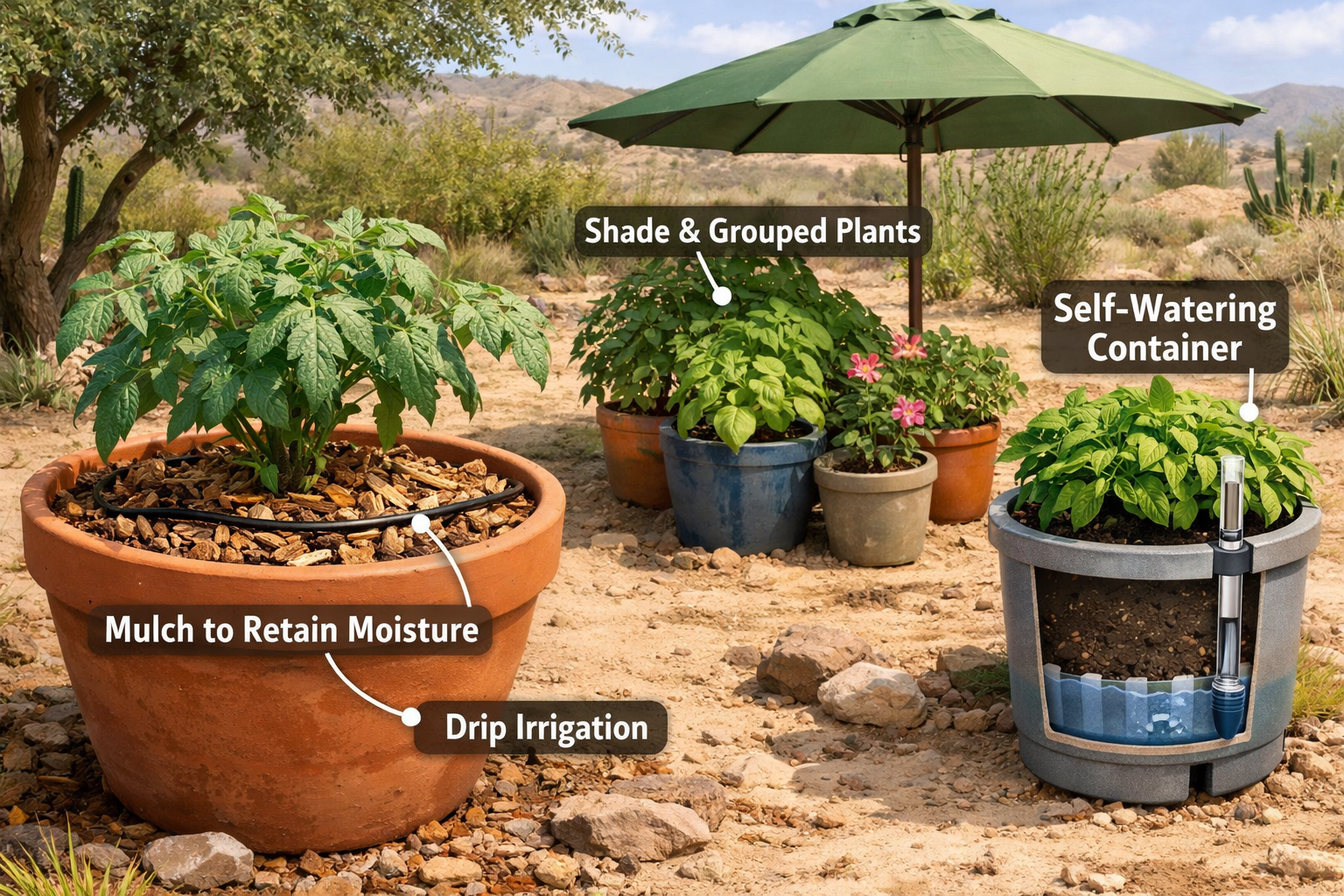
- Consider Self-Watering Solutions: For consistent moisture, especially during prolonged absences or intense heat, self-watering containers or drip irrigation systems are highly effective [2]. These systems deliver water directly to the roots, reducing waste and frequency.
- Rehydrate Bone-Dry Pots: If soil becomes so dry that water runs down the inside edges of the pot without penetrating, submerge the entire container in a bucket of water for 20-30 minutes until air bubbles stop [2]. This ensures thorough rehydration.
Common Mistake: Never water lightly or frequently. This encourages shallow root systems that are more susceptible to drying out during hot spells. Deep watering promotes strong, healthy roots [4].
How Can I Reduce Water Evaporation and Heat Stress for Container Plants?
Reducing water evaporation and heat stress for container plants involves several proactive strategies, including mulching, choosing appropriate containers, strategic plant placement, and grouping plants to create more favorable microclimates. These methods help to keep soil cooler and moisture consistent, even during intense hot weather in the USA.
Minimizing water loss from your container plants is as important as effective watering. Mulching is a fundamental technique: applying a 1-2 inch layer of organic material like wood chips, straw, or shredded leaves on top of the soil significantly reduces surface evaporation [6]. This also helps to regulate soil temperature, keeping roots cooler on scorching days and warmer on cooler nights. For more on soil preparation, check out “Prepare Soil For Container Plants At Home: 2026 Expert Guide” – https://minispacegarden.com/how-to-prepare-soil-for-container-plants-at-home/.
Strategies to Combat Evaporation and Heat Stress:
- Mulch: Apply a 1-2 inch layer of organic mulch (wood chips, straw, shredded leaves) over the soil surface [6]. This acts as an insulating barrier, reducing water evaporation and keeping roots cooler.
- Choose the Right Containers:
- Larger Pots: Provide more soil volume, which holds more moisture and takes longer to heat up [3].
- Light-Colored Pots: Reflect sunlight, keeping the root zone cooler than dark-colored pots, which absorb heat.
- Insulated Pots: Double-walled or foam-lined containers offer better insulation against extreme temperatures.
- Material Matters: Plastic pots retain moisture better than porous terracotta, though terracotta can keep roots cooler through evaporative cooling [5].
- To learn more about choosing the best containers, read “Best Containers For Gardening: Pots, Buckets & DIY Ideas In 2026” – https://minispacegarden.com/best-containers-for-gardening/.
- Strategic Placement:
- Shade During Peak Heat: Move portable containers to a shadier location during the hottest part of the day (10 AM to 4 PM) [3, 8].
- Group Plants: Clustering containers together increases ambient humidity around the plants and can create a slightly cooler microclimate, reducing water loss through transpiration [5].
- Use Larger Plants for Shade: Position taller plants to provide natural shade for smaller, more sensitive containers.
- Under Canopies: Placing containers under tree canopies or awnings provides natural shade [5].
- Wind Protection: Strong winds can rapidly dehydrate plants. Position containers in sheltered spots or use barriers to block excessive wind.
- Consider Heat-Resistant Plants: If you consistently struggle with plants in the heat, select varieties known for their heat and drought tolerance. Refer to “Drought Resistant Plants: 2026 Guide To Water-Wise Gardening” – https://minispacegarden.com/drought-resistant-plants/ for suitable options.
Edge Case: For extremely sensitive plants or during severe heatwaves, consider placing a tray of water under grouped containers to slightly increase local humidity, though ensure pots aren’t sitting directly in standing water to avoid root rot.
Troubleshooting Common Watering Issues in Hot Weather
Even with best practices, issues can arise. Understanding how to troubleshoot common watering problems in hot weather can save your container plants from irreversible damage. Look for signs of stress, such as wilting or yellowing leaves, and act swiftly.
Common Problems and Solutions:
- Rapid Wilting After Watering: If your plant wilts quickly despite recent watering, the soil might be hydrophobic (repelling water), or the roots could be damaged.
- Solution: Submerge the entire pot in a bucket of water for 30 minutes to an hour until the soil is fully saturated and no more bubbles appear [2]. This helps rehydrate the entire root ball.
- Water Runs Straight Through: This often indicates extremely dry, compacted soil that isn’t absorbing water.
- Solution: Again, the submergence method is best [2]. If it’s a persistent problem, gently aerate the soil surface with a chopstick or fork before watering, or consider repotting with fresh potting mix.
- Yellowing Leaves (Bottom First): This can be a sign of both overwatering and underwatering, but in hot weather, it’s more often severe underwatering or nutrient deficiency due to water stress.
- Solution: Check soil moisture. If dry, deep water thoroughly. If consistently moist, check drainage holes and consider if the plant is root-bound.
- Crispy, Brown Leaf Edges: A classic sign of severe underwatering or excessive heat/sun exposure.
- Solution: Increase watering frequency, provide shade during peak heat, and consider mulching. Trim off crispy foliage to encourage new growth.
- Pests Flourishing in Stressed Plants: Mites and other pests often target stressed plants.
- Solution: Ensure consistent watering. Healthy, well-hydrated plants are more resilient to pests. Inspect plants regularly and address any infestations promptly.
Choosing the Right Soil and Containers for Hot Climates
Selecting the appropriate soil mix and containers is paramount for the success of watering container plants in hot weather in the USA. The right choices can significantly extend the time between waterings and protect roots from extreme temperatures.
Soil Considerations:
- High-Quality Potting Mix: Use a lightweight, well-draining potting mix that contains organic matter (like compost) to improve water retention and perlite or vermiculite for aeration [3]. Avoid heavy garden soil, which compacts easily in pots and hinders drainage. For details on soil, see “Best Soil Mix For Container Gardening (Complete Guide)” – https://minispacegarden.com/best-soil-mix-for-container-gardening/.
- Water-Retentive Additives: Incorporate coco coir or compost into your potting mix to boost its water-holding capacity, which is crucial in hot weather [3].
- Avoid Over-Fertilizing: Excessive fertilizer can increase a plant’s water needs and lead to nutrient burn, especially when stressed by heat.
Container Selection:
- Size Matters Most: Larger containers hold more soil, thus more moisture, and are less prone to rapid temperature fluctuations [3]. When in doubt, go bigger. Refer to “Choose Pot Size For Container Plants: 2026 Expert Guide” – https://minispacegarden.com/how-to-choose-the-right-pot-size/.
- Material:
- Plastic/Glazed Ceramic: Excellent for moisture retention as they are non-porous. Lighter colors are best in full sun.
- Terracotta/Unglazed Clay: Porous, so they allow water to evaporate from their surface, which can cool the roots but also means faster drying [5]. May require daily watering in extreme heat.
- Fabric Pots (Grow Bags): Offer excellent aeration and prevent root circling, but also lose moisture quickly through their permeable walls. Great for drainage, but require diligent watering in hot conditions [5].
- Drainage Holes: Ensure every container has adequate drainage holes at the bottom to prevent waterlogging and root rot [4]. Adding a layer of gravel at the bottom is not necessary and can actually hinder drainage.
Comparison Table: Container Materials for Hot Weather
| Container Material | Pros | Cons | Hot Weather Suitability |
|---|---|---|---|
| Plastic/Glazed | Excellent moisture retention | Dark colors absorb heat; less aesthetic to some | High (especially light colors) |
| Terracotta | Evaporative cooling keeps roots cool | Dries out very quickly; heavy when large | Moderate (requires frequent watering) |
| Fabric (Grow Bags) | Excellent aeration; prevents root circling | Very fast drying; less aesthetically pleasing | Moderate (requires daily watering) |
| Insulated/Self-watering | Best for consistent moisture & temperature | Higher upfront cost; less variety in styles | High (ideal for busy gardeners) |
Watering Container Plants in Hot Weather: Automated Solutions
Automated watering solutions are a game-changer for watering container plants in hot weather in the USA, especially for busy gardeners or those with many pots. These systems provide consistent hydration, reduce manual labor, and help prevent both under- and over-watering.
Types of Automated Watering Systems:
- Self-Watering Containers: These pots have a built-in reservoir at the bottom that holds water, which is then wicked up into the soil as needed [2]. This provides a constant supply of moisture to the plant roots, significantly extending the time between refills. They are excellent for thirsty plants and offer peace of mind.
- Drip Irrigation Systems: A network of small tubes delivers water directly to the base of each plant at a slow, controlled rate [2]. These systems can be connected to a timer, allowing you to schedule precise watering times and durations. Drip systems are highly efficient, minimizing water waste from evaporation and runoff.
- Soaker Hoses: While more commonly used in garden beds, mini soaker hoses or “sweeping” hoses can be adapted for grouped containers. They seep water slowly along their length, providing gentle, consistent moisture.
- Watering Spikes/Globes: These devices release water slowly into the soil. Spikes are often plastic bottles inserted upside down, while globes are decorative glass balls. They offer a temporary solution for a few days but aren’t as consistent as self-watering pots or drip systems.
Benefit: Automating your watering routine ensures plants receive consistent moisture, preventing the stress of fluctuating hydration levels that can occur with manual watering in hot weather. This consistency promotes healthier, more vigorous growth.
Conclusion
Mastering the art of watering container plants in hot weather across the USA is fundamental to their survival and vibrancy during intense summers. By adopting a diligent approach to timing, technique, and moisture management, you can ensure your potted gardens thrive. Remember to always check soil moisture before watering, prioritize deep hydration, and leverage tools like mulch and appropriate containers to conserve water. Embrace automated solutions for convenience and consistency, and don’t hesitate to move plants to shade during peak heat. With these strategies in mind, your container plants can flourish, bringing beauty and bounty to your outdoor spaces throughout 2026 and beyond.
FAQ
Q1: How often should I water container plants in a heatwave in the USA?
A1: During a heatwave, container plants may need watering daily, and sometimes even twice a day, especially smaller pots or those made of porous materials like terracotta [5]. Always check soil moisture before watering [2].
Q2: What is the best time of day to water potted plants in hot weather?
A2: The best time to water potted plants is early morning, as it allows plants to absorb water before significant evaporation occurs and prepares them for the day’s heat [2, 7]. Late afternoon is a secondary option.
Q3: Should I water container plants until water comes out the bottom?
A3: Yes, you should water deeply until water drains from the bottom of the pot. This ensures the entire root ball is saturated and encourages deep root growth [4].
Q4: Can I use ice cubes to water container plants in hot weather?
A4: While ice cubes can provide slow, consistent moisture release, they don’t saturate the soil as effectively as deep watering and may not be sufficient for large or thirsty plants in hot weather. Use them sparingly as a supplementary method if at all.
Q5: What should I do if my container plant is wilting in hot weather despite watering?
A5: If wilting persists, the plant may be severely dehydrated, or the soil may have become hydrophobic. Try submerging the entire pot in a bucket of water for 20-30 minutes to rehydrate the root ball [2]. Also, provide temporary shade [3, 8].
Q6: Does mulch help container plants in hot weather?
A6: Yes, a 1-2 inch layer of organic mulch significantly reduces water evaporation from the soil surface and helps keep the root zone cooler in hot weather [6].
Q7: Are self-watering containers good for hot climates?
A7: Self-watering containers are excellent for hot climates because they provide a consistent supply of moisture to plant roots from a reservoir, reducing the frequency of manual watering and preventing dehydration [2].
Q8: Can dark-colored pots harm plants in hot weather?
A8: Dark-colored pots absorb more sunlight and can heat up significantly, potentially cooking the roots of your plants. Light-colored or insulated pots are preferable in hot weather [3].
Q9: How can I tell if I’m overwatering or underwatering in hot weather?
A9: In hot weather, yellowing leaves (starting from the bottom), crispy brown leaf edges, or rapid wilting are usually signs of underwatering or heat stress. Overwatering signs include soggy soil and a foul odor, less common during extreme heat. Always check soil moisture with your finger [2, 3].
Q10: Is it better to mist plants in hot weather?
A10: Misting plants in hot weather can provide very temporary humidity but is generally ineffective for deep hydration and can even encourage fungal diseases if leaves remain wet, especially in direct sun [3]. Focus on watering the soil.
References
[1] Hot Container Trends For 2026 – https://plantersplace.com/container-gardening/container-corner/hot-container-trends-for-2026/
[2] Watering Container Plants – https://www.provenwinners.com/learn/watering-container-plants
[3] Caring Container Plants During Heatwaves – https://ucanr.edu/blog/under-solano-sun/article/caring-container-plants-during-heatwaves
[4] How To Water Potted Plants – https://www.summerwindsnursery.com/az/inspire/blog/how-to-water-potted-plants/
[5] Surviving A Heat Wave 6 Hot Weather Watering Tips – https://gardenbetty.com/surviving-a-heat-wave-6-hot-weather-watering-tips/
[6] Watch – https://www.youtube.com/watch?v=Ma5-_dr4jiE
[7] Gardening Hot Weather – https://extension.umn.edu/planting-and-growing-guides/gardening-hot-weather
[8] Caring Container Plants Hot Weather – https://bioadvanced.com/caring-container-plants-hot-weather