Common Watering Mistakes in Container Gardening
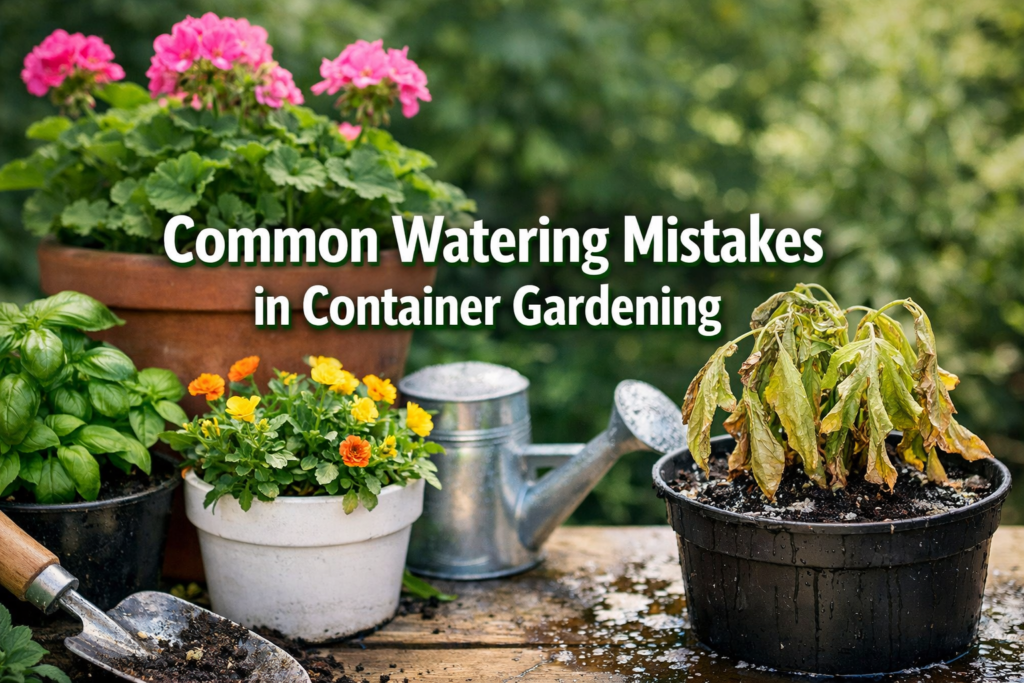
Container gardening offers immense flexibility and beauty, but many gardeners, especially beginners, often struggle with proper watering. The most common watering mistakes in container gardening involve overwatering or underwatering, incorrect timing, and inadequate drainage, which can severely impact plant health and even lead to plant death. Mastering watering techniques is crucial for thriving container plants.
Key Takeaways
- Overwatering is a leading cause of container plant death. It starves roots of oxygen.
- Underwatering leads to wilting and stunted growth. Plants need consistent moisture, especially in pots.
- Proper drainage is non-negotiable. Containers must have holes to prevent waterlogging.
- Feel the soil before watering. Your finger is the best moisture meter for most plants.
- Water deeply and thoroughly. Ensure water reaches the entire root ball.
- Water early in the morning. This minimizes evaporation and fungal diseases.
- Consider container size and material. These factors significantly influence watering frequency.
- Mulch helps retain soil moisture. It reduces evaporation and temperature fluctuations.
- Monitor plants regularly. Adjust watering based on plant needs, weather, and growth stage.
Why Is Watering Different for Container Plants?
Watering container plants differs significantly from in-ground gardening because containers offer a limited soil volume, which dries out much faster and has different nutrient dynamics. Unlike garden beds where roots can spread widely to find moisture and nutrients, container plants are entirely dependent on you for their water supply and are more susceptible to both drought and waterlogging.
Container soil dries out quickly for several key reasons:
- Limited Soil Volume: Pots hold a finite amount of soil, which means less water reservoir compared to an open garden bed.
- Increased Exposure: The sides of containers, especially terracotta or fabric pots, are exposed to air and sunlight, leading to faster evaporation.
- Restricted Root System: Plant roots are confined to the pot, making them more vulnerable to fluctuations in moisture levels.
- Drainage: While essential, good drainage also means water can pass through quickly, especially in well-aerated potting mixes.
Understanding these differences is the first step in avoiding common watering mistakes in container gardening. Without careful attention, even experienced gardeners can accidentally drown or dehydrate their potted plants.
What Are the Dangers of Overwatering Container Plants?
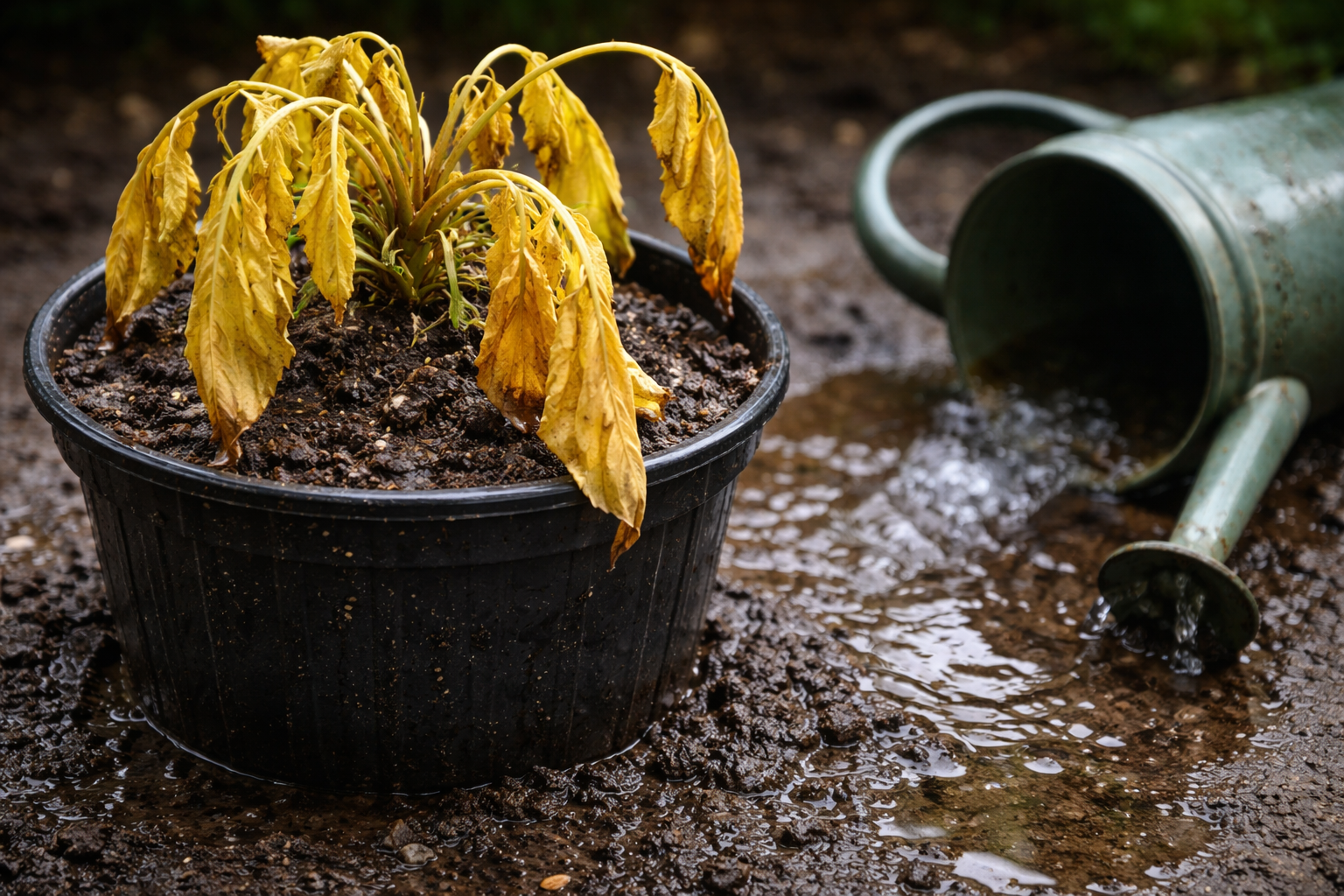
Overwatering container plants is arguably the most common and damaging mistake, leading to root rot, nutrient deficiencies, and ultimately, plant death. When soil is constantly saturated, plant roots cannot access the oxygen they need to survive, as water fills the air pockets in the soil.
Here’s why overwatering is so detrimental:
- Root Rot: A fungal disease thriving in anaerobic (oxygen-deprived) conditions, root rot causes roots to turn mushy, brown, and ineffective, preventing them from absorbing water and nutrients.
- Nutrient Leaching: Excessive watering flushes essential nutrients out of the potting mix, leading to nutrient deficiencies and stunted growth.
- Pest and Disease susceptibility: Weakened, waterlogged plants are more vulnerable to pests and other diseases.
- Stunted Growth: Without proper root function, the plant cannot grow effectively, exhibiting yellowing leaves, wilting despite wet soil, and a general lack of vigor.
To identify overwatering, check for yellowing leaves that might drop off, soft or mushy stems, and a persistent musty smell from the soil. Often, plants that are overwatered show symptoms similar to underwatering, such as wilting, which can confuse new gardeners. Always check the soil moisture before adding more water. For insights into plant care, see our Beginner’s Guide to Plant Care 2026.
How Can I Tell if My Container Plants Need Water?
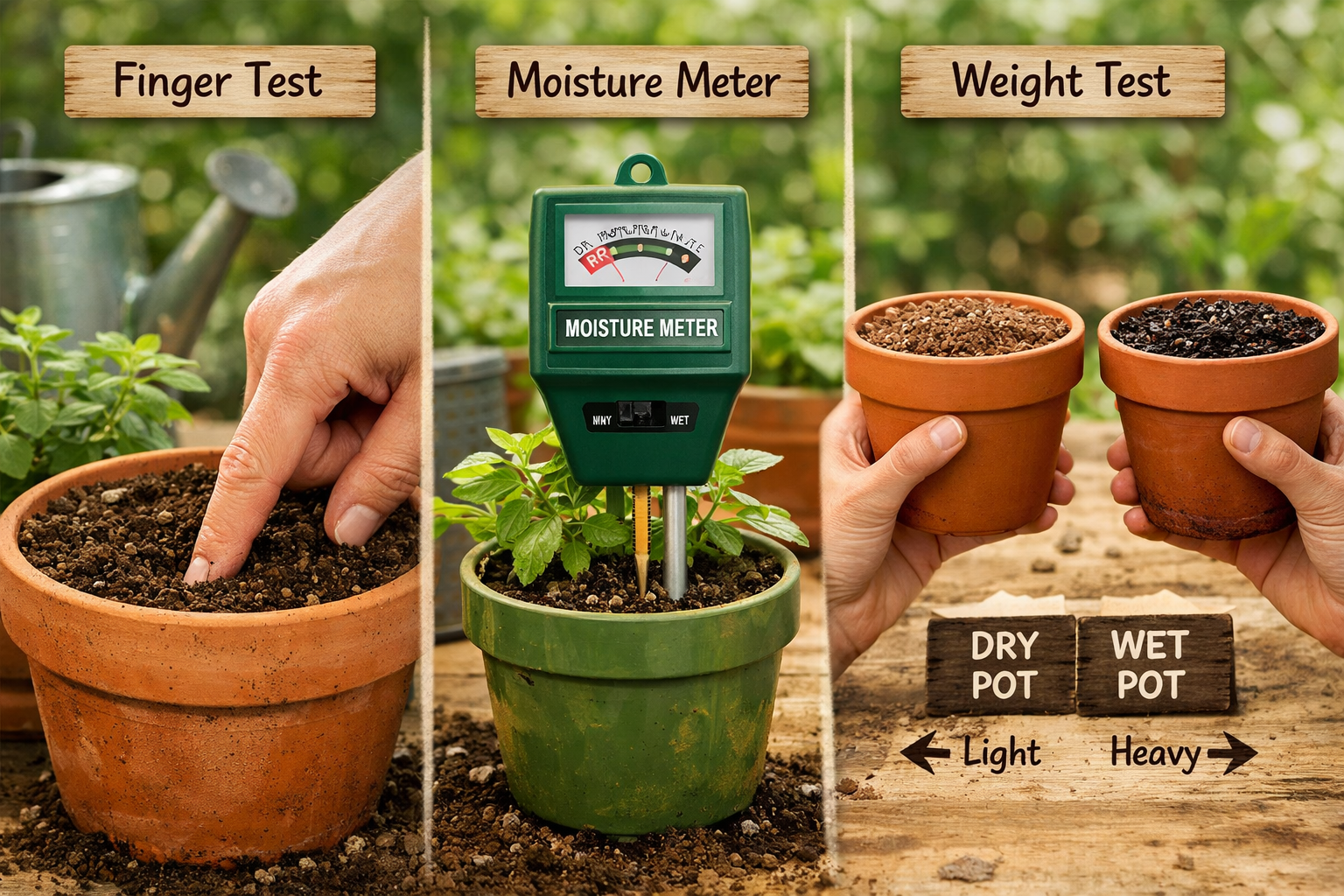
Determining if your container plants need water involves more than just looking at the soil surface; it requires physically checking the soil moisture and observing plant cues. The most reliable method is to feel the soil, as visual cues alone can be misleading.
Follow these steps to accurately assess soil moisture:
- Use Your Finger: Stick your finger about 1-2 inches deep into the soil.
- If it feels dry at this depth, it’s likely time to water.
- If it feels moist, wait longer.
- For larger containers or plants that prefer consistent moisture, you might check even deeper.
- Lift the Pot: For smaller containers, lift the pot. A dry pot will feel significantly lighter than a well-watered one. This method becomes intuitive with practice.
- Moisture Meter: While not always necessary, a moisture meter can provide a precise reading, especially for beginners or sensitive plants. Insert the probe into the soil, and it will indicate the moisture level.
- Observe Plant Signals:
- Wilting leaves: A classic sign of underwatering, though as mentioned, it can also indicate severe overwatering.
- Dull or drooping foliage: Healthy plants generally have vibrant, perky leaves.
- Crispy leaf edges: Indicates prolonged dryness.
Remember that different plants have different water requirements. For example, succulents prefer drier conditions, while many vegetables need consistently moist soil. Check out our guide on How Often Should You Water Plants? Ultimate Guide 2026 for more specific advice.
What Are Common Watering Technique Mistakes?
Beyond simply under or overwatering, several technique-related common watering mistakes in container gardening can undermine your efforts, including shallow watering, improper timing, and neglecting container properties. Addressing these ensures your plants receive water effectively.
Here are key watering technique mistakes and how to correct them:
- Shallow Watering:
- Mistake: Only wetting the top inch or two of soil. This encourages shallow root growth, making plants more vulnerable to drought and heat.
- Correction: Always water deeply until water drains from the bottom of the pot. This ensures the entire root ball is saturated, promoting deep, healthy roots. For thirsty plants like many container vegetables, this is especially important. Refer to “How Often to Water Container Vegetables in Summer 2026” for more specialized advice on this topic: How Often to Water Container Vegetables in Summer 2026.
- Improper Watering Timing:
- Mistake: Watering in the middle of a hot day or late in the evening. Watering during peak sun leads to rapid evaporation, wasting water and potentially scorching leaves. Watering late at night can leave foliage wet for too long, encouraging fungal diseases.
- Correction: Water early in the morning. This allows the plants to absorb water before the heat of the day, and any moisture on leaves has time to evaporate, reducing disease risk.
- Ignoring Container Size and Material:
- Mistake: Treating all containers the same. Small pots dry out faster than large ones. Terracotta pots wick moisture away quickly, while plastic or glazed ceramic pots retain it longer.
- Correction: Adjust watering frequency and volume based on the container. Smaller pots and porous materials like terracotta need more frequent watering. Larger, less porous pots can go longer between waterings.
- Lack of Drainage:
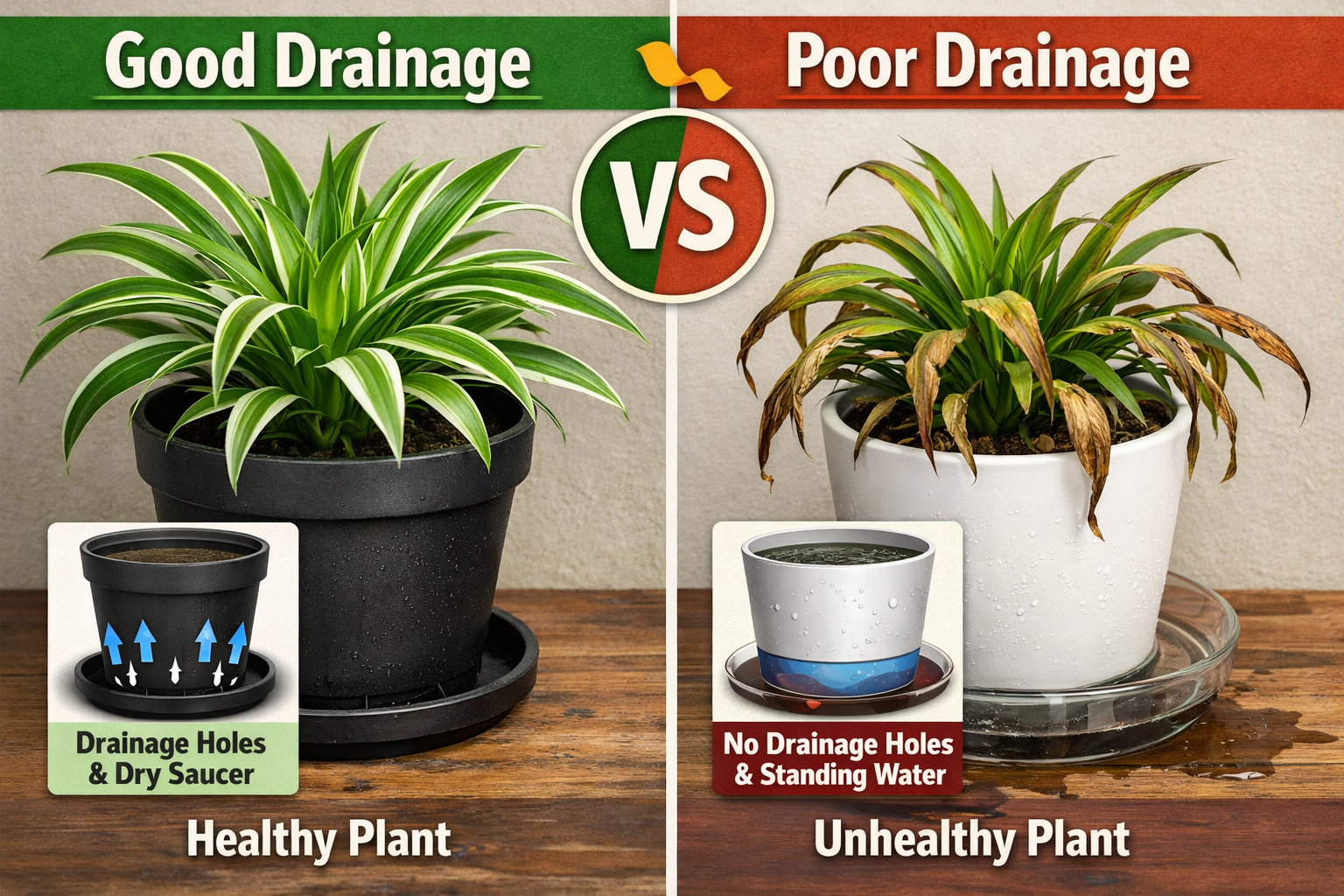
- Mistake: Using pots without drainage holes or blocking existing ones. This is a direct path to overwatering and root rot.
- Correction: Always use containers with adequate drainage holes. Place a screen or a piece of broken pottery over large holes to prevent soil loss while ensuring water can escape freely. Never let pots sit in standing water.
- Table: Container Material vs. Watering Needs
| Container Material | Water Retention | Evaporation Rate | Recommended Watering Frequency |
|---|---|---|---|
| Terracotta/Clay | Low | High | More frequent |
| Plastic | High | Low | Less frequent |
| Glazed Ceramic | High | Low | Less frequent |
| Fabric Pots | Medium | Medium-High | Medium to more frequent |
| Wood | Medium | Medium | Medium to less frequent |
- Watering Only the Leaves:
- Mistake: Using a sprinkler or hose to mist foliage heavily, rather than watering the soil. This does not get water to the roots and can promote leaf diseases.
- Correction: Direct water to the base of the plant, at soil level. If overhead watering is unavoidable, do it in the morning to allow leaves to dry.
How Can I Improve My Container Gardening Watering Habits?
Improving your container gardening watering habits involves a combination of consistent observation, understanding environmental factors, and proactive adjustments. By adopting better practices, you can ensure your plants remain healthy and productive throughout 2026.
Here are actionable steps to refine your watering strategy:
- Regular Monitoring: Make a daily habit of checking your plants, especially during hot or windy weather. This allows you to catch signs of stress early.
- Adopt the Finger Test: Prioritize the “finger test” over visual inspection. It’s the most reliable way to gauge soil moisture effectively.
- Water Deeply and Slowly: When watering, do so thoroughly until water begins to drain from the bottom. If the water runs through too quickly, consider watering in stages: water a bit, let it soak in for 10-15 minutes, then water again until drainage occurs.
- Consider Mulching: Apply a layer of organic mulch, such as shredded bark, straw, or compost, to the soil surface in your containers. Mulch helps retain moisture, suppresses weeds, and moderates soil temperature.
- Choose Appropriate Containers:
- Size Matters: Choose pots large enough to accommodate the mature size of your plant’s root system. Smaller pots dry out much faster.
- Material Choice: As discussed, terracotta pots dry out quicker than plastic or glazed ceramic ones. Select materials that match your watering style and the plant’s needs. For more on choosing containers, see “Best Pots for Small Space Gardening in 2026” – https://minispacegarden.com/best-pots-for-small-space-gardening/.
- Adjust for Weather and Season:
- Hot, Sunny, or Windy Days: Plants will need more frequent watering.
- Cool, Overcast Days: Reduce watering frequency.
- Winter: Dormant plants or those growing slowly need significantly less water.
- Use the Right Potting Mix: A high-quality potting mix designed for containers provides good drainage while retaining adequate moisture. Avoid using heavy garden soil, which can compact and lead to drainage issues. Explore Soil Basics for Container Gardening: 2026 Expert Guide for more information.
- Group Plants Strategically: Grouping plants that have similar watering needs can make watering more efficient and create a microclimate that reduces evaporation.
- Consider Self-Watering Planters: For busy gardeners or those growing very thirsty plants, self-watering planters can be a game-changer. They feature a reservoir that provides a consistent water supply.
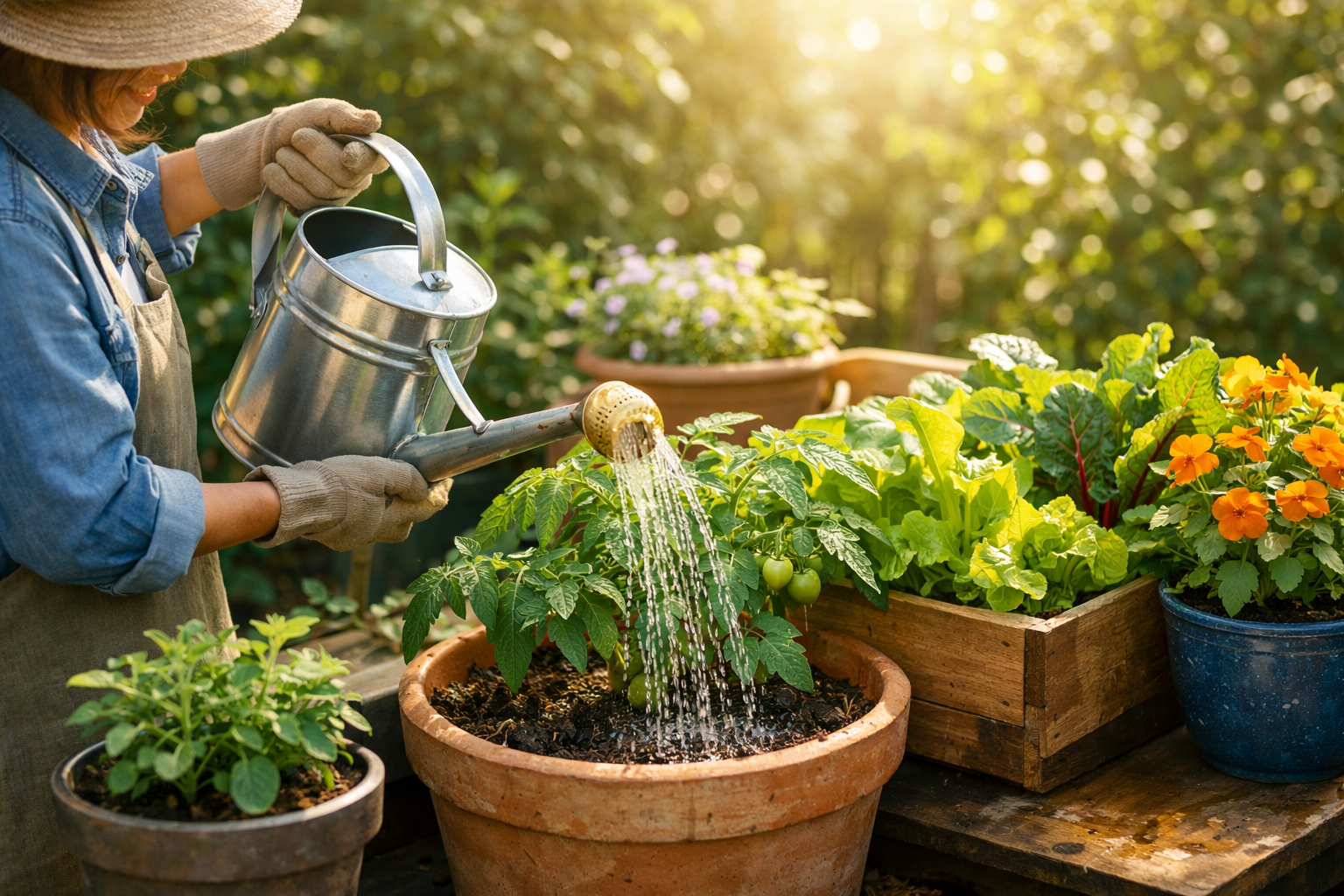
By implementing these strategies, you’ll move past common watering mistakes in container gardening and cultivate healthier, more resilient plants.
Conclusion
Mastering the art of watering is perhaps the most critical skill for success in container gardening. The common watering mistakes in container gardening—namely, overwatering, underwatering, improper timing, and neglecting drainage—are responsible for the demise of countless potted plants each year. By understanding the unique needs of containerized plants, paying close attention to soil moisture, and adopting effective watering techniques, you can ensure your plants thrive.
Actionable Next Steps:
- Assess Your Current Practices: Take a critical look at how you currently water. Are you checking soil moisture with your finger? Are your pots draining well?
- Inspect Your Containers: Ensure all your pots have adequate drainage holes. If not, drill them or consider repotting into appropriate containers.
- Invest in Good Potting Mix: Replace old or compacted soil with a fresh, high-quality potting mix designed for containers.
- Establish a Routine, with Flexibility: Aim to check your plants daily, especially during warm weather, but water only when needed based on the finger test.
- Educate Yourself on Plant Needs: Learn the specific watering preferences of each plant you grow. A little research goes a long way.
- Consider Mulching: Add a layer of mulch to your containers to conserve moisture.
By embracing these practices in 2026, you’ll transform your approach to container gardening and enjoy a flourishing, vibrant display of plants.
FAQ
Q: How often should I water my container plants? A: There’s no fixed schedule; water when the top 1-2 inches of soil feel dry to the touch. Factors like weather, plant type, and container size influence frequency.
Q: Can I use garden soil in my containers? A: No, garden soil compacts easily in pots, leading to poor drainage and aeration. Always use a high-quality, lightweight potting mix designed for containers.
Q: Why are my plant’s leaves turning yellow even though I’m watering it? A: Yellowing leaves can indicate both overwatering (roots lack oxygen) or underwatering (lack of moisture). Check the soil moisture deeply with your finger to diagnose correctly.
Q: Is it better to water from the top or bottom? A: Watering from the top until water drains out is generally sufficient. Bottom watering (placing the pot in a tray of water) can be useful for very dry soil or delicate plants, but ensure it’s not left to soak indefinitely.
Q: What are the best containers for beginners to avoid watering mistakes? A: Plastic or glazed ceramic pots retain moisture longer than terracotta, making them more forgiving for beginners. Ensure they always have drainage holes.
Q: My container plant is wilting, what should I do? A: First, check the soil moisture. If it’s bone dry, water thoroughly. If it’s soggy, you might be overwatering; allow the soil to dry out, and consider repotting if root rot is suspected.
Q: How can I tell if my pot has good drainage? A: After watering deeply, water should begin to flow out of the drainage holes within a minute or two. If it pools on top or drains very slowly, drainage is poor.
Q: Does mulching help with container plant watering? A: Yes, a layer of mulch on top of the soil in your container significantly reduces water evaporation, keeps soil temperatures more stable, and helps retain moisture, leading to less frequent watering.
Q: Should I water my container plants every day in summer 2026?
A: In hot summer conditions, many container plants, especially thirsty vegetables, may need daily watering. However, always check soil moisture before watering to prevent overwatering.