Wind-Resistant Balcony Plants: Ultimate 2026 Guide & Tips
Are you dreaming of a vibrant balcony garden, but strong winds keep dashing your hopes? Many aspiring urban gardeners face the challenge of a blustery balcony, where delicate plants quickly wilt, snap, or even topple over. The good news is that with the right plant selection and strategic planning, you can cultivate a beautiful, resilient green oasis even in the most exposed locations. This comprehensive guide will equip you with the knowledge to choose the best wind-resistant balcony plants and implement effective protection strategies to ensure your elevated garden flourishes in 2026.
Key Takeaways
- Select hardy plants: Opt for species with thick leaves, flexible stems, and deep root systems that naturally withstand wind.
- Prioritize native and adapted species: Australian natives, Mediterranean herbs, and succulents are excellent choices due to their natural adaptations.
- Choose appropriate containers: Heavy, low, and wide pots (concrete, ceramic, stone) provide stability and prevent toppling.
- Implement windbreaks: Use screens, trellises, or strategically placed larger plants to create sheltered microclimates.
- Ensure proper watering: Windy conditions accelerate soil drying; use self-watering pots or check moisture frequently.
- Consider plant height and shape: Taller, spindly plants are more vulnerable; select compact, bushy varieties.
- Group plants together: Grouping creates a mini microclimate, offering mutual protection from the wind.
- Use double-potting: Nesting smaller pots inside larger, heavier ones increases stability and insulation.
- Anchor where possible: Secure larger pots or trellises to railings if safety permits.
- Regular maintenance: Pruning, checking for damage, and consistent care are crucial for wind-exposed plants.
Quick Answer

To create a flourishing balcony garden in windy conditions, select wind-resistant balcony plants that naturally tolerate strong air currents, such as ornamental grasses, succulents, Mediterranean herbs, and robust native species. Pair these plants with heavy, stable containers and implement simple wind protection strategies like windbreaks or grouping plants to ensure their long-term health and vitality.
What Makes a Plant Wind-Resistant for Balconies?
Wind-resistant balcony plants possess specific physical characteristics that enable them to endure strong air currents without suffering significant damage, making them ideal for exposed urban spaces. These traits generally include thick, fleshy leaves that minimize moisture loss, flexible stems that can sway without breaking, and robust or deep root systems that anchor them firmly in their containers [4]. Plants adapted to arid or coastal environments often exhibit these qualities naturally.
Key Characteristics of Wind-Resistant Plants:
- Thick, Fleshy Leaves: Plants with succulent or leathery leaves retain moisture better, reducing the risk of desiccation and windburn. This is a common adaptation in plants native to hot, dry, or coastal areas [4].
- Flexible Stems: Instead of snapping under pressure, plants with pliable stems can bend and sway with the wind, dissipating its force. Ornamental grasses are a prime example of this characteristic [4].
- Strong, Fibrous, or Deep Root Systems: A well-developed root system provides essential anchorage, preventing the plant from being uprooted or toppled in gusty conditions [4]. While deep roots are challenging in pots, fibrous roots can still offer good stability.
- Compact Growth Habit: Shorter, bushier plants present less surface area to the wind compared to tall, spindly ones, reducing the force exerted upon them.
- Drought Tolerance: Windy conditions increase evaporation from both leaves and soil, so plants that can tolerate drier spells are inherently more resilient.
- Waxy Coatings or Hairs: Some plants have natural protective layers on their leaves that further reduce water loss and provide a barrier against wind damage.
When choosing plants for your balcony, evaluating these features will significantly improve your chances of success, especially if your space is particularly exposed to the elements.
Which Types of Wind-Resistant Balcony Plants Should You Consider?
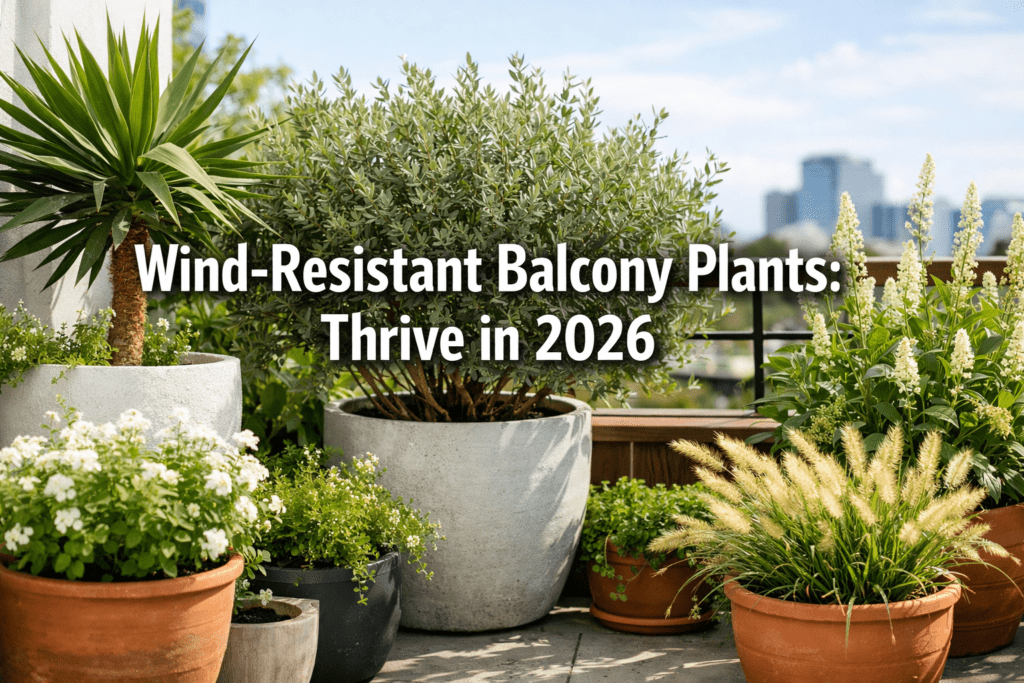
When selecting wind-resistant balcony plants, consider categories like ornamental grasses, succulents, cacti, Mediterranean herbs, and robust native plants, as these varieties are inherently adapted to harsh conditions and thrive where others might fail. These plants often feature the traits of thick leaves, flexible stems, and sturdy root systems, making them excellent candidates for exposed balconies [1].
Top Categories and Specific Plant Recommendations:
- Ornamental Grasses: These plants are champions of wind resistance due to their flexible stems and graceful swaying motion, which prevents breakage.
- Feather Reed Grass (Calamagrostis acutiflora): Known for its upright, feathery plumes that dance in the breeze [1].
- Fountain Grass (Pennisetum setaceum): Offers soft, arching foliage and fluffy seed heads [1].
- Blue Fescue (Festuca glauca): A compact, clumping grass with striking blue-gray foliage, ideal for smaller pots.
- Succulents and Cacti: Their thick, fleshy leaves store water, making them highly drought-tolerant and less susceptible to windburn. Their compact forms also minimize wind exposure.
- Agave: Architectural and striking, many varieties are suitable for large, heavy pots [1].
- Sedum (Stonecrop): Available in various forms, from groundcover types to upright varieties like ‘Autumn Joy’, all known for their resilience [1].
- Echeveria: Beautiful rosette-forming succulents that add texture and color [1].
- Aloe Vera: Not only wind-tolerant but also offers medicinal properties.
- Mediterranean Herbs: These herbs are accustomed to hot, sunny, and often windy coastal conditions, making them perfect for exposed balconies.
- Rosemary (Rosmarinus officinalis): A woody evergreen herb with fragrant, needle-like leaves [2].
- Thyme (Thymus vulgaris): Low-growing and hardy, excellent for cascading over pot edges [2].
- Oregano (Origanum vulgare): Similar to thyme in its resilience and preference for sunny, well-drained conditions [2].
- *Lavender (Lavandula spp.):* Known for its fragrant flowers and ability to withstand sun and wind.
- Australian Native Plants: Many Australian natives are exceptionally well-suited for windy, potted cultivation due to their natural adaptation to diverse and often harsh climates [1][2][5].
- *Kangaroo Paw (Anigozanthos spp.):* Striking, architectural flowers that are surprisingly robust [1].
- Lilly Pilly (Syzygium luehmannii): A beautiful shrub that can be pruned to size, offering dense foliage [1].
- *Bottlebrush (Callistemon spp.):* Known for its distinctive brush-like flowers and tough nature [1].
- Other Resilient Options:
- Portulaca (Moss Rose): A vibrant annual that thrives in full sun and is very tolerant of heat and wind.
- Gazania: Daisy-like flowers that come in brilliant colors and tolerate dry, windy conditions.
- Geraniums (Pelargoniums): While some varieties are more delicate, many are quite hardy and colorful.
- Boxwood (Buxus sempervirens): A dense evergreen shrub that can be pruned into various shapes and provides excellent structure.
Choosing Wisely:
When making your selection, always check the specific plant’s hardiness zone and light requirements to ensure it’s a good fit for your local climate and the amount of sun your balcony receives. For more general guidance on plant care, our Beginner’s Guide to Plant Care 2026: Grow Thriving Plants can be a valuable resource.
How Can You Protect Your Wind-Resistant Balcony Plants?
Protecting your wind-resistant balcony plants involves more than just selecting hardy species; it requires strategic planning of pot choice, placement, and the implementation of physical barriers to mitigate the force of strong gusts. By creating a more stable and sheltered environment, you can significantly enhance your plants’ ability to thrive.
Essential Protection Strategies:
Select Heavy and Stable Containers:
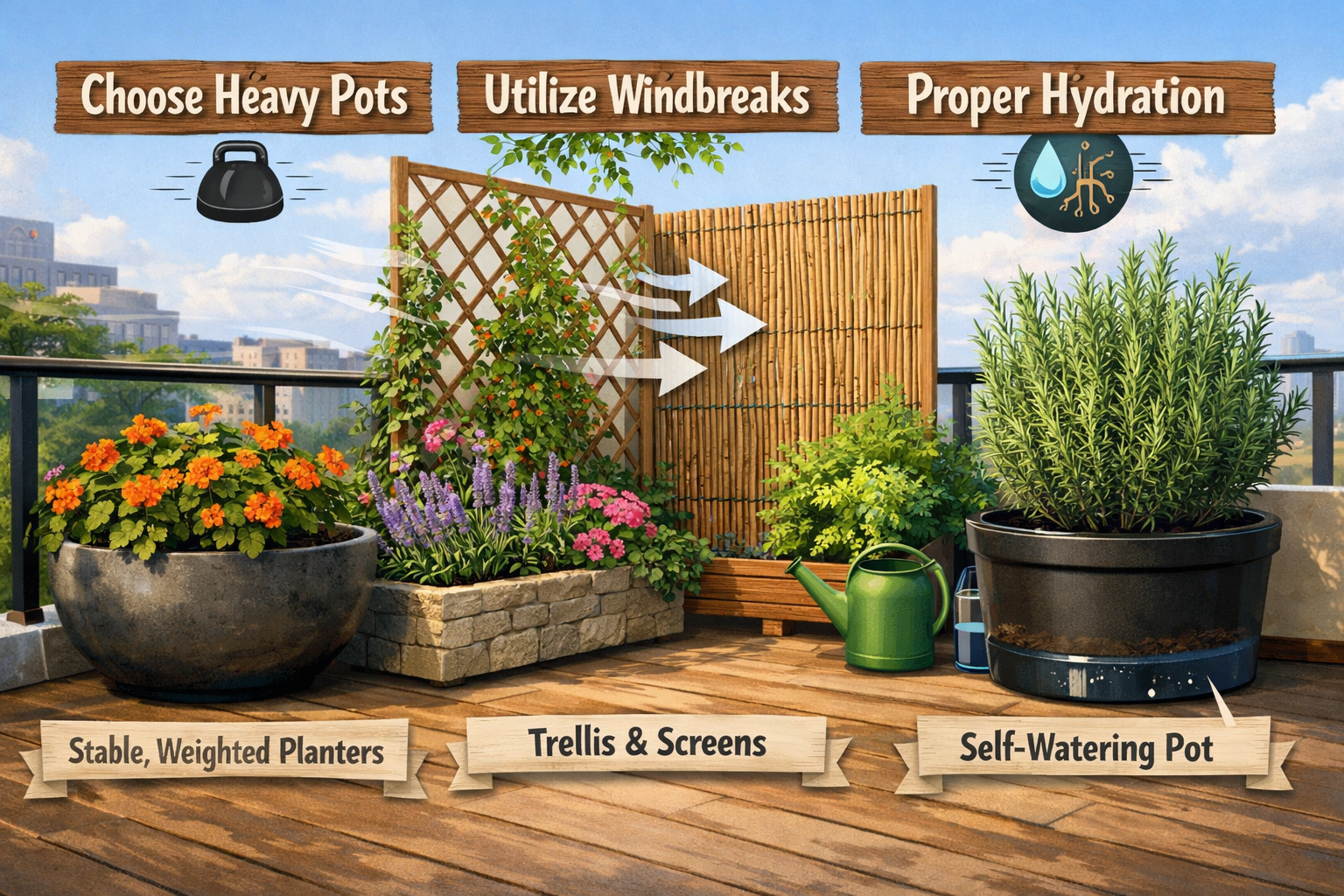
- Material Choice: Use pots made from heavy materials like concrete, stone, terracotta, or thick ceramic, as their weight helps prevent toppling in strong winds [1]. Avoid lightweight plastic pots unless you plan to weight them down.
- Shape and Size: Opt for low and wide container designs. These provide a lower center of gravity compared to tall, narrow pots, making them much more stable [1]. Larger pots also offer more soil volume, which can help anchor the plant. For a deeper dive into optimal containers, refer to our guide on Best Pots for Small Space Gardening in 2026.
Employ Windbreaks and Screens:
- Physical Barriers: Install screens, trellises, or even solid panels along the railing to deflect direct wind. Permeable screens that allow some air to pass through can be more effective than solid walls, as they reduce turbulence.
- Strategic Placement of Taller Plants: Position larger, more robust plants to shield smaller, more vulnerable ones. This creates a beneficial microclimate.
- Use Existing Structures: Walls, pillars, or sturdy furniture can serve as natural windbreaks.
Group Plants Together:
- Mutual Protection: Arranging plants in clusters allows them to protect each other. Taller plants can shield shorter ones, and the collective mass helps reduce individual plant exposure to wind. This also helps conserve moisture.
Consider Double-Potting:
- Added Weight and Insulation: Nest a smaller, planted pot inside a larger, heavier decorative pot [1]. The space between the two pots can be filled with gravel, sand, or even insulating material like styrofoam peanuts to add weight and provide insulation against temperature fluctuations.
Anchor Pots When Necessary:
- Secure Larger Containers: For very large or tall containers, consider securing them to the balcony railing or wall with heavy-duty ties or brackets, especially in areas prone to extreme winds. Always ensure this is done safely and according to building regulations.
Maintain Adequate Soil Moisture:
- Combat Evaporation: Wind significantly increases the rate of evaporation from both plant leaves and soil [2]. Ensure your plants are well-watered, but avoid overwatering.
- Self-Watering Pots: These pots have a reservoir that provides a consistent water supply, reducing the need for frequent watering and mitigating the impact of wind-driven evaporation [2]. For more on watering, see How Often Should You Water Plants? Ultimate Guide 2026.
- Mulch: Apply a layer of mulch (e.g., small pebbles, bark chips) to the soil surface to help retain moisture and keep roots cooler.
Pruning and Maintenance:
- Reduce Wind Resistance: Regularly prune your plants to maintain a compact, bushy shape. Removing dead or damaged branches also reduces potential points of failure in strong winds.
- Inspect Regularly: After strong winds, inspect your plants for any damage, and address it promptly to prevent further stress.
By integrating these protective measures, your wind-resistant balcony plants will not only survive but truly thrive, transforming your balcony into a resilient and beautiful retreat. Our Balcony Garden Setup Step-by-Step | 2026 Ultimate Guide offers further comprehensive advice for optimizing your balcony space.
What Are the Best Container and Potting Choices for Windy Balconies?
The best container and potting choices for windy balconies prioritize weight and stability, ensuring that your wind-resistant balcony plants remain firmly in place during gusts. Selecting materials like concrete, stone, or ceramic, along with specific pot designs such as low and wide shapes, is crucial for mitigating wind-related damage [1].
Key Container Considerations:
Heavy Materials:
- Concrete: Extremely heavy and durable, concrete pots offer superior stability [1]. They come in various modern and rustic styles.
- Stone: Similar to concrete, stone planters are very heavy and naturally blend into an outdoor environment.
- Terracotta/Ceramic: While not as heavy as concrete, thick-walled terracotta or glazed ceramic pots provide substantial weight compared to plastic and are aesthetically pleasing. Ensure they are frost-proof if you live in a colder climate.
- Avoid: Lightweight plastic or thin metal pots should generally be avoided unless specifically designed to be weighted or double-potted.
Low and Wide Designs:
- Center of Gravity: Pots with a wide base and a low profile are inherently more stable because they have a lower center of gravity [1]. This design makes them much harder to tip over.
- Trade-off: While tall, narrow pots might look elegant, they are a significant risk factor on windy balconies. If you must use them, consider placing very heavy rocks in the bottom or using the double-potting technique.
Size Matters:
- Larger Pots: Generally, larger pots offer more stability due to their increased weight and larger base footprint. They also provide more soil volume, which benefits the plant’s root system and moisture retention.
- Root Anchorage: More soil allows for a more developed root system, helping the plant anchor itself better within the container [4].
Drainage:
- Essential: Regardless of the material, ensure all pots have adequate drainage holes to prevent waterlogging, which can be detrimental to root health, especially for plants that prefer well-drained conditions like succulents and Mediterranean herbs. A good potting mix designed for container gardening will also aid drainage and aeration.
Potting Mix and Double-Potting:
- Quality Potting Mix: Use a high-quality, well-draining potting mix. For succulents and cacti, a specialized gritty mix is recommended. For other plants, a general-purpose potting mix with good aeration and water retention properties will suffice. Avoid heavy garden soil, which compacts easily in pots.
- Double-Potting Technique: This strategy involves placing a smaller, planted pot inside a larger, heavier outer pot [1]. The space between the two can be filled with sand, gravel, or even packing peanuts to add weight and insulation. This offers several benefits:
- Increased Stability: The outer pot adds significant weight, preventing the inner pot from toppling.
- Insulation: The air or filler material between the pots provides a buffer against temperature extremes, protecting roots from both heat and cold.
- Easier Maintenance: The inner pot can be easily removed for cleaning, repotting, or seasonal rotation.
By carefully considering both the material and design of your containers, you lay a strong foundation for a robust and beautiful balcony garden, even in the face of persistent winds. For comprehensive guidance on setting up your elevated garden, our “Complete Balcony Gardening Guide for Small Apartments 2026” – https://minispacegarden.com/balcony-gardening-guide-for-small-apartments/ can provide additional valuable insights.
How Do Windy Conditions Affect Balcony Plants and What Are the Risks?
Windy conditions significantly impact balcony plants by accelerating moisture loss, causing physical damage, and creating unfavorable growing environments, posing several risks even to otherwise hardy species. Understanding these effects is key to selecting and maintaining wind-resistant balcony plants effectively.
Primary Risks and Effects:
- Desiccation (Drying Out):
- Increased Evaporation: Wind speeds up the rate at which moisture evaporates from plant leaves (transpiration) and from the soil surface [2]. This can quickly lead to dehydration, even if the plant has recently been watered.
- Windburn: The combination of rapid moisture loss and friction from constant movement can cause leaves to dry out, turn brown, and develop a scorched appearance, similar to sunburn.
- Physical Damage:
- Broken Stems and Branches: Strong gusts can snap brittle stems or tear leaves, especially on plants with rigid structures [4].
- Uprooting: Plants with shallow root systems or those in lightweight pots can be entirely blown out of their containers [4].
- Abrasion: Constant rubbing against balcony railings, walls, or other plants can cause physical damage to stems and leaves, creating entry points for pests and diseases.
- Toppling Pots: Lightweight or tall, narrow pots are highly susceptible to being blown over, potentially damaging the plant and creating a safety hazard [1].
- Stunted Growth and Stress:
- Constant Stress: Plants expend energy trying to cope with the wind, diverting resources from growth, flowering, and fruit production.
- Root Damage: Even if not completely uprooted, constant rocking in the pot can damage fine root hairs, impairing nutrient and water uptake.
- Temperature Fluctuations:
- Wind Chill: Wind can make ambient temperatures feel colder, especially in winter, stressing plants not adapted to cold or causing frost damage.
- Rapid Heating/Cooling: On sunny, windy days, soil can dry out rapidly and heat up, then cool quickly when the sun sets, creating thermal stress.
Mitigating Risks:
By understanding these specific risks, gardeners can better appreciate why choosing wind-resistant balcony plants with their inherent adaptations (thick leaves, flexible stems, strong roots) is crucial. Furthermore, implementing the protective strategies discussed previously, such as heavy pots, windbreaks, and consistent watering, directly addresses these challenges, helping to safeguard your balcony garden against the relentless forces of wind.
Checklist for Establishing a Wind-Resistant Balcony Garden in 2026
Establishing a thriving wind-resistant balcony garden in 2026 requires a systematic approach, from initial site assessment to plant selection and ongoing maintenance. This checklist provides a clear roadmap to ensure your garden is resilient against the elements.
Step-by-Step Checklist:
1. Assess Your Balcony’s Wind Exposure:
- Observe wind direction and intensity throughout the day/season.
- Identify potential wind tunnels or sheltered spots.
- Note sunlight exposure and any existing structural elements that offer protection.
- Decision Rule: If winds are consistently strong, prioritize the most robust plants and structural protections.
2. Select Wind-Resistant Plants:
- Choose plants with thick leaves, flexible stems, and strong root systems (e.g., ornamental grasses, succulents, Mediterranean herbs, Australian natives) [1][4].
- Opt for compact, bushy varieties over tall, spindly ones.
- Verify plant hardiness zones and sun requirements match your balcony.
- Mistake to Avoid: Selecting delicate or tropical plants that are not adapted to wind, leading to rapid failure.
3. Choose Appropriate Containers:
- Select heavy materials: concrete, stone, thick ceramic, or terracotta [1].
- Prioritize low and wide pot designs for stability [1].
- Ensure all pots have adequate drainage holes.
- Consider larger pots for increased weight and root space.
- Edge Case: If using lightweight pots, plan to fill the bottom with gravel or stones for added weight, or utilize double-potting.
4. Implement Wind Protection Strategies:
- Install windbreaks (screens, trellises, dense evergreens) to deflect direct gusts [2].
- Group plants closely together for mutual protection.
- Strategically place larger, more robust plants to shield smaller, more delicate ones.
- Use the double-potting technique for added stability and insulation [1].
- Anchor very large or tall pots to railings if safe and permitted.
5. Prepare High-Quality Potting Mix:
- Use a well-draining, high-quality potting mix formulated for containers.
- Amend with perlite or grit for succulents to ensure excellent drainage.
- Avoid heavy garden soil.
6. Plant and Arrange:
- Plant firmly, ensuring roots are well-seated in the potting mix.
- Arrange plants based on their wind tolerance, placing the hardiest ones in the most exposed areas and using them as shields.
- Ensure adequate spacing for air circulation but close enough for mutual protection.
7. Establish a Watering Routine:
- Monitor soil moisture daily, as wind accelerates drying [2].
- Water thoroughly when the top inch of soil is dry.
- Consider self-watering pots to reduce evaporation and maintain consistent moisture [2].
- Apply a layer of mulch to conserve soil moisture.
8. Ongoing Maintenance:
- Regularly prune plants to maintain a compact shape and remove damaged foliage.
- Inspect plants after strong winds for any damage and address promptly.
- Fertilize appropriately according to plant needs.
- Repot as plants grow to prevent them from becoming root-bound, which can affect stability.
- Quick Example: After a particularly gusty week, I always check my rosemary and ornamental grasses for any broken stems and my agave for windburn on its leaf tips, pruning as needed to keep them healthy.
By meticulously following this checklist, you’ll be well-prepared to create a resilient and beautiful balcony garden that stands strong against the wind throughout 2026 and beyond. For an overall guide to setting up your balcony space, our Balcony Garden Setup Step-by-Step | 2026 Ultimate Guide can offer further assistance.
Pros and Cons of Growing Wind-Resistant Balcony Plants
Choosing wind-resistant balcony plants offers distinct advantages for urban gardeners in exposed locations, primarily ensuring a successful and less maintenance-intensive garden. However, this specialization can also present some limitations regarding plant diversity.
Pros of Growing Wind-Resistant Balcony Plants:
- Increased Survival Rate: These plants are specifically adapted to handle strong air currents, significantly reducing the likelihood of physical damage, uprooting, or desiccation that would destroy less hardy plants.
- Reduced Maintenance: With fewer plants needing constant rescue or replacement due to wind damage, gardeners can spend less time on crisis management and more time enjoying their space.
- Greater Longevity: Plants that aren’t constantly stressed by wind tend to live longer and remain healthier, providing sustained beauty and enjoyment.
- Drought Tolerance: Many wind-resistant plants (like succulents and Mediterranean herbs) are also drought-tolerant, meaning they require less frequent watering, a huge benefit as wind accelerates moisture loss [2].
- Structural Integrity: Flexible stems and robust root systems mean these plants are less likely to snap or fall over, maintaining the aesthetic appeal of your balcony garden.
- Safety: Sturdy plants in stable pots reduce the risk of falling debris or toppled containers, enhancing the safety of your balcony space.
Cons of Growing Wind-Resistant Balcony Plants:
- Limited Plant Diversity: Focusing solely on wind-resistant species can restrict your plant choices, potentially excluding some highly desired but delicate flowering plants or specific edibles.
- Aesthetic Limitations: While many wind-resistant plants are beautiful, some gardeners might find the overall aesthetic leans towards a more rugged, Mediterranean, or arid style, which may not suit all design preferences.
- Initial Investment: Heavy-duty pots and structural windbreaks, while crucial for success, can represent a higher initial investment compared to lightweight plastic pots and delicate plant varieties.
- Requires Research: Identifying truly wind-resistant species often requires specific research beyond general gardening advice, which can be an extra step for beginners. However, this guide aims to simplify that process!
Despite the potential limitations, the benefits of cultivating wind-resistant balcony plants far outweigh the cons for anyone dealing with an exposed balcony. The peace of mind and success rate gained by choosing the right plants and strategies ensure a thriving, beautiful outdoor space. For those interested in the easiest options, our “Best Low Maintenance Plants 2026: Easy Care Guide” – https://minispacegarden.com/low-maintenance-plants/ provides further valuable information.
Advanced Tips for Optimizing Your Wind-Resistant Balcony Garden
Beyond selecting the right wind-resistant balcony plants and basic protection, several advanced strategies can further enhance the resilience and beauty of your elevated garden. These tips focus on microclimate manipulation, smart design, and proactive care to ensure your balcony thrives in 2026.
Advanced Optimization Techniques:
Harness Vertical Gardening for Wind Protection:
- Living Walls as Windbreaks: Implement vertical garden structures along railings or walls using robust climbing plants like Bougainvillea or certain vigorous ivies. These living walls not only add beauty but also create an effective, permeable wind barrier that dissipates wind energy without creating harsh turbulence.
- Tiered Planting: Use tiered planters or shelving to create multiple levels. Place the most wind-sensitive plants on lower, more sheltered tiers, and hardier, taller plants on upper tiers to act as a natural shield.
- Internal Link: Explore “Vertical Gardening Guide for Small Spaces: Grow More in 2026” – https://minispacegarden.com/vertical-gardening-guide-for-small-spaces/ for more ideas.
Strategic Use of Mulch and Soil Amendments:
- Heavy Mulch: Beyond moisture retention, a thick layer of heavy mulch (e.g., decorative gravel, river pebbles) in your pots adds weight to the topsoil, helping to prevent soil erosion and plant dislodgement during strong gusts.
- Soil Texture for Anchorage: While good drainage is key, incorporating some heavier, nutrient-rich compost into your potting mix (unless growing succulents) can provide a slightly denser medium for roots to anchor into compared to very light, peat-based mixes.
Consider “Sacrificial” Plants:
- Buffer Zones: If you absolutely want to grow a few less wind-tolerant plants, strategically place them behind a dense row of your hardiest wind-resistant species. These “sacrificial” plants will bear the brunt of the wind, protecting your more prized but delicate specimens. This is an advanced application of the grouping strategy.
Guy Wires and Staking for Larger Plants:
- Proactive Support: For taller shrubs or small trees in containers, even if they are wind-resistant, consider temporary or permanent staking. Use flexible plant ties to secure them to sturdy stakes embedded deeply in the pot, or even small guy wires anchored to the pot’s handles or balcony structure during particularly windy seasons.
Wind-Proofing Accessories:
- Pot Feet/Weights: While heavy pots are preferred, for existing lighter pots, consider adding specialized pot weights or placing heavy paver stones underneath them to lower the center of gravity and add stability.
- Automated Watering Systems: For balconies that experience rapid drying due to wind, a drip irrigation system with a timer can ensure consistent moisture, alleviating the constant battle against desiccation.
Year-Round Wind Preparedness:
- Seasonal Rotation: If certain areas of your balcony are more exposed in winter (due to prevailing winds), rotate more sensitive potted plants to sheltered spots or bring them indoors if space allows.
- Winter Windbreaks: Consider temporary, removable windbreaks for winter, such as burlap screens, to protect evergreens from desiccation and frost burn.
By integrating these advanced tips, you’re not just planting; you’re engineering a resilient and aesthetically pleasing balcony garden that stands strong, no matter what the wind brings in 2026. This holistic approach ensures long-term success and minimizes common gardening frustrations.
Conclusion
Creating a flourishing balcony garden in a windy environment is not just possible; it’s an achievable goal for every urban gardener in 2026, provided you apply the right knowledge and strategies. The key lies in understanding the inherent challenges presented by wind and proactively selecting wind-resistant balcony plants that are naturally equipped to handle these conditions. From the flexible sway of ornamental grasses and the drought-defying resilience of succulents to the rugged beauty of Mediterranean herbs and Australian natives, a diverse array of plants can transform your exposed space into a verdant sanctuary.
Beyond plant selection, the success of your wind-resistant balcony garden hinges on strategic implementation. Choosing heavy, low-profile pots, employing effective windbreaks, grouping plants for mutual protection, and ensuring consistent moisture are all critical steps. By combining these horticultural and structural strategies, you mitigate the risks of desiccation and physical damage, allowing your plants to thrive rather than merely survive.
This guide provides a comprehensive framework, from understanding plant characteristics to advanced optimization tips, empowering you to make informed decisions. Embrace the challenge, apply these proven techniques, and enjoy the satisfaction of a vibrant, resilient balcony garden that stands strong against the elements for years to come.
FAQ
Q1: What is the most important factor for wind resistance in balcony plants?
A1: The most important factor is a plant’s inherent physical characteristics, such as thick, fleshy leaves to prevent water loss, flexible stems that bend without breaking, and strong root systems for anchorage [4].
Q2: Can I use lightweight plastic pots for wind-resistant plants?
A2: While possible, it’s not ideal. If you must use lightweight plastic pots, they should be heavily weighted with gravel or stones, or placed inside a larger, heavier decorative pot using the double-potting technique [1].
Q3: How often should I water balcony plants in windy conditions?
A3: Wind accelerates evaporation, so you should monitor soil moisture daily and water more frequently than usual, often when the top inch of soil feels dry [2]. Self-watering pots can also be very beneficial.
Q4: Are all succulents good wind-resistant balcony plants?
A4: Most succulents are excellent wind-resistant balcony plants due to their water-storing, fleshy leaves and compact forms. Varieties like Agave, Sedum, and Echeveria are particularly well-suited [1].
Q5: What is a simple DIY windbreak for a balcony?
A5: A simple DIY windbreak can be a sturdy trellis with climbing plants, a dense row of bushy potted plants, or even a bamboo screen secured to the balcony railing.
Q6: Can wind damage a plant’s roots in a pot?
A6: Yes, constant rocking from strong winds can damage a plant’s fine root hairs, impairing its ability to absorb water and nutrients, even if the plant isn’t completely uprooted.
Q7: Should I prune wind-resistant plants differently?
A7: Regularly prune wind-resistant plants to maintain a compact, bushy shape. This reduces the surface area exposed to the wind and removes any damaged or weak branches that could snap.
Q8: Are native plants generally good for windy balconies?
A8: Yes, many native plants, especially those adapted to coastal or arid conditions (like Australian natives), are naturally very resilient and make excellent wind-resistant balcony plants [1][5].
Q9: What is “double-potting” and how does it help with wind?
A9: Double-potting is nesting a smaller, planted pot inside a larger, heavier outer pot, often filling the gap with sand or gravel. This significantly increases the overall weight and stability, preventing toppling in wind [1].
Q10: Can wind make my balcony garden colder?
A10: Yes, wind can create a “wind chill” effect, making ambient temperatures feel colder to plants, which can be particularly detrimental to less hardy species during colder months.
Q11: What type of soil is best for wind-resistant balcony plants?
A11: A high-quality, well-draining potting mix is best. For succulents, use a gritty, fast-draining mix. Good soil aeration is also important to prevent waterlogging.
Q12: What are some common mistakes when planting on windy balconies?
A12: Common mistakes include using lightweight plastic pots, selecting delicate or tall, spindly plants, forgetting to water frequently, and not implementing any form of windbreak or protection.
References
[1] Plants And Pots Suitable For Windy Balconies – https://www.thebalconygarden.com.au/blogs/news/plants-and-pots-suitable-for-windy-balconies
[2] Spring Kickoff Best Plants For Hot Windy Balconies And How To Keep Them Thriving – https://www.homeleisure.com.au/spring-kickoff-best-plants-for-hot-windy-balconies-and-how-to-keep-them-thriving/
[3] Trends In Container Gardening 2026 – https://www.containedcreations.com/blog/trends-in-container-gardening-2026
[4] Hardy Patio Plants Texas July Climate Proof – https://urbanoasiscontracting.com/hardy-patio-plants-texas-july-climate-proof/
[5] Native Plants For Urban Balconies – https://wildones.org/native-plants-for-urban-balconies/
[6] That Winter The Wind Blows 1769515132 – https://web.ecreee.org/fresh-field/that-winter-the-wind-blows-1769515132
[7] Watch – https://www.youtube.com/watch?v=Qpx67-lwGjw
[8] 7 Plants That Can Weather Storms Hurricanes – https://southernlivingplants.com/plan-your-garden/7-plants-that-can-weather-storms-hurricanes/