Why are my radishes growing leaves but no bulbs?
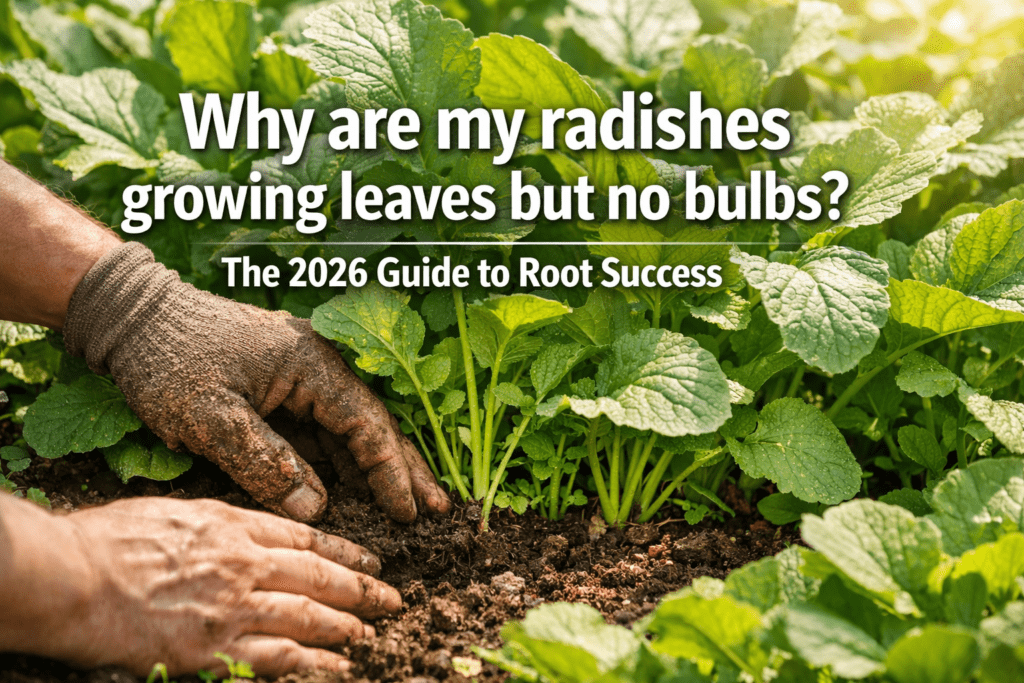
Are you looking forward to crisp, spicy radishes, only to find a tangle of green leaves with no swollen roots beneath the soil? If you’re asking, “Why are my radishes growing leaves but no bulbs?”, you’re not alone. This is a common frustration for many gardeners, signaling that while your radish plants are actively growing, they aren’t dedicating their energy to producing the edible part we all desire. The good news is that this issue is often fixable, rooted in a few key environmental or cultivation factors that can be adjusted for a bountiful harvest in your next growing cycle.
Key Takeaways
- Excess Nitrogen: Too much nitrogen in the soil encourages leafy growth at the expense of root development.
- Insufficient Sunlight: Radishes need at least 6 hours of direct sunlight daily to produce bulbs.
- Overcrowding: Plants need adequate space (1-2 inches apart) for bulbs to expand properly.
- Heat Stress: Temperatures above 75°F (24°C) can cause radishes to bolt and prevent bulb formation.
- Compacted Soil: Dense soil physically restricts root expansion and limits oxygen.
- Inconsistent Watering: Erratic moisture levels can stress plants and hinder bulb development.
- Solution Focus: Balance nutrients, thin seedlings, ensure ample sun, plant in cooler seasons, and amend soil.
Quick Answer
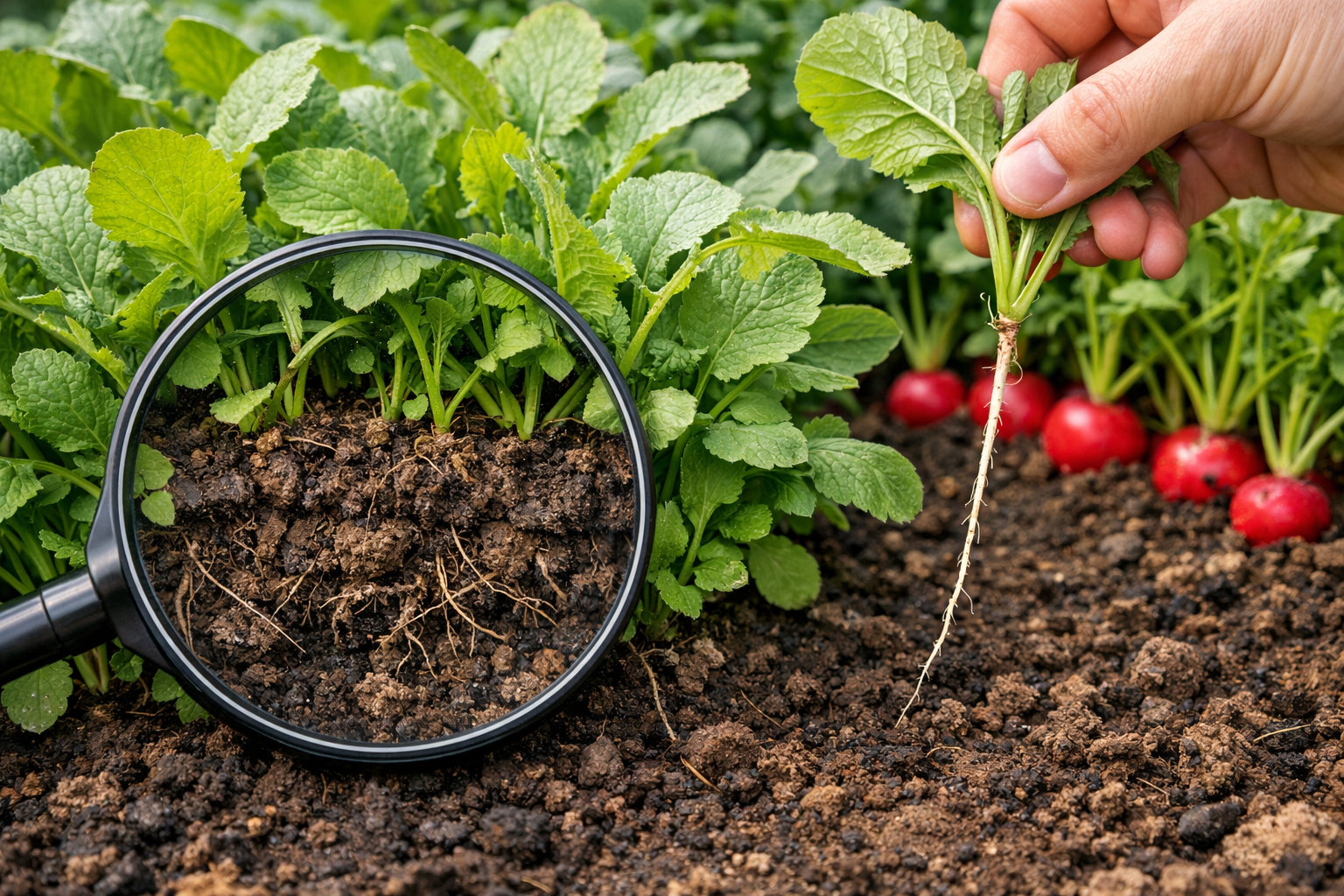
Radishes primarily grow leaves and no bulbs due to common environmental and cultivation issues such as excess nitrogen in the soil, inadequate sunlight, overcrowding, heat stress, or compacted soil [1, 3, 4]. Each of these factors can prevent the plant from channeling energy into root development, instead directing it towards foliage growth or premature flowering. Addressing these specific conditions is crucial for encouraging proper bulb formation.
Why Are My Radishes Growing Leaves But No Bulbs? Understanding Soil and Nutrients
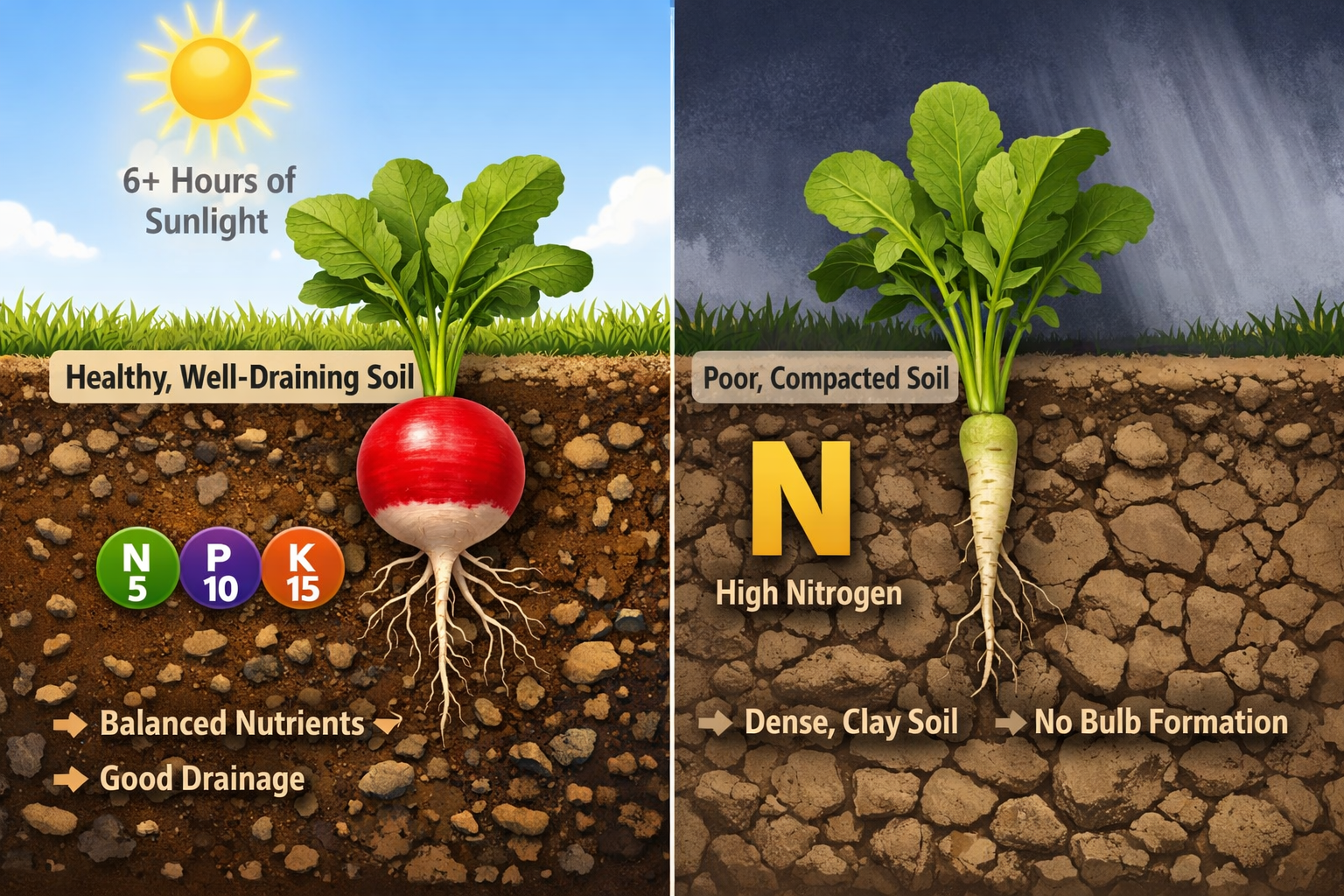
One of the most common reasons radishes develop lush foliage but fail to form bulbs is an imbalance in soil nutrients, particularly an excess of nitrogen [1, 3]. Nitrogen is essential for leafy growth, but too much of it tells the plant to prioritize green tops over the underground root.
When your radishes are growing leaves but no bulbs, it’s often a direct sign that the soil composition isn’t optimal for root vegetables. Radishes, like most root crops, thrive on a balanced diet with more phosphorus and potassium, which support root development, rather than an abundance of nitrogen, which promotes foliage [1]. If your soil is rich in nitrogen—perhaps from recent heavy fertilization with a ‘greens’ fertilizer or fresh compost—the plant will respond by channeling all its energy into producing abundant leaves. This often happens because the plant interprets the nitrogen signal as a need to grow taller and leafier to compete for light, rather than to store energy in a root bulb.
- Excess Nitrogen: Nitrogen-heavy fertilizers, especially those high in the first number of the N-P-K ratio (e.g., 10-5-5), can lead to an overproduction of leaves. Avoid using such fertilizers for radishes [1].
- Solution: Balance Nutrients: To counteract excess nitrogen, amend your soil with phosphorus and potassium sources at planting time. Bone meal, rock phosphate, or a balanced fertilizer with a lower nitrogen ratio can encourage root growth [1]. For container gardening, using a specifically formulated vegetable potting mix can help ensure the right balance from the start [https://minispacegarden.com/soil-basics-for-container-gardening/].
- Common Mistake: Applying fresh manure directly before planting radishes. Fresh manure is often very high in nitrogen, causing the radish plants to put all their energy into foliage. If you use manure, ensure it is well-composted and aged for several months.
[[IMAGE_PROMPT_1]]
The Impact of Light, Spacing, and Temperature on Radish Bulb Formation
Insufficient sunlight, overcrowding, and heat stress are critical environmental factors that can prevent radishes from forming bulbs, pushing them instead to produce only leaves [3, 4]. Radishes are fast-growing cool-season crops that require specific conditions to develop their edible roots.
If you’re observing your radishes growing leaves but no bulbs, examine their growing environment closely for these three issues. Radishes need ample direct sunlight to photosynthesize efficiently, producing the sugars necessary for bulb growth [4, 5]. When light is scarce, the plant stretches its leaves in search of more sun, neglecting root development. Similarly, crowded conditions create intense competition for resources, leaving little energy for any single plant to form a substantial bulb [2]. Finally, radishes are highly sensitive to heat; warm temperatures trigger them to “bolt,” or go to seed prematurely, bypassing the bulbing stage entirely [3, 4].
- Inadequate Sunlight: Radishes require a minimum of 6 hours of direct sunlight each day to properly form bulbs. Less than this will cause them to prioritize leaf growth as they try to reach more light [4, 5].
- Solution: Plant radishes in the sunniest part of your garden. If growing in containers or small spaces, ensure they are placed where they receive optimal light throughout the day. Consider companion planting carefully to avoid shading radishes.
- Overcrowding: When radish seedlings are not thinned, they compete intensely for nutrients, water, and space. This competition prevents individual bulbs from swelling [2, 4].
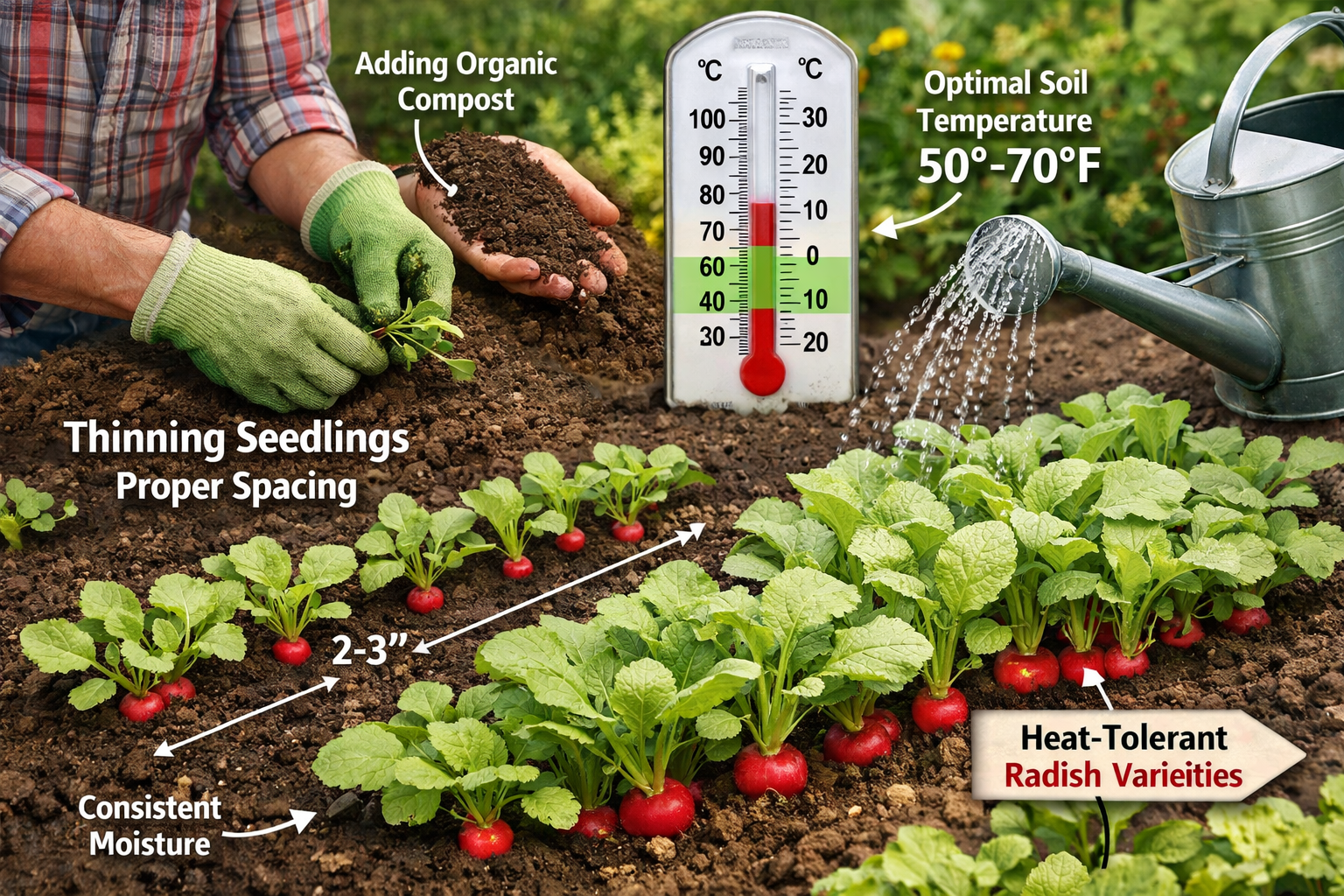
- Solution: Thin seedlings to at least 1-2 inches apart once they have developed their first set of true leaves. This provides ample room for each plant’s root to expand. You can often eat the thinnings in salads!
- Heat Stress: Radishes prefer cooler temperatures, ideally between 50-70°F (10-21°C). Temperatures consistently above 75°F (24°C) can cause radishes to bolt (produce flowers and seeds) instead of bulbs, and can also lead to woody, bitter roots if bulbs do form [3, 4].
- Solution: Plant radishes in early spring, about 3-4 weeks before the last expected frost, or in late summer for a fall harvest to avoid the peak summer heat [3]. For warmer climates, consider heat-tolerant varieties like ‘Icicle,’ ‘Roxanne,’ or ‘Sparkler’ [3]. Using mulch can also help regulate soil temperature [3].
[[IMAGE_PROMPT_2]]
What Role Does Soil Compaction and Watering Play When Radishes Grow Leaves But No Bulbs?
Soil compaction and inconsistent watering are often overlooked but significant factors contributing to radishes growing leaves but no bulbs. Both issues directly impede the physical development of the root and the plant’s ability to absorb necessary resources.
When you notice your radishes growing leaves but no bulbs, consider the texture of your soil and your watering habits. Compacted or heavy clay soils are a physical barrier to the radish root, preventing it from expanding into a globe [3, 6]. These soils also restrict oxygen flow, which is vital for healthy root development. Simultaneously, inconsistent watering—either too much or too little—stresses the radish plant. Radishes have a short, rapid growth cycle, and fluctuating moisture levels can signal stress, causing the plant to prioritize survival (like producing seeds) over forming a fleshy bulb, or simply making the existing bulb growth stunted and tough [3].
Soil Compaction
- Problem: Dense, heavy clay soils or soil that has been walked on can become compacted, making it difficult for the radish root to expand and swell into a bulb [3, 6]. This also reduces oxygen availability to the roots.
- Solution: Before planting, amend heavy or compacted soils with organic matter like compost, well-rotted manure, or peat moss. This improves soil structure, aeration, and drainage, making it easier for bulbs to form [6]. For small space gardening or container gardening, ensure you use a light, well-draining potting mix.
- Decision Rule: Choose to amend your garden soil if it feels hard, dense, or drains slowly after rain. If it crumbles easily, compaction is likely not the primary issue.
Watering Practices
- Problem: Radishes require consistent, even moisture throughout their rapid 25-30 day growth cycle. Irregular watering can lead to stress, causing bulbs to crack, become woody, or fail to form altogether [3]. Both overwatering (leading to root rot) and underwatering (stunting growth) are detrimental.
- Solution: Water regularly, especially during dry spells, to keep the soil consistently moist but not waterlogged. Aim for about 1 inch of water per week, either from rain or irrigation. Check soil moisture by sticking your finger about an inch deep; if it feels dry, it’s time to water [3].
- Common Mistake: Allowing the soil to completely dry out between waterings. Radishes are very sensitive to moisture fluctuations due to their quick growth.
[[IMAGE_PROMPT_3]]
Troubleshooting Chart for Radish Bulb Failure (2026)
Here’s a quick guide to diagnose and fix common issues if your radishes are growing leaves but no bulbs:
| Problem | Symptoms | Immediate Action | Long-Term Solution |
|---|---|---|---|
| Excess Nitrogen | Abundant, lush green leaves; small or no bulb. | Avoid high-nitrogen fertilizers. | Amend soil with bone meal or rock phosphate before next planting [1]. |
| Insufficient Sun | Leggy, stretched plants; pale green leaves. | Relocate containers to sunnier spot. | Plant in a location receiving 6+ hours of direct sun for future crops [4, 5]. |
| Overcrowding | Many small plants bunched together; no bulb growth. | Thin seedlings to 1-2 inches apart immediately [2]. | Practice proper seed spacing or meticulous thinning at germination. |
| Heat Stress | Plants bolt (flower); leaves may turn yellow/tough. | Provide temporary shade if possible. | Plant in early spring or late summer. Choose heat-tolerant varieties [3]. |
| Compacted Soil | Stunted bulbs, difficult to pull up. | Gently loosen soil around plants if possible. | Incorporate generous organic matter (compost) into soil before planting [6]. |
| Inconsistent Water | Cracked, tough, or non-existent bulbs. | Establish a consistent watering schedule. | Maintain even soil moisture; use mulch to retain moisture [3]. |
| Wrong Variety | Repeated issues despite ideal conditions. | Research specific radish varieties. | Choose varieties suited to your climate and desired harvest time (e.g., ‘French Breakfast’ for quick harvest) [3]. |
Preventative Measures for Future Radish Crops
To ensure your future radish harvests are full of crisp, plump bulbs and not just a sea of leaves, proactive measures are key. Prevention is always easier than trying to fix problems mid-season.
- Soil Preparation is Paramount: Before planting, enrich your soil with well-rotted compost to improve structure and drainage [6]. If your soil is heavy clay, compost will make a huge difference in allowing roots to expand. If you’re starting a new garden bed, consider a soil test to understand its nutrient profile and pH.
- Strategic Fertilization: Avoid fertilizers high in nitrogen. Instead, use a balanced organic fertilizer that favors phosphorus and potassium, or amend with bone meal. Remember, less is often more with radishes when it comes to feeding.
- Optimal Planting Times: Radishes are cool-season crops. Plant them in early spring as soon as the soil can be worked, or in late summer for a fall harvest [3]. Avoid planting during the hottest parts of summer unless you live in a very cool climate or choose heat-tolerant varieties.
- Mindful Watering: Consistent moisture is non-negotiable. Plan your watering schedule to keep the soil evenly moist. Using mulch, such as straw or shredded leaves, can significantly help maintain soil moisture and temperature, reducing the need for frequent watering [3].
- Proper Spacing from the Start: Pay attention to seed packet recommendations for spacing. While you might be tempted to sow thickly, it will only lead to disappointing results. Thin your seedlings promptly to the recommended 1-2 inches apart once they have their first true leaves [2]. This ensures each plant has the space and resources it needs. For small space vegetable gardening, precise spacing is even more important [https://minispacegarden.com/small-space-vegetable-gardening/].
- Choose the Right Variety: Some radish varieties are better suited for specific conditions. For example, some may tolerate more heat, while others are specifically bred for quick growth in cool conditions. Researching and selecting the appropriate variety for your local climate and growing season can make a significant difference.
Conclusion
Understanding “Why are my radishes growing leaves but no bulbs?” is the first step toward a successful harvest. This common gardening dilemma is almost always a signal that specific environmental conditions or cultivation practices need adjustment. By focusing on balanced soil nutrition (less nitrogen, more phosphorus and potassium), ensuring adequate sunlight, providing proper spacing, planting in the correct season to avoid heat stress, improving soil structure, and maintaining consistent moisture, you can transform your radish patch from a leafy jungle into a bounty of crisp, delicious roots. Don’t be discouraged by a disappointing harvest; each growing season offers a new opportunity to learn and apply these essential gardening principles for vibrant, bulbed radishes in 2026 and beyond.
Actionable Next Steps:
- Assess Your Soil: Perform a soil test or observe your soil’s texture and drainage. Amend heavy soils with compost.
- Adjust Fertilization: If you’ve used high-nitrogen fertilizers, switch to lower-nitrogen options or incorporate phosphorus/potassium sources.
- Optimize Sunlight: Confirm your radishes receive at least 6 hours of direct sun.
- Thin Rigorously: Don’t hesitate to thin seedlings to the recommended spacing.
- Time Your Planting: Plan your radish plantings for early spring or late summer to avoid peak heat.
- Water Consistently: Implement a regular watering schedule and consider using mulch.
FAQ
Why do my radishes have big tops but small roots?
This usually indicates an excess of nitrogen in the soil, which promotes leaf growth over root development, or insufficient sunlight, causing plants to put energy into reaching for light rather than bulbing [1, 4].
Can too much water cause radishes not to bulb?
Yes, overwatering can lead to waterlogged soil, depriving roots of oxygen and stunting bulb development, while inconsistent watering (too much then too little) can cause stress [3].
What is the ideal temperature for growing radishes with bulbs?
Radishes prefer cooler temperatures, ideally between 50-70°F (10-21°C). Temperatures above 75°F (24°C) can cause them to bolt [3].
How much space do radishes need to bulb?
Radishes need to be thinned to at least 1-2 inches apart to allow sufficient space for their bulbs to expand [2].
Do radishes need full sun to bulb?
Yes, radishes require a minimum of 6 hours of direct sunlight daily for proper bulb formation [4, 5].
What soil type is best for radish bulbs?
Radishes thrive in loose, well-draining soil that is rich in organic matter. Heavy, compacted clay soils can inhibit bulb development [3, 6].
How do I fix nitrogen-rich soil for radishes?
To balance high nitrogen, amend your soil with sources of phosphorus and potassium, such as bone meal, before planting [1].
Why are my radishes woody and hot?
Woody or excessively spicy radishes are often a sign of heat stress or inconsistent watering, which can prematurely mature the plant and affect flavor [3].
Can I still eat the leaves if my radishes don’t form bulbs?
Yes, radish greens are edible and nutritious! They can be added to salads, stir-fries, or sautéed like other leafy greens.
References
[1] Radishes And Onions With No Bulb – https://www.patwelsh.com/vegetables-fruits/radishes-and-onions-with-no-bulb/
[2] Why Are My Radishes Growing Only Leaves And No Bulbs – https://www.idyl.co.in/blogs/blog/why-are-my-radishes-growing-only-leaves-and-no-bulbs
[3] Radishes Growing Tops But No Bulbs 5 Causes And Simple Fixes – https://www.gardeninginsteps.com/article/radishes-growing-tops-but-no-bulbs-5-causes-and-simple-fixes
[4] Radish Does Not Form Bulbs – https://www.gardeningknowhow.com/edible/vegetables/radish/radish-does-not-form-bulbs.htm
[5] Watch – https://www.youtube.com/watch?v=faoJqB2hIR8
[6] When Radishes Dont Form Bulbs There Can Be Several Causes – https://www.bangordailynews.com/2020/06/18/homestead/when-radishes-dont-form-bulbs-there-can-be-several-causes/