When should I rotate crops in a small vegetable garden?
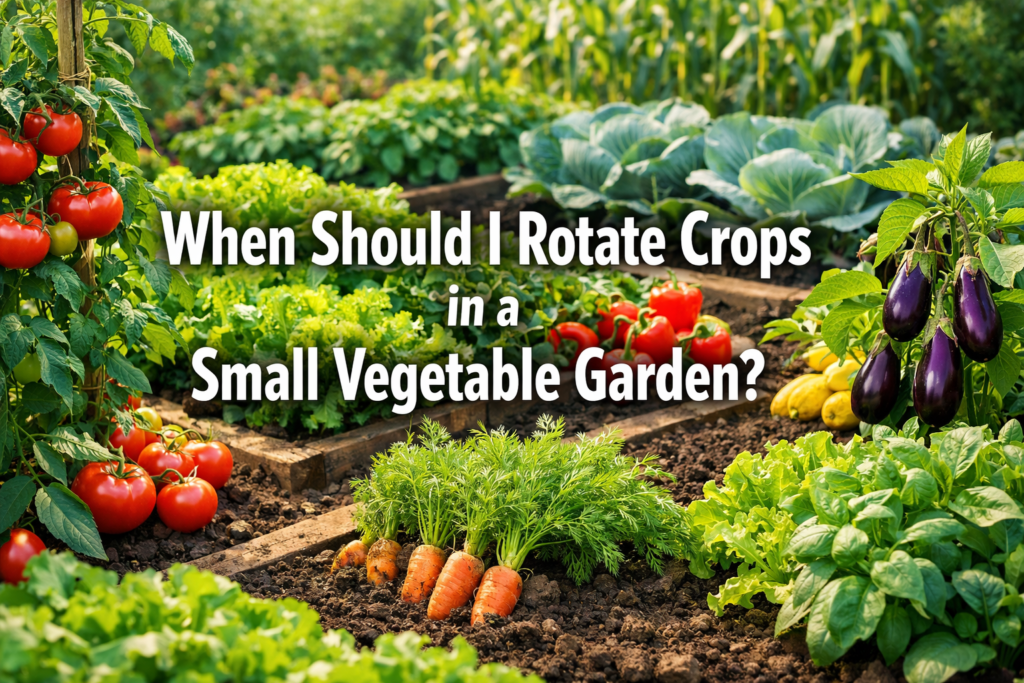
Rotating crops in a small vegetable garden is a fundamental practice for maintaining soil health, preventing pests and diseases, and ultimately boosting your yields. The ideal time to implement crop rotation is typically every year or two, with a common strategy involving moving each plant family to a different section of your garden annually. While flexible, a general rule of thumb is to avoid planting vegetables from the same family in the same spot for at least three to four years to achieve maximum benefits [3, 5].
Key Takeaways
- Rotate crops annually or every two years to prevent pest and disease buildup and maintain soil fertility [5].
- Group plants by family (e.g., Brassicas, Legumes, Nightshades) for effective rotation [1].
- Avoid planting the same plant family in the same spot for 3-4 years to break pest and disease cycles [3].
- Rotate heavy feeders (like corn, tomatoes) with light feeders and nitrogen-fixers (like beans, peas) to balance soil nutrients [4].
- Alternate shallow-rooted crops (e.g., lettuce) with deep-rooted crops (e.g., carrots) to utilize different soil depths [2].
- Even in small spaces, rotation disrupts pest lifecycles and reduces disease spores [1].
- Consider a simple 3 or 4-bed system for easier annual rotation.
- Healthy soil, monitoring, mulching, and companion planting can supplement rotation benefits in very small gardens [6].
Quick Answer
You should rotate crops in a small vegetable garden primarily every year or two to prevent the accumulation of soil-borne pests and diseases and to optimize soil nutrient usage [5]. A common approach involves grouping vegetables by family and moving them to a new bed or area annually, ensuring no single family occupies the same spot for three to four years [3, 1].
Why is Crop Rotation Important for Small Gardens?
Crop rotation is crucial even in a small vegetable garden because it directly impacts soil health, pest management, and disease prevention, leading to healthier plants and better harvests. When the same crop is grown in the same spot year after year, it depletes specific nutrients from the soil, creates an environment where specific pests thrive, and allows disease-causing pathogens to accumulate [1]. This practice mimics natural cycles and is a cornerstone of sustainable gardening.
Here’s why it matters:
- Pest and Disease Disruption: Many garden pests and diseases are specific to certain plant families. By moving these plants, you break the lifecycle of pests and prevent the buildup of disease spores in the soil, effectively starving them out [1]. For instance, rotating brassicas helps prevent clubroot, and moving onions can reduce onion white rot [1].
- Soil Fertility Management: Different plants have varying nutritional needs. Heavy feeders, such as corn, potatoes, and brassicas, deplete the soil of vital nutrients like nitrogen. By rotating them with lighter feeders or, especially, with legumes (like beans and peas), you can naturally enrich the soil. Legumes are known for their ability to fix nitrogen from the air into the soil, replenishing what other crops have used [4].
- Improved Yields and Plant Health: Healthy soil, free from concentrated pests and diseases and rich in balanced nutrients, directly translates to stronger, more productive plants [5]. Crops grown in a rotated system often exhibit better vigor and resilience against environmental stresses.
- Optimized Root Zone Utilization: Crops also differ in their root depths. Rotating shallow-rooted plants (e.g., salads, radishes) with deep-rooted ones (e.g., carrots, tomatoes, Brussels sprouts) ensures that nutrients and water are utilized from different soil layers, preventing exhaustion of specific zones [2].
Implementing crop rotation, even on a small scale, contributes significantly to the long-term productivity and ecological balance of your garden, making it a more resilient and rewarding space for growing your food. For guidance on setting up a small garden effectively, explore our Small Space Vegetable Gardening: 2026 Step-by-Step Guide.
When Should I Rotate Crops in a Small Vegetable Garden? Timing and Frequency
The most effective time to rotate crops in a small vegetable garden is annually, typically after the harvest of the current season’s crops and before preparing the beds for the next planting cycle. While an annual rotation is highly beneficial, a rotation interval of every one to two years can still significantly mitigate pest and disease issues [5].
Consider these timing guidelines:
- Annual Movement: For optimal results, plan to move each crop section forward to a different location in your garden every year [1]. This annual shift is fundamental to disrupting pest and disease cycles before they become firmly established.
- Minimum Interval for Plant Families: The golden rule for preventing specific soil-borne problems is to avoid planting members of the same plant family in the same spot more than once every three to four years [3]. This extended break is crucial for pathogens and pests to die off due to the absence of their host plant.
- Seasonal Considerations: In regions with multiple growing seasons (e.g., spring, summer, fall), you can rotate crops even within a single year if you are performing successive plantings. For example, after harvesting a spring crop of lettuce, you might plant beans (a legume) in that spot for summer. However, the critical “full rotation” usually refers to the annual shift of major plant families.
- Preparation for Next Season: The ideal time to conceptualize and map out your rotation plan is during the garden planning phase for the upcoming year, often in late winter or early spring before planting begins. This allows you to prepare your beds accordingly.
Example of an Annual Rotation:
If you have four main garden beds:
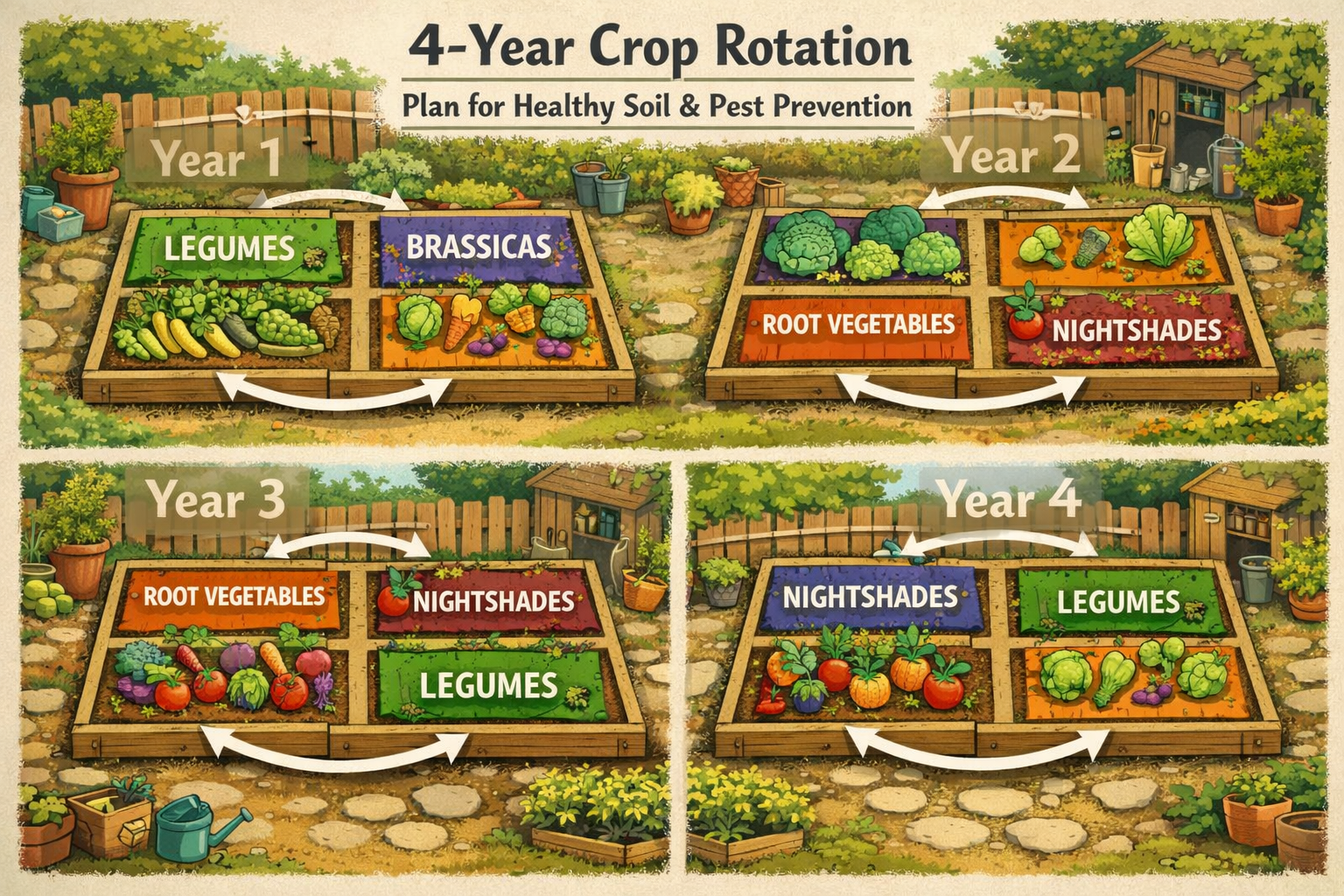
- Year 1: Bed 1 (Legumes), Bed 2 (Brassicas), Bed 3 (Nightshades), Bed 4 (Root Vegetables)
- Year 2: Bed 1 (Root Vegetables), Bed 2 (Legumes), Bed 3 (Brassicas), Bed 4 (Nightshades)
- Year 3: Bed 1 (Nightshades), Bed 2 (Root Vegetables), Bed 3 (Legumes), Bed 4 (Brassicas)
- Year 4: Bed 1 (Brassicas), Bed 2 (Nightshades), Bed 3 (Root Vegetables), Bed 4 (Legumes)
This systematic movement ensures that no plant family returns to the same bed for four years, providing ample time for pest and disease reduction and nutrient balancing. This approach is highly effective for maximizing productivity in small garden spaces. Learn more about maximizing your space in our Ultimate Guide to Small Space Gardening for Beginners 2026.
How to Implement Crop Rotation in a Small Vegetable Garden
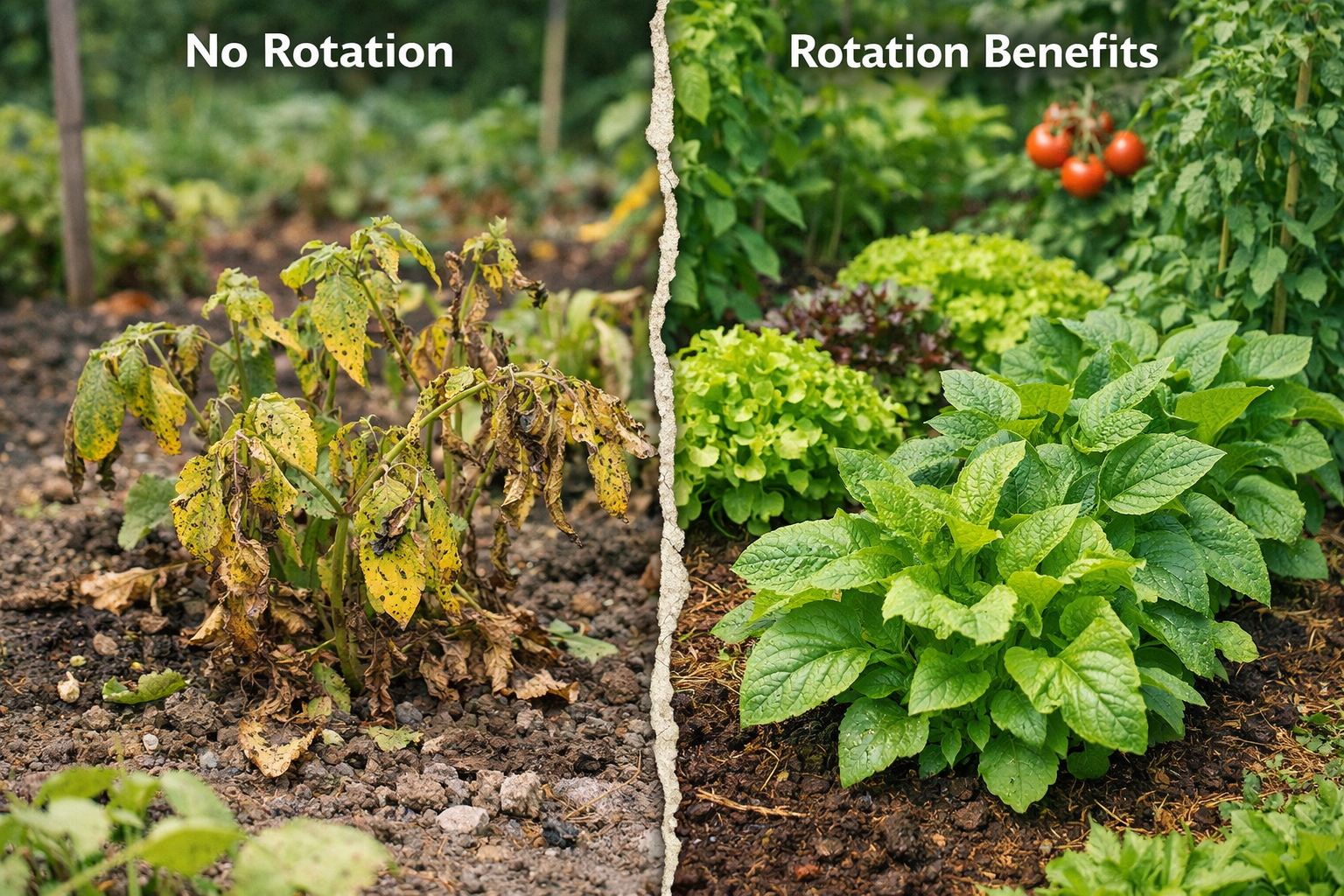
Implementing crop rotation in a small vegetable garden involves a strategic approach to grouping plants and planning their movement across your available space. It’s less about rigid rules and more about understanding plant families and their impact on the soil.
Here’s a step-by-step guide:
1. Group Your Vegetables by Family
The first step is to categorize your plants into family groups. This is crucial because members of the same family often share similar nutrient requirements, pest vulnerabilities, and disease susceptibilities [1].
Common Plant Families for Rotation:
- Brassicas (Cabbage Family): Broccoli, cabbage, kale, cauliflower, Brussels sprouts, radishes, turnips. These are heavy feeders and susceptible to clubroot [1].
- Legumes (Pea/Bean Family): Beans (bush, pole), peas, lentils. These are nitrogen-fixers, meaning they add nitrogen to the soil.
- Solanaceae (Nightshade Family): Tomatoes, peppers, potatoes, eggplants. These are heavy feeders and can be prone to blight and specific soil-borne pests. Never plant corn where tomatoes grew the previous year, as both attract similar worms [4].
- Alliums (Onion Family): Onions, garlic, leeks, chives. Prone to onion white rot [1].
- Cucurbits (Gourd Family): Cucumbers, squash, zucchini, pumpkins, melons.
- Apiaceae (Carrot Family): Carrots, parsnips, celery. These are typically root vegetables.
- Chenopodiaceae (Beet Family): Beets, spinach, Swiss chard.
2. Divide Your Garden into Sections
Even if your garden is small, try to mentally (or physically) divide it into 3 or 4 distinct sections or beds. These sections don’t have to be perfectly equal but should be large enough to accommodate a family of plants for a season. For container gardeners, this means rotating the soil and plants between different containers or ensuring you grow different families in the same container each year.
3. Plan Your Rotation Sequence
The core principle is to avoid planting the same plant family in the same section for at least three, and ideally four, consecutive years [3]. A good sequence often follows this pattern:
- Heavy Feeders (e.g., Solanaceae, Brassicas): Plant these first to utilize rich soil.
- Light Feeders / Root Crops (e.g., Apiaceae, Chenopodiaceae): These will follow, benefiting from the remaining nutrients.
- Nitrogen Fixers (Legumes): Plant these last in the cycle to replenish nitrogen in the soil, preparing it for the next round of heavy feeders [4].
Rotation Table Example for a 4-Bed System (Small Garden)
| Year | Bed 1 | Bed 2 | Bed 3 | Bed 4 |
|---|---|---|---|---|
| 2026 | Nightshades | Legumes | Brassicas | Root Crops |
| 2027 | Root Crops | Nightshades | Legumes | Brassicas |
| 2028 | Brassicas | Root Crops | Nightshades | Legumes |
| 2029 | Legumes | Brassicas | Root Crops | Nightshades |
This table provides a clear visual guide for managing your rotation over several seasons.
4. Consider Root Depths
Beyond plant families, also consider the root structures [2]:
- Shallow-rooted crops (e.g., lettuce, spinach, radishes) draw nutrients from the topsoil.
- Deep-rooted crops (e.g., carrots, tomatoes, Brussels sprouts) access nutrients deeper in the soil.
Rotating these types ensures a more even utilization of the soil profile, preventing nutrient depletion at specific depths [2].
5. Document Your Plantings
Keep a simple garden journal or map each year. Note what was planted where. This documentation is invaluable for remembering your rotation plan and tracking successes or challenges. Even small space gardeners can benefit from this practice [6]. For advice on common pitfalls, review our guide on Beginner Mistakes in Small Space Gardening 2026.
Exceptions and Considerations for Very Small Spaces
While crop rotation is highly recommended, very small gardens, especially those reliant on containers or highly intensive planting, might require adapted strategies. Home gardeners don’t always need rigid rotation schedules if other good practices are followed [6].
Container Gardening
- Change Soil Annually: The easiest “rotation” in containers is to replace a significant portion (or all) of the potting mix each year. Fresh soil minimizes the buildup of pathogens and provides new nutrients. For tips on soil, check our Soil Basics for Container Gardening: 2026 Expert Guide.
- Rotate Containers: If you have multiple containers, dedicate specific ones to certain plant families and physically move them around your space or switch the plants grown in them annually.
- Thorough Cleaning: Always clean containers thoroughly between plantings to remove any lingering disease spores or pest eggs.
Raised Beds and Intensive Gardening
- Micro-Rotation: If your raised beds are too small to divide into distinct sections for full family rotation, try “micro-rotation” within the bed. Plant a nitrogen-fixing crop in a spot where a heavy feeder was last year, even if it’s just a foot away.
- Companion Planting: While not a replacement for rotation, companion planting can help deter pests and improve plant health in close quarters. For example, marigolds can repel nematodes that attack tomato roots.
- Compost and Soil Amendments: Regularly incorporating high-quality compost and other organic matter replenishes a wide range of nutrients and improves soil structure, helping to buffer some of the impacts of less-than-ideal rotation [6].
- Vigilant Monitoring: Be extra diligent in observing your plants for signs of pests or diseases. Early detection allows for prompt action, reducing their spread.
Even without a perfect multi-year rotation, simply avoiding planting the exact same plant in the exact same spot year after year can offer significant benefits. The goal is to break the cycle and keep your soil diverse and healthy.
Advanced Strategies and Long-Term Benefits
For gardeners looking to refine their crop rotation practice and maximize long-term garden health, consider these advanced strategies:
Incorporating Cover Crops
Cover crops are plants grown specifically to benefit the soil rather than for harvest. In a small garden, they can be sown in beds that are otherwise fallow during an off-season or as part of a rotation cycle.
- Benefits: Cover crops prevent erosion, suppress weeds, add organic matter, and some (like clover or vetch) are legumes that fix nitrogen, significantly improving soil fertility [3].
- Application: After harvesting a heavy-feeding crop, you can plant a cover crop for the fall and winter. Till it into the soil in spring before planting your next main crop.
Leveraging Different Nutrient Needs
Strategically following specific plant types can boost soil health:
- Nitrogen-Heavy Followed by Nitrogen-Fixers: Always try to follow crops that are heavy nitrogen users (e.g., corn, potatoes, brassicas like cabbage or kale) with legumes (e.g., beans, peas). The legumes will replenish the nitrogen that the previous crop depleted [4].
- Root Crops After Leafy Greens: Root crops often benefit from the loosened soil and residual nutrients left by leafy greens.
Monitoring Soil Health
Regularly assess your soil. Observe its texture, color, and how well it drains. If you notice a decline in soil quality or plant vigor, it might be a sign that your rotation needs adjustments or that you need to incorporate more organic matter. Using soil tests every few years can provide detailed insights into nutrient levels and pH. Understanding your soil is foundational for any successful gardening, especially in small spaces where every inch counts. You can find more insights on small garden management here: Vegetable Gardening – Mini Space Garden | Small Space Gardening Ideas.
Long-Term Yields and Sustainability
Consistent crop rotation is not just about avoiding problems in the current year; it’s about building a sustainable and productive garden ecosystem for years to come. By actively managing soil health and breaking pest and disease cycles, you ensure that your small garden remains vibrant and continues to provide abundant harvests without relying heavily on chemical interventions. This proactive approach leads to stronger, more resilient plants and a healthier garden environment overall. For more plant care guidance, our Beginner’s Guide to Plant Care 2026: Grow Thriving Plants offers helpful tips.
Conclusion
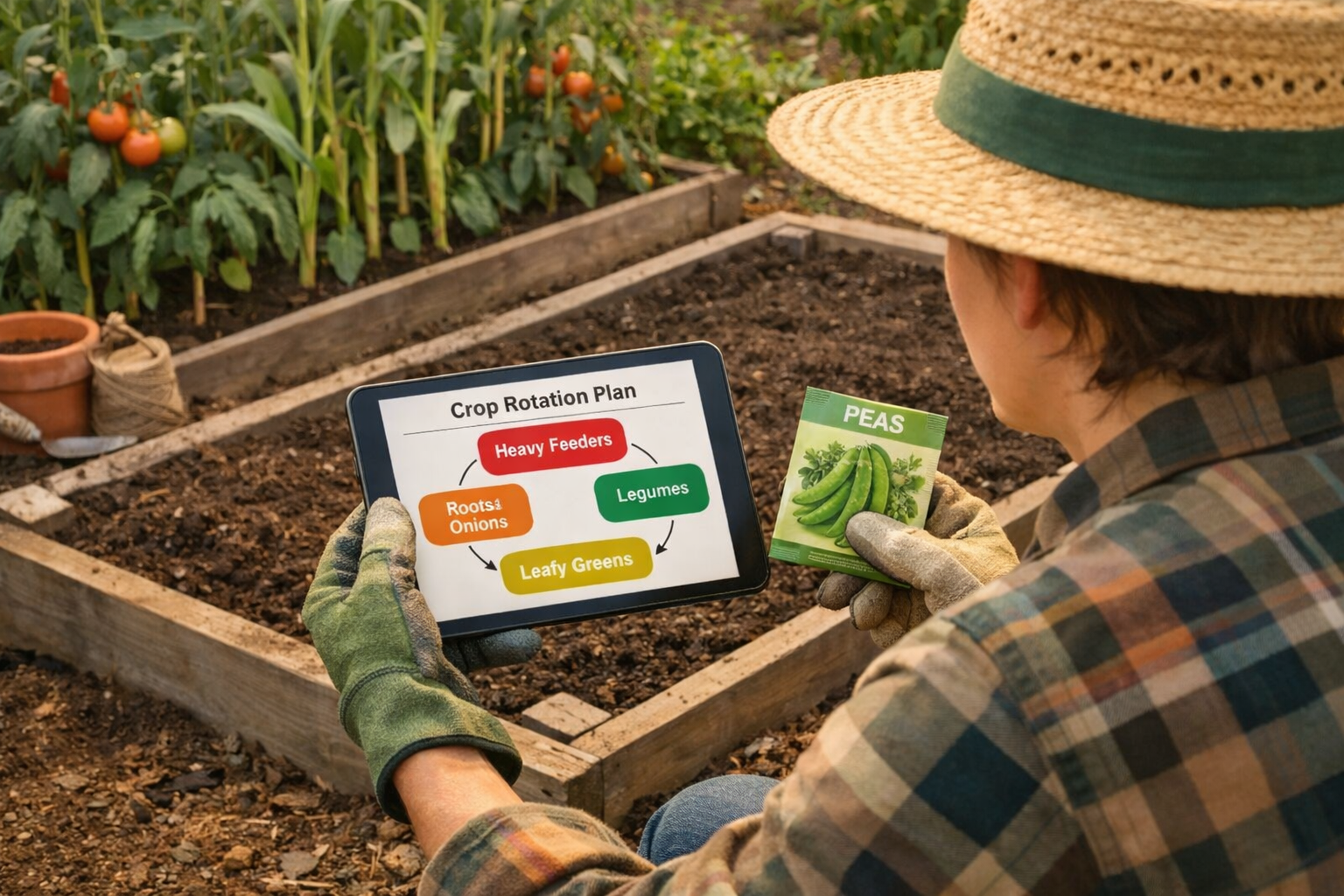
Deciding when should I rotate crops in a small vegetable garden is a critical step for ensuring the long-term health and productivity of your edible plants. The consensus points to an annual rotation, or every one to two years, as the most effective frequency, with a minimum three to four-year break before a plant family returns to the same spot [3, 5]. By grouping your vegetables into families and systematically moving them through your garden’s sections, you actively combat pests and diseases, balance soil nutrients, and utilize different soil depths more efficiently.
While the concept might seem daunting for a small space, even a simple 3 or 4-bed system or thoughtful container management can yield significant benefits. Remember to document your plantings, incorporate soil amendments like compost, and adapt your rotation based on your specific garden’s needs and observations. Implementing crop rotation is a testament to sustainable gardening, transforming your small plot into a thriving, resilient ecosystem capable of producing abundant, healthy harvests year after year.
FAQ
Q1: Can I skip crop rotation in a very small garden?
A1: While not ideal, home gardeners with very small spaces or containers can compensate by regularly amending soil with compost, monitoring for pests diligently, and ensuring diverse plantings rather than monocultures [6]. However, some form of rotation is always beneficial.
Q2: How many years should I wait before planting the same vegetable in the same spot?
A2: For maximum effectiveness in preventing pests and diseases, you should wait at least three to four years before planting vegetables from the same family in the exact same location [3].
Q3: What happens if I don’t rotate crops?
A3: Without crop rotation, you risk depletion of specific soil nutrients, a buildup of soil-borne pests and diseases specific to certain plant families, and ultimately, reduced yields and less healthy plants [1].
Q4: How do I categorize my vegetables for rotation?
A4: Group vegetables by family (e.g., Brassicas, Legumes, Nightshades, Alliums, Root Crops) as they share similar nutrient needs and disease susceptibilities [1].
Q5: Can I rotate crops in containers?
A5: Yes, in containers, you can rotate by replacing the soil annually, dedicating specific containers to different plant families each year, or thoroughly cleaning containers before replanting with a different family.
Q6: What’s a simple rotation schedule for a small garden?
A6: A simple 3 or 4-bed system works well. A common sequence is to follow heavy feeders (like tomatoes) with nitrogen-fixers (like beans), then with root crops or leafy greens, and then brassicas.
Q7: Do all plants need to be rotated?
A7: While annuals benefit most from rotation, perennial crops (like asparagus or rhubarb) are typically left in place for many years and are not part of the annual rotation cycle.
References
[1] Crop Rotation – https://www.rhs.org.uk/vegetables/crop-rotation
[2] Crop Rotation – https://nevegetable.org/cultural-practices/crop-rotation
[3] Cover Crops And Crop Rotation – https://www.usda.gov/about-usda/general-information/initiatives-and-highlighted-programs/peoples-garden/soil-health/cover-crops-and-crop-rotation
[4] Plan Ahead Mapping And Rotating Your 2026 Vegetable Garden – https://calhounjournal.com/plan-ahead-mapping-and-rotating-your-2026-vegetable-garden/
[5] Crop Rotation For The Home Vegetable Garden – https://extension.psu.edu/crop-rotation-for-the-home-vegetable-garden/
[6] Watch – https://www.youtube.com/watch?v=HwUNYGfrVv4
Tags: