What vegetables can handle partial shade (4–6 hours of sun)?
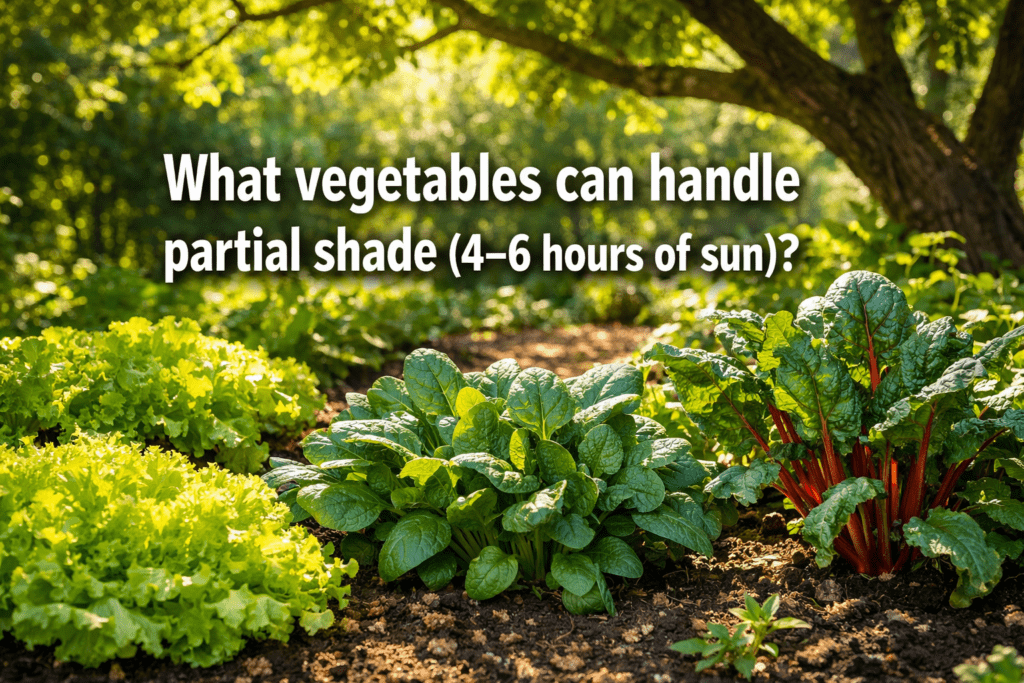
Many popular vegetables can thrive and produce a good harvest with just 4–6 hours of direct sunlight, often referred to as partial shade. This is great news for gardeners with less-than-ideal sunny spots or those looking to extend their growing season in warmer climates by providing some afternoon relief. Understanding what vegetables can handle partial shade (4–6 hours of sun) opens up many possibilities for maximizing your garden’s potential.
Key Takeaways
- Leafy greens, root vegetables, and brassicas are excellent choices for partial shade (4–6 hours of sun).
- Partial shade can improve the flavor and extend the harvest of certain crops, especially in hot climates.
- “Partial shade” means 4-6 hours of direct sun daily, ideally morning sun.
- Good soil, consistent watering, and proper spacing are crucial for success in less-than-full sun.
- Consider smaller varieties of root vegetables like carrots and radishes for better results in partial shade.
- Monitoring plant health and adapting care is essential when growing in varied light conditions.
- Beans and peas, particularly pole varieties, can also perform well with 4-5 hours of sun.
Quick Answer
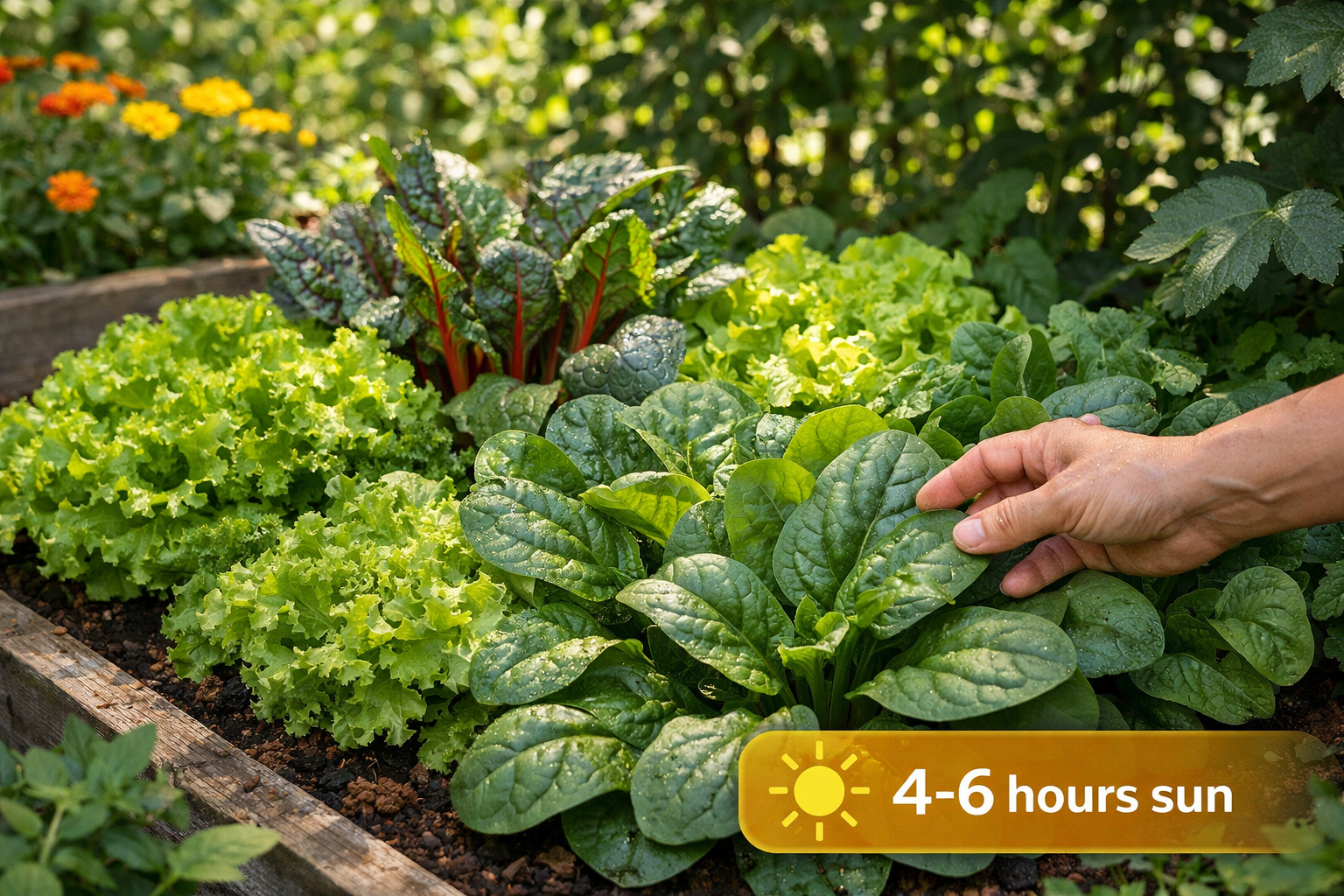
The best vegetables for partial shade (4–6 hours of sun) are primarily leafy greens like lettuce, spinach, kale, and Swiss chard, along with root vegetables such as radishes, carrots, beets, and turnips, and brassicas like broccoli and cabbage [1, 3, 7]. These plants generally prefer cooler temperatures and can benefit from protection from intense afternoon sun, resulting in slower growth but often improved flavor and reduced bolting.
Which Leafy Greens and Herbs Thrive in Partial Shade?
Leafy greens and many culinary herbs are outstanding candidates for partial shade, as they often prefer cooler conditions and can bolt (go to seed) quickly in intense, full sun. You can expect a good yield from these plants even with just 4–6 hours of daily sunlight, particularly if that sun occurs in the morning [2, 7].
If your garden receives limited direct sunlight, focus on these categories:
- Lettuce: Varieties like loose-leaf, butterhead, and romaine perform exceptionally well. Partial shade can prevent bitterness and extend the harvest season.
- Spinach: This cool-weather crop is prone to bolting in full sun and hot temperatures, making partial shade ideal [7].
- Kale: A robust leafy green that tolerates a range of conditions, including partial shade. It might grow slower, but the leaves will be tender [3].
- Swiss Chard: Similar to spinach, Swiss chard appreciates protection from the harshest sun, especially in warmer climates [7].
- Arugula: Grows quickly and benefits from partial shade to delay bolting and maintain its peppery flavor.
- Mustard Greens: These spicy greens thrive in cooler, shadier conditions.
- Herbs: Many herbs, including mint, cilantro, parsley, chives, and even some basil varieties, can do well in partial shade [2]. Mint, in particular, often prefers shadier spots.
Decision Rule: Choose leafy greens and tender herbs if your garden receives primarily morning sun and shade in the afternoon, as this combination prevents wilting and bolting while still providing enough energy for growth. For optimal results, ensure your soil is rich in organic matter and consistently moist. For more tips on maximizing your yields, see our guide to Small Space Vegetable Gardening: 2026 Step-by-Step Guide.
What Root Vegetables Can Handle Partial Shade (4–6 Hours of Sun)?
Root vegetables, while often associated with full sun, can surprisingly flourish in partial shade, especially if they are varieties that mature quickly or are harvested smaller. The key is to ensure the soil remains loose and well-drained, as compaction can hinder root development [4].
Many root vegetables can successfully grow with 4–6 hours of sunlight:
- Radishes: These quick-growing root crops are excellent for partial shade and can even benefit from it, as intense sun can make them too spicy or woody [1, 7].
- Carrots: While large varieties might struggle to size up, smaller, quicker-maturing carrot types (like ‘Paris Market’ or ‘Danvers Half Long’) do well [5]. They may take longer to mature and might not reach their maximum size, but you’ll still get a tasty harvest [4].
- Beets: Both the roots and the greens of beets can be harvested, making them a dual-purpose crop for partial shade [1, 3, 7].
- Turnips: These hearty root vegetables are quite tolerant of partial shade and produce both edible roots and greens [1, 7].
- Rutabagas: Similar to turnips, rutabagas can produce a good crop in partial shade conditions [1, 7].
Common Mistake: Expecting full-sized, quick-maturing root crops in partial shade. Growth will naturally be slower, and roots may be smaller than those grown in full sun. Adjust your expectations and consider harvesting them when young for tenderness.
Table: Sun vs. Partial-Shade Vegetable Growth
| Vegetable Category | Full Sun (6+ hrs) Benefit | Partial Shade (4-6 hrs) Benefit | Typical Outcome in Partial Shade |
|---|---|---|---|
| Leafy Greens | Faster growth, larger size | Slower bolting, less bitterness | Tender leaves, extended harvest |
| Root Vegetables | Max size, quicker maturity | Less stress, sweeter flavor | Smaller roots, slower growth |
| Brassicas | Optimal head formation | Better flavor, slower bolting | Tighter heads, reduced bitterness |
| Legumes | Abundant pod production | Reduced stress in hot climates | Good yield, possibly later maturity |
Can Broccoli, Cabbage, and Other Brassicas Grow in Partial Shade (4–6 Hours of Sun)?
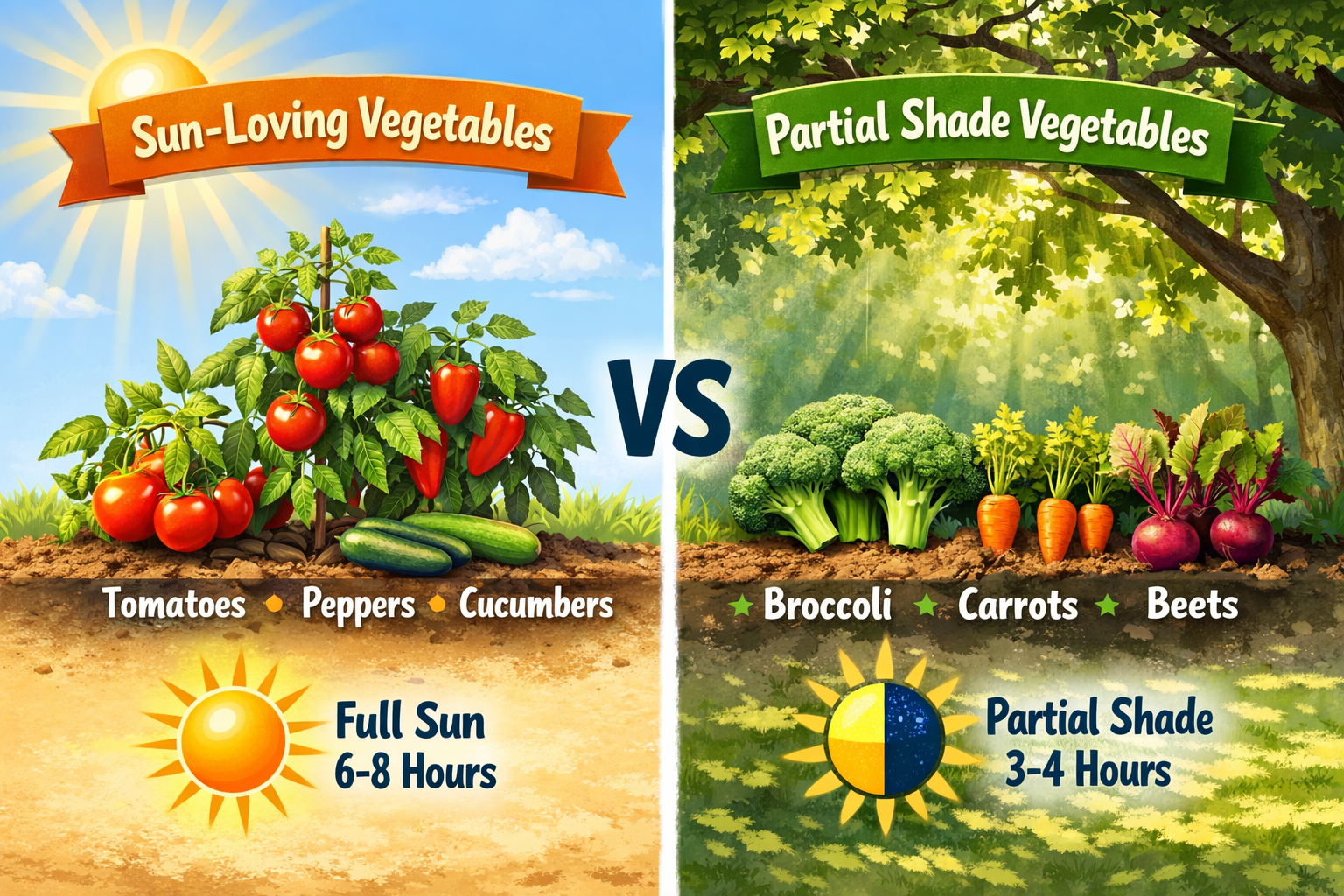
Yes, many brassicas, including broccoli, cabbage, and cauliflower, can grow and produce effectively in partial shade, particularly when protected from intense afternoon sun [6]. They are cool-season crops that benefit from slower growth, which can even enhance their flavor.
Consider these brassicas for your partial shade garden:
- Broccoli: While it might produce smaller heads and side shoots, broccoli grown in partial shade often has a sweeter, more nuanced flavor due to slower development [6].
- Cabbage: Cabbage requires around six hours of sunlight but performs well in partial shade, especially in warmer regions where it helps prevent premature bolting [6].
- Cauliflower: Like broccoli, cauliflower can produce good heads in partial shade, benefiting from the extended, cooler growing period to develop tighter, more flavorful florets [6].
- Kohlrabi: This unique brassica with an edible swollen stem is quite tolerant of partial shade conditions.
Edge Case: In very hot climates, partial shade for brassicas is not just tolerable but often beneficial. It prevents scorching and premature bolting, allowing the plants to develop fully. If you’re gardening in such a climate, positioning these plants to receive morning sun and afternoon shade is ideal. For those growing in containers, strategically moving pots to follow the sun can also be effective, as detailed in our guide to Beginner’s Guide to Plant Care 2026: Grow Thriving Plants.
What About Beans, Peas, and Alliums in Limited Sun?
Beans, peas, and alliums also have varieties that can tolerate and produce in conditions with 4–6 hours of direct sunlight. While their yields might not be as prolific as those grown in full sun, they can still provide a worthwhile harvest, making them suitable choices for varied garden plots.
Here’s how these categories fare:
- Beans: Pole beans often tolerate 4–5 hours of direct sun better than bush varieties [6, 7]. Their climbing nature allows them to reach for sunlight, and they can produce a decent crop even with limited direct exposure. Bush beans may also produce, but expect a reduced yield.
- Peas: Another cool-season favorite, peas appreciate partial shade, especially in areas with warmer springs or early summers [7]. The shade helps keep the soil cool and moist, extending their productive season.
- Onions: While typically considered full-sun plants, green onions (scallions) and smaller bulb onions can still produce well with 4-6 hours of sun [1]. They might not form large bulbs, but you’ll get plenty of green tops.
- Leeks: Similar to onions, leeks are quite adaptable and can produce respectable stalks in partial shade conditions [1]. Their elongated form is less dependent on intense sun for bulb formation.
Who It’s For: Gardeners with specific areas that receive morning sun and afternoon shade are ideal for these crops. The morning sun provides crucial energy for growth, while afternoon shade protects them from the stress of intense heat. If you’re wondering about setting up such a garden, our Ultimate Guide to Small Space Gardening for Beginners 2026 can help.
How Can You Maximize Yields in Partial Shade Gardens?
Maximizing yields in partial shade (4–6 hours of sun) involves more than just selecting the right plants; it requires strategic planning and consistent care. Even with limited sunlight, you can create a productive and thriving garden by optimizing other growing conditions [8].
Here are key strategies to enhance your partial shade garden:
- Improve Soil Quality: Since light is limited, ensure your soil is as nutrient-rich as possible. Incorporate plenty of organic matter like compost before planting. This provides essential nutrients and improves moisture retention and drainage. Good soil is vital for any garden, especially when optimizing for less-than-ideal light conditions [1]. Refer to our guide on Soil Basics for Container Gardening: 2026 Expert Guide for more information.
- Consistent Watering: Plants in partial shade may not dry out as quickly as those in full sun, but consistent moisture is still critical. Avoid overwatering, which can lead to root rot, but ensure the soil remains evenly moist, especially for developing root crops and leafy greens.
- Choose the Right Varieties: Select varieties specifically known for their shade tolerance or shorter maturity times. For carrots, choose “finger” or “baby” types over large, long-season varieties. Look for descriptions like “fast maturing” or “early harvest.”
- Strategic Planting:
- Morning Sun is Best: If you have a spot that gets morning sun and afternoon shade, that’s ideal. Morning sun is gentler and more effective for photosynthesis [2].
- Vertical Gardening: Utilize vertical space to help plants reach for more light or to create different sun exposures. Taller plants can cast shade on smaller ones, which can be beneficial for some shade-loving crops. See our Vertical Gardening Guide for Small Spaces: Grow More in 2026 for ideas.
- Succession Planting: Plant small batches every few weeks. This strategy can help you get a continuous harvest even if individual plants grow slower.
- Monitor and Adapt: Pay close attention to your plants. If leafy greens are bolting, they might be getting too much sun or heat. If they’re leggy, they might need more light. Adjust watering and consider providing temporary shade during peak heat.
- Nutrient Management: Regular, light feeding with a balanced organic fertilizer can support growth, especially since the plants may not be getting optimal light energy for photosynthesis.
Checklist for Maximizing Partial Shade Yields:
- ✅ Amend soil with abundant compost
- ✅ Water consistently, avoiding waterlogging
- ✅ Select shade-tolerant or quick-maturing varieties
- ✅ Prioritize locations with morning sun
- ✅ Implement vertical gardening where possible
- ✅ Practice succession planting for continuous harvests
- ✅ Observe plants and adjust care as needed
- ✅ Supplement with light organic fertilizer
What Factors Impact Vegetable Growth in Partial Shade?
Several factors beyond just the hours of direct sunlight significantly impact how well vegetables grow in partial shade. Understanding these can help gardeners optimize their plots for success [8].
Key factors include:
- Intensity of Sunlight: “Partial shade” can vary widely. Dappled light under a tree is different from strong direct morning sun followed by dense afternoon shade. The intensity of the light within those 4-6 hours matters.
- Temperature: Partial shade often correlates with cooler soil and air temperatures, which can be beneficial for cool-season crops but detrimental for heat-loving plants. For instance, leafy greens thrive in cooler conditions, making partial shade an advantage [2].
- Air Circulation: Shady spots can sometimes have poorer air circulation, leading to increased humidity and potential for fungal diseases. Proper plant spacing can mitigate this risk.
- Soil Quality: Good soil is paramount. In partial shade, plants have fewer energy resources from the sun, so they rely heavily on nutrient-rich, well-draining soil to fuel their growth [1].
- Water Availability: While evaporation is slower in shade, consistent moisture is still essential. Too little water stresses plants, and too much can lead to root issues.
- Competition from Trees/Shrubs: If the shade comes from other plants, their roots may compete for water and nutrients, which can starve your vegetables. Consider raised beds or containers in such scenarios to provide a dedicated root zone. This is especially relevant for Best Pots for Small Space Gardening in 2026.
Quick Example: A gardener successfully grows tender lettuce and spinach in a bed under a large oak tree that provides dappled afternoon shade. They amend the soil with copious amounts of compost annually, ensuring sufficient nutrients, and water deeply a few times a week. However, their tomatoes planted nearby in a similar partial shade area are leggy and produce minimal fruit because tomatoes require much more intense, direct sun. This illustrates that specific plant needs and optimal conditions vary significantly even within partial shade.
Can Container Gardening Help with Partial Shade Challenges?
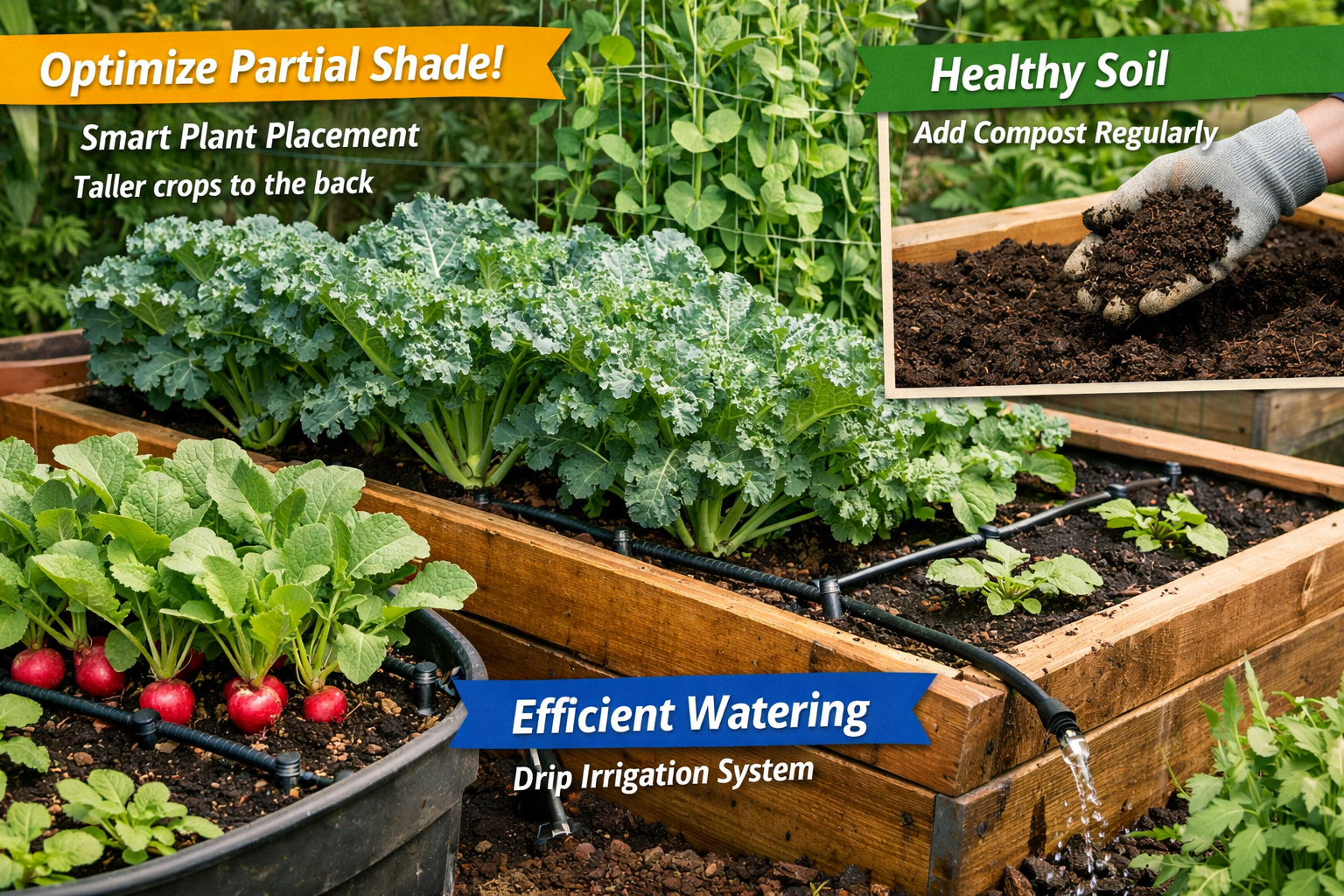
Container gardening is an excellent solution for overcoming partial shade challenges, especially in small spaces like balconies or patios, allowing gardeners to manipulate sun exposure more easily [2].
Here’s how container gardening helps:
- Mobility: The primary advantage is the ability to move containers throughout the day to maximize sun exposure. You can chase the sun, ensuring your plants receive their crucial 4–6 hours of direct light, then move them to shadier spots during intense afternoon heat. This flexibility is invaluable for optimizing growth [2].
- Controlled Environment: Containers allow for complete control over soil composition, which is critical for plants growing in sub-optimal light conditions. You can provide perfectly tailored, nutrient-rich, well-draining soil to support healthy growth [1].
- Reduced Competition: If your shade comes from large trees or shrubs, container gardening eliminates root competition for water and nutrients, giving your vegetables a distinct advantage.
- Space Efficiency: For those with very small yards or only balconies, containers make gardening in partial shade possible by utilizing every sunny patch effectively. Learn more about this in our Complete Balcony Gardening Guide for Small Apartments 2026.
Who It’s Not For: While beneficial, container gardening does require more frequent watering than in-ground gardening, especially during hot spells, due to faster soil drying. If you prefer a very low-maintenance approach without daily checks, extensive container gardening in partial shade might be more demanding.
Conclusion
Gardening in partial shade, which means providing 4–6 hours of direct sunlight daily, is not only possible but can lead to incredibly rewarding harvests, especially for certain vegetables. By focusing on leafy greens, many root vegetables, and select brassicas and legumes, you can transform seemingly challenging areas into productive food sources. The key to success lies in understanding the specific needs of these shade-tolerant plants, optimizing soil health, ensuring consistent moisture, and adapting your gardening practices to the unique microclimates of your space. Don’t let limited direct sunlight deter your gardening ambitions in 2026; instead, embrace the opportunity to cultivate a diverse and delicious array of crops that thrive in these conditions.
Actionable Next Steps:
- Map Your Sunlight: Observe your garden for a full day to identify areas receiving 4–6 hours of direct sunlight, noting if it’s morning or afternoon sun.
- Select Your Crops: Based on your sunlight observations, choose 3-5 varieties from the list of partial-shade tolerant vegetables.
- Prepare the Soil: Amend your chosen garden beds or containers with ample organic compost to ensure a nutrient-rich and well-draining environment.
- Plan Your Layout: Consider vertical elements or strategic planting to maximize light exposure for all plants.
- Start Planting: Get those seeds or seedlings in the ground, and enjoy the journey of growing vegetables in less-than-full sun!
FAQ
What does “partial shade” mean for vegetables?
Partial shade for vegetables means they receive 4–6 hours of direct sunlight per day, ideally morning sun, with protection from intense afternoon sun [2].
Can tomatoes grow in 4–6 hours of sun?
No, tomatoes are heat-loving, full-sun plants requiring at least 6-8 hours of direct sun to produce well; 4–6 hours will likely result in leggy plants and very few, if any, fruits.
Will vegetables grow slower in partial shade?
Yes, vegetables typically grow slower in partial shade compared to full sun conditions because they have less energy from photosynthesis, but this can sometimes lead to better flavor [6].
Is morning sun or afternoon sun better for partial shade vegetables?
Morning sun is generally better for partial shade vegetables because it provides essential light without the intense heat that can stress plants later in the day, especially for leafy greens [2].
Do I need to water partial shade vegetables less often?
You might need to water partial shade vegetables slightly less often than those in full sun because the soil dries out slower, but consistent moisture is still crucial; always check soil moisture before watering.
Can corn grow in partial shade?
Corn requires full sun (6-8+ hours) to pollinate properly and produce robust ears; it will struggle significantly in partial shade.
What vegetables produce well in only 3 hours of sun?
Very few vegetables thrive on just 3 hours of sun; you might get a minimal harvest of leafy greens like lettuce or spinach, but growth will be very slow and yields low.
References
[1] Planning Your Garden Vegetables – https://www.weedemandreap.com/planning-your-garden-vegetables/
[2] Vegetables Grow Shade – https://bonnieplants.com/blogs/garden-fundamentals/vegetables-grow-shade
[3] 16 Vegetables To Grow In Partial Shade – https://www.westonnurseries.com/16-vegetables-to-grow-in-partial-shade/
[4] Growing Vegetables Less 6 Hours Sun – https://ucanr.edu/site/uc-master-gardeners-placer-county/article/growing-vegetables-less-6-hours-sun
[5] Shade Vegetables – https://gardenbetty.com/shade-vegetables/
[6] Vegetables That Require Little Sun To Flourish – https://foodgardening.mequoda.com/daily/vegetable-gardening/vegetables-that-require-little-sun-to-flourish/
[7] Shade Vegetables – https://empressofdirt.net/shade-vegetables/
[8] Grow In Shade – https://www.foodgardenlife.com/learn/grow-in-shade