Vertical Gardening Guide for Small Spaces: Grow More in 2026
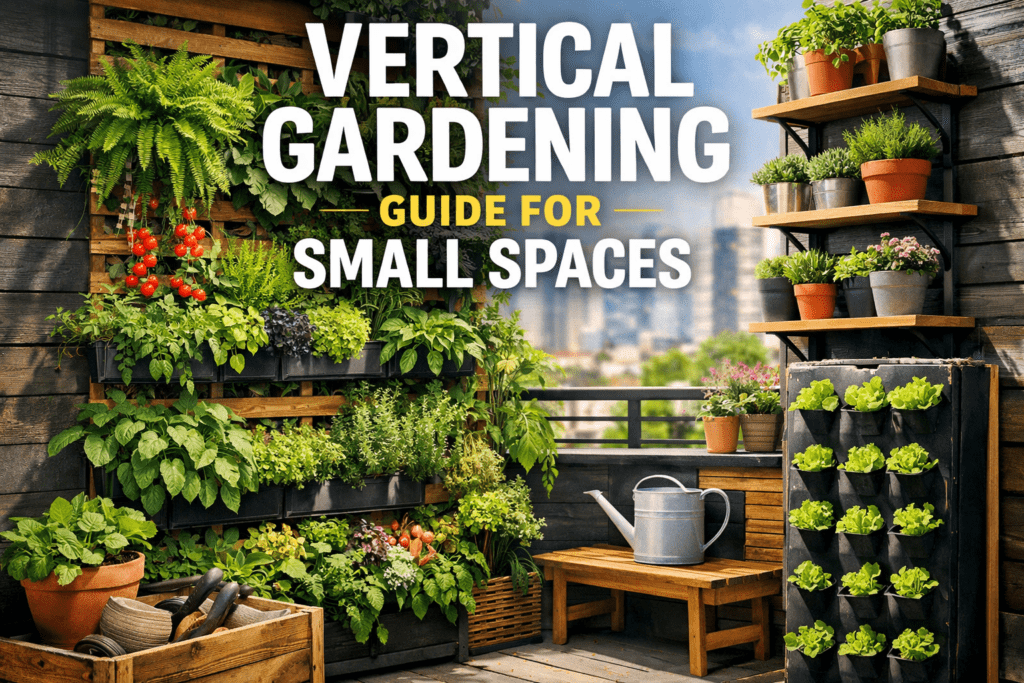
A vertical gardening guide for small spaces helps you transform limited areas, such as balconies, patios, or indoor walls, into thriving gardens by growing plants upwards rather than outwards. This innovative gardening method efficiently utilizes vertical planes, enabling cultivation of a wide variety of vegetables, herbs, and flowers in a fraction of the footprint required by traditional gardening, making fresh produce accessible even in urban environments.
TL;DR
- Vertical gardening maximizes growing space in confined areas, allowing cultivation of diverse plants like leafy greens, herbs, and small fruits.
- Choose from various systems, including wall-mounted, freestanding towers, and hydroponic setups, based on your space, budget, and desired maintenance level.
- Select appropriate plants, focusing on shallow-rooted varieties and climbing vegetables, and ensure proper spacing, watering, and drainage.
- Regular maintenance, including consistent watering and nutrient provision, is crucial for plant health in vertical systems.
- Vertical gardening offers benefits like significant space saving, reduced pest issues, and enhanced aesthetic appeal, transforming small areas into productive green spaces.
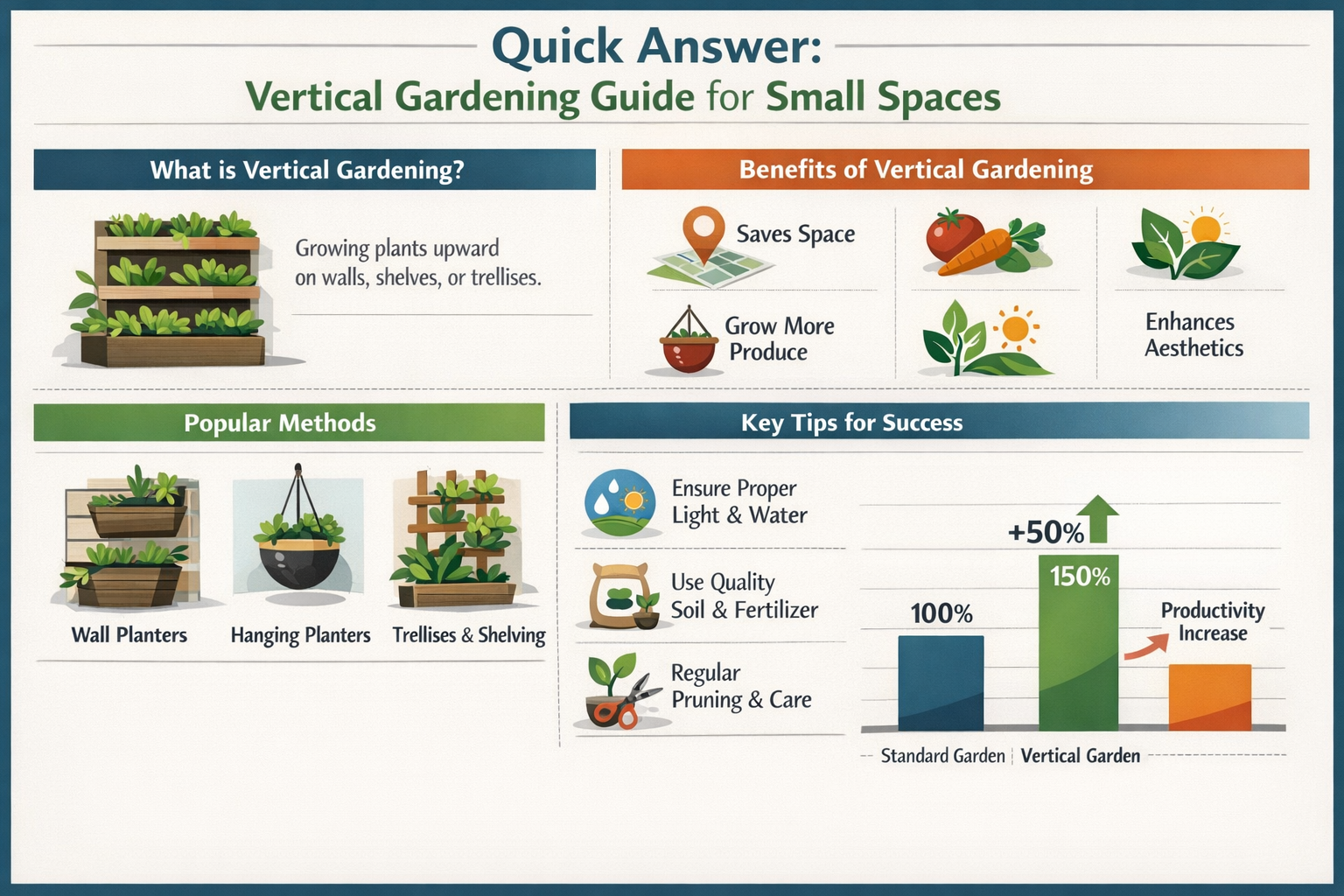
What is Vertical Gardening and Why is it Ideal for Small Spaces?
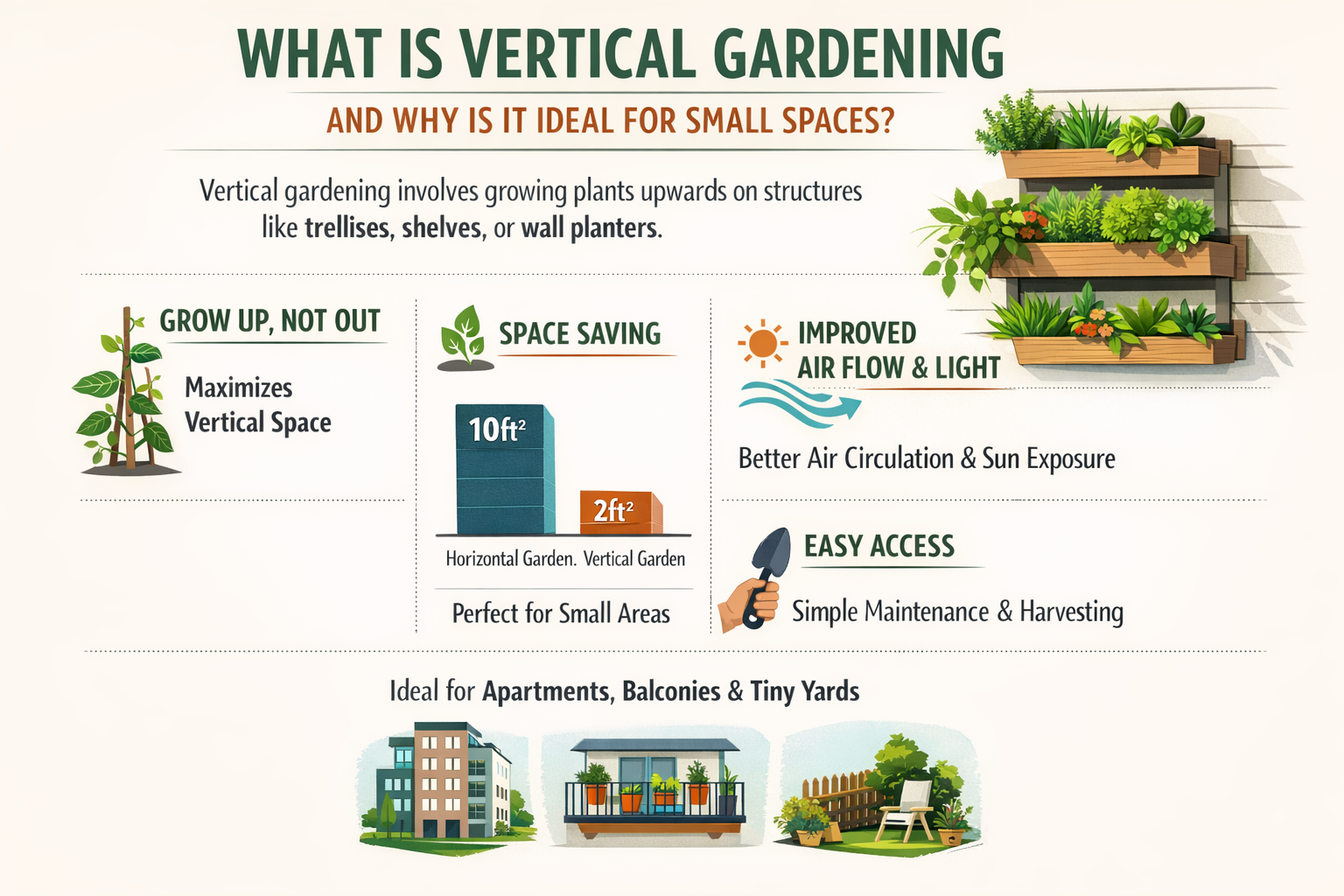
Vertical gardening is a method of growing plants in vertically stacked layers or on a vertically suspended panel, using a minimum of ground space. It is ideal for small spaces because it allows gardeners to cultivate a significant number of plants within a very compact footprint, leveraging walls, railings, or narrow corners. This approach effectively addresses the primary challenge of limited area, enabling urban dwellers or those with small yards to enjoy the benefits of gardening.
Vertical gardening systems often use 90% less floor space than traditional ground-level gardening, making them incredibly efficient for urban environments [2]. This method not only conserves space but also provides numerous other advantages:
- Maximizes Yields: By growing upwards, you can drastically increase the number of plants in a small area. For instance, some tower garden systems can accommodate 20–50 plants in just 1 square foot [2].
- Aesthetic Appeal: Vertical gardens can turn bland walls or fences into beautiful, living art installations, enhancing the visual appeal of any small space.
- Reduced Pests and Diseases: Lifting plants off the ground naturally deters soil-borne pests and rabbits, contributing to healthier plants with less intervention [2].
- Ergonomic Benefits: Gardening vertically can reduce the need for bending and kneeling, making it more accessible and comfortable for individuals of all ages and physical abilities.
- Improved Air Quality: More plants in a small space contribute to better air filtration and oxygen production, especially beneficial in enclosed urban settings.
Choosing vertical gardening for small spaces means making a conscious decision to optimize every square inch, turning what might seem like a limitation into an opportunity for lush growth. This approach is particularly beneficial for those living in apartments, condominiums, or homes with minimal outdoor areas, such as balconies or small patios. For more ideas on maximizing your outdoor space, explore our Ultimate Guide to Small Space Gardening for Beginners 2026.
Which Vertical Gardening Systems are Best for Compact Areas?
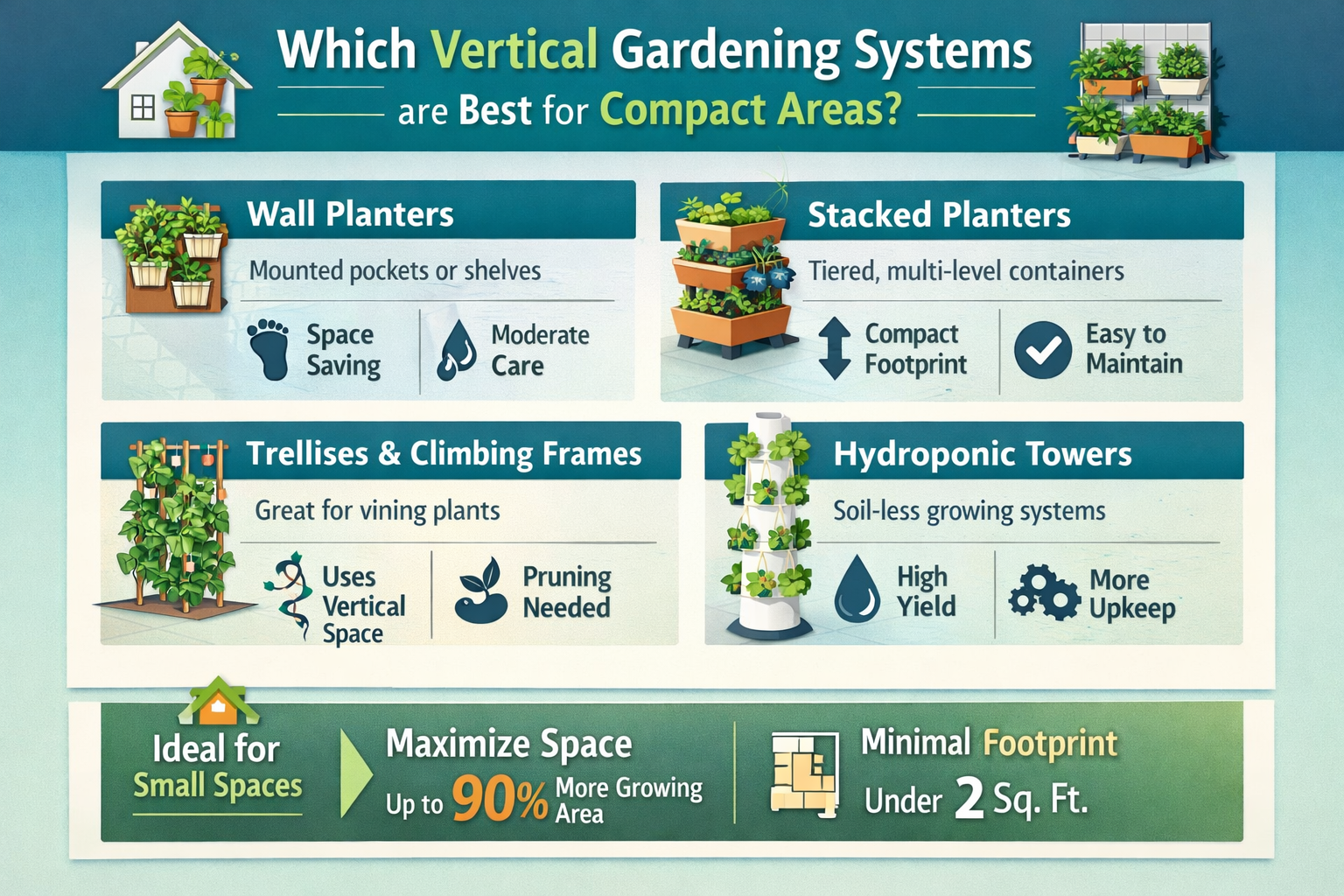
The best vertical gardening systems for compact areas are those that efficiently stack plants, are easy to install, and suit your specific space and plant choices. Options range from simple wall-mounted planters to sophisticated hydroponic towers, each offering unique benefits for different small-space scenarios.
When selecting a system for your compact area, consider the following popular types:
Wall-Mounted Planters:
- Description: These systems attach directly to a wall, fence, or balcony railing, using pockets, shelves, or individual pots. They are often made from felt, plastic, or wood.
- Ideal For: Balconies, indoor walls, small terraces, and patios where floor space is extremely limited [2]. They excel at transforming unused vertical surfaces into vibrant gardens.
- Pros: Highly space-efficient, visually appealing, good for showcasing decorative plants or herbs.
- Cons: Requires drilling or secure mounting, can be challenging to water evenly without a drip system, and plant access might be limited at higher points.
- Recommendation: Wall-mounted systems are recommended as the best overall choice for balconies, indoor walls, and small terraces due to their minimal footprint and aesthetic flexibility [2]. Choose a system with individual pots or well-designed pockets to ensure adequate drainage for each plant.
Freestanding Vertical Towers:
- Description: These self-supporting structures allow plants to grow in multiple tiers around a central column or stacked planters. Many include built-in composting features and water reservoirs.
- Ideal For: Patios, balconies, rooftops, or any small area with a flat surface where you prefer not to drill into walls.
- Pros: Portable, easy to set up (no drilling), often include efficient watering systems, and some models feature a vermicomposting tube, which means less waste and richer nutrients for your plants [4].
- Cons: Can be heavier when filled with soil, may require rotation for even sun exposure, and initial cost can be higher than simple wall systems.
- Recommendation: For beginners, freestanding vertical towers offer a user-friendly and low-maintenance option [4]. Look for models with integrated self-watering features to reduce daily care.
Trellis and Staking Systems:
- Description: While not strictly “vertical gardening” in the stacked sense, trellises, arbors, and stakes guide climbing plants upwards.
- Ideal For: Growing climbing vegetables like beans, peas, cucumbers, tomatoes, and even small melons [1]. These are great for adding height to a small garden bed or large container.
- Pros: Simple, inexpensive, and utilizes natural plant growth habits.
- Cons: Limited to climbing plant varieties, can take up more horizontal space at the base than other vertical systems.
- Recommendation: If you want to grow vining plants, integrate a trellis with other vertical systems. For example, a tomato cage can support a single plant in a large pot on a balcony.
Hydroponic and Aeroponic Vertical Systems:
- Description: These advanced systems grow plants without soil, using nutrient-rich water (hydroponics) or mist (aeroponics) delivered directly to the roots.
- Ideal For: Tech-savvy gardeners, those seeking rapid growth and high yields, or anyone in extremely tight spaces where cleanliness is paramount (e.g., indoor kitchens).
- Pros: Uses 90% less water than traditional gardening, enables faster plant growth, and eliminates soil-borne pests [2].
- Cons: Higher initial setup costs, requires electricity, and demands more technical knowledge for nutrient balancing and system maintenance.
- Recommendation: Choose hydroponics if you prioritize maximum efficiency and growth speed and are willing to invest in the setup and learn the specifics of nutrient management.
When making your choice, consider sunlight availability, your budget, the types of plants you wish to grow, and how much time you can dedicate to maintenance. A modular system that allows for expansion or reconfiguration can be a smart long-term investment.
| System Type | Space Footprint | Setup Difficulty | Best For | Key Advantages |
|---|---|---|---|---|
| Wall-Mounted | Minimal | Moderate | Balconies, indoor walls, decorative | Transforms unused walls, highly aesthetic |
| Freestanding Tower | Small | Easy | Patios, balconies, high plant density | Portable, often self-watering, beginner-friendly |
| Trellis/Staking | Moderate | Easy | Vining plants, existing garden beds | Cost-effective, natural growth support |
| Hydroponic/Aeroponic | Small | Advanced | Rapid growth, indoor use, water efficiency | Fast growth, water saving, no soil |
What Plants Thrive in a Vertical Garden for Small Spaces?
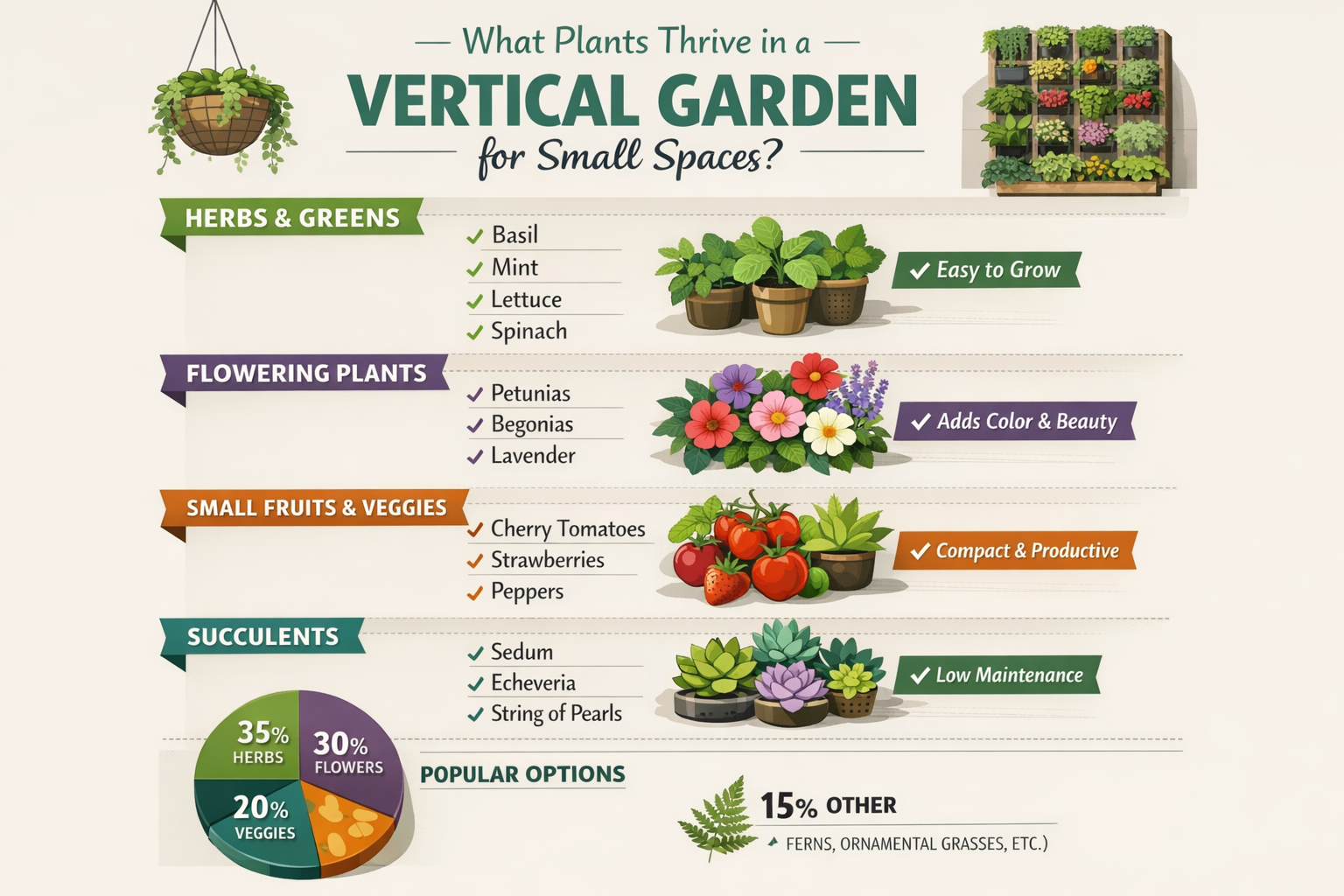
Plants that thrive in a vertical garden for small spaces are typically shallow-rooted, compact, or climbing varieties that adapt well to confined soil volumes and upward growth. Choosing the right plants is crucial for maximizing your yield and enjoyment from a limited vertical area.
Here’s a breakdown of plant types and specific examples that perform exceptionally well in vertical garden setups:
Leafy Greens:
- Why they thrive: These plants have shallow root systems, grow quickly, and are harvested leaf by leaf, making them perfect for continuous production in small pockets or tiers. They also tolerate partial shade, which can be advantageous in some vertical setups.
- Examples: Lettuce (loose-leaf varieties), spinach, arugula, kale, Swiss chard, and mustard greens. These are considered high-yield crops and perform exceptionally well in vertical systems [2].
Herbs:
- Why they thrive: Most herbs are compact, don’t require deep roots, and can be harvested frequently. Their fragrant foliage also adds an extra sensory dimension to your vertical garden.
- Examples: Basil, mint, parsley, cilantro, chives, oregano, thyme, and rosemary [1]. These shallow-rooted plants are ideal for vertical containers [1]. Ensure mint is in its own container or kept separate as it can be invasive.
Strawberries:
- Why they thrive: Strawberries are naturally well-suited for vertical systems because their fruits hang down, making them easy to pick and keeping them off the soil, which reduces rot. Their shallow roots are also ideal for smaller pockets.
- Examples: Alpine strawberries or traditional June-bearing and ever-bearing varieties. Strawberries are another high-yield crop known for exceptional performance in vertical systems [2].
Cherry Tomatoes:
- Why they thrive: While larger tomato varieties need significant support, determinate cherry tomato varieties or “bush” types can be grown successfully in larger pockets or tiers of a vertical system with adequate staking or support.
- Examples: ‘Tiny Tim’, ‘Micro Tom’, or other compact bush cherry tomato varieties. These can be considered high-yield if properly managed [2].
Climbing Vegetables (with Support):
- Why they thrive: These plants are designed to grow upwards, making them a natural fit for trellised vertical systems. They maximize space by using vertical planes entirely.
- Examples: Pole beans, peas, cucumbers, small squash, and even miniature pumpkins [1]. These are ideal for trellised structures [1]. You’ll need a robust trellis, netting, or string to guide their growth.
Annual Flowers:
- Why they thrive: Many annuals have shallow roots and vibrant blooms, adding color and attracting pollinators to your vertical garden.
- Examples: Pansies, violas, petunias, nasturtiums (edible flowers!), impatiens, and marigolds. These can be beautiful additions to vertical containers [1].
Plants to Approach with Caution:
- Root Vegetables: Carrots, potatoes, and large radishes require deeper soil and are generally not suitable for most vertical systems, unless you have exceptionally deep pockets or containers.
- Large Fruiting Plants: While some tomatoes work, large peppers, eggplants, or full-sized squash may become too heavy or require too much space/nutrients for typical vertical setups.
- Perennials with Extensive Root Systems: Unless you have very large, dedicated planters, avoid deep-rooted perennials that will outgrow their space quickly.
When selecting plants, always check their mature size and root requirements. Consider the amount of sunlight each section of your vertical garden receives, as some plants prefer full sun (strawberries, tomatoes) while others tolerate partial shade (leafy greens, many herbs). Grouping plants with similar light and water needs will simplify maintenance.
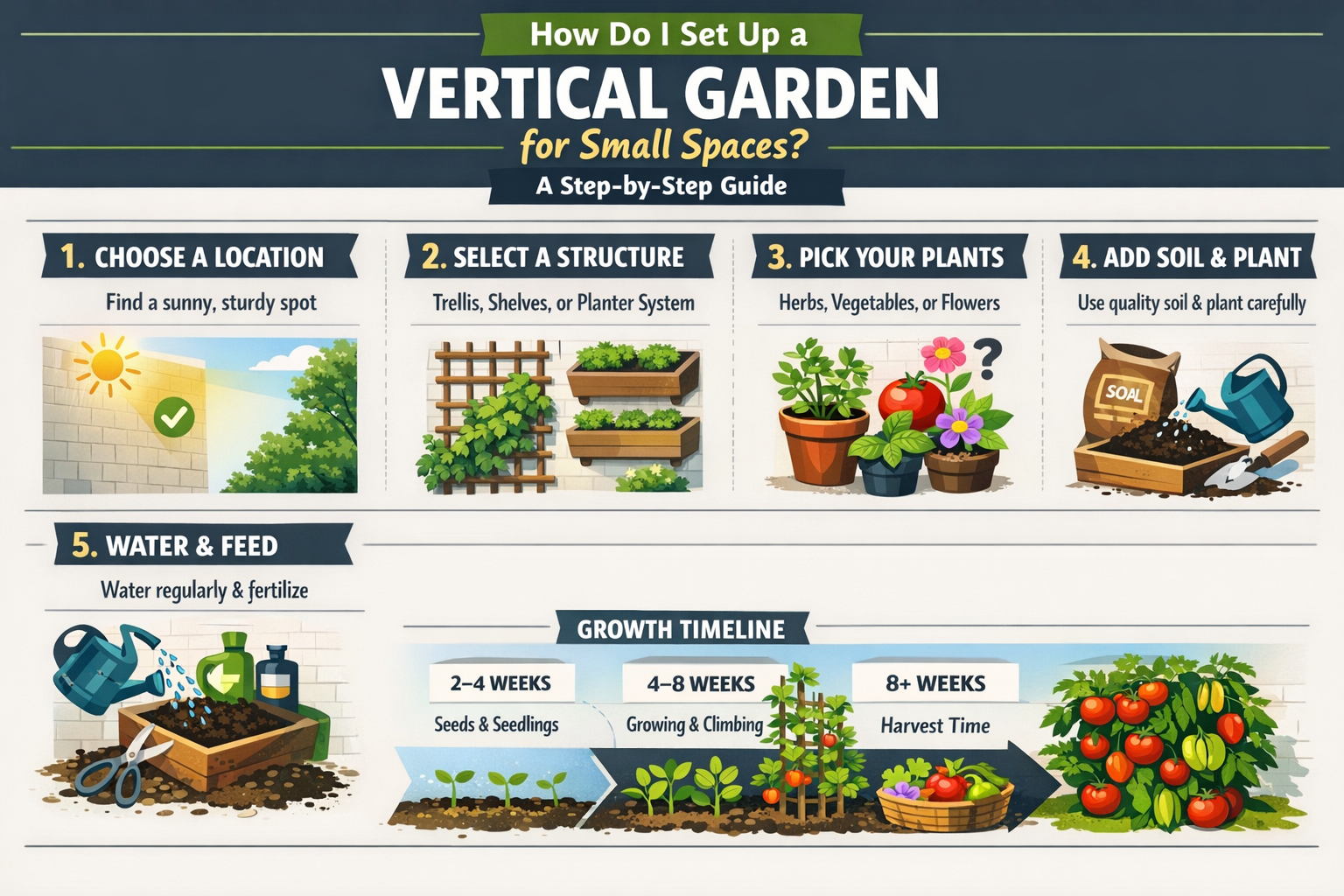
How Do I Set Up a Vertical Garden for Small Spaces? A Step-by-Step Guide
Setting up a vertical garden for small spaces involves selecting the right system, choosing a suitable location, and carefully planting to ensure success. By following a structured approach, even beginners can establish a thriving vertical garden.
Here’s a step-by-step guide to get your vertical garden up and running in 2026:
Choose Your Vertical Gardening System:
- Action: Refer to the “Which Vertical Gardening Systems are Best for Compact Areas?” section above. Decide between wall-mounted, freestanding tower, trellis, or hydroponic based on your space constraints, budget, and desired plant types.
- Consideration: A beginner-friendly approach often involves a freestanding vertical tower, as it requires minimal maintenance and no drilling [4]. For maximum space saving, a wall-mounted system is excellent [2].
Select an Ideal Location:
- Action: Identify a spot that receives adequate sunlight for the plants you intend to grow. Most vegetables and herbs require at least 6 hours of direct sunlight per day. Consider wind exposure and proximity to a water source.
- Consideration: For a balcony or patio, observe sun patterns throughout the day. If you’re gardening indoors, you might need supplemental grow lights.
Prepare Your System and Growing Medium:
- Action: Assemble your chosen vertical garden system according to the manufacturer’s instructions. Fill the pockets or containers with a high-quality potting mix.
- Consideration: Use a lightweight, well-draining potting mix, ideally one formulated for containers, to prevent compaction and provide good aeration for roots. For hydroponic systems, prepare your nutrient solution as directed.
Plant Your Chosen Varieties:
- Action: Carefully transplant seedlings or sow seeds directly into the individual pockets or tiers of your vertical garden. Ensure adequate spacing between plants to allow for air circulation and growth [1].
- Consideration: Space plants apart to ensure proper airflow and prevent disease [1]. Place plants that need more sun at the top or sunniest side, and those that tolerate partial shade lower down.
Install a Watering System (Optional but Recommended):
- Action: While manual watering is possible, vertical gardens tend to dry out faster than traditional beds [1][3]. Install a drip irrigation system or use self-watering features if your system includes them.
- Consideration: Drip irrigation is highly recommended to maximize water efficiency and ensure consistent moisture delivery to each plant [1][3]. This is especially true for wall-mounted systems where individual pockets can be hard to reach.
Initial Watering and Monitoring:
- Action: Water your newly planted vertical garden thoroughly immediately after planting. Monitor plants closely for the first few days for signs of stress or wilting.
- Consideration: Adequate drainage is critical to prevent waterlogging and root damage [1]. Ensure excess water can escape freely from each container or pocket.
Quick Checklist for Setup Success:
- ✅ System Chosen: Matches space and plant needs.
- ✅ Location Optimized: Adequate sunlight and accessibility.
- ✅ Growing Medium Ready: Lightweight, well-draining potting mix.
- ✅ Plants Selected: Shallow-rooted or climbing, compatible with sun.
- ✅ Proper Spacing: Airflow and growth accounted for.
- ✅ Watering Strategy: Manual or automated system in place.
- ✅ Drainage Ensured: No waterlogging risk.
By following these steps, you will create a strong foundation for a thriving vertical garden in your small space. For more inspiration on smart gardening ideas, check out Mini Space Garden | Small Space Gardening Ideas.
What are the Essential Maintenance Tips for a Thriving Vertical Garden?
Essential maintenance for a thriving vertical garden primarily involves consistent watering, providing adequate nutrients, and regular monitoring for pests and diseases. Due to their unique structure and limited soil volume, vertical gardens have specific care requirements that differ from traditional ground-level gardening.
Here are the crucial maintenance tips to ensure your vertical garden flourishes:
Consistent and Efficient Watering:
- Why it’s essential: Vertical gardens, especially those exposed to sun and wind, tend to dry out much faster than ground-level pots [1][3]. Insufficient water is a common cause of plant stress and failure.
- Action: Check soil moisture daily, especially during warm weather. Water when the top inch of soil feels dry.
- Recommendation: Install a drip irrigation system. Drip irrigation delivers water directly to the plant roots, minimizing waste and ensuring consistent hydration, which is highly recommended for maximizing water efficiency in vertical setups [1][3]. For small systems, a watering can with a narrow spout can work, but ensure all pockets receive sufficient water.
Adequate Drainage:
- Why it’s essential: While consistent watering is vital, proper drainage is equally critical to prevent waterlogging, which can lead to root rot and plant death [1].
- Action: Ensure that every pocket or container in your vertical system has drainage holes and that water can flow freely without accumulating at the bottom of a stack.
- Consideration: If using a multi-tiered system where water drains from one tier to the next, ensure the lowest tier has a collection tray to prevent runoff and nutrient loss.
Nutrient Management:
- Why it’s essential: Plants in containers, including vertical gardens, quickly deplete the nutrients in their limited potting mix. Regular feeding is necessary for healthy growth and prolific yields.
- Action: Begin with a high-quality potting mix that contains some slow-release fertilizer. Supplement with a balanced liquid fertilizer every 2-4 weeks, or according to product instructions. For tower gardens with composting features, ensure you are regularly adding organic matter to the central compost tube [4].
- Consideration: Over-fertilizing can burn roots, so always follow recommended dosages. Organic liquid fertilizers are a great option for edible plants.
Pruning and Harvesting:
- Why it’s essential: Regular pruning encourages bushier growth, prevents overcrowding, and improves air circulation, which is vital in a compact vertical space. Consistent harvesting stimulates new production.
- Action: Pinch back herbs and leafy greens to encourage new growth. Remove any yellowing, diseased, or dead leaves promptly. Harvest fruits and vegetables as they ripen.
- Consideration: Proper spacing between plants is crucial for good airflow and preventing disease spread in dense vertical gardens [1].
Pest and Disease Monitoring:
- Why it’s essential: While vertical gardens can deter soil-borne pests, flying insects or diseases can still occur. Early detection is key to prevention and control.
- Action: Regularly inspect your plants for signs of pests (e.g., aphids, spider mites) or diseases (e.g., powdery mildew).
- Intervention: Use organic pest control methods like neem oil, insecticidal soap, or manual removal if issues arise. Ensure good air circulation to deter fungal diseases.
Sunlight and Rotation:
- Why it’s essential: Ensure all plants receive adequate and even sunlight, especially in systems where some plants might be shaded by others.
- Action: If using a freestanding tower, rotate it periodically to ensure all sides get sun exposure. For wall-mounted systems, consider plant placement based on sun exposure or install supplemental grow lights indoors.
By diligently applying these maintenance tips, your vertical garden will not only survive but truly thrive, providing you with fresh produce and vibrant beauty year-round in your small space.
What are the Benefits and Challenges of Vertical Gardening in Small Spaces?
Vertical gardening offers significant advantages for those with limited room, but it also presents specific challenges that require mindful planning and consistent care. Understanding both the pros and cons helps gardeners make informed decisions and prepare for success in their small vertical oasis.
Benefits of Vertical Gardening
- Exceptional Space Saving: This is the primary benefit, allowing you to grow a large volume of plants in a footprint that would otherwise be unproductive [2]. Vertical systems utilize 90% less floor space than traditional ground gardening [2].
- Increased Yields: By maximizing plant density per square foot, you can achieve higher overall yields from a small area. Some tower systems can hold 20-50 plants in just 1 square foot [2].
- Reduced Pest and Disease Problems: Lifting plants off the ground helps deter common soil-borne pests like slugs and snails, as well as larger animals like rabbits [2]. Improved air circulation in well-spaced vertical setups can also reduce fungal diseases.
- Improved Aesthetics: Vertical gardens can transform plain walls, fences, or balconies into beautiful, lush green displays, adding natural beauty and visual interest to urban environments.
- Accessibility and Ergonomics: Gardening vertically means less bending and kneeling, making it more comfortable and accessible for people with mobility issues or those who simply prefer to garden standing up.
- Water Efficiency: Many vertical systems, especially hydroponic ones, can use significantly less water (up to 90% less) than traditional gardening methods, making them environmentally friendly [2]. Drip irrigation systems further enhance this efficiency [1].
- Noise Reduction and Insulation: A dense vertical garden can act as a natural sound barrier, reducing noise pollution, and can also provide some insulation for adjacent walls, potentially helping regulate indoor temperatures.
Challenges of Vertical Gardening
- Faster Drying Out: Due to increased exposure to air and sun, and smaller soil volumes, vertical gardens dry out more quickly than ground-level beds [1][3]. This necessitates more frequent watering.
- Nutrient Depletion: The limited amount of potting mix in vertical containers means nutrients are quickly used up, requiring a consistent fertilization schedule to maintain plant health.
- Initial Setup Cost: While DIY options can be inexpensive, high-quality, durable vertical gardening systems, especially advanced hydroponic setups, can have a higher initial cost compared to a basic traditional garden.
- Weight Considerations: When filled with soil and watered, vertical systems can become quite heavy. This is a crucial factor for balconies, decks, or wall-mounted systems, which must support the load.
- Sunlight Distribution: Ensuring all plants in a multi-tiered system receive adequate and even sunlight can be a challenge. Some plants may be shaded by others, requiring rotation or careful plant placement.
- Drainage Management: While crucial, ensuring adequate drainage for every plant while preventing water waste and mess can be tricky, especially with cascading systems. Inadequate drainage leads to root rot [1].
- Limited Plant Choice: While many plants thrive, deep-rooted vegetables or very large fruiting plants are generally not suitable for most vertical setups, limiting some gardening aspirations.
Despite the challenges, the benefits of vertical gardening for small spaces often outweigh the drawbacks, particularly for urban dwellers. With careful planning and consistent care, a vertical garden can be a highly rewarding and productive addition to any compact area.
FAQ
What are the best plants for a beginner’s vertical garden?
For beginners, the best plants are leafy greens (lettuce, spinach), herbs (basil, mint, parsley), and strawberries because they are shallow-rooted, grow quickly, and are relatively low-maintenance [1][2].
How much sunlight does a vertical garden need?
Most vegetables and herbs for a vertical garden require at least 6 hours of direct sunlight per day, though leafy greens and some herbs can tolerate partial shade [1].
Do vertical gardens use more water?
No, vertical gardens can actually be more water-efficient, especially with drip irrigation or hydroponic systems. Hydroponic systems use up to 90% less water than traditional gardening [2]. However, they dry out faster and may require more frequent watering if not efficiently managed [1][3].
Can I grow vegetables in a vertical garden indoors?
Yes, many vegetables and herbs can be grown indoors in a vertical garden, especially with adequate natural light or supplemental grow lights.
How often should I fertilize my vertical garden?
You should fertilize your vertical garden with a balanced liquid fertilizer every 2-4 weeks, as nutrients in the limited potting mix deplete quickly.
What are the most common mistakes in vertical gardening?
Common mistakes include inadequate watering, poor drainage, overcrowding plants, and neglecting nutrient replenishment [1][3].
Is vertical gardening expensive to start?
The cost varies. Simple DIY vertical gardens can be inexpensive, while advanced hydroponic or large pre-built systems can have a higher initial setup cost [2].
How do I prevent pests in my vertical garden?
Vertical gardens naturally deter soil-borne pests [2]. For other pests, regularly inspect plants and use organic solutions like neem oil or insecticidal soap if needed. Proper air circulation also helps prevent disease [1].
Can vertical gardens be used on balconies?
Yes, balconies are ideal locations for vertical gardens, especially wall-mounted or freestanding tower systems, maximizing space without taking up valuable floor area [2].
What is the lifespan of a vertical garden system?
The lifespan depends on the material. Plastic systems can last several years, while sturdy wood or metal systems can last much longer with proper care.
Key Takeaways
- Vertical gardening is an excellent solution for maximizing plant growth in small spaces like balconies, patios, and even indoors, utilizing vertical planes instead of horizontal ones.
- A variety of systems exist, including wall-mounted planters, freestanding towers, trellises, and advanced hydroponic setups, each suited for different needs and space constraints [2].
- Selecting appropriate plants, such as shallow-rooted herbs, leafy greens, strawberries, and climbing vegetables, is crucial for success [1][2].
- Consistent maintenance, particularly regular watering (often with drip irrigation for efficiency), adequate drainage, and nutrient replenishment, is vital for plant health [1][3].
- Vertical gardening offers significant benefits, including immense space savings, increased yields, reduced pest issues, and enhanced aesthetic appeal, transforming compact areas into productive and beautiful green spaces [2].
- While challenges like faster drying out and initial setup costs exist, they can be overcome with informed planning and consistent care.
References
[1] Vertical Vegetable Garden For Small Spaces – https://altogarden.com/blog/vertical-vegetable-garden-for-small-spaces/
[2] 10 Best Vertical Garden System For Small Spaces – https://jetfiretools.com/10-best-vertical-garden-system-for-small-spaces/
[3] Vertical Gardening For Small Spaces – https://salisburygreenhouse.com/vertical-gardening-for-small-spaces/
[4] How To Start Vertical Gardening On A Patio Or Balcony – https://www.gardentowerproject.com/blogs/learning-center/how-to-start-vertical-gardening-on-a-patio-or-balcony
[5] Watch – https://www.youtube.com/watch?v=an0L4n0Agdo
[6] Vertical Gardening For Small Spaces Transform Your Balcony Into A Green Oasis – https://gardensoulus.com/blogs/news/vertical-gardening-for-small-spaces-transform-your-balcony-into-a-green-oasis
[7] The Complete Guide To Vertical Gardening – https://www.gardenary.com/blog/the-complete-guide-to-vertical-gardening