Small Balcony Vegetable Gardening: Your 2026 Guide to Urban Harvests
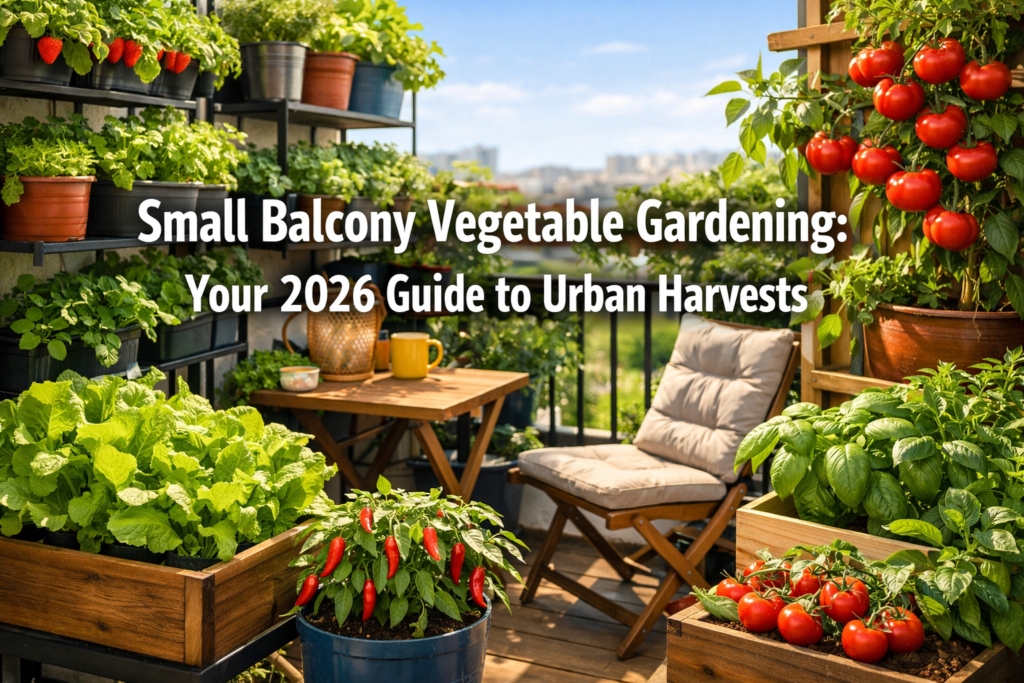
Are you dreaming of fresh, homegrown vegetables but only have a small balcony? You’re in luck! Small balcony vegetable gardening is not only possible but also a hugely rewarding endeavor, allowing urban dwellers to cultivate a personal oasis of edibles even in the most confined spaces. With the right strategies, plant choices, and a dash of creativity, anyone can transform their balcony into a productive vegetable garden, enjoying fresh produce right outside their door in 2026.
Key Takeaways
- Maximize Space: Utilize vertical gardening, railing planters, and hanging baskets to grow more in less area.
- Choose Wisely: Select compact, high-yielding vegetable varieties specifically bred for containers and small spaces.
- Sunlight is King: Most vegetables need at least 4-6 hours of direct sunlight daily for optimal growth.
- Smart Watering: Self-watering containers and consistent moisture checks are crucial for balcony plants, especially in windy conditions.
- Soil Matters: Use a high-quality, well-draining potting mix specifically formulated for containers to support healthy plant growth.
What is Small Balcony Vegetable Gardening and Why is it Popular in 2026?
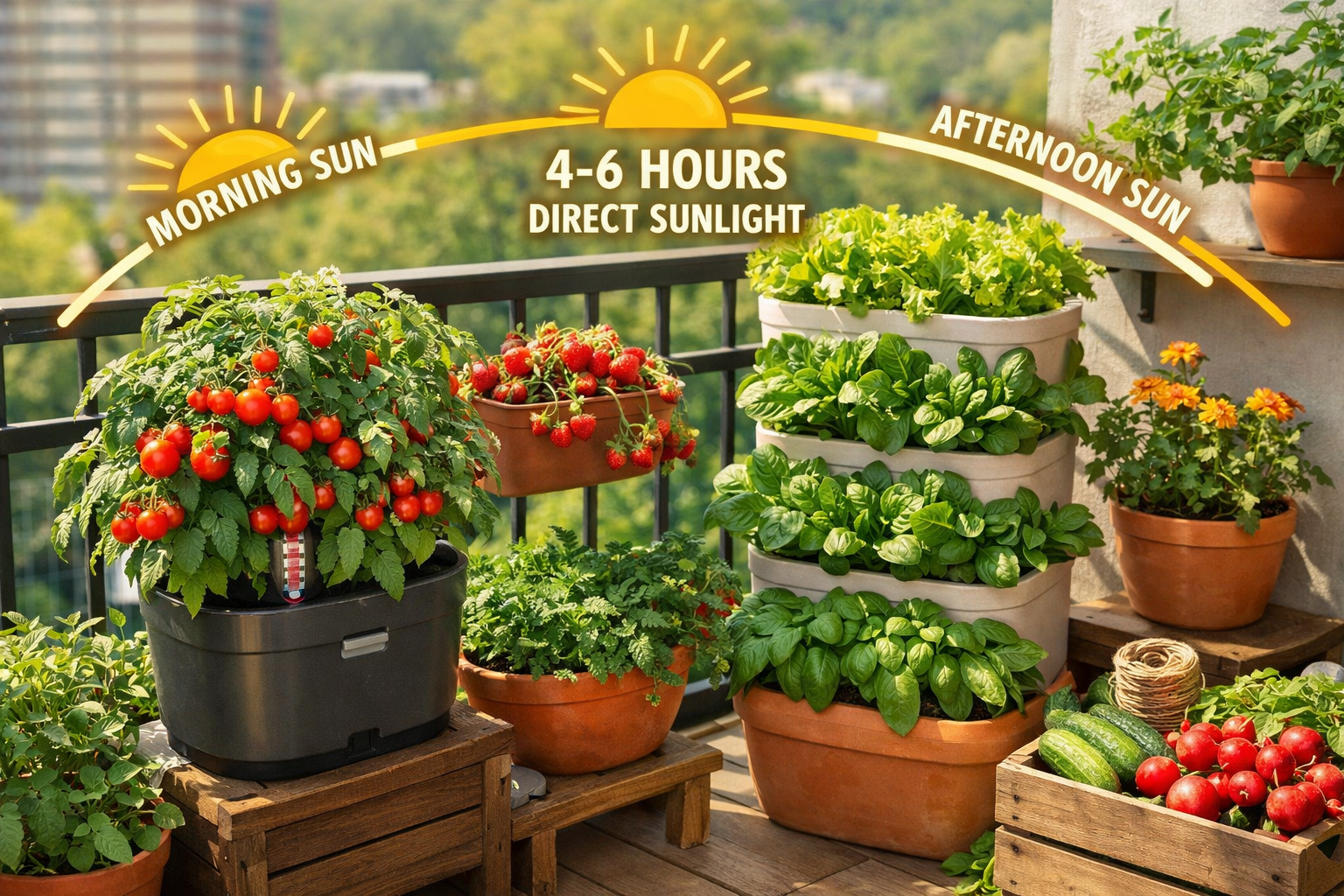
Small balcony vegetable gardening involves cultivating edible plants in containers on balconies, patios, or any limited outdoor urban space. This practice is increasingly popular in 2026 because it offers city residents the ability to grow their own fresh produce, contributing to healthier lifestyles and sustainability, even without a traditional yard [1]. The trend towards compact edibles and multi-purpose plants dominates 2026 gardening, with tabletop vegetables and hanging basket varieties becoming firm favorites [3]. This type of gardening provides fresh ingredients, reduces grocery bills, and offers a therapeutic connection to nature, which is particularly valued in urban environments.
This gardening method focuses on efficiency and smart design, leveraging every available square inch. For those with limited space, this approach is often the only way to enjoy homegrown food. Additionally, with heightened awareness around food origins and environmental impact, growing your own food on a balcony offers a tangible way to engage with sustainable living practices. The rise of blight-resistant tomato cultivars, compact aubergines, and 50cm grape vines further supports this trend, making successful harvests more accessible to beginners [3].
How Can I Maximize Space for Small Balcony Vegetable Gardening?
To maximize space for small balcony vegetable gardening, utilize vertical solutions, hanging options, and multi-tiered planters to expand growing capacity upwards rather than outwards. Vertical gardening is a game-changer for balconies, allowing you to grow significantly more plants without consuming precious floor space [1, 5].
Here are effective strategies for maximizing your small balcony’s growing potential:
- Vertical Planters: Install tiered planters, wall-mounted pockets, or stacking containers. These systems are excellent for leafy greens, herbs, and strawberries. They make efficient use of vertical surfaces like walls or railings. For ideas on setting up your system, check out our Vertical Gardening Guide for Small Spaces: Grow More in 2026.
- Railing Planters: Attach planters directly to your balcony railing. These are ideal for herbs, small flowers, or trailing vegetables, adding greenery without occupying floor space. Ensure they are securely fastened and don’t pose a safety risk to neighbors below.
- Hanging Baskets: Utilize the overhead space with hanging baskets for trailing plants like cherry tomatoes, strawberries, or specific cucumber varieties designed for hanging [3]. Ensure your balcony structure can safely support the weight of wet soil and mature plants.
- Stackable Pots: These allow you to grow several plants in a single footprint by stacking individual pots or specialized stacking garden systems. This works well for herbs, lettuces, and smaller root vegetables.
- Tiered Shelving Units: A sturdy shelving unit can house multiple pots on different levels, creating a compact garden tower. Choose rust-resistant materials for outdoor use.
- Grow Bags: While not inherently vertical, fabric grow bags are lightweight, portable, and come in various sizes, making them flexible for small spaces. They can be moved easily to optimize sunlight or rearranged to fit your layout.
- Foldable or Collapsible Planters: For balconies that serve multiple purposes, consider planters that can be folded away when not in use, offering ultimate flexibility.
Decision Rule: Choose vertical solutions if you have clear wall space or railings. Opt for stackable or tiered systems if you have limited horizontal floor space but can build upwards. For very narrow balconies, a combination of railing planters and a few strategic floor pots might be best.
What Are the Best Containers and Soil for Balcony Vegetables?
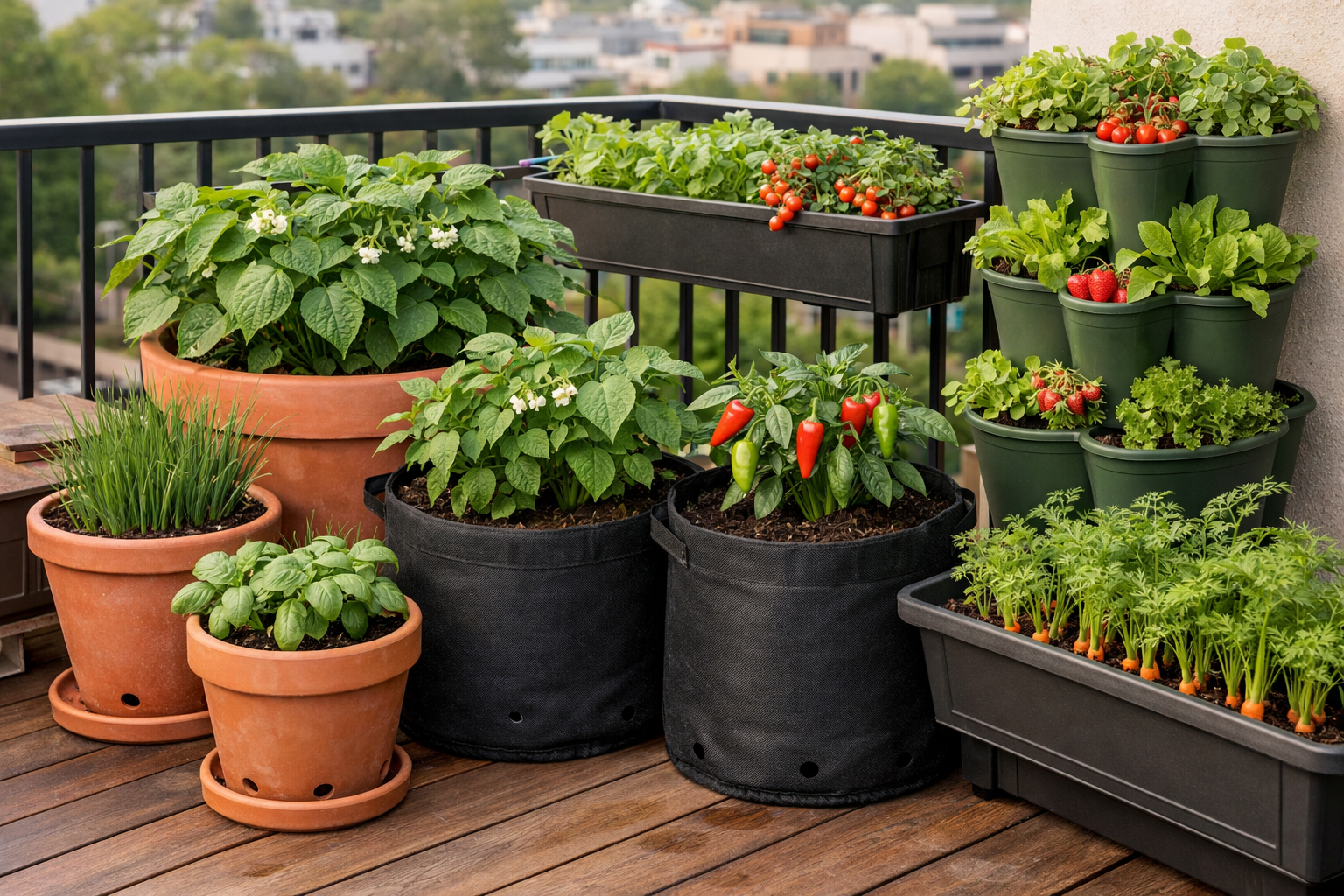
The best containers for balcony vegetables are those that offer adequate drainage, sufficient size for root growth, and are made from durable materials like terracotta, plastic, or fabric grow bags, while the ideal soil is a high-quality, well-draining potting mix [5]. Choosing the right containers and soil is paramount for the success of your small balcony vegetable garden.
Container Selection
- Material Matters:
- Terracotta/Clay: Breathable, which helps prevent overwatering, but dries out quickly. Good for plants that prefer drier conditions.
- Plastic: Lightweight, retains moisture well, and often more affordable. Can heat up in direct sun, potentially stressing roots.
- Fabric Grow Bags: Excellent aeration, promotes healthy root structure (air pruning), and are lightweight and portable. They also prevent overwatering. Many gardeners prefer these for ease of use and plant health. Learn more about the Best Pots for Small Space Gardening in 2026
- Wood: Attractive and insulative, but can rot over time. Use food-safe liners to extend life and prevent soil contact with treated wood.
- Size is Critical:
- Shallow-rooted plants (herbs, leafy greens): 6-8 inch deep pots.
- Medium-rooted plants (bush beans, peppers): 8-12 inch deep pots.
- Deep-rooted plants (tomatoes, cucumbers): 12-18 inch deep pots.
- When in doubt, choose a slightly larger pot, as it offers more room for root growth and retains moisture better, which is crucial for balcony gardening.
- Drainage Holes: Every container must have drainage holes to prevent waterlogging and root rot. If a decorative pot lacks them, use it as a cachepot with an inner pot that does have holes.
- Self-Watering Containers: These are highly recommended for balconies, especially for busy gardeners or those facing windy conditions that accelerate moisture loss [1, 5]. They feature a water reservoir at the bottom, reducing the frequency of watering.
Soil Selection
- Potting Mix, Not Garden Soil: Always use a high-quality potting mix specifically designed for containers. Garden soil is too dense, compacts easily in pots, and may contain pests or diseases. For in-depth information, refer to our Soil Basics for Container Gardening: 2026 Expert Guide.
- Key Characteristics:
- Good Drainage: Ensures roots don’t sit in water. Look for mixes containing perlite, vermiculite, or coco coir.
- Moisture Retention: While draining well, it should also hold enough moisture to keep plants hydrated.
- Nutrient Content: Many potting mixes come “pre-fertilized” for the first few weeks. After that, you’ll need to supplement with liquid fertilizer.
- Lightweight: Important for balconies where weight can be a concern.
- Organic Options: Consider organic potting mixes for growing edibles, especially if you prefer to avoid synthetic fertilizers and pesticides.
Common Mistake: Using garden soil instead of potting mix. Garden soil will compact, suffocate roots, and lead to poor plant growth. Always invest in good quality potting mix for successful container gardening.
How Do I Ensure Optimal Sunlight and Water for My Balcony Plants?
To ensure optimal sunlight and water for your balcony plants, first assess your balcony’s sun exposure throughout the day, aiming for at least 4-6 hours of direct sunlight for most vegetables, and then implement a consistent watering schedule, possibly using self-watering containers to combat moisture loss [1]. Balcony environments can be harsh, with intensified sunlight and wind, making diligent monitoring essential.
Sunlight Management
- Assess Sun Exposure:
- Observe your balcony’s sun patterns over a full day, or even a full season, in 2026.
- South-facing balconies: Typically receive the most sun, ideal for sun-loving vegetables like tomatoes, peppers, and cucumbers.
- East-facing balconies: Receive morning sun, which is less intense. Good for leafy greens, herbs, and radishes.
- West-facing balconies: Receive intense afternoon sun. Can be challenging, requiring careful plant selection or afternoon shade.
- North-facing balconies: Receive the least direct sun, suitable only for shade-tolerant crops like some leafy greens, spinach, or mint.
- Minimum Requirement: Most fruiting vegetables (tomatoes, peppers, beans) need a minimum of 6-8 hours of direct sunlight daily to produce well. Leafy greens and herbs can often thrive with 4-6 hours [1].
- Optimize Placement: Arrange your pots to ensure all plants receive their required sunlight. Rotate pots periodically to encourage even growth.
- Reflective Surfaces: White walls or light-colored balcony surfaces can reflect light, increasing the effective sun exposure for plants.
- Shade Solutions: For balconies with intense afternoon sun, consider using shade cloth or positioning taller plants to provide natural shade for more sensitive crops.
Watering Strategies
- Consistency is Key: Balcony plants in containers dry out much faster than garden beds, especially on windy or hot days [1]. Check soil moisture daily by sticking your finger about an inch into the soil. If it feels dry, it’s time to water.
- Deep Watering: Water thoroughly until you see water draining from the bottom of the pot. This encourages roots to grow deeper. Avoid frequent, shallow watering, which leads to shallow root systems.
- Self-Watering Containers: These are a fantastic investment for balcony gardeners as they significantly reduce watering frequency and ensure consistent moisture, a critical factor in battling the wind’s drying effects [1, 5].
- Watering Globes/Spikes: While not as efficient as self-watering containers, these can provide a slow release of water, acting as a buffer between waterings.
- Mulch: Apply a layer of organic mulch (like straw or coco coir) on top of the soil to help retain moisture, suppress weeds, and regulate soil temperature.
- Wind Protection: Wind accelerates water evaporation. Consider grouping pots together, using windbreaks (like trellises with climbing plants), or selecting sturdy, compact plant varieties to mitigate wind effects [1].
- Rain Collection (if permissible): If allowed in your building, a small rain barrel can collect water for your plants, providing a sustainable watering source.
Quick Example: On a west-facing balcony, I might plant heat-tolerant peppers and cherry tomatoes at the front to catch the intense afternoon sun, while tucking leafy greens like lettuce and spinach behind them or under a light shade cloth to protect them from scorching. I’d use self-watering containers for the tomatoes to ensure they never dry out.
What Are the Best Vegetables and Herbs for Small Balcony Vegetable Gardening in 2026?
For successful small balcony vegetable gardening in 2026, focus on compact, high-yielding varieties of vegetables and herbs that thrive in containers and make efficient use of limited space. The key is to select plants specifically bred for smaller footprints or those that naturally have a bushier, rather than sprawling, growth habit [2].
Here’s a curated list of top recommendations:
Top Vegetables for Balcony Gardening
- Tomatoes:
- Compact/Dwarf Varieties: “Micro Tom,” “Tiny Tim,” “Patio Princess,” “Celebrity Bush.” These are specifically bred to remain small and productive in pots.
- Cherry Tomatoes: Generally do very well in containers and offer continuous harvests. Consider hanging basket varieties for even better space utilization [3].
- Blight-Resistant: For uncertain weather, the RHS recommends “Buffalosun,” “Burlesque,” and “Nagina” [3].
- Tip: Provide sturdy stakes or cages as they grow, even compact varieties.
- Leafy Greens:
- Lettuce: “Black Seed Simpson,” “Tom Thumb,” “Salad Bowl.” Can be grown in shallow containers or vertical planters. Harvest outer leaves for continuous supply.
- Spinach: “Bloomsdale Long Standing,” “Tyee.” Tolerates some shade, ideal for east or north-facing balconies.
- Arugula: Quick-growing and adds a peppery kick to salads.
- Swiss Chard: “Bright Lights” offers colorful stems and is very productive.
- Tip: Many leafy greens are “cut-and-come-again,” allowing multiple harvests from one plant.
- Peppers:
- Bush or Compact Varieties: “Jalapeño M,” “Pot-a-Peno,” “Mini Bell.” Peppers love sun and heat.
- Tabletop Chillies: Increasingly popular in 2026 for their decorative and edible qualities [3].
- Tip: Keep soil consistently moist and provide full sun.
- Bush Beans:
- Compact Bush Varieties: “Provider,” “Contender.” Unlike pole beans, bush beans don’t require extensive trellising and mature quickly.
- Tip: Plant in succession every few weeks for a continuous harvest.
- Radishes: Quick-growing and can be tucked into small spaces or grown in shallow containers. Harvest in as little as 3-4 weeks.
- Carrots:
- Short/Round Varieties: “Paris Market,” “Danvers Half Long.” Grow well in deeper pots or grow bags. Ensure loose, well-draining soil.
- Eggplant (Aubergine):
- Compact Varieties: “Patio Baby,” “Fairy Tale.” Compact aubergines are a rising trend in 2026 [3].
- Tip: Provide plenty of sun and warmth.
- Cucumbers:
- Bush or Patio Varieties: “Bush Pickling,” “Spacemaster.” Some varieties are also suitable for hanging baskets [3].
- Tip: Even bush varieties benefit from a small cage or trellis to keep fruit off the ground.
- Blackcurrants: Emerging as a “super berry” trend in 2026, offering high yields and requiring less acidic soil than blueberries, making them a good balcony fruit option [3].
Top Herbs for Balcony Gardening
Herbs are perfect for small balcony vegetable gardening due to their compact size and relatively shallow root systems [1]. Potted herb sales surged 10% annually, highlighting their popularity [3].
- Basil: Needs warmth and sun. Pinch off flowers to encourage leaf production.
- Chives: Easy to grow, provides oniony flavor.
- Thyme: Drought-tolerant once established, great for sunny spots.
- Rosemary: Can grow into a small shrub, requires good drainage.
- Oregano: Spreads easily, perfect for a wider pot or hanging basket.
- Parsley: Both flat-leaf and curly varieties do well.
- Mint: Very vigorous, best grown in its own container to prevent it from taking over.
- Sage: Aromatic and relatively low-maintenance.
Comparison Table: Compact Vegetable Traits for Balconies
| Vegetable Type | Compact Varieties/Notes | Pot Depth (min) | Sun Needs (hours) | Support? |
|---|---|---|---|---|
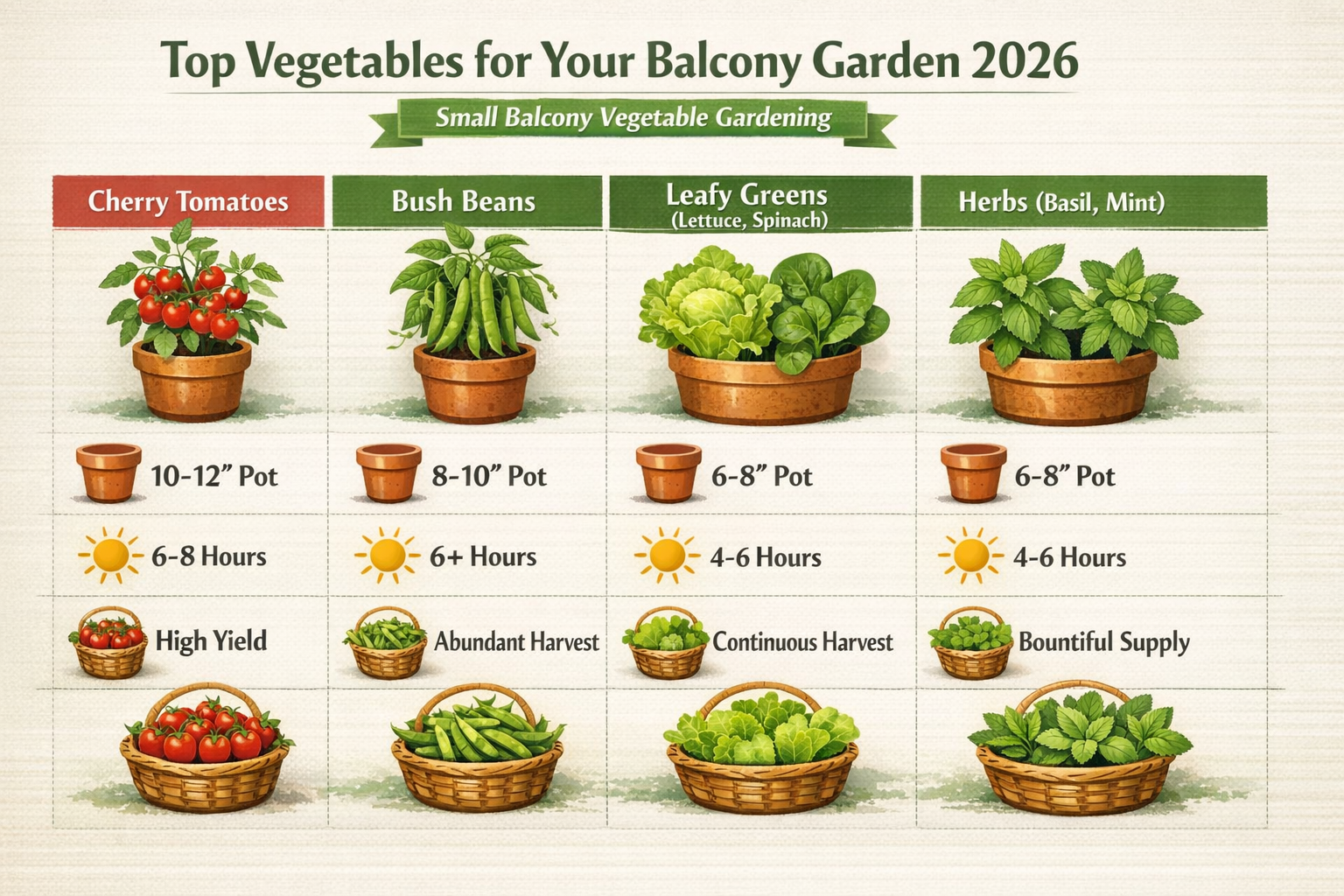
| Cherry Tomato | ‘Micro Tom’, ‘Patio Princess’, hanging types [3] | 12-18 inches | 6-8+ | Yes |
| Leafy Greens | Lettuce, Spinach, Arugula, Swiss Chard | 6-8 inches | 4-6+ | No |
| Peppers | ‘Pot-a-Peno’, ‘Mini Bell’, Tabletop chillies [3] | 8-12 inches | 6-8+ | Optional |
| Bush Beans | ‘Provider’, ‘Contender’ | 8-12 inches | 6-8+ | No |
| Radishes | ‘Cherry Belle’, ‘French Breakfast’ | 6 inches | 4-6+ | No |
| Carrots | ‘Paris Market’, ‘Danvers Half Long’ (shorter) | 12-18 inches | 6-8+ | No |
| Herbs | Basil, Chives, Thyme, Parsley, Mint, Rosemary | 6-8 inches | 4-6+ | No |
For a more extensive list of suitable plants, refer to our Best Vegetables for Small Space Gardening in 2026 guide.
What Are Common Challenges in Balcony Gardening and How Can I Overcome Them?
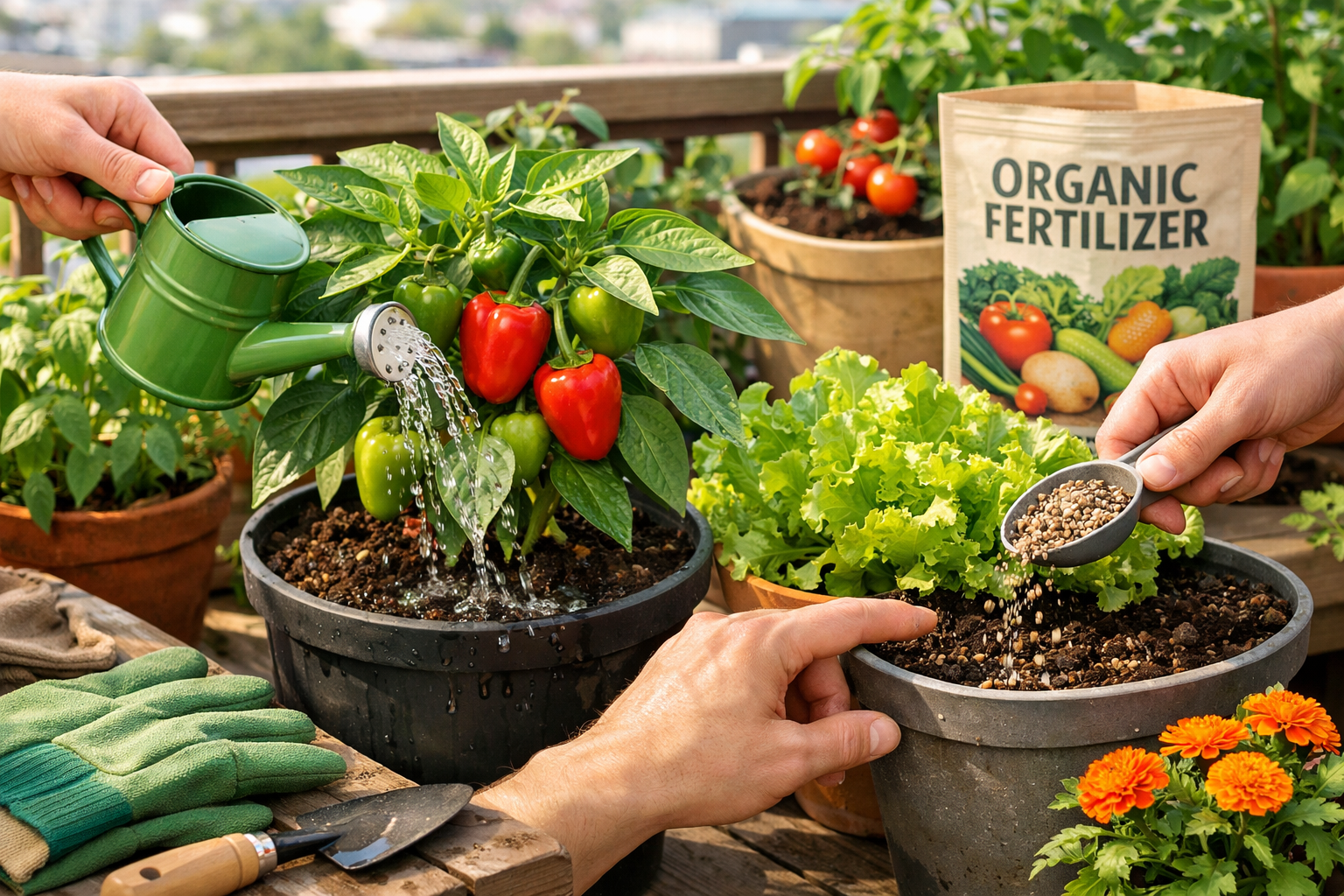
Common challenges in balcony gardening include limited space, inadequate sunlight, strong winds, and drainage issues, all of which can be overcome with careful planning and the right techniques. Addressing these specific environmental factors is key to a thriving small balcony vegetable garden.
Here’s how to tackle these common hurdles:
- Limited Space:
- Challenge: The most obvious limitation for small balcony vegetable gardening is the lack of ground area.
- Overcome: As discussed, embrace vertical gardening solutions like wall planters, stackable pots, and railing planters [1, 5]. Choose compact, dwarf, or bush varieties of vegetables and herbs that are specifically bred for containers [2]. Plan your layout carefully, considering the mature size of plants. Utilize hanging baskets for trailing crops.
- Inadequate Sunlight:
- Challenge: Many balconies receive less than the ideal 6-8 hours of direct sunlight needed for fruiting vegetables.
- Overcome: Conduct a sun study of your balcony throughout the day and year to understand sun patterns. Select plants appropriate for your light conditions; prioritize leafy greens, herbs, and root vegetables for shadier spots (4-6 hours) [1]. For sun-loving plants, place them in the brightest spots and rotate them if necessary. Use light-colored surfaces to reflect light.
- Wind Exposure:
- Challenge: Balconies, especially on higher floors, can experience strong winds that damage plants, dry out soil rapidly, and knock over pots [1].
- Overcome:
- Plant Selection: Choose compact, sturdy plants with flexible stems.
- Weighted Containers: Use heavier pots (like terracotta or ceramic) or add ballast (rocks, bricks) to the bottom of lighter plastic pots to prevent tipping.
- Grouping Pots: Cluster pots together to create a microclimate and offer mutual protection from wind.
- Windbreaks: Install a permeable screen, trellis with a dense climbing plant, or position larger, hardier plants strategically to block strong gusts.
- Self-Watering Pots: These help maintain consistent moisture despite wind-induced evaporation [1, 5].
- Drainage Issues:
- Challenge: Improper drainage leads to waterlogged soil, suffocating roots and causing rot.
- Overcome:
- Drainage Holes: Ensure all your containers have adequate drainage holes. Drill them if necessary.
- Potting Mix: Always use a high-quality, well-draining potting mix, never dense garden soil. Ingredients like perlite and vermiculite improve drainage.
- Elevate Pots: Use pot feet or risers to lift pots slightly off the ground, ensuring drainage holes don’t get blocked and allowing excess water to escape freely.
- Watering Frequency:
- Challenge: Container plants dry out much faster than in-ground gardens, especially in summer or windy conditions, requiring frequent watering.
- Overcome: Employ self-watering containers [1, 5]. Apply mulch to the soil surface to reduce evaporation. Water deeply and thoroughly when you do water, rather than frequent shallow sips. Consider drip irrigation systems for larger balcony gardens.
- Pests and Diseases:
- Challenge: Balcony gardens can still attract pests, and diseases can spread quickly in confined spaces.
- Overcome: Inspect plants regularly for signs of pests (aphids, spider mites) or diseases. Remove affected leaves immediately. Use organic pest control methods like neem oil or insecticidal soap. Encourage beneficial insects if possible (e.g., by planting marigolds). Ensure good air circulation around plants to prevent fungal issues. For more on preventing issues, see our Beginner Mistakes in Small Space Gardening 2026 guide.
- Overheating/Underheating:
- Challenge: Balconies can become heat sinks in summer or be exposed to cold drafts in winter.
- Overcome: Use light-colored pots to reflect heat. Provide shade cloth during peak summer afternoons. In colder weather, use insulating materials around pots or move sensitive plants indoors if possible.
By proactively addressing these challenges, you can create a resilient and productive small balcony vegetable garden that thrives through different seasons and conditions.
Building Your Small Balcony Vegetable Garden: A Step-by-Step Checklist
Building a small balcony vegetable garden involves planning, preparation, and consistent care. By following these steps, you can create a thriving edible oasis in your limited urban space.
Step 1: Assess Your Balcony and Plan
- Sunlight Audit: Observe your balcony for a full day, noting how many hours of direct sunlight each area receives. This is crucial for plant selection [1].
- Weight Capacity: Check with your building management about the weight capacity of your balcony, especially if you plan on using many large, heavy containers filled with wet soil.
- Space Measurement: Measure your available floor space, railing length, and wall space to plan for vertical structures, hanging baskets, and pots.
- Plant Selection: Based on sunlight and space, list the specific compact vegetable and herb varieties you want to grow [2, 3]. Prioritize high-yield plants.
- Water Access: Plan for how you will water your plants. Is there an outdoor faucet or will you need to carry water?
Step 2: Gather Your Materials
- Containers: Select appropriate pots, grow bags, vertical planters, or railing planters with good drainage [5]. Consider self-watering options [1].
- Potting Mix: Purchase high-quality, well-draining potting mix specifically formulated for containers. Do not use garden soil.
- Seeds or Seedlings: Choose healthy seeds or young plants of your selected varieties. For beginners, seedlings are often easier.
- Gardening Tools: Small trowel, watering can, gardening gloves, pruning shears. For more, see our Essential Tools for Small Space Gardening in 2026.
- Support Structures (if needed): Stakes, cages, or trellises for tomatoes, cucumbers, or climbing beans.
- Fertilizer: A balanced liquid organic fertilizer for vegetables.
- Mulch (Optional): Straw, coco coir, or wood chips to conserve moisture.
Step 3: Set Up Your Garden
- Clean and Prepare: Clear your balcony, ensuring it’s clean and free of debris.
- Assemble Structures: Install any vertical planters, shelving units, or railing hangers securely.
- Fill Containers: Fill your chosen containers with potting mix, leaving about an inch or two from the rim.
- Planting:
- Seeds: Follow package instructions for depth and spacing.
- Seedlings: Gently remove plants from their nursery pots. Dig a hole slightly larger than the root ball, place the plant, and backfill with soil, gently firming around the base. Water immediately.
- Add Supports: Install stakes or cages for plants like tomatoes or peppers at the time of planting to avoid disturbing roots later.
- Initial Watering: Water all newly planted containers thoroughly until water drains from the bottom.
Step 4: Ongoing Care and Maintenance
- Watering: Check soil moisture daily. Water when the top inch of soil feels dry. Adjust frequency based on weather, wind, and plant needs. Consider automated watering for convenience. For detailed guidance, check our How Often Should You Water Plants? Ultimate Guide 2026.
- Fertilizing: Container plants deplete soil nutrients faster. Begin fertilizing with a diluted liquid fertilizer every 2-4 weeks after the initial nutrients in the potting mix are used up (usually after 3-4 weeks). Follow product instructions carefully.
- Pest and Disease Monitoring: Inspect plants regularly for any signs of pests (look under leaves) or diseases. Address issues promptly with organic solutions.
- Pruning and Training: Pinch back herbs to encourage bushier growth. Prune suckers from tomatoes (unless it’s a determinate bush variety). Train climbing plants up trellises.
- Harvesting: Harvest vegetables and herbs regularly when they are ripe. This encourages more production.
- Weeding: While less common in containers, remove any weeds promptly to prevent competition for nutrients.
- Rotate and Replenish: At the end of the growing season, remove old plants. You may need to refresh or replace some of your potting mix for the next season.
Edge Case: If your balcony is prone to extremely high winds, consider investing in heavier, self-watering planters that are less likely to tip over and offer better moisture retention, reducing the stress on your plants.
Conclusion
Embracing small balcony vegetable gardening in 2026 is an accessible and enriching way to connect with nature, enjoy fresh produce, and enhance your urban living space. While challenges like limited space, sun exposure, and wind are inherent to balcony environments, they are entirely surmountable with thoughtful planning and strategic solutions. By selecting appropriate compact plant varieties, utilizing vertical growing techniques, choosing the right containers and soil, and adhering to consistent care routines, even the most novice gardener can cultivate a bountiful harvest.
Remember, gardening is a journey of continuous learning and experimentation. Don’t be discouraged by initial setbacks; instead, view them as opportunities to refine your approach. The satisfaction of harvesting your own produce, from crisp lettuce to juicy cherry tomatoes, directly from your balcony, is an unparalleled reward. Start small, observe your plants, and adapt your methods. Your personal urban farm awaits!
Actionable Next Steps:
- Evaluate Your Balcony: Take an hour to observe your balcony’s sun exposure throughout a typical day.
- Choose 2-3 Starter Plants: Select a few easy-to-grow, compact vegetables or herbs from our recommended list.
- Gather Basic Supplies: Purchase suitable containers (with drainage!), a quality potting mix, and either seeds or small seedlings.
- Set Up and Plant: Follow the step-by-step checklist to get your first plants in the ground.
- Commit to Daily Checks: Make it a habit to check your plants daily for moisture needs and signs of growth or issues.
Key Takeaways
- Small balcony vegetable gardening transforms urban spaces into productive food gardens.
- Vertical gardening and compact plant varieties are essential for maximizing limited space.
- Adequate sunlight (4-6+ hours) and proper watering practices are crucial for plant health.
- Choosing the right containers with drainage and high-quality potting mix supports strong root development.
- Common challenges like wind and rapid drying can be mitigated with specific strategies like self-watering containers and windbreaks.
- Starting with easy-to-grow herbs and leafy greens builds confidence for more ambitious crops.
- Regular monitoring for pests, diseases, and nutrient needs ensures a continuous, healthy harvest.
- The trend towards compact, high-yielding edibles makes 2026 an ideal year to start your balcony garden.
FAQ
Q: How much sun do balcony vegetables need?
A: Most fruiting vegetables require 6-8 hours of direct sunlight daily, while leafy greens and herbs can thrive with 4-6 hours [1].
Q: Can I grow tomatoes on a small balcony?
A: Yes, select compact or dwarf tomato varieties like “Micro Tom” or “Patio Princess,” and provide them with a large pot (12-18 inches deep) and a sturdy stake or cage [2].
Q: What are the easiest vegetables to grow on a balcony for beginners?
A: Leafy greens (lettuce, spinach), radishes, bush beans, and herbs (basil, chives, mint) are excellent choices for beginners due to their relatively quick growth and forgiving nature.
Q: What kind of soil should I use for balcony plants?
A: Always use a high-quality, lightweight potting mix specifically formulated for containers, as garden soil is too dense and lacks proper drainage for pots.
Q: How often should I water my balcony vegetable garden?
A: Container plants dry out faster than in-ground gardens. Check the soil daily, and water thoroughly when the top inch feels dry. Self-watering containers can reduce frequency [1, 5].
Q: How can I protect my balcony plants from strong winds?
A: Use heavy, stable pots, cluster plants together, install windbreaks, and consider self-watering containers to maintain moisture despite wind [1].
Q: Are there any specific herbs that do well on balconies?
A: Yes, basil, chives, thyme, rosemary, oregano, parsley, and mint are all excellent choices for balcony herb gardens due to their compact size and versatility [1].
Q: Is vertical gardening effective for small balconies?
A: Absolutely, vertical gardening is one of the most effective ways to maximize growing space on a small balcony, allowing you to cultivate many plants in a small footprint [1, 5].
Q: Do I need to fertilize balcony plants?
A: Yes, container plants quickly deplete soil nutrients. Supplement with a balanced liquid fertilizer every 2-4 weeks after the initial nutrients in the potting mix are used up.
Q: What are compact aubergines?
A: Compact aubergines (eggplants) are specific varieties, like ‘Patio Baby’ or ‘Fairy Tale,’ bred to grow smaller and produce fruit in limited spaces, making them suitable for balconies [3].
References
[1] Balcony Garden Themes To Maximize Your Small Space In 2026 – https://balconygardenparadise.com/balcony-garden-themes-to-maximize-your-small-space-in-2026/
[2] Best Vegetables For Balcony Gardening In 2026 – https://greenhomeworld.com/best-vegetables-for-balcony-gardening-in-2026/
[3] Gardening Trends 2026 – https://www.housebeautiful.com/uk/garden/plants/a69817540/gardening-trends-2026/
[4] Garden Trends 2026 – https://www.countryliving.com/gardening/garden-ideas/a70160525/garden-trends-2026/
[5] Trends In Container Gardening 2026 – https://www.containedcreations.com/blog/trends-in-container-gardening-2026
[6] Watch – https://www.youtube.com/watch?v=eyB2d23_QPg
[7] 2026 Garden Trends – https://southernlivingplants.com/plan-your-garden/2026-garden-trends/