Shade Plants for Balcony: Top Picks & Care Guide 2026
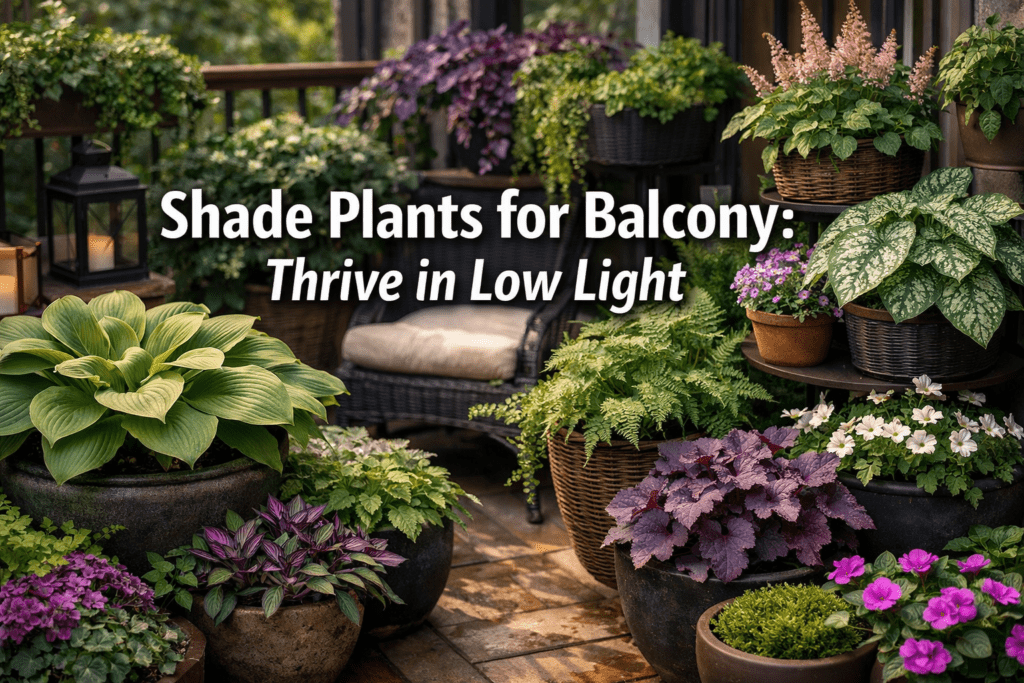
Transforming a dimly lit balcony into a lush haven is entirely possible by selecting the right shade plants for balcony conditions, which are specifically adapted to thrive with minimal direct sunlight. Focus on species known for their attractive foliage, diverse textures, and ability to flourish in containers, ensuring your urban oasis remains vibrant and healthy throughout the growing season of 2026.
Key Takeaways
- Embrace Shade: Balconies receiving less than six hours of direct sunlight can still host a vibrant garden with appropriate shade plants.
- Foliage is Key: Many shade plants offer stunning leaf colors and textures, providing year-round interest even without abundant flowers.
- Container Matters: Choose pots with good drainage and use a high-quality potting mix to prevent root rot.
- Water Wisely: Shade plants generally require less frequent watering than sun-lovers, but consistent moisture is crucial.
- Hardiness Zones: Select plants suited to your USDA hardiness zone to ensure they thrive outdoors.
- Top Picks: Heuchera, Brunnera, Pulmonaria, various ferns, Begonias, Coleus, Impatiens, and Hostas are excellent choices for shady balconies.
- Pest and Disease: Regular inspection helps catch issues early, especially in the humid conditions shade can create.
- Fertilize Sparingly: Shade plants typically need less fertilizer; a diluted liquid feed during the growing season is often sufficient.
Why Choose Shade Plants for Your Balcony?
Choosing shade plants for balcony environments is essential for gardeners whose outdoor spaces receive limited direct sunlight, typically less than six hours a day. These plants are specifically adapted to low-light conditions, preventing the common problems of scorched leaves, stunted growth, and failed blooms that sun-loving plants would experience in the same spot. Opting for shade-tolerant species ensures your balcony garden remains healthy, vibrant, and requires less intensive care, making it a sustainable and rewarding project for apartment dwellers.
Balconies, especially those facing north or shielded by buildings, often present unique challenges for plant growth due to insufficient light. Instead of struggling to force sun-loving plants into an unsuitable environment, embracing shade-loving varieties allows you to create a thriving green space. This approach not only ensures the plants’ success but also saves you time and effort on troubleshooting issues related to inadequate light. Many shade plants offer incredible diversity in foliage color, texture, and subtle blooms, providing continuous visual interest. For beginners looking to create a thriving small garden, understanding light requirements is a foundational step, as detailed in our Beginner’s Guide to Plant Care 2026: Grow Thriving Plants.
Benefits of Shade Plants on Balconies:
- Low Maintenance: Many shade plants are inherently low-maintenance, requiring less frequent watering and less stress from intense sun. This is particularly beneficial for those seeking low maintenance plants for their compact spaces.
- Prevents Sunburn: Leaves of shade plants are typically thinner and more delicate, designed to capture diffused light. Direct sun would scorch them, leading to unsightly damage and poor plant health.
- Humidity Control: Shady spots often retain more humidity, which many shade-loving plants prefer, reducing the need for constant vigilance over moisture levels.
- Unique Aesthetics: Shade plants often feature intricate leaf patterns, deep green hues, or variegated foliage that add a sophisticated texture to any balcony design.
- Extended Bloom Time: While fewer bloom, some shade flowers like Impatiens can provide a burst of color that lasts longer in cooler, shadier conditions compared to their sun-exposed counterparts.
When considering plants for your balcony, it’s crucial to accurately assess the amount of sunlight it receives throughout the day. A balcony that gets morning sun but is shaded in the afternoon is different from one that receives only indirect light all day. This assessment will help you narrow down the best shade plants for balcony success.
Top Foliage-Focused Shade Plants for Balcony Containers
For any balcony that primarily experiences shade, foliage plants are often the unsung heroes, providing continuous texture, color, and visual interest without relying on blooms. These selections are chosen for their robust performance in containers and their stunning leaf displays, making them ideal shade plants for balcony settings. By prioritizing foliage, gardeners can create sophisticated and dynamic arrangements that remain attractive through multiple seasons, even in low-light conditions.
1. Heuchera (Coral Bells) 🌱
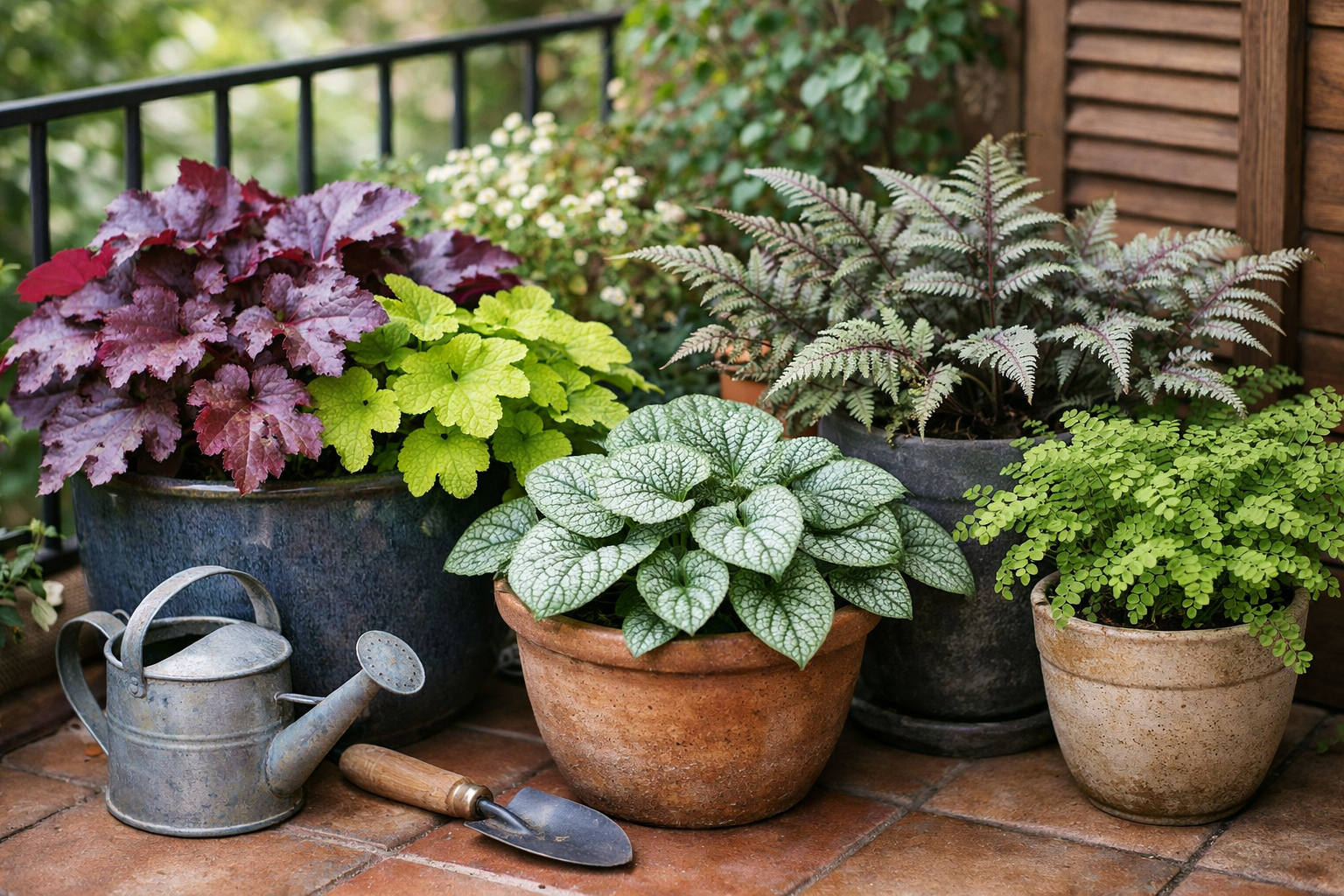
Heuchera, commonly known as Coral Bells, are exceptional shade plants for balcony containers due to their vibrant, diverse foliage and compact growth habit. They are hardy in USDA zones 4-9 and thrive in partial sun to partial shade, making them perfect for indirect light on a balcony [1, 3, 4, 6]. Their shallow root systems also make them particularly well-suited for pots [4].
- Color Range: Available in an astonishing array of colors including burgundy, purple-black, chartreuse, salmon, rusty orange, and even variegated patterns [1, 3, 4, 6]. Varieties like ‘Palace Purple’ offer deep, dramatic hues, while ‘Lime Rickey’ provides a bright pop of green.
- Texture: Leaves can be ruffled, smooth, lobed, or deeply cut, adding intricate texture to your container arrangements.
- Care Tip: Ensure good drainage and avoid overwatering, as they are susceptible to root rot in soggy conditions. A good quality potting mix designed for containers will serve them well.
- Consider this: For year-round interest, choose evergreen varieties that maintain their foliage through milder winters.
2. Brunnera (Siberian Bugloss) ❄️
Brunnera, or Siberian Bugloss, offers beautiful heart-shaped leaves, often speckled or variegated with silver, making it a standout among shade plants for balcony options. Hardy in zones 3-9, it produces delicate, forget-me-not-like blue flowers in early spring, adding a touch of ethereal beauty before the main growing season [1].
- Foliage Focus: Varieties such as ‘Jack Frost’ are prized for their luminous silver foliage with dark green veins, which brightens up shady corners [1].
- Size: Typically grows 8-18 inches tall and spreads 18-30 inches, creating a lovely mounding form in containers [1].
- Pairing: Its silvery leaves pair beautifully with darker-leaved Heuchera or green ferns.
- Maintenance: Brunnera prefers consistently moist soil but dislikes being waterlogged. It’s relatively pest-free.
3. Pulmonaria (Lungwort) ✨
Pulmonaria, or Lungwort, is another excellent choice for adding unique foliage and early spring color to your collection of shade plants for balcony containers. It’s hardy in zones 3-9 and known for its distinctive speckled or silvery leaves, often with blotches or spots [1].
- Foliage Variety: Leaf patterns range from heavily silvered to spots and splotches, providing a striking visual contrast.
- Blooms: Features charming bell-shaped flowers in shades of blue, pink, or white, which appear in early spring [1].
- Growth Habit: Forms compact clumps, generally 8-18 inches tall and 12-24 inches wide, making it suitable for smaller pots [1].
- Soil Preference: Prefers rich, moist, well-draining soil. Avoid letting the soil dry out completely.
4. Ferns 🌿
Ferns are classic shade plants for balcony gardens, offering unparalleled texture and lushness. Their diverse forms and shades of green can create a tranquil, woodland feel, and many varieties perform exceptionally well in containers, providing a sense of depth and vibrancy [1, 3, 7].
- Popular Varieties for Containers:
- Japanese Painted Fern: Known for its silvery-grey-green fronds with reddish-purple stems, adding a delicate, artistic touch [1].
- Maidenhair Fern: Features delicate, airy fronds and dark, wiry stems, requiring consistent humidity and moisture.
- Wood Fern: Robust and architectural, with sturdy fronds that offer a more substantial presence.
- Lady Fern: Graceful and feathery, providing a soft texture.
- Care Note: Ferns generally prefer high humidity and consistently moist, but not soggy, soil. They appreciate being shielded from strong winds on a balcony.
5. Hostas 💚
Hostas are quintessential shade plants for balcony settings, beloved for their vast array of leaf sizes, shapes, colors, and textures. While they do bloom with lavender or white flowers, their primary appeal lies in their foliage, making them a cornerstone for shaded container gardens [3, 7].
- Diversity: Available in sizes from miniature to very large, with leaves that can be blue, green, gold, white-edged, or variegated, and textures ranging from smooth to heavily corrugated [3].
- Container Suitability: Smaller and medium-sized varieties are perfect for pots. Choose a hosta size that won’t quickly outgrow its container.
- Pest Watch: Slugs and snails can be an issue for hostas, especially in damp, shaded conditions. Regularly inspect leaves and use organic pest control methods if necessary.
- Winter Care: In colder zones, hostas are deciduous and will die back in winter. The pots can be moved to a sheltered spot or overwintered indoors if space allows.
When selecting shade plants for balcony arrangements, don’t be afraid to mix and match. Combining different leaf colors, shapes, and textures from these foliage-focused options can create a visually dynamic and captivating display, turning a dull corner into a vibrant green retreat. For more ideas on maximizing small spaces, explore our Best Plants for Small Gardens 2026: The Complete List.
Flowering Shade Plants for Balcony Gardens
Even in shaded balcony environments, you don’t have to sacrifice color. Several flowering plants are perfectly suited to thrive with minimal direct sunlight, bringing vibrant blooms and cheerful accents to your green space. These selections are excellent shade plants for balcony gardeners who want to add a floral touch without compromising on plant health.
1. Begonias 🌸
Begonias are a fantastic choice for adding a splash of color to shaded balconies, thriving in full to partial shade and performing equally well in garden beds and pots [2, 6, 7]. There are many types of begonias, but for containers in shade, tuberous and wax begonias are particularly popular.
- Tuberous Begonias: Known for their large, showy blooms in vibrant shades of red, pink, orange, yellow, and white. They prefer indirect light and consistent moisture.
- Wax Begonias: Offer smaller, often glossy leaves and a continuous display of white, pink, or red flowers. Some varieties can tolerate more sun, but generally prefer shade [2, 6].
- Care Tip: Begonias prefer well-draining soil and consistent moisture. Avoid overhead watering to prevent fungal diseases. Deadheading spent blooms will encourage more flowering.
- Overwintering: Tuberous begonias can often be overwintered indoors by lifting and storing their tubers in a cool, dark place.
2. Impatiens 🌺
Impatiens are classic shade plants for balcony containers, celebrated for their prolific and colorful blooms that brighten up even the deepest shade [7]. They offer a continuous show of flowers from spring through fall.
- Color Palette: Available in almost every color imaginable except true blue, including shades of pink, red, orange, white, and purple.
- Growth Habit: Form mounding plants covered in flowers, making them excellent for hanging baskets, window boxes, or mixed containers.
- Moisture Needs: Impatiens are thirsty plants and require consistent moisture, especially in containers. They will quickly wilt if the soil dries out completely, though they often bounce back once watered.
- Disease Resistance: While New Guinea Impatiens and some newer varieties are resistant, common garden impatiens (Impatiens walleriana) can be susceptible to Downy Mildew. Check for resistant varieties when purchasing.
3. Coleus 🌈
While primarily grown for its stunning foliage, Coleus deserves a spot on any list of shade plants for balcony gardens that want color. Its leaves come in an incredible array of colors, patterns, and textures, providing a vibrant display that outshines many flowers [2, 6].
- Kaleidoscope of Colors: Varieties range from hot pink, vivid red, and deep burgundy to lime green, chartreuse, and chocolate brown, often with intricate contrasting margins or centers [2, 6].
- Foliage Textures: Leaves can be ruffled, scalloped, fringed, or smooth, adding further interest.
- Shade Tolerance: Many varieties thrive in full to partial shade, where their colors tend to be more intense and less prone to scorching than in direct sun [2, 6].
- Pinching: Pinching back the growing tips will encourage a bushier plant and prevent it from becoming leggy. Also, pinch off any flower spikes that appear, as flowering can divert energy from leaf production.
- Annual Care: Coleus is typically grown as an annual in most climates, though it can be overwintered indoors as a houseplant or propagated from cuttings.
By incorporating these flowering and intensely foliaged plants, your shaded balcony can become a captivating display of color and life. Remember to check out our Complete Balcony Gardening Guide for Small Apartments 2026 for more comprehensive advice on setting up your space.
Essential Care Tips for Shade Plants on Balconies
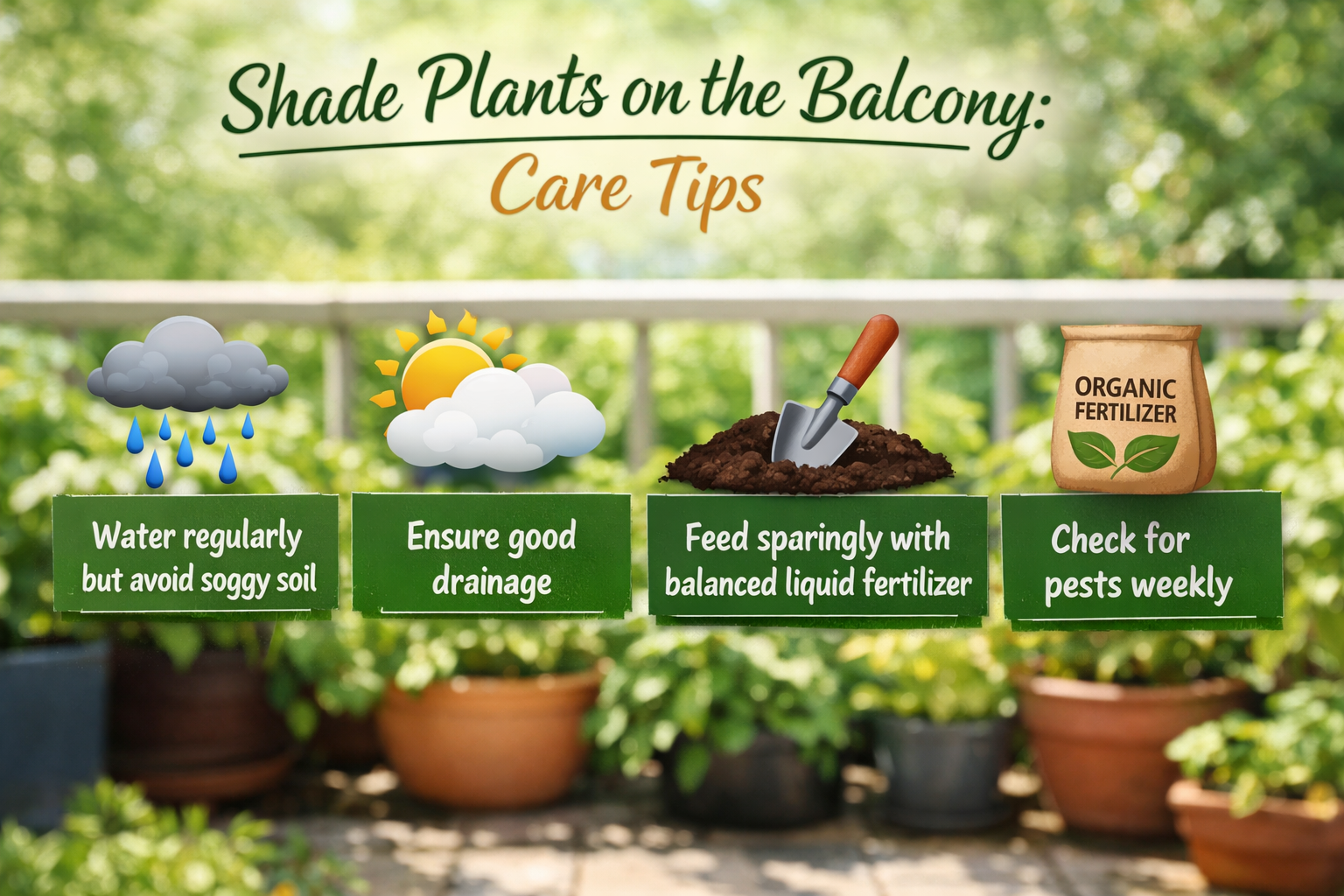
Successfully growing shade plants for balcony containers involves more than just selecting the right species; it also requires understanding their specific care requirements. While shade plants are generally less demanding in terms of light, they still need proper attention to thrive, especially when grown in pots. By focusing on watering, soil, fertilization, and pest management, you can ensure your balcony garden remains healthy and beautiful.
Watering: The Golden Rule for Shade Plants 💧
Watering is perhaps the most critical aspect of caring for shade plants for balcony environments. Shade conditions mean less evaporation, so plants generally need less frequent watering than their sun-loving counterparts. However, container plants dry out faster than garden beds, so a careful balance is needed.
- Check Soil Moisture: Always check the top inch or two of soil before watering. If it feels dry, it’s time to water. If it’s still damp, wait. This prevents overwatering, which is a common killer of shade plants.
- Water Thoroughly: When you do water, ensure it drains out the bottom of the pot. This flushes out excess salts and ensures the entire root ball is moistened. For detailed guidance, refer to our How Often Should You Water Plants? Ultimate Guide 2026.
- Drainage is Key: Ensure all your containers have drainage holes. Standing water leads to root rot, which is particularly detrimental to shade-loving plants in consistently moist conditions.
Soil and Potting Mix: The Foundation of Health 🪴
The right potting mix is crucial for the success of shade plants for balcony gardens, as it provides both anchorage and nutrients while ensuring proper drainage and aeration.
- High-Quality Potting Mix: Use a lightweight, well-draining potting mix specifically formulated for containers. Avoid heavy garden soil, which compacts easily and can suffocate roots in pots.
- Amendments: For plants that prefer consistently moist conditions (like ferns), you can add some organic matter like compost to improve water retention, but always ensure good drainage.
- Repotting: Most container plants benefit from repotting into a slightly larger pot every 1-2 years or refreshing the top few inches of soil with new potting mix.
Fertilization: Less is More 🧪
Shade plants for balcony settings generally require less fertilizer than sun-loving plants because their growth rate is often slower in lower light. Over-fertilizing can lead to leggy growth or nutrient burn.
- Diluted Liquid Fertilizer: Use a balanced liquid fertilizer at half strength every 4-6 weeks during the active growing season (spring and summer).
- Slow-Release Options: A slow-release granular fertilizer applied at the beginning of the growing season can also be effective, but follow package directions carefully, especially for container use.
- Stop in Fall/Winter: Do not fertilize shade plants during their dormant period (fall and winter), as this can stimulate weak growth and stress the plant.
Pest and Disease Management: Vigilance Pays Off 🔍
Shady, often humid, balcony environments can sometimes be attractive to certain pests and diseases. Regular inspection is your best defense.
- Daily Check-ins: Take a few moments each day or week to inspect the undersides of leaves and stems for signs of pests (like aphids, spider mites, or slugs) or disease (like powdery mildew).
- Good Air Circulation: Ensure plants aren’t too crowded to allow for good airflow, which helps prevent fungal diseases.
- Organic Solutions: For pests, consider organic options like insecticidal soap or neem oil. Remove slugs and snails manually, especially for hostas [3]. For diseases, improving air circulation and removing affected leaves can often help.
- Quarantine New Plants: Before introducing new shade plants for balcony to your existing collection, keep them separate for a week or two to ensure they aren’t bringing in pests or diseases.
By diligently applying these care tips, your balcony garden filled with shade plants for balcony will flourish, providing a serene and colorful retreat right outside your door. For those interested in a wider variety of plants, explore our guide to Easy Plants to Grow in Small Spaces (2026 Guide).
Designing Your Shady Balcony Oasis (2026)
Creating a visually appealing and functional shady balcony garden in 2026 involves more than just plant selection; it’s about smart design and strategic placement of your shade plants for balcony containers. With thoughtful planning, you can transform even the most challenging low-light space into a charming and inviting outdoor retreat.
Assessing Your Balcony’s Shade Profile 📏
Before you begin, understand the type of shade your balcony receives. This will inform your plant choices and container placement.
- Full Shade: Less than 3 hours of direct sunlight per day, or mostly indirect light. Ideal for deep shade lovers like ferns, some hostas, and impatiens.
- Partial Shade/Part Sun: 3-6 hours of direct sunlight, often in the morning or late afternoon. Many shade plants, including Heuchera, Brunnera, and Begonias, thrive here [1].
- Dappled Shade: Sunlight filtering through tree leaves or an awning, creating a moving pattern of light and shadow. Most shade plants enjoy this.
Consider how the light changes throughout the day and across seasons. A spot that’s shady in summer might get more sun in winter when trees are bare, or the sun’s angle changes.
Choosing the Right Containers and Arrangement 🏺
The containers you choose are just as important as the plants themselves, influencing both aesthetics and plant health.
- Material Matters:
- Terracotta/Clay: Porous, allowing air and moisture exchange, which can be good for drainage but also means more frequent watering.
- Plastic/Resin: Retains moisture longer, ideal for plants that prefer consistent dampness. Lighter and often more affordable.
- Ceramic/Glazed: Often decorative and retains moisture well. Can be heavy.
- Size and Depth: Ensure containers are appropriately sized for the mature plant. Too small, and plants become root-bound quickly; too large, and the soil might stay wet for too long. Deeper pots are generally better for larger plants, while shallow pots work for plants with shallow roots like Heuchera [4].
- Drainage Holes: Absolutely non-negotiable. Every container must have drainage holes to prevent root rot. Consider elevating pots with pot feet to ensure proper water flow.
- Layering and Grouping:
- Thrillers, Fillers, Spillers: A classic container design principle. “Thrillers” are tall, upright plants (e.g., a taller fern), “Fillers” are mounding plants that fill the middle (e.g., Brunnera, Hosta, Begonias), and “Spillers” trail over the edge (e.g., trailing Coleus, ivy) [1].
- Vary Heights and Textures: Combine plants with different leaf shapes, sizes, and colors to create visual interest. For instance, pair the broad leaves of a Hosta with the delicate fronds of a Maidenhair fern and the vibrant foliage of a Heuchera.
- Group Containers: Arrange groups of pots together to create a cohesive look and to increase humidity around plants. Use risers or overturned pots to create different levels.
Adding Verticality and Accessories 🪜
Maximize space and enhance appeal, especially on smaller balconies.
- Vertical Gardening: Employ vertical planters, wall-mounted pots, or tiered shelving to grow more shade plants for balcony without taking up valuable floor space. This is a game-changer for small space gardening and vertical gardening.
- Hanging Baskets: Excellent for showcasing trailing plants like certain Coleus varieties or Impatiens, adding greenery at eye level.
- Lighting: Consider string lights or solar-powered lanterns to illuminate your plants at night, extending the enjoyment of your balcony.
- Seating and Decor: Add comfortable seating, a small table, or decorative elements like wind chimes or small sculptures to complete the oasis feel.
Example Balcony Design for Full Shade:
| Container Type | Plants (Thrillers, Fillers, Spillers) | Notes |
|---|---|---|
| Large Urn | Japanese Painted Fern (Thriller) | Provides height and delicate texture. |
| Hosta ‘Halcyon’ (Filler) | Blue-green, corrugated leaves for substantial presence. | |
| Trailing Impatiens (Spiller) | White or pale pink blooms to cascade over the edge. | |
| Medium Round | Brunnera ‘Jack Frost’ (Filler) | Silvery foliage brightens the corner. |
| Heuchera ‘Caramel’ (Filler) | Warm, amber-orange leaves for contrast. | |
| Hanging Basket | Pink Begonia (Tuberous) | Bright, cheerful flowers at eye level. |
| Wall Planter | Assorted small Ferns | Variety of textures in a space-saving vertical display. |
By carefully considering your balcony’s conditions and employing smart design principles, you can create a beautiful and thriving haven with shade plants for balcony, making your outdoor space a true extension of your home. For further inspiration, our “Balcony Garden Setup Step-by-Step | 2026 Ultimate Guide” provides excellent resources for beginning your project https://minispacegarden.com/balcony-garden/.
Common Mistakes to Avoid When Growing Shade Plants on Balconies
Even with the best intentions, it’s easy to make mistakes when gardening, especially with specific conditions like growing shade plants for balcony spaces. Avoiding these common pitfalls will save you time, effort, and heartache, ensuring your plants thrive and your balcony remains a joyful oasis.
1. Overwatering: The Silent Killer 💧
The most frequent mistake with shade plants in containers is overwatering. Because shade reduces evaporation, the soil in pots stays moist longer.
- Problem: Constantly wet soil deprives roots of oxygen, leading to root rot, a fungal disease that can quickly kill plants.
- Solution: Always check the soil moisture before watering. Stick your finger two inches deep into the soil. If it feels moist, wait. If it’s dry, then water thoroughly until water drains from the bottom. Ensure containers have adequate drainage holes.
2. Ignoring Pot Drainage Holes 🕳️
Many decorative pots come without drainage holes. Using these without modification is a recipe for disaster for almost any plant, especially shade plants for balcony.
- Problem: Water collects at the bottom of the pot, creating anaerobic conditions that lead to root rot.
- Solution: Always use containers with drainage holes. If a decorative pot lacks them, either drill holes yourself or use it as a cachepot, placing a slightly smaller plant in a nursery pot with drainage inside it. Remember to empty any standing water from the cachepot after watering.
3. Placing Sun-Loving Plants in Shade ☀️➡️☁️
Trying to force sun-loving plants to grow in a shady balcony environment is a common beginner’s mistake.
- Problem: Sun-loving plants in shade will become leggy, produce few to no blooms, have pale foliage, and generally struggle to thrive. They may also be more susceptible to pests and diseases due to weakness.
- Solution: Be realistic about your balcony’s light conditions. Invest in true shade plants for balcony environments. Embrace the unique beauty of shade-loving foliage and flowers instead of fighting nature.
4. Over-Fertilizing 🧪
More fertilizer does not equal better growth, especially for shade plants.
- Problem: Shade plants often grow slower and require fewer nutrients than sun plants. Excess fertilizer can burn their roots, lead to leggy growth, or create nutrient imbalances.
- Solution: Use a balanced liquid fertilizer at half strength, and apply it less frequently (e.g., every 4-6 weeks) during the active growing season. Do not fertilize during dormant periods.
5. Neglecting Container Size and Quality Potting Mix 🪴
The container and its contents are the foundation for healthy growth.
- Problem: Using garden soil in containers will lead to compaction, poor drainage, and limited air circulation for roots. Too small a pot will quickly lead to a root-bound plant, requiring constant watering and causing stress.
- Solution: Always use a high-quality, lightweight potting mix specifically designed for containers. Choose pots that are appropriately sized for the mature plant, allowing room for root growth. Consider the long-term needs of your best pots for small space gardening in 2026.
6. Ignoring Pest and Disease Symptoms 🐛
Pests and diseases can establish quickly if not addressed early, particularly in the consistent humidity that shade can create.
- Problem: Small infestations can quickly become large, weakening plants and potentially spreading to others.
- Solution: Regularly inspect your plants for any signs of trouble. Act quickly with appropriate organic treatments if you spot pests or unusual leaf spots. Good air circulation also helps prevent many fungal issues. This ties into general plants care principles.
By being mindful of these common mistakes, you can provide your shade plants for balcony with the best possible environment to flourish, creating a beautiful and thriving green space that brings you joy throughout 2026 and beyond. For more general gardening advice, consider reviewing Beginner Mistakes in Small Space Gardening 2026.
Frequently Asked Questions about Shade Plants for Balcony
What qualifies as “shade” for balcony plants?
For balcony plants, “shade” typically means receiving less than six hours of direct sunlight per day, often just bright indirect light or dappled sun filtering through leaves [1].
Can I grow vegetables in a shady balcony garden?
While most vegetables prefer full sun, some can tolerate partial shade, such as leafy greens (lettuce, spinach, kale), root vegetables (carrots, radishes), and some herbs [7].
Do shade plants need less water than sun plants?
Generally, yes. Shade reduces water evaporation from both the soil and plant leaves, so shade plants usually require less frequent watering than sun-loving plants, but consistent moisture is still key [7].
What are some good low-maintenance shade plants for a balcony?
Excellent low-maintenance options include Hostas, Ferns, Heuchera (Coral Bells), and Brunnera (Siberian Bugloss), as they primarily rely on foliage interest and are generally robust [3].
How do I add color to a shady balcony without many flowers?
Focus on foliage plants with vibrant leaf colors and patterns like Heuchera (burgundy, chartreuse), Coleus (pinks, greens, reds), and Brunnera ‘Jack Frost’ (silvery-veined leaves) [1, 2].
Can I grow shade plants in pots that don’t have drainage holes?
It is strongly advised against growing plants in pots without drainage holes, as this leads to waterlogging and root rot. If you must use such a pot, place a plant in a smaller pot with drainage inside it, and regularly empty excess water [4].
How often should I fertilize my shade plants in containers?
Fertilize sparingly. Use a balanced liquid fertilizer at half strength every 4-6 weeks during the active growing season (spring and summer) [7]. Over-fertilizing can harm shade plants.
What should I do with my shade plants in winter on a balcony?
For perennials like Hostas or Heuchera, you can either bring the pots indoors to a cool, protected spot, or insulate them on the balcony if your climate is very cold. Annuals like Impatiens and Coleus typically won’t survive freezing temperatures [3].
Are there any fragrant shade plants suitable for balconies?
While fewer than sun plants, some shade-tolerant plants like Sweet Alyssum (in partial shade) or certain Hosta varieties offer a subtle fragrance, especially in the evening.
My shade plants look leggy; what’s wrong?
Leggy growth (long, stretched stems with sparse leaves) often indicates that the plant is reaching for more light. While shade plants tolerate low light, they still need some light. Try moving the plant to a slightly brighter spot with indirect light or pinching back stems to encourage bushier growth.
Conclusion
Creating a vibrant and inviting outdoor space on a shaded balcony in 2026 is not only achievable but also incredibly rewarding. By thoughtfully selecting shade plants for balcony conditions, you unlock a world of diverse foliage, subtle blooms, and lush textures that thrive in lower light. From the captivating colors of Heuchera and Coleus to the intricate beauty of ferns and the classic charm of Hostas and Begonias, there’s a perfect plant for every shaded nook.
Remember that success hinges on understanding your specific light conditions, choosing containers with excellent drainage, and mastering the nuances of watering and feeding for shade-loving species. Avoid common pitfalls like overwatering or forcing sun-loving plants into the shade, and you’ll cultivate a healthy, beautiful garden. My personal experience has shown that embracing the shade allows for a unique gardening experience, encouraging a focus on the subtle artistry of leaves and the serene atmosphere these plants create.
Actionable Next Steps:
- Assess Your Balcony: Spend a day observing how much direct and indirect light your balcony receives. Map out the truly shady spots.
- Choose Your Plants: Based on your light assessment and USDA hardiness zone, select 3-5 of your favorite shade plants for balcony from the recommendations above, considering both foliage and flower options.
- Source Quality Supplies: Purchase appropriate containers with drainage holes and a high-quality, well-draining potting mix.
- Plant and Arrange: Follow the design tips to plant your selections, layering heights and textures for visual appeal. Don’t forget vertical options if space is limited!
- Start Your Care Routine: Implement a consistent watering schedule (checking soil first!), fertilize sparingly, and regularly inspect for pests.
Embrace the challenge, and soon your shaded balcony will transform into a tranquil, green sanctuary.
References
[1] Shade – https://www.gardendesign.com/containers/shade.html
[2] 10 Plants For Your Shade Garden – https://www.provenwinners.com/learn/top-ten-lists/10-plants-for-your-shade-garden
[3] Great Plants For Shade 8201 – https://www.gardeners.com/blogs/perennial-gardening-articles/great-plants-for-shade-8201
[4] Eight Plants That Are Made For Shade In Pots – https://botanyonthebalcony.com/eight-plants-that-are-made-for-shade-in-pots/
[5] Full Shade Plants – https://mikesbackyardnursery.com/2014/08/full-shade-plants/
[6] Plants For Shade – https://www.veranda.com/outdoor-garden/g30696429/plants-for-shade/
[7] Finding Beauty Shade Patios Porches And – https://ucanr.edu/site/uc-master-gardener-program-contra-costa-county/article/finding-beauty-shade-patios-porches-and
[8] New Hardy Shade Plants To Grow Instead Of The Usual Suspects – https://www.finegardening.com/article/new-hardy-shade-plants-to-grow-instead-of-the-usual-suspects
[9] Watch – https://www.youtube.com/watch?v=9ctpR2MyhtU
[10] Watch – https://www.youtube.com/watch?v=Upng9C1ZV1w