How to save bolted vegetables for seeds (and what to do with them)?
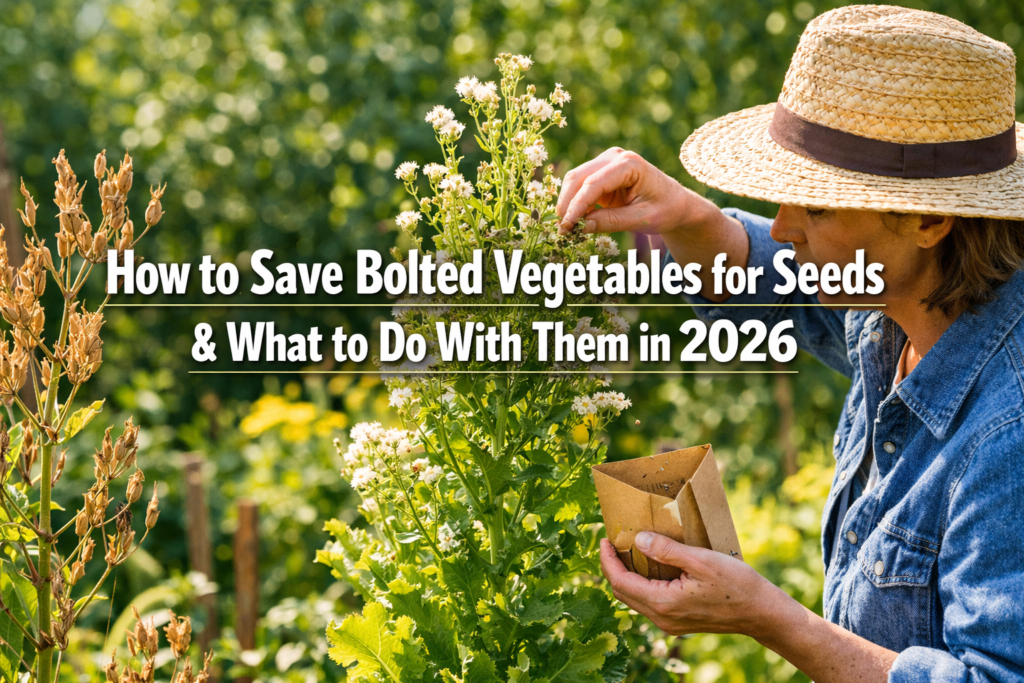
When vegetables “bolt,” they prematurely produce a flower stalk and go to seed, often signaling the end of their edible leafy or root harvest. However, this process presents a valuable opportunity for gardeners: to save seeds for future plantings. Learning how to save bolted vegetables for seeds (and what to do with them) can transform a perceived garden setback into a sustainable practice, ensuring a continuous supply of your favorite varieties year after year.
Key Takeaways
- Bolting occurs when vegetables, stressed by factors like heat or long daylight hours, shift from vegetative growth to producing flowers and seeds.
- Saving seeds from bolted vegetables is a sustainable practice, reducing costs and preserving specific plant varieties.
- Only save seeds from open-pollinated (heirloom) or self-pollinating non-hybrid varieties to ensure true-to-type offspring [4, 5].
- Allow seed heads to fully mature and dry on the plant before harvesting, indicated by a hard, darkened seed coat [2].
- Proper cleaning involves separating seeds from chaff and debris, which improves germination rates and prevents spoilage.
- Thorough drying is crucial; spread seeds thinly and stir regularly for several days until brittle [2].
- Store seeds in airtight containers with a desiccant like silica gel, in a cool, dark, and dry place for optimal longevity [2].
- Bolted plants can also attract pollinators, act as green manure, or be composted.
- Prevent bolting in future crops by selecting bolt-resistant varieties, providing adequate moisture, and offering shade during hot periods [6].
Quick Answer
To save seeds from bolted vegetables, first ensure the plant is an open-pollinated variety. Allow the seed heads to fully mature and dry on the plant, then carefully harvest them. Clean the seeds by separating them from any plant debris, thoroughly dry them for several days until brittle, and store them in a cool, dark, dry, and airtight environment, ideally with a desiccant, to preserve viability for future planting seasons.
Why Do Vegetables Bolt, and What Does It Mean for Seed Saving?
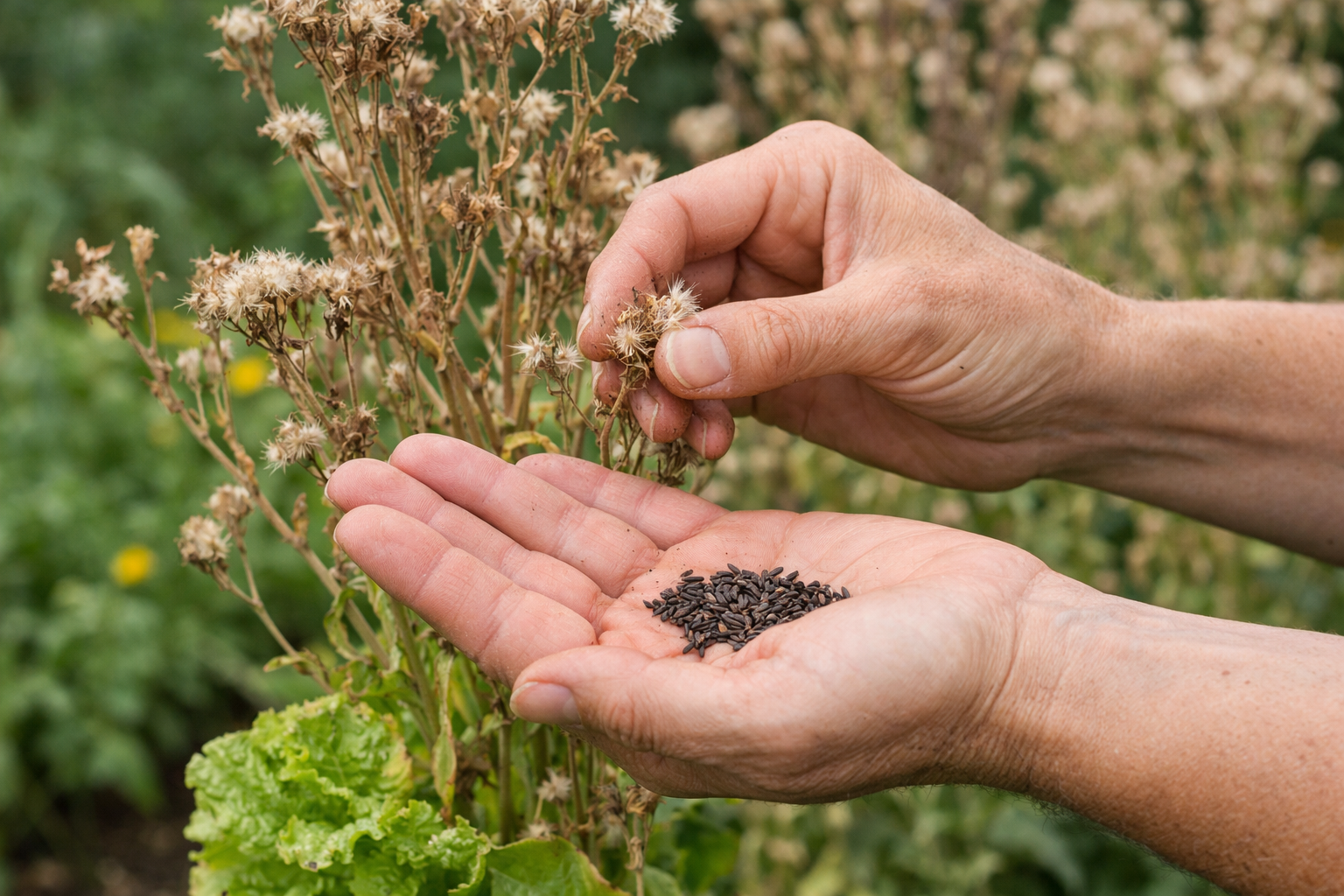
Vegetables bolt when they prematurely initiate their reproductive cycle, sending up a flower stalk and producing seeds, often in response to environmental stressors like high temperatures, long daylight hours, or insufficient moisture [1, 6]. For gardeners focused on harvesting leaves or roots, bolting signals the end of that specific plant’s edible stage as the taste can become bitter and texture woody [1]. However, understanding why and when plants bolt is crucial for successful seed saving, as it indicates the plant has shifted its energy into producing viable seeds.
Bolting is a natural process for many vegetables, particularly leafy greens and root crops, that are biennials or annuals. When conditions aren’t ideal for vegetative growth, the plant’s instinct is to reproduce before it dies.
- Environmental Triggers:
- High Temperatures: Many cool-season crops, like lettuce, spinach, and cilantro, are especially prone to bolting when temperatures rise unexpectedly or persist [1].
- Long Daylight Hours: Increasing daylight length in late spring and early summer can signal to the plant that it’s time to flower.
- Stress: Inconsistent watering, nutrient deficiencies, or overcrowding can also prompt a plant to bolt prematurely [6].
- Implications for Seed Saving:
- Focus on Reproduction: Once a plant bolts, its primary goal becomes seed production, making it an ideal candidate for seed saving.
- Taste vs. Seeds: While the edible parts of bolted vegetables often degrade in quality, the seeds themselves are developing and maturing.
- Timing: For seed saving, you want the plant to bolt so the seeds can form. It’s not a failure, but a necessary step for seed collection.
It is important to note that not all bolted plants are suitable for seed saving if your goal is to grow the same type of vegetable again. If you’re saving seeds, choose open-pollinated (often labeled as heirloom) varieties over hybrids. Hybrid seeds (F1 varieties) typically do not produce plants identical to their parents, meaning you won’t get the same quality or characteristics from saved seeds [4, 7]. For optimal results, select healthy, vigorous plants that bolted for environmental reasons rather than disease, as this ensures strong genetics for your future crops.
How to Save Bolted Vegetables for Seeds (and What to Do With Them)?
To successfully save seeds from bolted vegetables, you need to allow the seeds to fully mature on the plant, harvest them carefully, and then clean and dry them properly before storage. This process, while requiring patience, ensures viable seeds for the next growing season.
1. Identify Suitable Plants for Seed Saving
Before beginning, confirm the bolted vegetable is an open-pollinated (non-hybrid) variety [4]. Lettuce and many leafy greens are excellent choices for beginners, as they are often self-pollinating and produce true-to-type offspring [5]. Avoid saving seeds from hybrid (F1) plants, as their offspring will not consistently resemble the parent plant [4].
- Examples of Good Candidates for Seed Saving from Bolted Plants:
- Lettuce: Generally self-pollinating, easy to save [5].
- Spinach: Can cross-pollinate, so isolate varieties if saving multiple types.
- Cilantro/Coriander: Easy to save, coriander is the seed of cilantro.
- Radishes: Allow roots to continue growing even as the plant bolts.
- Arugula, Mustard Greens: Good candidates for seed saving.
- Beets/Chard: Biennials that bolt in their second year; good for seed saving.
2. Allow Seeds to Fully Mature on the Plant
This is the most critical step for viable seeds. Do not rush to harvest. The seeds need to develop completely and dry out on the plant.
- Visual Cues for Maturity:
- Color Change: Seeds often change color, becoming darker, harder, or more brittle when mature [2].
- Dryness: The seed pods or heads will turn brown and dry, feeling crisp to the touch.
- Papery Husks: For many leafy greens, fluffy white or tan “parachutes” (similar to dandelion seeds) will appear around the seed heads, indicating maturity [5].
- Sound: Shaking a dry seed head might produce a rattling sound as the mature seeds move inside.
- Protection (Optional but Recommended): For leafy greens like lettuce, you can place a paper bag over the maturing seed heads. This helps catch any seeds that drop prematurely and protects them from birds or strong winds [4]. Secure the bag loosely to allow for air circulation.
3. Harvesting the Mature Seeds
Once the seed heads are fully dry and mature, it’s time to collect them.
- Timing: Harvest on a dry, non-windy day, ideally in the morning after dew has evaporated.
- Method:
- Cut the entire seed stalk or individual seed heads from the plant.
- For plants with many small seeds (like lettuce), gently shake the stalks inside a bucket or over a tarp to dislodge the seeds.
- For larger seeds or pods, individually pick them from the dried plants.
4. Cleaning the Seeds
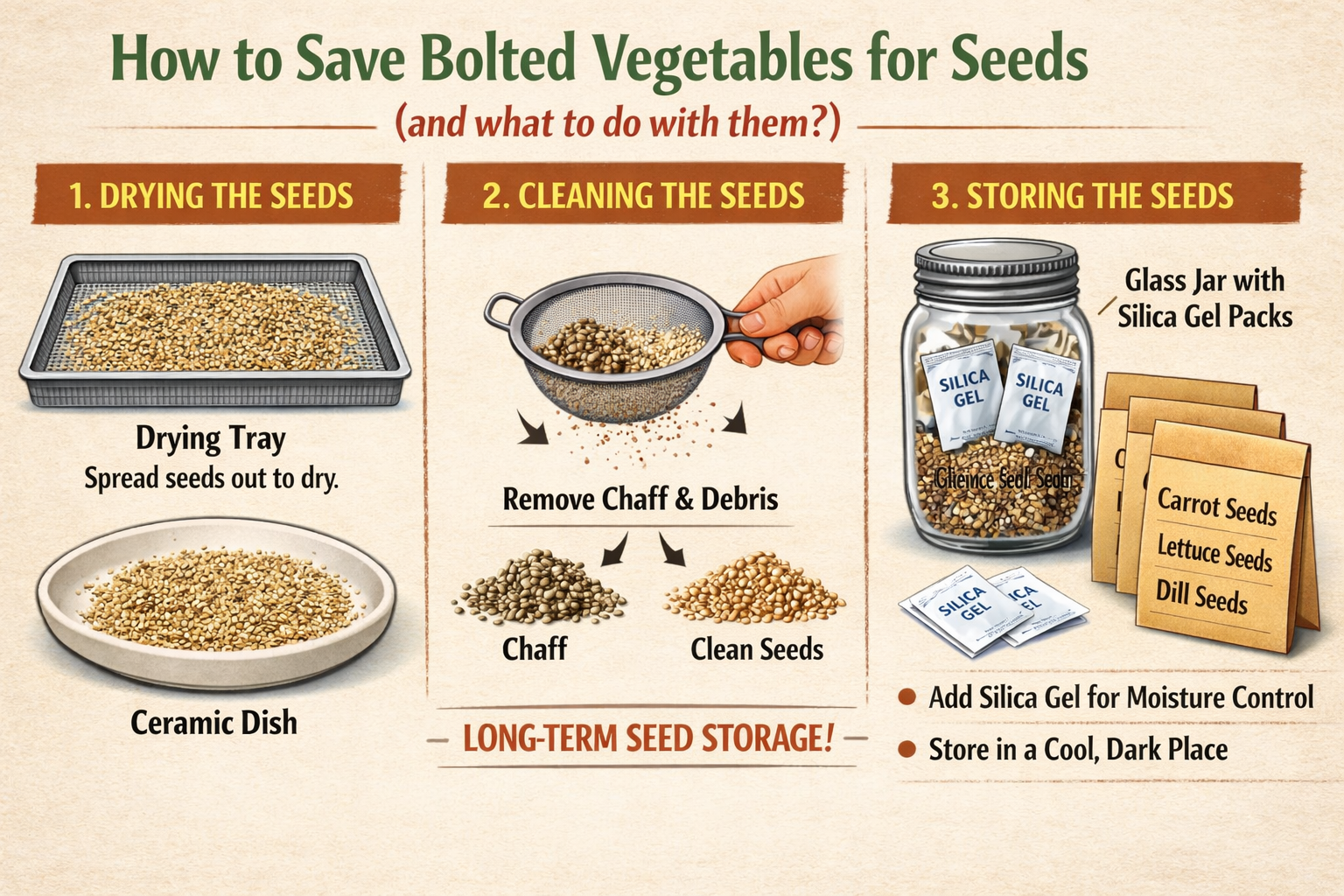
Cleaning involves separating the viable seeds from chaff (plant debris), dirt, and underdeveloped seeds. This improves storage life and germination rates [2].
- Methods:
- Winnowing: Pour seeds from one container to another in front of a gentle fan or on a slightly breezy day. The lighter chaff will blow away, leaving the heavier seeds behind.
- Sifting: Use screens or sieves with different mesh sizes to separate seeds from larger or smaller debris.
- Hand Picking: For larger seeds, simply pick out any unwanted material by hand.
| Cleaning Method | Best For | Pros | Cons |
|---|---|---|---|
| Winnowing | Small, light seeds | Quick for large quantities, separates by weight | Requires a breezy/fanned area, can lose some seeds |
| Sifting/Screens | Varied seed sizes | Good for different debris sizes, versatile | Can be time-consuming for large amounts |
| Hand Picking | Large seeds, small batches | Precise, minimal seed loss | Very time-consuming |
5. Drying the Seeds Thoroughly
Proper drying prevents mold and spoilage during storage, ensuring the seeds remain viable. This is a critical step [2].
- Process:
- Spread the cleaned seeds as thinly as possible on a flat surface, such as a ceramic plate, glass dish, or fine mesh screen [2].
- Place them in a warm, dry area with good air circulation, out of direct sunlight.
- Stir the seeds several times a day for at least 1-2 weeks, or until they are completely dry and brittle. They should snap, not bend.
- Test for Dryness: Try to dent a seed with your fingernail. If it dents, it needs more drying.
6. Storing the Cleaned and Dried Seeds
Correct storage maximizes the longevity and germination rate of your saved seeds [2].
- Containers: Use airtight containers such as glass jars, sealed plastic containers, or Mylar bags. Place paper envelopes with seeds inside these containers to allow for labeling [2].
- Desiccant: Include a small packet of silica gel or a tablespoon of powdered milk (wrapped in a tissue) inside the airtight container to absorb any residual moisture [2].
- Conditions: Store seeds in a cool, dark, and dry location. A refrigerator or freezer (if properly dried first) can extend viability significantly [2].
- Labeling: Label each packet with the vegetable type, variety, and date of harvest. This helps track germination rates over time and ensures you know what you’re planting.
What Can You Do with Bolted Vegetables Besides Saving Seeds?
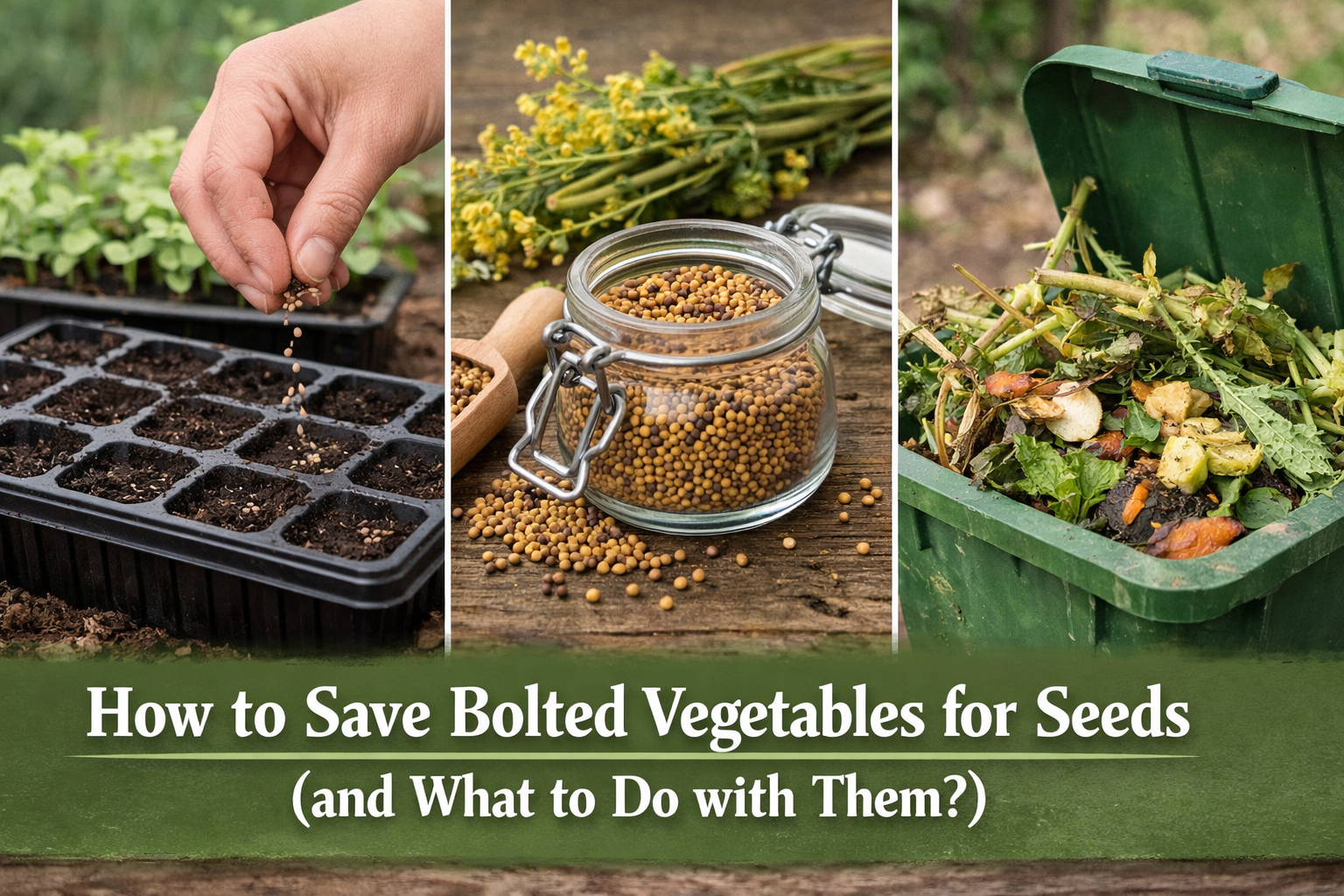
Beyond collecting seeds, bolted vegetables still offer value to your garden ecosystem and can contribute to sustainable gardening practices. Understanding these alternatives helps maximize the utility of every plant.
Attracting Pollinators and Beneficial Insects
Allowing some bolted plants to flower can significantly benefit your garden by attracting vital pollinators like bees and butterflies, as well as beneficial insects that prey on pests. For instance, the small flowers of bolted carrots, cilantro, or dill are particularly attractive to predatory wasps, hoverflies, and ladybugs. This natural pest control can reduce the need for chemical interventions, contributing to a healthier garden. This is especially useful in small space vegetable gardening where every plant can play multiple roles.
- Biodiversity Boost: Bolted flowers introduce floral diversity, which supports a wider range of insect life.
- Natural Pest Control: Many beneficial insects are attracted to the nectar and pollen of bolted vegetables, and in turn, will help manage pest populations.
- Aesthetic Appeal: The flowering stalks can add an unexpected architectural element and beauty to your garden.
Green Manure or Compost Contribution
If you don’t wish to save seeds or attract pollinators, bolted plants can be integrated back into your garden’s nutrient cycle as green manure or compost.
- Green Manure:
- Chop the bolted plant stalks and leaves and incorporate them directly into the soil.
- This adds organic matter, improving soil structure, water retention, and nutrient content.
- It also suppresses weeds and can help reduce soil erosion.
- Ensure the plant has not fully gone to seed to avoid future weed problems if you are incorporating directly into the soil.
- Compost:
- Add bolted plants (excluding any that show signs of disease) to your compost pile.
- They contribute valuable “green” material, rich in nitrogen, which helps balance the “brown” carbon materials in the compost.
- This transforms what might seem like a wasted plant into nutrient-rich compost for future garden beds.
Foraging and Culinary Uses (with caution)
While the taste and texture of many bolted vegetables degrade significantly, some parts can still be used, albeit with caution.
- Seeds as Spices: The seeds of bolted cilantro become coriander, a popular spice. Bolted mustard greens produce edible mustard seeds. These can be harvested, dried, and used in cooking.
- Young Flowers: Some young bolted flowers, such as those from arugula or radish, can be edible and add a peppery kick to salads. Always taste a small amount first, as bitterness can vary greatly.
- Stems and Leaves: Generally, once a plant bolts, the leaves become bitter and tough. However, some gardeners might still use them in small quantities in cooked dishes where bitterness is less noticeable or desired, such as stir-fries or braises.
Self-Sowing for Volunteer Seedlings
Certain bolted plants, particularly leafy greens like lettuce and arugula, are excellent at self-sowing. If left undisturbed, their mature seeds will naturally fall to the ground and germinate when conditions are right, often producing “volunteer” seedlings in the following season or even later in the same year [5].
- Reduced Effort: This is a low-effort way to get new plants without direct sowing.
- Natural Selection: Volunteer plants are often well-adapted to your specific garden’s microclimate.
- Management: You may need to thin volunteer seedlings to prevent overcrowding, particularly in small space gardens.
By embracing these alternative uses, you can ensure that even bolted vegetables contribute positively to your garden, enhancing sustainability and reducing waste. For more tips on managing your garden effectively, especially when dealing with common challenges, refer to guides on beginner mistakes in small space gardening 2026.
Frequently Asked Questions
Can you eat bolted vegetables?
While edible, bolted vegetables like lettuce or spinach often become bitter and develop tough, woody textures due to the change in plant chemistry as they produce seeds. Some bolted flowers (e.g., arugula, radish) and seeds (e.g., cilantro/coriander, mustard) can still be consumed [4].
How long does it take for bolted vegetables to produce seeds?
The time it takes varies by plant, but generally, after bolting, it can take anywhere from a few weeks to a couple of months for seeds to fully mature on the plant, depending on the vegetable and climate conditions.
Do bolted plants produce viable seeds?
Yes, if they are open-pollinated varieties and the seeds are allowed to fully mature and dry on the plant, then harvested and stored correctly, bolted plants can produce viable seeds [4, 2]. Hybrid plant seeds will not consistently produce true-to-type offspring [4].
What happens if I don’t harvest the seeds from bolted vegetables?
If you don’t harvest the seeds, they will eventually fall to the ground. Some may germinate naturally (self-sow) if conditions are favorable, leading to volunteer seedlings. Others may be eaten by wildlife or simply decompose [5].
How do I prevent vegetables from bolting?
Preventing bolting involves choosing bolt-resistant varieties, providing consistent moisture, offering shade during hot periods, and planting cool-season crops early enough in spring or late enough in fall to avoid extreme heat and long daylight hours [6].
Can I save seeds from any bolted vegetable?
You can save seeds from many bolted vegetables, but only save seeds from open-pollinated (non-hybrid) varieties if you want the offspring to be true to the parent plant [4]. Self-pollinating plants like lettuce are good choices [5].
What is the best way to store saved seeds?
Store thoroughly dried, cleaned seeds in airtight containers (like glass jars) with a desiccant (e.g., silica gel) in a cool, dark, and dry location such as a refrigerator or freezer. Label with the variety and date [2].
Conclusion
Saving seeds from bolted vegetables is a rewarding and sustainable practice that allows gardeners to become more self-sufficient and preserve cherished plant varieties. While bolting may initially seem like a setback for your harvest, it’s a natural progression that, with careful attention, yields the gift of future crops. By allowing seeds to mature on the plant, diligently harvesting, cleaning, and properly storing them, you can ensure a continuous cycle of growth in your garden for years to come. Remember to focus on open-pollinated varieties for consistent results and explore the other beneficial uses for bolted plants, from attracting pollinators to enriching your compost. Embrace bolting not as an end, but as a new beginning for your garden’s potential.
References
[1] Bolting Explained And How To Prevent It – https://seedsnsuch.com/blogs/gardeners-greenroom/bolting-explained-and-how-to-prevent-it
[2] libguides.utk.edu – https://libguides.utk.edu/c.php?g=843122&p=6025947
[3] Watch – https://www.youtube.com/watch?v=gR3se4B1_Po
[4] March 18th 2017 – https://www.gardeninginla.net/blog/march-18th-2017
[5] Saving Seed Tips – https://ucanr.edu/blog/napa-master-gardener-column/article/saving-seed-tips
[6] Ways To Prevent Vegetables From Bolting – https://www.masterclass.com/articles/ways-to-prevent-vegetables-from-bolting
[7] How To Save Heirloom Seeds For Planting – https://leafrootfruit.substack.com/p/how-to-save-heirloom-seeds-for-planting
Tags: