Indoor Vertical Gardening
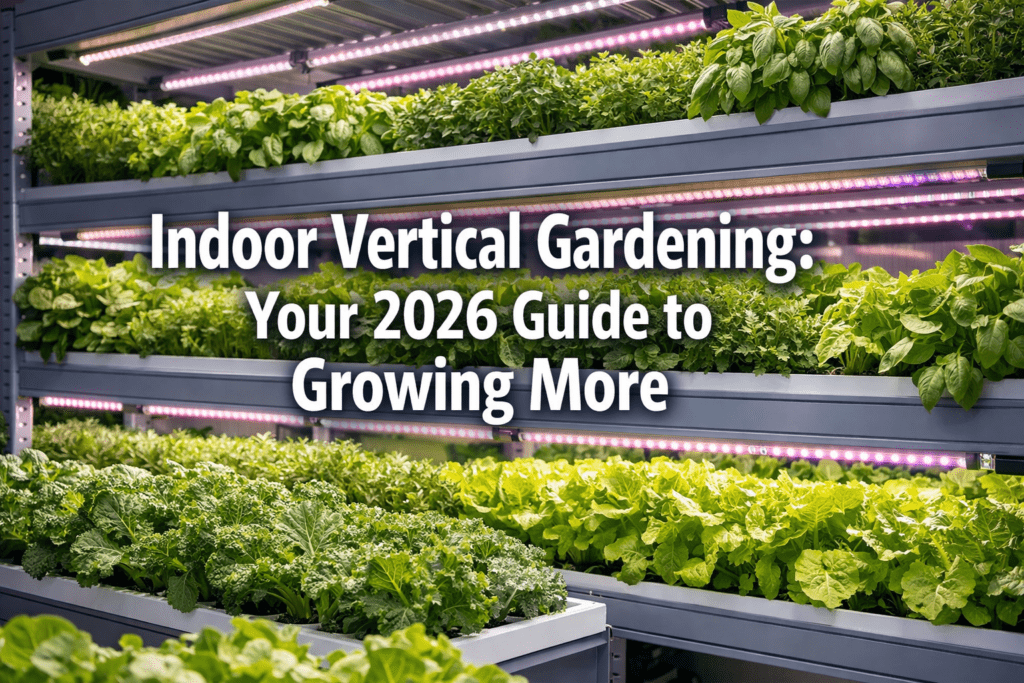
Quick Answer: Indoor vertical gardening involves growing plants in vertically stacked layers or on a vertical surface indoors, maximizing yield in minimal space, often using soilless growing techniques like hydroponics or aeroponics. This innovative method allows individuals to cultivate fresh produce, herbs, and flowers year-round, regardless of climate or available outdoor area, making it ideal for urban dwellers and those seeking sustainable home food production in 2026.
Key Takeaways
- Indoor vertical gardening conserves significant space, perfect for small homes and apartments.
- It enables year-round cultivation, offering fresh produce irrespective of outdoor seasons.
- Water usage is dramatically reduced compared to traditional gardening methods, often by over 90%.
- Common systems include hydroponic towers, wall-mounted pocket planters, and stacked container gardens.
- Lighting (especially LED grow lights) and nutrient delivery are crucial for success in soilless systems.
- Many popular plants like leafy greens, herbs, and small fruits thrive in indoor vertical setups.
- Starting costs vary, but DIY options can be budget-friendly, while advanced systems require more investment.
- Proper plant selection, environmental control, and pest management are vital for a successful harvest.
What is Indoor Vertical Gardening and Why is it Growing?
Indoor vertical gardening is a method of growing plants in vertically stacked layers or integrated into a vertical structure within an indoor environment. This approach is gaining immense popularity in 2026 because it addresses the critical challenges of space scarcity and the desire for fresh, locally grown food, particularly in urban settings. By using height rather than horizontal area, this technique allows for a significant increase in crop production per square foot.
This gardening style often employs soilless growing methods like hydroponics (where roots are submerged in nutrient-rich water) or aeroponics (where roots are misted with nutrient solution), though some systems can use a soil-based medium. The controlled indoor environment shields plants from pests, diseases, and adverse weather conditions, leading to more consistent and often higher yields. For city dwellers and those with limited outdoor space, vertical gardening basics provide a practical way to engage with gardening and produce their own food. Choosing the right system depends on available space and desired plant types. For instance, a small wall-mounted unit is perfect for herbs, while a larger tower might suit a variety of vegetables.
How Do Indoor Vertical Gardening Systems Work?
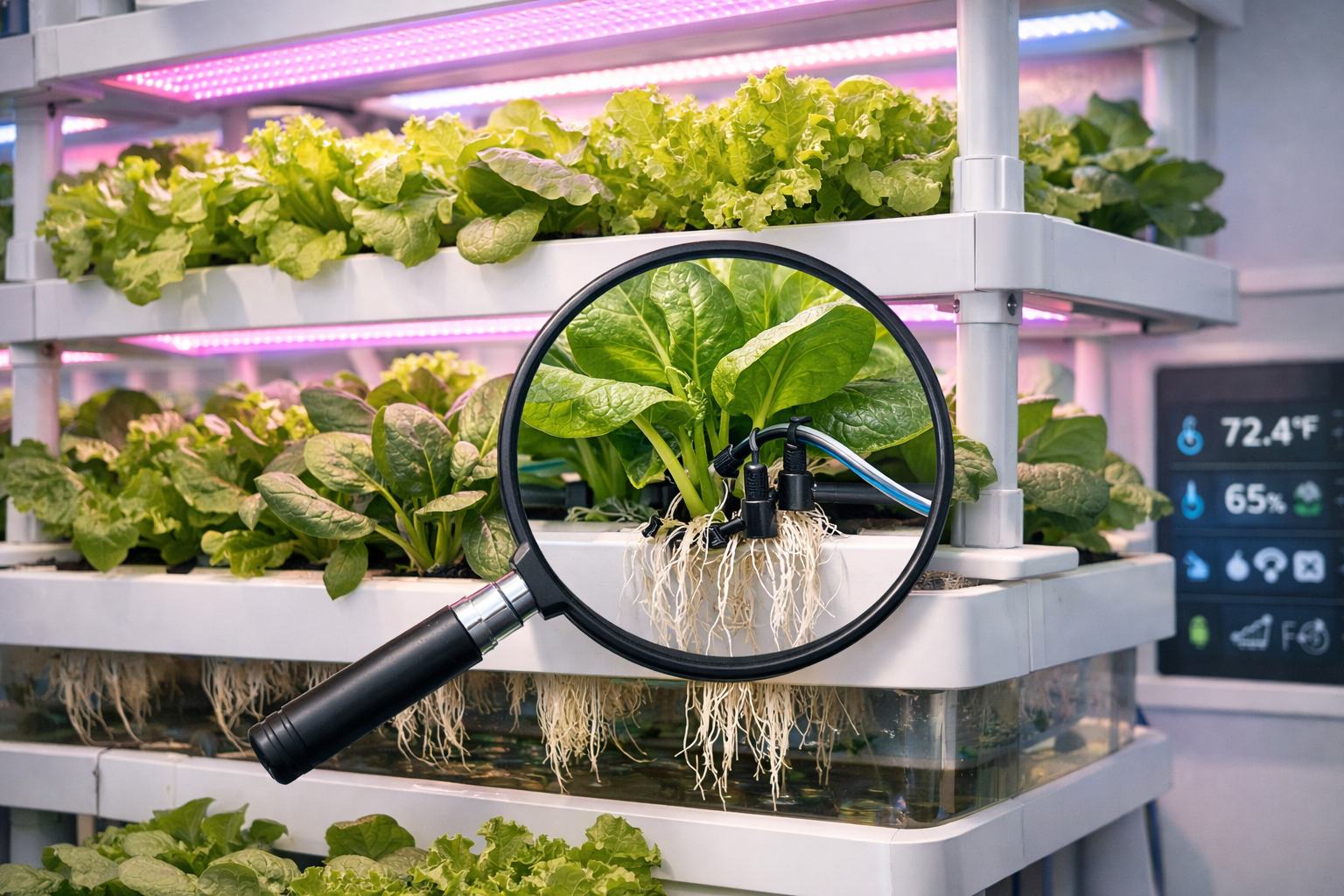
Indoor vertical gardening systems primarily work by optimizing space and delivering precise amounts of water, nutrients, and light directly to plants, often without soil. These systems typically consist of a structural frame, individual growing modules or pockets, a water reservoir, a pump, and artificial lighting, most commonly LED grow lights. The water and nutrient solution is circulated from the reservoir through the system, either constantly bathing the roots (hydroponics) or periodically misting them (aeroponics), and then drains back for reuse.
Key Components and Their Functions:
- Structure: This can be a tower, wall-mounted panel, or tiered shelf system that holds plants vertically.
- Growing Medium: While soil can be used, soilless mediums like rockwool, coco coir, or clay pebbles are common, offering aeration and moisture retention.
- Water Reservoir & Pump: Holds the nutrient solution and circulates it throughout the system.
- Nutrient Delivery System: Pipes, tubes, or wicks that carry the nutrient solution to each plant.
- Lighting: LED grow lights are essential to mimic sunlight and provide the full spectrum of light plants need for photosynthesis, especially for indoor vegetable gardening.
- Environmental Controls (Optional but Recommended): Sensors and controllers for temperature, humidity, and pH levels ensure optimal growing conditions.
For example, in a hydroponic tower, water mixed with specialized plant nutrients is pumped from a base reservoir to the top of the tower. Gravity then allows this solution to trickle down through the plant roots in each stacked pot, providing hydration and sustenance before returning to the reservoir. This closed-loop system significantly reduces water waste. Consider a basic tiered setup if you’re a beginner, as it’s often simpler to manage than complex hydroponic systems.
What Are the Benefits of Indoor Vertical Gardening?
Indoor vertical gardening offers numerous advantages, from maximizing limited space and enabling year-round harvests to significant resource conservation and greater control over growing conditions. These benefits make it an attractive option for both hobbyists and those seeking more sustainable living in 2026.
Primary Benefits:
- Space Efficiency: This is perhaps the most significant benefit. By growing upwards, you can cultivate a substantial amount of produce in a footprint no larger than a small bookshelf. This is particularly valuable for indoor gardening for small homes & apartments.
- Year-Round Growing: Indoor environments are protected from external weather, allowing for consistent production regardless of seasons or climate. This means fresh greens in winter and berries in spring, all from your home.
- Reduced Water Usage: Hydroponic and aeroponic systems recirculate water, often using 70-90% less water than traditional soil-based gardening, as cited by numerous agricultural studies.
- Faster Growth Rates: Plants in controlled indoor vertical gardens often grow faster due to optimized light, nutrient delivery, and environmental conditions.
- Fewer Pests and Diseases: The contained environment reduces exposure to outdoor pests and soil-borne diseases, minimizing the need for pesticides.
- Higher Yields: The combination of optimized conditions and dense planting can lead to greater output per plant and per square foot.
- Reduced Transportation Costs & Carbon Footprint: Growing food at home eliminates the need for long-distance transportation from farm to table, reducing fuel consumption and emissions.
- Freshness and Nutritional Value: Harvesting produce directly from your indoor garden ensures peak freshness and often higher nutrient retention compared to store-bought produce.
Choosing indoor vertical gardening means you can enjoy fresh, pesticide-free food right at your fingertips, enhancing your diet and connection to nature, even in the busiest urban landscapes. For specific plant suggestions, refer to our guide on best vegetables for small space gardening.
What Can You Grow in an Indoor Vertical Garden?
You can grow a surprising variety of plants in an indoor vertical garden, especially those with compact growth habits or shallow root systems, making it a versatile option for home growers. The success largely depends on choosing the right plants for your specific system and ensuring adequate light and nutrients.
Popular Choices for Indoor Vertical Gardening:
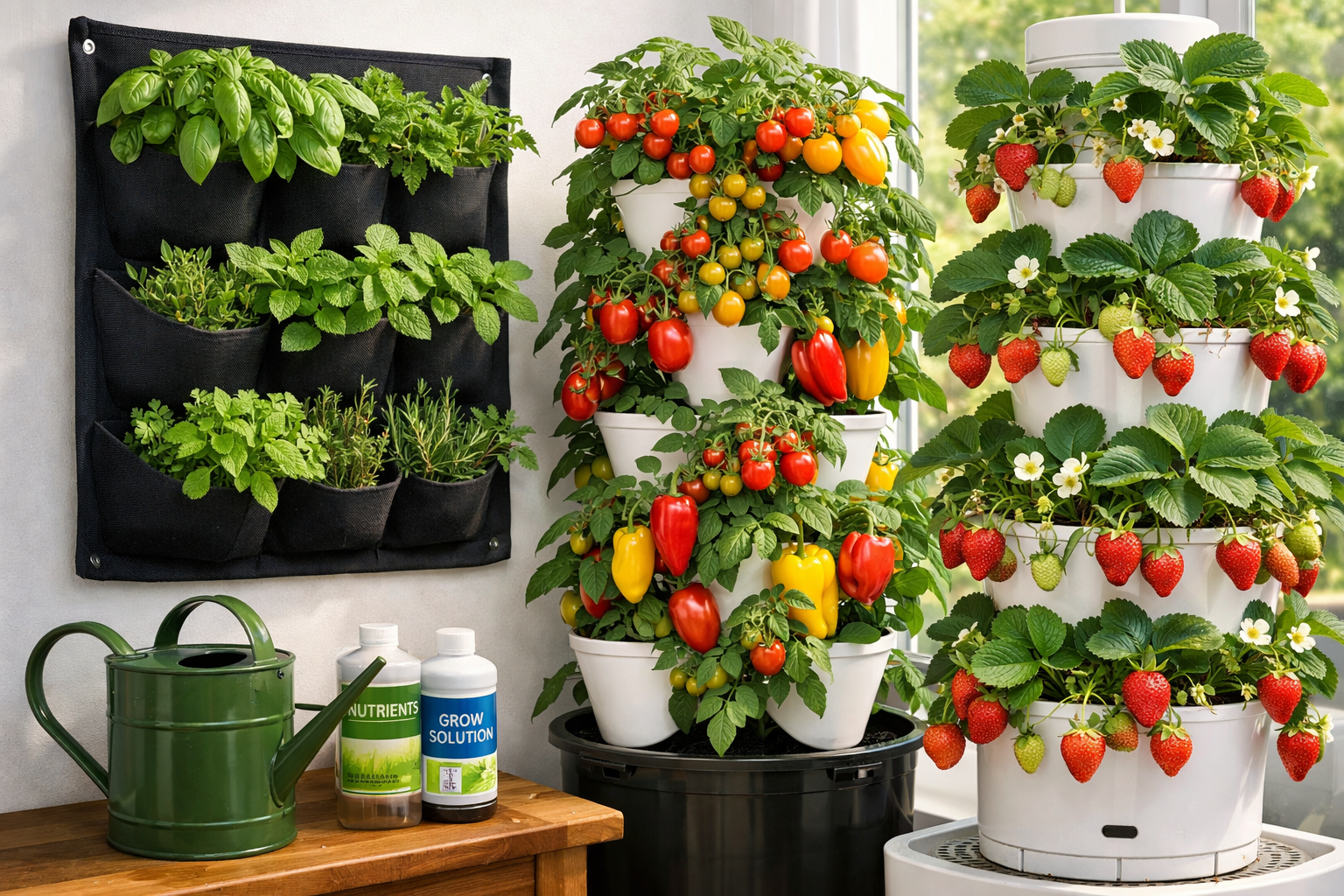
- Leafy Greens: Lettuce (romaine, butterhead, loose-leaf), spinach, kale, arugula, and Swiss chard are excellent choices due to their fast growth and relatively shallow root systems.
- Herbs: Basil, mint, parsley, cilantro, chives, oregano, thyme, and rosemary thrive in vertical setups. Growing herbs indoors is one of the most popular and rewarding aspects of vertical gardening.
- Strawberries: These berries are well-suited for cascading vertical systems, where their fruit can hang freely.
- Small Peppers: Compact varieties of bell peppers and chili peppers can be successfully grown, though they require more light.
- Cherry Tomatoes: Bush or determinate varieties that don’t vine excessively are a good fit for vertical spaces.
- Microgreens: These tiny, nutrient-packed greens are perfect for small trays or shallow tiers within a vertical system.
- Flowers: Edible flowers like nasturtiums or pansies, and decorative options, can add beauty and functionality.
When selecting plants, consider their mature size and light requirements. Plants that need a lot of sunlight, like tomatoes, will require more powerful grow lights and careful placement. Conversely, leafy greens and herbs are more forgiving and can often thrive with moderate light. Avoid large root vegetables like carrots or potatoes, or sprawling vining plants like pumpkins, unless you have a very specialized and large-scale vertical system.
How to Set Up Your Own Indoor Vertical Garden
Setting up your own indoor vertical garden involves selecting a system, choosing your plants, and then assembling the components to create a thriving environment. This process can be broken down into manageable steps, making it accessible even for beginners.
Step-by-Step Setup Guide:
Choose Your System:
- Tiered Shelving: Simple and often uses soil or coco coir. Good for beginners.
- Wall-Mounted Pockets/Panels: Excellent for herbs and leafy greens; can be soil-based or hydroponic.
- Vertical Towers (Hydroponic/Aeroponic): More advanced, but highly efficient for leafy greens, strawberries, and some compact vegetables.
- Decision Rule: Choose tiered shelving if you prefer soil and simplicity; opt for a vertical tower if maximizing yield and water efficiency are priorities. For ultimate guide to small space gardening for beginners, start with simpler setups.
Select Your Location: Choose an indoor spot with stable temperatures (ideally 65-75°F or 18-24°C) and access to an electrical outlet for lights and pumps.
Gather Supplies:
- Vertical garden structure
- Growing medium (e.g., rockwool, coco coir, potting mix)
- Seeds or young plant starts
- LED grow lights (full-spectrum is best)
- Water reservoir and pump (for hydroponic/aeroponic systems)
- Hydroponic nutrients (if applicable)
- pH testing kit and adjusters
- Timer for lights and pump
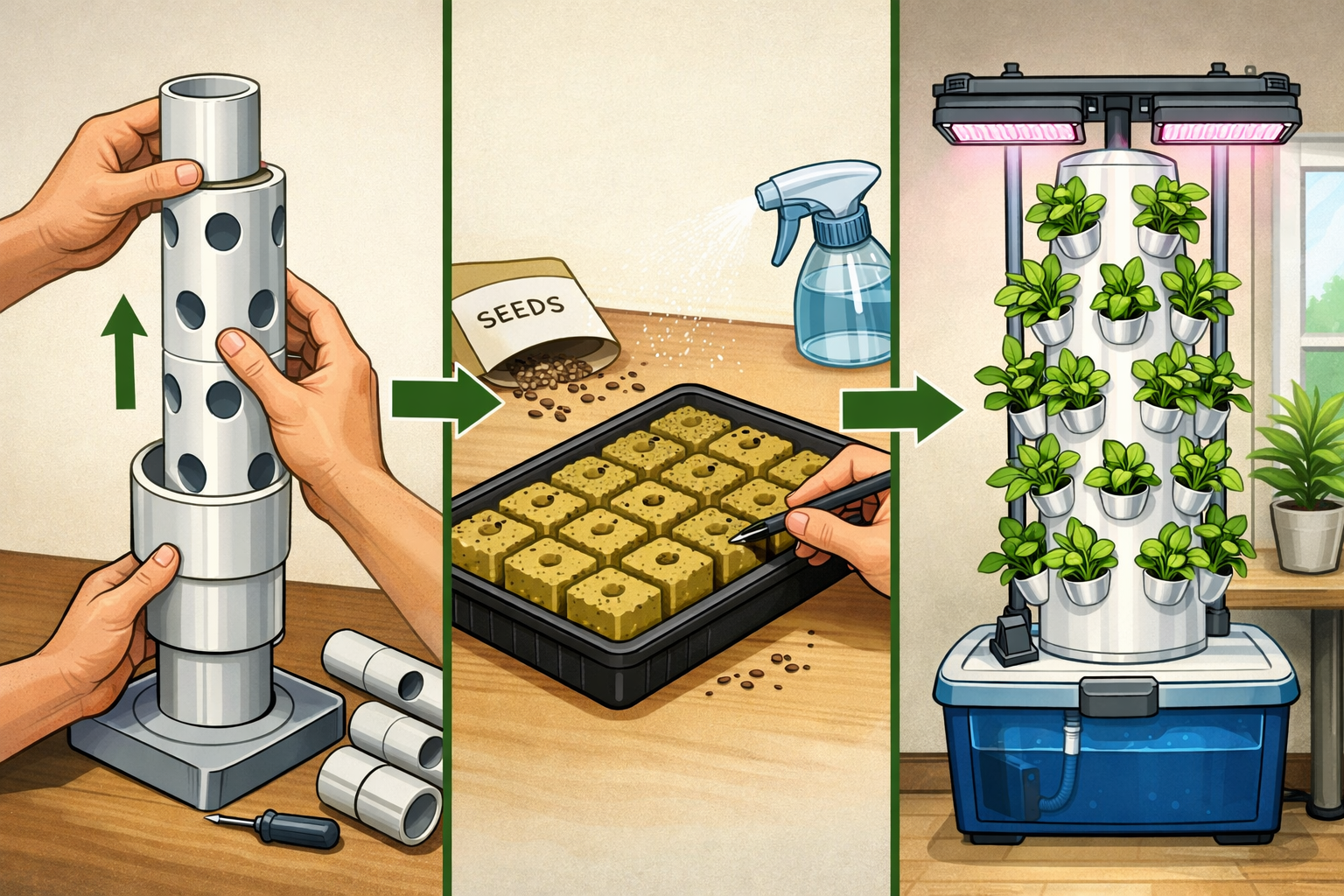
Assemble the System: Follow the manufacturer’s instructions for your chosen vertical garden. For DIY projects, ensure stability and proper water flow (if using hydroponics).
Prepare Plants & Growing Medium:
- Seeds: Start seeds in a propagation tray with rockwool cubes or seed-starting mix.
- Transplants: If using young plants, gently transfer them into your system’s growing modules with your chosen medium.
- Common Mistake: Overcrowding plants; give each plant adequate space to grow and receive light.
Install Lighting: Position grow lights according to plant needs (typically 6-12 inches above plant tops for most LEDs). Use a timer to provide 12-16 hours of light per day, mimicking natural daylight cycles.
Add Water and Nutrients (for hydroponic/aeroponic systems):
- Fill the reservoir with water and add hydroponic nutrients according to the product’s instructions.
- Test and adjust the pH to the optimal range for your plants (usually 5.5-6.5).
- Run the pump to ensure proper circulation.
Monitor and Maintain: Regularly check water levels, nutrient concentrations, and pH. Observe plants for signs of growth, deficiencies, or pests. Adjust light cycles and nutrient delivery as needed.
Essential Tips for Successful Indoor Vertical Gardening in 2026
Achieving a flourishing indoor vertical garden in 2026 requires attention to a few key environmental factors and consistent maintenance. By focusing on light, nutrients, water, and air circulation, you can optimize your plants’ growth and health.
- Lighting is Paramount: Since natural sunlight is often insufficient indoors, investing in good quality, full-spectrum LED grow lights is non-negotiable. Plants need 12-16 hours of light daily. Position lights at the correct distance to prevent stretching or burning. Consider a light meter if you’re serious about optimizing light intensity.
- Nutrient Management is Key: For soilless systems, plants receive all their nutrients from the water solution. Use hydroponic-specific nutrients, not standard garden fertilizers. Regularly test and adjust the pH of your nutrient solution, as this directly affects nutrient uptake. Flush your system periodically to prevent nutrient buildup.
- Water Quality Matters: Use filtered water if your tap water is very hard or heavily chlorinated. Hard water can lead to mineral buildup and affect pH stability. Ensure your reservoir is clean to prevent algae or bacterial growth.
- Air Circulation Prevents Problems: Good airflow helps strengthen stems, prevents fungal diseases, and aids in plant respiration. Use a small oscillating fan near your indoor vertical garden to provide gentle air movement.
- Pest and Disease Prevention: While indoor gardens are less prone to pests, they aren’t immune. Regularly inspect your plants for early signs of issues. Maintain cleanliness and isolate any new plants before introducing them to your system.
- Plant Selection for Success: Choose plants that are well-suited to vertical systems and your specific growing conditions (e.g., light availability, temperature). For maximizing yield in smaller spaces, refer to guides on best vegetables for small space gardening.
- Regular Monitoring: Consistent observation is your best tool. Look for discoloration, wilting, or unusual growth patterns, which can signal nutrient deficiencies, pest issues, or environmental imbalances.
By adhering to these tips, your indoor vertical garden can provide a steady supply of fresh, healthy produce throughout the year.
Common Challenges and Troubleshooting in Indoor Vertical Gardening
While rewarding, indoor vertical gardening can present some challenges, particularly for beginners. Understanding common issues and how to troubleshoot them effectively will ensure your plants remain healthy and productive.
Common Challenges & Solutions:
Nutrient Deficiencies:
- Problem: Yellowing leaves, stunted growth, unusual leaf coloration.
- Cause: Incorrect nutrient concentration, wrong nutrient type, or improper pH causing nutrient lockout.
- Solution: Regularly test nutrient solution pH and electrical conductivity (EC) or parts per million (PPM). Adjust pH to the optimal range (5.5-6.5 for most plants). Ensure you’re using a complete hydroponic nutrient formula designed for your plant’s growth stage.
Algae Growth:
- Problem: Green slime in the reservoir, on growing media, or roots.
- Cause: Light exposure to the nutrient solution or growing media.
- Solution: Ensure your reservoir is opaque and light-tight. Cover any exposed growing media with a light-blocking material. Algae compete for nutrients and oxygen.
Pest Infestations:
- Problem: Small insects (aphids, fungus gnats, spider mites), sticky residue, damaged leaves.
- Cause: Pests introduced on new plants, soil, or even through open windows.
- Solution: Inspect new plants thoroughly. Use sticky traps for flying insects. For active infestations, try insecticidal soap or neem oil, or introduce beneficial insects like ladybugs. Good balcony garden maintenance tips also apply to indoor setups.
Root Rot:
- Problem: Roots turn brown, mushy, and smell foul; plants wilt.
- Cause: Lack of oxygen in the root zone, often due to stagnant water or insufficient aeration.
- Solution: Ensure adequate aeration in your reservoir (e.g., air stone and pump). Don’t let roots sit in stagnant water. Maintain correct water temperatures (below 75°F/24°C).
Light Burn or Stretching:
- Problem: Leaves look bleached or scorched (burn), or stems are long and spindly (stretching).
- Cause: Lights too close/intense (burn) or too far/weak (stretching).
- Solution: Adjust light distance based on plant type and light intensity. Use a light meter to measure PPFD (Photosynthetic Photon Flux Density) if precise control is needed.
Pump or System Malfunctions:
- Problem: Water not circulating, drips, or leaks.
- Cause: Clogged pump, kinked tubing, loose connections.
- Solution: Regularly check and clean your pump. Inspect all tubing and connections for blockages or leaks. Have spare parts like tubing and small pumps on hand for quick repairs.
By proactively monitoring your system and knowing how to address these common issues, you can minimize setbacks and maintain a thriving indoor vertical garden.
Conclusion
Indoor vertical gardening represents a powerful solution for cultivating fresh produce in an increasingly urbanized world, allowing us to grow more in less space, year-round. From simple wall-mounted units to advanced hydroponic towers, the methods are diverse, but the underlying principles of optimized light, nutrient delivery, and environmental control remain constant. While challenges may arise, armed with the right knowledge and a bit of dedication, anyone can transform a small corner of their home into a productive, green oasis.
Actionable Next Steps:
- Assess Your Space: Determine the vertical and horizontal space you can dedicate to your garden.
- Choose a System: Research different vertical gardening systems and select one that aligns with your space, budget, and desired complexity.
- Select Your First Plants: Start with easy-to-grow leafy greens or herbs to build confidence.
- Invest in Quality Lighting: Secure appropriate LED grow lights for your chosen plants and system.
- Monitor Consistently: Regularly check your plants, water levels, pH, and nutrient solution to catch issues early.
Embrace indoor vertical gardening in 2026 and experience the joy of growing your own food, contributing to a more sustainable lifestyle, and enjoying fresh flavors right from your kitchen.
FAQ
Q: Is indoor vertical gardening expensive to start?
A: Initial costs vary; simple soil-based systems can be budget-friendly, while advanced hydroponic setups with automated lighting and pumps require more upfront investment. Many DIY options are available to reduce costs.
Q: How much light do plants need in an indoor vertical garden?
A: Most plants in indoor vertical gardens require 12-16 hours of full-spectrum LED light daily to mimic natural sunlight for optimal photosynthesis and growth.
Q: Can I use regular potting soil in a vertical garden?
A: Yes, some tiered or pocket vertical garden systems are designed for potting soil. However, many efficient vertical systems use soilless mediums like rockwool or coco coir, especially for hydroponic setups.
Q: How often do I need to water an indoor vertical garden?
A: For hydroponic systems, water/nutrient solution is continuously or periodically circulated. For soil-based systems, watering frequency depends on plant needs, growing medium, and environmental factors, similar to traditional container gardening.
Q: What are the best plants for beginners in indoor vertical gardening?
A: Leafy greens like lettuce, spinach, and kale, along with common herbs such as basil, mint, and parsley, are excellent choices for beginners due to their fast growth and relatively low maintenance.
Q: Do indoor vertical gardens attract pests?
A: While less prone than outdoor gardens, indoor vertical gardens can still attract pests. Good sanitation, isolating new plants, and regular inspection are key to prevention.
Q: How much space does an indoor vertical garden require?
A: An indoor vertical garden can fit into very small spaces, from a narrow wall section to a corner. The primary benefit is using vertical height, meaning a small floor footprint can yield significant produce.
Q: Do I need a green thumb to start indoor vertical gardening?
A: No, indoor vertical gardening is accessible to beginners. With the right setup and attention to basic plant care, anyone can achieve success and enjoy fresh produce.
Q: How often should I change the nutrient solution in a hydroponic vertical garden?
A: It’s generally recommended to change the nutrient solution every 1-2 weeks to ensure plants receive fresh, balanced nutrients and to prevent nutrient imbalances or buildup.