Indoor Plant Watering Schedule Trackers: Methods Compared (2026)
Quick Answer: Effective indoor plant watering schedule tracker methods range from simple analog notes to advanced digital applications, each offering unique advantages for managing plant hydration, ultimately preventing both under- and overwatering. The best choice depends on factors like the number of plants, individual tech comfort, and desired level of detail and automation.
Key Takeaways:
- Diverse Options: Trackers span from physical calendars and plant tags to sophisticated mobile apps and smart devices.
- Preventing Issues: Consistent tracking helps avoid common watering mistakes like root rot from overwatering or wilting from underwatering.
- Analog Simplicity: Manual methods like calendars or plant journals are ideal for a few plants or those who prefer tactile record-keeping.
- Digital Convenience: Apps offer reminders, plant-specific care details, and often integrate with moisture sensors for precision.
- Moisture Meters: These tools provide real-time soil moisture data, complementing any tracking system for accurate watering needs.
- Customization is Key: Tailor your chosen method to the specific needs of your plant collection and your personal organizational style.
- Seasonal Adjustments: Any effective tracker should allow for easy adjustments to watering frequency based on seasonal changes and plant growth.
- Beyond Basic Tracking: Some advanced systems offer light monitoring, humidity tracking, and nutrient reminders.
What Are the Primary Indoor Plant Watering Schedule Tracker Methods?
The primary indoor plant watering schedule tracker methods can be broadly categorized into analog (manual) and digital (app-based or smart device) solutions, each providing distinct ways to monitor and remind you when your plants need water. Analog methods, such as physical calendars, plant journals, and simple stick-in markers, offer a hands-on approach, while digital options, including mobile applications and smart moisture sensors, provide automation and data-rich insights. Understanding these categories is the first step in an effective indoor plant watering schedule tracker methods comparison.
Analog Tracking Methods
Analog methods are often preferred by those who enjoy a tangible approach to plant care or have a smaller collection.
- Physical Calendar or Planner: Mark specific watering days on a wall calendar or in a personal planner. This method is straightforward and visually accessible, perfect for remembering general watering intervals.
- Pro Tip: Use different colored pens for different plant groups or add notes for specific plant needs (e.g., “Fern – extra humidity”).
- Plant Journal or Notebook: Dedicate a notebook to your plants, detailing each plant’s name, watering date, observations (e.g., “leaves drooping,” “new growth”), and next scheduled watering. This allows for more comprehensive record-keeping and a deeper understanding of individual plant health.
- Choose this if: You enjoy detailed record-keeping and have the discipline to update it regularly.
- Watering Sticks or Markers: Simple wooden or plastic sticks inserted into the soil that change color or have etched reminders. These provide a quick visual cue for specific plants.
- Consideration: Less effective for tracking historical data or managing many plants.
- “Finger Test” + Memory: While not a “tracker” in the traditional sense, this fundamental method involves feeling the soil moisture and remembering when each plant was last watered. It relies heavily on gardener intuition and experience. This is a foundational skill, even when using other tracking tools.
Digital Tracking Methods
Digital tools leverage technology to streamline plant care, offering features that go beyond simple scheduling.
- Mobile Applications: Numerous apps (e.g., Planta, PictureThis, Vera) allow users to log plants, set custom watering reminders, track growth, and even diagnose issues. Many offer plant identification and care guides.
- Benefit: Centralized data, push notifications, and often cloud-synced across devices.
- Choose this if: You have many plants, want personalized care guidance, or prefer automated reminders.
- Spreadsheets (Google Sheets, Excel): For those comfortable with data, a spreadsheet can be a powerful custom tracker. Create columns for plant name, last watered date, next estimated watering, notes, and specific care requirements.
- Advantage: Highly customizable, allows for complex sorting and filtering.
- Smart Moisture Sensors/Meters: Devices that are inserted into the soil and connect to an app, providing real-time data on soil moisture levels. Some can even trigger automatic watering systems.
- Precision: Eliminates guesswork by providing exact moisture readings.
- Edge Case: Not all plants thrive with constant moisture; some prefer drying out between waterings. Use these tools to learn patterns, not just as a continuous data feed.
- Digital Calendars (Google Calendar, Outlook): Set recurring events for plant watering, with options for daily, weekly, or custom intervals. You can add notes within each event for specific plant needs.
How Do Analog and Digital Indoor Plant Watering Schedule Trackers Compare?
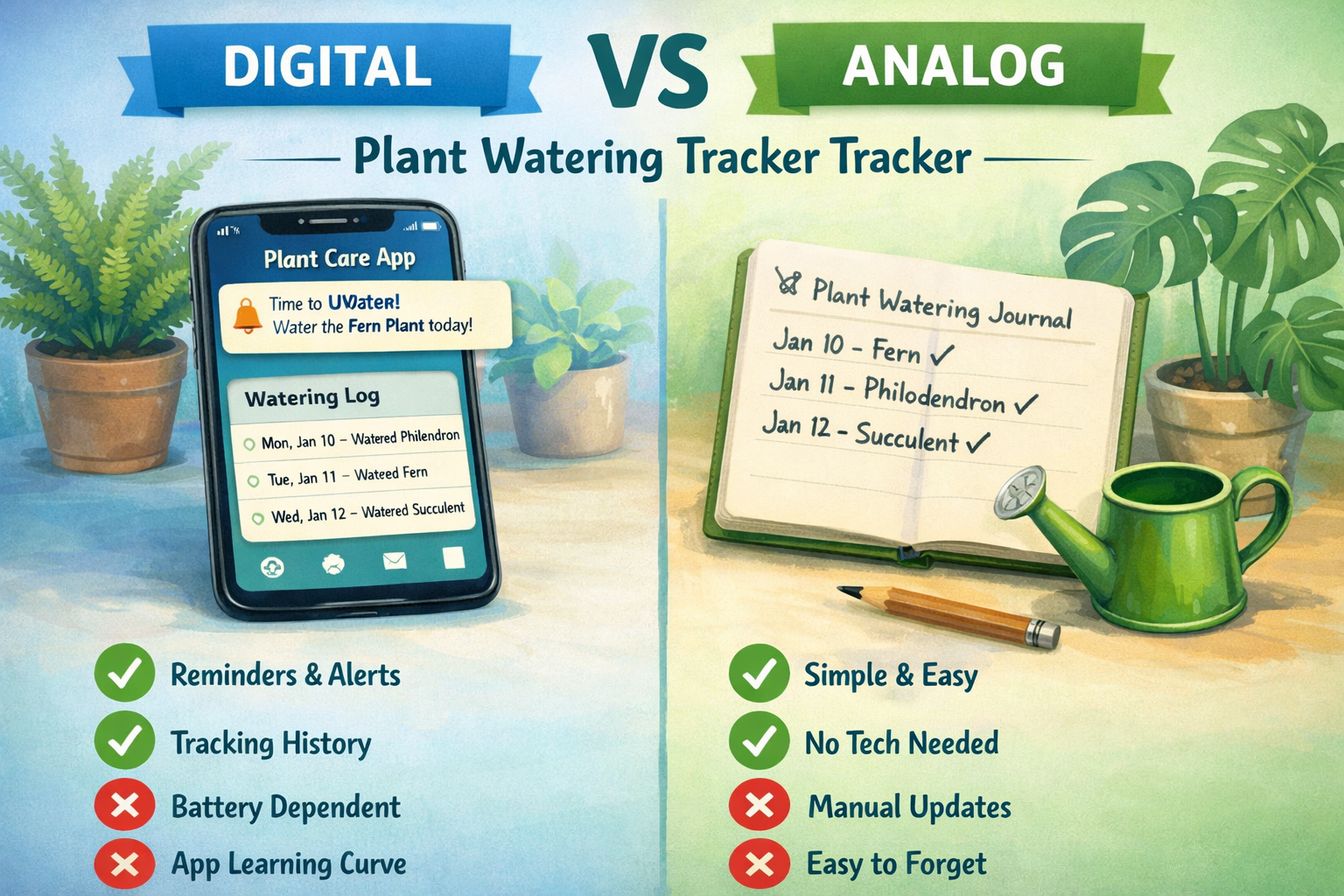
Analog and digital indoor plant watering schedule tracker methods offer distinct advantages and disadvantages, primarily differing in their ease of use, automation capabilities, data depth, and cost. Understanding these differences is crucial for selecting the best system for your specific gardening style and collection size.
Ease of Use & Setup
- Analog: Generally simple to set up—just grab a pen and paper. However, consistency relies entirely on manual effort. No learning curve for interfaces.
- Digital: Initial setup can take longer, involving app downloads, plant input, and customization. Once set up, many aspects become automated, like reminders. Apps often have intuitive interfaces designed for ease of use.
Automation & Reminders
- Analog: Offers no automation. Reminders depend on a visual cue (seeing the calendar) or personal discipline.
- Digital: Excels in automation. Provides push notifications, email reminders, and can integrate with smart home systems. This is a significant benefit for busy individuals or large collections.
Data & Insights
- Analog: Data is typically simple (dates watered, brief notes). Analyzing trends or plant health over time requires manual review.
- Digital: Many apps store extensive data, including watering history, growth logs, light exposure, and humidity. Some provide insights into plant health trends and suggest adjustments. This can be invaluable for understanding specific plant needs.
Cost & Accessibility
- Analog: Very low cost—often just paper and a pen. Accessible to everyone, regardless of tech proficiency or internet access.
- Digital: Can range from free (basic apps, spreadsheets) to paid subscriptions for premium features or the cost of smart hardware. Requires a smartphone or computer and internet access.
Scalability
- Analog: Becomes cumbersome with a large number of plants, as managing individual records for dozens of plants can be time-consuming.
- Digital: Highly scalable. Apps and spreadsheets can manage hundreds of plants efficiently, with search, filter, and group functions.
Here’s a quick Indoor plant watering schedule tracker methods comparison table:
| Feature | Analog Methods (e.g., Journal, Calendar) | Digital Methods (e.g., Apps, Smart Sensors) |
|---|---|---|
| Setup Time | Minimal | Moderate (app download, plant input) |
| Cost | Very Low (paper, pen) | Low to High (free apps, subscriptions, sensors) |
| Automation | None | High (reminders, auto-logging) |
| Data Depth | Basic (dates, short notes) | Rich (history, growth, environment) |
| Scalability | Low (cumbersome for many plants) | High (manages large collections easily) |
| Accessibility | High (no tech needed) | Moderate (requires devices, internet) |
| Learning Curve | None | Low to Moderate |
How to Choose the Best Indoor Plant Watering Schedule Tracker for Your Needs
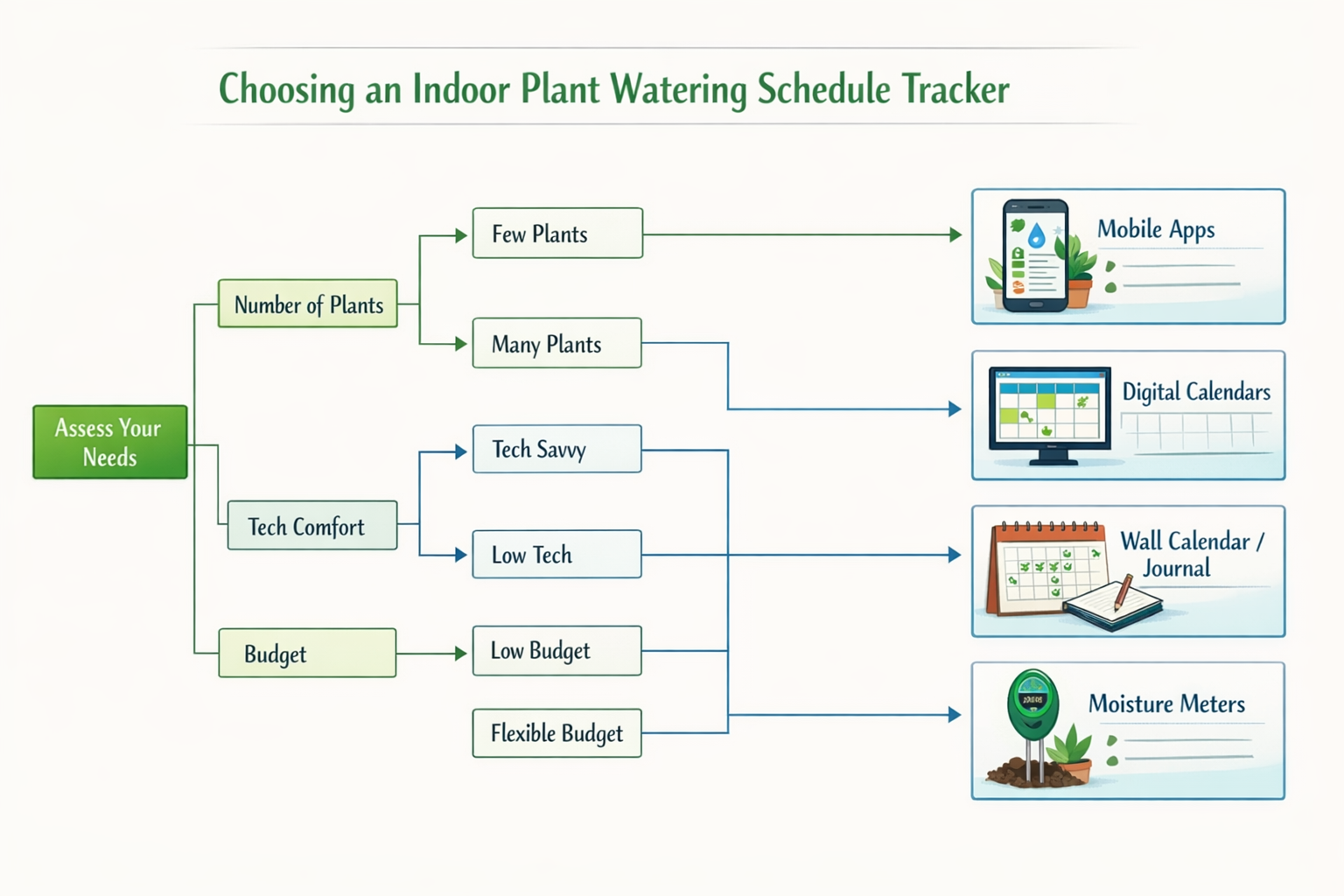
Choosing the best indoor plant watering schedule tracker requires an assessment of your personal gardening style, the size and diversity of your plant collection, your comfort with technology, and your budget. The most effective tracker is one you will consistently use, ensuring your plants receive appropriate hydration without becoming a chore. Think about how often you need to adjust watering and what information is most important to you, as detailed in our comprehensive Indoor Watering Guide: Master Houseplant Hydration In 2026.
1. Assess Your Plant Collection Size
- Few Plants (1-5): Simple analog methods like a small notebook, plant tags, or even a mental note combined with the “finger test” might suffice. Over-complicating with a digital app might feel excessive.
- Moderate Collection (5-20): A dedicated plant journal or a free mobile app could be ideal. These offer a good balance between detail and manageability.
- Large Collection (20+): Digital apps or a customized spreadsheet are highly recommended. They offer the scalability and organizational features needed to track diverse watering needs efficiently. For guidance on specific plant types, explore our article on Low Light Indoor Plants: Your 2026 Guide To Easy Greenery.
2. Consider Your Tech Comfort Level
- Tech-Averse: Stick with analog solutions. A beautifully kept plant journal can be a rewarding experience in itself.
- Tech-Neutral/Beginner: Start with a simple, free mobile app or a basic spreadsheet. Many apps are designed to be user-friendly.
- Tech-Savvy: Explore advanced plant care apps, smart moisture sensors, or integrated smart home solutions for maximum automation and data.
3. Determine Your Desired Level of Detail & Automation
- Basic Reminders: If you only need to know when to water, a physical calendar or a simple digital calendar reminder is enough.
- Detailed Records & Insights: For tracking plant growth, identifying issues, or optimizing care, a comprehensive plant care app or a custom spreadsheet is better. These allow you to log observations, dates, and even photos.
- Automated Watering/Monitoring: Smart moisture sensors paired with apps provide real-time data, reducing guesswork. Some systems can even trigger irrigation. This is suitable for those seeking high precision and minimal manual effort.
4. Factor In Your Budget
- Zero Cost: Pen and paper, basic spreadsheets, or free versions of plant care apps.
- Low Cost: A dedicated plant journal, moisture meter, or a one-time purchase for a premium app.
- Higher Cost: Subscription-based apps with advanced features, multiple smart moisture sensors, or integrated smart watering systems.
5. Evaluate Your Gardening Routine & Lifestyle
- Busy Schedule: Digital apps with push notifications are excellent for ensuring you don’t forget to water.
- Hands-On Approach: If you enjoy daily interaction with your plants, a journal or even the “finger test” might be more satisfying.
- Travel Frequently: Remote monitoring with smart sensors and app notifications can be a lifesaver, allowing a plant sitter to know exactly what to do.
Common Mistake: Choosing an overly complex system for a small collection, or an insufficient system for a large, diverse one. The best system fits your current needs and can scale if your collection grows. For more general advice, see our Indoor Plant Care Guide 2026: Grow Thriving Houseplants.
Optimizing Your Indoor Plant Watering Schedule Tracker Method for Best Results
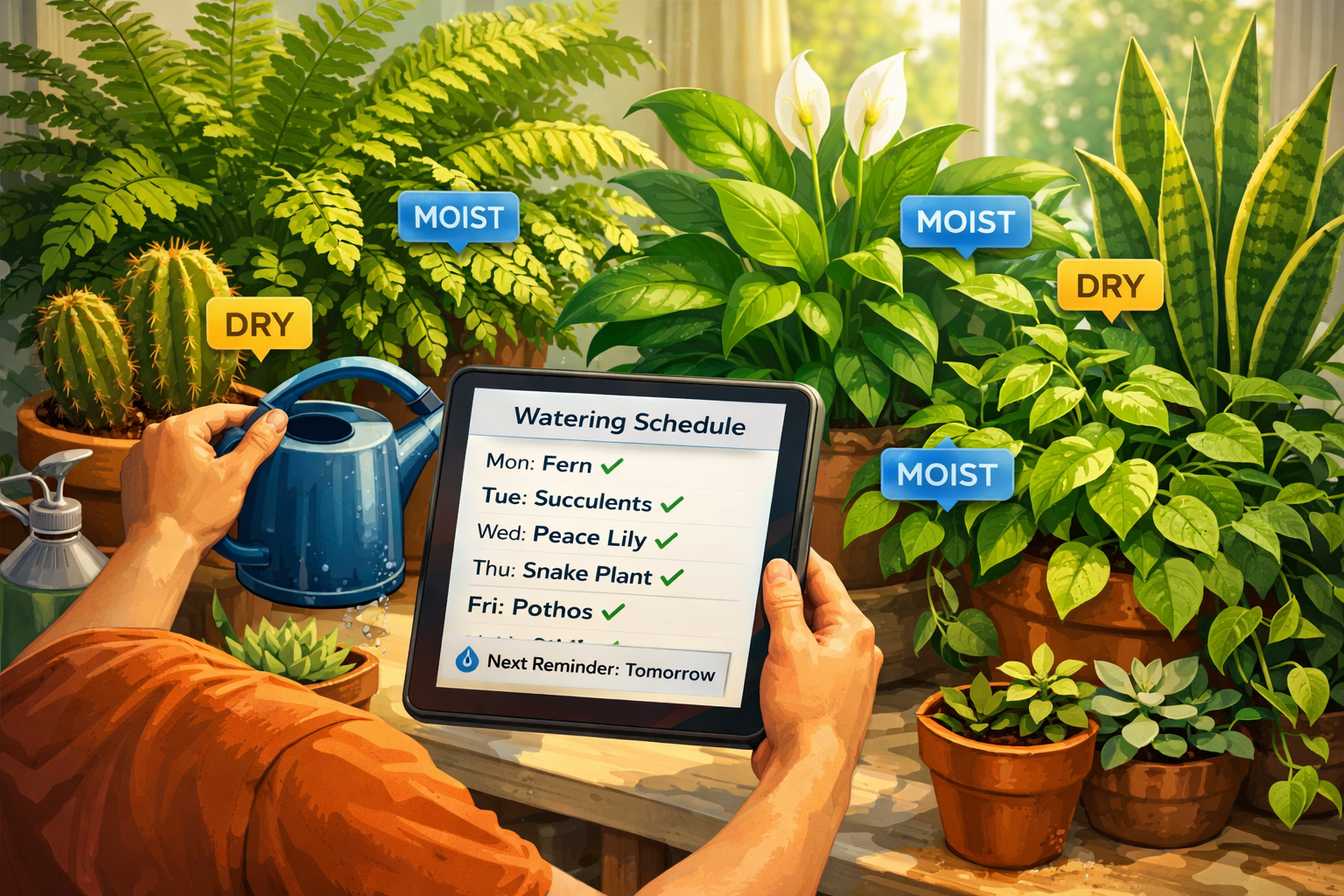
Optimizing your chosen indoor plant watering schedule tracker method involves more than just setting reminders; it requires understanding your plants’ individual needs, adapting to environmental changes, and regularly reviewing your system’s effectiveness. The goal is to develop a sustainable routine that ensures optimal hydration for all your houseplants. This is a critical aspect of plant care, as highlighted in our guide on How Often Should You Water Container Plants? 2026 Expert Guide.
1. Understand Individual Plant Needs
Every plant species has unique watering requirements. A successful tracker acknowledges this diversity.
- Research Specifics: Before adding a plant to your tracker, research its preferred soil moisture (e.g., “keep consistently moist,” “let dry out completely between waterings”) and typical watering frequency.
- Group Similar Plants: If using an analog system, group plants with similar needs together in your journal or on your calendar. Digital apps often allow for custom profiles for each plant.
- Consider Potting Materials: Terra cotta pots dry out faster than plastic or glazed pots. Account for this in your schedule, even for plants of the same species. Our article on Best Pots For Indoor Plants 2026: Ultimate Guide To Choosin offers more insights.
2. Adapt to Environmental Factors
Indoor conditions are rarely static, and these changes directly impact watering needs.
- Seasonal Changes: Plants generally need more water in warmer, brighter months (spring/summer) and less in cooler, darker months (fall/winter). Adjust your schedule accordingly.
- Humidity & Temperature: Higher humidity means less frequent watering, while dry air and high temperatures increase water evaporation. If your home has fluctuating humidity, consider a humidifier.
- Light Exposure: Plants in brighter spots or under grow lights will photosynthesize more and thus require more water than those in low light. Our guide on Indoor Gardening Without Sunlight: Grow Plants Year-Round offers solutions for specific lighting scenarios.
3. Integrate Physical Checks
Even with the most sophisticated tracker, a physical check remains the gold standard for determining if a plant truly needs water.
- The Finger Test: Stick your finger about an inch or two into the soil. If it feels dry, it’s likely time to water. This is crucial for avoiding common watering mistakes.
- Lift the Pot: A dry pot will feel significantly lighter than a recently watered one. This method becomes easier with practice.
- Moisture Meters: Use a basic moisture meter occasionally to verify your observations, especially for plants prone to root rot.
4. Regularly Review and Adjust Your Schedule
Plant care is dynamic, and your watering schedule should evolve with your plants.
- Observe Your Plants: Pay attention to signs of stress: wilting, yellowing leaves, or stunted growth can indicate watering issues. Adjust your tracker based on these observations.
- Track Growth: As plants grow, their water needs may increase. A young plant might need less water than a mature one.
- Re-potting: After re-potting, plants may temporarily have different watering needs as they establish in new soil. Update your tracker notes.
- Feedback Loop: Use your tracker as a learning tool. If a plant consistently gets overwatered on a 7-day schedule, switch it to 10 days in your system.
By combining the organizational power of a chosen tracker method with careful observation and adaptation, you can ensure your indoor plants flourish in 2026 and beyond.
Conclusion
Choosing the right indoor plant watering schedule tracker method is a foundational step toward becoming a successful indoor gardener in 2026. Whether you opt for the simplicity and tactile satisfaction of an analog journal or the automation and data richness of a digital app, the goal remains the same: to provide your plants with consistent, appropriate hydration tailored to their unique needs and evolving environmental conditions.
The best tracker isn’t the most expensive or feature-laden; it’s the one you’ll actually use consistently. Start by evaluating your plant collection size, technological comfort, desired level of detail, and budget. Implement your chosen method, but don’t stop there. Continuously observe your plants, adapt to seasonal changes, and integrate physical soil checks to verify your schedule. By doing so, you’ll move beyond mere tracking to truly understanding your plants, fostering a thriving indoor garden and avoiding common pitfalls like overwatering or underwatering.
Actionable Next Steps:
- Assess Your Current Needs: Count your plants, consider your comfort with technology, and decide how much detail you want to track.
- Experiment: Try a simple analog method for a week or two, then explore a free plant care app to see which approach feels more natural and sustainable for you.
- Invest Wisely: If a digital app or smart sensor significantly improves your plant care routine, consider investing in a premium version or device.
- Educate Yourself: Continuously learn about your specific plant species’ needs to fine-tune your watering schedule, irrespective of the tracker method you choose.
FAQ
Q1: What is the most effective indoor plant watering schedule tracker for beginners?
A1: For beginners, a simple combination of the “finger test” and a physical calendar or a basic, free mobile plant care app is most effective, providing both tactile feedback and gentle reminders without being overwhelming.
Q2: Can a moisture meter replace an indoor plant watering schedule tracker?
A2: A moisture meter doesn’t replace a full tracker but acts as an excellent complementary tool. It provides real-time data to confirm soil dryness, which helps validate and fine-tune any manual or digital watering schedule.
Q3: Are digital plant watering apps worth the subscription fee?
A3: Digital plant watering apps with subscription fees can be worth it for those with large, diverse plant collections, busy schedules, or a desire for advanced features like plant identification, pest diagnosis, or personalized care recommendations.
Q4: How often should I adjust my plant watering schedule?
A4: You should typically review and adjust your plant watering schedule seasonally, or whenever there are significant changes in your home’s temperature, humidity, or your plant’s growth cycle (e.g., active growth vs. dormancy).
Q5: What are the common mistakes when using a plant watering tracker?
A5: Common mistakes include blindly following the schedule without physically checking the soil, not adjusting for environmental changes, failing to account for individual plant needs, and abandoning the system due to initial complexity.
Q6: Can I use a single indoor plant watering schedule tracker for all my plants?
A6: Yes, you can use a single tracker, but it must accommodate individual plant needs. Digital apps are great for this, allowing custom profiles. For analog, categorize plants with similar needs or dedicate individual entries.
Related Reading
- Indoor Watering Guide: Master Houseplant Hydration In 2026
- How Often Should You Water Container Plants? 2026 Expert Guide
- Indoor Plant Care Guide 2026: Grow Thriving Houseplants
- Best Pots For Indoor Plants 2026: Ultimate Guide To Choosin
- Common Watering Mistakes In Container Gardening: Expert Guide 2026