How Often Should You Water Plants?
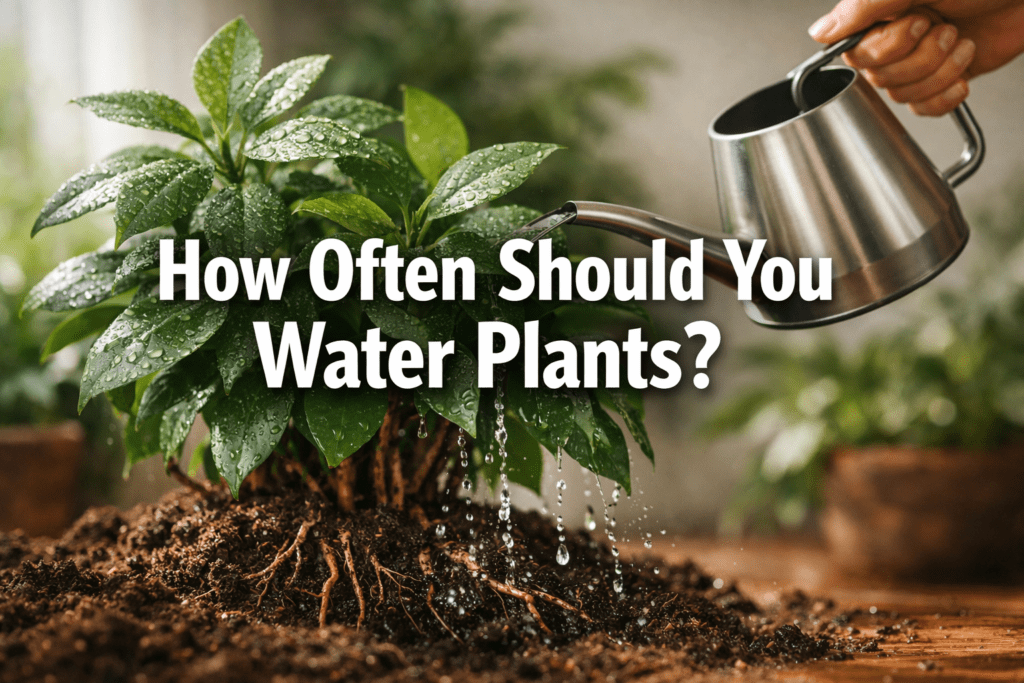
Determining how often you should water plants involves assessing several key factors rather than adhering to a fixed schedule. The most effective approach is to consistently check the soil moisture level, either by feeling the soil with your finger or using a moisture meter, and then watering thoroughly only when the top few inches of soil feel dry. This method prevents both overwatering and underwatering, catering to the specific needs of each plant based on its species, pot, and environmental conditions.
Key Takeaways
- No Universal Rule: The ideal watering frequency for plants varies significantly based on plant type, pot, soil, and environment.
- Check Soil Moisture: The most reliable method to determine when to water is by checking the soil moisture level, typically with your finger or a moisture meter.
- Avoid Overwatering: Overwatering is a more common cause of plant death than underwatering, leading to root rot and fungal issues.
- Observe Plant Cues: Wilting, discolored leaves, or stunted growth can all indicate watering problems, though signs vary between underwatering and overwatering.
- Adjust Seasonally: Plants generally require less water in cooler, darker months and more in warmer, brighter periods due to changes in growth and evaporation rates.
What Factors Determine How Often Should You Water Plants?
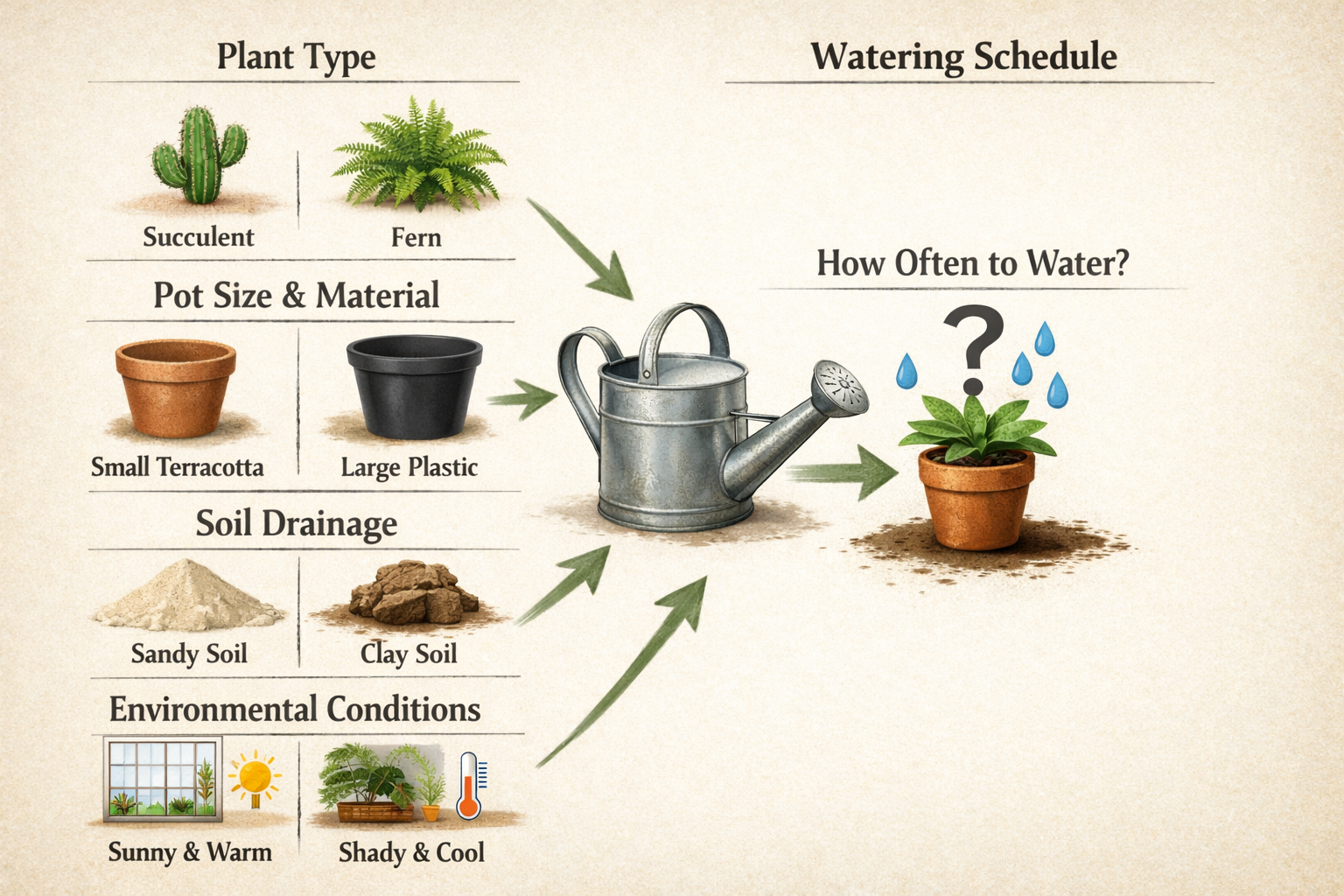
The frequency for how often you should water plants is not a one-size-fits-all answer but depends heavily on several interconnected factors. Understanding these elements allows for tailored plant care, ensuring plants receive the right amount of hydration without experiencing stress.
Core Influencing Factors
- Plant Type: Different plant species have vastly different water requirements.
- Desert Plants (e.g., succulents, cacti): These plants are adapted to arid conditions and store water in their leaves or stems. They need infrequent watering, often only when the soil is completely dry for an extended period. Overwatering is a common killer for these types.
- Tropical Plants (e.g., ferns, calatheas): Originating from humid environments, these plants typically prefer consistently moist (but not waterlogged) soil and often benefit from higher ambient humidity.
- Flowering Plants: Many flowering plants, especially during their blooming period, require more consistent moisture to support flower production.
- Vegetable Plants: Most vegetables, particularly fruiting ones like tomatoes or peppers, need regular and deep watering, especially during hot weather and fruit development. For those interested in growing edibles in compact spaces, consult our Small Space Vegetable Gardening: 2026 Step-by-Step Guide.
- Pot Size and Material: The container a plant lives in significantly impacts soil moisture retention.
- Smaller Pots: Dry out much faster than larger pots because they hold less soil and expose a larger surface area relative to their volume.
- Larger Pots: Retain moisture for longer periods, but also present a greater risk of waterlogging if drainage is poor.
- Terracotta/Unglazed Clay Pots: These porous materials allow water to evaporate through their sides, promoting faster drying and better aeration. This can be beneficial for plants prone to root rot, but necessitates more frequent watering.
- Plastic/Glazed Ceramic Pots: Non-porous materials reduce evaporation from the pot’s sides, meaning the soil stays wet longer. These are suitable for plants that prefer consistently moist conditions or for gardeners who prefer less frequent watering.
- Soil Type and Drainage: The composition of the potting mix directly affects how well it retains water and how quickly it drains.
- Sandy Soil: Drains very quickly and retains less moisture, requiring more frequent watering.
- Clay-Heavy Soil: Retains a lot of water and drains slowly, increasing the risk of waterlogging.
- Well-Draining Potting Mix: A quality potting mix designed for most houseplants typically contains components like perlite, bark, or coco coir, which improve drainage and aeration while still holding adequate moisture. Poor drainage can quickly lead to root rot, a common issue for container plants, especially those in small spaces. The Ultimate Guide to Small Space Gardening for Beginners 2026 emphasizes the importance of good soil.
- Environmental Conditions: The surrounding environment plays a crucial role in how quickly water is used by the plant and evaporates from the soil.
- Temperature: Higher temperatures increase evaporation from the soil and transpiration (water loss through leaves), leading to a need for more frequent watering.
- Humidity: Low humidity causes plants to lose water faster through their leaves, requiring more frequent watering. High humidity, conversely, slows down water loss.
- Light Exposure: Plants in brighter light or direct sunlight photosynthesize more actively and generally use more water than plants in low light conditions.
- Air Circulation: Good airflow can help prevent fungal issues but also increases the rate of evaporation from the soil surface.
Decision Rule: When considering how often you should water plants, always prioritize plant-specific needs first, then adjust based on pot type, soil, and the prevailing environmental conditions. For instance, a succulent in a terracotta pot in a sunny, dry room will need far less water than a fern in a plastic pot in a humid, shaded environment.
How to Check Soil Moisture Effectively
The most reliable method for determining when to water a plant is to directly assess the moisture level of the soil. This prevents guessing and ensures the plant receives water only when needed, avoiding the pitfalls of overwatering or underwatering.
Practical Methods for Soil Moisture Check
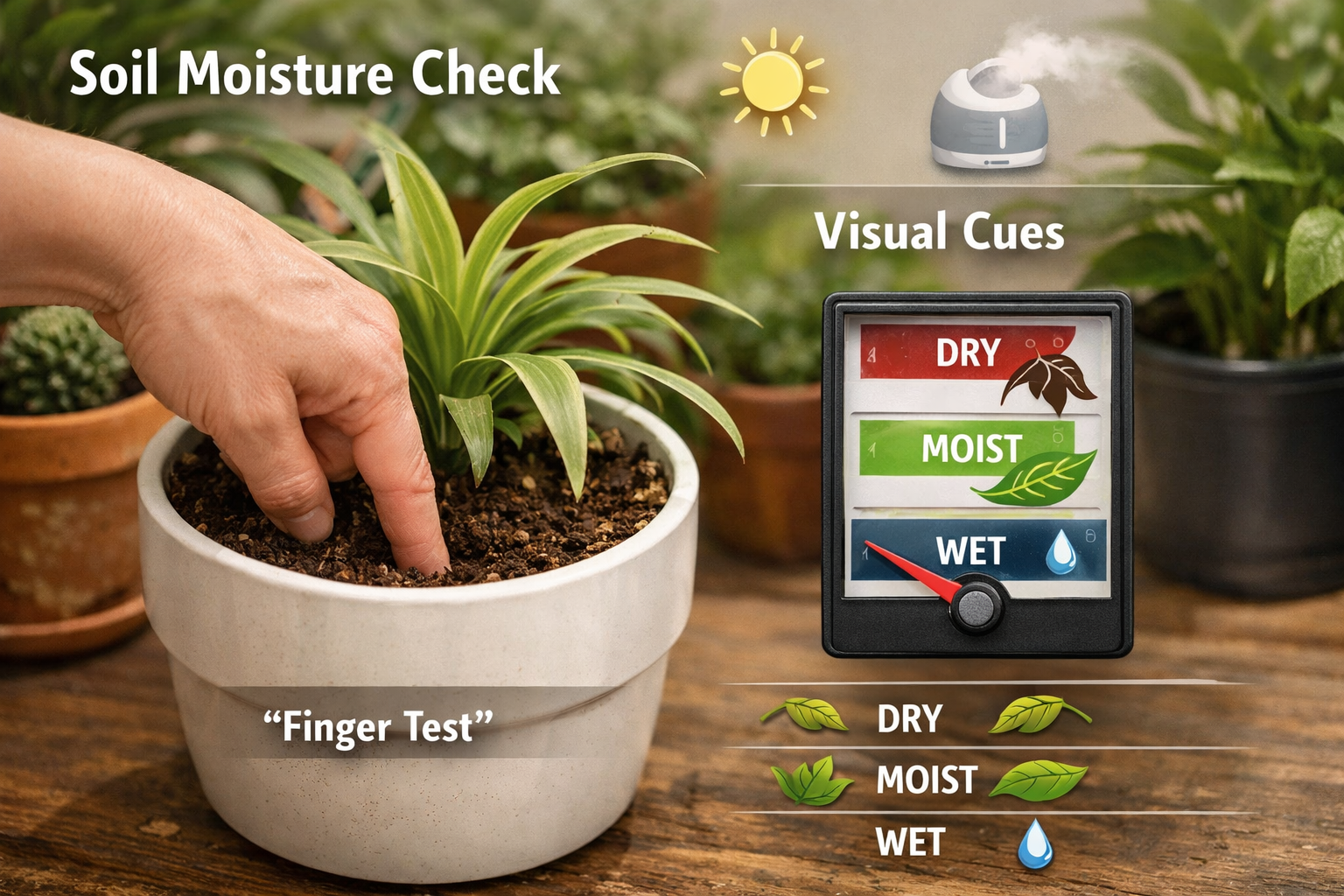
The Finger Test (Recommended for Most):
- Process: Insert your index finger about 2-3 inches (or up to the second knuckle) into the potting mix near the base of the plant. For very small pots, 1 inch may suffice.
- Interpretation:
- Dry: If the soil feels dry to the touch at that depth, it’s generally time to water.
- Moist: If it feels moist or damp, wait and check again in a day or two.
- Wet/Soggy: If it feels saturated or squishy, the plant is likely overwatered; hold off on watering and ensure proper drainage.
- Why it works: This method provides a direct tactile assessment of the moisture level where roots are actively absorbing water, giving a clear indication of the plant’s current hydration status.
- Constraint: This test is most effective for medium to large potted plants. For very small seedlings or delicate plants, an alternative method might be less disruptive.
Soil Moisture Meter:
- Process: Insert the probe of a soil moisture meter into the soil to the recommended depth. The meter will provide a reading on a scale (e.g., 1-10, or dry-moist-wet).
- Interpretation: Follow the plant’s specific moisture requirements. Most plants prefer to be watered when the meter reads in the “dry” to “slightly moist” range, not bone dry or consistently wet.
- Benefits: Offers a more precise, objective reading than the finger test, and can reach deeper into larger pots without disturbing roots.
- Consideration: Some cheaper meters can be unreliable; invest in a quality meter if precision is crucial for your collection. Calibrate or test your meter periodically to ensure accuracy.
Lifting the Pot (Weight Test):
- Process: Gently lift the potted plant after watering thoroughly, noting its weight. Lift it again after a few days or when you suspect it might be dry.
- Interpretation: A significantly lighter pot indicates that much of the water has been used or evaporated, suggesting it’s time to water again. A heavy pot means there is still plenty of moisture.
- Benefits: Excellent for smaller to medium-sized pots, as it’s quick and clean. Over time, gardeners develop an intuitive sense of “dry weight.”
- Limitations: Less effective for very large or heavy pots, or for pots with heavy decorative elements.
Common Mistake: Watering on a strict schedule (e.g., “every Wednesday”) without checking the soil. This often leads to either overwatering (if the soil is still moist) or underwatering (if the soil dries out faster than anticipated due to environmental changes). Always prioritize checking the soil.
Signs Your Plant Needs Water (and Signs of Too Much Water)
Observing your plant for visual cues is essential for understanding its health and making informed decisions about how often you should water plants. Plants communicate their needs through their leaves, stems, and overall vigor.
Symptoms of Underwatering
When a plant isn’t receiving enough water, it shows signs of dehydration and stress as it tries to conserve moisture.
- Wilting or Drooping Leaves: This is a classic sign. Leaves lose turgor (internal water pressure) and become limp, often hanging downwards. They might still feel soft.
- Dry, Crispy Leaves: Especially at the edges or tips, leaves may turn brown, become brittle, and curl inwards or upwards. Older, lower leaves are often affected first.
- Stunted Growth: New growth may appear very small, slow, or non-existent.
- Fading Leaf Color: Leaves might appear dull or pale, losing their vibrant green.
- Dry, Compacted Soil: The potting mix may shrink away from the sides of the pot, feeling very hard and dry to the touch. It might even be difficult for water to penetrate initially.
- Light Pot Weight: As noted with the weight test, a significantly light pot often signals dry soil.
Symptoms of Overwatering
Conversely, providing too much water is a very common cause of plant death, particularly for indoor plants. Overwatering essentially suffocates the roots by displacing oxygen in the soil, leading to root rot.
- Yellowing Leaves (often starting from the bottom): Leaves turn yellow, sometimes with soft, mushy spots. Unlike underwatering, these leaves often feel soft or limp, not crispy.
- Drooping Leaves (but soil is wet): Leaves may still wilt or droop, even when the soil is visibly wet. This is because roots are rotting and cannot absorb water effectively, mimicking dehydration symptoms.
- Mushy Stems or Base: The stem or base of the plant might feel soft, mushy, or discolored, indicating rot.
- Foul Odor from Soil: A sour or stagnant smell emanating from the pot suggests anaerobic conditions and root rot.
- Fungus Gnats: Small, dark flies hovering around the soil surface are often attracted to consistently wet soil, where they lay their eggs.
- Brown/Black Roots: If you carefully unpot the plant and inspect the roots, healthy roots are typically white or tan and firm. Overwatered roots will be dark, soft, and mushy.
Edge Case: Some plants, like Peace Lilies, dramatically wilt when thirsty but quickly perk up after watering, making them excellent communicators. Others, like succulents, may show little immediate distress from underwatering but will quickly succumb to root rot from overwatering without obvious early warning signs beyond a consistently wet substrate. For specific plants, refer to a guide like “Best Plants for Small Gardens 2026: The Complete List” for tailored advice.
Watering Techniques for Optimal Plant Health
Applying the correct watering technique is just as crucial as knowing how often you should water plants. Proper technique ensures water reaches the roots evenly and effectively, preventing common problems.
Best Practices for Watering
Water Thoroughly Until Drainage:
- Process: When you do water, apply water slowly and evenly over the entire soil surface until it begins to drain out of the bottom of the pot.
- Why it works: This ensures that water penetrates deep into the root zone, encouraging roots to grow downwards and fully hydrating the entire soil ball. Shallow watering only moistens the topsoil, leading to shallow root systems that are more susceptible to drought.
- Constraint: Ensure your pot has drainage holes. If not, consider repotting or drilling holes. For indoor plants, use a saucer to catch excess water, and empty it after 15-30 minutes to prevent the plant from sitting in standing water, which can lead to root rot.
Bottom Watering (Sub-Irrigation):
- Process: Place the potted plant (with drainage holes) into a tray or sink filled with 1-2 inches of water. Allow the plant to soak up water through its drainage holes for 15-30 minutes, or until the top of the soil feels moist.
- Benefits: This method encourages strong root development, prevents soil compaction from top watering, reduces the risk of fungus gnats (as the topsoil remains drier), and is excellent for plants that dislike having wet leaves (e.g., African Violets).
- Consideration: After bottom watering, always remove the plant from the water bath and allow any excess to drain completely before returning it to its spot. Occasionally, top water to flush out accumulated salts.
Use Room Temperature Water:
- Process: Water plants with water that is approximately room temperature.
- Why it works: Extremely cold water can shock plant roots, potentially causing damage or slowing growth.
- Consideration: If using tap water, allowing it to sit out for 24 hours can help dissipate chlorine, which can be beneficial for sensitive plants.
Water in the Morning:
- Process: For outdoor plants, especially those in vegetable gardens or on balconies, water early in the morning.
- Why it works: This allows the foliage to dry before nightfall, reducing the risk of fungal diseases. It also ensures plants have ample water to cope with the day’s heat.
- Constraint: For indoor plants, the time of day is less critical, but consistent morning watering can establish a good routine.
Comparison Table: Top vs. Bottom Watering
| Feature | Top Watering | Bottom Watering |
|---|---|---|
| Method | Water applied from above onto soil surface | Pot sits in water, absorbed through drainage holes |
| Soil Compaction | Can compact soil over time | Minimizes compaction, promotes aeration |
| Salt Buildup | Flushes salts from soil | Can lead to salt buildup on soil surface |
| Fungus Gnats | Topsoil stays moist longer, can attract gnats | Topsoil stays drier, deters gnats |
| Root Development | Encourages downward growth if done thoroughly | Encourages strong, deep root systems |
| Plant Preference | Good for most plants, essential for flushing salts | Ideal for sensitive foliage, thirsty plants, seedlings |
| Key Advantage | Simple, effective, flushes excess salts | Reduces leaf spotting, prevents pests, consistent moisture |
| Downside | Can wash away nutrients, potential for splash damage | Requires occasional top-flushing, longer process |
Seasonal Adjustments for Watering Plants in 2026
The change in seasons significantly impacts a plant’s water requirements. Adapting your watering schedule throughout the year is crucial for plant health and growth.
How Seasons Affect Watering Needs
Spring (Growth Period):
- Needs: As plants emerge from dormancy, light levels increase, and temperatures rise, they begin active growth. This period often requires an increase in watering frequency.
- Action: Begin to gradually increase watering as new shoots appear and temperatures become consistently warmer. Check the soil more frequently than in winter.
- Context: This is often when plants are repotted or started, making consistent moisture vital for establishment. For balcony gardeners, spring is a key time to revitalize your plants; see our Complete Balcony Gardening Guide for Small Apartments 2026.
Summer (Peak Growth/Heat):
- Needs: This is typically when plants require the most water. High temperatures, intense sunlight, and increased metabolic activity mean plants lose water rapidly through transpiration and evaporation.
- Action: Water more frequently and deeply. For many outdoor plants, daily watering might be necessary, especially during heatwaves. Indoor plants near sunny windows will also dry out faster.
- Constraint: Be mindful of midday watering in direct sun, as water on leaves can magnify sunlight and cause burns. Early morning watering is generally best for outdoor plants.
Autumn (Slowing Down):
- Needs: As daylight hours shorten and temperatures cool, plant growth slows down, and their water requirements decrease.
- Action: Gradually reduce watering frequency as temperatures drop. Allow the soil to dry out more between waterings.
- Mistake to Avoid: Continuing a summer watering schedule can easily lead to overwatering and root rot as the plant prepares for dormancy.
Winter (Dormancy/Low Light):
- Needs: Most plants enter a period of reduced growth or dormancy. Lower light levels, cooler temperatures, and often less active growth mean significantly less water is needed.
- Action: Water much less frequently. Allow the soil to dry out considerably between waterings, especially for succulents and cacti. For many houseplants, watering might be reduced to once every few weeks or even longer.
- Edge Case: Plants under grow lights or in heated homes with very low humidity might still require more frequent watering than those in cooler, less active environments. Always use the finger test. For those focusing on Indoor Gardening for Small Homes & Apartments: 2026 Guide, winter care is especially important due to controlled indoor environments.
Common Watering Mistakes to Avoid
Even experienced gardeners can fall prey to common watering mistakes. Recognizing and avoiding these pitfalls is just as important as knowing how often you should water plants correctly.
Pitfalls in Plant Hydration
Overwatering (The Most Common Killer):
- Mistake: Providing water too frequently or in excessive amounts, leading to constantly saturated soil.
- Consequence: Deprives roots of oxygen, causing root rot. Symptoms include yellowing leaves, wilting despite wet soil, and mushy stems.
- Correction: Always check soil moisture before watering. Ensure pots have drainage holes and empty saucers of standing water. If root rot is suspected, unpot the plant, trim affected roots, and repot in fresh, well-draining soil.
Underwatering:
- Mistake: Not providing enough water, or not watering deeply enough when you do.
- Consequence: Dehydration, stunted growth, crispy leaves, and eventual plant death.
- Correction: Water thoroughly until water drains from the bottom. If the soil has become compacted and hydrophobic (repels water), try bottom watering or slowly rehydrate by watering in small increments over a few hours.
Watering on a Schedule, Not on Need:
- Mistake: Sticking to a rigid watering schedule (e.g., “every Sunday”) regardless of environmental conditions or soil moisture.
- Consequence: Can lead to either overwatering or underwatering as plant needs fluctuate.
- Correction: Use the finger test or a moisture meter as your primary guide. Adjust frequency based on temperature, light, and humidity.
Using Pots Without Drainage Holes:
- Mistake: Planting directly into decorative pots that lack drainage holes.
- Consequence: Water accumulates at the bottom, creating a stagnant, anaerobic environment that is a breeding ground for root rot.
- Correction: Always use pots with drainage holes. If you love a decorative pot without holes, use it as a cachepot (a decorative outer pot) and keep your plant in a nursery pot with drainage inside it. Remove the plant from the cachepot for watering and allow it to drain fully before returning it.
Ignoring Plant-Specific Needs:
- Mistake: Treating all plants the same, despite varying requirements.
- Consequence: Succulents will rot with tropical plant watering, and ferns will dry out with succulent watering.
- Correction: Research the specific water needs of each plant you own. Group plants with similar requirements together if possible. For example, cacti and succulents thrive in well-draining soil and infrequent watering, a key tip for any Vertical Gardening Guide for Small Spaces: Grow More in 2026.
Watering Leaves Instead of Soil:
- Mistake: Spraying water directly onto the leaves instead of at the base of the plant.
- Consequence: Can lead to fungal diseases (like powdery mildew) if leaves remain wet, especially in low light or poor air circulation. While some plants appreciate misting for humidity, this is not a substitute for root watering.
- Correction: Direct the water stream to the soil surface. Misting can supplement humidity but should be done in conjunction with proper soil watering.
Troubleshooting Watering Problems: A Checklist
When your plants are struggling, a systematic approach to troubleshooting watering issues can help diagnose and correct the problem. This checklist provides actionable steps.
Diagnosing and Fixing Watering Issues
Assess Soil Moisture:
- Action: Perform the finger test (2-3 inches deep) or use a moisture meter.
- Diagnosis:
- Bone Dry: Underwatering.
- Consistently Wet/Soggy: Overwatering.
- Just Moist (top dry, lower moist): Potentially ideal, or a specific plant might prefer more/less.
Inspect Drainage:
- Action: Check if the pot has drainage holes. After watering, does water freely flow out? Is the saucer emptied regularly?
- Diagnosis:
- No Drainage/Slow Drainage: Major overwatering risk.
- Water Sits in Saucer: Can lead to root rot.
- Correction: Repot into a pot with drainage. If water drains slowly, consider improving soil with perlite or grit, or repotting into a larger pot with fresh, well-draining mix. Always empty saucers.
Examine Roots (If Suspected Root Rot):
- Action: Gently unpot the plant to inspect the roots.
- Diagnosis:
- Healthy Roots: White or tan, firm, spread throughout the soil.
- Root Rot: Brown/black, mushy, foul-smelling.
- Correction: Trim away all affected roots with clean scissors. Repot in fresh, sterile, well-draining potting mix. Reduce watering frequency significantly.
Review Environmental Conditions:
- Action: Consider recent changes in temperature, light exposure, and humidity.
- Diagnosis:
- New, Brighter Location/Increased Heat: Plant likely needs more water.
- New, Shadier Location/Cooler Temps: Plant likely needs less water.
- Low Indoor Humidity (especially in winter with heating): May cause faster drying, but also stress, leading to a need for consistent (but not increased) soil moisture.
- Correction: Adjust watering frequency accordingly. Consider a humidifier for tropical plants in dry environments.
Check for Pests:
- Action: Inspect leaves (top and bottom), stems, and soil for signs of pests (e.g., fungus gnats in wet soil, spider mites in dry conditions).
- Diagnosis: Pests can stress plants, making them more vulnerable to watering issues. Fungus gnats specifically thrive in moist topsoil.
- Correction: Address pest issues separately. For fungus gnats, allow the topsoil to dry out completely between waterings, use sticky traps, or beneficial nematodes.
Consider Pot Size and Material:
- Action: Evaluate if the pot is appropriately sized and made of a suitable material for the plant’s needs.
- Diagnosis:
- Too Small: Dries out too quickly, requiring constant watering.
- Too Large: Soil stays wet too long, increasing overwatering risk.
- Terracotta for Water-Loving Plant: Dries out too fast.
- Plastic for Succulent: Stays wet too long.
- Correction: Repot into an appropriately sized and material-appropriate pot. For general guidance on container gardening, check out the Home – Mini Space Garden | Small Space Gardening Ideas resource.
Quick Example: A Fiddle Leaf Fig (notoriously finicky) starts developing brown, crispy spots on lower leaves, but the soil still feels slightly damp.
- Troubleshooting:
- Soil Moisture: Damp soil rules out severe underwatering initially.
- Drainage: Confirm good drainage.
- Roots: A quick check of roots might reveal early rot.
- Visual Cue Analysis: Brown, crispy spots with damp soil often point to early root rot due to overwatering, where the plant can’t absorb water effectively, leading to localized dehydration.
- Solution: Allow the soil to dry out more thoroughly between waterings, reduce frequency, and ensure no standing water in the saucer.
Conclusion
Understanding how often you should water plants is less about a rigid schedule and more about becoming attuned to the individual needs of each plant. By consistently checking soil moisture, observing plant health, and adjusting your approach based on plant type, pot, soil, and environmental conditions, you can establish a thriving collection. The finger test remains the most accessible and effective method for most gardeners, empowering you to provide the precise hydration your plants require. Remember, overwatering is a more frequent cause of plant demise than underwatering, making careful assessment paramount.
Actionable Next Steps:
- Adopt the Finger Test: Make it a habit to check the soil moisture with your finger (or a moisture meter) before every watering session.
- Observe Your Plants: Pay close attention to leaf color, texture, and overall plant vigor to catch early signs of distress.
- Adjust Seasonally: Modify your watering frequency as seasons change, watering more in summer and less in winter.
- Ensure Proper Drainage: Always use pots with drainage holes and empty excess water from saucers promptly.
- Research Specific Needs: For new plants, take a moment to understand their specific watering preferences.
- Learn from Mistakes: If a plant struggles, use the troubleshooting checklist to identify the problem and refine your technique for future success.
FAQ
How do I know if I’m overwatering or underwatering my plant?
Overwatering typically causes yellowing, drooping, or mushy leaves, often with consistently wet soil and possibly a foul smell. Underwatering results in crispy, browning leaves, wilting, and very dry, hard soil.
How often should I water a succulent?
Succulents need infrequent watering. Allow the soil to dry out completely between waterings, and then wait an additional week or two before watering again, especially in cooler months.
Can I water plants with tap water?
Most plants tolerate tap water. For sensitive plants, or if your tap water is heavily chlorinated, let it sit out for 24 hours to allow chlorine to dissipate, or use filtered water.
What is the best time of day to water plants?
For outdoor plants, early morning is best as it allows foliage to dry before night, reducing disease risk, and plants are hydrated before the day’s heat. For indoor plants, the time of day is less critical.
Why do my plant’s leaves turn yellow after watering?
Yellowing leaves after watering often indicate overwatering, leading to root rot. It can also be a sign of nutrient deficiency, but if the soil is consistently wet, overwatering is the more likely culprit.
Should I mist my plants?
Misting increases humidity around a plant temporarily, which can benefit tropical plants. However, it is not a substitute for proper soil watering and should be done in conjunction with checking soil moisture.
My plant has fungus gnats. Am I overwatering?
Yes, fungus gnats are often a sign of consistently wet topsoil. Allow the top inch or two of soil to dry out completely between waterings to deter them.
What if my pot doesn’t have drainage holes?
It is strongly recommended to repot into a container with drainage holes. If you must use a pot without drainage, plant in a nursery pot with holes and place it inside the decorative pot, removing it for watering and ensuring complete drainage.
How does pot material affect watering?
Porous materials like terracotta allow water to evaporate faster, meaning more frequent watering. Non-porous materials like plastic or glazed ceramic retain moisture longer, requiring less frequent watering.
Should I water plants more in the summer?
Yes, most plants require more frequent watering in summer due to higher temperatures, increased light intensity, and greater evaporation and transpiration rates.
Sources
- The Old Farmer’s Almanac. (2026). How to Water Houseplants (Correctly!).
- Royal Horticultural Society. (2025). Watering plants.
- University of Maryland Extension. (2025). Plant Problems: Overwatering.