Easy Plants to Grow in Small Spaces: A Complete Guide for 2026
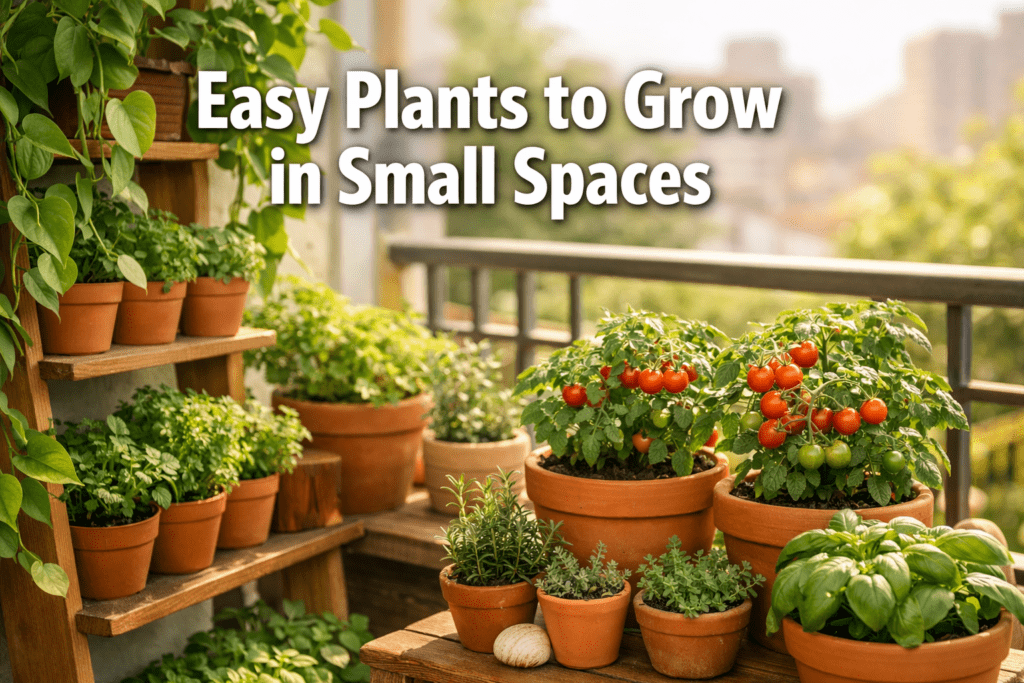
You don’t need a backyard to grow a garden. Whether you have a narrow balcony, a sunny windowsill, or just a few square feet of patio, dozens of plants will thrive in those tight quarters with minimal effort on your part. This guide covers the best easy plants to grow in small spaces, from herbs and vegetables to houseplants and compact ornamentals, so you can start growing something green no matter where you live.
With roughly 80% of Americans now living in urban areas, the demand for compact gardening solutions has never been higher [1]. The good news: plant breeders and gardening experts have responded with dwarf varieties, vertical planting systems, and container-friendly cultivars that make small-space gardening genuinely simple.
Key Takeaways
- Herbs, leafy greens, and compact vegetables are the easiest edible plants for small spaces, requiring only containers and decent sunlight.
- Spider plants, pothos, and hoyas are among the most forgiving houseplants for indoor small-space growing [2].
- Vertical planting, container gardening, and hydroponics are the three main techniques that make limited space productive [1].
- Dwarf and compact plant varieties are specifically bred for containers and small gardens, producing full-sized harvests in a fraction of the footprint.
- Low-maintenance, drought-tolerant plants reduce the time and effort needed to keep a small garden healthy [7].
Quick Answer
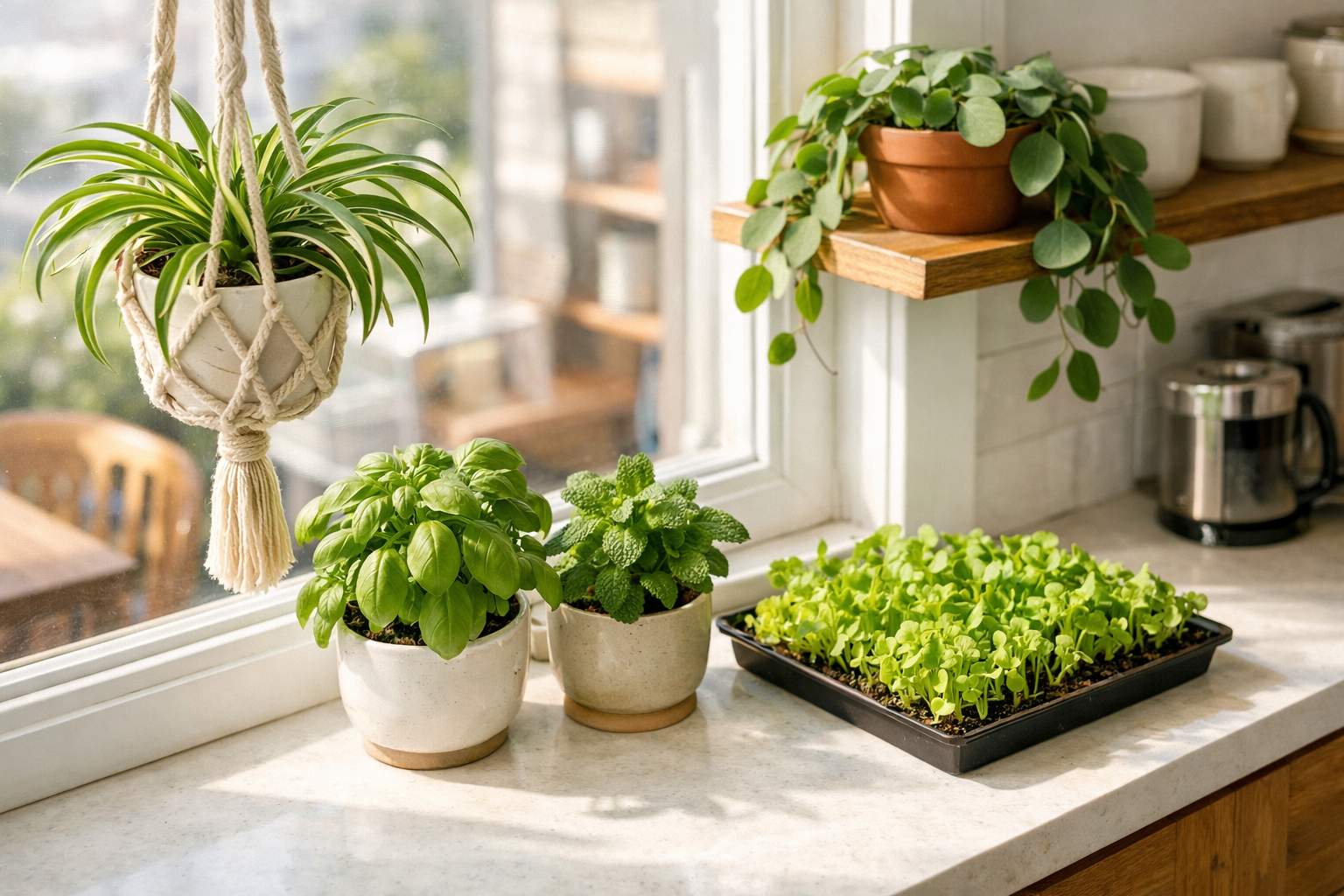
The easiest plants to grow in small spaces include herbs (basil, mint, rosemary), leafy greens (lettuce, spinach), compact vegetables (cherry tomatoes, pole beans), and low-maintenance houseplants (spider plants, pothos, hoyas). These plants adapt well to containers, need modest sunlight, and forgive the occasional missed watering. Start with one or two varieties that match your light conditions and available space, then expand from there.
What Makes a Plant “Easy” for Small Spaces?
Not every plant belongs in a compact garden. The best easy plants to grow in small spaces share a few specific traits that set them apart from their full-sized, high-maintenance counterparts.
Look for plants that meet these criteria:
- Compact growth habit: Plants that stay small naturally or have dwarf varieties bred for containers.
- Shallow or contained root systems: Deep taproots don’t work well in pots. Fibrous, shallow roots do.
- Flexible light requirements: Plants that tolerate partial shade or indirect light give you more placement options indoors.
- Low water needs: Drought-tolerant or moderate-water plants are more forgiving if you forget a watering [7].
- Disease resistance: In small spaces, airflow is often limited. Disease-resistant varieties reduce problems before they start.
Common mistake: Choosing a plant based on how it looks at the nursery without checking its mature size. A cute little tomato seedling can become a 6-foot vine that overwhelms a balcony. Always check the tag or description for mature dimensions.
Choose compact varieties if you’re working with less than 20 square feet of growing space. Choose trailing or climbing varieties if you have vertical space (walls, railings, shelves) but limited floor area.
For a broader overview of techniques and planning, see our ultimate guide to small space gardening for beginners.
Which Herbs Are Easiest to Grow in Small Spaces?
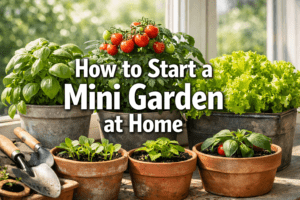
Herbs are the single best starting point for small-space gardening. Most herbs grow happily in 6- to 8-inch pots, need only a sunny windowsill, and give you something useful for the kitchen within weeks.
Top Herbs for Containers
| Herb | Pot Size Needed | Sunlight | Water Needs | Harvest Time |
|---|---|---|---|---|
| Basil | 6–8 inches | Full sun (6+ hrs) | Moderate | 3–4 weeks |
| Mint | 8–10 inches | Partial to full sun | Moderate to high | 3–4 weeks |
| Rosemary | 8–12 inches | Full sun | Low | 6–8 weeks |
| Chives | 6 inches | Partial to full sun | Moderate | 3–4 weeks |
| Thyme | 6 inches | Full sun | Low | 4–6 weeks |
| Parsley | 6–8 inches | Partial to full sun | Moderate | 3–4 weeks |
| Cilantro | 8 inches | Partial sun | Moderate | 3–4 weeks |
Herbs are consistently recommended by garden experts as ideal container plants because they produce continuously throughout the growing season [1]. A single basil plant in a sunny window can provide fresh leaves for months.
Practical tip: Mint spreads aggressively, so always grow it in its own container. If you plant mint alongside other herbs, it will take over the pot within a few weeks.
Choose basil or chives if you’re a complete beginner. Both germinate quickly, grow fast, and are hard to kill as long as they get sunlight. Choose rosemary or thyme if you tend to forget watering; both prefer drier soil.
What Are the Best Vegetables to Grow in Small Spaces?
Lettuce, cherry tomatoes, pole beans, cucumbers, and microgreens are the top vegetables for compact gardens [1]. Each of these grows well in containers and produces a meaningful harvest without needing a traditional garden bed.
Vegetables That Work in Containers
- Lettuce and salad greens: Grow in shallow containers (4–6 inches deep). Ready to harvest in 30–45 days. Cut-and-come-again varieties let you harvest multiple times from one planting.
- Cherry and dwarf tomatoes: Dwarf varieties like ‘Tiny Tim’ or ‘Patio Princess’ stay under 2 feet tall and produce full-flavored fruit. Need at least 5-gallon containers and 6+ hours of sun.
- Pole beans: Grow vertically on a simple trellis or string, making them perfect for balconies. A single 12-inch pot with a 5-foot support can produce beans for weeks.
- Cucumbers (bush varieties): Compact bush cucumbers like ‘Spacemaster’ grow in 5-gallon containers. Vining types work too if you have a trellis.
- Microgreens: The fastest and most space-efficient option. Grow in trays just 1–2 inches deep on a countertop. Ready in 7–14 days. No outdoor space required.
- Cabbage (mini varieties): Compact varieties like ‘Gonzales’ produce softball-sized heads in containers [1].
“Dwarf varieties are specifically bred for container gardening” and produce harvests comparable to full-sized plants in a fraction of the space [1].
Edge case: If your small space gets fewer than 4 hours of direct sunlight, stick with leafy greens and microgreens. Tomatoes, beans, and cucumbers need 6+ hours of sun to produce well.
If you’re exploring creative ways to arrange edible plants in tight quarters, our small space gardening ideas hub has layout suggestions and container recommendations.
Which Houseplants Thrive in Small Indoor Spaces?
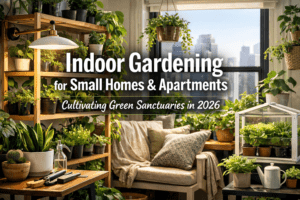
Spider plants, hoyas, and pothos are three of the most adaptable houseplants for small indoor spaces, and all three tolerate a range of light conditions [2].
Best Indoor Plants for Apartments and Small Rooms
Spider Plant (Chlorophytum comosum)
- Tolerates low to bright indirect light
- Pet-safe, which matters in small apartments where pets and plants share close quarters
- Produces “babies” (plantlets) you can propagate for free
- Water when the top inch of soil dries out
Hoya (various species)
- Low water needs; let soil dry between waterings
- Compact trailing growth suits shelves and hanging planters
- Blooms with fragrant, waxy flowers under bright indirect light
- Genuinely low-maintenance [2]
Pothos (Epipremnum aureum)
- Survives in low light, though it grows faster in bright indirect light
- Trailing habit works well on shelves, mantels, or in hanging pots
- Nearly impossible to kill through neglect
- Not pet-safe (toxic if ingested)
Asparagus Fern (Asparagus setaceus)
- Feathery, delicate texture adds visual interest
- Needs regular watering and moderate light
- Works well in bathrooms where humidity is higher [2]
Snake Plant (Sansevieria)
- Upright growth takes up almost no floor space
- Tolerates low light and infrequent watering
- One of the most drought-tolerant indoor plants available
Choose spider plants or pothos if your space has limited natural light. Choose hoyas if you want something low-water and flowering. Choose snake plants if you want a vertical accent that fits in a narrow corner.
Common mistake: Overwatering indoor plants in small spaces. Smaller pots dry out faster than large garden beds, but they also hold moisture closer to the roots. Check the soil before watering rather than following a rigid schedule.
How Do You Maximize Growing Space When Square Footage Is Limited?
Three main techniques let you grow more in less space: vertical planting, container gardening, and hydroponics [1]. Each approach suits different situations, and you can combine them.
Vertical Planting
Vertical gardens use walls, trellises, stacked planters, and hanging baskets to grow plants upward instead of outward. This is the single most effective way to multiply your growing area.
Practical options:
- Wall-mounted pocket planters for herbs and strawberries
- Tension rod shelving in front of windows for multiple pot tiers
- Trellises attached to balcony railings for climbing beans, peas, or cucumbers
- Hanging baskets for trailing plants like pothos, string of pearls, or cherry tomatoes
Container Gardening
Containers let you grow almost anything, anywhere. The key is matching pot size to plant needs.
Container sizing guide:
| Plant Type | Minimum Container Size |
|---|---|
| Herbs | 6–8 inch diameter |
| Lettuce/greens | 4–6 inches deep, any width |
| Cherry tomatoes | 5-gallon (12-inch diameter) |
| Pole beans | 5-gallon with trellis |
| Dwarf fruit bushes | 7–10 gallon |
| Houseplants | Varies; match to root ball + 1–2 inches |
Tip: Use lightweight containers (fabric grow bags, plastic, or fiberglass) on balconies where weight limits apply. Terracotta looks great but gets heavy when filled with wet soil.
Hydroponics
Hydroponic systems grow plants in water with dissolved nutrients, eliminating the need for soil entirely. Compact countertop hydroponic units are now widely available and work well for herbs, lettuce, and other greens year-round [1].
Best hydroponic plants for small spaces:
- Lettuce and salad greens
- Basil, cilantro, mint, and other herbs
- Brassica family plants (kale, bok choy)
- Strawberries, tomatoes, and cucumbers in summer with larger systems [1]
Choose vertical planting if you have wall or railing space but limited floor area. Choose hydroponics if you want to grow edibles indoors year-round without natural light (most units include grow lights). Choose traditional containers if you prefer simplicity and already have outdoor space with sun.
For step-by-step setup instructions, check out our beginner’s guide to small space gardening.
What Are the Best Compact Ornamental Plants for Small Outdoor Spaces?
Compact ornamental plants can provide flowers, fragrance, and even privacy screening in surprisingly small footprints. Several varieties bred for small gardens offer what experts call “double duty” benefits: year-round visual interest combined with practical function [3].
Recommended Compact Ornamentals
- Diamond Spire Gardenia: Fragrant white blooms, compact upright form, works as a small privacy screen or focal point [3].
- Autumn Bonfire Encore Azalea: Reblooming azalea that flowers in spring and fall, staying compact enough for large containers [3].
- Touch of Gold Holly: Evergreen with golden-tipped foliage, provides year-round color and structure [3].
- Low Scape Aronia: Compact shrub with white spring flowers, dark berries, and brilliant fall color. Also produces edible berries [3].
- Boxwoods: Classic evergreen that takes well to pruning and container growing. Provides structure and a soothing green backdrop [5].
Flowers for Small-Space Containers
Traditional favorites like roses, hydrangeas, jasmine, and lavender remain popular choices, and many now come in compact or patio varieties [5]. For annual color in containers, begonias, impatiens, petunias, and pelargoniums are reliable performers that bloom continuously through the growing season [1].
Choose evergreens (boxwood, holly) if you want year-round structure and low maintenance. Choose flowering shrubs (gardenia, azalea) if fragrance and seasonal color matter more to you.
Can You Grow Fruit in a Small Space?
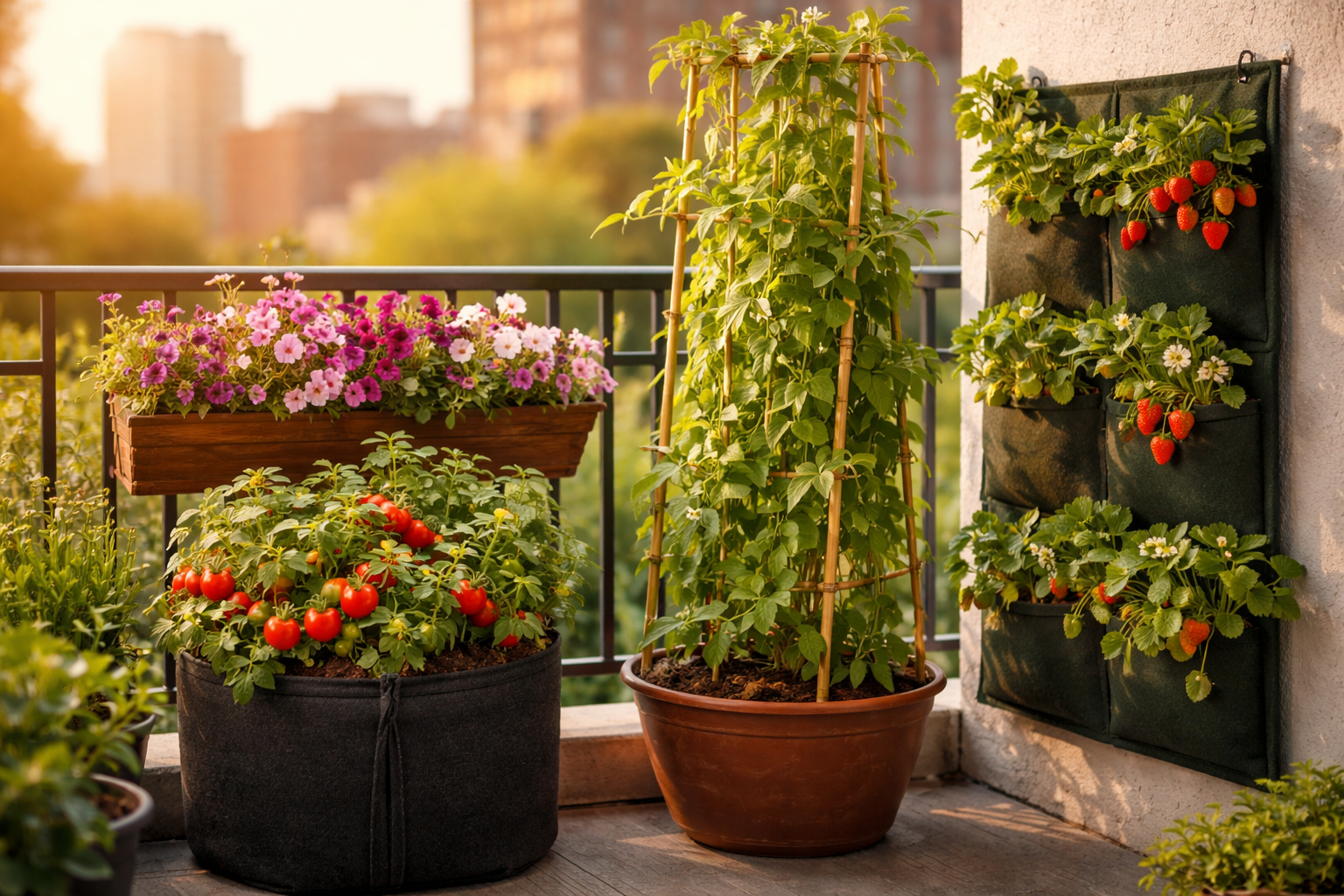
Yes. Several fruit-bearing shrubs and dwarf fruit trees are bred specifically for container growing, combining visual appeal with edible harvests [3].
Best Fruit Plants for Small Spaces
- Easy as Pie Bush Cherry: Compact cherry bush that produces fruit in containers. Self-pollinating, so you only need one plant [3].
- Bushel and Berry Rubus varieties: Compact raspberry and blackberry bushes bred for patio containers [3].
- Strawberries: Grow well in hanging baskets, vertical pocket planters, or window boxes. Everbearing varieties produce fruit from spring through fall.
- Dwarf citrus trees: Meyer lemon and calamondin orange stay small enough for large pots (10–15 gallon). Need full sun and protection from frost.
- Blueberries (compact varieties): ‘Top Hat’ and similar dwarf blueberries grow in 5-gallon containers. Need acidic soil (use blueberry-specific potting mix).
Common mistake: Expecting full-sized harvests from container fruit plants in their first year. Most fruit-bearing plants need one to two seasons to establish before producing meaningful yields. Be patient with the first year and focus on healthy root development.
Choose strawberries if you want the fastest fruit harvest in the smallest space. Choose bush cherries or blueberries if you want a perennial plant that produces for years.
What Are Common Mistakes When Growing Plants in Small Spaces?
Even easy plants can struggle if you make a few avoidable errors. Here are the most frequent problems I see with small-space gardens:
Overcrowding containers. Plants need room for roots and airflow. Follow spacing recommendations even when it feels like you’re wasting pot space. Crowded plants compete for water and nutrients, and both lose.
Ignoring drainage. Every container needs drainage holes. Sitting in waterlogged soil kills more container plants than any pest or disease. If your decorative pot doesn’t have holes, use it as a cachepot (outer sleeve) with a functional pot inside.
Choosing the wrong light match. A sun-loving tomato won’t produce on a north-facing balcony. Assess your actual light conditions (not what you wish they were) before choosing plants.
Using garden soil in containers. Garden soil compacts in pots, suffocating roots. Use a quality potting mix designed for containers.
Skipping fertilizer. Container plants exhaust their soil nutrients faster than in-ground plants. Feed with a balanced liquid fertilizer every 2–4 weeks during the growing season.
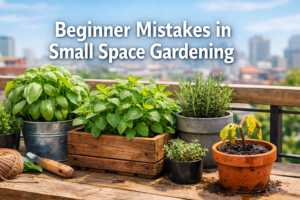
Underestimating wind on balconies. High-rise balconies can be windy, drying out soil and damaging plants. Use heavier pots or windbreaks, and water more frequently.
Neglecting seasonal transitions. Some plants need to come indoors before frost. Plan for where they’ll go before cold weather arrives.
Our small space gardening resource center covers troubleshooting for many of these issues in more detail.
How Do You Choose the Right Plants for Your Specific Small Space?
Start by assessing three things: light, space dimensions, and your maintenance commitment. The right plant for your space depends on these factors more than anything else.
Decision Framework
Step 1: Measure your light.
- Full sun (6+ hours direct): Tomatoes, peppers, herbs, roses, most vegetables.
- Partial sun (3–6 hours): Lettuce, spinach, chives, parsley, impatiens, begonias.
- Low light (under 3 hours or indirect only): Pothos, snake plant, spider plant, ferns.
Step 2: Measure your space.
- Windowsill only: Herbs, microgreens, small houseplants.
- Balcony or patio (under 50 sq ft): Containers with vegetables, herbs, compact ornamentals, vertical planters.
- Small yard or rooftop: Raised beds, larger containers, dwarf fruit trees, shrubs.
Step 3: Be honest about maintenance.
- 5 minutes a day: Herbs, pothos, snake plant, succulents.
- 15 minutes a day: Container vegetables, flowering annuals, strawberries.
- 30+ minutes a day: Hydroponic systems, multiple container crops, fruit trees.
Homeowners in 2026 are increasingly prioritizing low-water, drought-tolerant varieties that resist disease and need minimal upkeep [7]. If low maintenance is your priority, lean toward succulents, hoyas, snake plants, rosemary, and thyme.
For more ideas tailored to different space types, visit our small space gardening ideas page.
What’s the Best Way to Get Started?
Start small. Pick two or three plants from this guide that match your light and space, buy quality potting mix and appropriately sized containers, and begin. You can always expand later.
Quick-Start Checklist
- Assess your available light (full sun, partial, or low light)
- Measure your space and decide on container sizes
- Choose 2–3 beginner-friendly plants from this guide
- Buy quality potting mix (not garden soil)
- Ensure all containers have drainage holes
- Set a watering reminder for the first few weeks until you learn your plants’ needs
- Add a balanced liquid fertilizer to your shopping list
- Plan for vertical space if floor area is limited
If you only grow one thing, make it basil. It’s fast, forgiving, useful in the kitchen, and it smells great. A single pot of basil on a sunny windowsill can convert even the most skeptical non-gardener.
FAQ
What is the easiest plant to grow in a small space?
Pothos is the easiest houseplant; it tolerates low light, irregular watering, and grows in almost any indoor environment. For edibles, basil is the easiest herb, and lettuce is the easiest vegetable.
Can I grow vegetables on a balcony?
Yes. Cherry tomatoes, lettuce, pole beans, herbs, and cucumbers all grow well in balcony containers as long as they get adequate sunlight (at least 4–6 hours for greens, 6+ hours for fruiting vegetables) [1].
How much sunlight do small-space plants need?
It depends on the plant. Leafy greens and many houseplants need 3–4 hours of indirect or direct light. Fruiting vegetables and herbs generally need 6+ hours of direct sunlight.
What size container do I need for tomatoes?
A minimum of 5 gallons (approximately 12 inches in diameter) for dwarf or cherry tomato varieties. Larger indeterminate varieties need 10-gallon containers or bigger.
Are hydroponic systems good for small spaces?
Yes. Compact countertop hydroponic units grow herbs and lettuce year-round in as little as 1–2 square feet of counter space, and most include built-in grow lights [1].
Which plants are safe for pets in small apartments?
Spider plants are pet-safe and tolerate varied light conditions [2]. Boston ferns, calatheas, and most herbs (basil, rosemary, thyme) are also non-toxic to cats and dogs. Avoid pothos, which is toxic if ingested by pets.
Can I grow fruit in containers?
Yes. Strawberries, bush cherries, compact blueberries, and dwarf citrus trees all produce fruit in containers [3]. Expect smaller yields than in-ground plants, especially in the first year.
How often should I water container plants?
Check the soil daily in warm weather. Water when the top inch feels dry for most plants. Succulents and drought-tolerant plants like rosemary can go longer between waterings. Overwatering is more common than underwatering in containers.
What’s the cheapest way to start a small-space garden?
Grow herbs or lettuce from seed in recycled containers (yogurt cups, tin cans with drainage holes). Seeds cost a few dollars, and potting mix is inexpensive. You can have a productive windowsill garden for under $15.
Do I need special soil for container gardening?
Yes. Use potting mix, not garden soil. Potting mix is lighter, drains better, and won’t compact around roots the way garden soil does in containers.
Can I garden indoors with no natural light?
Yes, with grow lights. LED grow lights are affordable and energy-efficient. Pair them with a countertop hydroponic system or simple pots for herbs and greens. Microgreens are especially well-suited to artificial light growing.
What are the best low-maintenance plants for beginners?
Snake plants, pothos, spider plants, and hoyas require the least attention indoors [2]. Outdoors, rosemary, thyme, and lavender are drought-tolerant and low-effort [7].
Conclusion
Growing plants in a small space is straightforward once you match the right plants to your conditions. Start by assessing your light, measuring your space, and being realistic about how much time you’ll spend on maintenance. Then pick a few plants from this guide and begin.
Your next steps:
- Today: Walk through your space and note where sunlight falls throughout the day.
- This week: Choose 2–3 plants from the recommendations above that fit your light and space.
- This weekend: Pick up containers, potting mix, and your chosen plants or seeds.
- Ongoing: Water consistently, fertilize monthly during the growing season, and expand your garden as you gain confidence.
Small-space gardening isn’t a compromise. It’s a focused, efficient way to grow herbs, vegetables, flowers, and houseplants that improve your meals, your air quality, and your daily mood. The best time to start is now, and you really only need one pot and one plant to begin.
For more ideas, layouts, and plant recommendations, explore our complete small space gardening resource center.
Key Takeaways
- Herbs (basil, mint, rosemary, thyme) are the easiest and most rewarding starting point for any small-space garden.
- Leafy greens and microgreens grow in minimal space and need less sunlight than fruiting vegetables.
- Spider plants, pothos, hoyas, and snake plants are the most forgiving houseplants for small indoor spaces [2].
- Vertical planting, container gardening, and hydroponics are the three core techniques for maximizing limited space [1].
- Always use potting mix (not garden soil) in containers, and ensure every pot has drainage.
- Match plants to your actual light conditions, not your ideal ones.
- Compact and dwarf varieties of tomatoes, fruit bushes, and ornamental shrubs are specifically bred for small-space growing [1][3].
- Low-maintenance, drought-tolerant plants reduce effort and increase your chances of success [7].
- Start with 2–3 plants, learn their needs, and expand gradually.
- A productive small-space garden can start for under $15 with seeds and basic supplies.
References
[1] Micro Garden Trend 2026 – https://www.housedigest.com/2003069/micro-garden-trend-2026/
[2] 7 Best Houseplants 2026 – https://dennis7dees.com/7-best-houseplants-2026/
[3] Garden Trends 2026 – https://www.countryliving.com/gardening/garden-ideas/a70160525/garden-trends-2026/
[5] Watch – https://www.youtube.com/watch?v=ERu3ZXEvO-I
[7] 2026 Plant Trends Low Maintenance Regional And Purpose Driven – https://blog.landscapeprofessionals.org/2026-plant-trends-low-maintenance-regional-and-purpose-driven/