
Does companion planting actually work scientifically?
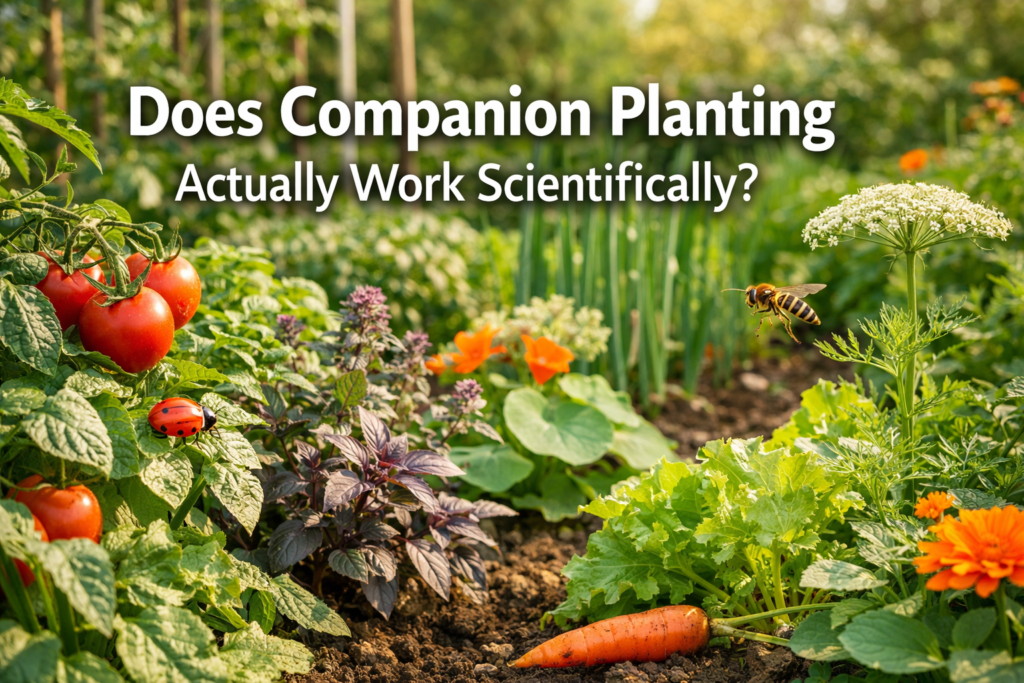
For centuries, gardeners have sworn by companion planting—the practice of growing different plants near each other to benefit one or both species. But in an age seeking evidence-based practices, the question arises: Does companion planting actually work scientifically? The short answer is yes, many aspects of companion planting are supported by scientific research, particularly regarding pest management and soil health, although some claims lack robust evidence and are considered gardening lore.
Key Takeaways
- Evidence-Based Benefits: Many companion planting practices are scientifically proven to reduce pests and diseases, improve growth, and enhance biodiversity [1, 4].
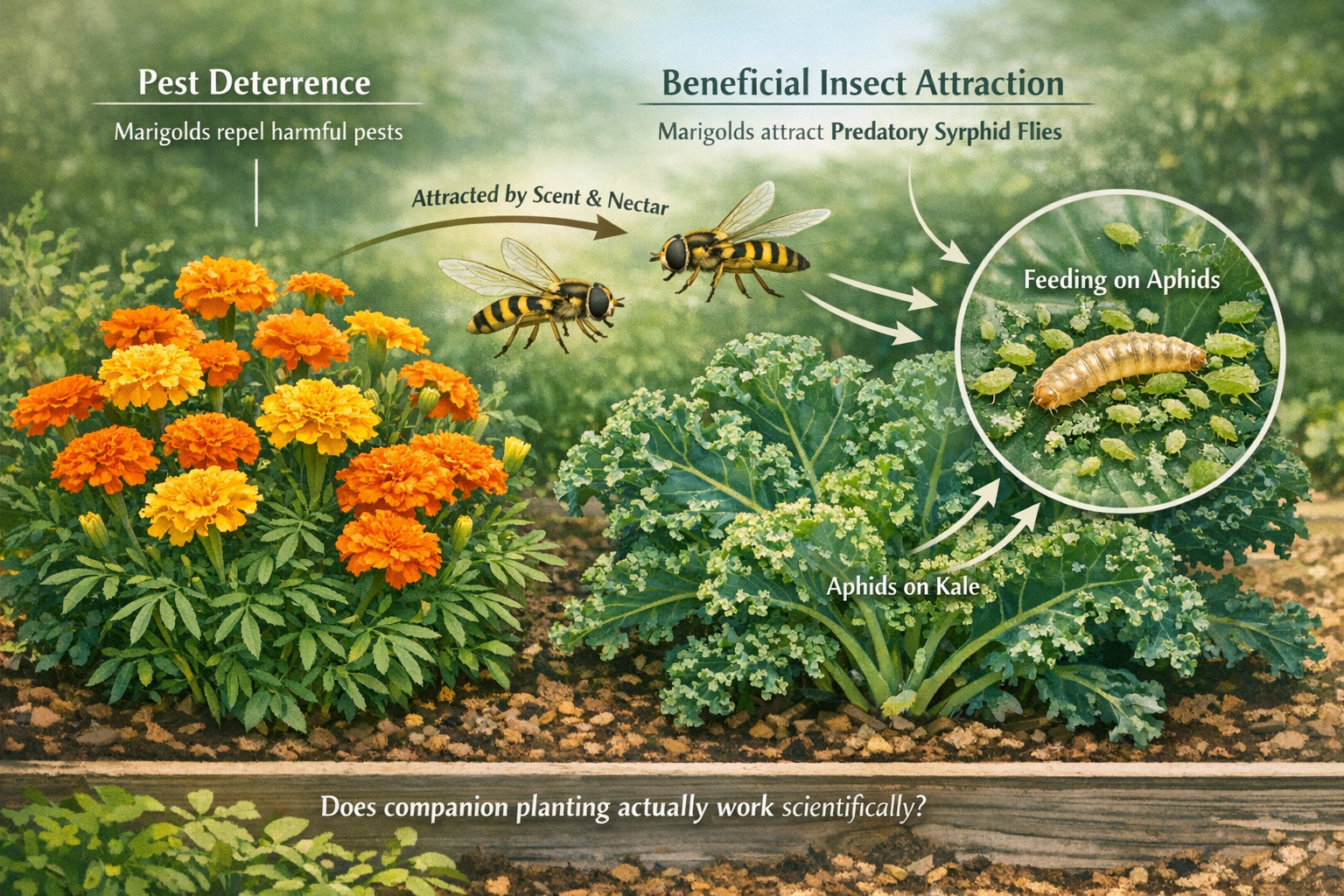
- Pest Deterrence: Certain plants, like marigolds, can significantly reduce pest populations (e.g., aphids, nematodes) by attracting beneficial insects or repelling harmful ones [1].
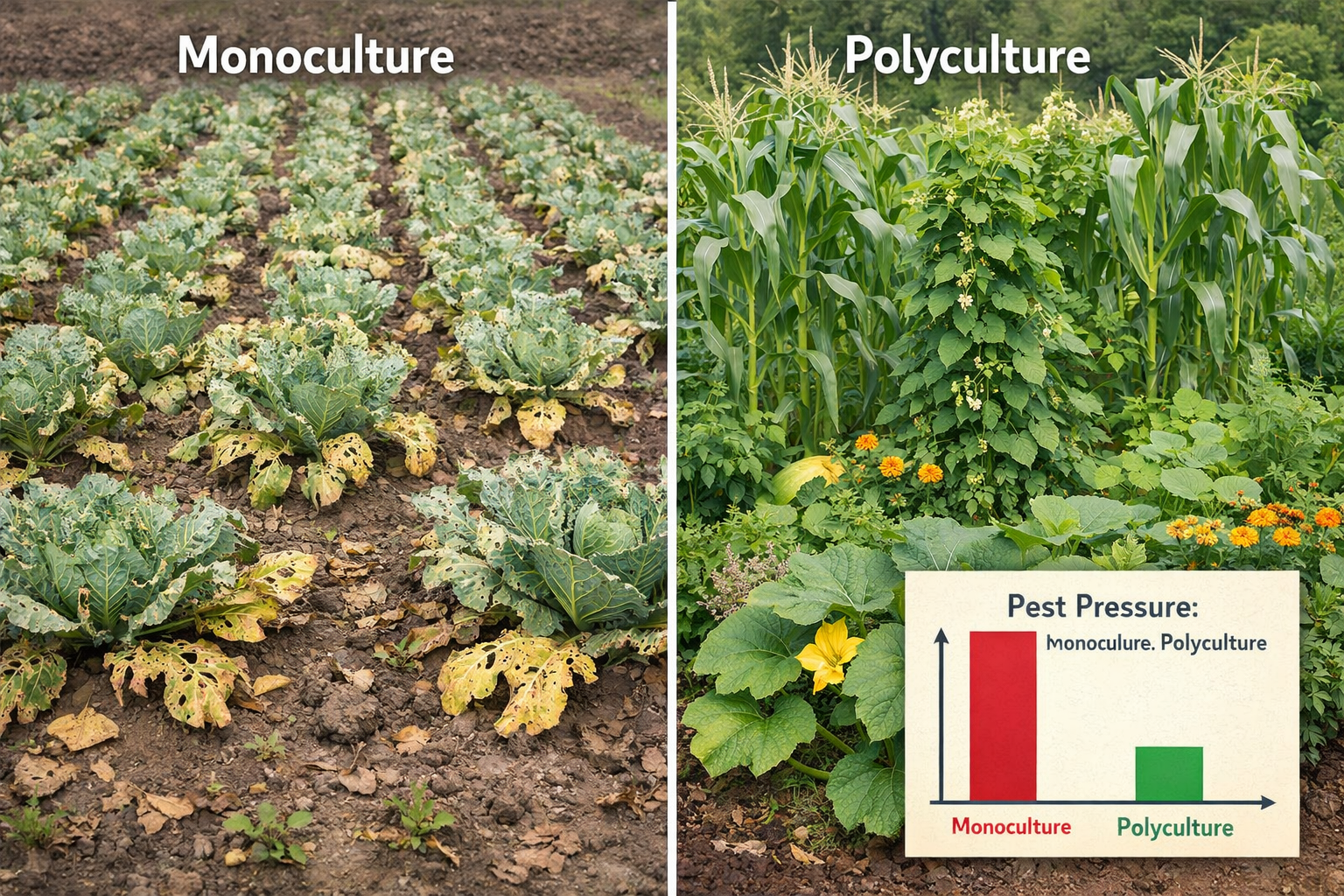
- Biodiversity Boost: Polyculture, or diverse planting, enhances garden resilience against pests and pathogens more effectively than monoculture [1, 3].
- Nutrient Cycling: Legumes can contribute nitrogen to the soil, though this benefit primarily occurs after decomposition, not actively during their growth alongside companions [5].
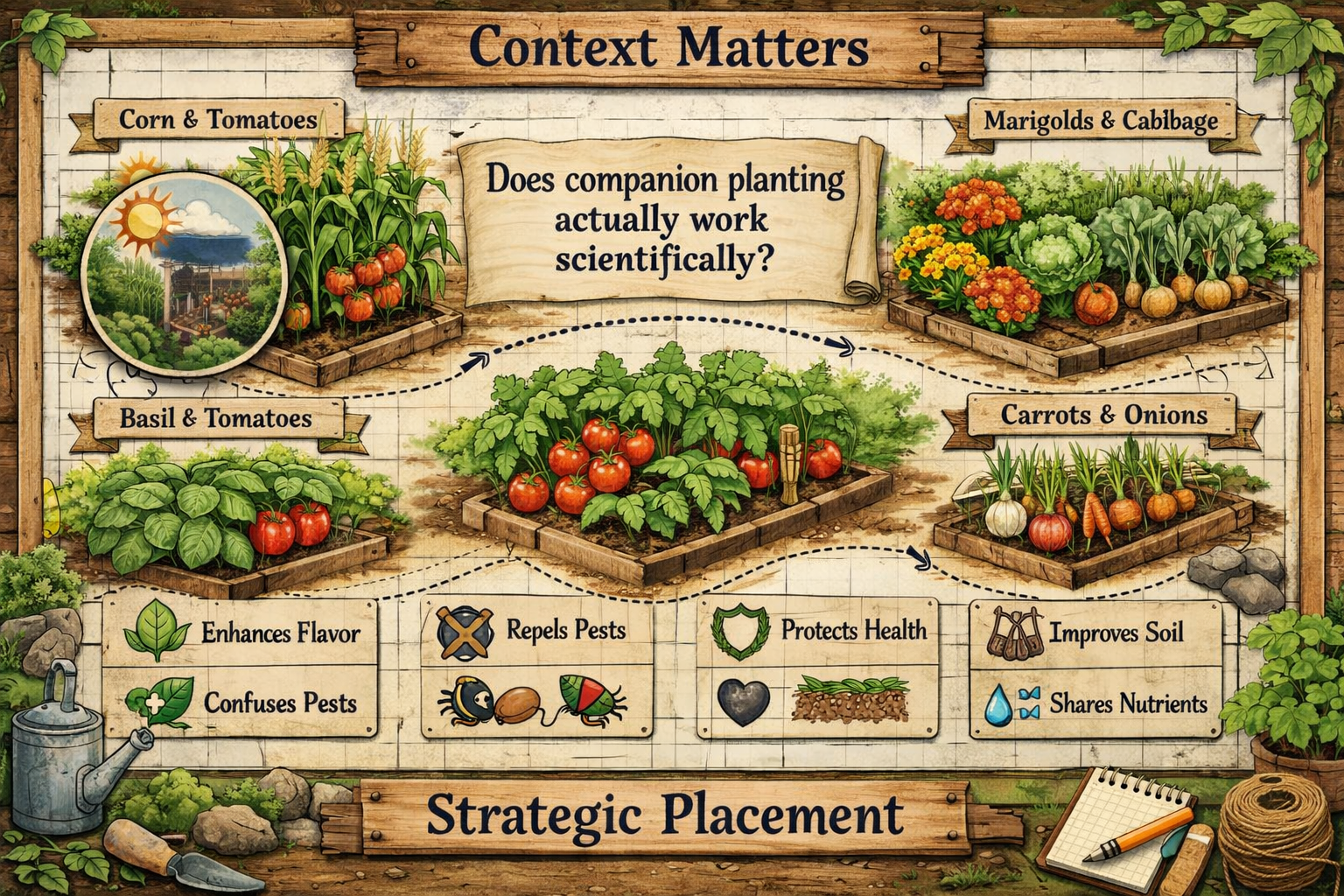
- Context is Crucial: The success of companion planting depends heavily on specific plant pairings, environmental conditions, planting density, and timing [5].
- Not All Claims Are Scientific: While some pairings are well-documented, others lack rigorous scientific proof and should be approached with a critical eye [2, 4].
- Improvement, Not Miracle Cure: Companion planting is a valuable tool for integrated pest management and sustainable gardening, but it’s not a magical solution for all garden challenges.
Quick Answer
Yes, many aspects of companion planting are backed by scientific evidence, primarily through mechanisms like pest deterrence, attraction of beneficial insects, and improved soil health. While not every traditional pairing holds up to scientific scrutiny, the principle of plant diversity in a garden system—known as polyculture—has been repeatedly shown to foster healthier, more resilient ecosystems than monoculture plantings [1, 3].
How Does Companion Planting Actually Work Scientifically for Pest Control?
Companion planting effectively manages pests scientifically by utilizing specific plant properties to deter harmful insects, attract beneficial predators, or confuse pests looking for host plants. This strategic placement disrupts pest life cycles and reduces overall damage to crops, offering a natural and sustainable pest management solution [1, 7].
Mechanisms of Pest Control:
- Deterring Pests: Some plants emit natural compounds that repel specific insect pests. For instance, marigolds (especially French marigolds) are highly effective at repelling root-knot nematodes both above and below ground, protecting susceptible crops [1]. Similarly, onions and garlic can deter aphids from nearby plants.
- Attracting Beneficial Insects: Certain flowering plants, particularly those with small, open flowers, provide nectar and pollen for beneficial insects like ladybugs, lacewings, and parasitic wasps. These insects, in turn, prey on common garden pests. Sweet alyssum, for example, attracts syrphid flies, whose larvae are voracious aphid eaters, making it a good companion for tomatoes [1].
- Masking and Confusion: Planting diverse species together makes it harder for specialized pests to locate their target host plants. The varied scents and visual cues in a polyculture garden can confuse pests, reducing their ability to find and infest crops compared to a monoculture where host plants are abundant and easily identifiable [1]. This is a key reason why biodiversity fosters greater resilience against insect infestations [1].
Consideration: When implementing pest-deterring companions, ensure the chosen repellent plants are robust enough not to be overwhelmed by the pest if the primary crop is heavily infested. For optimal results, integrate companion planting with other strategies outlined in a Beginner’s Guide to Plant Care 2026: Grow Thriving Plants.
Does Companion Planting Actually Work Scientifically for Enhancing Growth and Soil Health?
Yes, companion planting can scientifically enhance plant growth and improve soil health, primarily through nutrient cycling, improved soil structure, and microclimate modification. While nitrogen fixation is a well-known benefit of legumes, their active nitrogen contribution to companion plants typically occurs post-decomposition rather than during live growth [5].
Ways Companion Planting Improves Growth and Soil:
- Nitrogen Fixation: Legumes (such as beans and peas) form symbiotic relationships with nitrogen-fixing bacteria in their root nodules. These bacteria convert atmospheric nitrogen into a form usable by plants. While this is a clear scientific benefit, the nitrogen becomes readily available to neighboring plants mainly after the legume plant dies and decomposes, releasing the stored nitrogen into the soil [5]. This makes legumes excellent for long-term soil enrichment and cover cropping.
- Nutrient Mining: Some plants, known as dynamic accumulators, have deep taproots that can draw nutrients from deeper soil layers. When these plants die and decompose, they release these nutrients into the topsoil, making them available to shallower-rooted companion plants. Comfrey is a classic example often used for this purpose.
- Soil Structure and Aeration: Plants with different root systems can improve soil structure. Deep-rooted plants break up compacted soil, allowing better water penetration and aeration, which benefits all nearby plants. This diverse root network also supports a richer soil microbiome. For more on this, consult our Soil Basics for Container Gardening: 2026 Expert Guide.
- Microclimate Modification: Taller plants can provide shade for sun-sensitive companions, protecting them from heat stress and reducing water evaporation. For example, corn can offer shade and structural support for climbing beans or lettuce, benefiting from a cooler microclimate [5].
Common Mistake: Assuming immediate and direct nitrogen transfer from growing legumes to companion plants. While legumes enrich the soil over time, they don’t typically “feed” nitrogen directly to actively growing neighbors in significant amounts [5]. The most substantial benefits come from incorporating legume residue into the soil.
What Are Some Scientifically Supported Companion Planting Pairings and Principles?
Several companion planting pairings and principles have received scientific validation, demonstrating tangible benefits in real-world garden settings. These pairings often leverage the specific biochemical properties of plants or their physical growth habits to create a more resilient and productive ecosystem.
Documented Effective Pairings and Principles:
- Marigolds and Kale/Tomatoes: French marigolds ( Tagetes patula ) are proven to reduce root-knot nematode populations in the soil and can significantly decrease aphid infestations on kale by attracting predatory syrphid flies and parasitic wasps [1]. Planting sweet alyssum near tomatoes also attracts beneficial insects [1].
- Potato Onions and Tomatoes: Studies indicate that potato onions interplanted with tomatoes can help inhibit soil-borne diseases such as Verticillium wilt, contributing to healthier tomato plants [1].
- Corn, Beans, and Squash (The Three Sisters): This traditional Native American planting method is a prime example of effective companion planting.
- Corn: Provides a tall stalk for climbing beans to ascend, offering structural support [5].
- Beans: Are legumes that fix nitrogen in the soil, enriching it for the heavy-feeding corn and squash (though as noted, the most significant nitrogen release is post-decomposition) [5].
- Squash: Spreads low to the ground, shading the soil to suppress weeds, retain moisture, and deter pests with its prickly leaves.
- Carrots and Rosemary: Rosemary can deter the carrot rust fly, a common pest that damages carrot roots.
- Lettuce and Taller Vegetables: Planting lettuce behind taller crops like tomatoes provides essential shade, preventing lettuce from bolting (going to seed prematurely) in hot weather [5].
Decision Rule: Choose companion plants that address a known problem in your garden (e.g., specific pests, nutrient deficiencies, or sun exposure issues). Research the specific varieties of companion plants, as effectiveness can vary. For example, some marigold varieties are more effective against nematodes than others [1]. Always consider your local climate and growing conditions. If you’re new to gardening, learning about Beginner Mistakes in Small Space Gardening 2026 can help you avoid common pitfalls.
Comparison of Monoculture vs. Polyculture
| Feature | Monoculture (Single Crop) | Polyculture (Companion Planting) |
|---|---|---|
| Pest Pressure | High; pests easily find host plants and spread rapidly | Reduced; pests are confused, beneficial predators are attracted [1] |
| Disease Incidence | Higher; lack of diversity can lead to rapid disease spread | Lower; increased biodiversity creates resilience against pathogens [1] |
| Nutrient Cycling | Less efficient; relies on external inputs | More efficient; diverse root systems, nitrogen fixers [5] |
| Soil Health | Can deplete specific nutrients, prone to erosion | Improved structure, increased organic matter, diverse microbial life |
| Weed Control | Relies heavily on manual weeding or herbicides | Some companions suppress weeds by shading or competition [5] |
| Yield Stability | More vulnerable to crop failure from pests/disease | More stable; intercropping can optimize space and resources |
FAQ
Is companion planting a myth?
No, companion planting is not entirely a myth. While some anecdotal claims lack scientific evidence, many practices, especially those related to pest management and beneficial insect attraction, are scientifically supported [1, 4, 6].
What is the most common scientific benefit of companion planting?
The most common scientific benefit is pest deterrence and the attraction of beneficial insects, leading to reduced pest pressure on crops [1].
Do legumes actively feed nitrogen to companion plants?
Legumes fix nitrogen, but they add very little nitrogen to the soil for companion plants while actively growing. The primary benefit of nitrogen release occurs after the legume’s decomposition [5].
Can companion planting improve crop yield?
Yes, by reducing pest and disease incidence, improving soil health, and optimizing resource use (like light and water), companion planting can indirectly lead to improved crop yields [1].
Are there any risks to companion planting?
Yes, some plant combinations can be detrimental (e.g., competing for resources, attracting shared pests, or inhibiting growth). Research specific pairings before planting [5].
How does biodiversity relate to companion planting?
Ecological science repeatedly shows that increased biodiversity, which companion planting promotes, creates greater resilience against insects, pathogens, and climatic threats in a garden ecosystem [1].
What factors influence the effectiveness of companion planting?
Crop density, planting ratio, relative planting times, soil type, and climate all significantly affect how companion species interact and influence outcomes [5].
Conclusion
The question, “Does companion planting actually work scientifically?” can be answered with a resounding yes for many of its applications. While the practice has roots in traditional gardening wisdom, modern scientific research increasingly validates its effectiveness in specific contexts. We’ve seen how strategically pairing plants can lead to measurable benefits, from repelling harmful pests and attracting beneficial insects to enhancing soil health and even providing physical support for growing crops.
It’s clear that the principles of biodiversity and ecological interaction are at the heart of successful companion planting. By fostering a diverse garden ecosystem, we create more resilient plants that are better equipped to withstand environmental stresses and pest pressures. However, it’s equally important to approach companion planting with a critical eye, distinguishing between scientifically proven pairings and those that remain largely anecdotal.
For us at Mini Space Garden, the evidence suggests that incorporating scientifically backed companion planting strategies is a valuable tool for any gardener, especially those working with limited space. By understanding the underlying mechanisms, you can make informed choices that lead to a healthier, more productive garden in 2026 and beyond.
Actionable Next Steps:
- Research Specific Pairings: Before planting, investigate specific companion pairs known to work in your region and for your target crops, focusing on documented scientific benefits.
- Start Small: Experiment with a few well-researched companion plant combinations in your garden this year. Observe their effects on pest populations and plant vigor.
- Prioritize Polyculture: Aim for diversity in your garden rather than monocultures. Even if specific companion benefits aren’t fully understood, increasing plant variety generally leads to a healthier ecosystem.
- Observe and Adapt: Pay attention to how your plants interact. What works well in one season or location might need adjustment in another.
- Focus on Integrated Strategies: Combine companion planting with other sustainable gardening practices like proper watering (see How Often Should You Water Plants? Ultimate Guide 2026) and healthy soil management.
References
[1] Companion Planting Fad Or Science – https://www.epicgardening.com/companion-planting-fad-or-science/
[2] Weeding Out The Pseudoscience In Companion Planting – https://gardenprofessors.com/weeding-out-the-pseudoscience-in-companion-planting/
[3] Adding Diversity Garden – https://www.udel.edu/academics/colleges/canr/cooperative-extension/fact-sheets/adding-diversity-garden/
[4] Companion Planting Myth Or Truth – https://extension.msstate.edu/blogs/extension-for-real-life/companion-planting-myth-or-truth
[5] Companion Planting Truth Myth – https://www.gardenmyths.com/companion-planting-truth-myth/
[6] Companion Planting Is Not A Myth – https://www.finegardening.com/article/companion-planting-is-not-a-myth
[7] Companion Planting – https://extension.wvu.edu/lawn-gardening-pests/gardening/garden-management/companion-planting
Tags: