Companion Planting Guide 2026: Boost Your Garden Naturally
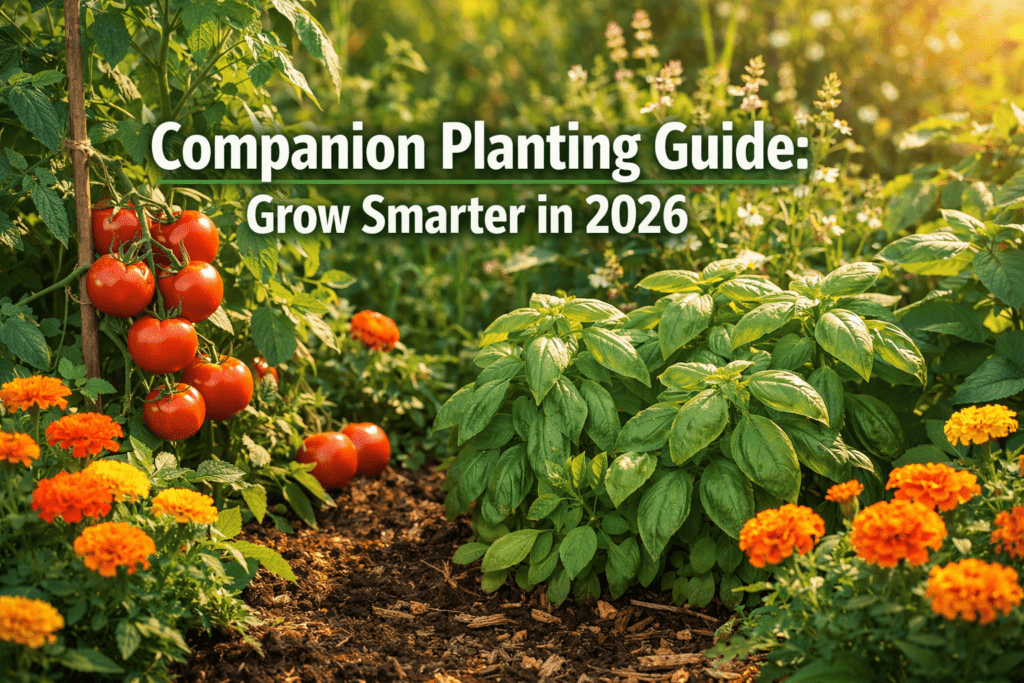
Ever wished your garden could flourish with less fuss, fewer pests, and healthier plants? The secret might lie in the ancient art of companion planting. This Companion Planting Guide will help you understand how specific plants grown together can mutually benefit each other, creating a more resilient and productive ecosystem right in your backyard or on your balcony in 2026.
Key Takeaways
- Companion planting involves growing specific plants together to achieve mutual benefits like pest control, increased growth, and improved soil health [1].
- The practice leverages natural plant interactions, reducing the need for chemical interventions in your garden [3].
- Benefits include natural pest deterrence, attracting beneficial insects, enhanced nutrient uptake, and improved plant flavor and vigor [2].
- Successful companion planting requires understanding plant families, growth habits, and specific beneficial or detrimental pairings [5].
- Common examples include basil near tomatoes for flavor enhancement and pest deterrence, or marigolds around vegetables to repel nematodes [4].
- Start small by incorporating 2-3 proven companion pairs into your garden plan for 2026 to see immediate benefits.
- Consider your specific garden conditions and plant needs when selecting companions, as some pairings are region-specific.
Quick Answer
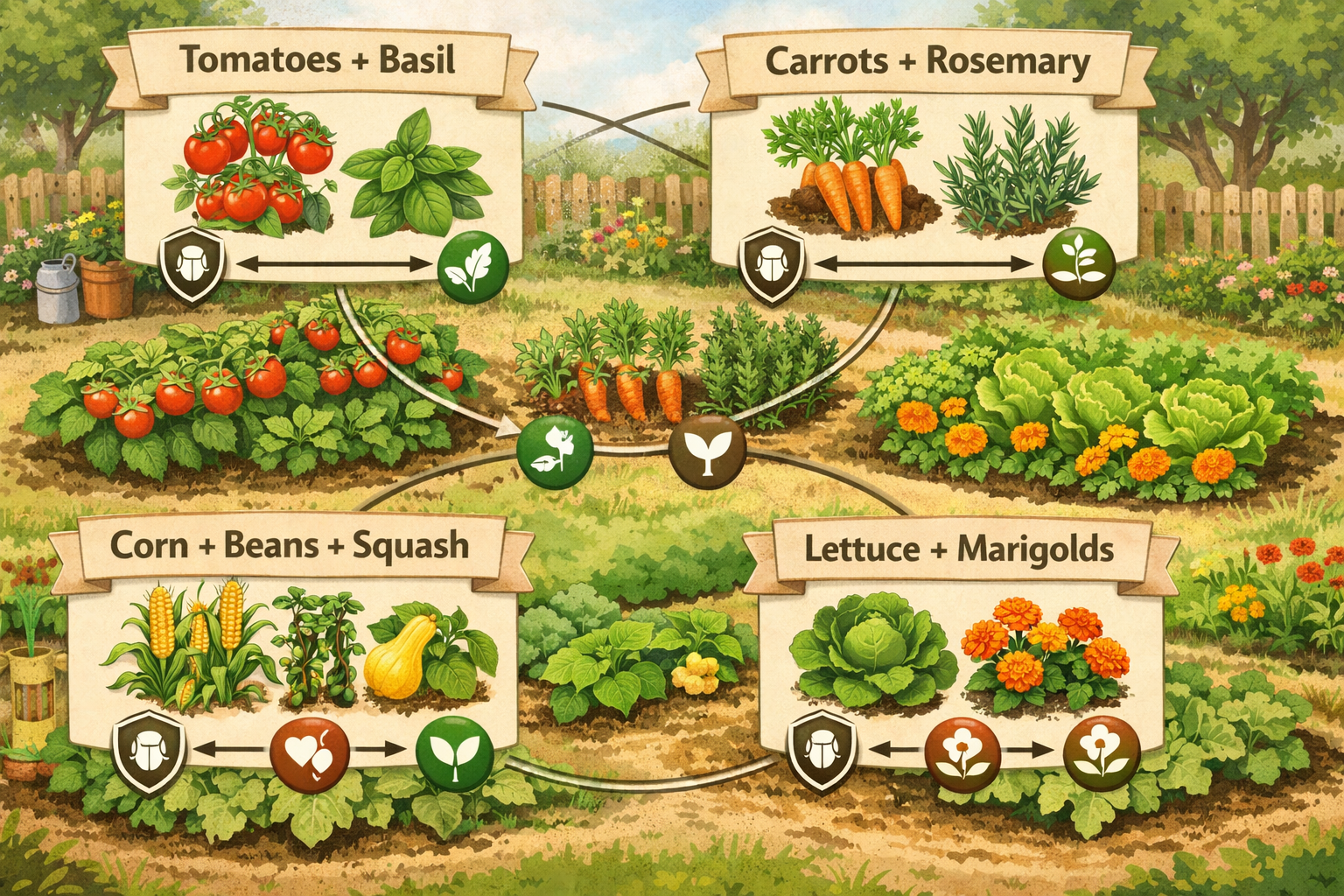
Companion planting is a gardening strategy where certain plants are grown in close proximity to one another to provide various benefits, such as natural pest deterrence, attracting beneficial insects, improving plant growth and flavor, and enhancing soil health [3, 4]. This method utilizes the natural interactions between different species to create a more balanced and productive garden ecosystem, making it a sustainable choice for gardeners looking to optimize their harvests in 2026.
What is Companion Planting and Why Does It Matter for Your 2026 Garden?
Companion planting is the strategic placement of different plant species near each other to foster mutual benefits, creating a healthier, more productive garden environment without relying heavily on artificial inputs [1]. This practice matters for your 2026 garden because it’s a sustainable, organic method that enhances natural defenses, improves soil, and can significantly boost your yield.
By carefully selecting planting partners, gardeners can:
- Deter Pests Naturally: Some plants emit scents or compounds that repel common garden pests, protecting their neighbors [4]. For example, marigolds are known to deter nematodes and other harmful insects.
- Attract Beneficial Insects: Certain flowering plants can draw in pollinators like bees and butterflies, as well as predatory insects that feed on pests, such as ladybugs and hoverflies [2].
- Improve Soil Health: Legumes, like beans and peas, fix nitrogen in the soil, making it available for neighboring plants [6]. Other companions can help suppress weeds or improve soil structure.
- Enhance Growth and Flavor: Some plant pairings are believed to improve the growth rate and even the taste of adjacent crops [5]. Basil, for instance, is often said to make tomatoes taste better.
- Provide Structural Support: Tall, sturdy plants like corn can offer natural support for climbing plants such as pole beans, forming a classic “Three Sisters” planting arrangement [6].
Understanding these symbiotic relationships is crucial for any gardener aiming for a more eco-friendly and abundant harvest. If you’re looking to minimize chemical use and maximize natural resilience, integrating companion planting into your strategy for 2026 is an excellent choice.
How Can Companion Planting Benefit Your Small Space Garden?
Companion planting offers significant advantages for small space gardens by maximizing efficiency, increasing yields, and enhancing overall plant health within limited areas. In a compact setting, every square inch counts, and strategic plant pairings ensure that your plants are working together rather than competing [6].
Here’s how companion planting specifically benefits small space gardening:
- Optimized Resource Use: By planting companions with different root depths or nutrient needs, you can more efficiently utilize the soil and available water. For example, shallow-rooted lettuce can thrive alongside deeper-rooted carrots.
- Natural Pest Management in Confined Spaces: Chemical sprays can be less desirable and harder to manage in tight quarters. Companion plants offer an organic first line of defense against pests, which is particularly useful for balcony gardens or container setups [3]. Planting herbs like mint or basil can help keep pests away from nearby vegetables.
- Increased Biodiversity: A diverse planting scheme can attract more beneficial insects and pollinators, which are vital even in small urban gardens. More diversity often means a more robust and resilient garden ecosystem [2].
- Improved Air Circulation and Shade: Taller companions can provide beneficial shade for sun-sensitive plants during hot periods, while certain plant combinations can encourage better air flow, reducing the risk of fungal diseases—a common concern in dense plantings [1].
- Aesthetic Appeal: Thoughtful companion planting can create visually appealing, lush displays in containers or raised beds, which is an added bonus for visible small spaces like patios or balconies.
When planning your small space garden for 2026, consider companion planting as an integral part of your strategy. For example, try growing lettuce under taller tomato plants, or placing nasturtiums around squash to lure aphids away. You can find more ideas in our guide to Small Space Vegetable Gardening: 2026 Step-by-Step Guide.
Key Principles of Effective Companion Planting Guide
To implement companion planting successfully, it’s essential to understand its core principles, which involve recognizing plant interactions and environmental factors. An effective companion planting guide considers both the beneficial and detrimental relationships between various species [3].
The main principles include:
- Understanding Plant Chemistry: Many plants release chemical compounds through their roots or leaves that can either deter pests or attract beneficial insects, or even affect the growth of nearby plants [5]. For instance, members of the allium family (onions, garlic) can repel aphids and slugs.
- Beneficial Insect Attraction: Incorporate flowering plants that provide nectar and pollen for pollinators and predatory insects. Dill, cilantro, and cosmos are excellent choices for attracting beneficials.
- Pest Repellence: Select plants known for their pest-repelling qualities. Marigolds (Tagetes species) are famous for deterring nematodes and other soil pests, while nasturtiums can act as a trap crop for aphids, drawing them away from more valuable plants [4].
- Nutrient Cycling and Soil Improvement: Legumes (beans, peas) fix atmospheric nitrogen into the soil, making it available to nitrogen-hungry plants like corn or brassicas [6]. Deep-rooted plants can also break up compacted soil, improving drainage and aeration for shallow-rooted companions.
- Shade and Support: Taller plants can provide natural shade for smaller, sun-sensitive crops during intense heat, while strong-stemmed plants can offer physical support for climbers.
- Weed Suppression: Densely planted groundcover companions can help suppress weeds by shading the soil and outcompeting them for resources.
Common Mistake: A common mistake is planting incompatible species together, such as mint (which can be invasive and compete heavily for nutrients) directly in a vegetable bed without containment, or planting members of the brassica family (cabbage, broccoli) near strawberries, which can inhibit their growth. Always research specific plant pairings before implementing them.
Top Companion Planting Pairings for a Healthier Garden
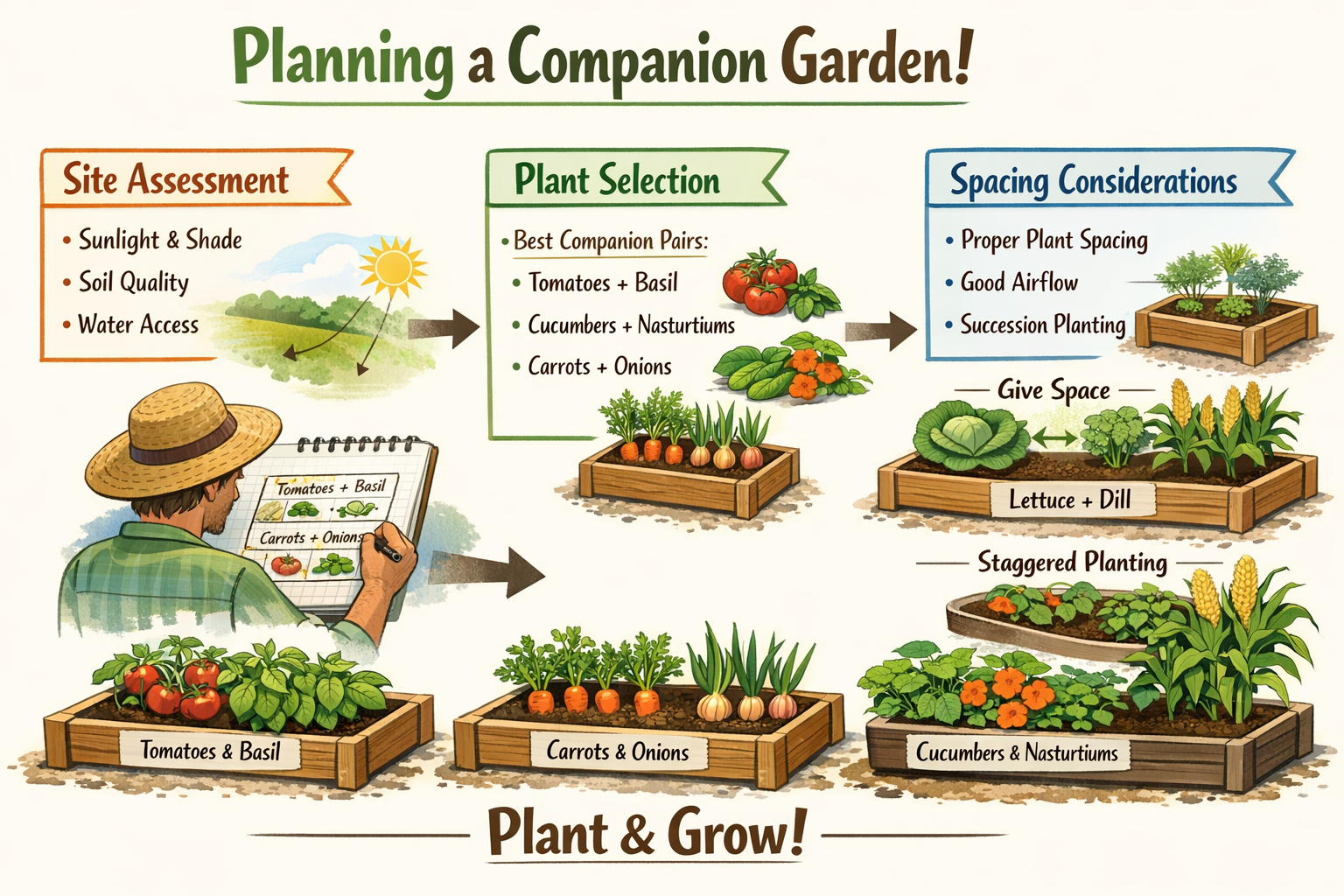
Selecting the right companion pairs is crucial for maximizing benefits in your garden, leveraging natural synergies to boost plant health and productivity. These pairings have been observed over generations to deliver consistent advantages [4].
Here are some of the most effective and popular companion planting pairings for a healthier garden:
| Vegetable | Good Companions | Bad Companions | Benefits |
|---|---|---|---|
| Tomatoes | Basil, Carrots, Marigolds, Nasturtiums, Onions | Cabbage, Broccoli, Corn, Dill, Fennel, Kohlrabi | Basil improves flavor and repels flies/mosquitoes; Carrots loosen soil; Marigolds deter nematodes; Nasturtiums act as a trap crop for aphids [4, 5]. |
| Beans | Carrots, Corn, Cucumbers, Marigolds, Potatoes, Radishes | Onions, Garlic | Nitrogen fixation benefits many plants; Corn provides support; Marigolds deter beetles [6]. |
| Cabbage | Beets, Celery, Dill, Lettuce, Onions, Potatoes, Rosemary, Sage | Strawberries, Tomatoes, Pole Beans | Aromatic herbs like Rosemary and Sage deter cabbage moths; Onions repel rabbits [3]. |
| Carrots | Lettuce, Rosemary, Radishes, Onions, Leeks | Dill, Fennel | Rosemary deters carrot rust fly; Lettuce shades soil, keeping it cool; Onions deter various pests [4]. |
| Corn | Beans, Cucumbers, Melons, Squash (Three Sisters) | Tomatoes | Beans fix nitrogen; Squash provides ground cover and deters weeds; Corn provides a trellis for beans [6]. |
| Cucumbers | Beans, Corn, Dill, Marigolds, Radishes | Aromatic herbs (strong ones), Potatoes, Sage | Corn provides shade; Radishes loosen soil; Marigolds deter pests [4]. |
| Lettuce | Carrots, Radishes, Strawberries, Mint (in containers) | Cabbage family (some conflict) | Benefits from shade of taller plants; Mint deters slugs (if contained) [5]. |
| Peppers | Basil, Carrots, Onions, Spinach, Tomatoes (limited proximity) | Beans, Fennel | Basil improves flavor; Onions deter pests; Spinach provides ground cover. |
| Strawberries | Beans, Borage, Lettuce, Spinach | Cabbage, Broccoli, Kale (Brassicas), Kohlrabi | Borage attracts pollinators; Lettuce and Spinach provide ground cover and moisture retention [2]. |
| Squash | Corn, Beans, Marigolds, Nasturtiums | Potatoes | Part of the Three Sisters; Marigolds and Nasturtiums deter pests; Beans fix nitrogen [6]. |
Decision Rule: Choose pairings that address specific issues in your garden, such as persistent pests (e.g., marigolds for nematodes) or nutrient deficiencies (e.g., beans for nitrogen). For small space gardeners, prioritizing scent-based pest deterrence (herbs) and maximizing vertical space (corn for beans) is particularly effective. For more guidance on optimizing your growing area, see our Ultimate Guide to Small Space Gardening for Beginners 2026.
Getting Started with Your 2026 Companion Planting Guide
Beginning your companion planting journey in 2026 is a straightforward process that involves planning, plant selection, and careful observation. I recommend starting small to understand how specific pairings work in your unique garden environment [5].
Here’s a step-by-step guide to help you get started:
Assess Your Current Garden and Goals:
- Identify Needs: What challenges do you currently face? Are you battling specific pests, struggling with soil health, or aiming to boost yields? This will help you select targeted companion pairs.
- Space Considerations: For small gardens, containers, or raised beds, focus on pairings that offer benefits without overcrowding. Consider vertical gardening solutions.
Research Beneficial and Detrimental Pairings:
- Consult reliable sources like this guide and university extension services to find proven companion combinations for the plants you wish to grow [3]. Pay attention to both “good” and “bad” neighbors.
- Look for specific benefits, such as pest repulsion, beneficial insect attraction, or nutrient enhancement.
Plan Your Layout:
- Draw a Diagram: Sketch your garden beds or containers. Mark where each plant will go, grouping compatible plants together.
- Consider Growth Habits: Place taller plants where they won’t shade sun-loving shorter plants unless shade is the desired benefit. Account for mature plant size to prevent overcrowding.
- Rotate Crops: Even with companion planting, it’s good practice to rotate crops annually to prevent disease buildup and optimize soil nutrients.
Select Your Plants:
- Choose healthy seedlings or seeds. Consider heirlooms or open-pollinated varieties, as they often have robust genetics.
- Don’t forget to include beneficial insect attractors like marigolds, nasturtiums, or dill near your main crops [2].
Plant and Observe:
- Plant your chosen companions according to your plan, ensuring proper spacing.
- Monitor Regularly: Watch how your plants interact. Are pests decreasing? Is growth improving? Adjust your plan in subsequent seasons based on your observations. Take notes!
- Water and Feed Appropriately: Even with companion planting, basic plant care like proper watering and nutrient supply is essential. Our Beginner’s Guide to Plant Care 2026 can help.
Quick Example: If you want to grow tomatoes, plan to plant basil nearby (for flavor and pest deterrence) and marigolds around the perimeter (to repel nematodes). For corn, consider planting pole beans and squash beneath them for a classic “Three Sisters” combination. This comprehensive approach is part of how to start a mini garden at home in 2026.
Common Mistakes to Avoid in Companion Planting
While companion planting offers many benefits, certain mistakes can negate its advantages or even harm your garden. Avoiding these pitfalls will ensure your efforts yield positive results [3].
Here are some common mistakes to sidestep:
- Ignoring Detrimental Pairings: Not all plants are friends. Some, like fennel, can inhibit the growth of many other vegetables, including tomatoes, peppers, and beans [4]. Always check for “bad neighbors” before planting.
- Overcrowding: While companion planting aims for diversity, planting too densely can lead to poor air circulation, increased disease risk, and competition for nutrients and light [2]. Ensure plants have enough space to mature.
- Assuming All Varieties are the Same: “Marigolds” for pest control typically refers to Tagetes species (French and African marigolds), not calendula (pot marigold). Specificity matters when choosing companions for their particular benefits [1].
- Planting Invasive Companions Uncontained: Herbs like mint can be excellent pest deterrents but are notoriously invasive. Plant them in pots placed within the garden bed to prevent them from taking over and competing with other plants for resources.
- Neglecting Soil Health: Companion planting works best in healthy soil. If your soil is depleted or unbalanced, even the best companion pairings might struggle. Prioritize soil basics for container gardening or raised beds.
- Relying Solely on Companion Planting: While powerful, companion planting is one tool in an organic gardener’s arsenal. It should be combined with other good practices like crop rotation, proper watering, and attentive observation for optimal results [3].
By being mindful of these common missteps, you can harness the full potential of your 2026 companion planting efforts, leading to a more vibrant and productive garden.
Conclusion
Embracing companion planting in your 2026 gardening strategy offers a powerful, sustainable, and organic approach to cultivating a healthier, more resilient, and more productive garden. By understanding and applying the principles of beneficial plant interactions, you can naturally deter pests, attract pollinators, improve soil vitality, and enhance the growth and flavor of your crops. This Companion Planting Guide serves as your blueprint for leveraging nature’s own wisdom to create a thriving ecosystem, whether you have a sprawling backyard or a compact balcony garden.
Start by researching a few proven pairings relevant to your chosen plants and local conditions. Experiment in a small area, observe the results, and gradually expand your companion planting efforts. The journey of discovering these symbiotic relationships is not only rewarding but also contributes to a more sustainable and harmonious environment, proving that sometimes, the best gardening partners are found right next door.
References
[1] Companion Planting Resources – https://attra.ncat.org/publication/companion-planting-resources/
[2] Adding Diversity Garden – https://www.udel.edu/academics/colleges/canr/cooperative-extension/fact-sheets/adding-diversity-garden/
[3] Companion Planting Home Gardens – https://extension.umn.edu/planting-and-growing-guides/companion-planting-home-gardens
[4] Companion Planting Guide – https://www.farmersalmanac.com/companion-planting-guide
[5] Companion Planting A Guide – https://sowtrueseed.com/blogs/gardening/companion-planting-a-guide
[6] Boost Harvests With Companion Planting – https://www.bootstrapfarmer.com/blogs/backyard-gardening/boost-harvests-with-companion-planting