Best Pots for Balcony Garden 2026: Ultimate Guide to Small
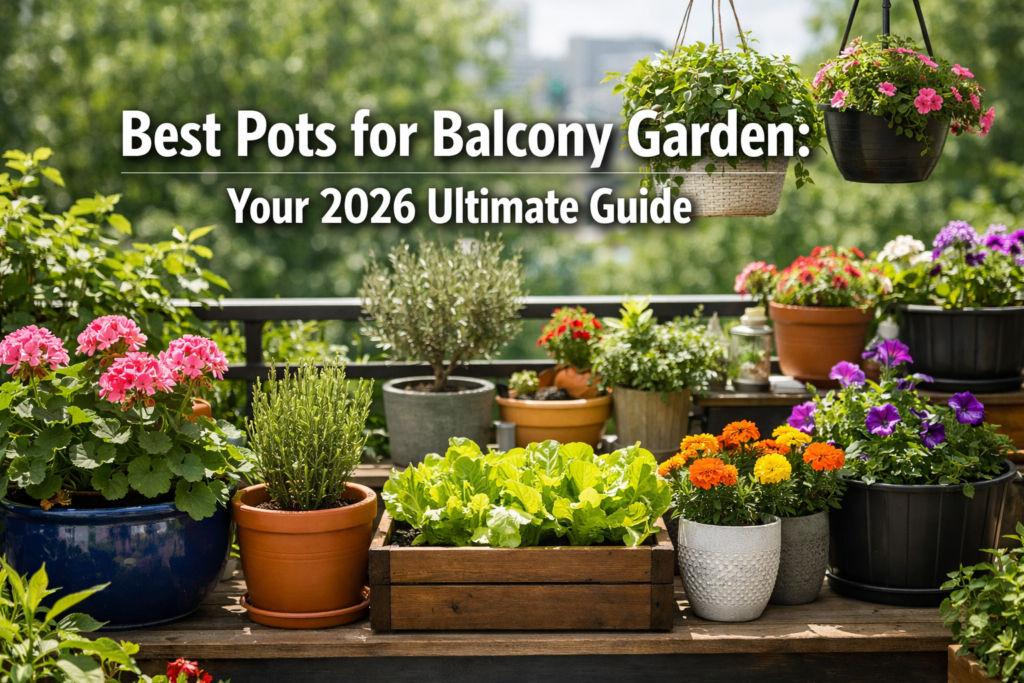
Are you dreaming of a lush, vibrant green space right outside your apartment door, but only have a small balcony to work with? Choosing the best pots for your balcony garden is the crucial first step to turning that dream into a reality. The right pots not only provide a home for your plants but also influence their health, manage watering, and fit within the aesthetic and structural limits of your balcony. From material and size to drainage and special features, understanding your options can make all the difference in creating a thriving urban oasis in 2026.
Key Takeaways
- Material Matters: Plastic offers affordability and lightness; terracotta breathes well but dries quickly; ceramic is beautiful but heavy; fabric pots promote air pruning.
- Size for Success: Match pot size to your plant’s mature root system, ensuring adequate space for growth and moisture retention.
- Drainage is Non-Negotiable: Adequate drainage holes are essential to prevent root rot; consider pots with integrated saucers or self-watering systems.
- Weight Considerations: Balconies have weight limits, so opt for lightweight materials like plastic or fabric, especially for larger plants or multiple containers.
- Space-Saving Solutions: Vertical planters, railing planters, and hanging baskets are excellent for maximizing limited balcony real estate.
- Self-Watering Pots: Ideal for busy gardeners, these pots provide consistent moisture and reduce watering frequency.
- Eco-Friendly Choices: Explore options made from recycled plastics, sustainable materials, or those designed for longevity to reduce environmental impact.
- Aesthetics and Style: Choose pots that complement your balcony’s design and your personal taste, creating a cohesive and inviting outdoor space.
Quick Answer
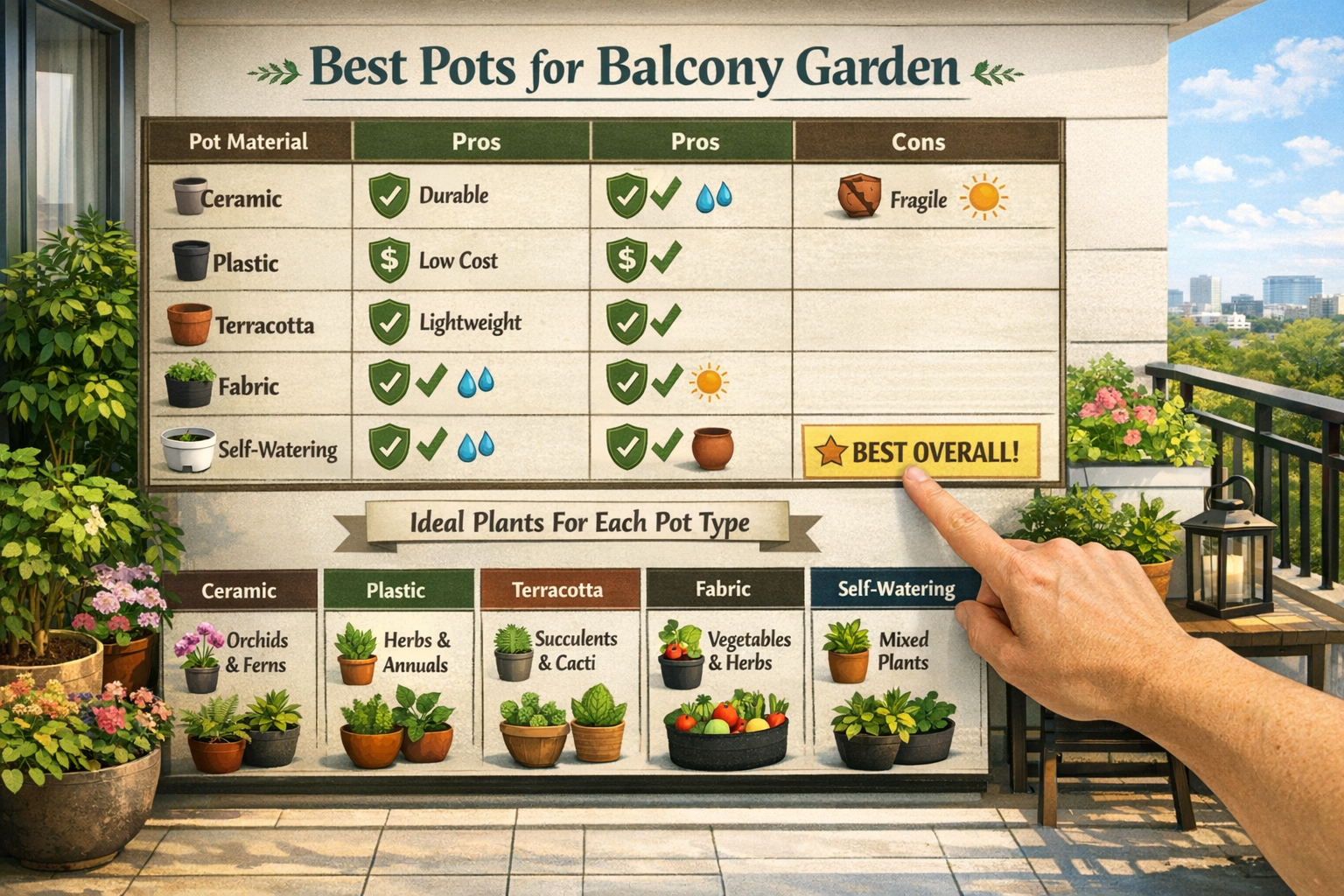
The best pots for a balcony garden are typically lightweight, offer excellent drainage, and come in sizes appropriate for your chosen plants and balcony space. Options like plastic or fabric pots are highly recommended for their portability and affordability, while self-watering systems and railing planters provide practical benefits for urban gardeners in 2026. Prioritize durability, proper drainage, and the overall weight of the container, especially if your balcony has weight restrictions.
What Are the Best Pot Materials for a Balcony Garden?
The best pot materials for a balcony garden depend heavily on your specific needs regarding weight, plant type, watering habits, and aesthetic preferences. Lightweight materials like plastic and fabric are generally excellent choices for balconies due to their reduced impact on structural load and ease of movement.
When selecting pots for a balcony garden, consider the pros and cons of each common material:
1. Plastic Pots
Plastic pots are a top choice for balcony gardeners due to their affordability, lightweight nature, and durability. They retain moisture well, which can be beneficial for plants that prefer consistently moist soil, though careful watering is still required to prevent waterlogging.
- Pros:
- Lightweight: Crucial for balconies with weight restrictions and easy to move around [1].
- Affordable: A budget-friendly option, making it easy to purchase multiple pots for various plants [1].
- Moisture Retention: Plastic doesn’t absorb water, so soil stays moist longer, reducing watering frequency.
- Durable: Less prone to cracking or breaking than ceramic or terracotta, especially in varying weather conditions.
- Variety: Available in a vast array of colors, sizes, and styles, including decorative options.
- Cons:
- Less Breathable: Can lead to overwatering and root rot if drainage is insufficient.
- Heat Retention: Darker plastic pots can absorb significant heat, potentially stressing plant roots in direct sun.
- Environmental Impact: Traditional plastics are not biodegradable, though recycled plastic options are increasingly available [3].
- Decision Rule: Choose plastic pots if you need lightweight, affordable, and low-maintenance options, especially for drought-tolerant plants or if you are diligent with drainage. The Homenote Plastic Planter, for example, offers great value with multiple sizes [1].
2. Terracotta Pots
Terracotta pots are classic, breathable, and provide a rustic aesthetic, making them popular for specific plant types that prefer drier conditions. Their porous nature allows for excellent air circulation to the roots.
- Pros:
- Breathability: The porous clay allows air and moisture to pass through, preventing root rot and soil compaction.
- Evaporative Cooling: Helps to keep soil temperatures lower, beneficial for heat-sensitive plants.
- Aesthetic Appeal: Offers a natural, earthy look that complements many garden styles.
- Weight: Heavier than plastic, which can provide stability for taller plants in windy conditions.
- Cons:
- Dries Quickly: Requires more frequent watering, especially in hot, sunny balcony environments.
- Fragile: Prone to cracking and breaking if dropped or exposed to freezing temperatures.
- Heavy: Can contribute significantly to a balcony’s overall weight load, making them harder to move.
- Mineral Buildup: Can develop white mineral deposits over time, which may be unsightly but are generally harmless.
- Decision Rule: Opt for terracotta if you grow plants that prefer well-drained soil (e.g., succulents, cacti, herbs) and are prepared for more frequent watering. Ensure your balcony can handle the weight, especially for larger pots.
3. Ceramic Pots
Ceramic pots, often glazed, are highly decorative and come in an endless variety of finishes, adding significant aesthetic value to a balcony garden. They share some characteristics with plastic in terms of moisture retention.
- Pros:
- Aesthetic Value: Beautiful and decorative, offering a wide range of colors, patterns, and designs.
- Moisture Retention: Glazed ceramic retains moisture well, similar to plastic.
- Heavy: Provides stability for larger plants, reducing the risk of tipping in high winds.
- Cons:
- Very Heavy: A significant weight concern for balconies; heavier than terracotta.
- Expensive: Generally more costly than plastic or terracotta.
- Fragile: Can crack or chip easily if dropped or exposed to extreme temperature changes.
- Less Breathable: Glazed ceramic reduces air circulation to the roots.
- Decision Rule: Choose ceramic pots for accent plants or where aesthetic impact is paramount, provided your balcony’s weight capacity is not an issue. The LE TAUCI Plant Pot is an example of a ceramic option with good features [1].
4. Fabric Pots (Grow Bags)
Fabric pots, or grow bags, are made from breathable, often recycled, geotextile fabric. They are a modern solution gaining popularity for their unique benefits to root health.
- Pros:
- Air Pruning: Prevents roots from circling, encouraging a dense, fibrous root system that takes up water and nutrients more efficiently.
- Excellent Drainage and Aeration: The porous fabric promotes superior airflow and drainage, minimizing the risk of root rot.
- Lightweight and Flexible: Extremely easy to move and store when not in use.
- Temperature Regulation: Helps dissipate excess heat, keeping roots cooler in hot weather.
- Affordable: Often less expensive than rigid pots.
- Cons:
- Dries Quickly: May require more frequent watering, especially in hot climates.
- Less Decorative: Their appearance is more utilitarian compared to ceramic or glazed pots.
- Durability: While durable, they may not last as long as plastic or ceramic pots, though many are designed for multiple seasons.
- Decision Rule: Fabric pots are ideal for plants that need excellent drainage and aeration, such as vegetables or root crops, and when weight and flexibility are primary concerns for your balcony garden.
5. Metal Planters
Metal planters, often made of galvanized steel, aluminum, or wrought iron, offer a sleek, modern, or industrial look.
- Pros:
- Durability: Very robust and long-lasting.
- Aesthetic: Can provide a contemporary or industrial design element.
- Stability: Heavier metals offer good stability.
- Cons:
- Heat Conduction: Metal heats up quickly in the sun, potentially cooking roots.
- Corrosion: Some metals can rust over time if not properly treated.
- Weight: Can be heavy, depending on the type of metal and size.
- Cost: Often more expensive than plastic or fabric.
- Decision Rule: Use metal planters for specific aesthetic purposes or in shadier parts of the balcony. Consider lining them with insulating material or choosing lighter metals like aluminum. Argos Home offers metal balcony planters as an option [2].
What Are the Best Pots for Balcony Garden Space Optimization?
Optimizing space is paramount for balcony gardens, as square footage is often limited. The best pots for maximizing balcony space are those that utilize vertical areas, railings, or fit snugly into corners without impeding movement. These innovative designs allow gardeners to cultivate a wider variety of plants, making the most of every available inch.
To make the most of your balcony’s footprint, consider these specialized pot types:
1. Railing Planters
Railing planters are designed to hook directly over your balcony railing, effectively using vertical space that would otherwise go unused. They create an attractive display both inside and outside the balcony.
- Key Features:
- Space-Saving: Frees up floor space by hanging over railings.
- Enhanced Aesthetics: Adds greenery to the balcony exterior, enhancing curb appeal.
- Variety: Available in various materials (plastic, metal) and sizes to fit different railing widths.
- Considerations:
- Weight Distribution: Ensure the combined weight of the planter, soil, and plants does not exceed your railing’s capacity.
- Wind Exposure: Plants in railing planters may be more exposed to wind, requiring careful plant selection and watering.
- Drainage: Confirm adequate drainage and consider drip trays if water dripping onto lower balconies is a concern.
- Example: The Elho Green Basics Easy Hanger is made from recycled plastics and is an eco-friendly railing option [2].
2. Vertical Planters/Garden Systems
Vertical planters are multi-tiered systems or wall-mounted pockets that allow plants to grow upwards, making them incredibly efficient for small spaces. They are a game-changer for gardeners wanting to maximize their harvest or floral display on a balcony.
- Key Features:
- Maximum Space Utilization: Transforms a wall into a living garden.
- Diverse Planting: Can accommodate a variety of herbs, flowers, and even small vegetables.
- Visual Impact: Creates a stunning green wall effect.
- Considerations:
- Installation: Requires secure mounting to a sturdy wall or railing.
- Watering: Some vertical systems require specialized irrigation to ensure even watering for all plants.
- Light Exposure: Ensure all tiers receive adequate sunlight.
- Recommendation: Explore different vertical gardening systems discussed in our Vertical Gardening Basics: Your 2026 Guide to Small Space Gardens for comprehensive guidance.
3. Hanging Baskets
Hanging baskets are suspended from hooks on the ceiling or wall, utilizing overhead space. They are perfect for trailing plants, flowers, or even small fruits like strawberries.
- Key Features:
- Aesthetic Appeal: Adds a soft, cascading element to the balcony design.
- Space-Saving: Lifts plants off the floor and railings.
- Flexibility: Can be easily moved or rearranged.
- Considerations:
- Weight: Ensure the hook and ceiling/structure can support the full weight of a watered basket.
- Watering: Hanging baskets tend to dry out quickly and can be messy to water.
- Sun Exposure: Choose plants suitable for the light conditions of their hanging spot.
4. Self-Watering Planters
While not exclusively space-saving, self-watering planters are a practical choice for balcony gardens because they reduce maintenance, freeing up gardener’s time which indirectly helps manage a larger number of plants in a small area. These pots typically feature a reservoir that provides a consistent water supply to the plant roots.
- Key Features:
- Reduced Watering Frequency: Ideal for busy individuals or during hot spells.
- Consistent Moisture: Promotes healthier plant growth by avoiding cycles of drought and overwatering.
- Nutrient Efficiency: Can help prevent nutrient washout that occurs with traditional top-down watering.
- Considerations:
- Cost: Generally more expensive than standard pots.
- Root Rot Risk: While designed to prevent it, improper use or very poor soil can still lead to root issues.
- Weight: Can be heavier when the reservoir is full.
- Example: The Gardenix 7″ Self-Watering Pot is highlighted for its comprehensive features, including a water gauge and coconut coir puck [1]. The Andrews Plastic Balcony Planter also offers a wick irrigation system for extended hydration [2].
5. Window Boxes
Window boxes attach directly to your balcony railing or wall beneath a window, creating a linear planting space. They are excellent for creating a continuous display of flowers or herbs.
- Key Features:
- Linear Planting: Ideal for symmetrical displays.
- Easy Access: Often at a convenient height for tending.
- Aesthetic: Classic look that enhances the exterior of your home.
- Considerations:
- Secure Mounting: Essential for safety and stability.
- Drainage: Ensure proper drainage to avoid water accumulation.
- Sun Exposure: Like railing planters, plants are exposed to the elements.
By strategically incorporating these space-optimizing pots, you can transform even the smallest balcony into a thriving and aesthetically pleasing garden. For more ideas on maximizing your green space, read our “Best Pots for Small Space Gardening in 2026” guide [https://minispacegarden.com/best-pots-for-small-space-gardening/].
How to Choose the Right Pot Size for Your Balcony Plants
Choosing the right pot size for your balcony plants is critical for their health and growth, as it directly impacts root development, moisture retention, and nutrient availability. A pot that is too small will stunt growth, while one too large can lead to overwatering and root rot. Always consider the plant’s mature size and root system when making your selection.
Here’s a guide to help you choose the appropriate pot size:
1. Consider the Plant’s Mature Size
Research the typical mature size of the plant you intend to grow. This includes both its above-ground foliage and its root system.
- Small Plants (Herbs, Annual Flowers, Small Succulents): Generally thrive in pots 6-8 inches in diameter. Examples include basil, thyme, marigolds, and small aloe plants.
- Medium Plants (Bushy Herbs, Leafy Greens, Small Shrubs, Perennials): Require pots 8-12 inches in diameter. Think rosemary, lettuce, kale, or dwarf petunias.
- Large Plants (Tomatoes, Peppers, Fruit Shrubs, Small Trees): Need larger containers, typically 12-24 inches or even larger. Determinate tomatoes or small blueberry bushes fall into this category. For detailed plant suggestions, refer to our “Best Plants for Small Gardens 2026: The Complete List” [https://minispacegarden.com/best-plants-for-small-space-gardens-complete-list/].
2. Root System Type
Different plants have different root structures, which should influence your pot choice.
- Shallow Roots: Plants with shallow, spreading root systems (e.g., most annual flowers, many herbs) can do well in wider, shallower pots.
- Deep Taproots: Plants with deep taproots (e.g., carrots, some perennial flowers) need deeper pots to accommodate their downward growth.
- Fibrous Roots: Most plants have fibrous root systems that spread outwards. Ensure the pot has sufficient width and depth.
3. Growth Rate
Fast-growing plants will outgrow their pots more quickly than slow-growing ones, requiring more frequent repotting or a larger initial pot.
- Rapid Growers: Start them in slightly larger pots or be prepared to repot them once or twice within a growing season.
- Slow Growers: Can start in smaller pots and be gradually moved up in size as they mature.
4. Group Planting
If you plan to plant multiple plants in one container, ensure the pot is large enough to accommodate the mature root systems of all plants, allowing for adequate spacing between them.
- Rule of Thumb: Add an extra 2-4 inches in diameter for each additional plant you intend to group.
- Compatibility: Group plants with similar water and light requirements to ensure they all thrive.
5. Water Retention and Drainage
Pot size also affects how quickly the soil dries out.
- Smaller Pots: Dry out much faster, requiring more frequent watering. This can be an issue on a hot, sunny balcony.
- Larger Pots: Retain moisture longer, which can be beneficial, but also increases the risk of overwatering if drainage is poor.
- Crucial Tip: Always ensure your chosen pot, regardless of size, has adequate drainage holes. Without them, even the perfect size pot can lead to root rot. If a pot lacks drainage, drill holes or use it as a cachepot (decorative outer pot).
Common Mistake: Choosing a pot that is too large in an attempt to avoid repotting. Excess soil in a too-large pot holds too much moisture for a small root system, leading to a higher risk of root rot. Choose a pot that is only slightly larger than the current root ball (about 1-2 inches larger in diameter) when repotting.
By carefully considering these factors, you can select the optimal pot sizes that will encourage healthy growth and a flourishing balcony garden.
Understanding Drainage Needs for Balcony Garden Pots
Proper drainage is the single most critical factor for plant health in container gardening, especially for a balcony garden where water runoff management is also a concern. Without adequate drainage, soil becomes waterlogged, depriving roots of oxygen and leading to root rot, which is often fatal for plants. Every pot must have drainage holes, and sometimes, additional measures are necessary to ensure proper water flow.
Here’s what you need to know about drainage:
1. The Importance of Drainage Holes
- Oxygen for Roots: Plant roots need oxygen to respire and absorb nutrients. Waterlogged soil fills the air pockets, suffocating the roots.
- Prevents Root Rot: Excess standing water around roots creates an anaerobic environment, fostering harmful bacteria and fungi that cause root rot.
- Flushes Salts: Proper drainage helps flush out excess mineral salts that can accumulate in potting mix over time, which can harm plants.
- Prevents Overwatering: While tempting, adding a layer of gravel or broken pottery at the bottom of a pot does not improve drainage and can actually create a “perched water table” that hinders it [7]. The best approach is simply adequate drainage holes.
2. How Many Drainage Holes Are Enough?
- Minimum: Most standard pots should have at least one large drainage hole (at least 0.5 to 1 inch in diameter) or several smaller ones.
- General Rule: Aim for drainage holes that collectively account for about 1/4 to 1/2 inch per foot of pot diameter. For very large pots, more holes are better.
- Drilling Holes: If a decorative pot lacks drainage holes, it’s essential to drill them yourself using the appropriate drill bit for the material (e.g., masonry bit for ceramic, specific plastic bit for plastic).
- Mesh Over Holes: Placing a small piece of mesh screen or coffee filter over the drainage holes can prevent soil from washing out while still allowing water to escape freely.
3. Drainage Solutions for Balconies
Since water runoff can be an issue on balconies (e.g., dripping onto neighbors below), managing drainage effectively is crucial.
- Saucers/Drip Trays:
- Purpose: These collect excess water that drains from the pot, preventing it from staining your balcony floor or dripping below.
- Selection: Choose saucers that are slightly larger than the pot’s base.
- Maintenance: Regularly empty collected water to prevent mosquito breeding and stagnant water issues.
- Self-Watering Pots:
- Mechanism: These pots have a built-in reservoir that wicks water up to the soil as needed, minimizing overflow from the top and providing controlled drainage.
- Benefit: Reduces the need for saucers and significantly lessens the risk of runoff [1].
- Balcony-Specific Planters:
- Design: Some balcony planters, like those designed for railings, may have integrated drainage systems or attachable saucers specifically for urban environments [2].
- Watering Technique:
- Slow & Deep: Water slowly until you see water just beginning to come out of the drainage holes. This ensures the soil is thoroughly moistened without excessive runoff.
- Check Soil Moisture: Before watering, stick your finger 1-2 inches into the soil. Water only when the soil feels dry at that depth. For more guidance on this, see “How Often Should You Water Plants? Ultimate Guide 2026” [https://minispacegarden.com/how-often-should-you-water-plants/].
Edge Case: No Drainage Holes: If you absolutely cannot drill drainage holes (e.g., for certain decorative planters), you must use the pot as a cachepot. Plant your specimen in a slightly smaller nursery pot with drainage holes, then place this nursery pot inside the decorative one. This allows you to easily remove the plant for watering and draining excess water elsewhere, preventing any water from accumulating around the roots.
Top Features to Look for in Balcony Garden Pots (2026)
When selecting the best pots for your balcony garden in 2026, beyond material and size, several key features can significantly enhance plant health, ease of maintenance, and the overall success of your urban garden. These features address common balcony gardening challenges like weight, watering, and space limitations.
Here are the top features to prioritize:
1. Integrated Drainage and Saucers
As discussed, drainage is non-negotiable. Pots with integrated drainage holes and accompanying saucers are a huge advantage for balcony gardeners.
- Benefit: Prevents root rot and protects your balcony surface from water damage or dripping onto neighbors.
- Look For: A clear design where the saucer securely attaches or is perfectly sized to the pot, making it easy to remove and empty. Some modern designs have a slightly raised bottom within the pot to create a natural reservoir without waterlogging the roots.
2. Lightweight Construction
Balconies often have weight restrictions, and even if they don’t, moving heavy pots filled with soil and plants can be a challenge.
- Benefit: Easier to rearrange your garden layout, comply with weight limits, and clean your balcony.
- Look For: Pots made from plastic, fabric, fiberglass, or lightweight composite materials. Even larger pots should feel manageable when empty.
3. Self-Watering Systems
For busy individuals or those prone to forgetting to water, self-watering pots are a game-changer. They feature a water reservoir at the bottom and a wicking system that provides continuous moisture to the plant roots.
- Benefit: Reduces watering frequency, ensures consistent moisture levels, and promotes healthier growth by preventing over/under-watering.
- Look For: A clear water gauge indicator (like the Gardenix 7″ Self-Watering Pot) to easily monitor water levels, a generous reservoir capacity, and a robust wicking system [1]. The Andrews Plastic Balcony Planter with its wick irrigation system offers up to 12 weeks of hydration [2].
4. UV Resistance
Balconies, especially those facing south or west, receive intense sun exposure. Pots need to withstand UV radiation without degrading.
- Benefit: Prevents pots from becoming brittle, fading, or cracking prematurely.
- Look For: Manufacturers that specify UV-resistant materials, particularly for plastic pots.
5. Durability and Weather Resistance
Your balcony pots will be exposed to various weather conditions, including sun, rain, and potentially wind and cold.
- Benefit: Ensures pots last for multiple seasons, offering better long-term value.
- Look For: Materials known for their resilience, such as high-quality plastic, fiberglass, or treated metals. Terracotta and ceramic can be durable but are prone to cracking in freezing temperatures if not brought indoors.
6. Space-Saving Design
Given the often-limited space on balconies, pots designed to maximize planting area are highly valuable.
- Benefit: Allows you to grow more plants in a confined area.
- Look For: Railing planters, vertical garden modules, stackable pots, or narrow rectangular planters that fit well against walls or railings [2]. Consider the benefits outlined in our “Complete Balcony Gardening Guide for Small Apartments 2026” [https://minispacegarden.com/balcony-gardening-guide-for-small-apartments/].
7. Portability (Handles/Wheels)
For larger pots or those you might need to move frequently (e.g., bringing plants indoors for winter, rearranging), portability features are very helpful.
- Benefit: Makes it easier to move heavy plants without strain.
- Look For: Sturdy handles, recessed grips, or pots with integrated castor wheels for effortless movement.
8. Aesthetic Appeal
While functionality is key, the visual appeal of your pots contributes significantly to your balcony’s ambiance.
- Benefit: Enhances the beauty of your outdoor living space and complements your home’s style.
- Look For: Colors, textures, and shapes that match your personal taste and the overall decor of your balcony. Eco-friendly options from brands like West Elm and Hawkins New York provide both style and sustainability [3].
Quick Example: Imagine you’re growing tomatoes on a sunny balcony. You’d want a large (15-20 gallon equivalent), UV-resistant, lightweight plastic pot with integrated drainage, possibly self-watering, and ideally with wheels for easy repositioning if needed. This combination maximizes growth potential while addressing all practical balcony concerns.
Eco-Friendly Pot Options for a Sustainable Balcony Garden
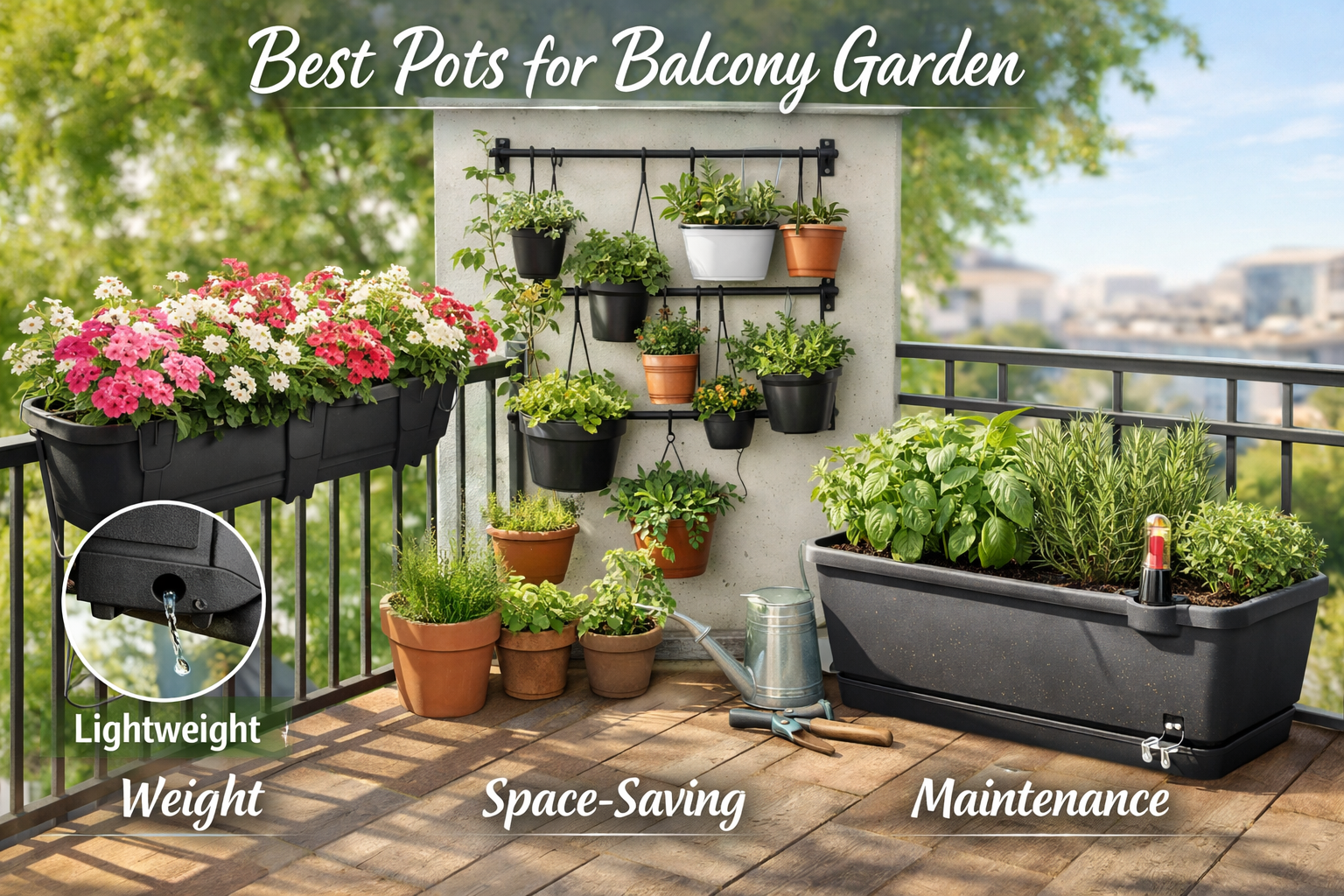
As environmental consciousness grows, many balcony gardeners are seeking sustainable and eco-friendly pot options that minimize their ecological footprint. Choosing responsible materials helps reduce waste, conserves resources, and contributes to a healthier planet. In 2026, there are more choices than ever for green-minded gardeners.
Here’s a look at eco-friendly pot options for your balcony garden:
1. Recycled Plastic Pots
Pots made from recycled plastics are an excellent way to divert waste from landfills and reduce the demand for virgin plastic production.
- Benefits:
- Reduces Waste: Utilizes post-consumer or post-industrial plastics.
- Durable: Retains the inherent durability and lightweight nature of plastic.
- Cost-Effective: Often competitively priced.
- Look For: Products clearly labeled as “recycled plastic.” Brands like Elho (with their Green Basics Easy Hanger) specifically use recycled plastics [2]. West Elm also offers recycled plastic planters in various sizes [3].
2. Biodegradable and Plant-Based Pots
These innovative pots are designed to break down naturally over time, reducing long-term waste. They are often made from materials like coir (coconut fiber), peat, wood pulp, or other plant fibers.
- Benefits:
- Zero Waste: Decompose into the soil, leaving no lasting residue.
- Root-Friendly: Some types allow roots to grow through them, reducing transplant shock.
- Look For: Brands like Rosebud Home Goods which offer biodegradable and recycled plant-based materials [3]. These are great for starting seeds or plants that will eventually be transplanted into larger, more permanent containers or directly into the ground (if you have the option).
3. Fiber Cement or Composite Materials
Pots made from fiber cement, often a mix of cement and plant fibers, or other composite materials, offer a balance of durability and a more natural look than plastic.
- Benefits:
- Natural Appearance: Can mimic stone or concrete without the extreme weight.
- Insulating Properties: Fiber cement can offer better insulation than traditional terracotta or plastic, protecting roots from temperature extremes [3].
- Durability: Long-lasting when properly cared for.
- Look For: Hawkins New York, which uses fiber cement construction, provides good insulation properties [3].
4. Terracotta (Sustainable Sourcing)
While terracotta has some drawbacks (weight, fragility, frequent watering), it is a natural, earth-derived material. Its eco-friendliness can be enhanced by choosing locally sourced and sustainably produced options.
- Benefits:
- Natural Material: Made from clay, a readily available natural resource.
- Breathable: Excellent for root health.
- Considerations: Look for suppliers who prioritize responsible clay extraction and manufacturing processes. Avoid overly processed or glazed terracotta that may contain harmful chemicals.
5. Galvanized Steel and Other Recyclable Metals
Metal planters, particularly those made from galvanized steel, can be highly durable and have a long lifespan, which is a key aspect of sustainability. At the end of their life, they are also easily recyclable.
- Benefits:
- Extremely Durable: Lasts for many years, reducing consumption.
- Recyclable: Metal is highly recyclable without loss of quality.
- Considerations: As mentioned earlier, metal can heat up quickly, so consider this for plant choice and placement.
6. Wood Planters (Sustainable Wood)
Wood planters can be beautiful and natural, but their sustainability depends on the source of the wood.
- Benefits:
- Natural Aesthetic: Blends beautifully with a garden environment.
- Insulating: Offers good temperature regulation for roots.
- Considerations: Choose planters made from sustainably harvested wood (FSC certified) or reclaimed wood to ensure you are not contributing to deforestation. Ensure they are treated with non-toxic sealants to prolong life and protect plants.
Common Mistake: Assuming any “natural” material is automatically eco-friendly. Always look for certifications (like FSC for wood, or recycled content claims) or inquire about the sourcing and manufacturing processes to make truly informed, sustainable choices for your balcony garden. The Large Willow Wall Hanging Planter is an example of a plastic-free, natural option [2].
Balcony Garden Pot Selection Comparison Table
To help you quickly compare different options for your balcony garden, here’s a table summarizing key attributes of popular pot materials and types. This helps identify the best pots for balcony garden needs based on your priorities.
| Feature / Pot Type | Plastic Pots | Terracotta Pots | Glazed Ceramic Pots | Fabric Pots (Grow Bags) | Railing/Vertical Planters (Often Plastic/Metal) | Self-Watering Pots (Often Plastic) |
|---|---|---|---|---|---|---|
| Weight | Very Lightweight ⚖️ | Moderate to Heavy | Very Heavy 🏋️♀️ | Extremely Lightweight | Varies, can be lightweight | Moderate (with water reservoir) |
| Durability | Good, UV-dependent | Moderate, fragile | Good, fragile | Good, multi-season | Good, often weather-resistant | Good |
| Cost | Low 💰 | Moderate | High 💲💲 | Low 💰 | Moderate to High (system-dependent) | Moderate to High |
| Drainage | Good (with holes) | Excellent (porous) | Good (with holes) | Excellent (breathable) | Good (integrated) | Controlled (reservoir) |
| Moisture Ret. | High | Low (dries quickly) | High | Low (dries quickly) | Varies by material | Excellent (consistent) |
| Breathability | Low | High 🌬️ | Low | High 🌬️ | Varies | Low |
| Aesthetic | Versatile, modern | Classic, rustic | Decorative, elegant | Utilitarian | Modern, space-saving | Functional, modern |
| Eco-Friendly | Recycled options 👍 | Natural material | Natural material | Often recycled 👍 | Recycled options, space-saving | Recycled options, water-saving |
| Best For | Beginners, large plants, budget, portability | Drought-tolerant plants, herbs | Accent plants, stability | Vegetables, root crops, aeration | Small spaces, visual impact, edibles | Busy gardeners, consistent moisture |
| Maintenance | Low | High (watering) | Moderate | High (watering) | Varies by system | Low (reduced watering) |
This table serves as a quick reference, but remember to always consider your specific balcony conditions, plant needs, and personal preferences when making your final choices.
Common Mistakes to Avoid When Choosing Balcony Garden Pots
Selecting the best pots for a balcony garden goes beyond just aesthetics; several critical factors can lead to common mistakes that hinder plant health and balcony safety. Being aware of these pitfalls can save you time, money, and disappointment, ensuring your urban garden thrives in 2026.
Here are some common mistakes to avoid:
1. Neglecting Drainage Holes
- Mistake: Buying or using pots without adequate drainage holes. Many decorative pots are sold without them.
- Consequence: Water accumulates at the bottom, leading to waterlogged soil, root suffocation, and ultimately, root rot. This is arguably the most common cause of container plant death.
- Solution: Always ensure every pot has at least one large drainage hole. If not, drill holes using appropriate tools for the pot material, or use the decorative pot as a cachepot (outer pot) for a nursery pot that does have drainage.
2. Underestimating Balcony Weight Limits
- Mistake: Filling a balcony with numerous large, heavy pots (e.g., terracotta or ceramic) without knowing the balcony’s structural weight capacity.
- Consequence: Can pose a safety hazard, potentially leading to structural damage or collapse.
- Solution: Prioritize lightweight materials like plastic, fabric, or fiberglass, especially for larger plants or if you plan many containers. If unsure, consult your building management or a structural engineer. Always factor in the weight of wet soil and mature plants.
3. Choosing the Wrong Pot Size
- Mistake: Selecting pots that are too small or too large for the plants.
- Consequence:
- Too Small: Stunts growth, requires constant watering, and often leads to plants becoming root-bound.
- Too Large: Soil stays wet for too long, leading to root rot, and the plant spends too much energy developing roots rather than foliage/flowers.
- Solution: Match pot size to the plant’s mature root system. As a general rule, a plant’s root ball should have about 1-2 inches of space between it and the pot walls when repotting. Refer to our section on “How to Choose the Right Pot Size for Your Balcony Plants” for detailed guidance.
4. Ignoring Material Properties for Balcony Conditions
- Mistake: Using materials that are not suited to your balcony’s sun exposure, wind, or climate. For example, dark plastic pots in full sun, or terracotta in very windy conditions.
- Consequence: Plant stress (overheating roots, drying out too quickly), pots blowing over, or premature pot degradation.
- Solution:
- Sunny Balconies: Choose light-colored pots to reflect heat, or breathable materials like terracotta or fabric. Avoid dark plastic or metal.
- Windy Balconies: Opt for heavier pots or those with a wide base for stability, or secure railing planters.
- Cold Climates: Avoid porous materials like terracotta that can crack with freeze-thaw cycles if left outdoors.
5. Prioritizing Aesthetics Over Functionality
- Mistake: Choosing pots solely based on their looks, disregarding practical needs like drainage, size, or weight.
- Consequence: Unhealthy plants and ongoing gardening frustrations.
- Solution: While aesthetics are important for your balcony oasis, functionality (drainage, size, material suitability) must come first. There are many beautiful and functional pots available; seek a balance. The Good Trade provides resources for choosing planter pots with both sustainability and design in mind [3].
6. Forgetting About Water Runoff Management
- Mistake: Allowing water to freely drain from pots onto lower balconies or shared spaces.
- Consequence: Annoying neighbors, potentially leading to complaints or damage to property below.
- Solution: Always use saucers or drip trays for every pot. Consider self-watering planters or balcony-specific planters with integrated runoff solutions. Be mindful of how you water, especially during heavy rainfall.
By avoiding these common mistakes, you can establish a healthy, safe, and aesthetically pleasing balcony garden with the right pots in 2026. For more general gardening advice, check out “Beginner Mistakes in Small Space Gardening 2026” [https://minispacegarden.com/beginner-mistakes-in-small-space-gardening/].
Maximizing Space with Smart Pot Placement and Design
Efficient pot placement and thoughtful design are crucial for transforming a small balcony into a functional and beautiful garden. It’s not just about the best pots for your balcony garden, but also how you arrange them to create depth, maximize light, and ensure ease of access. Strategic design can make even the tiniest balcony feel expansive and lush in 2026.
Here are strategies for maximizing space with smart pot placement and design:
1. Go Vertical
One of the most effective ways to maximize space on a balcony is to utilize vertical areas. This draws the eye upwards and frees up valuable floor space.
- Vertical Planters/Garden Walls: Install multi-tiered planters or modular wall-mounted systems that allow you to grow a wide array of plants, from herbs to flowers, along a wall or railing.
- Hanging Baskets: Suspend baskets from the ceiling, a pergola, or a wall-mounted bracket. These are perfect for trailing plants like petunias, fuchsias, or strawberries.
- Stackable Pots: Some pots are designed to stack, creating a tiered effect without needing a large footprint. This is great for herbs or succulents. For more inspiration, explore “Vertical Gardening Guide for Small Spaces: Grow More in 2026” [https://minispacegarden.com/vertical-gardening-guide-for-small-spaces/].
2. Utilize Railings
Balcony railings offer an often-underused opportunity for additional planting space.
- Railing Planters: Choose planters specifically designed to hook over or attach to your railing. These come in various sizes and materials and can add greenery both inside and outside the balcony.
- Window Boxes: Similar to railing planters, window boxes can be securely mounted to the underside of a railing or wall, creating a continuous line of color.
3. Layer and Cluster
Create visual interest and density by layering pots of different heights and clustering them together.
- Varying Heights: Use risers, small tables, or plant stands to elevate some pots, creating a multi-level display. This helps smaller plants get adequate light and adds visual depth.
- Grouping: Cluster pots together, especially those with similar care needs. This can create a microclimate that benefits plants and makes watering easier. Ensure there’s still good air circulation to prevent fungal issues.
4. Corner Solutions
Corners are prime real estate for compact planting.
- Corner Shelves: Install tiered corner shelves to hold multiple small pots.
- Triangular Planters: Look for planters specifically designed to fit snugly into corners.
5. Consider Mobility
The ability to move pots around offers flexibility in design and plant care.
- Wheeled Planters: For larger, heavier pots, choose those with built-in wheels or place them on rolling caddies. This makes cleaning, rearranging, or moving plants into optimal sunlight (or shade) much easier.
- Lightweight Pots: Opt for lightweight materials (plastic, fabric) for pots you anticipate moving frequently.
6. Mind the Walkway
Always ensure that your pot placement does not obstruct walkways or create tripping hazards.
- Clear Paths: Design your garden so there’s always a clear, safe path to move around.
- Folding Furniture: If you have seating, consider folding tables and chairs that can be tucked away when not in use, freeing up space for plants.
7. Reflective Surfaces
While not directly related to pots, using mirrors or light-colored surfaces can visually expand the space and reflect light to plants in shadier spots.
- Mirror Placement: A strategically placed outdoor mirror can double the perceived size of your garden.
- Light-Colored Pots/Walls: Lighter colors reflect more light and can make a small space feel brighter and larger.
By integrating these smart placement and design principles with your selection of the best pots for balcony garden projects, you can transform your outdoor space into a thriving, beautiful, and highly functional extension of your home.
Conclusion
Creating a thriving balcony garden in 2026 is an achievable and rewarding endeavor, and selecting the best pots for your balcony garden is the foundational step. We’ve explored how crucial factors like material, size, drainage, and space-saving features directly impact the success and aesthetics of your urban oasis. From the lightweight versatility of plastic and fabric pots to the aesthetic charm of ceramic and the innovative functionality of self-watering systems, there’s a perfect pot for every plant and every balcony.
Remember to prioritize proper drainage to prevent root rot, consider your balcony’s weight limitations, and choose pot sizes that allow your plants to flourish without becoming root-bound or waterlogged. Embrace space-saving solutions like vertical planters and railing baskets to maximize your green footprint, and don’t forget the importance of eco-friendly options to garden responsibly.
Your balcony is a blank canvas, and with the right pots and thoughtful planning, you can transform it into a vibrant, personal sanctuary. Take these insights, assess your specific needs, and embark on your balcony gardening journey with confidence. Happy planting!
FAQ
Q1: What are the lightest pots for a balcony garden?
A1: Fabric pots (grow bags) and plastic pots are generally the lightest options, making them ideal for balconies with weight restrictions or for gardeners who need to move pots frequently. Fiberglass is another lightweight yet durable choice.
Q2: Do balcony pots need drainage holes?
A2: Yes, every pot used for planting on a balcony must have drainage holes. Without them, water will accumulate, leading to waterlogged soil and fatal root rot for most plants.
Q3: How do I prevent water from dripping from my balcony pots onto neighbors below?
A3: Use pots with integrated saucers or purchase separate drip trays for every pot. Self-watering planters are also excellent for minimizing runoff, as they control water delivery to the plant.
Q4: Are self-watering pots good for balconies?
A4: Yes, self-watering pots are excellent for balconies, especially for busy gardeners or those with hot, sunny exposures. They reduce watering frequency and ensure consistent moisture, which promotes healthier plant growth.
Q5: What size pot is best for a small tomato plant on a balcony?
A5: For most determinate (bush) tomato varieties, a pot with a minimum capacity of 5 gallons (around 12-15 inches in diameter and depth) is recommended. Larger pots (7-10 gallons) are even better for healthier growth and more fruit.
Q6: Can I use terracotta pots on a windy balcony?
A6: While terracotta pots are beautiful, their porous nature means they dry out quickly, and their weight can be a concern for very large pots. For windy balconies, choose heavier, wider-based terracotta pots for stability, or opt for more stable, weighted plastic or ceramic options.
Q7: What are eco-friendly pot options for a balcony?
A7: Eco-friendly options include pots made from recycled plastic, biodegradable plant-based materials (like coir or peat), fiber cement, sustainably sourced wood, and durable metal planters that are recyclable at the end of their life.
Q8: How can I maximize space on a small balcony with pots?
A8: Maximize space by going vertical with railing planters, hanging baskets, and multi-tiered vertical garden systems. Layer pots of different heights, utilize corner shelves, and consider stackable designs.
Q9: Should I put gravel at the bottom of my balcony pots for drainage?
A9: No, adding gravel or broken pottery to the bottom of a pot does not improve drainage and can actually hinder it by creating a “perched water table” that keeps soil above it excessively wet [7]. Proper drainage is achieved solely through adequate drainage holes.
Q10: How often should I repot my balcony plants?
A10: Most annual plants don’t require repotting within a single season. Perennials and vegetables grown for multiple seasons typically need repotting into a slightly larger container when their roots begin to fill the current pot (e.g., roots emerging from drainage holes).
Q11: Are dark-colored pots a problem on a sunny balcony?
A11: Yes, dark-colored pots absorb more solar radiation, which can cause the soil and roots to overheat, potentially stressing or damaging the plant. Lighter-colored pots are generally better for sunny balconies as they reflect heat.
References
[1] Best Garden Pot – https://www.techgearlab.com/topics/home/best-garden-pot
[2] Balcony Planters – https://www.gardenersworld.com/product-guides/growing/balcony-planters/
[3] Choosing Planter Pots – https://www.thegoodtrade.com/features/choosing-planter-pots/
[7] Watch – https://www.youtube.com/watch?v=9IQZCrqBMNA