Best Hanging Plants for Balconies in 2026
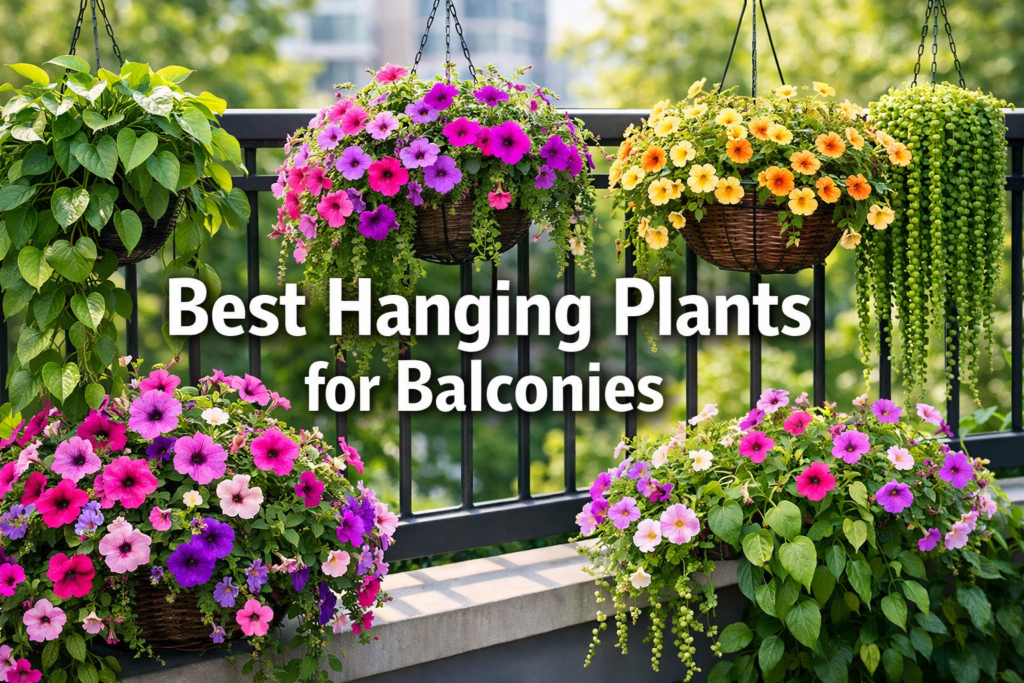
Transforming a balcony into a green oasis is a rewarding endeavor, and selecting the best hanging plants for balconies is key to success. This guide provides comprehensive information on the top choices for various light conditions, maintenance levels, and aesthetic preferences, ensuring your elevated garden thrives throughout 2026 and beyond.
Key Takeaways
- Flowering Trailing Plants: Choose options like Petunias, Calibrachoa, and Lobelia for vibrant color and cascading beauty.
- Foliage-Focused Choices: Pothos, Hoya, and English Ivy offer lush, year-round greenery and require less direct sunlight.
- Climate Considerations: Select heat and drought-tolerant varieties like succulents and Portulaca for sunny, hot balconies.
- Low-Maintenance Options: Opt for resilient plants such as Ferns, Geraniums, or select herbs for easy care.
- Proper Care: Success depends on choosing the right soil, understanding watering needs, and providing adequate light.
What Are the Best Trailing Flowering Plants for Balconies?
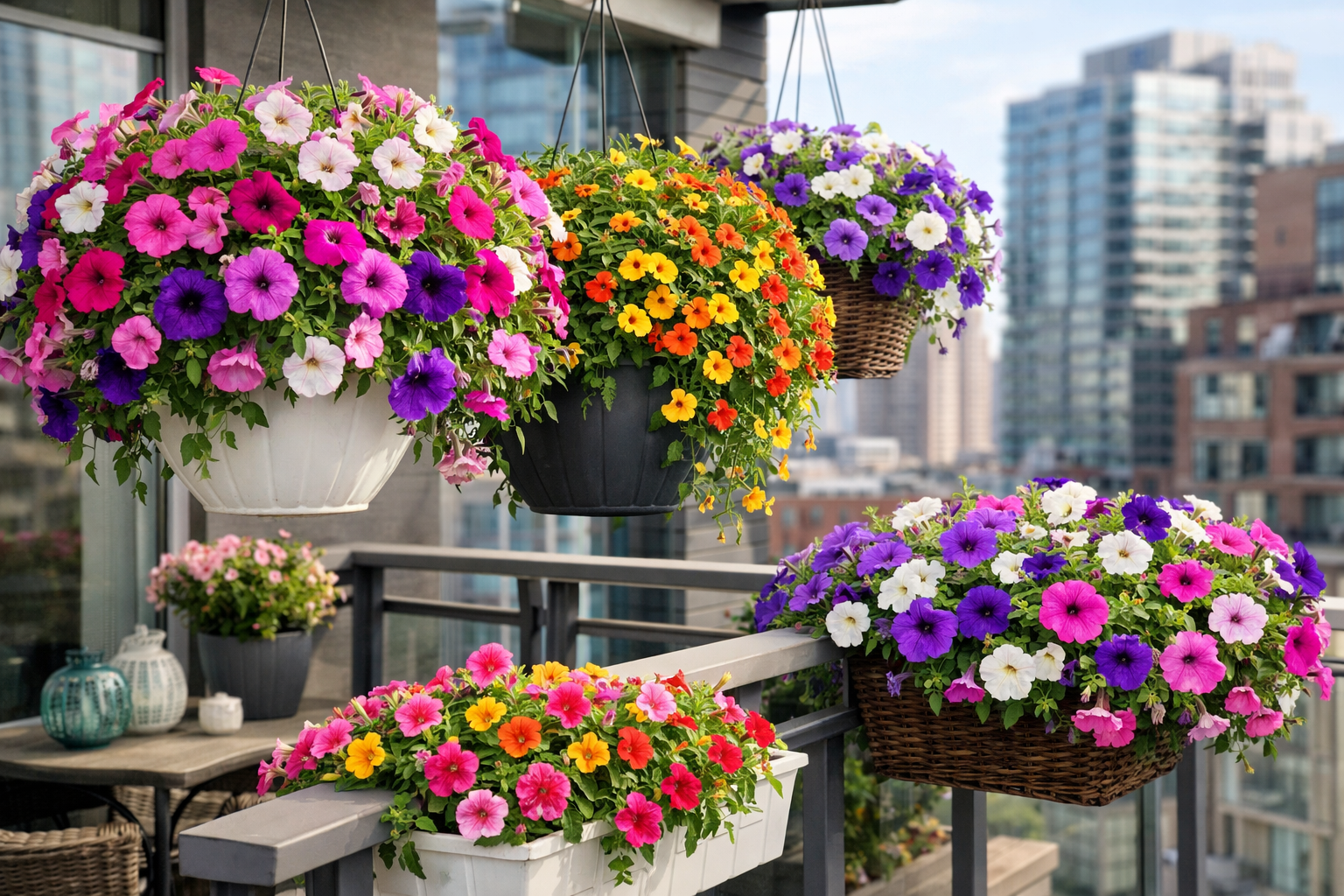
The best trailing flowering plants for balconies are those that offer continuous blooms, cascade beautifully, and are relatively easy to maintain, bringing vibrant color and dynamic movement to your outdoor space. These plants are ideal for adding a splash of cheer and natural elegance, thriving in containers and hanging baskets.
For dazzling displays, consider classic choices that are proven performers in various climates.
- Wave Petunias: These are incredibly popular for their prolific flowering and long, trailing stems that can drape gracefully over the sides of containers. Wave Petunias come in a wide array of colors, from vibrant purples and reds to soft pinks and whites, blooming from spring until the first frost [1]. They require ample sunlight and consistent watering to perform their best.
- Calibrachoa (Million Bells): Similar in appearance to miniature petunias, Calibrachoa produces hundreds of small, bell-shaped flowers. They are renowned for their continuous blooming and heat tolerance, making them an excellent choice for sunny balconies [1]. They also come in numerous colors and do not require deadheading, simplifying maintenance.
- Trailing Lobelia: Known for its delicate, airy blooms in shades of blue, purple, pink, and white, Trailing Lobelia creates a soft, misty effect. It prefers cooler temperatures and can thrive in partial shade, making it a good option for balconies that receive morning sun or dappled light [1].
- Trailing Verbena: This plant offers clusters of small flowers in rich colors like purple, red, and pink, and is particularly valued for its heat and drought tolerance once established [1, 4]. Trailing Verbena blooms continuously and is attractive to pollinators, adding life to your balcony.
When choosing trailing flowering plants, consider the amount of direct sunlight your balcony receives. Most flowering plants prefer at least 6 hours of direct sun per day. If your balcony is partially shaded, varieties like Lobelia or Fuchsia might be more suitable. For more general advice on choosing plants for smaller spaces, explore our guide on Best Plants for Small Gardens 2026.
Which Foliage-Focused Hanging Plants Are Ideal for Balconies?
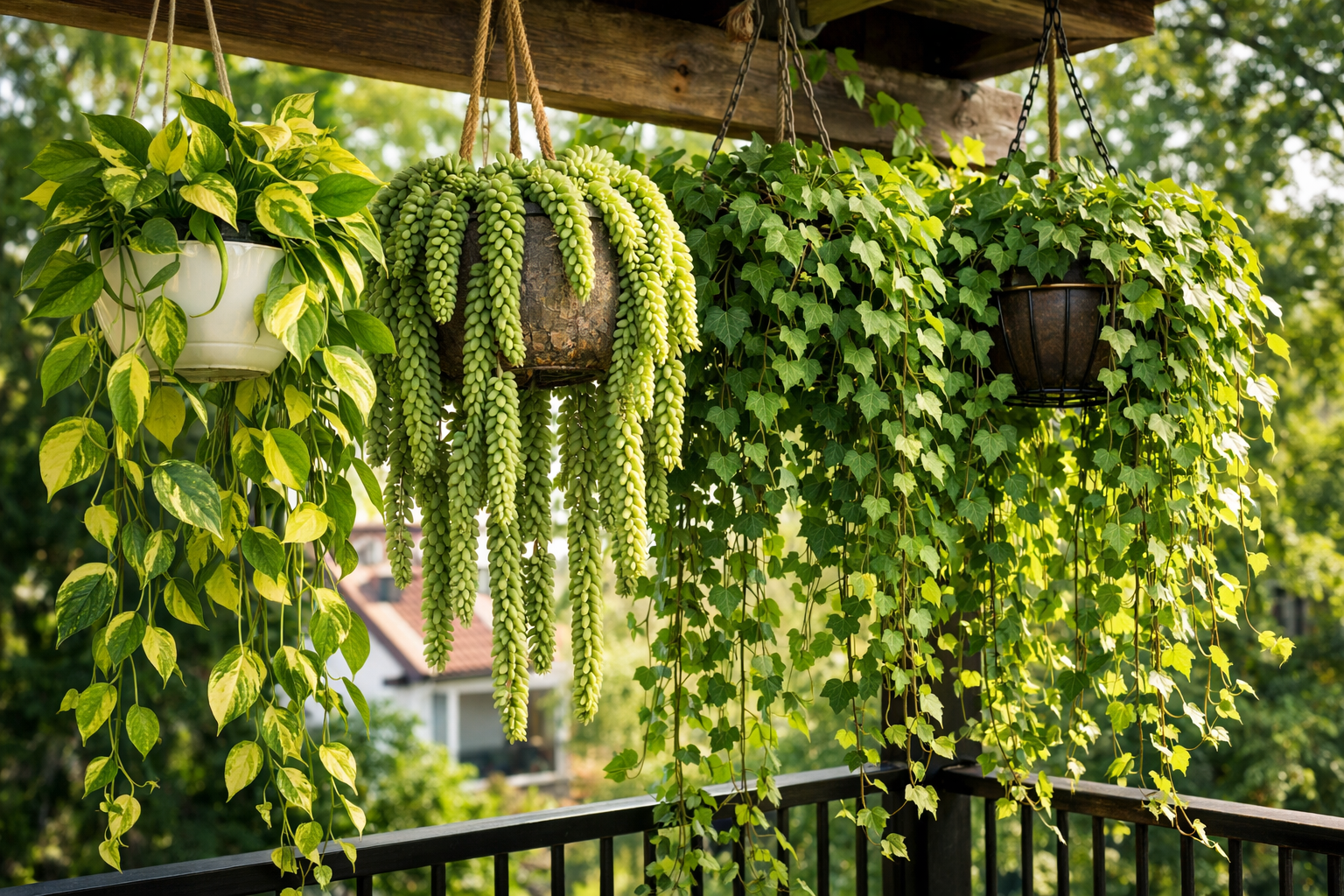
Foliage-focused hanging plants are ideal for balconies when you desire year-round greenery, unique textures, and a lush, sophisticated aesthetic without the need for constant flowering. These plants often require less direct sunlight than their flowering counterparts and can be excellent for creating privacy or softening harsh architectural lines.
Many foliage plants are also very forgiving, making them great for beginners or those with busy schedules.
- Pothos (Epipremnum aureum): Also known as Devil’s Ivy, Pothos is an incredibly resilient and popular choice for hanging baskets. It features heart-shaped leaves that can be solid green or variegated with yellow or white [2]. Pothos tolerates a range of light conditions, from low to bright indirect light, and is forgiving of occasional neglect, making it a top contender for Low Maintenance Plants for Beginners.
- Hoya (Wax Plant): Hoyas are known for their thick, waxy leaves and unique, star-shaped, fragrant flowers that appear in clusters. While they do flower, their primary appeal for many is their attractive foliage and trailing habit [2]. Hoyas prefer bright, indirect light and well-draining soil, becoming quite drought-tolerant once established.
- Burro’s Tail (Sedum morganianum): This succulent is a standout with its distinctive long, trailing stems covered in plump, teardrop-shaped leaves that resemble braided hair [2]. Burro’s Tail is extremely drought-tolerant and thrives in full sun to partial shade, making it a low-maintenance option for sunny, hot balconies. Handle with care, as its leaves detach easily.
- English Ivy (Hedera helix): A classic choice for its elegant, deeply lobed leaves and vigorous trailing habit, English Ivy can create a dense, verdant curtain. It prefers partial to full shade, making it perfect for north-facing or heavily shaded balconies [2]. While beautiful, be mindful that it can be invasive in some regions if allowed to escape its container.
When selecting foliage plants, consider the ultimate length of the trails and whether you want to create a dense curtain or a more delicate effect. These plants are excellent for adding structural interest and a calm, green backdrop to your balcony space. For more tips on how to properly care for these plants, consult our Beginner’s Guide to Plant Care 2026.
How Can I Choose Heat and Drought-Tolerant Hanging Plants for Sunny Balconies?
To choose heat and drought-tolerant hanging plants for sunny balconies, focus on varieties naturally adapted to arid conditions and intense sunlight, ensuring your plants survive and thrive with less frequent watering during hot spells. These plants are excellent for south-facing balconies or regions with consistently high temperatures.
Selecting resilient plants is crucial for sustainability and reduced maintenance in demanding environments.
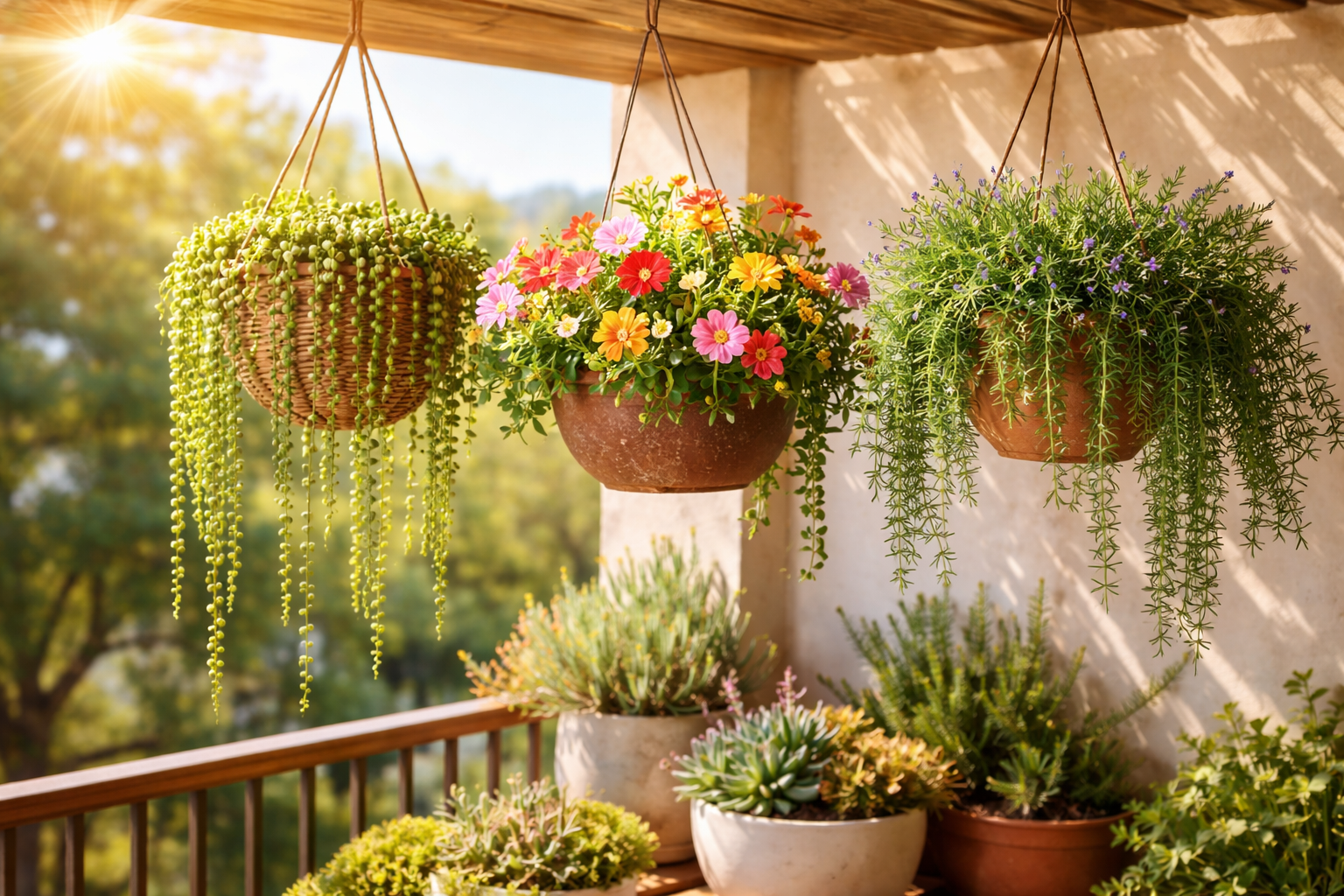
- Trailing Succulents: Many succulent varieties, such as String of Pearls (Senecio rowleyanus), String of Bananas (Senecio radicans), and Sedum varieties (like Burro’s Tail mentioned earlier), are excellent choices for sunny, hot balconies. They store water in their leaves, allowing them to withstand long periods without watering [3]. They require bright, direct sunlight and extremely well-draining soil.
- Portulaca (Moss Rose): This vibrant annual is a superstar in hot, dry conditions. Portulaca produces an abundance of cup-shaped, brightly colored flowers that open in the sun and close at night or on cloudy days [3]. It thrives in full sun and poor to average soil, requiring very little water once established.
- Creeping Rosemary (Rosmarinus officinalis ‘Prostratus’): While primarily known as an herb, creeping rosemary makes an attractive and fragrant trailing plant for sunny balconies. It has needle-like, aromatic leaves and produces small blue flowers. It is highly drought-tolerant and thrives in full sun, making it a practical and beautiful choice [3].
- Lantana (Lantana camara): This tough, sun-loving plant produces clusters of small flowers that change color as they mature, creating a multi-hued effect. Lantana is extremely tolerant of heat, drought, and even humidity, blooming continuously throughout the warm season [6]. It also attracts butterflies, adding extra charm to your balcony.
When gardening in hot, sunny conditions, consider using larger pots that retain moisture better and choose light-colored containers to prevent roots from overheating. Our guide on Best Pots for Small Space Gardening in 2026 can help you select appropriate containers. Additionally, understanding how often you should water plants in these conditions is vital to prevent root rot from overwatering or desiccation from underwatering. For more information on dealing with challenging climates, explore Heat Tolerant Hanging Basket Plants [6].
What Are the Best Low-Maintenance Hanging Plants for Balconies?
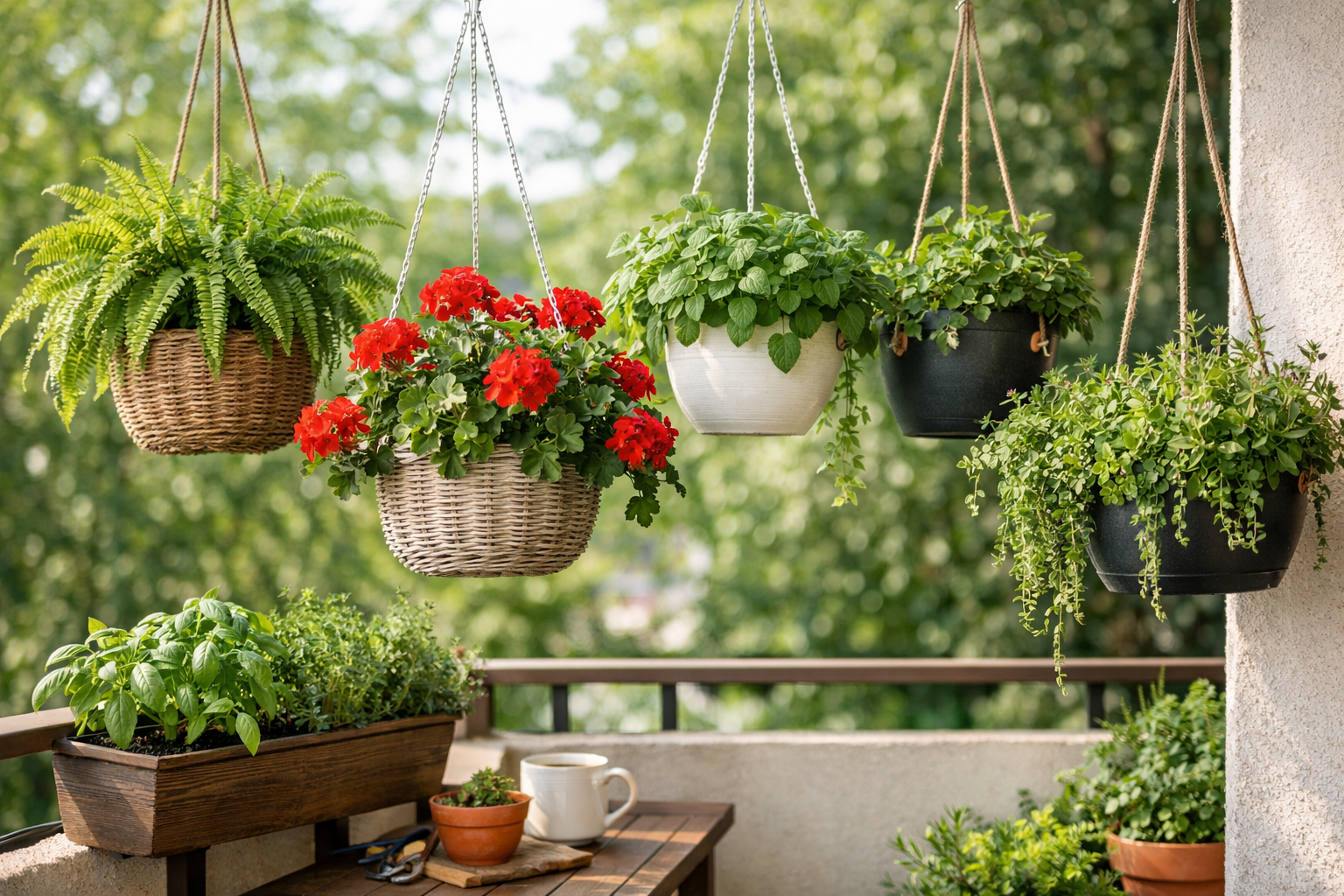
The best low-maintenance hanging plants for balconies are those that tolerate a range of conditions, don’t demand constant attention, and remain attractive with minimal effort, making them ideal for busy gardeners or beginners. These choices help create a beautiful space without feeling like a chore.
Choosing easy-care options allows you to enjoy your balcony without the stress of intensive gardening.
- Boston Fern (Nephrolepis exaltata ‘Bostoniensis’): Known for its lush, feathery fronds, the Boston Fern is a classic hanging plant that thrives in partial to full shade. It requires consistent moisture but is relatively pest-free and doesn’t need flowering to look fantastic. It’s an excellent choice for creating a cool, green aesthetic on a shaded balcony.
- Geraniums (Pelargonium x hortorum): While many geraniums are upright, trailing varieties are perfect for hanging baskets. They offer continuous blooms in various colors and are generally quite tough. Geraniums prefer full sun to partial shade and are relatively drought-tolerant once established, making them a forgiving choice for bright spots.
- Begonias (Tuberous and Wax Begonias): Trailing begonias, especially tuberous varieties, produce spectacular flowers in shades of red, orange, pink, and yellow, often with a cascading habit. Wax begonias offer glossy foliage and smaller, consistent blooms. Both types prefer partial shade and consistent moisture but are otherwise quite low-maintenance, thriving in sheltered balcony spots.
- Sweet Potato Vine (Ipomoea batatas): Grown for its vibrant, ornamental foliage rather than its edible tubers, Sweet Potato Vine offers striking lime green, dark purple, or variegated leaves. It’s incredibly vigorous, tolerates a range of light conditions from full sun to partial shade, and is relatively drought-tolerant. Its rapid growth makes it an excellent filler and spiller for hanging baskets.
- Herbs (Mint, Thyme, Oregano): Many herbs, particularly those with a spreading or trailing habit like mint, creeping thyme, and oregano, make excellent low-maintenance hanging plants. They are not only attractive but also provide fresh ingredients for cooking. Most herbs prefer full sun and good drainage, and they are generally hardy and require minimal care beyond regular harvesting.
When aiming for low-maintenance, always consider the size of the plant at maturity and ensure your hanging basket or container provides enough space for its root system. Opt for self-watering planters if you tend to forget watering. For more comprehensive guidance on selecting resilient plants, check out our article on Best Low Maintenance Plants 2026: Easy Care Guide. These choices help ensure your balcony garden is a source of joy, not stress.
Essential Care Tips for Thriving Balcony Hanging Plants
Even the most resilient plants benefit from a foundational understanding of their needs. Proper care ensures longevity, vibrant growth, and continuous blooms for your best hanging plants for balconies.
Soil and Fertilization
- Choose High-Quality Potting Mix: Regular garden soil is too heavy for containers. Opt for a lightweight, well-draining potting mix that retains moisture while allowing excess water to escape. Many mixes include slow-release fertilizers for an initial boost.
- Regular Feeding: Hanging plants, especially flowering varieties, are heavy feeders. Nutrients leach out quickly from small containers. Fertilize every 2-4 weeks during the growing season (spring through fall) with a balanced liquid fertilizer, or incorporate slow-release granules at the beginning of the season.
- Check pH: Most plants prefer a slightly acidic to neutral pH (6.0-7.0). If your plants are struggling despite good watering and light, a soil pH test can provide valuable insight. For more on soil, see our Soil Basics for Container Gardening: 2026 Expert Guide.
Watering Techniques
- Consistency is Key: Hanging baskets dry out faster than ground beds due to increased air circulation and sun exposure. Check soil moisture daily by sticking your finger about an inch into the soil. Water when the top inch feels dry.
- Water Thoroughly: Water until you see drainage from the bottom of the pot. This ensures the entire root ball is moistened.
- Avoid Overwatering: While consistency is important, avoid letting plants sit in soggy soil, which can lead to root rot. Good drainage is crucial. Consider using self-watering planters for easier management, especially for new gardeners. For detailed watering advice, refer to How Often Should You Water Plants? Ultimate Guide 2026.
Light Requirements
- Know Your Plant’s Needs: Before purchasing, understand whether your chosen plant thrives in full sun (6+ hours direct light), partial sun/shade (3-6 hours direct light, often morning sun), or full shade (less than 3 hours direct light).
- Observe Your Balcony: Monitor your balcony’s light conditions throughout the day and across seasons. A spot that gets morning sun in spring might be scorching hot in summer afternoons.
- Rotate Plants: Periodically rotating your hanging baskets ensures even growth and prevents plants from becoming lopsided as they stretch towards the light.
Pruning and Deadheading
- Deadhead for More Blooms: For many flowering plants, regularly removing spent flowers (deadheading) encourages the plant to produce more blooms instead of focusing energy on seed production.
- Prune for Shape and Health: Pinching back leggy growth encourages bushier, fuller plants. Remove any yellowing, diseased, or dead leaves promptly to maintain plant health and appearance.
- Rejuvenation Pruning: For plants that become very leggy or sparse by mid-season, a more aggressive “haircut” can often stimulate new growth and a flush of fresh blooms.
Troubleshooting Common Issues with Balcony Hanging Plants
Even the best hanging plants for balconies can face challenges. Knowing how to diagnose and address common problems can save your plants and your peace of mind.
Yellowing Leaves
- Diagnosis: Yellow leaves are a common symptom with multiple causes.
- Underwatering: Leaves may be crispy and dry, starting from the bottom.
- Overwatering: Leaves may be soft and mushy, often accompanied by wilting despite wet soil. This can lead to root rot.
- Nutrient Deficiency: Uniform yellowing (chlorosis) can indicate a lack of nitrogen, iron, or other essential nutrients, especially in older leaves.
- Pests or Disease: Inspect for small insects or unusual spots/patterns.
- Solution: Adjust watering schedule based on diagnosis. For nutrient deficiency, apply a balanced liquid fertilizer. Address pests or diseases as needed.
Wilting Plants
- Diagnosis: Drooping leaves, even if the soil feels moist.
- Underwatering: The most common cause; soil will be dry.
- Overwatering/Root Rot: Plants wilt because damaged roots can’t absorb water, even from wet soil.
- Heat Stress: Plants may wilt temporarily during the hottest part of the day, recovering in the evening. This is common for less heat-tolerant varieties.
- Solution: For underwatering, water thoroughly. For suspected root rot, allow the soil to dry out more between waterings and ensure good drainage. Provide partial shade during peak heat for heat-sensitive plants.
Pest Infestations
- Common Pests: Aphids, spider mites, whiteflies, and mealybugs are frequent visitors to balcony plants.
- Symptoms: Sticky residue on leaves (honeydew), tiny webs, distorted new growth, visible insects, or white cottony masses.
- Solution:
- Manual Removal: For small infestations, physically remove pests or spray them off with a strong jet of water.
- Insecticidal Soap/Neem Oil: Apply according to product directions, focusing on the undersides of leaves.
- Preventative Measures: Inspect plants regularly, isolate new plants before introducing them to your collection, and encourage beneficial insects.
Leggy Growth and Sparse Blooms
- Diagnosis: Long, stretched stems with few leaves or flowers.
- Insufficient Light: Plants are stretching to find more light.
- Lack of Pruning: Not pinching back growth can lead to lanky plants.
- Nutrient Imbalance: Too much nitrogen can promote leafy growth at the expense of flowers.
- Solution: Move plants to a brighter location or provide supplemental light. Regularly pinch back stems to encourage bushier growth. Ensure a balanced fertilizer, perhaps one higher in phosphorus for flowering plants.
By regularly observing your hanging plants and understanding these common issues, you can keep your balcony garden looking vibrant and healthy all season long. Establishing a Balcony Garden Setup Step-by-Step can also help prevent many of these problems before they start.
Comparison of Popular Hanging Plants for Balconies
Choosing the best hanging plants for balconies often comes down to balancing aesthetic appeal with your specific conditions and care preferences. Here’s a comparative overview of some top contenders:
| Plant Type | Best For | Light Needs | Watering Needs | Notable Trait | Maintenance Level |
|---|---|---|---|---|---|
| Wave Petunias | Vibrant color, fast growth | Full Sun | Consistent, ample water | Prolific blooms, long trailing | Moderate |
| Calibrachoa | Continuous bloom, heat tolerance | Full Sun | Moderate, well-draining soil | Self-cleaning (no deadheading needed) | Low-Moderate |
| Pothos | Lush green foliage, year-round interest | Partial Shade-Low | Allow soil to dry between waterings | Extremely forgiving, air-purifying | Very Low |
| Burro’s Tail | Unique succulent texture, drought tolerance | Full Sun-Partial | Infrequent, well-draining soil | Visually striking, extremely drought-tolerant | Very Low |
| English Ivy | Elegant trailing, privacy screen | Partial to Full | Consistent moisture, tolerates drying out | Dense foliage, great for shaded areas | Low-Moderate |
| Boston Fern | Green backdrop, shaded areas | Partial to Full | Consistent moisture, high humidity | Classic look, thrives in indirect light | Moderate |
| Geraniums | Bright flowers, sun-loving | Full Sun-Partial | Moderate, tolerates slight drought | Cheerful blooms, generally pest-resistant | Low-Moderate |
| Sweet Potato Vine | Dramatic foliage color, fast growth | Full Sun-Partial | Moderate, good drainage | Excellent “spiller” in mixed containers | Low |
| Portulaca | Extreme heat/drought tolerance, bright blooms | Full Sun | Infrequent, very drought-tolerant | Sun-loving flowers, vibrant colors | Very Low |
Choosing Tip: If you travel frequently or forget to water, Burro’s Tail or Portulaca are excellent drought-tolerant choices. For a lush, green look with minimal effort, Pothos or English Ivy will be your best bet. If continuous, vibrant blooms are your priority and you have a sunny spot, Wave Petunias or Calibrachoa are unmatched. For more on general plant maintenance, check out our Plants Care section.
Frequently Asked Questions (FAQ)
What type of hanging basket is best for balconies?
Plastic or resin hanging baskets are lightweight and retain moisture well, while coco-lined wire baskets offer excellent drainage and aeration, but dry out faster. Choose baskets with good drainage holes regardless of material.
How often should I fertilize hanging plants on my balcony?
During the active growing season (spring and summer), fertilize flowering hanging plants every 2-4 weeks with a balanced liquid fertilizer. Foliage plants may need less frequent feeding, perhaps once a month.
Can I grow edible plants in hanging baskets on my balcony?
Yes, many herbs like mint, thyme, and oregano, as well as compact varieties of strawberries, cherry tomatoes, and leafy greens, are excellent choices for edible hanging baskets.
Do I need to deadhead all flowering hanging plants?
Deadheading (removing spent blooms) encourages more flowers for many plants like petunias and geraniums. However, some plants like Calibrachoa are “self-cleaning” and don’t require deadheading.
How do I prevent hanging plants from drying out too quickly?
Use larger baskets, line coco coir baskets with plastic (poke drainage holes), add water-retaining crystals to the soil, or use self-watering planters. Watering thoroughly and consistently is also crucial.
What are some good options for shaded balconies?
For shaded balconies, consider Boston Ferns, English Ivy, Begonias, Fuchsias, and Trailing Lobelia. These plants thrive with indirect light and can add significant beauty to low-light areas.
How can I make my hanging baskets look fuller?
To encourage fuller growth, pinch back the growing tips of your plants regularly. You can also plant multiple smaller plants in one basket, ensuring they have enough space.
Are native plants suitable for hanging baskets on balconies?
Yes, some native plants, especially those with trailing or compact habits, can be suitable. They often require less water and maintenance once established and support local pollinators [5]. Consult local nurseries for region-specific recommendations.
What is the ideal soil for hanging plants?
A high-quality, lightweight potting mix designed for containers is ideal. It should offer good drainage while retaining sufficient moisture and provide essential nutrients for plant growth.
How do I protect hanging plants from strong winds on a balcony?
Choose sturdy hooks and hangers. Position baskets in sheltered spots if possible, or select plants with flexible stems that can withstand wind. Bringing plants indoors during severe weather is also an option.
Conclusion
Choosing the best hanging plants for balconies is about aligning your aesthetic desires with your balcony’s environmental conditions and your commitment to care. Whether you crave the vibrant cascade of flowering annuals like Wave Petunias, the lush, year-round greenery of Pothos, or the resilient charm of succulents, there’s a perfect plant waiting to transform your outdoor space. By considering factors like sunlight exposure, watering needs, and maintenance levels, you can cultivate a thriving, beautiful balcony garden that brings joy and serenity throughout 2026. Remember that the right soil, consistent watering, and occasional feeding are the cornerstones of success, ensuring your elevated oasis remains a vibrant showcase.
Key Takeaways
- Match Plants to Light: Select plants based on your balcony’s sun exposure (full sun, partial shade, or full shade) for optimal growth.
- Consider Maintenance: Opt for low-maintenance varieties if you have a busy schedule or are a beginner.
- Diversify Plant Types: Combine flowering and foliage plants for continuous interest and varied textures.
- Prioritize Drainage: Always use hanging baskets with adequate drainage holes and a quality potting mix to prevent root rot.
- Water Wisely: Check soil moisture regularly and water thoroughly, adapting frequency to weather conditions and plant type.
- Feed Regularly: Provide nutrients during the growing season, as hanging plants deplete soil resources quickly.
- Prune for Health: Pinch back and deadhead to encourage bushier growth and more prolific blooms.
- Troubleshoot Actively: Address yellowing leaves, wilting, or pests promptly to maintain plant health.
- Experiment and Enjoy: Don’t be afraid to try different plants and arrangements to find what works best for your unique balcony space.
Related Reading
- Complete Balcony Gardening Guide for Small Apartments 2026
- Easy Plants to Grow in Small Spaces (2026 Guide)
- Ultimate Guide to Small Space Gardening for Beginners 2026
References
[1] The 8 Best Trailing Plants For Container Gardens – https://tedsgardens.com/the-8-best-trailing-plants-for-container-gardens/
[2] The Ultimate Guide To Hanging Plants And Vertical Gardens – https://www.hoselink.com.au/blogs/gardening/the-ultimate-guide-to-hanging-plants-and-vertical-gardens
[3] Growing Plants In Tight Spaces – https://greengoddess.com/growing-plants-in-tight-spaces/
[4] Hanging Basket Flowers – https://www.provenwinners.com/learn/hanging-basket-flowers
[5] Native Plants For Urban Balconies – https://wildones.org/native-plants-for-urban-balconies/
[6] Heat Tolerant Hanging Basket Plants – https://www.botanicalinterests.com/community/blog/heat-tolerant-hanging-basket-plants/
[7] Top 10 Hanging Plants To Beautify Your Balcony – https://indorenursery.com/top-10-hanging-plants-to-beautify-your-balcony/