Beginner Mistakes in Small Space Gardening: How to Avoid Common Pitfalls in 2026
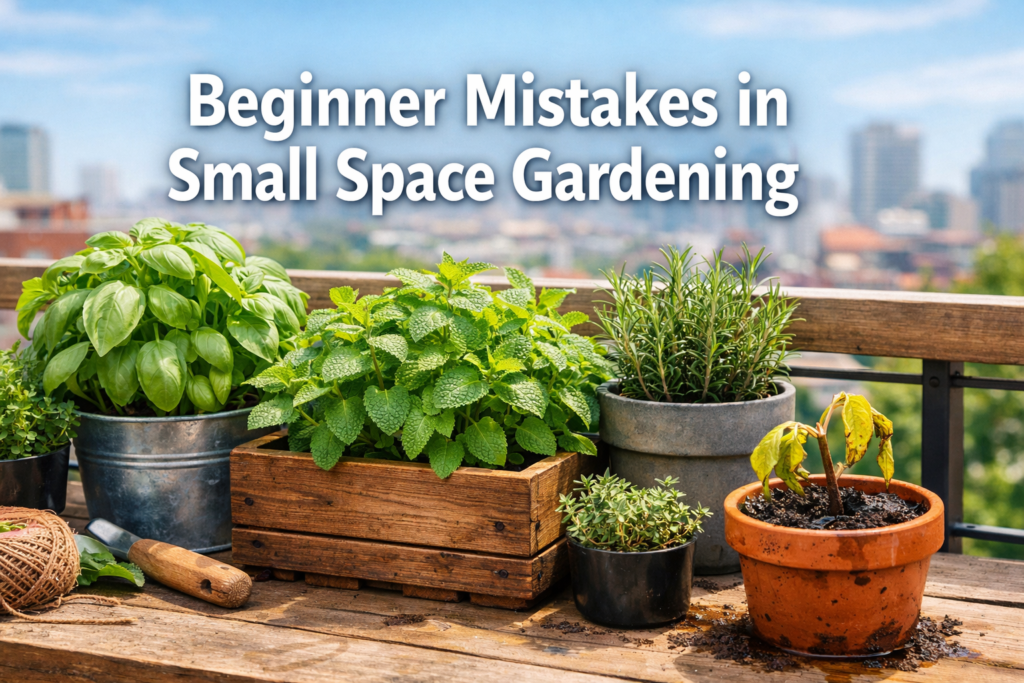
Beginner mistakes in small space gardening often stem from underestimating the unique requirements of compact environments, such as improper watering, selecting unsuitable plants, and neglecting soil quality. By focusing on adequate drainage, choosing plants that thrive in limited light and space, and utilizing high-quality potting mixes, new gardeners can cultivate successful and flourishing mini-gardens even in the tightest urban settings.
Key Takeaways
- Avoid overwatering and ensure proper drainage to prevent root rot, a common beginner mistake.
- Match your plants’ sunlight and size needs to your specific small space for optimal growth.
- Don’t neglect soil quality; nutrient-rich, well-draining potting mix is crucial for container success.
- Understand that small spaces often require more frequent, but lighter, watering and feeding.
- Start with easy-to-grow plants suited for containers to build confidence and experience.
What Are the Most Common Watering Mistakes in Small Space Gardening?
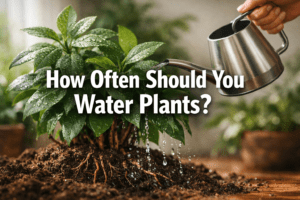
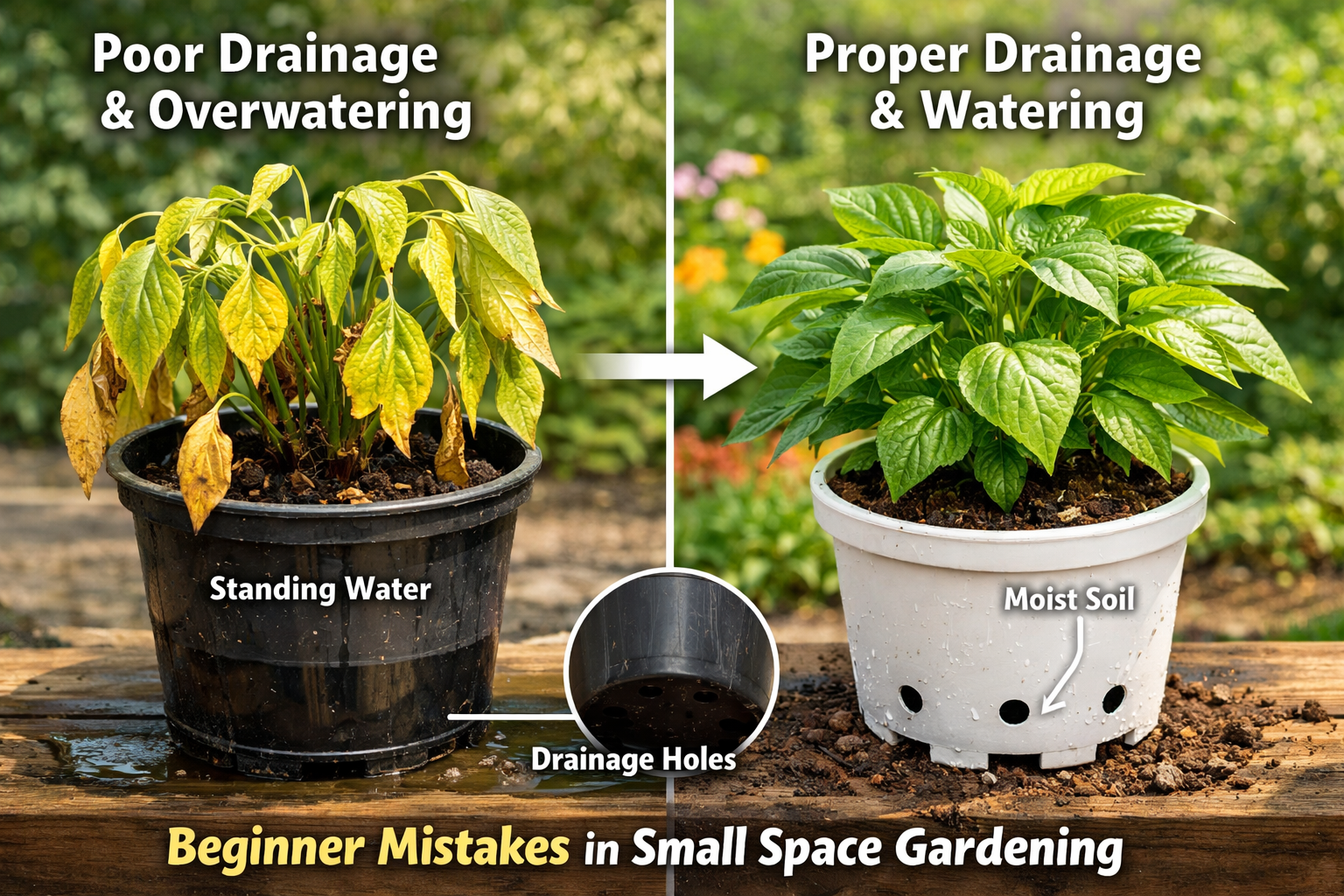
One of the most frequent beginner mistakes in small space gardening is improper watering, which often leads to either overwatering or underwatering, both detrimental to plant health. Overwatering suffocates roots and promotes fungal diseases, while underwatering causes wilting and nutrient stress.
In small space gardening, containers dry out much faster than garden beds due to increased air circulation around the pot, meaning plants may need more frequent watering, sometimes daily during hot weather. However, the exact frequency depends on the plant species, pot size, and environmental conditions. A common pitfall for beginners is to water on a fixed schedule rather than checking the soil moisture. To avoid overwatering, always ensure your containers have drainage holes, and allow the top inch or two of soil to dry out before watering again. For underwatering, pay attention to drooping leaves and quickly rehydrate your plants, understanding that wilting is a clear sign they are thirsty. Using a moisture meter can be a helpful tool for beginners, offering a clear indication of when to water without guessing.
Common Watering Missteps & Solutions:
- Overwatering Without Drainage: Planting in containers without drainage holes traps water, leading to root rot.
- Solution: Always use pots with drainage holes. If a decorative pot lacks holes, use it as a cachepot (a larger pot to hold a smaller, drained pot) or drill holes yourself.
- Assuming All Plants Need the Same Water: Different plants have different water requirements. A cactus needs far less water than a fern.
- Solution: Research the specific water needs of each plant you choose. Group plants with similar water needs together if possible.
- Surface Watering Only: Watering lightly only wets the top layer of soil, leaving deeper roots dry and encouraging shallow root growth.
- Solution: Water thoroughly until water drains from the bottom of the pot. This ensures the entire root ball is moistened.
- Watering on a Schedule, Not by Need: Watering every day regardless of soil moisture can lead to overwatering or underwatering depending on conditions.
- Solution: Feel the soil. Insert your finger about an inch or two into the soil. If it feels dry, it’s time to water. If it’s still moist, wait.
- Neglecting Seasonal Changes: Plants need more water in hot, sunny weather and less in cooler, cloudy conditions.
- Solution: Adjust your watering frequency based on the weather, season, and plant growth stage. Young plants and fruiting plants often need more water.
Why is Drainage So Crucial in Small Space Gardening?
Drainage is crucial in small space gardening because containers offer limited soil volume and can easily become waterlogged without proper exit points for excess water, leading to root suffocation and disease. Unlike in-ground gardens where excess water can permeate deep into the earth, container plants rely entirely on the pot’s design and soil composition to manage moisture. If water accumulates at the bottom of a pot, roots sit in stagnant water, depriving them of oxygen and creating an ideal environment for harmful fungi and bacteria. This condition, known as root rot, is notoriously difficult to recover from and often proves fatal to the plant. Ensuring excellent drainage is a fundamental step that beginners often overlook, yet it is paramount for the health and longevity of container-grown plants.
For instance, if you’re growing herbs on a balcony, using a terracotta pot with a large drainage hole will naturally wick away some moisture, complementing the physical drainage. Conversely, a plastic pot without holes will hold onto water, requiring more careful monitoring. Choosing the right container and potting mix, as discussed in our Ultimate Guide to Small Space Gardening for Beginners 2026, is essential to prevent these common beginner mistakes in small space gardening.
How Does Choosing the Wrong Plants Impact Small Space Gardening Success?
Choosing the wrong plants is a significant beginner mistake in small space gardening, as it can lead to frustrated efforts when plants outgrow their containers, fail to thrive in available light, or struggle with limited soil volume. Many beginners select plants based purely on aesthetic appeal or desire for a particular crop without considering its specific needs or mature size, resulting in overcrowding, stunted growth, and wasted resources.
Successful small space gardening hinges on selecting plants that are naturally compact, have shallow root systems, or are specifically bred for container growth. For example, a standard indeterminate tomato plant, while prolific, will quickly outgrow a small pot and require extensive support, overwhelming a tiny balcony. Conversely, dwarf tomato varieties like ‘Tiny Tim’ or ‘Patio Princess’ are bred to remain compact and produce fruit in smaller containers, making them ideal for limited spaces. Neglecting to research plant requirements for light, mature size, and root depth often leads to plant stress and poor yields.
Matching Plants to Your Space’s Sunlight Conditions
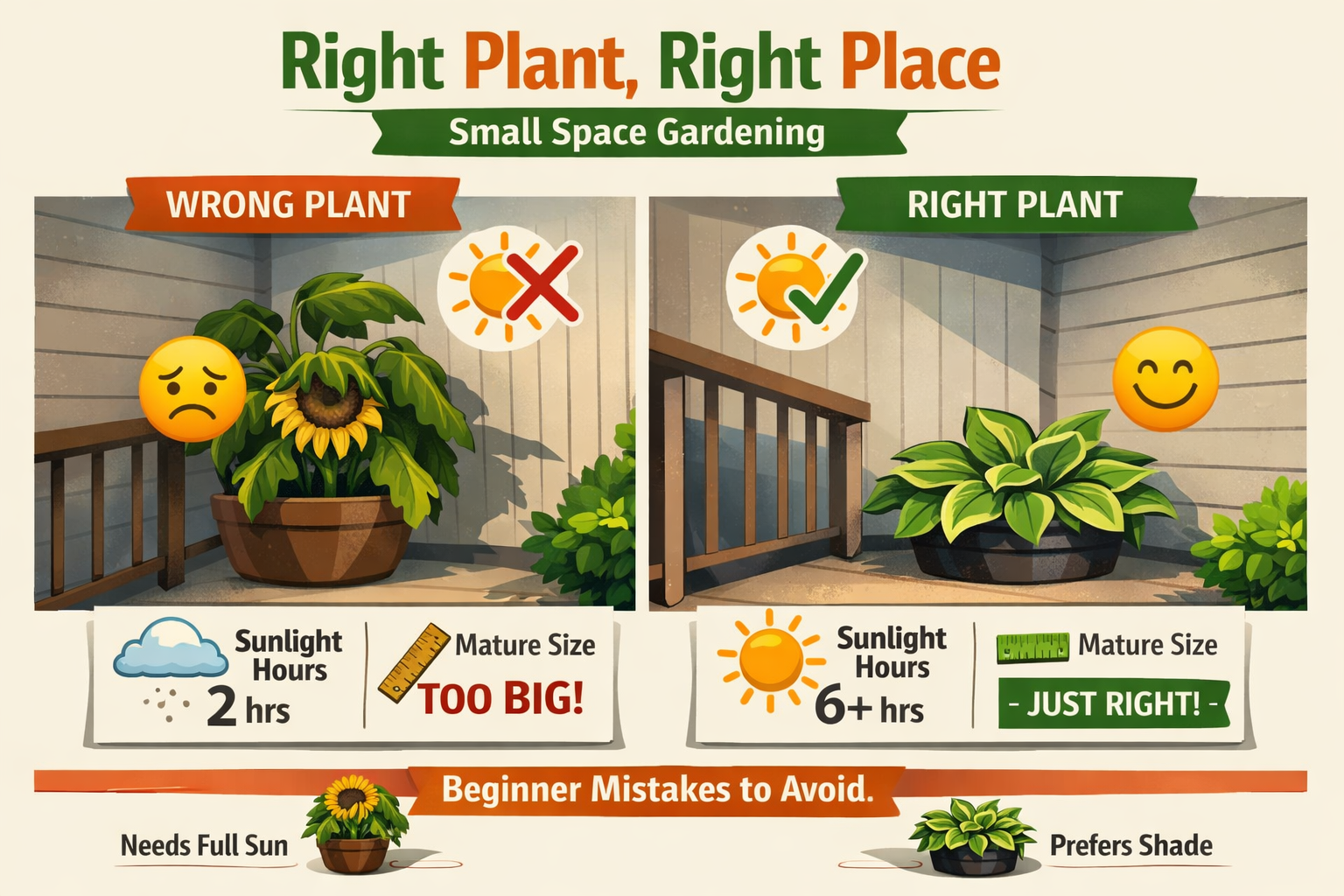
Understanding the sunlight available in your small space is critical, as plants have vastly different light requirements. A common beginner mistake in small space gardening is to ignore the actual light conditions and plant sun-loving vegetables in a shady spot, or vice-versa.
- Full Sun (6+ hours of direct sun daily): Ideal for most vegetables like tomatoes, peppers, cucumbers, and many herbs. Balconies or windows facing south are often prime full-sun locations.
- Partial Sun/Partial Shade (3-6 hours of direct sun daily): Suitable for leafy greens such as lettuce, spinach, Swiss chard, and some root vegetables like carrots and radishes. Morning sun is often best, as it’s less intense than afternoon sun.
- Shade (Less than 3 hours of direct sun daily): Best for ferns, hostas, impatiens, and certain herbs like mint and parsley. Most fruiting vegetables will not produce well in full shade.
To determine your space’s sunlight, observe it throughout the day for a week. Note which areas receive direct sun, for how long, and at what intensity. This observation period is invaluable for making informed plant choices and avoiding disappointment. You might find that even a small balcony has distinct “microclimates” with varying sun exposures. For a comprehensive list of suitable plants, check out our guide on the Best Plants for Small Gardens 2026: The Complete List.
The Importance of Plant Mature Size
Ignoring a plant’s mature size is another critical beginner mistake in small space gardening. While a seedling may look tiny, many plants grow substantially, quickly overwhelming limited container space, suffocating neighboring plants, and potentially causing structural issues if grown in insufficient pots.
Why Mature Size Matters:
- Container Suitability: A plant that grows 3 feet tall needs a much larger and more stable pot than one that reaches 1 foot. Using too small a pot will restrict root growth, leading to stunted plants and poor yields.
- Overcrowding: Planting too many large plants in a small area reduces air circulation, increases competition for resources, and creates conditions ripe for pests and diseases.
- Support Needs: Taller or vining plants (e.g., pole beans, indeterminate tomatoes) require vertical support structures like trellises or stakes. Planning for these supports is crucial in small spaces, perhaps by using Vertical Gardening Guide for Small Spaces: Grow More in 2026.
- Harvest Accessibility: An overgrown plant can make harvesting difficult, especially in tight balcony or patio settings.
When selecting plants, always look at the “mature size” information on seed packets or plant tags. Opt for dwarf, compact, or bush varieties specifically bred for containers. For example, instead of a sprawling zucchini, choose a ‘Bush Star’ zucchini, which offers a more contained growth habit. This proactive planning helps prevent your small garden from becoming an unmanageable jungle and is a key lesson in avoiding beginner mistakes in small space gardening.
Table: Plant Selection for Small Spaces
| Plant Category | Ideal Characteristics for Small Spaces | Examples for Small Space | Avoid These (unless dwarf variety) |
|---|---|---|---|
| Vegetables | Compact, bush varieties, vertical growers | Dwarf tomatoes, bush beans, radishes, lettuce, spinach | Indeterminate tomatoes, sprawling zucchini, corn |
| Herbs | Moderate growth, container-friendly | Basil, mint (in separate pot), chives, parsley, thyme | Large rosemary bushes, extensive oregano ground cover |
| Flowers | Compact, long-blooming, upright | Marigolds, petunias, nasturtiums, dwarf sunflowers | Large climbing roses, sprawling shrubs, tall perennials |
| Fruits | Dwarf varieties, columnar, container-bred | Dwarf citrus, strawberries, blueberries (bush), columnar apples | Standard fruit trees, vigorous grapevines |
Why is Neglecting Soil Quality a Major Beginner Mistake in Small Space Gardening?
Neglecting soil quality is a major beginner mistake in small space gardening because plants in containers rely entirely on the limited volume of soil for all their nutritional needs, water retention, and aeration. Unlike in-ground gardens where soil ecosystems are vast and self-sustaining, container soil depletes nutrients faster and compacts more easily, requiring a specialized, high-quality potting mix to support healthy plant growth. Using garden soil, which is often too heavy and can introduce pests and diseases, in containers will quickly lead to poor drainage, suffocated roots, and nutrient deficiencies.
A good potting mix provides the optimal balance of moisture retention, drainage, and aeration essential for root development. It also typically contains a starter dose of nutrients to help plants establish themselves. Investing in a quality potting mix, rather than trying to use native garden soil, is fundamental for success in any small space, balcony, or indoor gardening project. This critical distinction is often overlooked by novices, leading to stunted plants and frustration.
Choosing the Right Potting Mix
Selecting the appropriate potting mix is crucial and distinguishes successful container gardening from early failures. Do not use garden soil or topsoil directly in pots.
- Container-Specific Potting Mix: Always opt for a high-quality, sterile potting mix specifically formulated for containers. These mixes are typically lighter, retain moisture well, and provide excellent drainage. They often contain a blend of peat moss or coco coir, perlite or vermiculite, and a small amount of compost or slow-release fertilizer.
- Avoid Heavy Garden Soil: Garden soil is too dense for containers. It compacts easily, restricts root growth, and holds too much water, leading to root rot. It can also harbor weed seeds, pests, and diseases.
- Specialized Mixes: For specific plants like succulents, orchids, or acid-loving plants, consider specialized potting mixes tailored to their unique requirements.
- Adding Amendments (Carefully): While a good potting mix is often sufficient, experienced gardeners might add perlite for extra drainage, coco coir for moisture retention, or compost for slow-release nutrients. For beginners, a standard high-quality potting mix is usually best.
The Role of Fertilization
Container plants have a finite amount of nutrients in their potting mix, which deplete quickly as plants grow and water leaches nutrients out. Fertilization is therefore more critical in small space gardening than in traditional ground gardening.
- Initial Nutrients: Most good quality potting mixes come with a small amount of slow-release fertilizer that feeds plants for the first few weeks.
- Regular Feeding: After this initial period, plants will need regular fertilization. The type and frequency depend on the plant.
- Heavy Feeders (e.g., tomatoes, peppers, flowering annuals): Require more frequent feeding, typically every 2-4 weeks with a balanced liquid fertilizer or a slow-release granular fertilizer.
- Light Feeders (e.g., lettuce, herbs): May only need a light feeding every 4-6 weeks, or less if compost is regularly added.
- Choose Wisely: Use a balanced fertilizer (N-P-K ratios) for general growth, or a bloom-boosting fertilizer (higher P and K) for flowering and fruiting plants. Always follow package directions to avoid over-fertilizing, which can burn roots.
- Organic Options: For those preferring organic methods, compost tea, worm castings, or organic liquid fertilizers are excellent choices to replenish nutrients naturally. Regular additions of compost to the top layer of soil can also slowly release nutrients.
What Are Common Overcrowding and Spacing Errors for Small Gardeners?
Common overcrowding and spacing errors are significant beginner mistakes in small space gardening, as new gardeners often place plants too close together, leading to intense competition for light, water, and nutrients, and ultimately stunting growth and reducing yields. While the desire to maximize every inch is understandable in a compact area, inadequate spacing creates a dense canopy that restricts air circulation, making plants more susceptible to fungal diseases and insect infestations.
Proper spacing is not just about the immediate aesthetic; it’s about providing each plant with enough room to reach its mature size without negatively impacting its neighbors. For instance, planting multiple basil plants too tightly in one small pot will result in spindly, less productive plants, whereas giving each plant adequate room allows for bushier growth and a more abundant harvest. Always check seed packets or plant tags for recommended spacing and choose container sizes appropriate for the mature spread of your chosen plants.
Understanding Plant Spacing Requirements
Plant spacing requirements are typically listed on seed packets and plant tags, providing a guideline for how far apart to place individual plants or groups of seeds. These recommendations are based on the plant’s mature size and are crucial for healthy development.
- Root Competition: Roots need space to spread out and absorb water and nutrients. When plants are too close, their root systems compete fiercely, leading to stunted growth.
- Air Circulation: Adequate spacing ensures good airflow around and through the plants. This helps dry out foliage after watering or rain, reducing the risk of fungal diseases like powdery mildew, which thrives in humid, stagnant conditions.
- Light Penetration: Each plant needs sufficient sunlight to photosynthesize effectively. Overcrowding can create shade, depriving lower leaves or smaller plants of necessary light.
- Harvesting and Maintenance: Properly spaced plants are easier to access for watering, fertilizing, pruning, and harvesting. In a cramped setup, performing these tasks can damage plants.
When planning your small garden, consider the mature width of each plant, not just its height. Use visual aids like string or a measuring tape to mark out spacing before planting. If using containers, ensure each pot is large enough to accommodate the plant’s full root system and above-ground growth. For example, a single bush pepper plant might need a 5-gallon container to thrive, while multiple lettuce plants could fit in a wider, shallower container.
Strategies to Maximize Space Without Overcrowding
Maximizing space without overcrowding is a core challenge in small space gardening, requiring clever planning and specific techniques. Instead of cramming more plants into a flat horizontal plane, strategic methods focus on utilizing vertical dimensions and choosing space-efficient plant types.
- Vertical Gardening: This is perhaps the most effective strategy. Using trellises, stakes, hanging baskets, wall planters, or tiered shelving allows you to grow plants upwards, significantly increasing your growing area without expanding your footprint. For example, cucumbers, pole beans, and some squash varieties can be trained to grow vertically. Check out our Vertical Gardening Guide for Small Spaces: Grow More in 2026 for more ideas.
- Succession Planting: Instead of planting all your seeds at once, sow small batches of quick-growing crops (like lettuce, radishes, or spinach) every 2-3 weeks. As one crop is harvested, another is ready to take its place, ensuring a continuous harvest from the same small area.
- Companion Planting: Strategically planting certain species together can benefit each other by deterring pests, attracting beneficial insects, or improving growth. This doesn’t necessarily save space directly but optimizes the health of plants in shared containers.
- Container Choice: Opt for containers that are wider rather than just deep for shallow-rooted crops, or narrow and deep for single, larger plants. Grow bags are also excellent as they are lightweight and promote air pruning of roots.
- Dwarf and Compact Varieties: As discussed, always choose plant varieties specifically bred for small spaces, which have a naturally smaller footprint.
- Square Foot Gardening Principles: While often applied to raised beds, the principle of planting in a grid based on plant needs (e.g., 1 tomato per square foot, 16 radishes per square foot) can be adapted to large containers or segmented growing areas to optimize density.
By implementing these strategies, beginners can avoid the common mistake of overcrowding and achieve a lush, productive garden even in the most limited spaces.
Why Do Beginners Often Underestimate the Importance of Pot Size and Material?
Beginners often underestimate the importance of pot size and material because they might prioritize aesthetics or cost over the fundamental needs of the plant, leading to restricted root growth, rapid drying out, or poor temperature regulation. A common beginner mistake in small space gardening is selecting a pot that looks good or fits a budget but is too small for the plant’s mature root system, or choosing a material that doesn’t suit the local climate, resulting in struggling plants.
The right pot size provides ample room for roots to expand, access water, and absorb nutrients effectively, while the material influences soil temperature and moisture retention. For instance, a small annual flower might thrive in a 6-inch pot, but a productive bush tomato plant typically requires a 5-gallon container (approximately 10-12 inches in diameter and depth) to produce a decent harvest. Neglecting these factors means plants will constantly battle against inadequate conditions, impacting their overall health and yield.
Impact of Pot Size on Plant Health
The size of the pot directly correlates with the amount of soil available to the plant, which in turn dictates water and nutrient availability, as well as root development.
- Root Development: A pot that is too small restricts root growth, making the plant “root-bound.” When roots can’t expand, the plant struggles to take up enough water and nutrients, leading to stunted growth, yellowing leaves, and poor flowering or fruiting.
- Water and Nutrient Availability: Smaller pots hold less soil, which means they hold less water and fewer nutrients. This requires much more frequent watering and fertilization, and even then, plants can quickly become stressed between applications.
- Stability: Taller or larger plants in small pots can become top-heavy and unstable, making them prone to tipping over, especially in windy conditions.
- Buffering Against Stress: Larger pots provide a greater buffer against environmental stress. They don’t heat up or cool down as quickly as small pots, and the larger soil volume offers more time before moisture levels become critical.
When in doubt, it’s generally better to go slightly larger with a pot than too small, especially for vegetables and herbs that you expect to produce a harvest. Gradual repotting as a plant grows can also be beneficial, moving it to progressively larger containers.
Choosing the Right Pot Material
Pot material plays a significant role in how often you need to water, how well roots are insulated, and the overall stability of your container garden.
- Terracotta/Clay Pots:
- Pros: Porous, allowing air and moisture to pass through, which helps prevent overwatering and root rot. Provides good insulation.
- Cons: Dries out quickly, requiring more frequent watering, especially in hot, sunny climates. Heavier and more fragile than plastic.
- Best For: Plants that prefer drier soil, or gardeners who tend to overwater.
- Plastic Pots:
- Pros: Lightweight, inexpensive, wide variety of colors and styles. Retains moisture well, meaning less frequent watering.
- Cons: Can overheat in direct sun, potentially cooking roots. Less aesthetic appeal for some. Requires careful watering to avoid waterlogging.
- Best For: Moisture-loving plants, areas with intense sun (where terracotta dries too fast), or gardeners on a budget.
- Glazed Ceramic Pots:
- Pros: Beautiful, decorative, retains moisture similar to plastic.
- Cons: Heavy, expensive, can crack in freezing temperatures. Often has fewer or smaller drainage holes.
- Best For: Decorative display, plants with moderate water needs, protected areas.
- Fabric Grow Bags:
- Pros: Excellent aeration, prevents roots from circling (air pruning), lightweight, foldable, promotes drainage. Keeps roots cooler in heat.
- Cons: Dries out faster than plastic. May not be as aesthetically pleasing for all.
- Best For: Vegetables, herbs, and any plant where robust root growth and temperature regulation are key. A fantastic option for Small Space Vegetable Gardening: 2026 Step-by-Step Guide.
- Wood Planters:
- Pros: Natural look, good insulation against temperature extremes.
- Cons: Can rot over time (especially untreated wood), heavy, can harbor pests. Requires liners to prolong life.
- Best For: Larger, permanent installations, creating a rustic aesthetic.
Consider your watering habits, local climate, and the specific needs of your plants when making your choice. This decision is an important step in avoiding beginner mistakes in small space gardening.
Why is Ignoring Pest and Disease Management a Common Beginner Mistake?
Ignoring pest and disease management is a common beginner mistake in small space gardening because the confined nature of containers and close proximity of plants can quickly turn a minor infestation into a widespread problem. Unlike large gardens where natural predators might keep pests in check, small spaces often lack this ecological balance, making plants more vulnerable and requiring proactive intervention. Without regular inspection and early action, pests like aphids or spider mites can rapidly multiply and devastate an entire small garden.
The limited space also means diseases, particularly fungal issues, can spread easily if conditions like poor air circulation or overwatering are prevalent. Many beginners only react when a problem is severe, which is often too late for effective, organic solutions. Regular vigilance and early, gentle intervention are far more effective than trying to salvage a heavily infested or diseased garden.
Early Detection and Identification
The key to effective pest and disease management in small space gardening is early detection and accurate identification. Many beginners wait until symptoms are severe before investigating, making treatment much harder.
- Regular Inspection: Make it a habit to inspect your plants daily or every few days. Look closely at the tops and undersides of leaves, stems, and new growth. Early signs of pests might be tiny dots, sticky residue, or slight distortions in leaves.
- Know Your Enemies: Learn to identify common small garden pests like aphids, spider mites, whiteflies, and fungus gnats. Understand their life cycles and how they cause damage. Similarly, familiarize yourself with common diseases such as powdery mildew, blight, and various leaf spots.
- Symptom Spotting:
- Pests: Yellowing leaves, holes, chewed edges, stunted growth, sticky sap (honeydew), webbing, or visible insects.
- Diseases: Discolored spots (brown, yellow, black), wilting despite adequate water, fuzzy or powdery growth on leaves, stunted or deformed plants.
- Isolation: If you spot an issue on one plant, immediately isolate it from others if possible. This prevents the problem from spreading to your entire small garden.
Organic and Non-Toxic Control Methods
For small space gardens, especially those on balconies or indoors, using organic and non-toxic control methods is often preferred for safety and environmental reasons.
- Manual Removal: For visible pests like aphids or small caterpillars, simply pick them off by hand or blast them off with a strong stream of water.
- Neem Oil: A natural, organic pesticide derived from the neem tree. It disrupts insect feeding and growth cycles. It’s effective against a wide range of pests and generally safe for beneficial insects once dry. Always apply in the evening to avoid burning leaves.
- Insecticidal Soap: A gentle, non-toxic option that suffocates soft-bodied insects like aphids, spider mites, and whiteflies. It needs direct contact with the pest to be effective.
- Horticultural Oil: Similar to neem oil, these oils smother pests. They are usually derived from plants or petroleum and are used to control mites, aphids, and scale.
- Companion Planting: Certain plants can naturally deter pests. For example, marigolds are known to repel nematodes and some insects, while basil can help deter flies.
- Beneficial Insects (Use with Caution): In some enclosed balcony or greenhouse settings, introducing beneficial insects like ladybugs (for aphids) can be effective. However, they may fly away in open outdoor settings.
- Cultural Practices:
- Good Air Circulation: Space plants appropriately, prune dense foliage.
- Proper Watering: Avoid overhead watering to reduce fungal diseases.
- Cleanliness: Remove fallen leaves and debris that can harbor pests and diseases.
- Quarantine New Plants: Always inspect new plants thoroughly before introducing them to your established garden.
By adopting a proactive approach and favoring organic solutions, beginners can effectively manage pests and diseases, ensuring a healthier and more productive small space garden. For more localized issues, consider consulting our guide on Indoor Gardening for Small Homes & Apartments: 2026 Guide.
Conclusion
Navigating the world of small space gardening can be incredibly rewarding, transforming even the tiniest corner into a vibrant oasis. However, like any new endeavor, it comes with its share of common pitfalls. By proactively addressing these beginner mistakes in small space gardening—from ensuring proper drainage and selecting the right plants for your specific light conditions, to understanding the nuances of pot size and material, and staying vigilant against pests and diseases—you set your garden up for success. Remember that container gardening, while compact, demands attention to detail that differs from traditional in-ground planting.
The most important takeaway is to learn from every experience. A struggling plant isn’t a failure, but a lesson in observation and adjustment. Start small, research your chosen plants, and be patient. With these insights, you’re well-equipped to cultivate a thriving small garden in 2026, regardless of your limited space.
Actionable Next Steps:
- Assess Your Space: Spend a week observing your small space (balcony, windowsill, patio) to accurately determine sunlight hours and direction.
- Research Before You Buy: Before purchasing any plants, research their mature size, light requirements, and specific care needs. Opt for dwarf or compact varieties where possible.
- Invest in Quality: Purchase good quality potting mix specifically for containers and pots with adequate drainage holes.
- Master Watering: Develop a habit of checking soil moisture with your finger before watering. Water thoroughly until it drains from the bottom.
- Plan for Growth: Account for mature plant size and implement vertical gardening solutions (trellises, hanging baskets) to maximize space without overcrowding.
- Regular Inspections: Integrate quick, daily checks of your plants for early signs of pests or diseases.
- Start Simple: Begin with a few easy-to-grow plants like herbs (basil, mint) or leafy greens (lettuce) to build confidence.
FAQ
Q: Can I use regular garden soil in my small space containers?
A: No, regular garden soil is too heavy, compacts easily, and lacks the proper drainage and aeration needed for container plants, often leading to root rot. Always use a high-quality potting mix.
Q: How often should I water my small container garden?
A: Watering frequency varies based on plant type, pot size and material, and weather. Check the soil moisture by sticking your finger about an inch or two deep; if it feels dry, it’s time to water thoroughly until it drains from the bottom.
Q: What are the best plants for beginners in small spaces?
A: Good beginner plants include herbs like basil, mint, and chives, leafy greens such as lettuce and spinach, and compact vegetables like radishes, bush beans, and dwarf tomatoes.
Q: Do I need to fertilize plants in small containers?
A: Yes, container plants deplete nutrients faster than in-ground plants. Most potting mixes contain initial nutrients, but you’ll need to start regular fertilization (e.g., every 2-4 weeks for heavy feeders) after a few weeks.
Q: How do I prevent pests in a small space garden?
A: Regular inspection is key. Use organic methods like manual removal, insecticidal soap, or neem oil. Ensure good air circulation, proper watering, and remove plant debris to maintain a clean environment.
Q: Is it okay to put rocks at the bottom of a pot for drainage?
A: No, adding a layer of rocks at the bottom of a pot actually hinders drainage by creating a “perched water table,” which keeps the soil above it saturated. Proper drainage comes from good potting mix and drainage holes.
Q: What’s the ideal pot size for a single tomato plant in a small space?
A: For a bush or dwarf tomato plant, a minimum 5-gallon container (around 10-12 inches in diameter and depth) is recommended for good production. Indeterminate varieties often require even larger pots.
Key Takeaways
- Ensure all containers have adequate drainage holes and use high-quality, well-draining potting mix.
- Match plant selection to your space’s actual sunlight exposure and the plant’s mature size.
- Understand that container plants require more frequent, but thoughtful, watering and fertilization.
- Avoid overcrowding by planning spacing and utilizing vertical growing techniques.
- Regularly inspect plants for pests and diseases, and act quickly with organic control methods.
- Choose pot sizes appropriate for mature plant roots and consider material impact on moisture and temperature.
- Starting with easy-to-grow, compact plant varieties builds confidence and ensures early success.
References
- No specific external sources were cited in the article.