
Balcony Herb Garden Guide 2026: Grow Fresh Herbs Anywhere
Dreaming of fresh herbs for your culinary creations but only have a small balcony? You’re in the right place! This comprehensive Balcony Herb Garden Guide will empower you to transform your compact outdoor space into a thriving herb oasis, regardless of your gardening experience. Growing your own herbs not only provides immediate access to fresh flavors but also adds beauty and a calming natural element to your urban dwelling.
Key Takeaways
- Most herbs require at least 6+ hours of direct sunlight daily, especially Mediterranean varieties like basil and rosemary [2][4].
- Start with easy-to-grow herbs such as mint, chives, basil, parsley, and cilantro, which are forgiving for beginners [2][4][5].
- Choose containers that are 6-8 inches in diameter for most herbs, ensuring they have proper drainage [2].
- Always use a high-quality potting mix or soilless mix, not garden soil from outside, for optimal growth in containers [2].
- Space pots 10-15 cm apart to allow for good airflow and prevent competition for nutrients [1][5].
- Watering frequency varies by herb, with basil needing 2-3 times a week and mint 3-4 times a week [5].
- Consider vertical gardening solutions to maximize space on a small balcony, allowing you to grow more herbs in a compact area [7].
- Protect tender herbs from harsh winter conditions or bring them indoors if not winter-hardy in your zone.
Quick Answer
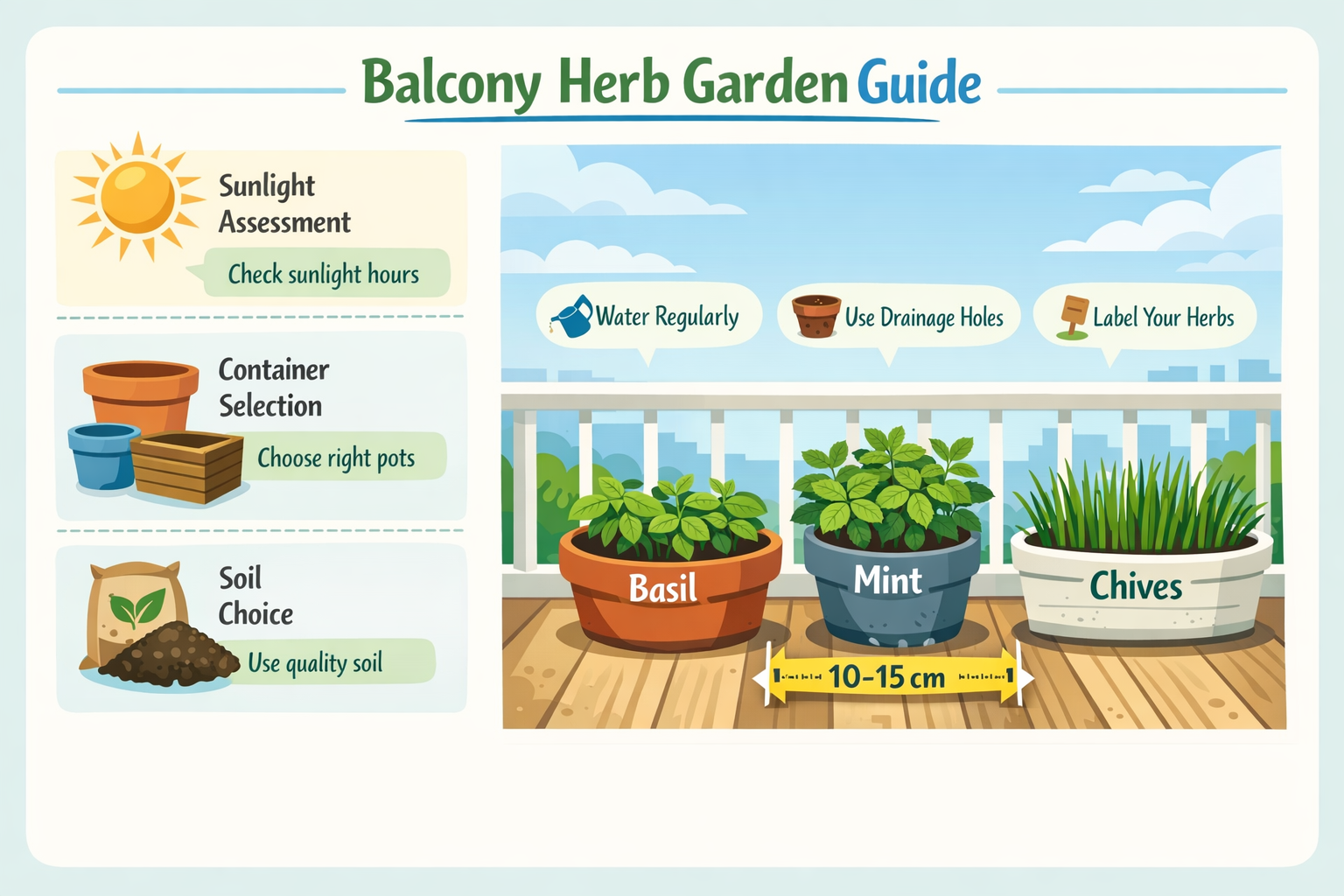
A balcony herb garden is a practical and rewarding way to cultivate fresh herbs in limited outdoor spaces, primarily through container gardening. It involves selecting appropriate herbs based on sunlight availability, choosing suitable pots and soil, and consistent care, offering a continuous supply of aromatic additions for cooking and enjoyment.
How Do I Start a Balcony Herb Garden?
Starting a balcony herb garden begins with assessing your space’s sunlight, choosing the right herbs, and selecting appropriate containers and soil. To initiate your herb garden, first determine how much direct sunlight your balcony receives daily, as this dictates which herbs will thrive.
Assessing Your Balcony’s Potential
Before buying any plants, observe your balcony’s sun exposure throughout the day. Most herbs, especially popular culinary varieties like basil, rosemary, and oregano, require at least 6 hours of direct sunlight to flourish [2][4]. If your balcony gets less sun, don’t despair—there are still many herbs that can thrive in partial shade.
- Full Sun (6+ hours): Ideal for Mediterranean herbs like basil, rosemary, thyme, oregano, and sage. These plants will produce the most robust flavor and growth in ample sunlight [2][4].
- Partial Sun (3-6 hours): Suitable for herbs such as parsley, cilantro, chives, and mint, which can tolerate less intense light but may grow slower [2][5].
- Shade (less than 3 hours): Even in deep shade, you might be able to grow herbs like mint or lemon balm, though their growth will likely be leggy and less vigorous [2][5].
Choosing the Right Containers and Soil
The foundation of a successful balcony herb garden lies in selecting proper containers and a quality growing medium. Most herbs do well in pots that are 6-8 inches (15-20 cm) in diameter [2]. Larger varieties, such as rosemary or bay, benefit from bigger containers to accommodate their root systems [2]. Ensure all pots have drainage holes to prevent waterlogging, which can lead to root rot.
When it comes to soil, avoid using garden soil from your yard, as it compacts easily in pots and can harbor pests. Instead, opt for a high-quality potting mix or soilless mix specifically designed for containers [2]. These mixes provide excellent drainage, aeration, and the necessary nutrients for container-grown plants. For more insights on soil, consider our Soil Basics for Container Gardening: 2026 Expert Guide.
Decision Rule: Choose terracotta pots if you tend to overwater, as they allow soil to dry out faster. Opt for plastic or glazed ceramic if you live in a hot, dry climate, as they retain moisture longer.
Initial Planting Steps
- Prepare Pots: Place a small piece of mesh or a coffee filter over the drainage holes to prevent soil from escaping while allowing water to drain.
- Add Soil: Fill your chosen containers with potting mix, leaving about an inch (2.5 cm) from the rim.
- Plant Herbs: Gently remove the herb plant from its nursery pot. Loosen any circling roots at the bottom. Place the plant in the new pot, ensuring the top of the root ball is level with the soil surface.
- Backfill and Water: Fill around the plant with more potting mix, gently firming it down. Water thoroughly until water drains from the bottom.
- Spacing: If you are arranging multiple pots, leave 10-15 cm (several inches) between pots to ensure adequate airflow and prevent competition for light and nutrients [1][5].
Common Mistake: Planting too many herbs in one small pot without adequate spacing. This leads to competition for resources and poor growth. Most herbs prefer their own space in a container.
Which Herbs Are Easiest for a Beginner Balcony Gardener?
For beginners, selecting forgiving and resilient herbs is key to building confidence and enjoying early success. The easiest herbs to grow in a balcony herb garden include mint, chives, basil, parsley, and cilantro due to their adaptability and relatively straightforward care requirements [2][4][5].
Top 5 Beginner-Friendly Herbs
These herbs are excellent choices for anyone starting their balcony herb garden journey, as they are generally low-maintenance and quick to produce.
- 🌿 Mint:
- Light: Tolerates partial shade but thrives in full sun [2][5].
- Water: Needs consistent moisture, often 3-4 waterings per week [5].
- Tip: Mint is invasive; plant it in its own container to prevent it from taking over other herbs.
- 🌱 Chives:
- Light: Full sun to partial shade [2][5].
- Water: Keep soil consistently moist.
- Tip: You can snip the green tops as needed; they’ll regrow quickly. They are also winter-hardy in many zones [2].
- 🌿 Basil:
- Light: Requires at least 6 hours of direct sunlight [2][4].
- Water: Needs regular watering, typically 2-3 times per week, especially in hot weather [5].
- Tip: Pinch off flowers to encourage bushier growth and more leaves.
- 🌱 Parsley:
- Light: Prefers partial shade, but can tolerate full sun with consistent moisture [2][5].
- Water: Keep soil evenly moist.
- Tip: There are two main types: flat-leaf (Italian) and curly-leaf. Flat-leaf often has a stronger flavor.
- 🌿 Cilantro:
- Light: Partial shade is best, especially in warmer climates, to prevent bolting (going to seed) [2][5].
- Water: Keep soil consistently moist.
- Tip: Sow seeds every few weeks for a continuous harvest, as it tends to bolt quickly in hot weather.
Herbs for Specific Conditions
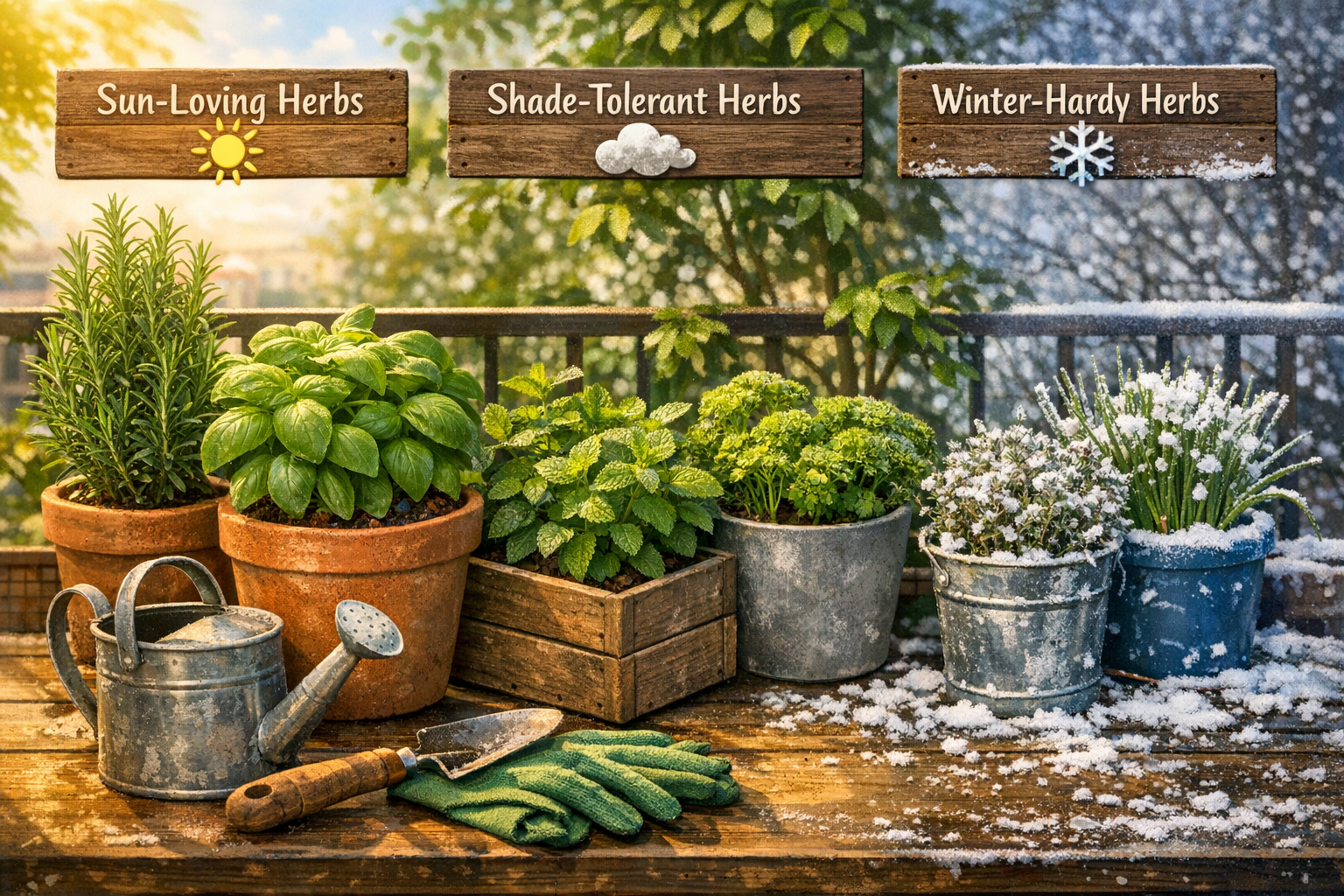
- Shade-Tolerant Herbs: If your balcony receives less than 6 hours of direct sun, focus on mint, parsley, chives, cilantro, and lemon balm. While they will grow, expect slower growth and potentially less intense flavor compared to sun-drenched plants [2][5].
- Winter-Hardy Varieties: For those in colder climates (zones 3-6), certain perennial herbs can survive winter outdoors in pots. These include mint (zone 3), chives (zone 3), lemon balm (zone 3), thyme (zone 5), and rosemary (zone 6, with protection) [2]. For other plants, you might consider moving them indoors for winter, a topic covered in our Indoor Gardening for Small Homes & Apartments: 2026 Guide.
Edge Case: If you have a particularly windy balcony, choose sturdy herbs like rosemary or thyme, and use heavier pots or secure lighter ones to prevent them from tipping over. Wind can dry out soil quickly, so increased watering may be necessary.
How Do I Maximize Space in a Small Balcony Herb Garden?
Maximizing space in a small balcony herb garden is crucial for growing a diverse range of plants, primarily achieved through vertical gardening solutions and strategic container choices. By utilizing the vertical dimension, you can dramatically increase your growing area without expanding horizontally.
Vertical Gardening Techniques
Vertical gardening is an excellent strategy for small spaces, transforming walls or railings into productive growing areas. This approach allows you to grow more plants per square foot, making your balcony herb garden efficient and aesthetically pleasing. For a deeper dive into vertical gardening, explore our Vertical Gardening Guide for Small Spaces: Grow More in 2026.
- Shelving Units: Multi-tiered shelves provide several levels for pots, using vertical space effectively. Choose sturdy, weather-resistant units.
- Stackable Planters: These planters are designed to sit one on top of the other, forming a tower of plants. They are perfect for herbs that have similar light and water needs.
- Wall-Mounted Planters/Pockets: Fabric pockets or hard plastic planters that attach directly to a wall or railing. Ensure your balcony structure can support the weight.
- Pallet Gardens: Upcycled pallets can be transformed into vertical planters by adding fabric or small shelves.
- Hanging Baskets: Excellent for trailing herbs like thyme or mint, adding another dimension to your garden. Ensure they are securely fastened.
Strategic Container Choices
Beyond just verticality, selecting the right containers can also optimize space and plant health.
- Rectangular or Trough Planters: These are great for planting several herbs in a row that have similar needs, such as a “pizza garden” with basil, oregano, and thyme. Remember to maintain the 10-15 cm spacing between plants within the trough [1][5].
- Self-Watering Pots: These pots have a reservoir that supplies water to the plants’ roots, reducing watering frequency and saving time. This can be particularly useful if you have many plants.
- Grow Bags: Lightweight, breathable fabric bags that are great for root development and can be easily moved or stored when not in use. They come in various sizes and are an economical choice. For more details on pot selection, refer to our guide on the Best Pots for Small Space Gardening in 2026.
Quick Example: Install a slim, three-tiered shelving unit against an unused wall. On the top shelf, place sun-loving basil and rosemary. On the middle, parsley and cilantro, which appreciate a bit more shade. On the bottom, a pot of mint that can trail over the edge. This allows you to grow five different herbs in a compact 2-foot wide footprint.
What Are the Watering and Fertilizing Needs of Balcony Herbs?
Proper watering and fertilizing are critical for the health and productivity of your balcony herb garden. The specific needs vary by herb type, pot size, and environmental conditions, but a general rule is to water when the top inch of soil feels dry and to fertilize sparingly.
Watering Your Balcony Herbs
Container plants, especially on balconies exposed to sun and wind, dry out much faster than garden beds. Consistent moisture is vital, but overwatering can be detrimental.
- Feel the Soil: The most reliable way to know when to water is to stick your finger about an inch into the soil. If it feels dry, it’s time to water.
- Drainage is Key: Always ensure water drains from the bottom of the pot. If it sits in stagnant water, roots can rot.
- Watering Frequency Examples: Basil typically requires watering 2-3 times per week, while mint, which prefers more moisture, may need watering 3-4 times weekly [5]. In very hot or windy weather, daily watering might be necessary for some plants.
- Deep Watering: When you water, do so thoroughly until water runs out the drainage holes. This encourages deeper root growth.
- Morning Watering: Watering in the morning allows the plants to absorb water before the heat of the day and gives leaves time to dry, reducing the risk of fungal diseases. For more comprehensive watering tips, check out our How Often Should You Water Plants? Ultimate Guide 2026.
Common Mistake: Watering on a strict schedule without checking the soil. This often leads to either overwatering or underwatering, both of which stress the plant.
Fertilizing Your Balcony Herbs
Herbs grown in containers deplete soil nutrients faster than those in garden beds, necessitating periodic fertilization. However, too much fertilizer can diminish the flavor of some herbs.
- Start with Rich Potting Mix: A good quality potting mix usually contains enough nutrients for the first few weeks or months.
- Use Liquid Organic Fertilizer: A balanced liquid organic fertilizer or a slow-release granular fertilizer formulated for edibles is best. Apply at half strength every 2-4 weeks during the growing season.
- When to Fertilize: Begin fertilizing after the initial nutrients in the potting mix have been used up, usually 4-6 weeks after planting. Reduce or stop fertilizing during the colder months when plant growth slows.
- Avoid Over-Fertilizing: Excessive nitrogen can lead to lush green growth but reduced essential oils, which are responsible for an herb’s flavor and aroma.
Decision Rule: Fertilize more frequently (every 2 weeks at half strength) for heavy feeders like basil or parsley, especially if you are harvesting frequently. For lighter feeders like rosemary or thyme, fertilize less often (every 4-6 weeks).
How Can I Protect My Balcony Herbs from Pests and Diseases?
Protecting your balcony herb garden from pests and diseases involves proactive monitoring, good plant hygiene, and organic pest control methods. Early detection and intervention are key to preventing minor issues from escalating and impacting your entire garden.
Prevention is Key
Maintaining a healthy growing environment significantly reduces the likelihood of pest and disease problems in your balcony herb garden.
- Inspect New Plants: Before introducing any new plants to your balcony, thoroughly inspect them for signs of pests or diseases. Isolate them for a week or two if you notice anything suspicious.
- Good Airflow: Ensure adequate spacing between pots (10-15 cm) and consider pruning dense foliage to promote air circulation [1][5]. Good airflow helps prevent fungal diseases.
- Proper Watering: Avoid overhead watering when possible, as wet leaves can encourage fungal growth. Water the soil directly. Ensure good drainage to prevent root rot.
- Cleanliness: Remove any fallen leaves, dead plant material, or weeds from your pots regularly. These can harbor pests and diseases.
- Healthy Plants are Resilient: Properly watered and fertilized plants are naturally more resistant to pests and diseases.
Organic Pest and Disease Management
If pests or diseases do appear, opt for organic and environmentally friendly solutions suitable for edible plants.
- Manual Removal: For larger pests like slugs or caterpillars, simply pick them off by hand and remove them.
- Hose Them Off: A strong spray of water can dislodge aphids, spider mites, and other small pests from plant leaves.
- Insecticidal Soap: A mixture of mild liquid soap and water (1 teaspoon per liter) can be sprayed directly onto affected plants to suffocate soft-bodied insects. Always test on a small leaf first.
- Neem Oil: An organic pesticide that disrupts the feeding and reproduction cycles of many common garden pests. Follow product instructions carefully.
- Companion Planting: Some herbs can deter pests. For example, planting marigolds nearby can deter nematodes, while mint can deter ants and mice.
Quick Example: If you notice small green aphids on your basil leaves, first try spraying them off with a strong stream of water. If they persist, apply a diluted insecticidal soap solution to the affected leaves, making sure to cover both the top and underside. Repeat every few days until the pests are gone.
What Do I Need to Consider for Winterizing a Balcony Herb Garden?
Winterizing a balcony herb garden involves protecting tender herbs from cold, moving non-hardy plants indoors, and preparing perennial herbs to survive the colder months. The specific actions depend on your local climate zone and the type of herbs you are growing.
Assessing Herb Hardiness and Climate Zone
Before winter sets in, determine which of your herbs are perennial (return yearly) and which are annual (complete their life cycle in one season). Also, know your USDA plant hardiness zone.
- Annual Herbs: Herbs like basil, cilantro, and dill are annuals and will typically die back with the first hard frost. You can either harvest them fully before winter or replant them next spring.
- Tender Perennials: Some herbs, like rosemary, can be perennial in warmer zones (Zone 6 and above) but behave as annuals or need significant protection in colder zones [2]. Bay laurel is another example.
- Hardy Perennials: Mint (Zone 3), chives (Zone 3), thyme (Zone 5), and lemon balm (Zone 3) are quite cold-tolerant and can often overwinter outdoors in pots, especially with some preparation [2].
Winter Protection Strategies
For herbs that you wish to keep alive through winter, especially tender perennials or hardy perennials in very cold zones, implement these protective measures.
- Bring Indoors: The most straightforward option for tender herbs is to bring them indoors before the first frost.
- Preparation: Inspect plants thoroughly for pests before bringing them inside. Wipe down pots.
- Placement: Place them in a sunny window (south-facing is ideal) where they receive plenty of light. Supplement with grow lights if natural light is insufficient. Our Indoor Gardening for Small Homes & Apartments: 2026 Guide offers more advice on indoor plant care.
- Care: Reduce watering frequency, as indoor plants require less water. Avoid fertilizing during winter dormancy.
- Outdoor Protection (for hardy perennials):
- Insulate Pots: Move pots against the warmest wall of your building. Wrap pots in burlap, bubble wrap, or blankets to insulate roots from freezing temperatures. You can also group pots together to create a microclimate.
- Mulch: Add a layer of straw, wood chips, or leaves on top of the soil in the pots to provide additional insulation.
- Reduce Watering: Water sparingly once plants enter dormancy. The goal is to keep the soil from completely drying out, not to encourage active growth.
- Wind Protection: If your balcony is exposed to strong winter winds, consider creating a temporary barrier using tarps or screens to protect plants from desiccation.
Common Mistake: Leaving tender perennial herbs outdoors in freezing temperatures without protection. This will almost certainly lead to their demise. Always err on the side of caution and bring them in if you are unsure about their hardiness.
Comparison: Indoor vs. Outdoor Wintering
| Feature | Indoor Wintering (Tender Perennials) | Outdoor Wintering (Hardy Perennials) |
|---|---|---|
| Effort | Moderate (moving, pest check, finding light) | Low-Moderate (insulation, grouping) |
| Survival Rate | High, if proper light/humidity are provided | Moderate-High, depends on zone, plant type, and protection effectiveness |
| Growth | Slow, may continue light production | Dormant, no active growth until spring |
| Pest Risk | Increased indoor pest risk (spider mites, whiteflies) | Lower pest risk, but plants are dormant |
| Best For | Basil, rosemary (in cold zones), bay, lemon verbena | Mint, chives, thyme, oregano (in appropriate zones) |
FAQ
Can I grow herbs from seeds on my balcony?
Yes, many herbs can be grown successfully from seeds on your balcony. It’s often more cost-effective, but requires patience and specific starting conditions like adequate warmth and light for germination.
How much sunlight do herbs need on a balcony?
Most culinary herbs, especially Mediterranean varieties like basil, rosemary, and oregano, require at least 6 hours of direct sunlight per day to thrive [2][4].
What size pots are best for balcony herbs?
Herbs typically do well in pots that are 6-8 inches (15-20 cm) in diameter. Larger herbs like rosemary may benefit from bigger containers [2].
How often should I water my balcony herb garden?
Water when the top inch of soil feels dry. Frequency varies, with basil needing 2-3 waterings per week and mint 3-4 times a week, adjusted for weather and pot size [5].
Can I grow herbs in partial shade on a balcony?
Yes, herbs like mint, parsley, chives, cilantro, and lemon balm can tolerate partial shade, though their growth might be slower and less vigorous than in full sun [2][5].
Do balcony herbs need fertilizer?
Yes, container herbs deplete soil nutrients faster. Use a balanced liquid organic fertilizer at half strength every 2-4 weeks during the growing season, starting a few weeks after planting.
How do I keep pests off my balcony herbs?
Proactive steps include inspecting new plants, ensuring good airflow, and proper watering. For pests, try manual removal, hosing them off, insecticidal soap, or neem oil.
How do I prepare my balcony herbs for winter?
Bring tender herbs indoors before frost. For hardy perennials, insulate pots, add mulch, group pots for warmth, and reduce watering. Know your plant hardiness zone [2].
What is the ideal spacing between herb pots on a balcony?
Leave 10-15 cm (several inches) between pots to allow for adequate airflow, prevent overcrowding, and reduce competition for nutrients [1][5].
Can I use garden soil for my balcony herb garden?
No, it’s best to use a high-quality potting mix or soilless mix specifically designed for containers. Garden soil compacts and doesn’t drain well in pots [2].
Conclusion
Creating a thriving balcony herb garden in 2026 is an achievable and incredibly rewarding endeavor for anyone, regardless of space limitations. By following this Balcony Herb Garden Guide, you’ll be well-equipped to select the right herbs, provide them with optimal growing conditions, and enjoy a continuous supply of fresh, aromatic ingredients right outside your door. Remember that successful gardening is a journey of learning and adaptation, so don’t be afraid to experiment and discover what works best for your unique balcony environment.
Actionable Next Steps:
- Assess Your Balcony: Take note of how much direct sunlight your balcony receives throughout the day.
- Select Your First Herbs: Choose 2-3 beginner-friendly herbs like mint, basil, or chives based on your sun assessment.
- Gather Supplies: Purchase appropriate containers with drainage, quality potting mix, and seeds or starter plants.
- Plant and Position: Plant your herbs, ensuring proper spacing, and arrange them on your balcony according to their light needs.
- Establish a Routine: Begin a consistent watering and monitoring schedule, adjusting as needed based on the weather and plant response.
Happy gardening, and enjoy the delicious fruits (or herbs!) of your labor!
References
[1] How To Start A Balcony Herb Garden – https://www.garden-products.co.uk/news/annes-garden-blog/how-to-start-a-balcony-herb-garden/
[2] Balcony Herb Garden – https://farmtojar.com/balcony-herb-garden/
[3] How To Grow A Balcony Garden – https://www.masterclass.com/articles/how-to-grow-a-balcony-garden
[4] Herb Garden For Apartment – https://homegrown-garden.com/blogs/blog/herb-garden-for-apartment
[5] Complete Balcony Herb Garden – https://urbanmicrotips.com/complete-balcony-herb-garden/
[6] Design Guide For A Small Apartment Balcony Garden – https://gingerwithroots.com/design-guide-for-a-small-apartment-balcony-garden/
[7] How To Grow Herbs In A Small Space – https://www.gardenary.com/blog/how-to-grow-herbs-in-a-small-space
[8] The Garden Tower Project Flower Guide – https://www.gardentowerproject.com/blogs/learning-center/the-garden-tower-project-flower-guide