Balcony Gardening Without Sunlight: Cultivating Green Spaces in the Shade in 2026
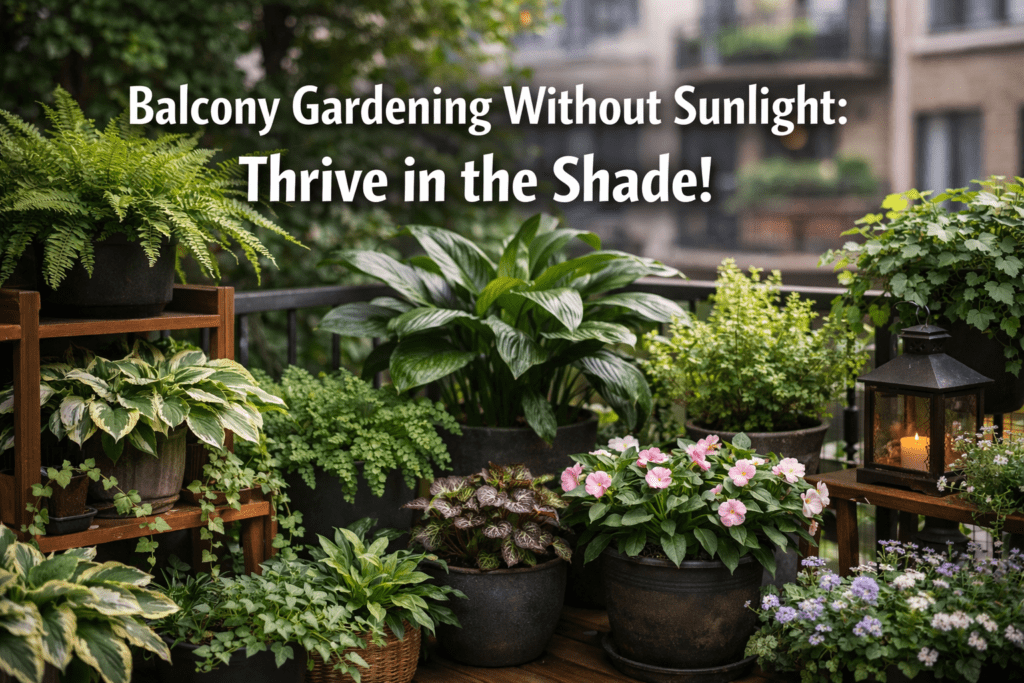
Balcony gardening without sunlight is entirely possible by focusing on plant selection, optimizing ambient light, and implementing tailored care routines. You can create a flourishing green space on your balcony even if it receives minimal or no direct sun by choosing shade-loving species, utilizing reflective materials, and employing vertical gardening techniques to make the most of available light
Key Takeaways
- Successful balcony gardening without sunlight relies on selecting shade-tolerant plants.
- Maximizing ambient light through strategic placement, reflective surfaces, and vertical gardening is crucial.
- Specialized care, including appropriate watering, nutrient management, and natural pest control, is essential for low-light conditions.
- Even with limited or no direct sun, a vibrant and productive balcony garden is entirely achievable in 2026.
- Focus on dwarf varieties, foliage plants, and certain flowering species known to thrive in indirect light.
Can You Really Do Balcony Gardening Without Sunlight in 2026?
Yes, you can absolutely engage in balcony gardening without direct sunlight in 2026 by strategically choosing plants that thrive in shade or indirect light and implementing clever light-maximizing techniques. While many plants require several hours of direct sun, a surprising number of species, from lush foliage plants to certain flowering varieties and even some edibles, are perfectly suited for low-light conditions, allowing you to cultivate a vibrant garden even on a north-facing or heavily shaded balcony [1].
Successfully creating a garden in a low-light environment hinges on understanding plant needs and environmental adaptations. Here’s how it’s not only possible but increasingly popular:
- Adaptable Plant Selection: The primary key is selecting plants that are naturally adapted to thrive with limited direct sun. Many tropical and subtropical plants, for example, naturally grow on forest floors where light is dappled and indirect.
- Technological Aids: While natural sunlight is ideal, modern gardening includes options like grow lights for extremely dark areas, though these may not be necessary for simply “low light” balconies.
- Space Optimization: Vertical gardening systems and hanging baskets are excellent for maximizing the use of what little ambient light is available, preventing plants from being overshadowed by railings or other structures. To learn more about efficient space usage, consider exploring “Vertical Gardening Basics: Your 2026 Guide to Small Space Gardens” – https://minispacegarden.com/vertical-gardening-basics/.
- Microclimates: Balconies often have unique microclimates. A shaded balcony might also be cooler and more humid, which benefits certain plants and reduces the need for frequent watering.
A common mistake is trying to force sun-loving plants into a shaded environment. Instead, embracing the shade and selecting plants accordingly ensures a much higher success rate and a more beautiful, thriving garden.
What Are the Best Plants for Balcony Gardening Without Sunlight?
The best plants for balcony gardening without sunlight are those naturally adapted to low-light conditions, primarily focusing on robust foliage plants, certain flowering species, and specific dwarf varieties. These plants can flourish with indirect light, making them ideal for shaded balconies [1].
To ensure your success, here’s a detailed breakdown of suitable plant categories:
Foliage Plants (Shade Lovers)
These plants are champions of low light, often boasting striking leaf patterns and textures. They don’t need flowers to make a statement.
- Aglaonema (Chinese Evergreen): Known for its vibrant, patterned leaves, Aglaonema tolerates low light and adds a splash of color.
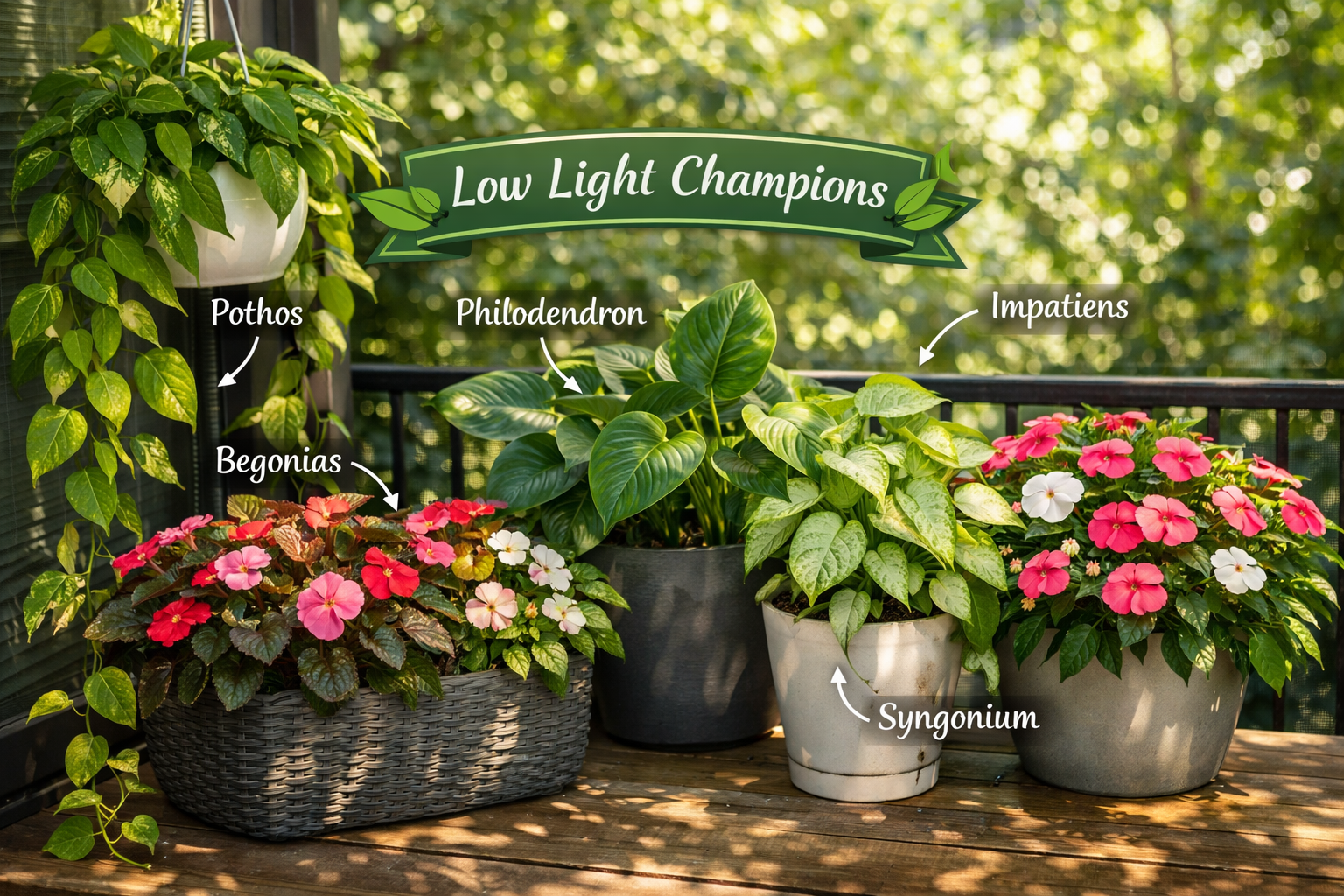
- Pothos (Devil’s Ivy): Extremely adaptable and easy to care for, Pothos is a classic choice for shaded areas, trailing beautifully from hanging baskets.
- Philodendron: Similar to Pothos, many Philodendron varieties thrive in indirect light and come in various leaf shapes and sizes.
- Syngonium (Arrowhead Plant): With its distinctive arrow-shaped leaves, Syngonium is another excellent choice that handles low light well and can climb or trail.
- Coleus: While some varieties prefer more sun for vibrant color, many Coleus types display stunning leaf variegation even in partial to full shade [1]. Their diverse colors make them perfect for adding visual interest.
- Ferns: Most ferns, such as Boston ferns or Maidenhair ferns, are natural woodland dwellers and love the consistent moisture and indirect light found in shaded spots.
Flowering Plants (Tolerant of Indirect Light)
While fewer options exist, several flowering plants can provide beautiful blooms without direct sun.
- Begonias: Tuberous and wax begonias are fantastic for shade, offering continuous blooms in a range of colors. They thrive in consistent moisture and indirect light [1].
- Impatiens: Traditional impatiens are renowned for their ability to bloom profusely in shaded areas, though newer varieties like New Guinea Impatiens prefer more light.
- Hydrangeas: Some compact varieties can do well with morning sun and afternoon shade, producing large, showy flower clusters [1].
- Pentas (Egyptian Starcluster): While often recommended for sun, certain varieties of Pentas can surprisingly tolerate partial shade, though blooming may be less prolific than in full sun [1].
- Bleeding Heart (Dicentra spectabilis): A spring bloomer that prefers cool, shaded conditions and moist soil, offering delicate, heart-shaped flowers [1].
- Mini Mussaenda and Tecoma: These plants can still flower in areas receiving filtered light, though their bloom intensity might be reduced compared to full sun exposure [1].
- Dwarf Ixora: While typically sun-lovers, the dwarf varieties can manage with less direct light, offering small, colorful flower clusters [1].
Edible Plants for Shade
While most edibles crave sun, a few can tolerate or even prefer partial shade.
- Leafy Greens: Lettuce, spinach, kale, arugula, and Swiss chard can do remarkably well with only 3-4 hours of indirect light or dappled shade. They might grow slower but are less prone to bolting.
- Herbs: Mint, parsley, cilantro, chives, and lemon balm can thrive in partial shade.
- Turmeric (Curcuma longa): This tropical plant thrives in indirect light and warm, humid conditions, making it an excellent, unique choice for a minimal-sunlight balcony [1]. You can harvest the rhizomes (roots) for culinary use.
- Strawberries: While they prefer sun, certain varieties can produce a decent harvest in partial shade.
Decision Rule: Choose foliage plants for guaranteed lushness and texture in deep shade. Opt for flowering plants like Begonias or Impatiens if you desire blooms, ensuring they receive some indirect light. For edibles, prioritize leafy greens and herbs over fruiting vegetables in low-light scenarios. For more ideas on what to grow, refer to our “Best Plants for Small Gardens 2026: The Complete List” – https://minispacegarden.com/best-plants-for-small-space-gardens-complete-list/.
How Can I Maximize Light for Balcony Gardening Without Sunlight?
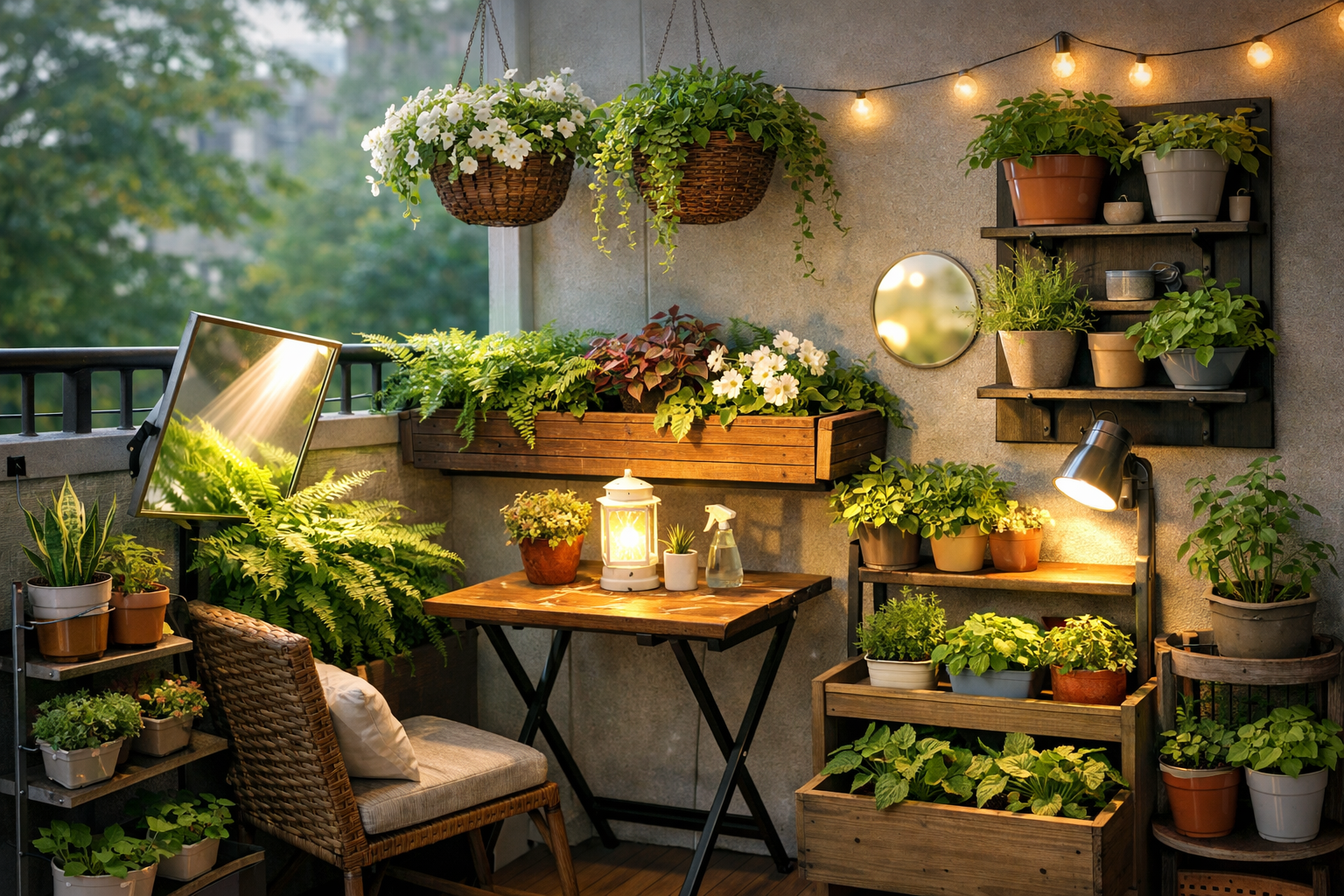
To maximize light for balcony gardening without direct sunlight, you should strategically place containers, utilize reflective surfaces, employ vertical gardening, and consider plant rotation. These techniques help to capture and distribute ambient light more effectively, compensating for the lack of direct sun [1].
Here are practical strategies for enhancing light exposure in a shaded balcony environment:
Strategic Container Placement
The location of your pots can make a significant difference in how much light your plants receive.
- Railing Planters: These containers hang over your balcony railing, allowing plants to capture more overhead and ambient light that might otherwise be blocked by the balcony floor or walls [1]. This also frees up valuable floor space.
- Hanging Baskets: Elevating plants in hanging baskets can expose them to more light, especially if hung from a sturdy overhead support that catches light from above or the side.
- Tiered Stands: Using multi-tiered plant stands allows you to layer plants, with taller, more light-demanding (but still shade-tolerant) plants on upper tiers and those needing less light on lower ones.
Utilizing Reflective Surfaces
Reflective materials can bounce available light onto your plants, significantly boosting light levels.
- Mirrors: A large, strategically placed mirror on a wall opposite your plants can reflect light back onto them. Ensure it’s safely secured.
- Light-Colored Walls/Surfaces: If possible, ensure your balcony walls or any adjacent structures are painted in light colors (white, cream, light grey). These colors reflect light more effectively than dark surfaces, which absorb it.
- Aluminum Foil or Mylar: For a temporary or more intensive boost, you can line the back of shelves or areas behind plants with aluminum foil or Mylar sheets. This is particularly useful for delicate seedlings or plants needing a quick light increase.
Vertical Gardening
Vertical systems leverage vertical space, allowing plants to access light that might not reach the balcony floor.
- Wall-Mounted Planters: Systems that attach directly to a wall, holding multiple pots or pockets, can position plants higher up where they might catch more diffuse light.
- Pallet Gardens: Upcycled pallets can be transformed into vertical planters, offering multiple levels for plant placement. For inspiration, check out our “Vertical Gardening Guide for Small Spaces: Grow More in 2026” – https://minispacegarden.com/vertical-gardening-guide-for-small-spaces/.
- Stackable Planters: These self-contained units stack on top of each other, providing height and multiple planting spots without taking up much floor space.
Plant Rotation
Regularly rotating your plants ensures all sides get exposure to the available light, promoting even growth.
- Seasonal Adjustment: The angle of the sun changes with the seasons. Plants that might get some morning sun in summer could receive no direct light in winter. Be prepared to move plants around seasonally.
- Daily or Weekly Rotation: For very low-light conditions, rotating pots every few days or even daily can ensure all parts of the plant are exposed to the ambient light, preventing them from stretching unevenly towards the light source [1].
- Lightweight Containers: Opting for lightweight pots, such as those made from plastic, fabric, or cocopeat, makes regular repositioning much easier [1].
Common Mistake: Relying solely on one method to increase light. The most effective approach combines several techniques, creating a multi-faceted light-optimizing environment for your balcony garden.
What are the Essential Care Tips for Balcony Gardening Without Sunlight?
Essential care tips for balcony gardening without sunlight involve precise watering, appropriate soil selection, nutrient management, and proactive pest control, all tailored to the unique conditions of low-light environments. These practices ensure the health and vitality of your shade-loving plants [1].
Here’s how to keep your low-light balcony garden thriving:
1. Watering
Watering correctly is critical for plants in shaded areas, as they typically use less water than those in direct sun.
- Reduced Frequency: Plants in shade lose less moisture through evaporation and transpiration, meaning they need less frequent watering. Overwatering is a common killer of shade plants.
- Check Soil Moisture: Always check the top inch or two of soil before watering. If it feels moist, wait. Water only when the soil begins to dry out.
- Drainage: Ensure all containers have adequate drainage holes. Standing water can quickly lead to root rot, especially in cooler, shadier conditions. Using appropriate pots is key; our guide on “Best Pots for Small Space Gardening in 2026 – Maximize Your” – https://minispacegarden.com/best-pots-for-small-space-gardening/ offers great insights.
2. Soil Selection
The right soil mix provides essential nutrients and ensures proper drainage and aeration.
- Lightweight Potting Mix: Use a high-quality, lightweight potting mix specifically designed for containers. These mixes often contain components like peat moss, perlite, or vermiculite to improve drainage and aeration.
- Cocopeat (Coconut Husks): Incorporating cocopeat into your soil mix is highly beneficial. It improves drainage, retains moisture effectively without becoming waterlogged, and is lighter than traditional soil, making pots easier to move [1]. For more on soil, check out “Soil Basics for Container Gardening: 2026 Expert Guide” – https://minispacegarden.com/soil-basics-for-container-gardening/.
- Avoid Garden Soil: Never use garden soil in containers as it compacts easily, drains poorly, and may introduce pests and diseases.
3. Nutrient Management
Even in low light, plants need nutrients, but their requirements might differ from sun-loving counterparts.
- Less Frequent Fertilizing: Plants growing in low light generally grow slower and require less fertilizer than those in full sun. Over-fertilizing can harm them.
- Balanced Liquid Fertilizer: Use a balanced liquid fertilizer at half-strength every 4-6 weeks during the growing season (spring and summer).
- Organic Options: Consider slow-release organic fertilizers or compost tea, which provide nutrients gently over time.
4. Pest Control
Shady, humid conditions can sometimes favor certain pests, making proactive management important.
- Regular Inspection: Routinely check the undersides of leaves and stems for signs of pests like aphids, spider mites, or mealybugs. Early detection is key.
- Natural Pesticides: For effective, non-toxic pest control, use neem oil spray. Apply it in the early morning or late evening to avoid leaf burn and repeat two to three times every second day for effective protection [1].
- Good Air Circulation: Ensure plants aren’t overly crowded to promote good air circulation, which can deter fungal diseases and some pests.
5. Pruning and Maintenance
Regular maintenance keeps plants healthy and shapely.
- Deadheading and Trimming: Remove spent flowers (deadhead) and trim any yellowing or leggy growth. This encourages bushier growth and directs energy to healthy parts of the plant.
- Cleanliness: Keep your balcony clean, removing fallen leaves and debris that can harbor pests or diseases.
Edge Case: If your balcony receives absolutely no natural light, even diffuse, you might consider supplemental grow lights. However, for most “low light” situations, the strategies above are sufficient.
Creating a Lush Oasis: A Step-by-Step Guide to Balcony Gardening Without Sunlight
Creating a lush oasis through balcony gardening without sunlight involves a systematic approach, starting with site assessment and culminating in ongoing plant care. This guide will help you transform your shaded balcony into a thriving green space in 2026.
Here’s a step-by-step process:
Assess Your Balcony’s Light Conditions:
- Observation: Spend a full day observing your balcony. Note exactly how much direct sunlight (if any) it receives, at what times, and from which direction. Even “no direct sun” balconies often get diffuse light or reflected light for a few hours.
- Light Meter (Optional): For precision, use a simple light meter to gauge the intensity of light in different areas of your balcony throughout the day. This helps determine which plants will truly thrive where.
- Identify Shaded Zones: Pinpoint the areas that are consistently in deep shade versus those that get bright, indirect light.
Select the Right Plants:
- Research Shade-Tolerant Varieties: Based on your light assessment, choose plants from the lists of foliage plants, flowering plants, and edibles that specifically thrive in low-light conditions [1].
- Consider Mature Size: Always check the mature size of the plant to ensure it won’t outgrow your container or balcony space. Dwarf varieties are excellent choices for small balconies.
- Aesthetic Appeal: Mix textures, leaf shapes, and if possible, colors to create visual interest. For ideas, consult “Easy Plants to Grow in Small Spaces (2026 Guide)” – https://minispacegarden.com/easy-plants-to-grow-in-small-spaces/.
Choose Appropriate Containers and Soil:
- Containers with Drainage: Select pots that have ample drainage holes. Material choice is important: lightweight plastic or fabric pots are easier to move for light rotation, while terracotta breathes better but can dry out faster. Consider railing pots to maximize space and light [1].
- High-Quality Potting Mix: Use a sterile, well-draining potting mix. Incorporate cocopeat for improved aeration, drainage, and moisture retention [1]. Avoid heavy garden soil.
Plan Your Layout and Maximize Light:
- Verticality: Utilize vertical space with shelves, hanging baskets, or wall-mounted planters to elevate plants into brighter zones.
- Reflective Surfaces: Position mirrors or light-colored surfaces strategically to bounce ambient light onto your plants.
- Plant Grouping: Group plants together to create a microclimate that can increase humidity and offer a more lush appearance.
- Future Growth: Account for plant growth and potential changes in light conditions throughout the year.
Planting Your Garden:
- Fill Pots: Fill your chosen containers with the potting mix, leaving an inch or two from the rim.
- Transplant Carefully: Gently remove plants from their nursery pots, loosen any circling roots, and place them in the new container.
- Water In: Water thoroughly after planting to settle the soil around the roots.
Implement a Tailored Care Routine:
- Watering Schedule: Establish a watering routine based on soil moisture, not a fixed calendar. Less frequent watering is key for shade plants.
- Fertilization: Fertilize sparingly with a diluted liquid fertilizer during the growing season.
- Pest Monitoring: Regularly inspect plants for pests and address issues promptly with natural solutions like neem oil [1].
- Rotation: Regularly rotate your pots to ensure even light exposure and growth for all sides of the plant [1].
- Pruning: Trim yellowing leaves and deadhead spent flowers to encourage new growth and maintain plant health. For comprehensive plant care, refer to “Beginner’s Guide to Plant Care 2026: Grow Thriving Plants” – https://minispacegarden.com/beginners-guide-to-plant-care/.
By following these steps, you can create a beautiful and flourishing balcony garden, proving that a lack of direct sunlight is merely a design challenge, not a barrier to green living.
The Benefits of Balcony Gardening Without Sunlight
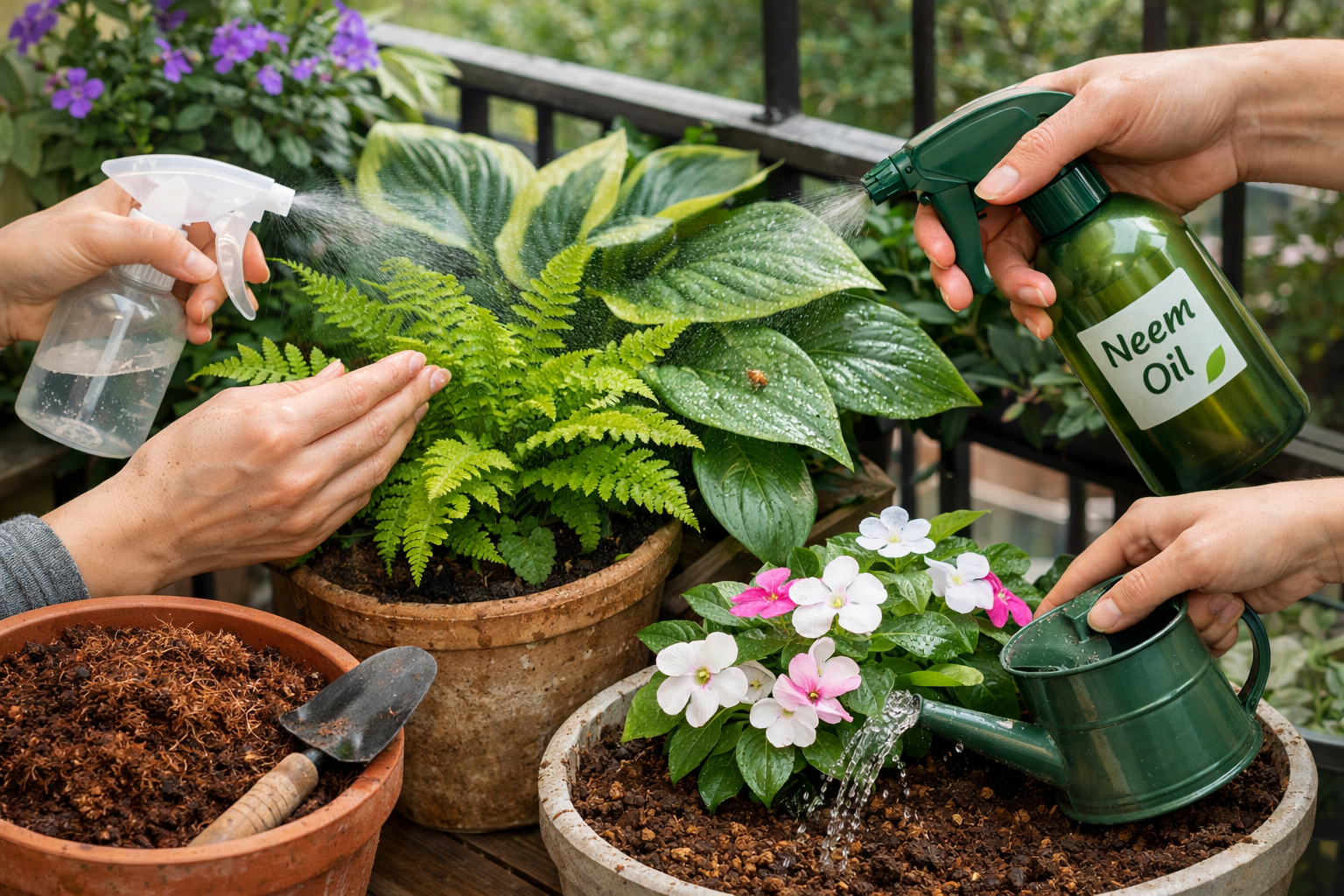
Balcony gardening without sunlight offers numerous benefits beyond just aesthetic appeal, including enhancing mental well-being, improving air quality, and promoting sustainable living, even in urban environments. This type of gardening demonstrates that space or sun limitations don’t prevent the enjoyment of cultivating plants [3].
Here’s why embracing shade gardening on your balcony is a rewarding endeavor:
Stress Reduction and Mental Well-being:
- Nature Connection: Engaging with plants, even on a small scale, can significantly reduce stress and improve mood [3]. The act of nurturing living things provides a sense of purpose and calm.
- Biophilic Design: Bringing nature into your living space creates a more soothing and restorative environment, which is known as biophilic design.
Improved Air Quality:
- Natural Filters: Plants naturally filter airborne toxins and produce oxygen, contributing to cleaner air on your balcony and potentially inside your home, especially beneficial in urban settings.
- Humidity Boost: Some plants can slightly increase ambient humidity, which can be pleasant in dry climates.
Aesthetic Enhancement of Your Space:
- Green Oasis: A lush, green balcony transforms an otherwise bare or underutilized space into a vibrant, inviting outdoor room.
- Privacy: Strategically placed taller plants or vertical gardens can offer increased privacy from neighbors.
- Increased Property Value: A well-maintained and aesthetically pleasing balcony garden can add perceived value to your home.
Sustainable Living and Food Production:
- Local Food Source: Even a small shade garden can yield fresh herbs and leafy greens, reducing your reliance on store-bought produce and fostering a connection to your food [3].
- Reduced Carbon Footprint: Growing your own food, even partially, lessens the transportation and packaging associated with commercial produce.
- Composting Potential: Gardening naturally encourages practices like composting, further reducing household waste and enriching your soil. Sustainable gardening is a growing trend in 2026, with a focus on composting and wildlife-friendly landscaping [2].
Pest Management Advantages:
- Fewer Sun-Loving Pests: Shaded conditions naturally deter many common garden pests that thrive in direct sunlight. This can lead to less intense pest management requirements compared to sunny gardens.
- Natural Pest Control Methods: The emphasis on gentle care in shade gardening often leads to a preference for natural pest control methods like neem oil, avoiding harsh chemicals [1].
Less Water Evaporation:
- Reduced Watering Needs: Plants in shaded environments experience less direct sun exposure, which means less water evaporates from the soil and from the plant leaves. This translates to less frequent watering, conserving water and saving time.
Accessibility and Inclusivity:
- Broader Participation: Balcony gardening without direct sunlight opens up gardening opportunities to individuals with shaded living spaces, making gardening more accessible to a wider audience.
- Adaptability: It demonstrates that gardening is highly adaptable and doesn’t require a large, sunny yard. For anyone interested in container gardening, our “Complete Balcony Gardening Guide for Small Apartments 2026” – https://minispacegarden.com/balcony-gardening-guide-for-small-apartments/ offers further guidance.
The ability to cultivate a thriving garden in low-light conditions empowers urban dwellers and those with challenging outdoor spaces to enjoy the myriad benefits of greenery. It proves that with the right approach, limitations can become opportunities for creativity and growth.
Comparison: Sun-Loving vs. Shade-Loving Balcony Gardens
Understanding the fundamental differences between sun-loving and shade-loving balcony gardens is crucial for successful cultivation, primarily revolving around plant selection, watering practices, and light management techniques. While sun-drenched balconies allow for a wide range of fruiting plants and succulents, shaded balconies excel with lush foliage, delicate blooms, and specific edibles.
Here’s a comparison to highlight the distinctions:
| Feature | Sun-Loving Balcony Garden | Shade-Loving Balcony Garden |
|---|---|---|
| Light Needs | 6+ hours of direct sunlight per day | 0-4 hours of direct sun; thrives in indirect/dappled light |
| Typical Plants | Tomatoes, peppers, herbs (basil, rosemary), sunflowers, petunias, succulents, most edibles. | Foliage plants (Pothos, ferns, Aglaonema), Begonias, Impatiens, Hostas, leafy greens (lettuce, spinach), mint, turmeric [1]. |
| Watering | Requires frequent watering; soil dries out quickly due to sun and heat. | Requires less frequent watering; soil retains moisture longer; prone to root rot if overwatered [1]. |
| Fertilization | May require more frequent feeding due to faster growth and nutrient uptake. | Generally requires less frequent and often diluted fertilization due to slower growth rates [1]. |
| Pest Control | Attracts a wider range of sun-loving pests (e.g., aphids, spider mites); requires diligent monitoring. | Fewer sun-loving pests; prone to slugs, snails, and some fungal issues in humid shade. |
| Container Choice | Durable, often heavier pots (ceramic, terracotta) to prevent tipping and provide insulation; light-colored pots to reduce heat absorption. | Lightweight pots (plastic, fabric) for easy rotation [1]; good drainage is paramount. |
| Growth Habits | Often compact, bushy, or vine-like; focus on fruit and flower production. | Often sprawling, trailing, or upright with emphasis on leaf size, texture, and pattern. |
| Temperature | Higher ambient temperatures; plants tolerate heat well. | Cooler, more consistent temperatures; plants prefer moderate heat, some sensitive to extreme heat. |
| Seasonality | Typically robust throughout summer, may require more intensive protection in shoulder seasons. | Often more resilient in fluctuating temperatures, especially foliage plants; consistent growth if protected. |
| Aesthetic Focus | Abundant blooms, colorful fruits, vibrant flowers. | Lush greenery, varied leaf textures, subtle flowers, sense of calm and coolness. |
Decision Rule: Choose sun-loving plants if your balcony receives ample direct sunlight for at least 6 hours daily, especially if your goal is to grow fruiting vegetables. Opt for shade-loving plants if your balcony has limited or no direct sun, prioritizing foliage, specific flowering plants, and leafy greens for a beautiful, low-maintenance green space. A key mistake is trying to grow sun-loving plants in shaded conditions, leading to leggy growth, poor flowering, and weak yields.
Troubleshooting Common Issues in Balcony Gardening Without Sunlight
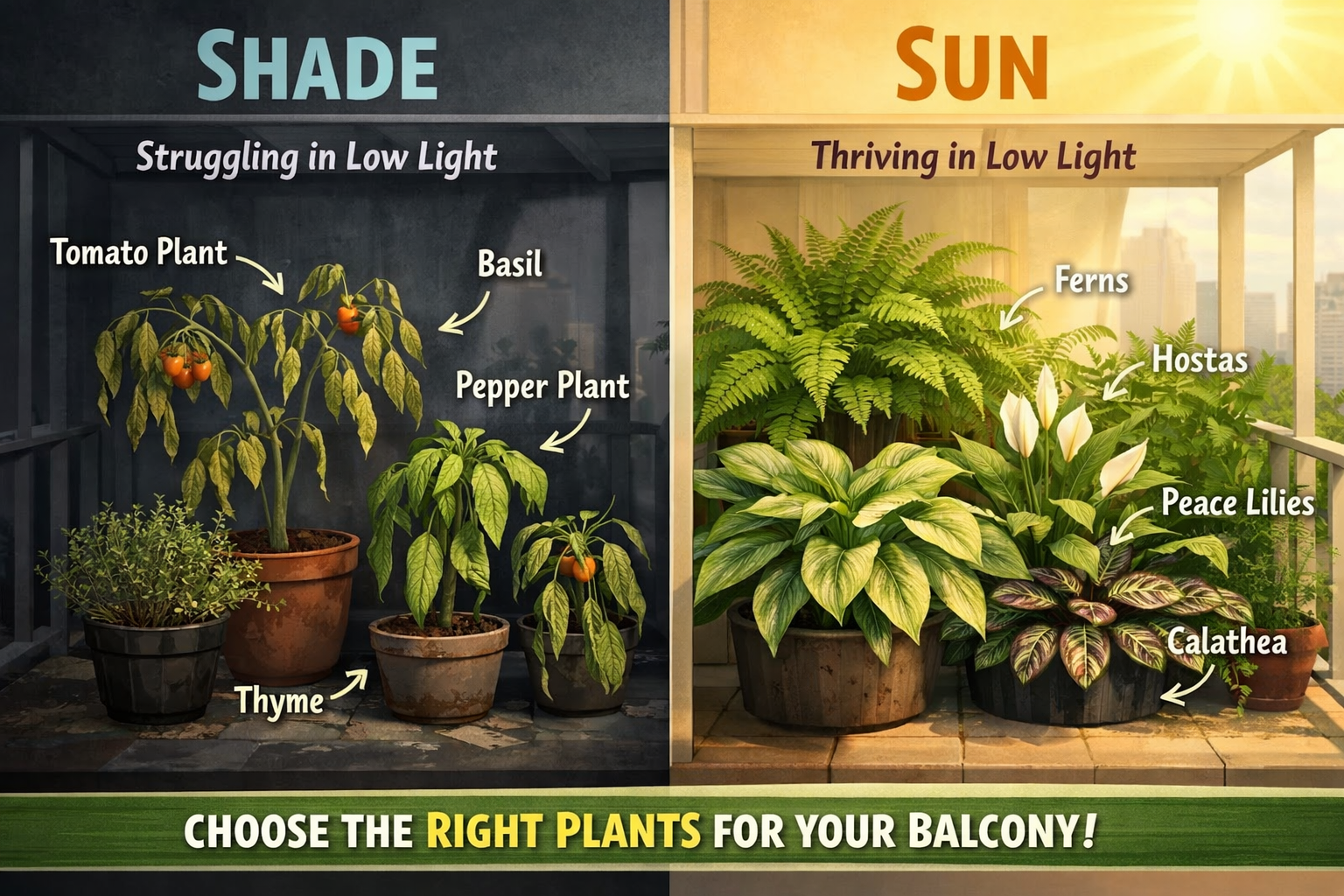
Troubleshooting common issues in balcony gardening without sunlight often involves addressing problems related to light, water, pests, and nutrients, all of which manifest differently in shaded conditions. Identifying the root cause is crucial for successful plant recovery and long-term health.
Here are some common problems and their solutions:
1. Leggy or Stretched Growth
- Problem: Plants appear tall, thin, and sparse with leaves spaced far apart on the stem. This is a classic sign they are “stretching” to find more light.
- Solution:
- Relocate: Move the plant to the brightest spot on your balcony that still falls within its shade-tolerance.
- Reflect Light: Employ reflective surfaces like mirrors or light-colored backdrops to bounce more ambient light onto the plant.
- Rotate: Regularly rotate the pot (e.g., weekly) to ensure all sides of the plant receive even exposure to available light [1].
- Prune: Trim back leggy growth to encourage bushier development.
2. Yellowing Leaves
- Problem: Leaves turn yellow, often starting from the bottom, and may eventually drop off. This can indicate overwatering, nutrient deficiency, or insufficient light.
- Solution:
- Check Watering: This is the most common cause. Feel the soil; if it’s soggy, you’re overwatering. Allow the top inch or two to dry out before watering again. Ensure proper drainage holes.
- Nutrient Check: If watering is correct, it might be a nutrient deficiency (e.g., nitrogen). Fertilize with a diluted liquid fertilizer.
- Light Adjustment: While less common than overwatering for yellowing leaves in shade, very low light can stress plants, leading to yellowing. Try moving to a slightly brighter spot.
3. Drooping or Wilting Plants
- Problem: Leaves and stems droop, making the plant look limp. This can be due to underwatering, overwatering, or root rot.
- Solution:
- Assess Soil Moisture: If the soil is bone dry, it’s underwatering – water thoroughly until it drains from the bottom. If the soil is perpetually wet and mushy, it’s overwatering or root rot.
- Root Rot (Overwatering): If overwatering is the cause and roots are rotting, repot the plant into fresh, well-draining soil, trimming off any mushy, foul-smelling roots. Ensure excellent drainage going forward.
4. Lack of Flowers (for flowering plants)
- Problem: Flowering plants produce lush foliage but few or no blooms.
- Solution:
- Increase Light: Even shade-tolerant flowering plants need some indirect bright light to bloom. Move the plant to the brightest indirect light spot on your balcony.
- Phosphorus Boost: Use a fertilizer with a higher phosphorus content to encourage blooming, but don’t over-fertilize.
- Deadhead: Regularly remove spent flowers to encourage the plant to produce more blooms [1].
5. Pest Infestations
- Problem: Visible pests (e.g., aphids, mealybugs, spider mites) on leaves, sticky residue, or distorted growth. Shady, humid conditions can sometimes favor certain pests.
- Solution:
- Manual Removal: For small infestations, wipe pests off with a damp cloth or spray them off with a strong jet of water.
- Neem Oil Spray: Apply neem oil spray in the early morning or late evening. This natural pesticide is effective and plant-safe when used correctly, repeating every other day for several applications until pests are gone [1].
- Isolate: Isolate infected plants to prevent pests from spreading to healthy ones.
6. Fungal Issues (e.g., powdery mildew)
- Problem: White, powdery patches on leaves or other signs of fungal growth, often due to poor air circulation and high humidity in shade.
- Solution:
- Improve Air Circulation: Space plants out to allow for better airflow. Prune dense foliage if necessary.
- Water Correctly: Water at the base of the plant, avoiding wetting the leaves, especially in the evening.
- Fungicides: For persistent issues, consider an organic fungicide or a homemade solution of baking soda and water.
Key takeaway: Many problems in shade gardens stem from overwatering or insufficient light (even for shade plants). Always address these two factors first before considering other solutions. For more common gardening mishaps, explore “Beginner Mistakes in Small Space Gardening 2026” – https://minispacegarden.com/beginner-mistakes-in-small-space-gardening/.
FAQs about Balcony Gardening Without Sunlight
Q1: What kind of light is “indirect light” for balcony plants?
A1: Indirect light refers to bright light that doesn’t come directly from the sun, such as light filtered through a sheer curtain, reflected off a light-colored wall, or light from a sky where the sun is not visible.
Q2: How often should I water plants in a shaded balcony garden?
A2: You should water plants in a shaded balcony garden less frequently than sun-exposed plants. Always check the top inch or two of soil; water only when it feels dry [1].
Q3: Can I grow vegetables on a balcony with no direct sunlight?
A3: Yes, you can grow certain vegetables like leafy greens (lettuce, spinach, kale), some herbs (mint, parsley, cilantro), and turmeric, as they can tolerate partial or indirect light conditions [1].
Q4: Are there any flowering plants that do well in full shade?
A4: Yes, plants like Begonias, Impatiens, and some varieties of Hydrangeas can produce flowers even in full or partial shade, though bloom intensity might vary [1].
Q5: How can I improve light on a very dark balcony?
A5: You can improve light by using reflective surfaces like mirrors, painting walls light colors, positioning plants on railing planters, or even considering supplemental grow lights for extremely dark areas [1].
Q6: What type of soil is best for balcony gardening without sunlight?
A6: A lightweight, well-draining potting mix is best. Incorporating cocopeat is highly recommended as it improves drainage and aeration while retaining moisture effectively [1].
Q7: Will my plants still grow as big in the shade as they would in the sun?
A7: Generally, plants in shade will grow slower and may not reach the same size or produce as many flowers/fruits as their counterparts in optimal sun conditions, but they will still be healthy and beautiful.
Q8: How important is drainage for shade plants?
A8: Drainage is critically important for shade plants. Because they use less water, standing water can quickly lead to root rot. Ensure all containers have adequate drainage holes.
Q9: Can I use regular garden soil for my balcony containers?
A9: No, it’s not recommended to use regular garden soil in containers as it compacts easily, drains poorly, and may contain pests or diseases. Always use a high-quality potting mix.
Q10: How do I rotate plants for better light exposure?
A10: Regularly turn your pots (e.g., weekly or bi-weekly) to ensure all sides of the plant receive exposure to the available ambient light, promoting even growth [1].
Q11: What are common pests in shaded balcony gardens?
A11: While fewer sun-loving pests may be present, common issues can include aphids, spider mites, mealybugs, and sometimes slugs or snails in very damp conditions.
Q12: Is vertical gardening effective for shaded balconies?
A12: Yes, vertical gardening is very effective as it lifts plants off the floor, allowing them to catch more ambient or reflected light from higher up [1].
Key Takeaways
- Plant Selection is Paramount: Prioritize shade-tolerant plants like Aglaonema, Pothos, Begonias, Impatiens, and specific leafy greens to thrive without direct sunlight [1].
- Maximize Ambient Light: Utilize strategies such as reflective surfaces, light-colored walls, and strategic placement of railing planters and hanging baskets to optimize available indirect light [1].
- Vertical Gardening: Employ vertical systems to elevate plants, accessing higher light levels and saving precious floor space [1].
- Tailored Watering: Water less frequently than sun-exposed plants, always checking soil moisture to prevent overwatering, which is a common issue in shaded environments.
- Optimal Soil & Nutrition: Use a lightweight, well-draining potting mix, ideally incorporating cocopeat, and fertilize sparingly to match the slower growth rate of shade plants [1].
- Proactive Pest Control: Regularly inspect plants and use natural solutions like neem oil spray for pest management, applied during cooler times of the day [1].
- Regular Rotation: Periodically rotate your plant containers to ensure all sides receive even light exposure, promoting balanced growth and preventing leggy stems [1].
- Embrace the Uniqueness: Understand that shaded gardens offer a unique aesthetic of lush foliage and delicate blooms, providing a calm and serene green space.
- Sustainable Practices: Balcony gardening without sunlight aligns with sustainable gardening trends, promoting local food growth and improved air quality [2, 3].
- Troubleshooting Awareness: Be aware of common issues like leggy growth or yellowing leaves, and understand how to address them effectively through light, water, and nutrient adjustments.
References
[1] Home Garden Less Sunlight More Plant – https://thebetterindia.com/430328/home-garden-less-sunlight-more-plant/ [2] Sustainable Gardening Trends 2026 – https://extension.umn.edu/yard-and-garden-news/sustainable-gardening-trends-2026 [3] Balcony Gardening For Beginners – https://www.citycultivator.com/balcony-gardening-for-beginners/ [4] Discover Revolutionary Space Saving Gardening 130000367 – https://www.aol.com/articles/discover-revolutionary-space-saving-gardening-130000367.html