Balcony Gardening for Renters: 2026 Ultimate Guide
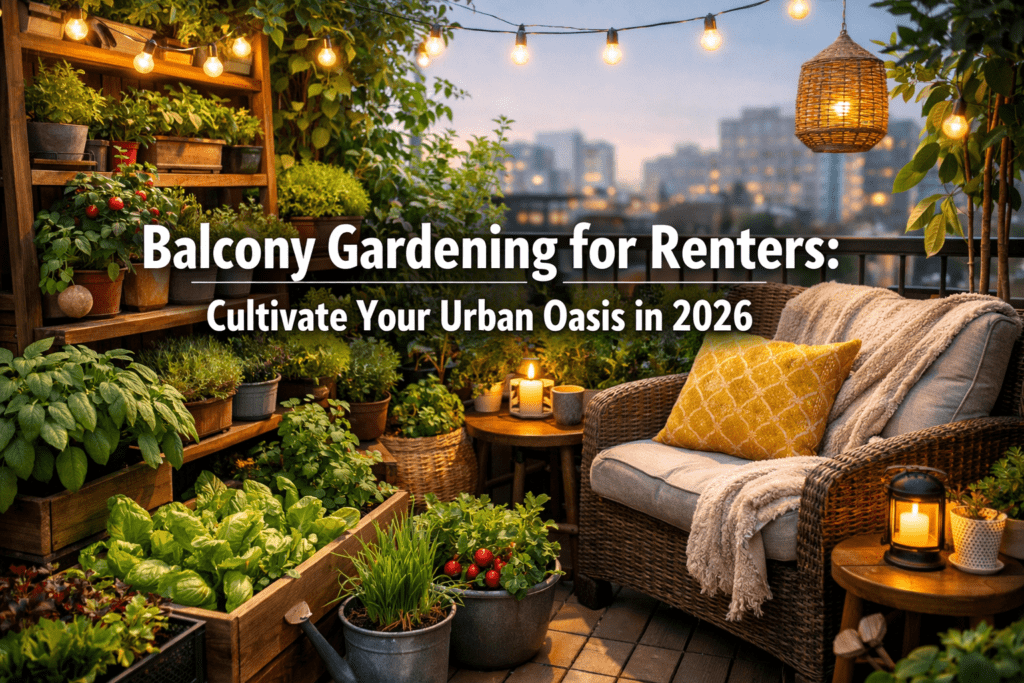
Are you dreaming of fresh herbs, vibrant flowers, or even homegrown vegetables, but live in an apartment with just a balcony? You’re in luck! Balcony gardening for renters is not only possible but also a rapidly growing trend in 2026, offering a rewarding way to bring greenery and fresh produce into urban living spaces, regardless of size. This comprehensive guide will equip you with the knowledge and strategies to transform your limited outdoor space into a thriving garden sanctuary, enhancing your well-being and adding a touch of nature to your home.
Key Takeaways
- Permit-Free Green Space: Balcony gardening for renters allows you to cultivate plants without needing a yard or extensive outdoor property.
- Maximized Small Spaces: Utilize vertical gardening solutions, hanging baskets, and railing planters to make the most of limited square footage [4].
- Smart Plant Choices: Focus on compact, dual-purpose, and low-maintenance plant varieties that thrive in containers and specific light conditions [1], [2], [3].
- Lease Agreement Awareness: Always check your rental agreement for weight restrictions and specific rules regarding balcony modifications before starting.
- Essential Equipment: Invest in lightweight pots, quality potting mix, and basic tools suitable for container gardening.
- Watering and Drainage: Implement efficient watering systems and ensure proper drainage to prevent water damage to your balcony and plants.
- Pest and Disease Management: Learn organic methods to protect your plants and maintain a healthy balcony ecosystem.
- Seasonal Adaptability: Choose plants appropriate for your climate and be prepared to protect them from harsh weather conditions.
- Environmental Benefits: Contribute to urban biodiversity, reduce your carbon footprint, and enjoy fresh, homegrown produce.
Quick Answer
Balcony gardening for renters involves transforming a small outdoor balcony into a productive or decorative garden using containers, vertical systems, and careful plant selection. It requires understanding your balcony’s light conditions, checking lease agreements, and choosing plants that thrive in limited spaces while being mindful of weight limits and drainage.
How Can Renters Successfully Garden on a Balcony in 2026?
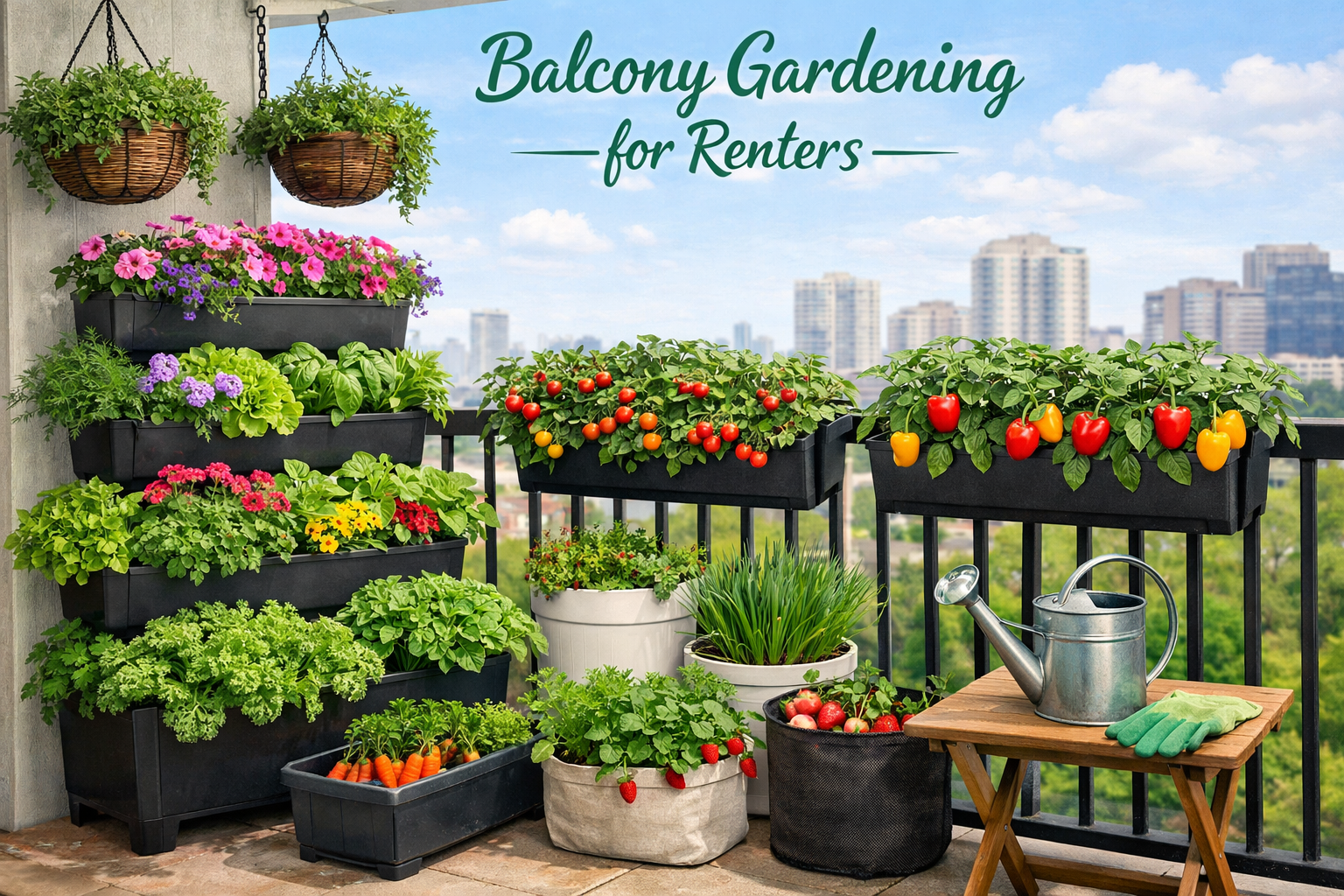
Renters can successfully garden on a balcony in 2026 by strategically utilizing vertical space, choosing appropriate lightweight containers, and selecting plants that are well-suited to the balcony’s specific sunlight and environmental conditions. The key is to maximize limited square footage and adhere to any building regulations.
To create a flourishing balcony garden, consider these essential steps and factors:
- Assess Your Balcony’s Conditions:
- Sunlight Exposure: Observe how many hours of direct sunlight your balcony receives daily. A south-facing balcony typically gets full sun (6+ hours), while north-facing balconies receive minimal light. East-facing balconies get morning sun, and west-facing balconies get intense afternoon sun. This assessment dictates which plants will thrive [6].
- Wind Exposure: High-rise balconies can experience strong winds, which can damage plants, dry out soil, and even blow over containers. Consider windbreaks like trellises with climbing plants or strategically placed larger pots.
- Weight Restrictions: This is crucial for renters. Before bringing heavy planters, consult your landlord or building management about the balcony’s weight capacity. Opt for lightweight materials like plastic, fabric grow bags, or fiberglass pots over heavy ceramic or concrete when possible.
- Check Your Lease Agreement:
- Many rental agreements have clauses regarding modifications, attachments to railings, water drainage, and even plant types. Always review your lease or speak with your landlord to avoid potential issues. Ensure any watering runoff doesn’t impact lower units.
- Choose the Right Containers:
- Variety is Key: Mix and match different types of containers to add visual interest and accommodate various plants. Options include traditional pots, railing planters, hanging baskets, and fabric grow bags.
- Size Matters: Ensure pots are large enough for your plants’ root systems to grow, but not so large they become excessively heavy when filled with soil and water. For more guidance, explore our guide on the best pots for small space gardening in 2026.
- Drainage: Every container must have drainage holes to prevent root rot. If a pot lacks them, drill them yourself or use a cachepot with an inner pot that drains.
- Select Quality Potting Mix:
- Do not use garden soil, which is too dense for containers and can introduce pests and diseases. Instead, use a high-quality, lightweight potting mix specifically designed for container gardening. This provides proper aeration, drainage, and nutrients. For more details, refer to our soil basics for container gardening: 2026 expert guide.
- Embrace Vertical Gardening Solutions:
- Vertical gardening is a game-changer for small balconies [4]. Consider vertical planters, tiered shelving units, wall-mounted pockets, or trellises for climbing plants. This allows you to grow significantly more in a limited footprint. Our vertical gardening guide for small spaces: grow more in 2026 offers detailed insights.
Common Mistake: Overlooking lease terms or balcony weight limits can lead to significant problems, from fines to structural damage. Always confirm these details first.
What Are the Best Plants for Balcony Gardening for Renters?
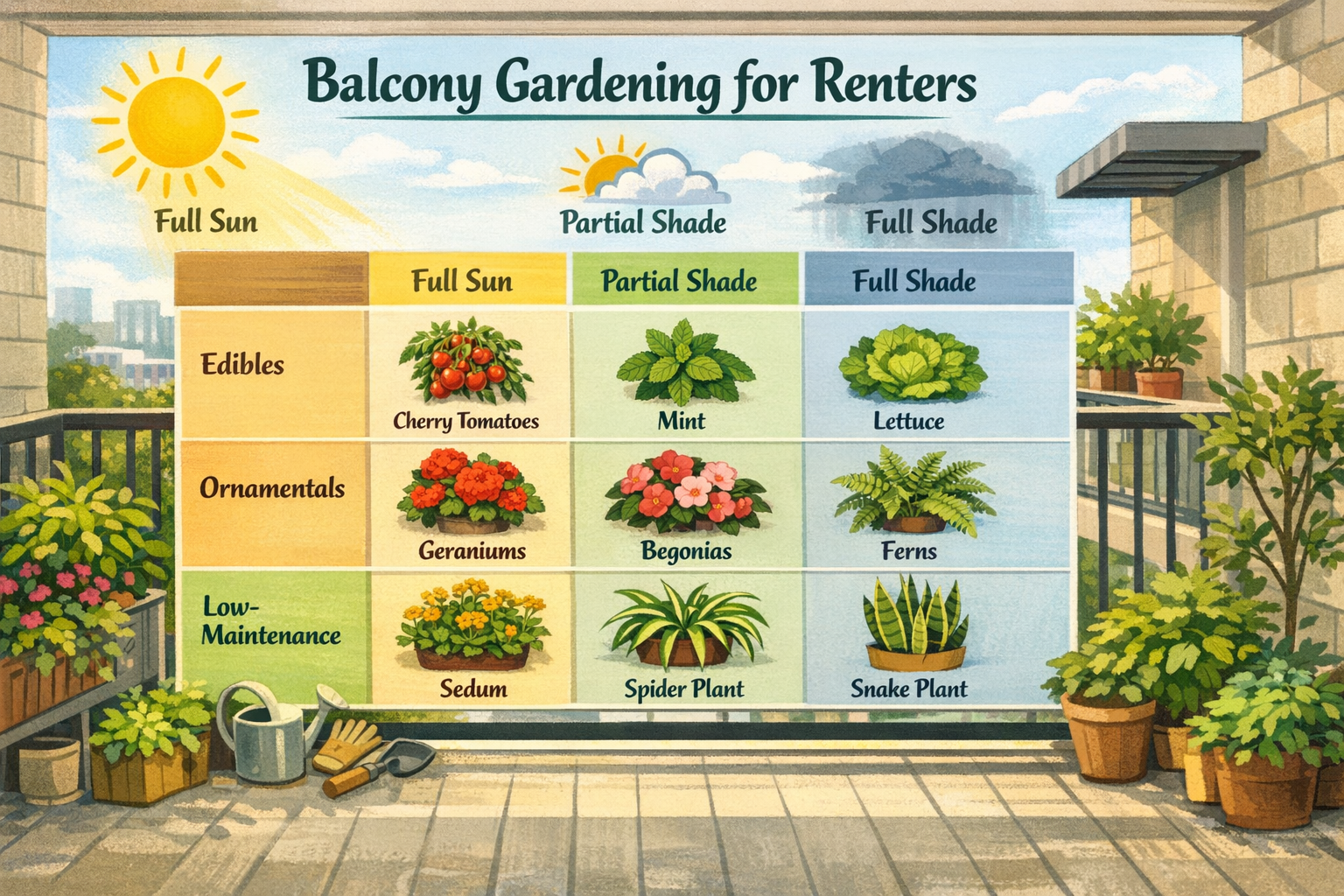
The best plants for balcony gardening for renters are compact varieties, those that thrive in containers, and options that match the specific light and environmental conditions of the balcony, often prioritizing edibles and low-maintenance choices [6], [2].
When selecting plants for your balcony garden, consider these categories:
- Edibles (Herbs, Vegetables, Fruits):
- Herbs: Mint, basil, rosemary, thyme, chives, oregano, and parsley are excellent choices. They are relatively compact and provide fresh flavor for cooking. Many herbs are also dual-purpose, offering fragrance and aesthetic appeal [3].
- Leafy Greens: Lettuce, spinach, kale, and Swiss chard grow well in partial shade and are perfect for successive harvests.
- Compact Vegetables: Cherry tomatoes (bush varieties), bell peppers, chili peppers, radishes, carrots (short varieties), and bush beans are ideal. Look for varieties labeled “patio,” “dwarf,” or “container-friendly.” For more ideas, check out the best vegetables for small space gardening in 2026.
- Small Fruits: Strawberries, blueberries (in acidic soil), and dwarf citrus trees can thrive in large containers with adequate sun.
- Ornamental Flowers:
- Sun-Lovers (Full Sun): Petunias, geraniums, marigolds, nasturtiums, and portulaca add vibrant color.
- Shade-Tolerant (Partial to Full Shade): Impatiens, begonias, fuchsias, and ferns bring beauty to less sunny spots [2].
- Trailing Plants: Lobelia, sweet potato vine, and calibrachoa are excellent for hanging baskets and railing planters.
- Low-Maintenance Options:
- For renters with busy schedules, choosing plants that require less frequent watering or attention is beneficial. Succulents, sedum, lavender, rosemary, and some ornamental grasses are good choices [1]. Drought-tolerant plants are gaining popularity for their resilience [2].
- Chinese Fan Palms and Boxwood are mentioned as low-maintenance plants that also provide year-round interest and privacy [2].
Decision Rule: Choose plants based on your balcony’s specific sunlight hours. If you have a sunny balcony, focus on sun-loving edibles and vibrant flowers. For shadier balconies, prioritize leafy greens, certain herbs, and shade-tolerant ornamentals. Always match the plant to its light requirements to ensure success.
How Do You Plan a Layout for a Small Balcony Garden?
Planning a layout for a small balcony garden involves maximizing vertical space, ensuring accessibility for watering and care, and considering the aesthetic appeal without overcrowding the area. Strategic placement is key to transforming a tiny space into a functional and beautiful garden.
Here’s how to effectively plan your balcony garden layout:
- Vertical is Vital: Since horizontal space is limited, look upwards. Install tiered shelving, wall-mounted planters, or a trellis along one wall. This frees up floor space and creates visual layers. Vertical gardening is a cornerstone of effective small space design.
- Define Zones (Even Small Ones):
- Growing Zone: Dedicate areas for your main plants. This might be a vertical wall unit, a corner with stacked pots, or railing planters.
- Seating/Relaxation Zone: If space allows, incorporate a small bistro set or a comfortable chair. A garden should be enjoyed!
- Storage Zone: Use a small, waterproof storage box for tools, extra potting mix, or watering cans.
- Consider Flow and Access:
- Ensure you can easily reach all plants for watering, pruning, and harvesting. Avoid placing large, immovable objects that block access to plants behind them.
- Leave a clear path for walking, especially if your balcony is an entry point.
- Use Multi-functional Items:
- A bench with storage underneath, a small table that folds away, or planters with integrated trellises can serve multiple purposes.
- Think about “dual-purpose plants” that offer both beauty and function, like edible flowers or fragrant herbs that also attract pollinators [1], [3].
- Vary Heights and Textures:
- Create visual interest by using pots of different heights, shapes, and materials. Place taller plants at the back or in corners, and smaller, trailing plants towards the front or in hanging baskets.
- Mix foliage textures (broad leaves, feathery fronds) and flower shapes to make the space feel richer and more diverse.
- Mind the Balcony Railing:
- Railing planters are excellent for maximizing space, but ensure they are securely fastened and don’t pose a safety risk or obstruct views for neighbors. Check your lease for rules on attaching items to railings.
- Sketch It Out:
- Before buying anything, draw a simple diagram of your balcony. Measure its dimensions and experiment with different arrangements for planters, furniture, and vertical elements. This helps visualize the space and prevent costly mistakes.
- Start Small and Expand:
- You don’t need to do everything at once. Begin with a few key plants and expand as you gain confidence and understand your balcony’s microclimate better.
Quick Example: A renter with a 4×8 foot balcony might dedicate one 4-foot wall to a tiered vertical planter for herbs and leafy greens. Along the railing, they could install clip-on planters for strawberries. The remaining floor space could hold two large containers for dwarf tomatoes and bell peppers, with a small folding chair and table squeezed into a corner for relaxation. This maximizes edibles while allowing for enjoyment.
What Essential Tools and Supplies Do Renters Need for Balcony Gardening?
For balcony gardening, renters primarily need lightweight and compact tools and supplies suitable for container gardening, focusing on items that address watering, planting, and basic plant care without requiring large storage spaces. These essentials ensure efficiency and ease of maintenance in a small area.
Here’s a list of essential tools and supplies:
- Containers:
- Lightweight Pots: Opt for plastic, resin, fabric grow bags, or lightweight fiberglass. These are easier to move and pose less of a weight concern. Best Pots for Small Space Gardening in 2026 offers great recommendations.
- Railing Planters: Great for utilizing railing space without taking up floor area.
- Hanging Baskets: Ideal for trailing plants and adding greenery at eye level.
- Vertical Planters/Shelving: Essential for maximizing vertical space [4].
- Potting Mix:
- High-Quality Potting Mix: A good soil-less mix specifically formulated for containers provides proper drainage and aeration. Avoid heavy garden soil. For an in-depth look, see Soil Basics for Container Gardening: 2026 Expert Guide.
- Compost/Fertilizer: A small bag of organic compost or a balanced slow-release fertilizer will replenish nutrients in your potting mix.
- Watering Equipment:
- Small Watering Can: Essential for precise watering. Choose one with a narrow spout.
- Hose with Spray Nozzle (if feasible): If you have a water source on your balcony, a lightweight, expandable hose can be very convenient. Otherwise, buckets or multiple trips with a watering can will suffice.
- Self-watering planters or drip irrigation kits: Consider these for busy renters or larger setups to ensure consistent moisture and reduce daily watering tasks.
- Hand Tools:
- Hand Trowel: For digging small holes for planting and transplanting.
- Hand Cultivator/Fork: For aerating soil and mixing in amendments.
- Pruning Shears/Snips: For harvesting herbs, deadheading flowers, and light pruning. Small, sharp snips are perfect for balcony scale.
- Gloves: Protect your hands from soil and thorns.
- Plant Supports (as needed):
- Small Trellises or Stakes: For climbing vegetables like peas, beans, or indeterminate tomatoes.
- Cages: For bushier plants like peppers or compact tomatoes.
- Pest and Disease Management:
- Organic Pest Spray: Neem oil or insecticidal soap are good options for common balcony pests.
- Monitoring: Magnifying glass to inspect for tiny pests.
- Optional but Helpful:
- Seed Starting Trays: If you plan to grow from seed.
- Plant Tags: To label what you’ve planted.
- Balcony Gardening Handbook: A good reference guide for specific plant needs.
Decision Rule: Prioritize multi-functional tools and supplies that are lightweight and compact. For instance, a small trowel and pruners are more useful than a large shovel or hedge trimmer for balcony gardening.
How Can Renters Address Drainage and Watering Challenges on a Balcony?
Renters can address drainage and watering challenges on a balcony by ensuring all containers have adequate drainage holes, using saucers or trays to catch excess water, and employing strategic watering techniques and self-watering solutions to prevent runoff and maintain optimal soil moisture.
Managing water is one of the most critical aspects of balcony gardening, especially for renters who must avoid damaging their property or disturbing neighbors below.
- Ensure Proper Drainage Holes:
- Every pot must have drainage holes at the bottom. Without them, water accumulates, leading to root rot and plant death. If your decorative pots lack holes, either drill them or use them as cachepots with an inner nursery pot that has drainage.
- Utilize Saucers and Trays:
- Place a saucer or tray underneath every pot to catch excess water runoff. This prevents water from dripping onto the balcony floor, neighboring units, or public spaces.
- Empty saucers regularly, especially after heavy watering or rain, to prevent mosquito breeding and stagnant water issues.
- Strategic Watering Techniques:
- Water Deeply, Less Frequently: Instead of shallow daily watering, water thoroughly until you see water drain from the bottom of the pot. This encourages roots to grow deeper.
- Check Soil Moisture: Before watering, stick your finger about an inch or two into the soil. If it feels dry, it’s time to water. If it’s still damp, wait. Overwatering is a common killer of container plants. For detailed guidance, see How Often Should You Water Plants? Ultimate Guide 2026.
- Water in the Morning: Watering in the morning allows plants to absorb water before the heat of the day, reducing evaporation and fungal diseases that can arise from damp foliage overnight.
- Consider Self-Watering Solutions:
- Self-Watering Planters: These containers have a reservoir at the bottom that wicks water up to the soil, providing consistent moisture over longer periods. They are excellent for busy renters or during short trips away.
- Drip Irrigation Systems: Small, inexpensive drip kits can be set up for multiple pots. They deliver water directly to the plant’s roots, minimizing waste and runoff. They can even be connected to a timer for automation.
- Watering Globes/Spikes: These devices slowly release water into the soil, providing a continuous supply.
- Mulch Your Pots:
- Adding a layer of mulch (like wood chips, pebbles, or even straw) to the top of your potting mix helps retain soil moisture, reduces evaporation, and regulates soil temperature.
- Protect from Rain:
- During prolonged heavy rain, move sensitive plants under cover if possible, or temporarily adjust their placement to prevent waterlogging.
Common Mistake: Neglecting to use saucers or allowing water to drip freely can lead to complaints from neighbors, potential damage to the building structure, or slippery conditions on the balcony. Always manage runoff responsibly.
What Are the Benefits and Challenges of Balcony Gardening for Renters?
Balcony gardening for renters offers numerous benefits, including access to fresh produce, aesthetic enhancement, and mental well-being, while posing challenges primarily related to space limitations, structural integrity, and adherence to rental agreements. Understanding both sides helps in planning a successful and sustainable garden.
Benefits of Balcony Gardening for Renters 🌱
- Fresh Produce and Herbs: Enjoy the unparalleled taste of homegrown vegetables, fruits, and herbs, often picked just minutes before use. This can lead to healthier eating habits.
- Stress Reduction and Well-being: Gardening is a therapeutic activity, known to reduce stress, improve mood, and foster a connection with nature, even in an urban environment.
- Aesthetic Appeal: Transform a drab balcony into a vibrant, attractive extension of your living space, increasing your home’s visual appeal and potentially its perceived value.
- Air Quality Improvement: Plants naturally purify the air, producing oxygen and filtering out some pollutants, contributing to a fresher outdoor environment.
- Environmental Contribution: Even a small balcony garden can attract pollinators like bees and butterflies, contributing to local biodiversity and supporting the ecosystem [3].
- Cost Savings: Growing your own produce can lead to savings on grocery bills, especially for expensive herbs and specialty vegetables.
- Educational Opportunity: Learn about plant life cycles, pest management, and sustainable practices. It’s a continuous learning experience.
- Privacy: Strategically placed taller plants or trellises can offer a degree of privacy from neighbors.
Challenges of Balcony Gardening for Renters 🚧
- Limited Space: The most obvious challenge is the small footprint, requiring creative solutions like vertical gardening and compact plant varieties. For ideas on maximizing space, see Small Space Gardening – Mini Space Garden.
- Weight Restrictions: Balconies have structural weight limits. Heavy pots, soil, and water can quickly add up, posing a safety risk if not managed carefully.
- Sunlight Variability: Balconies can have inconsistent sun exposure depending on orientation and surrounding buildings, limiting plant choices.
- Wind Exposure: High-rise balconies are prone to strong winds, which can desiccate plants, knock over pots, and physically damage foliage.
- Watering and Drainage: Preventing water runoff from affecting neighbors below is a primary concern, requiring diligent use of saucers and careful watering techniques.
- Lease Agreement Restrictions: Many landlords have rules about what can be placed on balconies, modifications, and potential damage, which must be respected.
- Pest and Disease Management: While often less severe than in ground gardens, balcony gardens can still attract pests. Integrated pest management (IPM) is crucial.
- Seasonal Limitations: Depending on your climate, balcony gardens may be more exposed to extreme temperatures, limiting year-round growing unless protected or brought indoors.
- Privacy and Aesthetics: Balancing your desire for a lush garden with your neighbors’ views and the overall building aesthetic can be a consideration.
Edge Case: If your balcony receives virtually no direct sunlight, consider focusing on shade-loving ornamental plants like ferns, hostas, and impatiens, or cultivating mushrooms, rather than attempting sun-loving vegetables. Alternatively, explore indoor gardening options if available indoor gardening for small homes & apartments: 2026 guide.
How Can Renters Ensure Safety and Compliance in Balcony Gardening?
Renters can ensure safety and compliance in balcony gardening by meticulously checking their lease agreement, strictly adhering to balcony weight limits, securing all containers and structures against wind, and implementing proper drainage systems to prevent water damage. These measures protect both the gardener and the property.
Safety and compliance are paramount for any renter embarking on balcony gardening. Ignoring these aspects can lead to property damage, lease violations, or even serious accidents.
- Review Your Lease Agreement Thoroughly:
- Weight Restrictions: This is often the most overlooked but critical point. Your lease or building management can provide information on the maximum permissible weight per square foot on your balcony. Always err on the side of caution.
- Prohibited Items: Some leases explicitly forbid certain items like BBQs, open flames, or specific types of plants.
- Alterations and Attachments: Rules regarding drilling holes, attaching items to railings, or installing permanent structures (like trellises or vertical gardens) are common.
- Water Runoff: Most leases will require that water does not drip onto lower balconies or common areas.
- Pest Control: Your lease might have stipulations about attracting pests.
- Adhere to Weight Limits:
- Calculate Estimated Weight: Consider the weight of your pots, soil (especially when wet), water, and plants. A cubic foot of wet potting mix can weigh 80-100 pounds. Larger ceramic or concrete pots are very heavy, even empty.
- Choose Lightweight Materials: Opt for plastic, fabric, or fiberglass containers instead of heavy terracotta or ceramic.
- Distribute Weight Evenly: Avoid concentrating all heavy items in one small area. Spread them out across the balcony floor.
- Vertical Gardening Advantages: While vertical systems add weight, they often allow for more plants with less soil volume per plant compared to many individual large pots on the floor.
- Secure All Items:
- Wind Protection: High winds can easily knock over pots, especially tall plants or lightweight containers. Use heavy-bottomed pots, or secure pots to railings or walls with ties.
- Railing Planters and Hanging Baskets: Ensure these are securely fastened with strong, weather-resistant brackets or hooks. Regularly check for wear and tear.
- Manage Water Drainage:
- Saucers and Trays: As discussed earlier, use saucers under every pot to catch runoff. Empty them after watering.
- Avoid Overflow: Do not overwater to the point where saucers overflow.
- Consider Drip Systems: Drip irrigation reduces runoff by delivering water precisely to the plant’s roots.
- Maintain Cleanliness and Pest Control:
- Regular Cleaning: Keep your balcony clean of fallen leaves and debris to deter pests.
- Organic Pest Control: Use organic methods (neem oil, insecticidal soap) to control pests without harsh chemicals that could affect neighbors.
- Avoid Stagnant Water: Empty saucers and remove any standing water to prevent mosquito breeding.
- Consider Neighborly Relations:
- Even if your lease allows it, consider how your garden might impact neighbors. Avoid excessively tall plants that block views or noisy activities. A shared sense of community can make urban living much more pleasant.
Checklist for Balcony Gardening for Renters Safety & Compliance:
- ☑️ Read entire lease agreement for balcony rules.
- ☑️ Confirm balcony weight limit with landlord/building management.
- ☑️ Choose lightweight pots and spread weight evenly.
- ☑️ Use saucers under all pots and empty them regularly.
- ☑️ Secure hanging baskets and railing planters firmly.
- ☑️ Use windbreaks if your balcony is exposed.
- ☑️ Water carefully to prevent runoff over the railing.
- ☑️ Keep balcony clean to deter pests.
- ☑️ Inform neighbors of extensive changes (e.g., large trellises) if applicable.
Balcony Gardening Trends for Renters in 2026
Balcony gardening for renters in 2026 is heavily influenced by trends emphasizing vertical growth, container gardening with dual-purpose plants, sustainability, and low-maintenance solutions to fit compact urban lifestyles [4], [1]. These trends reflect a desire for green spaces that are both functional and easy to manage.
Here’s a closer look at the key trends shaping balcony gardening for renters this year:
- Vertical Growing Solutions are Paramount:
- With urban living spaces becoming smaller, the drive to maximize every inch has led to a surge in vertical gardening systems [4]. This includes multi-tiered planters, wall-mounted pocket systems, ladder shelves, and modular units. These solutions allow renters to grow significantly more plants without taking up precious floor space.
- This trend aligns perfectly with the need for efficient use of limited balcony areas, transforming bare walls into lush green backdrops. Check out our complete balcony gardening guide for small apartments 2026 for more vertical ideas.
- Dual-Purpose and Compact Plants are Favored:
- Renters are increasingly choosing plants that offer both beauty and function [1], [3]. This means selecting herbs that are fragrant and edible, flowers that attract pollinators, or compact vegetable varieties that look attractive while producing food.
- Emphasis is on “plants that do double duty with benefits like year-round interest, fragrance, flowers, and privacy” [2]. This includes specific compact varieties of vegetables, herbs, and even fruit-bearing plants [6].
- Low-Maintenance and Drought-Tolerant Choices:
- Busy urban lifestyles mean less time for intensive gardening. The demand for low-maintenance plants is high, including options like Chinese Fan Palms, Boxwood, and various drought-tolerant plants that require less frequent watering [1], [2].
- This trend helps renters enjoy their green spaces without the burden of constant care, making gardening accessible to more people. Check out our guide on best low maintenance plants 2026: easy care guide.
- Sustainable Practices and Organic Focus:
- There’s a growing consciousness among renters about environmental impact. This translates to using organic potting mixes, composting kitchen scraps (even on a small scale with worm bins), rainwater harvesting (if allowed and feasible), and choosing peat-free soil alternatives.
- Integrated pest management (IPM) with natural solutions is preferred over chemical pesticides.
- Smart Gardening Technology:
- While perhaps more advanced, there’s a slow adoption of smart irrigation systems, self-watering planters, and even app-controlled plant monitors for more efficient watering and nutrient delivery. These technologies are particularly appealing to renters who travel or want to optimize plant health with minimal effort.
- Bringing the Indoors Out:
- Blurring the lines between indoor and outdoor living, renters are decorating their balconies with comfortable furniture, outdoor rugs, and ambient lighting to create cozy “outdoor rooms.” Plants become an integral part of this extended living space, contributing to the overall aesthetic and comfort [3], [5].
Table: Trending Balcony Garden Elements in 2026
| Element | Description | Benefit for Renters |
|---|---|---|
| Vertical Planters | Stackable units, wall pockets, tiered shelves [4] | Maximizes limited floor space; creates green walls. |
| Dual-Purpose Plants | Herbs (edible & fragrant), pollinator-friendly flowers [1], [3] | Functional and beautiful; efficient use of space. |
| Lightweight Containers | Fabric grow bags, plastic, fiberglass | Addresses weight restrictions; easy to move. |
| Drought-Tolerant Plants | Succulents, lavender, certain grasses, Boxwood [2] | Reduces watering frequency; suitable for busy lifestyles. |
| Smart Irrigation | Self-watering pots, small drip systems | Ensures consistent moisture; lowers daily maintenance. |
| Edible Landscaping | Compact vegetables (e.g., dwarf tomatoes, mini peppers), strawberries [6] | Provides fresh food; attractive and productive. |
| Privacy Screens (Green) | Climbing vines on trellises, taller leafy plants [2] | Offers seclusion; enhances aesthetic appeal naturally. |
Conclusion
Embarking on balcony gardening for renters in 2026 is an incredibly rewarding endeavor that transforms a simple outdoor space into a vibrant, productive oasis. By carefully considering your balcony’s conditions, understanding your lease agreement, and choosing the right plants and tools, you can cultivate a thriving garden that enhances your urban living experience. Remember to prioritize lightweight solutions, utilize vertical space, and manage drainage responsibly to ensure safety and compliance. The joy of harvesting your own herbs, watching flowers bloom, or simply relaxing in your green sanctuary is an invaluable addition to any renter’s life.
Actionable Next Steps:
- Inspect Your Balcony: Determine sunlight exposure (hours per day), wind patterns, and measure available space.
- Review Your Lease: Read your rental agreement for any restrictions on weight, attachments, or plant types. If unsure, contact your landlord.
- Choose Your First Plants: Start with easy-to-grow, compact, and low-maintenance varieties that match your balcony’s light conditions.
- Gather Essential Supplies: Invest in lightweight pots with drainage, quality potting mix, a small watering can, and basic hand tools.
- Start Small: Begin with a few pots and gradually expand your garden as you gain confidence and experience.
FAQ
Q1: Can I grow vegetables on a small apartment balcony?
A1: Yes, absolutely! Many compact vegetable varieties like cherry tomatoes, bell peppers, lettuce, and herbs thrive in containers on small apartment balconies, especially with adequate sunlight.
Q2: How do I know if my balcony can handle the weight of a garden?
A2: Always check your lease agreement or consult your landlord/building management for specific weight limits. Opt for lightweight plastic or fabric pots and distribute weight evenly to stay within safe limits.
Q3: What are the best low-maintenance plants for a renter’s balcony?
A3: Excellent low-maintenance options include succulents, sedum, lavender, rosemary, mint, and certain ornamental grasses. Chinese Fan Palms and Boxwood are also trending for their ease of care and year-round interest [2].
Q4: How do I prevent water from dripping onto my neighbor’s balcony?
A4: Place a saucer or tray under every pot to catch excess water. Empty these saucers after watering or rain. Consider self-watering planters or small drip irrigation systems to minimize runoff.
Q5: Is vertical gardening really effective for small balconies?
A5: Yes, vertical gardening is highly effective for small balconies as it maximizes growing space by utilizing walls and railings, allowing you to grow significantly more plants without taking up floor space [4].
Q6: Do I need special soil for balcony gardening?
A6: Yes, use a high-quality, lightweight potting mix specifically formulated for containers. Do not use heavy garden soil, which can compact and impede drainage in pots.
Q7: What if my balcony gets very little sunlight?
A7: For low-light balconies, focus on shade-tolerant plants like impatiens, begonias, ferns, hostas, leafy greens (lettuce, spinach), and some herbs like mint or parsley.
Q8: Can I attach planters to my balcony railing?
A8: You must check your lease agreement first. If allowed, ensure railing planters are securely fastened with strong brackets designed for the purpose to prevent them from falling.
Q9: How often should I water my balcony plants?
A9: Watering frequency depends on the plant, pot size, weather, and soil type. Check the soil moisture by hand; water deeply when the top inch or two feels dry. Watering in the morning is generally best.
Q10: What are “dual-purpose” plants in balcony gardening?
A10: Dual-purpose plants offer more than one benefit, such as herbs that are both edible and fragrant, or flowers that are ornamental and attract pollinators. They maximize the value of limited space [1], [3].
References
[1] Trends In Container Gardening 2026 – https://www.containedcreations.com/blog/trends-in-container-gardening-2026
[2] Garden Trends 2026 – https://www.countryliving.com/gardening/garden-ideas/a70160525/garden-trends-2026/
[3] Patio And Porch Trends 2026 – https://www.veranda.com/outdoor-garden/a69739522/patio-and-porch-trends-2026/
[4] 2026 Outdoor Living And Landscaping Trends To Transform Your Backyard – https://www.dripworks.com/blog/2026-outdoor-living-and-landscaping-trends-to-transform-your-backyard
[5] Whats Trending For 2026 – https://www.thebalconygarden.com.au/blogs/news/whats-trending-for-2026
[6] 2026 Gardening Trends – https://www.westonnurseries.com/2026-gardening-trends/
[7] 2026 Garden Trends – https://southernlivingplants.com/plan-your-garden/2026-garden-trends/
[8] Garden Trends For 2026 – https://www.agriframes.us/blogs/garden-designs/garden-trends-for-2026