How often should I water vegetables in containers during summer?
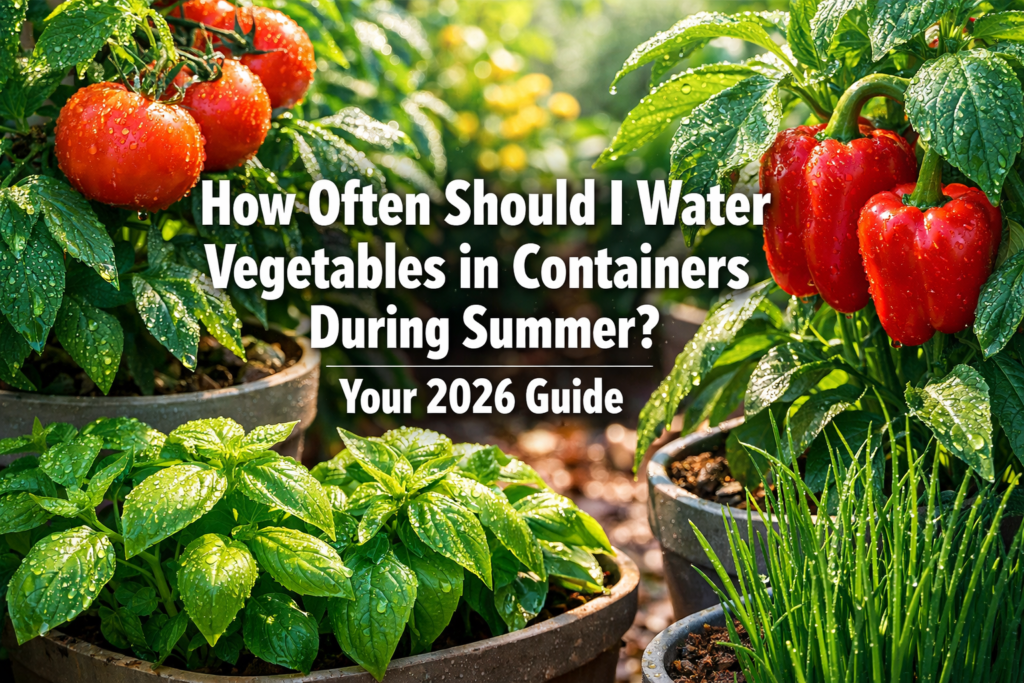
When summer arrives, the question of “How often should I water vegetables in containers during summer?” becomes paramount for any container gardener. Unlike plants in the ground, containerized vegetables dry out significantly faster, requiring a more vigilant watering routine to ensure a bountiful harvest. Getting this right is crucial for plant health and productivity.
Key Takeaways
- Daily watering is typically required for most container vegetables during summer, especially in temperatures above 25°C (77°F) [1].
- Check soil moisture daily by sticking your finger one inch into the soil; if it feels dry, it’s time to water [1, 7].
- Watering twice daily may be necessary during extreme heat (near 35°C/95°F or above) or for smaller pots [1, 2].
- Morning is the best time to water to reduce evaporation and prevent fungal diseases [1, 3].
- Water until drainage occurs from the bottom of the pot to ensure the entire root zone is hydrated [2].
- Container size matters greatly: Smaller pots dry out faster than larger ones [1, 2].
- Use moisture-retaining soil amendments like coconut coir or compost to improve water retention [1].
- Mulch or grouping pots can help reduce evaporation and keep soil cooler [1].
- Wilting foliage is a clear sign of thirst, but can also indicate overwatering—always check soil moisture first.
Quick Answer
During summer, you should typically water vegetables in containers once a day, especially when temperatures consistently exceed 25°C (77°F) [1]. In periods of extreme heat (above 35°C/95°F) or for smaller pots, watering twice daily—once in the morning and potentially again in the late afternoon—becomes essential [1, 2]. Always verify the soil moisture by touch before watering to prevent both under- and over-watering.
What Factors Determine How Often Should I Water Vegetables in Containers During Summer?
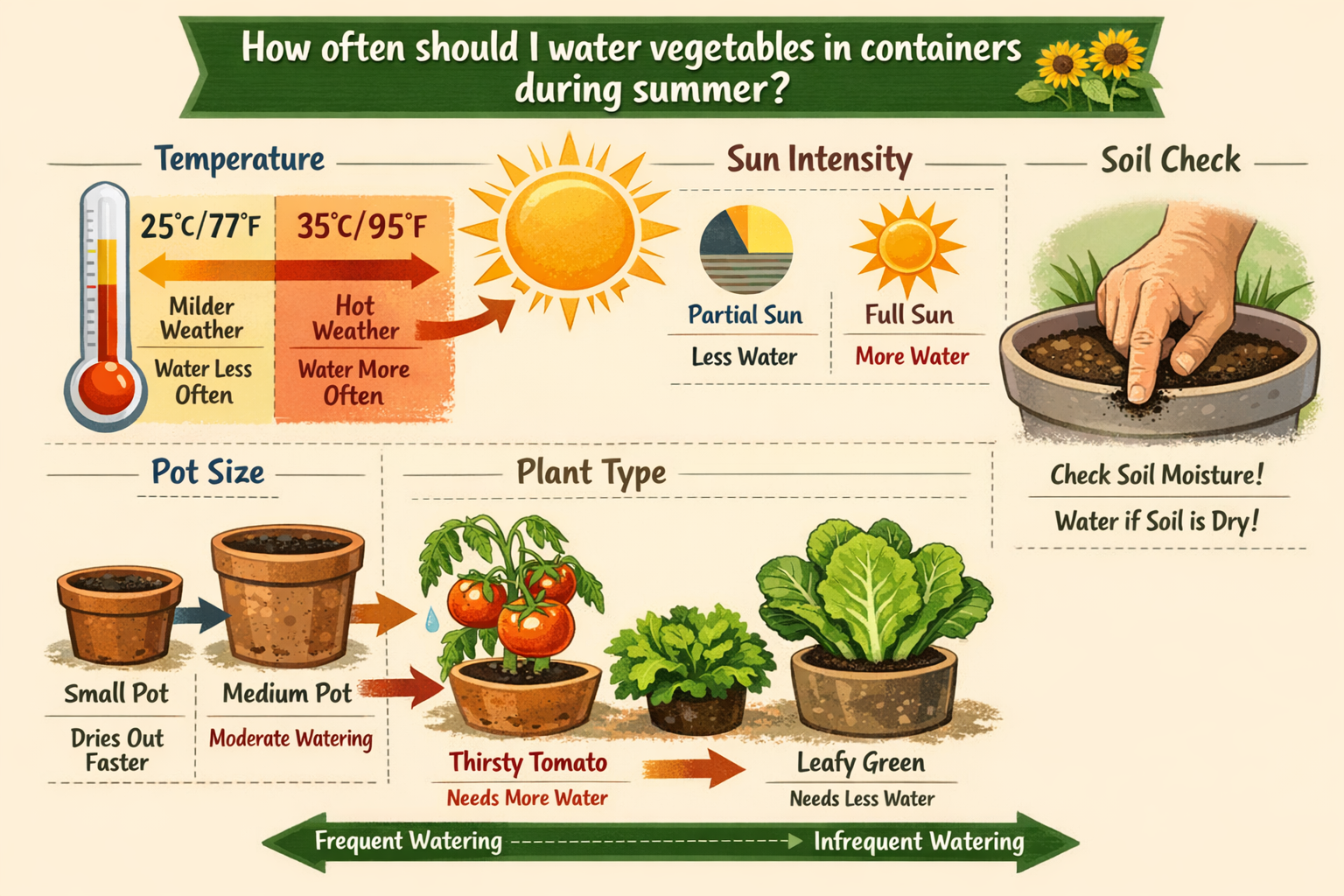
The frequency for how often should I water vegetables in containers during summer is not a one-size-fits-all schedule; it’s dictated by several critical environmental and plant-specific factors. Understanding these elements allows you to tailor a watering regimen that keeps your container vegetables thriving through the hottest months [1].
- Temperature and Humidity: Higher temperatures drastically increase the rate of evaporation from the soil and transpiration from plant leaves [2]. On a hot, sunny day above 25°C (77°F), a container might need water daily. When temperatures approach 35°C (95°F), even twice-daily watering might be necessary for some plants [2]. Lower humidity also accelerates water loss.
- Container Size and Material: Smaller containers hold less soil volume, meaning they dry out much faster than larger pots [1, 2]. A 5-gallon fabric grow bag will retain moisture differently than a 1-gallon plastic pot. Porous materials like terracotta will lose moisture through their walls, increasing watering frequency compared to plastic or glazed ceramic containers [6]. For advice on choosing the right containers, see our guide on the Best Pots for Small Space Gardening in 2026.
- Type of Vegetable Plant: Different vegetables have varying water needs. Thirsty plants like tomatoes, cucumbers, peppers, and squash require consistent moisture and will quickly show signs of stress if deprived [4]. Drought-tolerant herbs like rosemary or thyme, while less common in large containers for summer harvest, will tolerate slightly drier conditions. Leafy greens, while needing consistent moisture, might not demand as much water as a fruiting plant producing heavily.
- Soil Mix Composition: A well-draining yet moisture-retentive potting mix is crucial for container vegetables [1]. Mixes containing peat moss, coco coir, or compost can hold water more effectively, extending the time between waterings compared to sandy or heavy clay-based soils [1]. Poor drainage, however, can lead to root rot even if the surface appears dry. For more information on creating optimal soil, refer to “Soil Basics for Container Gardening: 2026 Expert Guide” – https://minispacegarden.com/soil-basics-for-container-gardening/.
- Sunlight Exposure and Wind: Plants exposed to full, direct sun for 6-8 hours or more, especially in windy conditions, will use more water and dry out faster than those in partial shade or sheltered spots [1]. The combination of intense sun and strong winds can dramatically increase water loss.
Decision Rule: If you are unsure about how often should I water vegetables in containers during summer, always default to checking the top inch of soil daily. This hands-on approach accounts for all variables simultaneously and gives the most accurate indication of when to water [7].
What Are the Best Practices for Watering Container Vegetables in Summer?
To answer how often should I water vegetables in containers during summer effectively, it’s not just about frequency, but also how you water. Implementing proper techniques ensures your plants absorb enough moisture without encountering issues like nutrient loss or fungal diseases [2].
Here are the best practices:
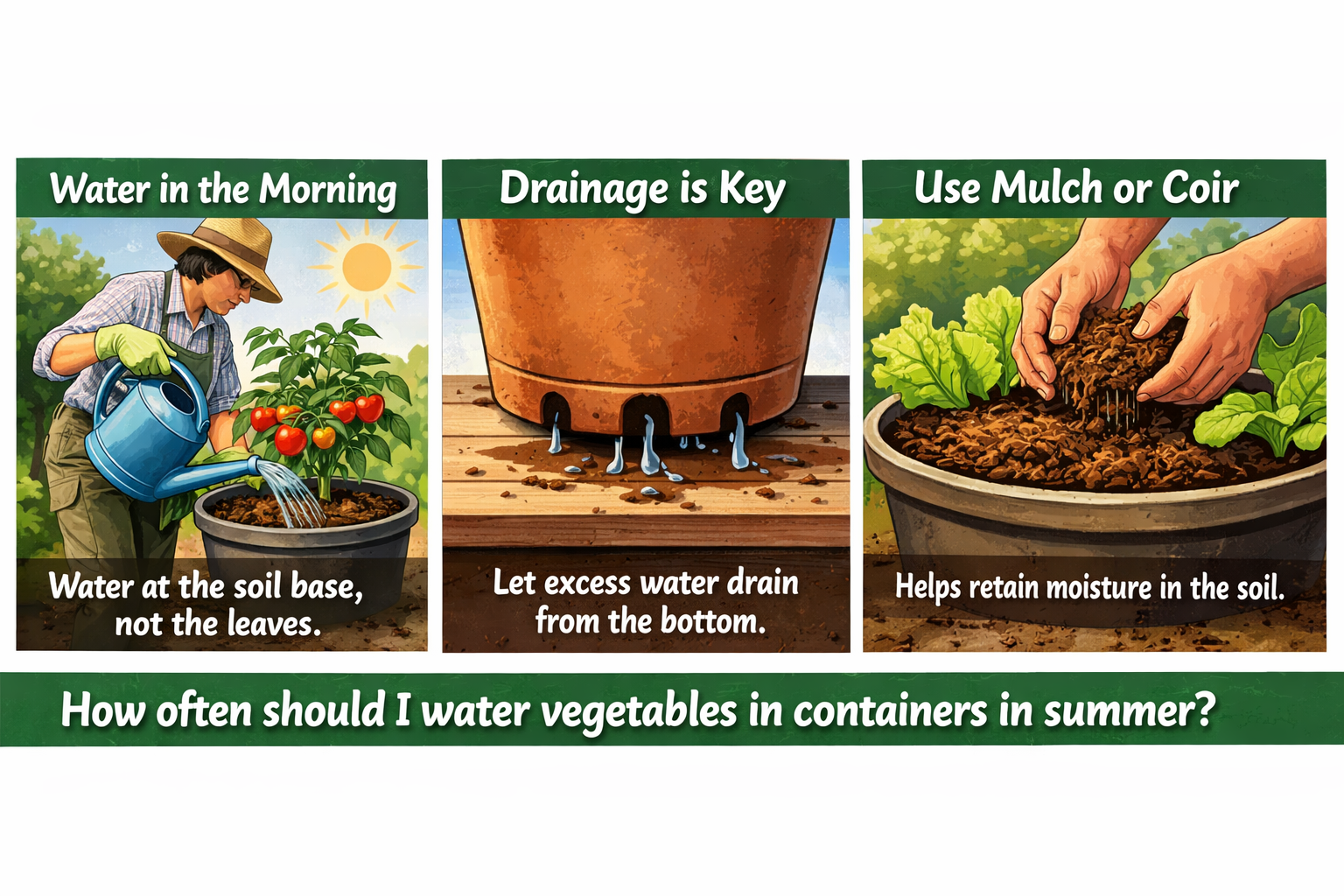
- Water in the Morning: The ideal time to water container vegetables is early in the morning [1, 3]. This allows the plants to hydrate before the intense midday sun increases evaporation and stress. It also gives any splashed foliage time to dry completely, which is vital for preventing fungal diseases [1].
- Check Soil Moisture by Hand: Before watering, always insert your finger about one inch into the potting mix [1, 7]. If the soil feels dry at that depth, it’s time to water. If it’s still damp, hold off. This method is far more reliable than relying solely on visual cues or a fixed schedule. You can also gently lift smaller pots; if they feel unusually light, they likely need water [1].
- Water Deeply Until Drainage: When you do water, do so thoroughly. Apply water slowly to the soil surface until it begins to trickle out of the drainage holes at the bottom of the container [2]. This ensures that water reaches the entire root system, encouraging deeper root growth. Avoid light, frequent sprinkles, which only wet the top layer of soil.
- Avoid Overhead Watering: Whenever possible, direct water to the base of the plant, directly on the soil, rather than spraying the foliage [3]. Wet leaves, especially in the evening, can create a humid environment conducive to diseases like powdery mildew.
- Consider Self-Watering Solutions: For busy gardeners or during peak summer, self-watering containers or drip irrigation systems can be invaluable [1]. These systems deliver water consistently and efficiently, reducing the need for daily manual checks and ensuring plants receive steady moisture.
- Mulch the Soil Surface: Applying a layer of organic mulch (like straw, shredded leaves, or wood chips) to the top of your container soil can significantly reduce evaporation, keep roots cooler, and help maintain consistent soil moisture [1]. This is a simple yet effective technique.
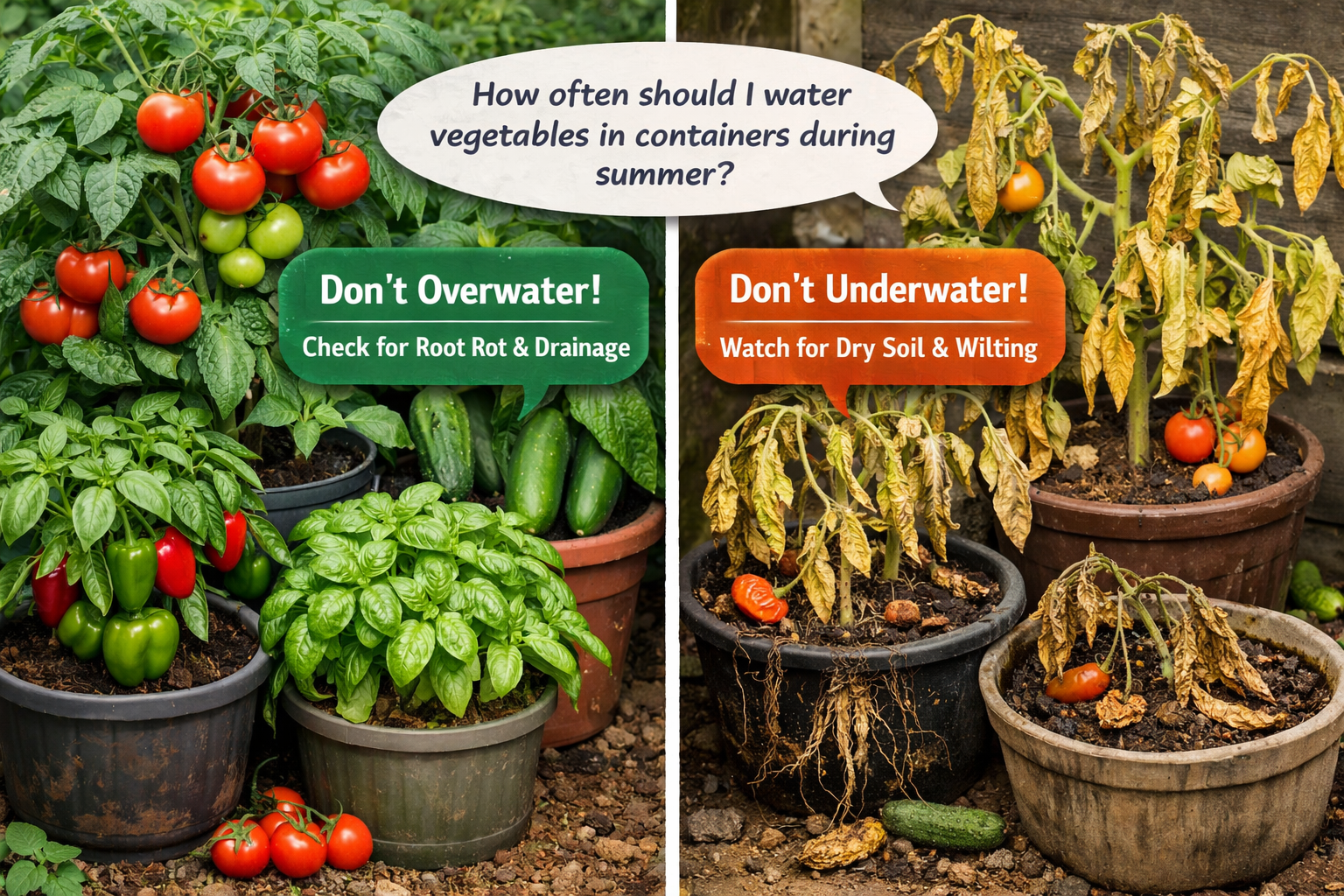
Common Mistake: A common mistake is watering on a strict schedule without checking soil moisture. This can lead to overwatering, where roots sit in waterlogged soil, depriving them of oxygen and causing root rot, even if the plant shows similar wilting symptoms to underwatering.
How Can I Optimize Watering for My Container Vegetables in 2026?
Optimizing your watering strategy for container vegetables in summer goes beyond just frequency; it involves proactive measures and smart choices that help your plants thrive with less effort. In 2026, leveraging available knowledge and simple techniques can make a big difference in how often should I water vegetables in containers during summer.
- Choose the Right Potting Mix: Start with a high-quality, lightweight potting mix designed for containers. These mixes typically contain ingredients like peat moss, coir, or perlite that improve drainage while retaining moisture [1]. Avoid using garden soil, which can compact in containers and hinder drainage.
- Incorporate Moisture-Retaining Amendments: Before planting, consider mixing in additional amendments to your potting mix. Coconut coir is excellent for water retention, as is well-rotted compost [1]. Water-absorbing polymer crystals can also be used, but sparingly and according to package directions, as excessive use can oversaturate the soil.
- Utilize Larger Containers: Whenever feasible, opt for larger containers for your vegetables [1, 2]. A larger volume of soil provides more moisture and buffers against temperature fluctuations, meaning less frequent watering. For example, a tomato plant in a 10-gallon container will require less frequent watering than one in a 5-gallon pot.
- Group Containers Together: Grouping pots closely helps create a microclimate that can increase humidity around the plants and reduce wind exposure, thereby slowing down evaporation from the soil surface [1]. This is particularly effective for plants with similar water needs.
- Provide Partial Shade During Peak Heat: If possible, move heat-sensitive container vegetables to a location that receives partial shade during the hottest part of the afternoon, or use shade cloth. Reducing direct sun exposure during extreme heat lessens the plant’s water demands and prevents scorching [2].
- Install Drip Irrigation or Self-Watering Systems: For a truly optimized approach, especially if you have many containers, consider installing a simple drip irrigation system or using self-watering planters [1]. These systems deliver water directly to the root zone efficiently and consistently, reducing water waste and ensuring steady hydration. For more on managing your growing space, explore “Small Space Vegetable Gardening: 2026 Step-by-Step Guide” – https://minispacegarden.com/small-space-vegetable-gardening/.
Edge Case: During a prolonged heatwave with temperatures consistently above 35°C (95°F) for several days, even large containers with moisture-retentive soil may require twice-daily watering [2]. Monitor plants closely for any signs of wilting, which is their primary signal of distress. The University of Maryland’s 2026 guidance emphasizes the need for consistent watering schedules for container plants due to their rapid drying out [5].
Troubleshooting: What If My Container Vegetables Are Still Wilting?
Wilting leaves are a clear sign of distress in container vegetables, often indicating a watering issue. However, wilting doesn’t always mean your plant needs more water; it can also be a symptom of overwatering or other problems. When assessing how often should I water vegetables in containers during summer, it’s important to diagnose the root cause accurately.
Here’s how to troubleshoot wilting container vegetables:
- Check Soil Moisture First: This is the most crucial step [1, 7]. Stick your finger deep into the soil (at least 1-2 inches).
- If the soil is bone dry: The plant is likely underwatered. Water immediately and thoroughly until water drains from the bottom. Consider increasing your watering frequency to daily or even twice daily during hot spells.
- If the soil is soggy and wet: The plant is likely overwatered, leading to root rot. Roots deprived of oxygen cannot absorb water, causing wilting despite ample moisture.
- Action: Stop watering immediately. Allow the soil to dry out significantly. If possible, gently lift the plant from its container to inspect the roots. Healthy roots are white and firm; rotting roots are brown, mushy, and may smell foul. Repotting into fresh, dry potting mix may be necessary if root rot is severe. Ensure adequate drainage holes in your container.
- Assess Environmental Conditions:
- Extreme Heat Stress: Even with sufficient water, plants can temporarily wilt during the hottest part of the day as a protective mechanism against excessive moisture loss through transpiration. If the plant perks up in the evening or after temperatures cool, it’s likely heat stress, not dehydration.
- Action: Provide afternoon shade or use shade cloth. Ensure consistent morning watering.
- Wind Exposure: Strong winds can rapidly dry out soil and foliage.
- Action: Move containers to a more sheltered location or group them to reduce wind exposure.
- Extreme Heat Stress: Even with sufficient water, plants can temporarily wilt during the hottest part of the day as a protective mechanism against excessive moisture loss through transpiration. If the plant perks up in the evening or after temperatures cool, it’s likely heat stress, not dehydration.
- Inspect for Pests or Diseases: Wilting can also be a symptom of pest infestations (e.g., aphids, spider mites, borers) or diseases (e.g., Fusarium wilt, bacterial wilt) that damage the plant’s vascular system, preventing water uptake.
- Action: Examine leaves (top and bottom), stems, and the base of the plant for visible pests, unusual spots, discoloration, or stem damage. Address specific pests or diseases as appropriate.
- Nutrient Deficiencies: Severe nutrient deficiencies can sometimes lead to wilting or stunted growth that mimics watering problems.
- Action: Ensure your plants are receiving balanced nutrition through regular feeding. However, don’t confuse wilting with nutrient issues without first ruling out watering problems.
Troubleshooting Tip: A healthy container plant, even when thirsty, usually responds quickly (within an hour or two) to a thorough watering. If wilting persists after watering a dry plant, or if the soil is wet, investigate other causes.
Watering Container Vegetables: Quick Reference Table for Summer 2026
To help you quickly determine how often should I water vegetables in containers during summer, this table provides general guidelines. Remember, these are starting points; always confirm soil moisture by hand.
| Factor | Typical Watering Frequency (Summer) | Notes & Considerations
This article addresses how often I should water container vegetables in the summer, focusing on key factors and techniques for success. Container gardening offers flexibility and accessibility, but it also presents unique watering challenges, especially during hot weather. Unlike garden beds, containers have limited soil volume and are more exposed to drying elements, necessitating more frequent and attentive watering. Understanding plant needs, environmental conditions, and proper watering methods can prevent common pitfalls like wilting and ensure a productive vegetable yield.
Key Takeaways
- Daily watering is typically required for most container vegetables during summer, especially in temperatures above 25°C (77°F) [1].
- Check soil moisture daily by sticking your finger one inch into the soil; if it feels dry, it’s time to water [1, 7].
- Watering twice daily may be necessary during extreme heat (near 35°C/95°F or above) or for smaller pots [1, 2].
- Morning is the best time to water to reduce evaporation and prevent fungal diseases [1, 3].
- Water until drainage occurs from the bottom of the pot to ensure the entire root zone is hydrated [2].
- Container size matters greatly: Smaller pots dry out faster than larger ones [1, 2].
- Use moisture-retaining soil amendments like coconut coir or compost to improve water retention [1].
- Mulch or grouping pots can help reduce evaporation and keep soil cooler [1].
- Wilting foliage is a clear sign of thirst, but can also indicate overwatering—always check soil moisture first.
Quick Answer
During summer, you should typically water vegetables in containers once a day, especially when temperatures consistently exceed 25°C (77°F) [1]. In periods of extreme heat (above 35°C/95°F) or for smaller pots, watering twice daily—once in the morning and potentially again in the late afternoon—becomes essential [1, 2]. Always verify the soil moisture by touch before watering to prevent both under- and over-watering.
What Factors Determine How Often Should I Water Vegetables in Containers During Summer?
The frequency for how often should I water vegetables in containers during summer is not a one-size-fits-all schedule; it’s dictated by several critical environmental and plant-specific factors. Understanding these elements allows you to tailor a watering regimen that keeps your container vegetables thriving through the hottest months [1].
- Temperature and Humidity: Higher temperatures drastically increase the rate of evaporation from the soil and transpiration from plant leaves [2]. On a hot, sunny day above 25°C (77°F), a container might need water daily. When temperatures approach 35°C (95°F), even twice-daily watering might be necessary for some plants [2]. Lower humidity also accelerates water loss.
- Container Size and Material: Smaller containers hold less soil volume, meaning they dry out much faster than larger pots [1, 2]. A 5-gallon fabric grow bag will retain moisture differently than a 1-gallon plastic pot. Porous materials like terracotta will lose moisture through their walls, increasing watering frequency compared to plastic or glazed ceramic containers [6]. For advice on choosing the right containers, see our guide on the Best Pots for Small Space Gardening in 2026.
- Type of Vegetable Plant: Different vegetables have varying water needs. Thirsty plants like tomatoes, cucumbers, peppers, and squash require consistent moisture and will quickly show signs of stress if deprived [4]. Drought-tolerant herbs like rosemary or thyme, while less common in large containers for summer harvest, will tolerate slightly drier conditions. Leafy greens, while needing consistent moisture, might not demand as much water as a fruiting plant producing heavily.
- Soil Mix Composition: A well-draining yet moisture-retentive potting mix is crucial for container vegetables [1]. Mixes containing peat moss, coco coir, or compost can hold water more effectively, extending the time between waterings compared to sandy or heavy clay-based soils [1]. Poor drainage, however, can lead to root rot even if the surface appears dry. For more information on creating optimal soil, refer to “Soil Basics for Container Gardening: 2026 Expert Guide” – https://minispacegarden.com/soil-basics-for-container-gardening/.
- Sunlight Exposure and Wind: Plants exposed to full, direct sun for 6-8 hours or more, especially in windy conditions, will use more water and dry out faster than those in partial shade or sheltered spots [1]. The combination of intense sun and strong winds can dramatically increase water loss.
Decision Rule: If you are unsure about how often should I water vegetables in containers during summer, always default to checking the top inch of soil daily. This hands-on approach accounts for all variables simultaneously and gives the most accurate indication of when to water [7].
What Are the Best Practices for Watering Container Vegetables in Summer?
To answer how often should I water vegetables in containers during summer effectively, it’s not just about frequency, but also how you water. Implementing proper techniques ensures your plants absorb enough moisture without encountering issues like nutrient loss or fungal diseases [2].
Here are the best practices:
- Water in the Morning: The ideal time to water container vegetables is early in the morning [1, 3]. This allows the plants to hydrate before the intense midday sun increases evaporation and stress. It also gives any splashed foliage time to dry completely, which is vital for preventing fungal diseases [1].
- Check Soil Moisture by Hand: Before watering, always insert your finger about one inch into the potting mix [1, 7]. If the soil feels dry at that depth, it’s time to water. If it’s still damp, hold off. This method is far more reliable than relying solely on visual cues or a fixed schedule. You can also gently lift smaller pots; if they feel unusually light, they likely need water [1].
- Water Deeply Until Drainage: When you do water, do so thoroughly. Apply water slowly to the soil surface until it begins to trickle out of the drainage holes at the bottom of the container [2]. This ensures that water reaches the entire root system, encouraging deeper root growth. Avoid light, frequent sprinkles, which only wet the top layer of soil.
- Avoid Overhead Watering: Whenever possible, direct water to the base of the plant, directly on the soil, rather than spraying the foliage [3]. Wet leaves, especially in the evening, can create a humid environment conducive to diseases like powdery mildew.
- Consider Self-Watering Solutions: For busy gardeners or during peak summer, self-watering containers or drip irrigation systems can be invaluable [1]. These systems deliver water consistently and efficiently, reducing the need for daily manual checks and ensuring plants receive steady moisture.
- Mulch the Soil Surface: Applying a layer of organic mulch (like straw, shredded leaves, or wood chips) to the top of your container soil can significantly reduce evaporation, keep roots cooler, and help maintain consistent soil moisture [1]. This is a simple yet effective technique.
Common Mistake: A common mistake is watering on a strict schedule without checking soil moisture. This can lead to overwatering, where roots sit in waterlogged soil, depriving them of oxygen and causing root rot, even if the plant shows similar wilting symptoms to underwatering.
How Can I Optimize Watering for My Container Vegetables in 2026?
Optimizing your watering strategy for container vegetables in summer goes beyond just frequency; it involves proactive measures and smart choices that help your plants thrive with less effort. In 2026, leveraging available knowledge and simple techniques can make a big difference in how often should I water vegetables in containers during summer.
- Choose the Right Potting Mix: Start with a high-quality, lightweight potting mix designed for containers. These mixes typically contain ingredients like peat moss, coir, or perlite that improve drainage while retaining moisture [1]. Avoid using garden soil, which can compact in containers and hinder drainage.
- Incorporate Moisture-Retaining Amendments: Before planting, consider mixing in additional amendments to your potting mix. Coconut coir is excellent for water retention, as is well-rotted compost [1]. Water-absorbing polymer crystals can also be used, but sparingly and according to package directions, as excessive use can oversaturate the soil.
- Utilize Larger Containers: Whenever feasible, opt for larger containers for your vegetables [1, 2]. A larger volume of soil provides more moisture and buffers against temperature fluctuations, meaning less frequent watering. For example, a tomato plant in a 10-gallon container will require less frequent watering than one in a 5-gallon pot.
- Group Containers Together: Grouping pots closely helps create a microclimate that can increase humidity around the plants and reduce wind exposure, thereby slowing down evaporation from the soil surface [1]. This is particularly effective for plants with similar water needs.
- Provide Partial Shade During Peak Heat: If possible, move heat-sensitive container vegetables to a location that receives partial shade during the hottest part of the afternoon, or use shade cloth. Reducing direct sun exposure during extreme heat lessens the plant’s water demands and prevents scorching [2].
- Install Drip Irrigation or Self-Watering Systems: For a truly optimized approach, especially if you have many containers, consider installing a simple drip irrigation system or using self-watering planters [1]. These systems deliver water directly to the root zone efficiently and consistently, reducing water waste and ensuring steady hydration. For more on managing your growing space, explore “Small Space Vegetable Gardening: 2026 Step-by-Step Guide” – https://minispacegarden.com/small-space-vegetable-gardening/.
Edge Case: During a prolonged heatwave with temperatures consistently above 35°C (95°F) for several days, even large containers with moisture-retentive soil may require twice-daily watering [2]. Monitor plants closely for any signs of wilting, which is their primary signal of distress. The University of Maryland’s 2026 guidance emphasizes the need for consistent watering schedules for container plants due to their rapid drying out [5].
Troubleshooting: What If My Container Vegetables Are Still Wilting?
Wilting leaves are a clear sign of distress in container vegetables, often indicating a watering issue. However, wilting doesn’t always mean your plant needs more water; it can also be a symptom of overwatering or other problems. When assessing how often should I water vegetables in containers during summer, it’s important to diagnose the root cause accurately.
Here’s how to troubleshoot wilting container vegetables:
- Check Soil Moisture First: This is the most crucial step [1, 7]. Stick your finger deep into the soil (at least 1-2 inches).
- If the soil is bone dry: The plant is likely underwatered. Water immediately and thoroughly until water drains from the bottom. Consider increasing your watering frequency to daily or even twice daily during hot spells.
- If the soil is soggy and wet: The plant is likely overwatered, leading to root rot. Roots deprived of oxygen cannot absorb water, causing wilting despite ample moisture.
- Action: Stop watering immediately. Allow the soil to dry out significantly. If possible, gently lift the plant from its container to inspect the roots. Healthy roots are white and firm; rotting roots are brown, mushy, and may smell foul. Repotting into fresh, dry potting mix may be necessary if root rot is severe. Ensure adequate drainage holes in your container.
- Assess Environmental Conditions:
- Extreme Heat Stress: Even with sufficient water, plants can temporarily wilt during the hottest part of the day as a protective mechanism against excessive moisture loss through transpiration. If the plant perks up in the evening or after temperatures cool, it’s likely heat stress, not dehydration.
- Action: Provide afternoon shade or use shade cloth. Ensure consistent morning watering.
- Wind Exposure: Strong winds can rapidly dry out soil and foliage.
- Action: Move containers to a more sheltered location or group them to reduce wind exposure.
- Extreme Heat Stress: Even with sufficient water, plants can temporarily wilt during the hottest part of the day as a protective mechanism against excessive moisture loss through transpiration. If the plant perks up in the evening or after temperatures cool, it’s likely heat stress, not dehydration.
- Inspect for Pests or Diseases: Wilting can also be a symptom of pest infestations (e.g., aphids, spider mites, borers) or diseases (e.g., Fusarium wilt, bacterial wilt) that damage the plant’s vascular system, preventing water uptake.
- Action: Examine leaves (top and bottom), stems, and the base of the plant for visible pests, unusual spots, discoloration, or stem damage. Address specific pests or diseases as appropriate.
- Nutrient Deficiencies: Severe nutrient deficiencies can sometimes lead to wilting or stunted growth that mimics watering problems.
- Action: Ensure your plants are receiving balanced nutrition through regular feeding. However, don’t confuse wilting with nutrient issues without first ruling out watering problems.
Troubleshooting Tip: A healthy container plant, even when thirsty, usually responds quickly (within an hour or two) to a thorough watering. If wilting persists after watering a dry plant, or if the soil is wet, investigate other causes.
Watering Container Vegetables: Quick Reference Table for Summer 2026
To help you quickly determine how often should I water vegetables in containers during summer, this table provides general guidelines. Remember, these are starting points; always confirm soil moisture by hand.
| Factor | Typical Watering Frequency (Summer) | Notes & Considerations |
|---|---|---|
| Moderate Heat | Daily (especially if above 25°C/77°F) [1] | Check soil 1 inch deep; water if dry. Water deeply in the morning. |
| Extreme Heat | Twice Daily (morning & late afternoon) [1, 2] | Temperatures near or above 35°C/95°F. Essential for small pots and thirsty plants. |
| Small Containers | Often Daily; potentially twice daily [1] | Dry out fastest. Consider grouping or self-watering options. |
| Large Containers | Daily to every other day | Retain moisture longer than small pots. Still check soil daily. |
| Thirsty Plants | Daily; potentially twice daily [4] | (e.g., tomatoes, cucumbers, peppers). Monitor closely for signs of stress. |
| Moisture-Retentive Soil | Daily to every other day [1] | Soil with coco coir or compost holds water better. |
| Mulched Pots | Can extend intervals by reducing evaporation [1] | Mulch helps keep soil cooler and reduces water loss. |
| Shaded during Peak Sun | May reduce frequency slightly | Less sun exposure in afternoon reduces water demand, especially for heat-sensitive plants. |
Related Reading
- How Often Should You Water Plants? Ultimate Guide 2026
- Small Space Vegetable Gardening: 2026 Step-by-Step Guide
- Container Gardening – Mini Space Garden | Small Space Gardening Ideas
FAQ
How can I tell if my container vegetables need water?
Stick your finger about one inch into the soil; if it feels dry, it’s time to water [1, 7]. You can also lift smaller pots to gauge their weight—a light pot usually indicates dry soil [1].
Is it better to water container vegetables in the morning or evening during summer?
Morning is generally best, as it allows plants to absorb water before the heat of the day, reduces evaporation, and gives foliage time to dry, preventing fungal issues [1, 3].
What happens if I overwater my container vegetables?
Overwatering can lead to root rot, where roots suffocate due to a lack of oxygen in soggy soil. Symptoms include wilting, yellowing leaves, and stunted growth [1].
Do all vegetables in containers need the same amount of water?
No, water needs vary. Thirsty fruiting plants like tomatoes and peppers generally need more water than leafy greens or herbs [4].
Can strong winds affect how often I water container vegetables?
Yes, strong winds significantly increase evaporation from both soil and plant leaves, leading to faster drying out and requiring more frequent watering [1].
Should I water until water comes out the bottom of the pot?
Yes, watering until water gently trickles from the drainage holes ensures the entire root zone is saturated, which is crucial for deep root development and thorough hydration [2].
Do larger containers need less frequent watering?
Generally, yes. Larger containers hold more soil volume, which retains moisture longer than smaller pots, thus requiring less frequent watering [1, 2].
Can I use a moisture meter instead of my finger?
Moisture meters can be helpful, but they should be used in conjunction with a finger test to confirm readings, as their accuracy can sometimes vary.
What is the ideal soil temperature for container vegetables in summer?
While specific soil temperature isn’t solely a watering factor, keeping the soil cooler (e.g., through mulching or shading) reduces water loss, maintaining better overall plant health [1].
How much water do container vegetables need per week in summer?
While “two inches of water per week” is a general guideline for in-ground gardens, container vegetables in summer often need daily watering, equating to more than two inches due to rapid evaporation and plant transpiration [2]. It’s better to focus on consistent soil moisture rather than a weekly volume.
Conclusion
Mastering how often should I water vegetables in containers during summer is fundamental to successful container gardening. The key takeaway is vigilance: daily checks of soil moisture are indispensable, especially during peak summer temperatures. While a general guideline of daily watering holds true for many scenarios, understanding the nuanced influence of factors like temperature, container size, and plant type allows for a more responsive and effective watering strategy.
By implementing best practices—watering deeply in the morning, utilizing moisture-retaining soil, and considering passive solutions like mulching or self-watering systems—you can optimize water use and significantly reduce plant stress. Remember that wilting isn’t always a sign of thirst; always check soil moisture first to accurately diagnose and resolve the issue. With careful observation and consistent care, your container vegetables will thrive, rewarding you with a bountiful summer harvest.
Actionable Next Steps:
- Commit to Daily Soil Checks: Make a habit of checking the top inch of soil in each container every morning.
- Adjust Frequency as Needed: Be prepared to water twice daily during extreme heat waves or for smaller pots.
- Optimize Your Setup: Consider adding mulch, using larger pots, or grouping containers to help retain moisture.
- Investigate Wilting Promptly: If plants wilt, check soil moisture before adding more water to determine if it’s underwatering, overwatering, or another issue.
References
[1] Watering Container Vegetables In Summer How Often When – https://mygardeningjourney.com/2025/05/08/watering-container-vegetables-in-summer-how-often-when/
[2] How To Water Your Vegetable Beds Container Gardens Calculating Temperature And Water Frequency – https://www.therustedgarden.com/blogs/vegetable-gardening-tips-blog/how-to-water-your-vegetable-beds-container-gardens-calculating-temperature-and-water-frequency
[3] How Often Should I Water My Plants In The Summer – https://foodgardening.mequoda.com/daily/watering-irrigation/how-often-should-i-water-my-plants-in-the-summer/
[4] How Much Water Do Vegetables Need – https://bonnieplants.com/blogs/garden-fundamentals/how-much-water-do-vegetables-need
[5] Welcome To The Year Of Container Gardening – https://marylandgrows.umd.edu/2026/02/04/welcome-to-the-year-of-container-gardening/
[6] Best Practices Watering Container Gardens – https://www.containedcreations.com/blog/best-practices-watering-container-gardens
[7] Watering The Vegetable Garden – https://gardeningsolutions.ifas.ufl.edu/plants/edibles/vegetables/watering-the-vegetable-garden/