Fertilizers for Vegetables: 2026 Expert Guide for Optimal Gardening
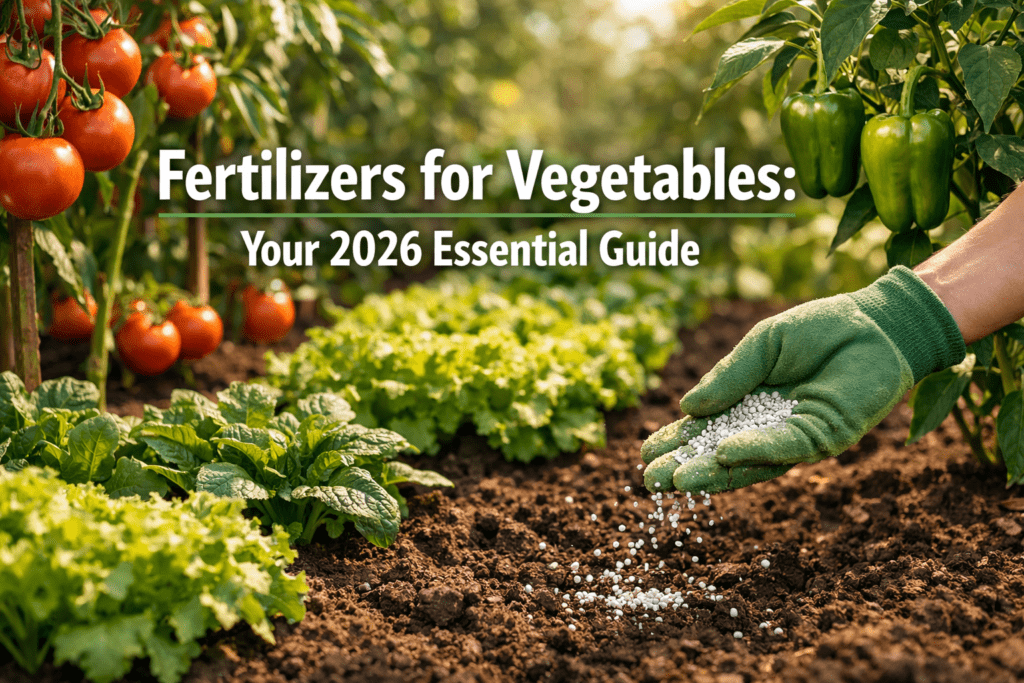
Are you looking to boost your vegetable harvest and ensure your plants thrive? Understanding and properly applying fertilizers for vegetables is crucial for robust growth, abundant yields, and vibrant produce. Just like humans need a balanced diet, vegetables require specific nutrients to flourish, and often, soil alone cannot provide everything they need throughout their life cycle.
Key Takeaways
- Vegetables require a balanced array of macro- and micronutrients for optimal growth and yield.
- Soil testing is the most accurate way to determine your garden’s specific nutrient deficiencies.
- Organic fertilizers improve soil health long-term, while synthetic fertilizers offer precise, fast-acting nutrient delivery.
- Choose fertilizers based on your vegetable type, growth stage, and soil test results.
- Over-fertilization can be detrimental, leading to nutrient burn and environmental pollution.
- The global market for organic fertilizers is rapidly growing, driven by a focus on sustainable agriculture and rising demand for organic produce [2].
- Liquid formulations of organic fertilizers are increasingly popular due to their compatibility with modern fertigation systems [2].
- Emerging technologies like microbial inoculants and waste-to-fertilizer systems are enhancing fertilizer effectiveness and sustainability [2, 3].
Quick Answer
Fertilizers for vegetables supply essential nutrients that soil might lack, promoting healthier plant growth, increased yields, and improved produce quality. The best approach involves understanding your soil’s current nutrient profile through testing, choosing between organic or synthetic options based on your gardening philosophy, and applying the right type and amount of fertilizer at appropriate growth stages for your specific vegetable crops.
Why Do Vegetables Need Fertilizers?
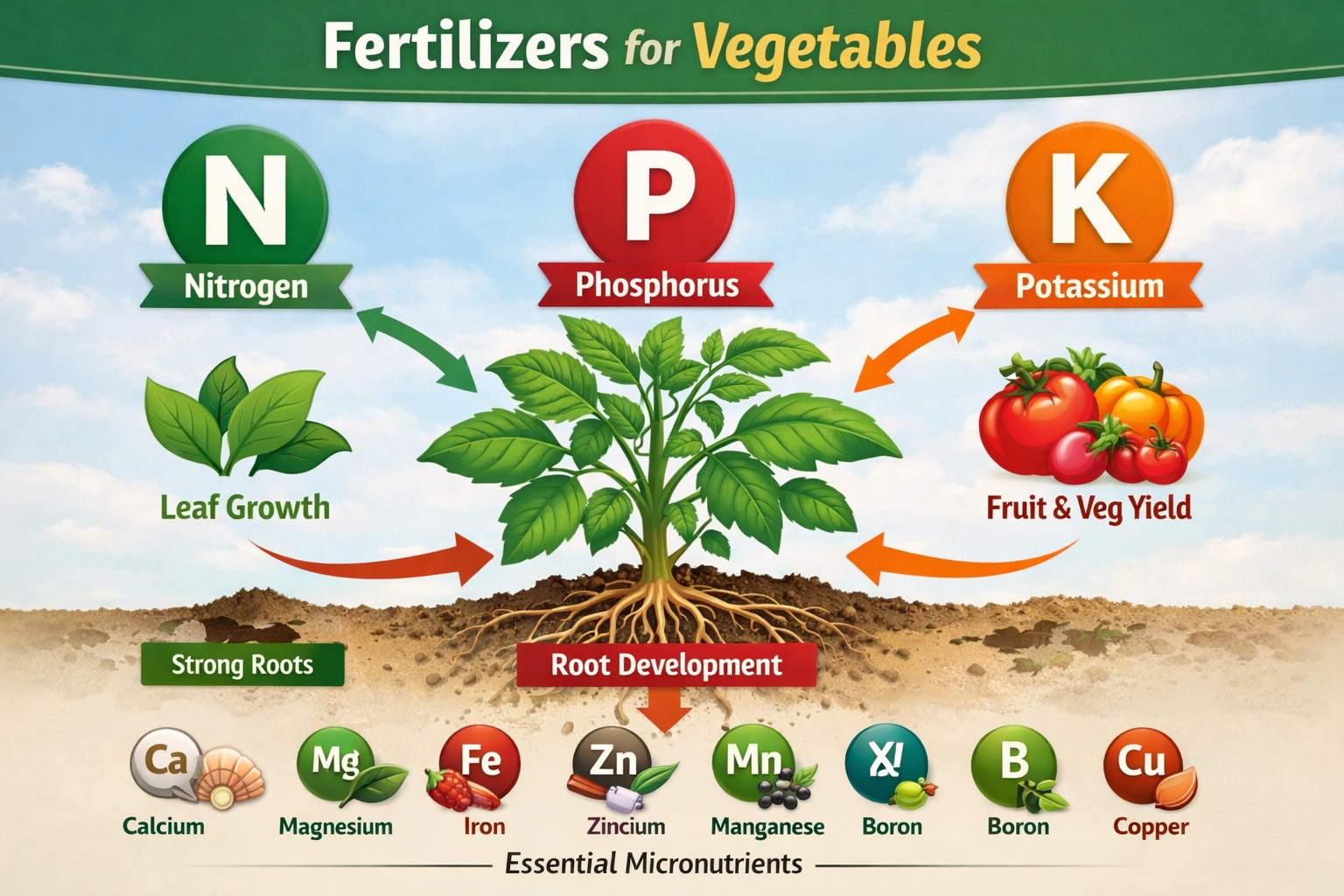
Vegetables need fertilizers to supplement the nutrients naturally present in the soil, ensuring they have the building blocks for healthy development and productivity. While soil provides some nutrients, continuous cropping often depletes essential elements, especially in small space gardens or containers [1, 8]. Plants rely on macronutrients like nitrogen (N), phosphorus (P), and potassium (K), as well as various micronutrients, for everything from leaf growth and root development to flowering and fruiting. Without adequate nutrition, vegetable plants can exhibit stunted growth, poor yields, and susceptibility to pests and diseases.
Essential Nutrients for Thriving Vegetables
Vegetables, like all plants, require a diverse range of nutrients to complete their life cycle. These are generally categorized into macronutrients and micronutrients.
- Macronutrients (N-P-K): These are needed in larger quantities.
- Nitrogen (N): Crucial for leafy growth and overall plant vigor. It’s a key component of chlorophyll, essential for photosynthesis. Too little nitrogen leads to yellowing leaves; too much can cause abundant foliage but fewer fruits.
- Phosphorus (P): Essential for root development, flowering, fruiting, and seed formation. It helps plants convert energy from the sun into usable food. A deficiency can result in purple-tinged leaves and poor fruit set.
- Potassium (K): Supports overall plant health, disease resistance, and fruit quality. It helps regulate water movement and nutrient transport within the plant. Potassium deficiency often appears as yellowing or browning along leaf margins.
- Secondary Macronutrients: Calcium, magnesium, and sulfur are also needed in significant amounts.
- Calcium: Important for cell wall structure and preventing disorders like blossom end rot in tomatoes and peppers.
- Magnesium: Central to the chlorophyll molecule and vital for photosynthesis.
- Sulfur: Aids in protein formation and enzyme activity.
- Micronutrients: Required in smaller quantities but equally vital, including iron, manganese, boron, zinc, copper, and molybdenum. These play roles in various enzymatic reactions and plant processes.
Understanding these nutrient roles helps in selecting the right fertilizers for vegetables that address specific plant needs or soil deficiencies. For more insights on general plant care, consider our Beginner’s Guide to Plant Care 2026: Grow Thriving Plants.
Organic vs. Synthetic Fertilizers for Vegetables: Which to Choose?
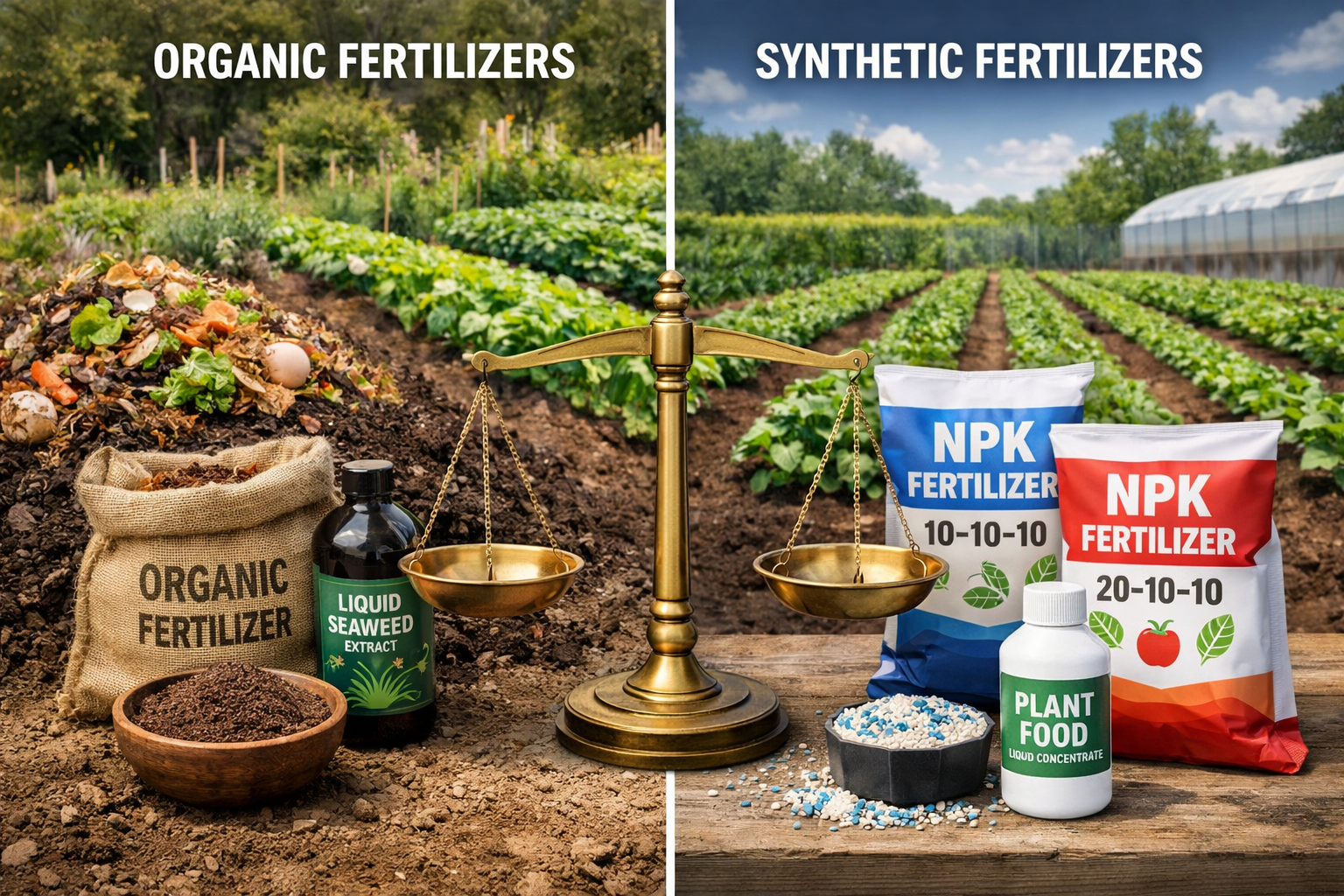
When selecting fertilizers for vegetables, gardeners typically choose between organic and synthetic options, each offering distinct advantages and disadvantages depending on their gardening goals and environmental considerations. Organic fertilizers improve soil health over time and support a diverse microbial ecosystem, while synthetic fertilizers provide precise, fast-acting nutrient delivery. The global organic fertilizer market is projected to reach USD 15.6 billion by 2033, underscoring a growing shift towards sustainable practices [2].
| Feature | Organic Fertilizers | Synthetic Fertilizers |
|---|---|---|
| Nutrient Source | Naturally derived materials (manure, compost, bone meal) | Chemically processed, inorganic salts |
| Nutrient Release | Slow, gradual release as microbes break down material | Fast, immediately available to plants |
| Soil Health | Improves soil structure, water retention, microbial life | No direct soil health benefits; can harm microbes over time |
| Environmental Impact | Sustainable, reduces chemical runoff, non-toxic | Potential for runoff pollution, energy-intensive production |
| Application | Less precise, requires patience for results | Precise nutrient ratios, immediate impact |
| Cost | Varies; can be cheaper if homemade (compost); specialty organic can be more expensive | Generally more affordable per pound of nutrient |
| Best For | Long-term soil improvement, sustainable gardening, container gardening [2, 8] | Quick nutrient boosts, addressing specific deficiencies |
Organic Fertilizers for Vegetables
Organic fertilizers are derived from living or once-living organisms and their byproducts. They feed the soil microbes, which then slowly release nutrients for the plants.
Common Organic Fertilizers:
- Compost: A cornerstone of organic gardening, compost improves soil structure, water retention, and provides a wide range of nutrients slowly [8]. It’s excellent for overall soil health.
- Manure: Aged animal manure (cow, chicken, horse) is rich in nitrogen and other nutrients. Always use well-composted manure to avoid burning plants or introducing pathogens.
- Bone Meal: A good source of phosphorus and calcium, beneficial for root development and flowering plants.
- Blood Meal: High in nitrogen, ideal for leafy green vegetables.
- Fish Emulsion: A liquid fertilizer rich in nitrogen and micronutrients, providing a quick boost to plants. Liquid organic fertilizer formulations are among the fastest-growing types due to their compatibility with modern fertigation systems [2].
- Alfalfa Meal: Provides nitrogen, phosphorus, and potassium, plus growth stimulants.
- Kelp Meal/Seaweed Extract: Contains a broad spectrum of trace minerals and plant hormones that promote overall plant health and stress resistance. Biofertilizers and fortified organic blends, often incorporating seaweed extracts, are key growth segments in the market [2].
Synthetic Fertilizers for Vegetables
Synthetic fertilizers are manufactured compounds designed to deliver specific nutrient ratios in a readily available form. They are often labeled with an N-P-K ratio (e.g., 10-10-10).
Common Synthetic Fertilizers:
- Balanced Granular Fertilizers (e.g., 10-10-10): Provide equal parts nitrogen, phosphorus, and potassium, suitable for general-purpose feeding.
- High Nitrogen Fertilizers (e.g., 20-5-5): Promote leafy growth, good for greens like spinach, lettuce, and kale.
- High Phosphorus Fertilizers (e.g., 5-10-5): Beneficial for root crops and fruiting vegetables, especially at planting time.
- Liquid Concentrates: Can be diluted and applied directly to the soil or foliage for rapid nutrient uptake.
Choosing between these options depends on your gardening philosophy. Many gardeners find a hybrid approach beneficial, using organic materials for long-term soil health and supplementing with targeted synthetic applications when quick nutrient boosts are needed. For those starting a garden, understanding soil basics is critical, particularly for container gardening, where nutrient depletion can be more rapid [8]. Our Soil Basics for Container Gardening: 2026 Expert Guide provides further details.
How to Determine Your Vegetable Garden’s Fertilizer Needs
Determining your vegetable garden’s fertilizer needs accurately is best achieved through a soil test, as guesswork can lead to either under-fertilization or damaging over-fertilization. A soil test provides a precise snapshot of your soil’s current nutrient levels and pH, allowing you to apply only what is necessary, saving money and preventing environmental harm.
The Importance of Soil Testing
A soil test is a diagnostic tool that measures the pH, organic matter content, and available levels of essential nutrients (N, P, K, and micronutrients) in your garden soil. Without a soil test, applying fertilizers becomes a guessing game, potentially leading to:
- Nutrient Imbalances: Too much of one nutrient can inhibit the uptake of others, even if they are present.
- Over-fertilization: Excess nutrients can burn plant roots, lead to excessive leafy growth at the expense of fruits, and cause nutrient runoff into waterways, polluting the environment.
- Under-fertilization: Insufficient nutrients result in stunted growth, poor yields, and unhealthy plants.
Most local university extension offices or private labs offer affordable soil testing services. They will provide detailed recommendations based on your test results, often tailored to the specific crops you plan to grow. Some regions even have specific guides, like the 2026 Southeastern U.S. Vegetable Crop Handbook, that incorporate local soil conditions.
Interpreting Soil Test Results
When you receive your soil test results, you’ll typically see:
- pH Level: This indicates how acidic or alkaline your soil is. Most vegetables prefer a slightly acidic to neutral pH (6.0-7.0). pH affects nutrient availability; for example, iron becomes less available in alkaline soils. Adjusting pH with lime (to raise) or sulfur (to lower) is often more critical than adding nutrients initially.
- Macronutrient Levels (N, P, K): These will be listed as low, medium, or high, often with specific numerical values.
- Micronutrient Levels: Similar to macronutrients, these indicate any deficiencies or excesses.
- Organic Matter Content: A healthy garden soil should ideally have 3-5% organic matter, which is vital for nutrient retention, soil structure, and microbial activity.
Based on these results, the report will recommend specific fertilizer types and application rates to amend your soil for optimal vegetable growth. For example, if your phosphorus is low, the recommendation might be bone meal (organic) or superphosphate (synthetic).
When and How to Apply Fertilizers for Vegetables
Applying fertilizers for vegetables at the correct time and using appropriate methods maximizes nutrient uptake and minimizes waste, leading to healthier plants and better yields. General guidelines suggest fertilizing at planting and then side-dressing or liquid feeding during key growth stages.
Timing Your Fertilizer Applications
The timing of fertilizer application is crucial and generally follows the plant’s growth cycle:
- Pre-Planting/Soil Preparation: This is often the most important application.
- Goal: Build a strong foundation of nutrients in the soil before planting.
- Method: Incorporate compost, well-rotted manure, or a balanced granular fertilizer into the soil during bed preparation. This is especially vital for heavy feeders like tomatoes, corn, and squash. A soil test will guide the specific recommendations for this initial amendment.
- At Planting/Transplanting:
- Goal: Give young plants an immediate nutrient boost to establish roots and begin initial growth.
- Method: For transplants, a starter solution (diluted liquid fertilizer high in phosphorus) can be applied directly to the planting hole or as a drench after planting. For seeds, a light application of granular fertilizer can be broadcast.
- Side-Dressing (During Growth):
- Goal: Replenish nutrients as plants grow and begin to flower and fruit, especially for heavy feeders.
- Method: Apply granular fertilizer in a band along the side of the plant row (6-8 inches from the stem) or in a circle around individual plants, then lightly work it into the soil and water thoroughly. This is typically done when plants are about one-third to half-grown, and again when fruiting begins for heavy producers.
- Liquid Feeding:
- Goal: Provide quick nutrient boosts or foliar feeding for rapid uptake, particularly useful for container plants or during periods of stress.
- Method: Dilute liquid fertilizers (like fish emulsion or a balanced liquid synthetic) according to package directions and apply as a soil drench or foliar spray. This can be done every 2-4 weeks, especially for fast-growing crops. Liquid organic fertilizer formulations are gaining popularity for their efficiency in modern systems [2].
Application Methods for Fertilizers for Vegetables
The method of application depends on the fertilizer type and the specific needs of your plants:
- Broadcasting: Spreading granular fertilizer evenly over the entire garden bed. Best for pre-planting or large areas.
- Banding/Side-Dressing: Applying fertilizer in a concentrated band near the plant row, beneficial for row crops.
- Top-Dressing: Spreading fertilizer directly on the soil surface around individual plants, especially useful for established perennials or container plants. This is a common practice in small space vegetable gardening.
- Foliar Feeding: Spraying diluted liquid fertilizer directly onto plant leaves. Nutrients are absorbed quickly but the effect is short-lived. Best as a supplemental feeding.
- Fertigation: Applying liquid fertilizers through an irrigation system. This is highly efficient and common in commercial operations but can also be adapted for home gardens using drip systems.
Always follow package instructions for application rates, as over-fertilizing can harm plants and pollute the environment. More guidance on general watering, which is key for nutrient absorption, can be found in our How Often Should You Water Plants? Ultimate Guide 2026.
Tailoring Fertilizers to Specific Vegetable Types
Different vegetables have varying nutrient requirements, making it beneficial to tailor your fertilizer choices for optimal growth. Understanding these specific needs helps ensure each plant gets exactly what it needs, preventing deficiencies or excesses.
Heavy Feeders vs. Light Feeders
Vegetables can be broadly categorized by their nutrient demands:
- Heavy Feeders: These vegetables require a significant amount of nutrients, especially nitrogen, throughout their growth cycle to produce large yields.
- Examples: Tomatoes 🍅, corn 🌽, squash, cucumbers, cabbage, broccoli, leafy greens (lettuce, spinach, kale).
- Fertilizer Strategy: Benefit from rich compost and well-rotted manure pre-planting, followed by regular side-dressing or liquid feeding with a balanced or nitrogen-rich fertilizer during their growth and fruiting stages. For instance, corn benefits greatly from a nitrogen boost when it’s knee-high.
- Moderate Feeders: These have average nutrient needs.
- Examples: Peppers, beans, carrots, radishes, beets, onions, potatoes.
- Fertilizer Strategy: Typically thrive with good initial soil preparation (compost) and perhaps one moderate side-dressing during their main growth period. Beans, being legumes, fix their own nitrogen and usually require less supplemental nitrogen.
- Light Feeders: These require fewer nutrients and can even be harmed by over-fertilization, especially with nitrogen.
- Examples: Herbs (thyme, rosemary, oregano), peas.
- Fertilizer Strategy: Often do best in moderately fertile soil with minimal additional fertilizer, mostly relying on well-amended soil.
Specific Vegetable Needs
- Leafy Greens (Lettuce, Spinach, Kale): These primarily benefit from nitrogen to promote lush, green foliage.
- Recommendation: High-nitrogen organic options like blood meal or fish emulsion, or a synthetic fertilizer with a higher first number (e.g., 20-5-5).
- Fruiting Vegetables (Tomatoes, Peppers, Squash): Require balanced nutrition initially, then more phosphorus and potassium during flowering and fruiting to support fruit development.
- Recommendation: Bone meal or rock phosphate pre-planting for phosphorus; liquid feeds high in K (e.g., kelp meal) once flowers appear. Calcium is also vital to prevent blossom end rot in tomatoes and peppers, which can be provided via crushed eggshells or specific calcium supplements.
- Root Vegetables (Carrots, Radishes, Beets): Benefit from phosphorus for strong root development and potassium for overall health, but too much nitrogen can lead to lush tops and small roots.
- Recommendation: Balanced fertilizer or one slightly higher in P and K. Avoid excessive nitrogen.
- Legumes (Beans, Peas): These plants have a unique ability to fix atmospheric nitrogen, meaning they typically need very little supplemental nitrogen.
- Recommendation: Focus on phosphorus and potassium. Over-fertilizing with nitrogen can hinder their nitrogen-fixing ability and lead to excessive foliage with few pods.
By customizing your fertilizer approach, you ensure each plant receives the ideal conditions to thrive, resulting in a more successful and abundant vegetable garden. This attention to detail is paramount for healthy growth, whether you’re cultivating in a traditional garden bed or exploring vertical gardening basics.
Common Mistakes to Avoid When Fertilizing Vegetables
Even with the best intentions, gardeners can make mistakes when applying fertilizers for vegetables that can harm plants and waste resources. Avoiding these common pitfalls is crucial for successful and sustainable gardening.
Over-Fertilization
This is perhaps the most frequent and damaging mistake. Applying too much fertilizer, especially synthetic varieties, can lead to:
- Fertilizer Burn: Excess salts in the fertilizer draw water out of plant roots, causing leaves to turn brown and crispy, resembling drought damage. In severe cases, it can kill the plant.
- Nutrient Imbalances: Too much of one nutrient can make it difficult for plants to absorb others, even if they are present in the soil. For example, excessive phosphorus can lock up micronutrients like zinc and iron.
- Excessive Foliage, Poor Yields: High nitrogen can promote lush, leafy growth at the expense of flowers and fruits, which is counterproductive for fruiting vegetables.
- Environmental Pollution: Excess nutrients can leach into groundwater or run off into surface water, contributing to algal blooms and harming aquatic ecosystems.
How to avoid: Always follow package directions for application rates. When in doubt, apply slightly less than recommended. Err on the side of caution, as it’s easier to add more fertilizer than to remedy over-fertilization. Conduct a soil test to understand actual needs [8].
Incorrect Timing
Applying fertilizer at the wrong time can be ineffective or even detrimental.
- Too Early/Too Late: Fertilizing dormant plants or just before a heavy rain can lead to nutrient leaching before plants can absorb them. Fertilizing late in the season with nitrogen can promote tender new growth that is vulnerable to frost.
- Ignoring Growth Stages: Applying high nitrogen when a fruiting plant is setting fruit might push leafy growth instead of fruit development.
How to avoid: Understand the growth cycle of your vegetables and time applications accordingly (pre-planting, at planting, side-dressing during active growth, especially before flowering/fruiting).
Applying to Dry Soil
Applying granular or liquid fertilizer to dry soil can concentrate salts and damage plant roots, especially if followed by inconsistent watering.
How to avoid: Always water your garden thoroughly before applying granular fertilizers. For liquid fertilizers, ensure the soil is moist. After application, water again lightly to help dissolve granular products and wash liquid fertilizers into the root zone.
Neglecting Soil pH
Soil pH significantly impacts nutrient availability. If the pH is too acidic or too alkaline, plants cannot absorb nutrients effectively, even if they are present in the soil.
How to avoid: Test your soil pH regularly and adjust it if necessary before adding large amounts of fertilizer. For most vegetables, a pH between 6.0 and 7.0 is ideal. Adding lime raises pH, while sulfur or peat moss lowers it.
By being mindful of these common mistakes, you can optimize your use of fertilizers for vegetables, ensuring a healthier garden and a more rewarding harvest. Recognizing these issues is part of avoiding Beginner Mistakes in Small Space Gardening 2026.
Sustainable Fertilizer Practices for the Home Gardener
Adopting sustainable fertilizer practices in your vegetable garden not only benefits your plants and soil but also contributes to broader environmental health. These methods often focus on building long-term soil fertility and reducing reliance on external inputs.
Emphasizing Soil Health
The foundation of sustainable fertilization is healthy soil. Rich, living soil minimizes the need for synthetic inputs and supports resilient plant growth.
- Composting: Regularly adding homemade compost to your garden beds is one of the most effective ways to improve soil structure, water retention, and nutrient availability. Composting remains the dominant organic fertilizer production process due to its cost-efficiency and scalability [2].
- Cover Cropping: Planting cover crops (like clover, vetch, or rye) during off-seasons protects soil from erosion, suppresses weeds, and adds organic matter and nitrogen when tilled under.
- Mulching: Applying a layer of organic mulch (straw, shredded leaves, wood chips) around plants helps retain soil moisture, regulate soil temperature, suppress weeds, and slowly break down to add organic matter to the soil.
- Crop Rotation: Rotating different vegetable families each year prevents the build-up of pests and diseases and helps balance nutrient demands, as different crops extract varying amounts of nutrients from the soil.
Utilizing Organic and Local Resources
Prioritizing organic and locally sourced materials reduces the environmental footprint of your gardening efforts.
- Organic Fertilizers: As the global organic fertilizer market continues to grow significantly, opting for organic options like well-rotted manure, bone meal, fish emulsion, and kelp meal supports sustainable agriculture and improves soil biology [2]. Modern organic fertilizers, incorporating microbial inoculants, can achieve nutrient release profiles comparable to conventional options, making them viable for commercial and home use [2].
- Local Sourcing: Inquire at local farms or garden centers for locally produced compost or manure, which can reduce transportation costs and support regional economies.
- Waste-to-Fertilizer Initiatives: Researchers are actively developing innovative methods to create ammonia-based fertilizers from protein-rich farm waste, offering a greener and more affordable alternative to traditional production [3]. While not yet widely available for home gardeners, this highlights a future direction for sustainable nutrient sourcing.
By integrating these sustainable practices, home gardeners can create thriving vegetable patches that are productive, environmentally friendly, and less reliant on external, energy-intensive inputs. This aligns with a broader focus on soil health restoration, which governments and farmers increasingly recognize as crucial for food security [2]. For those interested in more general vegetable gardening resources, our site offers a wealth of information.
Conclusion
Mastering the art of fertilizing your vegetable garden is a cornerstone of successful and sustainable cultivation. From understanding the nuanced needs of heavy versus light feeders to choosing between organic and synthetic options, the right approach can significantly impact your harvest quality and quantity. Always begin with a soil test to accurately assess your garden’s unique requirements, then tailor your fertilizer choices and application timing to support your plants through every stage of growth.
Embracing sustainable practices like composting, mulching, and thoughtful nutrient management not only ensures a bountiful yield in 2026 but also nurtures the long-term health of your soil and the environment. By avoiding common mistakes like over-fertilization and incorrect timing, you’ll cultivate a more resilient garden that provides delicious, nutritious vegetables for years to come.
FAQ
What is the best all-purpose fertilizer for vegetables?
A balanced N-P-K fertilizer like 10-10-10 or a rich compost provides a good general nutrient base for most vegetables, but a soil test is the best way to determine specific needs.
How often should I fertilize my vegetable garden?
The frequency depends on your soil, the specific vegetable types, and the fertilizer used. Generally, once at planting, and then side-dressing or liquid feeding every 3-6 weeks for heavy feeders during their active growth, is a good starting point.
Can I over-fertilize my vegetables?
Yes, over-fertilization is a common mistake that can lead to “fertilizer burn,” stunted growth, and environmental pollution. Always follow label directions and err on the side of caution.
Are organic fertilizers better than synthetic ones for vegetables?
Organic fertilizers build long-term soil health and feed the soil microbes, while synthetic fertilizers offer precise, immediate nutrient delivery. Neither is inherently “better”; the best choice depends on your gardening goals and soil conditions.
What does the N-P-K ratio on fertilizers mean?
N-P-K stands for Nitrogen (N), Phosphorus (P), and Potassium (K), representing the percentage of each nutrient by weight in the fertilizer. For example, 10-5-5 means 10% nitrogen, 5% phosphorus, and 5% potassium.
When should I stop fertilizing vegetables?
Generally, stop fertilizing fruiting vegetables once they begin to show signs of winding down or about 2-4 weeks before the first anticipated frost. For leafy greens, you can continue light feeding as long as you are harvesting.
How do I fertilize vegetables in containers?
Container vegetables have higher nutrient demands due to frequent watering and limited soil volume. Use a slow-release granular fertilizer mixed into the potting mix, or apply a diluted liquid fertilizer every 2-4 weeks during the growing season.
Can I make my own fertilizer for vegetables?
Yes, you can make compost from kitchen and yard waste, and create compost tea or worm castings, which are excellent organic fertilizers. Well-rotted animal manure is also a valuable homemade option.
References
[1] Global Fertilizer Market P – https://www.renub.com/global-fertilizer-market-p.php
[2] Organic Fertilizer Market Set To Surge To Usd 15 6 Billion By 2033 On Sustainable Agriculture Boom Study By Market Minds – https://www.globenewswire.com/news-release/2026/02/23/3242451/0/en/Organic-Fertilizer-Market-Set-to-Surge-to-USD-15-6-Billion-by-2033-on-Sustainable-Agriculture-Boom-Study-by-Market-Minds.html
[3] Turning Farm Waste Into A Greener Future – https://news.clemson.edu/turning-farm-waste-into-a-greener-future/
[6] 2026 Southeastern U S Vegetable Crop Handbook – https://vegetables.ces.ncsu.edu/2026/01/2026-southeastern-u-s-vegetable-crop-handbook/
[8] Arec 66 – https://www.pubs.ext.vt.edu/AREC/AREC-66/AREC-66.html