Small Balcony Vegetable Garden Ideas USA: 2026 Urban Guide
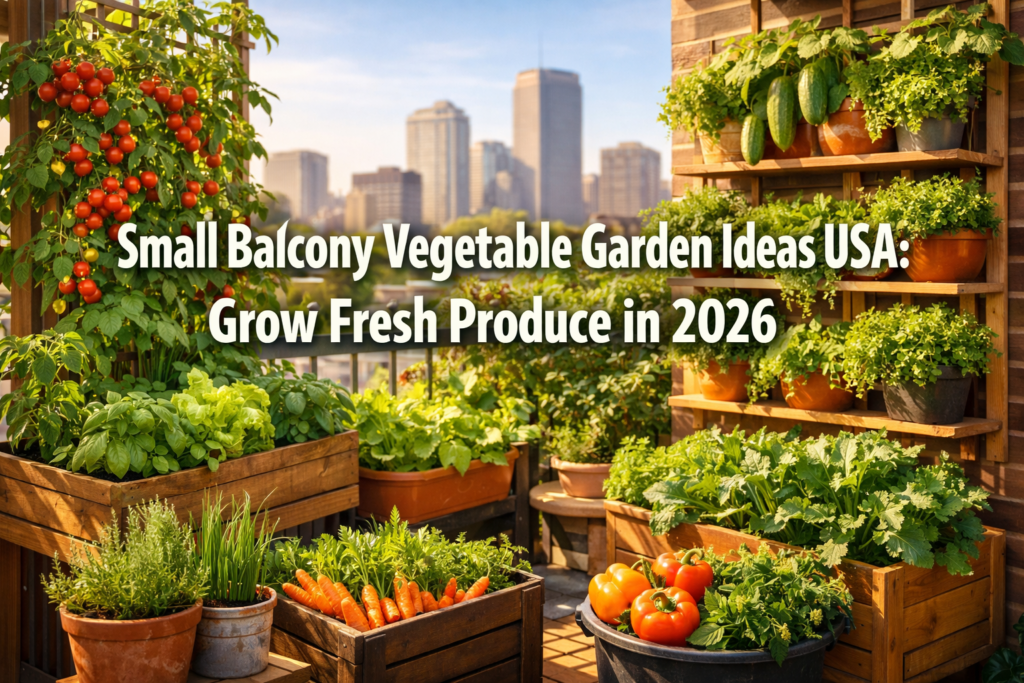
Gardening in compact urban spaces across the USA is entirely feasible and rewarding, even on a small balcony. By optimizing plant selection, container choices, and vertical space, you can cultivate a diverse and productive vegetable garden, providing fresh produce right at your doorstep. This guide explores practical and inspiring small balcony vegetable garden ideas for 2026, tailored for urban dwellers throughout the United States.
Key Takeaways
- Maximize Vertical Space: Utilize shelves, hanging planters, and trellises to grow more in less square footage.
- Choose Compact Varieties: Select dwarf, bush, or container-specific vegetable types that thrive in limited root space.
- Smart Container Selection: Opt for pots with good drainage and appropriate sizes for your chosen plants; fabric grow bags are excellent.
- Sunlight is Key: Observe your balcony’s sun exposure throughout the day to select plants that will flourish.
- Consistent Care: Small gardens dry out faster and require diligent watering and feeding.
- Pest & Disease Management: Stay vigilant for common balcony garden pests and address issues promptly.
- Start Small: Begin with a few easy-to-grow vegetables to build confidence and learn your balcony’s specific conditions.
What are the Best Vegetables for Small Balcony Gardens in the USA?
The best vegetables for small balcony gardens in the USA are typically compact varieties that are prolific producers and do not require extensive root systems or sprawling growth habits. These include leafy greens, many herbs, dwarf tomato varieties, and smaller fruiting plants like peppers and bush beans.
When considering small balcony vegetable garden ideas USA, selecting the right plants is paramount. Focus on varieties known for container suitability and high yield in limited space.
- Leafy Greens: Lettuce (loose-leaf varieties), spinach, Swiss chard, arugula, and kale are excellent choices. They tolerate partial shade and can be harvested “cut-and-come-again,” providing multiple yields.
- Herbs: Basil, mint, parsley, cilantro, chives, and thyme thrive in pots and are perfect for frequent harvesting. Consider grouping herbs with similar light and water needs. For more, check our Balcony Herb Garden Guide 2026.
- Dwarf Tomatoes: Look for “bush” or “determinate” varieties like ‘Patio Princess’, ‘Tiny Tim’, or ‘Micro Tom’. Cherry tomatoes are particularly good for small spaces and hanging baskets.
- Peppers: Bell peppers and chili peppers (jalapeños, serranos) do well in containers, especially smaller, compact varieties. They love heat and sun.
- Bush Beans: Unlike pole beans, bush beans don’t need tall trellises and offer a good yield in a single harvest.
- Radishes and Carrots (short varieties): These root vegetables can be grown in shallower containers. Look for ‘Paris Market’ radishes or ‘Danvers Half Long’ carrots.
- Strawberries: Alpine or everbearing varieties can be grown in hanging baskets or strawberry pots, offering sweet treats throughout the season.
Decision Rule: Choose leafy greens and herbs for balconies with less direct sunlight (4-6 hours) and fruiting vegetables like tomatoes and peppers for balconies receiving 6+ hours of direct sun daily.
How Can I Maximize Space in a Small Balcony Vegetable Garden?
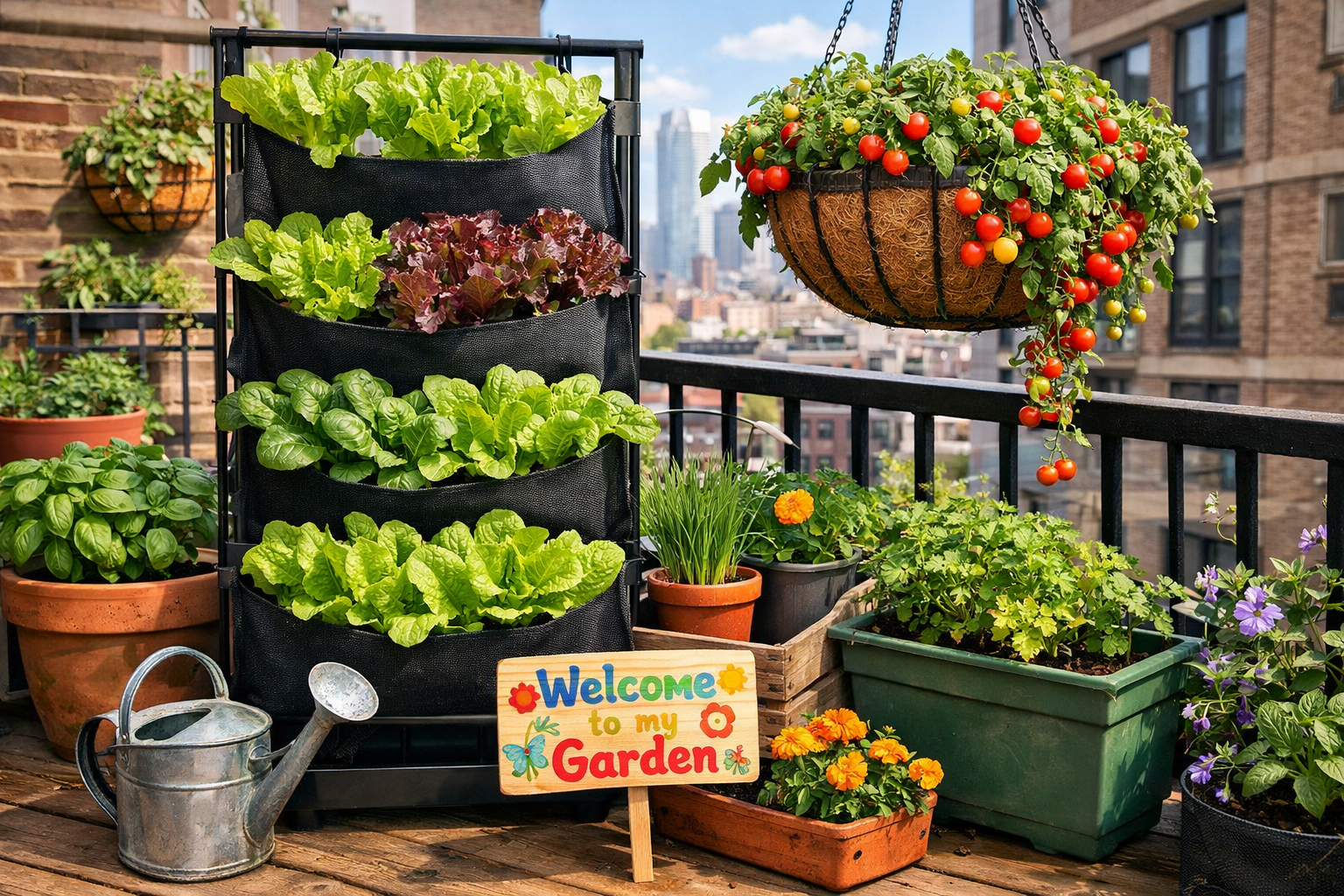
To maximize space in a small balcony vegetable garden, employ vertical gardening techniques, utilize multi-functional containers, and strategically plan your layout to leverage every available inch. This approach transforms vertical surfaces and unused corners into productive growing areas.
One of the biggest challenges with small balcony vegetable garden ideas USA is the limited horizontal footprint. Creative solutions are key:
- Vertical Planters: Tiered planters, wall-mounted pouches, and DIY pallet gardens are fantastic for growing herbs, strawberries, and leafy greens. Our Vertical Balcony Garden Ideas delves deeper into this.
- Hanging Baskets: Ideal for trailing plants like cherry tomatoes, strawberries, or various herbs. Ensure they are securely mounted to support the weight of wet soil and mature plants.
- Trellises and Cages: Support climbing plants like pole beans, cucumbers (bush varieties can be trained), or indeterminate tomatoes. These allow plants to grow upwards instead of sprawling outwards.
- Stackable Containers: Grow multiple plants in a single footprint. These are particularly good for herbs or smaller greens.
- Rail Planters: Utilize the balcony railing itself by hanging planters over it, adding extra growing space without taking up floor area.
- Rolling Carts/Shelves: A multi-tiered rolling cart can house several plants and be moved to follow the sun or for easy access.
- Smart Layout Planning:
- Place taller plants or vertical structures against the back wall to avoid shading smaller plants.
- Consider the path of the sun throughout the day and arrange plants accordingly.
- Leave enough space for comfortable movement and plant care.
Common Mistake: Overcrowding plants. While it’s tempting to plant as much as possible, overcrowding leads to poor air circulation, increased pest and disease issues, and stunted growth due to competition for nutrients and light. Always check recommended plant spacing.
What Are Essential Supplies for Small Balcony Vegetable Gardens?
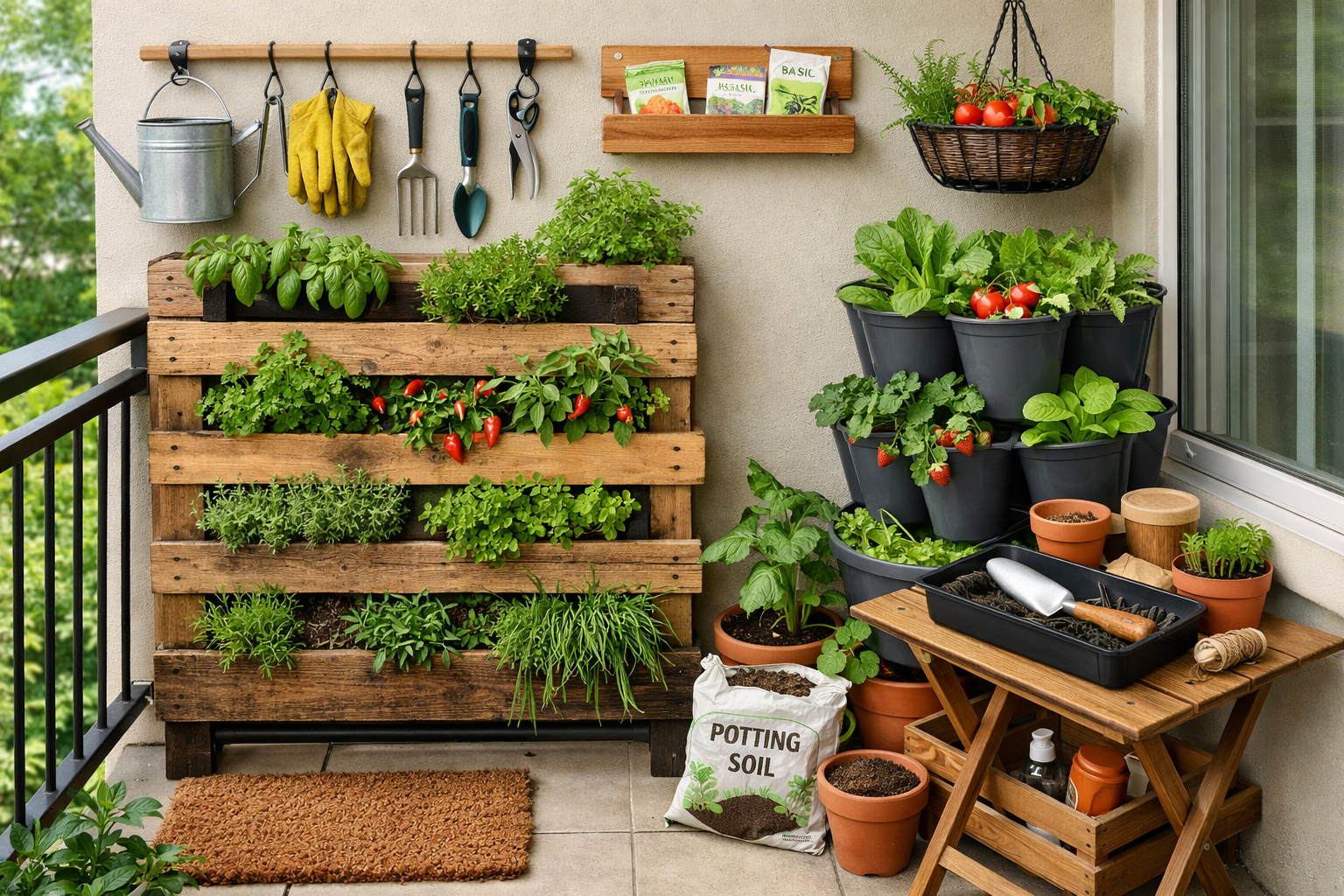
Essential supplies for small balcony vegetable gardens in 2026 include appropriate containers, high-quality potting mix, seeds or seedlings, and basic gardening tools to ensure plants thrive and space is optimized. Having the right equipment makes the gardening process much smoother and more successful.
Setting up your small balcony vegetable garden requires a thoughtful selection of supplies. Prioritizing quality and suitability for small spaces is crucial.
- Containers:
- Fabric Grow Bags: Excellent for aeration and drainage, preventing root bound issues. Available in various sizes.
- Plastic Pots: Lightweight and retain moisture well. Choose UV-resistant options.
- Terracotta Pots: Aesthetically pleasing but dry out faster, requiring more frequent watering.
- Self-watering Planters: Ideal for busy gardeners, as they have a reservoir that reduces watering frequency.
- For guidance on selecting the right pots, refer to our guide on Best Pots For Balcony Garden 2026.
- Potting Mix: Do not use garden soil. A high-quality, well-draining potting mix specifically designed for containers is essential. It provides aeration, nutrients, and moisture retention.
- Seeds or Seedlings: Start with seeds for cost-effectiveness and variety, or purchase seedlings for a quicker harvest. Ensure varieties are suitable for containers.
- Watering Can or Hose with Spray Nozzle: Essential for consistent and gentle watering. For larger balconies, a small hose with an adjustable nozzle can be very efficient. Consider a small drip irrigation system for hands-off watering. For tips on watering, see our guide on Common Watering Mistakes In Container Gardening.
- Fertilizer: Container plants deplete nutrients faster. Use an organic, balanced liquid fertilizer or slow-release granular fertilizer, following package directions. Our Fertilizers For Vegetables: 2026 Expert Guide offers more details.
- Basic Tools:
- Hand Trowel: For planting and transplanting.
- Hand Pruners/Snips: For harvesting and light pruning.
- Gloves: Protect your hands.
- Small Shovel/Scoop: For moving soil.
- Support Structures: Trellises, stakes, or tomato cages as needed for climbing plants.
- Sunlight Meter (Optional but Recommended): Helps accurately assess your balcony’s light conditions.
Edge Case: If your balcony receives very little direct sunlight (less than 3-4 hours), consider supplementing with grow lights for certain vegetables, or focus entirely on shade-tolerant leafy greens like spinach and lettuce, and specific herbs such as mint and parsley.
What are Key Maintenance Tips for Thriving Balcony Gardens?
Key maintenance tips for thriving balcony gardens involve consistent watering and feeding, regular pest and disease checks, and timely harvesting to encourage continuous production. These practices ensure your plants remain healthy and productive throughout the growing season.
Small balcony vegetable garden ideas USA rely heavily on attentive maintenance due to the unique environment of container gardening.
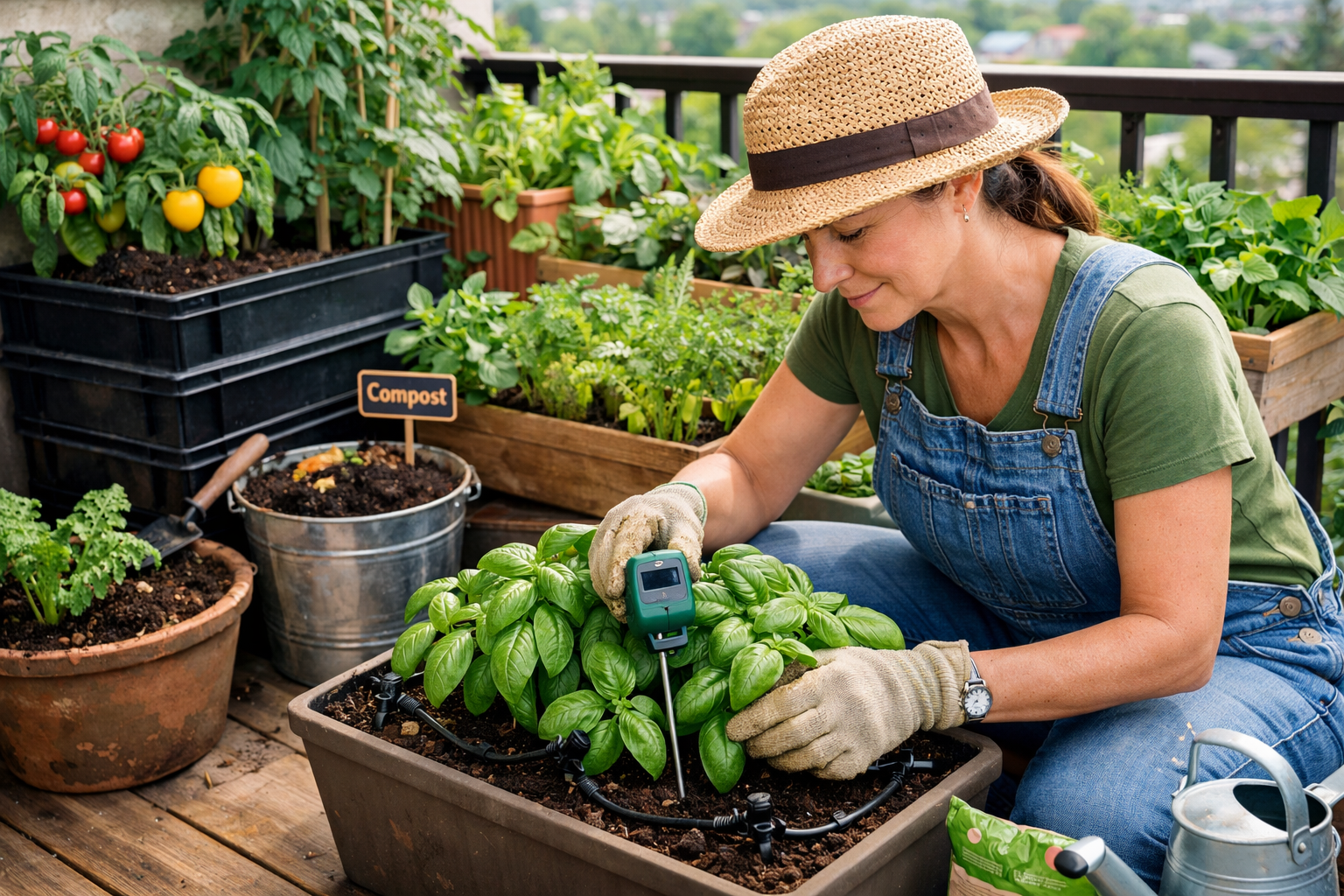
- Watering: Containers dry out much faster than in-ground gardens. Check soil moisture daily by sticking your finger about an inch into the soil. Water thoroughly until it drains from the bottom. Overwatering can be as damaging as under-watering.
- Fertilizing: As nutrients leach out with watering, regular feeding is crucial. Apply a balanced liquid fertilizer every 2-4 weeks, or use a slow-release granular fertilizer at the start of the season.
- Pest and Disease Management: Balcony gardens are not immune to pests. Inspect plants regularly for signs of insects or disease. Treat issues promptly with organic solutions like neem oil or insecticidal soap. Our Pest Control For Small Gardens: 2026 Expert Guide offers comprehensive advice.
- Harvesting: Harvest vegetables regularly to encourage new growth and prevent plants from going to seed too early. This is especially true for leafy greens and herbs.
- Pruning: Remove any yellowing, diseased, or dead leaves to improve air circulation and direct the plant’s energy towards producing fruit. For tomatoes, ‘suckering’ can help increase yield.
- Sunlight Monitoring: As the seasons change, the sun’s angle shifts. You might need to rotate pots or adjust vertical planters to ensure all plants receive adequate light.
- Weeding: While less common in containers, stray weeds can still appear. Remove them promptly to prevent competition for resources.
- Repotting/Refreshing Soil: Every year, consider refreshing the top few inches of soil or completely repotting plants with fresh potting mix. Over time, soil compacts and loses nutrients. Find out more about Balcony Garden Maintenance Tips 2026.
Quick Example: For a ‘cut-and-come-again’ lettuce plant, use sharp scissors to snip off outer leaves about an inch above the soil line. This allows the inner leaves to continue growing, providing multiple harvests from a single plant.
Frequently Asked Questions About Small Balcony Vegetable Gardens USA
Can I grow vegetables on a north-facing balcony in the USA?
Yes, you can grow certain vegetables on a north-facing balcony, especially those that tolerate partial shade. Focus on leafy greens like lettuce, spinach, kale, Swiss chard, and herbs such as mint, parsley, and cilantro. These plants generally need 3-4 hours of direct sun or bright indirect light to thrive.
How much sunlight do balcony vegetables need?
Most fruiting vegetables (tomatoes, peppers, cucumbers) require at least 6-8 hours of direct sunlight per day. Leafy greens and many herbs can thrive with 4-6 hours, and some even tolerate 3-4 hours of direct sun or bright indirect light.
What size containers are best for balcony vegetables?
Container size depends on the plant. Smaller herbs and leafy greens can do well in 6-8 inch pots. Bush beans, peppers, and determinate tomatoes generally need 5-gallon (10-12 inch diameter) containers or larger. Root vegetables like carrots and radishes need pots at least 6-8 inches deep.
How often should I water my balcony vegetable garden?
Balcony gardens, especially in containers, often need daily watering during hot, sunny weather. In cooler periods or after rain, you might water every 2-3 days. Always check the soil moisture by hand before watering; it should feel slightly damp, not soggy or bone dry.
Can I use regular garden soil in my balcony containers?
No, regular garden soil is too dense for containers. It doesn’t drain well, compacts easily, and can introduce pests and diseases. Always use a high-quality, lightweight potting mix specifically formulated for containers, which provides better aeration and drainage.
How do I protect my balcony garden from strong winds?
To protect against wind, choose sturdy, heavier pots, or add weight to the bottom of lighter ones. Place taller plants closer to the railing or wall. Consider installing a windbreak using netting, bamboo screens, or strategically placed wind-resistant plants.
What vegetables are easiest for beginners on a balcony?
For beginners, easy-to-grow vegetables include lettuce, spinach, radishes, bush beans, cherry tomatoes, and various herbs like basil and mint. These plants are relatively forgiving and offer quick rewards. Our Easy Vegetables For Beginners: Your 2026 Guide has more suggestions.
Is organic gardening possible on a small balcony?
Yes, organic gardening is very achievable on a small balcony. Use organic potting mix, organic fertilizers, and natural pest control methods like neem oil or hand-picking pests. Grow from organic seeds or seedlings to ensure a fully organic approach.
Conclusion
Embracing small balcony vegetable garden ideas in the USA for 2026 offers a tangible way to connect with nature, enjoy fresh, homegrown produce, and add a touch of green to urban living. By making smart choices in plant varieties, maximizing vertical space, and committing to consistent care, even the most compact balcony can become a thriving edible oasis. Whether you’re harvesting your first batch of leafy greens or picking ripe cherry tomatoes, the satisfaction of growing your own food is immeasurable. Start small, learn from your experiences, and watch your balcony transform into a productive and beautiful garden.
Actionable Next Steps:
- Assess Your Balcony: Determine sun exposure, wind patterns, and available space.
- Choose Your First Plants: Select 3-5 easy-to-grow vegetables or herbs suited to your balcony’s conditions.
- Gather Supplies: Purchase appropriate containers, high-quality potting mix, and basic tools.
- Start Planting: Begin with seeds or seedlings, following planting instructions carefully.
- Establish a Routine: Develop a consistent watering, feeding, and checking schedule for your new garden.